(Continued from Part 1. )
III – The Hive
The Beehive is the home you provide for the bees. It is supposed to make your task of managing the hive easier, while giving the bees what they want for a home. This is where you show your mettle and what you have learned. If the bees don’t like your home, don’t worry, they’ll just leave! The signs are all there if you know how to read them (an experienced mentor can help immensely). There are several styles of hives out there. Top Bar and Langstroth hives are the most common styles, Langstroths are the most popular, and what I would recommend new people get. They are affordable and interchangeable. While other versions offer advantages to some beekeepers, the ubiquity of Langstroth style hives makes them the beginner’s choice in my opinion.
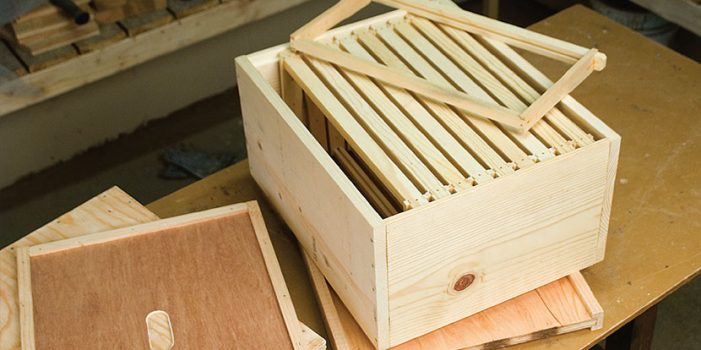
Langstroth style hives are the wooden boxes you typically see (in the field, or as seen at the top of this article). The boxes house the frames of honeycomb, where the bees store honey and grow their young. Developed by Lorenzo Lorraine Langstroth in approximately 1851. He discovered the magic of “Bee Space” and revolutionized the field. It turns out bees are very particular about the space they occupy. They do not like open spaces, so the equipment in Langstroth hives is all designed to fit together and give you the appropriate bee space between components. This is important to managing the bees successfully – they can live just about anywhere, but your ability to successfully manage them is greatly improved if you pay attention to bee space. Langstroth hives come in 2 sizes – 8 or 10 frames (e.g. the wooden box is sized to fit 8 or 10 frames inside); and 3 depths – Shallow, Medium, or Deep. The boxes hold the frames, the frames hold the honey and baby bees.
Langstroth hives have a few sections, and different vendors have come up with different ideas on the same function. I urge you to not get confused by the variety available – it can be overwhelming to the novice; it was for me. Look at the starter packages available or ask your mentor or a club member to help you choose. I will offer my suggestions below.Continue reading“Introduction to Beekeeping – Part 2, by K. in Tennessee”