(Continued from Part 1. This concludes the article.)
Battery Alternatives
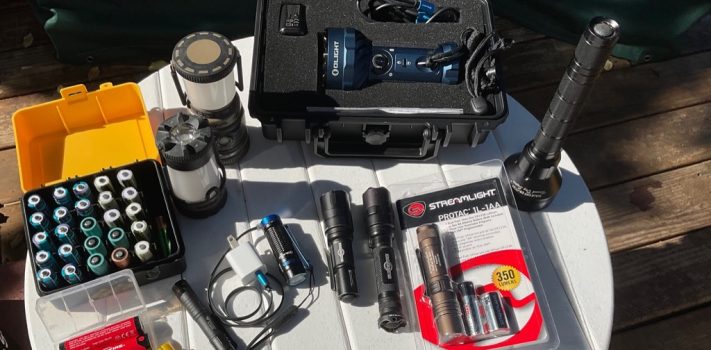
When one acquires one or more of these flashlights, how do we keep them running if the batteries are not available at the local store or there is not power during a blackout to run a battery charger? Over time I have come to appreciate four types of batteries or cells to power my flashlights and buy them accordingly. AA lithium or rechargeable NIMH, CR123 primary cells, 18650 rechargeable lithium ion and cells or batteries that are built into the light and charge by USB or magnetically. These cells can meet all my needs quite well. Usually, I have alkaline batteries on hand as well, but one must be careful not to leave them in any light of value due to the possibility of the cells leaking. Do not let that stop you from having some. Rotate them as needed in cheaper lights and in my opinion, Energizer6 cells tend to not leak as often as Duracell.7 Lithium cells andCR123 have no such leaking problems and can be stored for 10 years or more retaining full power. These are sometimes called primary cells and are not rechargeable.
NIMH8 cells, NiCd9 and lithium Ion (Li-ion) cells like the 18650 are rechargeable and come in many sizes. I have found having a mix of all the above is a good strategy for being prepared should the lights go out long term.
One thing to be aware of is rechargeable cells will not last as long in a light and will need to be recharged when compared alkaline or primary cells. This is a small shortcoming and nothing when you consider that rechargeable batteries can be recharged 500 to 3,000 times depending on their chemistry.Continue reading“Keep Flashlights Running In All Situations – Part 2, by J. Smith”