(Continued from Part 2. This concludes the article.)
Microgreens That I Have Grown
What follows are descriptions of some of the greens I have grown so far with a few observations I’ve made along the way. If you are planting trays several times a week, you’ll have overlapping harvest periods, and this gives you flexibility in terms of the different combinations you can make at dinner time.
Basil
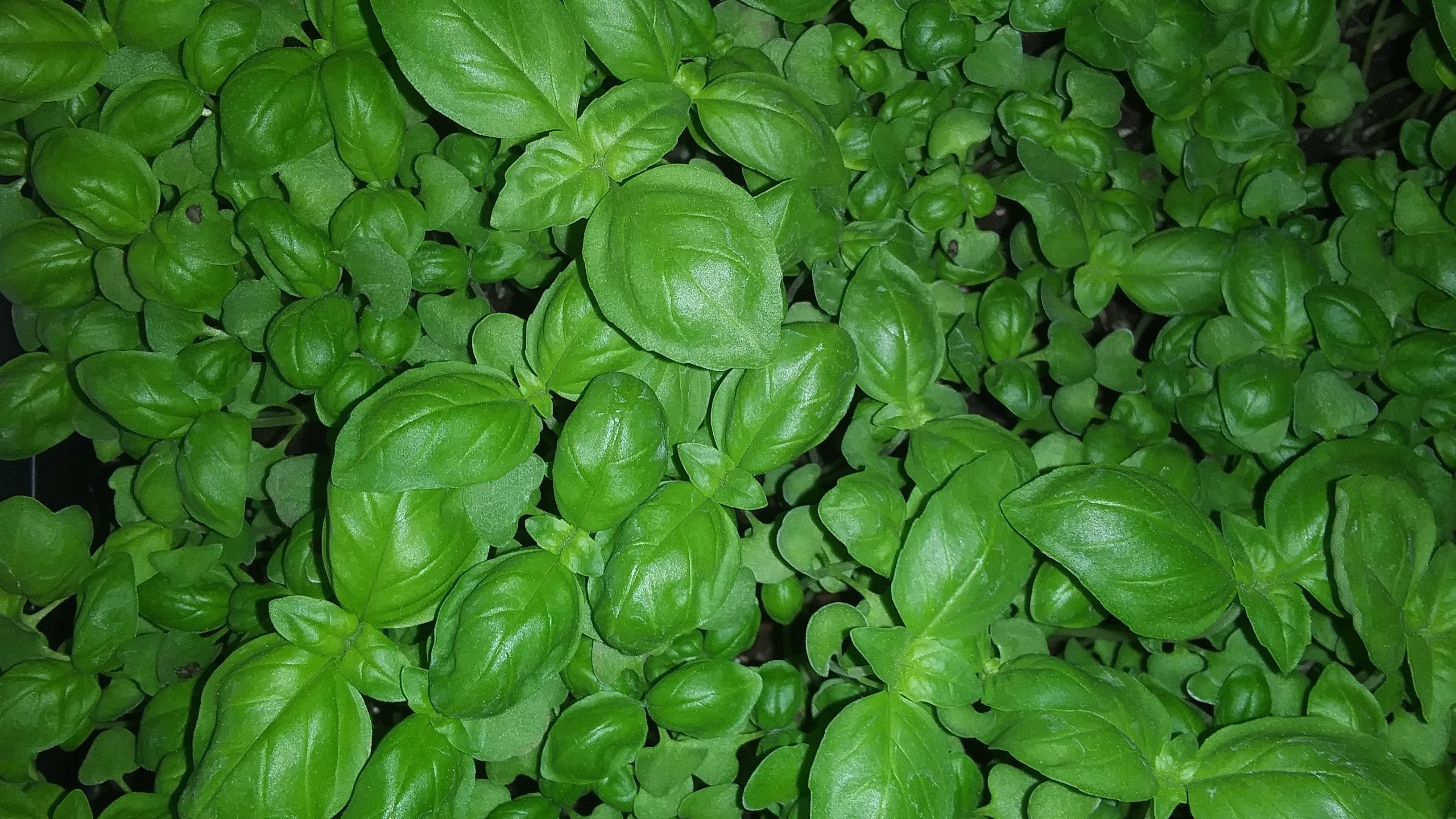
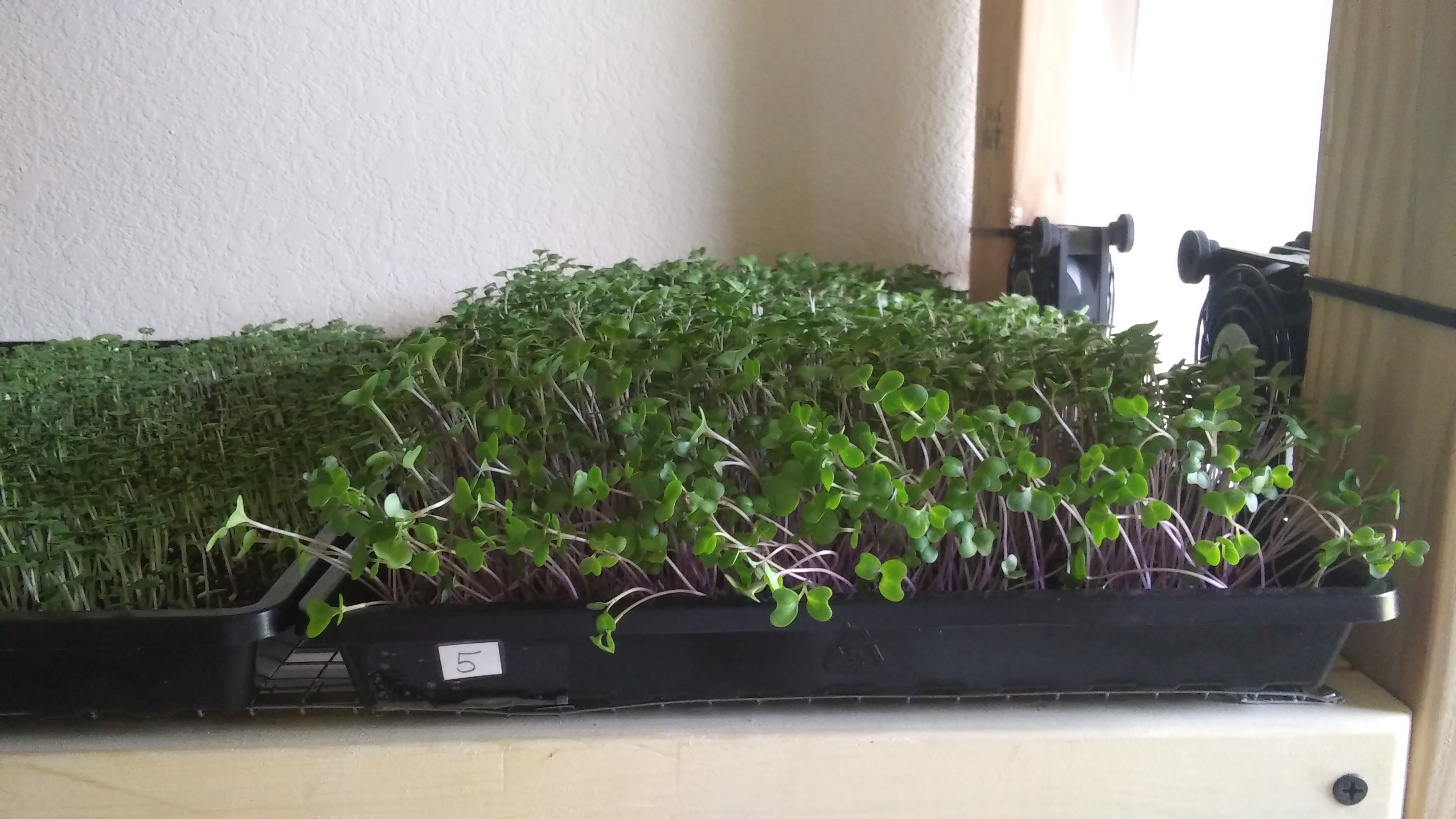
Basil grows more slowly, at least initially, but is well worth the wait. I sowed a couple 1020 trays more sparsely than I would normally, and let them grow for a full month. They went well beyond the microgreen stage and put on two to three sets of ‘true’ leaves (see Figure 15). I remain impressed that they were able to thrive for so long in only about ¾ inch of soil. We harvested both trays at once, and my wife made more than a quart of pesto from the foliage. That’s a real treasure if you can’t get to a grocery store.
Black Oil Sunflower
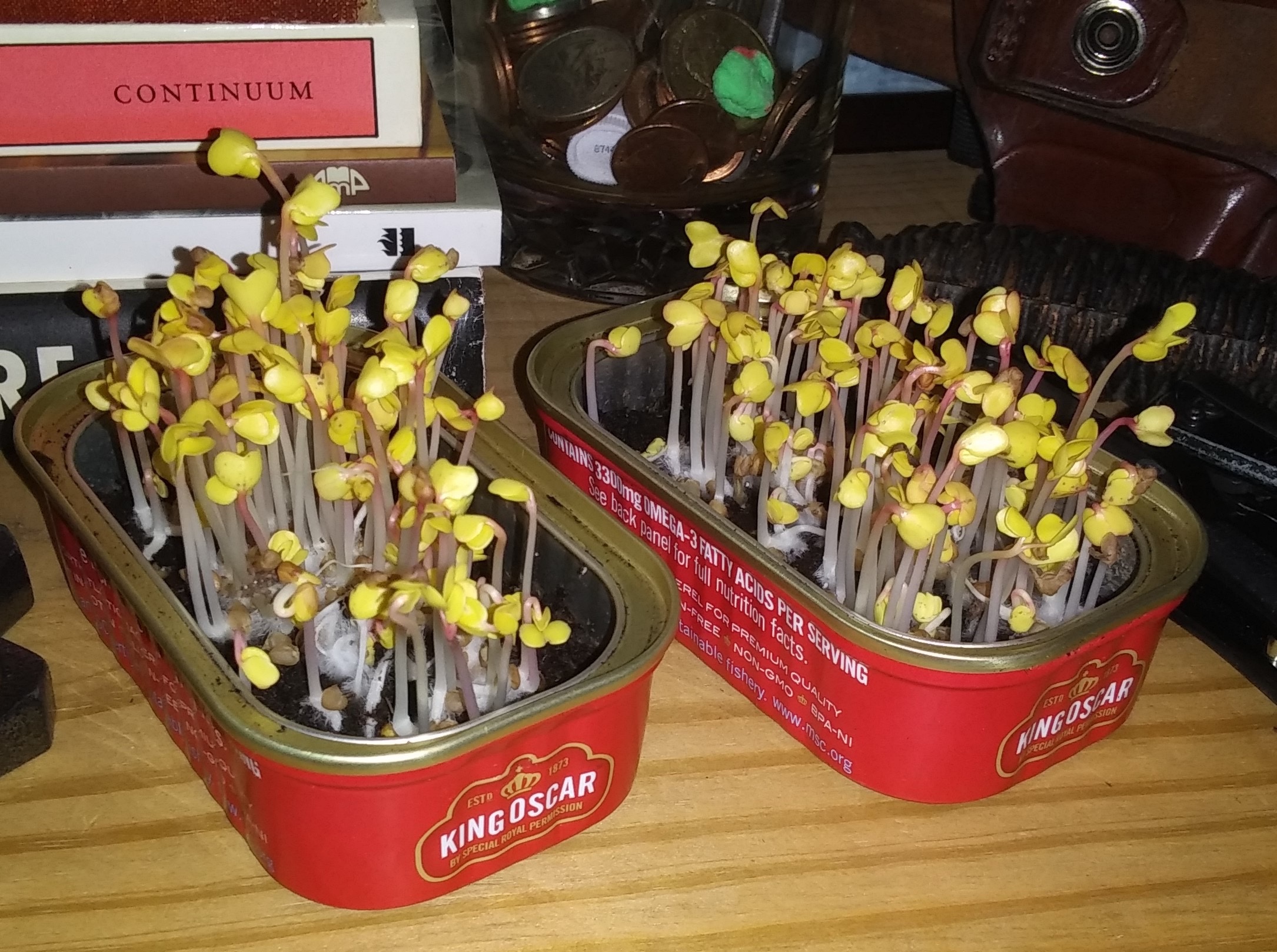
Sunflower could have been a contender for our favorite but, so far, we haven’t had any good seed. Both trays I grew had to be thrown out due to mold. The germination rate was abysmal. But my curiosity wouldn’t let me give up right away. I beat the mold back with a spayed mixture of hydrogen peroxide and water, then allowed the couple dozen plants which germinated to reach the harvest stage. They are robust in terms of size with thick stems and thick, waxy leaves, and the flavor is nutty and very similar to the flavor of sunflower seeds.
Reading reviews online from several sunflower seed vendors I noticed that there were several negative reviews for sunflowers in the spring of this year and, knowing that most Black Oil Sunflower comes from Italy, my guess is that there was a bubble somewhere in the supply line. It’s likely that huge quantities of this seed had to sit somewhere in suboptimal environmental conditions for much longer than normal, and that this led to the mold.
Like me, you may be tempted to purchase the Black Oil seeds sold as bird feed. Proceed with caution. The seed may be treated to prevent sprouting.Continue reading“The Secret Salad Garden – Part 3, by D.G.”