Economics and Investing:

Coke Has Suspended All Production in Venezuela. The stoppage isn’t due to price issues. There is apparently a sugar shortage that is expected to last for months. – Sent in by RBS

o o o

It costs $150 to buy a dozen eggs in Venezuela right now

o o o

A bit heavy on the charts but interesting nonetheless: Gold Not Ready for a Final Intermediate Cycle Low

o o o

Mike Maloney’s analysis of “Brexit The Movie”: What You Need To Know About Brexit: The Movie – Mike Maloney (Part 1) – Sent in by M.T.

o o o

SurvivalBlog and its editors are not paid investment counselors or advisers. Please see our Provisos page for details.


Odds ‘n Sods:

A couple of interesting wildlife videos to remind us that not all survival threats come from the two legged variety of predators:

Golfers stand by as giant alligator disrupts their game – “Get next to it for perspective…” Thank goodness the fellow did not listen to that advice. – A.S.

A cougar caught in a foot trap being released by a couple of brave rangers. – J.S.

o o o

Where Will You Be When The End Game Begins? – Cognitive Dissonance – Sent in by D.D.

o o o

From the “Reasons I hate social media” camp: Tenants angry after apartment building orders them to ‘friend’ it on Facebook – DSV

o o o

SurvivalBlog reader Mr. Natural writes in:

If you’re a Window 7 or 8 user, here are a few techniques to stop Microsoft from shoving a Windows 10 “upgrade” up your nose without your permission. Take heed. If you’re not already a victim, don’t get complacent. Microsoft is now pushing Windows 10 even harder. And sneakier. Why? Because they CAN. It all so … so Soviet!

o o o

Mike Williamson, SurvivalBlog’s Editor at Large, sent in this link to some Russian wisdom from the Soviet labor camps.


Notes for Tuesday – May 31, 2016

May 31st, 1895 was the birthday of George R. Stewart. Prior to his death on August 22, 1980, he was a novelist, university professor, and toponymist. In the preparedness community, he is best remembered as the author of the classic post-pandemic novel Earth Abides.

o o o

Today, we present another entry for Round 64 of the SurvivalBlog non-fiction writing contest. The nearly $12,000 worth of prizes for this round include:

First Prize:

  1. A Tactical Self-Contained 2-Series Solar Power Generator system from Always Empowered. This compact starter power system is packaged in a wheeled O.D. green EMP-shielded Pelican hard case (a $1,700 value),
  2. A Gunsite Academy Three Day Course Certificate that is good for any one, two, or three day course (a $1,195 value),
  3. A course certificate from onPoint Tactical for the prize winner’s choice of three-day civilian courses, excluding those restricted for military or government teams. Three day onPoint courses normally cost $795,
  4. DRD Tactical is providing a 5.56 NATO QD Billet upper with a hammer forged, chrome-lined barrel and a hard case to go with your own AR lower. It will allow any standard AR-type rifle to have a quick change barrel, which can be assembled in less than one minute without the use of any tools and a compact carry capability in a hard case or 3-day pack (an $1,100 value),
  5. Gun Mag Warehouse is providing 20 Magpul PMAG 30-rd Magazines (a value of $300) and a Gun Mag Warehouse T-Shirt; (an equivalent prize will be awarded for residents in states with magazine restrictions),
  6. Two cases of Mountain House freeze-dried assorted entrees in #10 cans, courtesy of Ready Made Resources (a $350 value),
  7. The Ark Institute is donating a non-GMO, non-hybrid vegetable seed package (enough for two families of four) plus seed storage materials, a CD-ROM of Geri Guidetti’s book “Build Your Ark! How to Prepare for Self Reliance in Uncertain Times”, and two bottles of Potassium Iodate (a $325 retail value),
  8. A $250 gift certificate good for any product from Sunflower Ammo,
  9. KellyKettleUSA.com is donating an AquaBrick water filtration kit with a retail value of $250, and
  10. Two cases of meals, Ready to Eat (MREs), courtesy of CampingSurvival.com (a $180 value).

Second Prize:

  1. A Glock form factor SIRT laser training pistol and a SIRT AR-15/M4 Laser Training Bolt, courtesy of Next Level Training, which have a combined retail value of $589,
  2. A transferable certificate for a two-day Ultimate Bug Out Course from Florida Firearms Training (a $400 value),
  3. A Model 175 Series Solar Generator provided by Quantum Harvest LLC (a $439 value),
  4. A Trekker IV™ Four-Person Emergency Kit from Emergency Essentials (a $250 value),
  5. A $200 gift certificate good towards any books published by PrepperPress.com,
  6. A pre-selected assortment of military surplus gear from CJL Enterprize (a $300 value),
  7. RepackBox is providing a $300 gift certificate to their site, and
  8. Safecastle is providing a package of 10 LifeStraws (a $200 value)
  9. American Gunsmithing Institute (AGI) is providing a $300 certificate good towards any of their DVD training courses.

Third Prize:

  1. A Royal Berkey water filter, courtesy of Directive 21 (a $275 value),
  2. A $245 gift certificate from custom knife-maker Jon Kelly Designs, of Eureka, Montana,
  3. A large handmade clothes drying rack, a washboard, and a Homesteading for Beginners DVD, all courtesy of The Homestead Store, with a combined value of $206,
  4. Expanded sets of both washable feminine pads and liners, donated by Naturally Cozy (a $185 retail value),
  5. Two Super Survival Pack seed collections, a $150 value, courtesy of Seed for Security, LLC,
  6. Mayflower Trading is donating a $200 gift certificate for homesteading appliances,
  7. Montie Gear is donating a Precision Rest (a $249 value), and
  8. Two 1,000-foot spools of full mil-spec U.S.-made 750 paracord (in-stock colors only) from www.TOUGHGRID.com (a $240 value).

Round 64 ends on May 31st, so get busy writing and e-mail us your entry. Remember that there is a 1,500-word minimum, and that articles on practical “how to” skills for survival have an advantage in the judging.


Survival Escape and Evasion, by Nemo

When reading survivalist literature, on various blogs and in fiction, there are many good ideas and suggestions, but often suffering from an idealization of circumstances, both before and after “the event”, which throws all into confusion. On the one hand, preparations for disaster are too often haunted by the twin hell-hounds of over-confidence and the myth of universal preparedness. Over-confidence, in that the prepper is assumed to have unlimited financial resources and time to purchase the items suggested and to acquire the training needed to do various things. Universal preparedness, being a myth, is based on the idea that the things prepared for are the things one will have to deal with. Reality is a sloppy mess at times, and the things that happen are often not the things one has thought to deal with. Chaos is always bubbling under the surface, and in a SHTF scenario, chaos bursts to the surface. Therefore, it is not theoretically possible to be prepared for anything and everything. One can prepare for those things one has the imagination to project out into the future, but one cannot prepare for that which has not been imagined.

On the subject of bug out bags and bugging out in general, these deficiencies of the imagination can be fatal. On the one hand, one can over pack their bags, leading to a slow and painful foot evacuation, which inevitably results in taking rests, perhaps at the exact moment when one must keep moving, or gear must be shed to lighten the load and continue the trek toward safety. Packing a vehicle, one should also keep in mind that there is a fair likelihood of not being able to complete the journey in a vehicle. Whether automotive breakdowns, road blockages, carjacking, or inaccessible terrain, the reality is the longer the vehicular journey to a safe place during a crisis, the greater the odds of a disruption and possible rehabilitating breakdown. Journeys should be planned and packing done with the assumption of getting at least part of the way there on foot. Your vehicle may get you closer to the destination and faster, but do not assume that a vehicle will get you all of the way there.

Bugging out is a problematic subject. Much has been written on this subject, and I do not wish to rehash it. But suffice to say, if you do not get the “jump” on traffic, whether by early warning or simply pulling up stakes and leaving before it gets really bad, then chances are you will be stuck in traffic at some point. Fuel costs will immediately begin spiking up, as soon as a generalized crisis is announced, and travel restrictions may well come into play at some point. If you are not fully prepared at that moment and ready to go, you may well miss a narrow window of opportunity to get from point A to point B.

Bugging in is a preferred option for many, especially the elderly and the disabled. Those without financial resources to secure a secondary residence are also likely to bug in. Bugging in consists of securing the home for an extended stay indoors with little to no outside relief. One can fortify the home with improved doors, locks, alarm systems, fences, et cetera. Certainly, one should store enough food and water to stay indoors for an absolute minimum of two weeks. For an extended crisis, one should store enough food to last for multiple months and up to one year. Fortification of the home should also increase exponentially with the projected duration and severity of the foreseen crisis.

For an extended crisis, one should also raise food resources, from gardening to small livestock, and even small luxuries like homemade beer and wine. I am of the opinion that black market trade will always exist, regardless of any national or local crisis, and many things can be obtained even in the worst circumstances, but the question becomes: What are you willing to trade in exchange for whatever is on sale?

One thing that one should not be without in a crisis is a firearm and plenty of ammunition. While it may be possible to trade for guns and ammo, even deep into a crisis, valuation will be so high as to require the buyer to give up things they had no intention of being without. Then, the owner of the gun may decide to simply take what you have and give you nothing in return. In which case you will be lucky to escape with your life. Therefore, always have a gun, regardless of any law. Every American should have at least one gun hidden away somewhere it cannot be found. The day may come when only such hidden guns are the last barrier between absolute tyranny and the possibility of one day achieving the freedom we once knew.

The flip side is, in certain circumstances, having a gun is the one thing that will surely result in the loss of your freedom. Checkpoints are an ideal gun disarmament zone. I have manned checkpoints and done other security work, and I can assure you that when I was at the checkpoint there was no such thing as a legal gun. Anyone attempting to cross through under suspicion of having a gun would be quickly detained or worse. The only exception to the rule is VIP’s. Are you a VIP? If not, then this advice is for you. There was at least one occasion when I had a legal gun that had to be left behind in order to cross an international border into a country where everybody hated me, and they would have killed me on principle. On the other hand, if I had tried to sneak a gun through security, I would have been in quite a pickle.

If you find yourself stuck in traffic on the way to your bug out and you see a checkpoint up ahead, know that your vehicular journey has come to an end. The only way out at this point is too quietly and with great stealth exit the vehicle with what you can easily carry in your hands and attempt to sneak into the cover by the side of the road. If you have not been seen exiting the vehicle, you may be able to escape into the woods and possibly continue your evasion until you reach your destination. Take with you any maps, GPS, and other material that may indicate your eventual destination. When the police and soldiers search your empty vehicle, they will find indicators that may alert them to go in hot pursuit. Your long rifle in the trunk is probable cause to initiate pursuit. Certainly, they will have your identity, either from insurance and registration left behind or from the VIN number. At this point in your escape, destroy and dispose of all identity documents. You can get new identity documents later, if you wish, and it may be wise to change your identity at this point.

From that point on, escape and evasion is the name of the game. Put all your training into practice, and this time it is for real. The likelihood of bringing legal guns through a checkpoint in a national crisis is virtually nil. The only result of passing through the checkpoint with guns in the vehicle will be your incarceration. So, leave the vehicle and sneak into the woods. Keep moving, and avoid highways. Do not attempt to camp out in the woods anywhere in that county or municipal jurisdiction. Keep moving, avoid highways, utilize drainage ditches to evade helicopters, stash and hide gear as necessary, change appearances, and in general consider yourself to be behind enemy lines.

One simple way to avoid this eventuality is simply to stay off the roads. Evacuate on foot, blend in with refugees, and affect a sad and discouraged demeanor, combined with dirty faces and worn clothing, and you are likely to attract less attention. I recommend taking with you in the vehicle, a folding shopping cart and a dirty change of clothes in case one must suddenly take on the appearance of “homeless” refugees. With any luck and perhaps a CB radio or a police scanner in the vehicle, one might take advantage of a rest stop to make this transformation before traffic is stopped at a bottleneck of a checkpoint.

I have a little experience in escape and evasion, running blockades, and even running from the law. Without going into details, I have crossed international borders during a national lock-down for reasons of security. I have crossed into hostile countries where there are people who would murder me if they only knew my identity. I have crossed international borders in violation of a court order. Of course I had to see the judge after the fact, but I was able to make that “bug out” when I felt it was necessary. I have also done quite a bit of E&E from basic common criminals. On at least one occasion, the gentleman in question had a gun and intended to shoot me with it.

No system of security is perfect. There is always the possibility of escape, and to make that escape one must remain confident that it is possible. The number one reason that people get caught is that they give up. They despair of escape, and so they remain where they ought not to be, awaiting capture. The second reason people get caught is that they do not believe they can get caught. Overconfidence can also be a disability. One must walk the razor’s edge between confidence and paranoia. At all times, remain calm, bland, and uninteresting. Security guards I have encountered while on the run did not see any signs of nervousness or else I would have been caught. Also, contraband in luggage is a sure way to get caught. Sometimes, one must travel very light to get through obstacles, human and otherwise. On the other hand, carrying no luggage at all is sometimes regarded as suspicious.

Bugging out should be considered a form of escape and evasion. Anything less is preparing to fail. Even when the crisis has not yet arrived, one should plan and execute an orderly evacuation as if behind enemy lines. Just as the hunter sees sudden movement in the brush, so do security forces alert to hasty moves and a high energetic state of “nervousness”. Whatever your plan, do dry runs with all principals involved, make sure everyone knows their role and the script. Have a perfectly reasonable explanation why you are traveling, and do not give an excuse to search the vehicle. If the vehicle is likely to be searched in any case, make an effort to have the more suspicious items not in the vehicle, i.e. pre-positioned at the safe house. Otherwise, hide certain things in parts of the vehicle that are not likely to be searched. A license for a firearm is no excuse at a checkpoint when the orders from on high are to disarm and arrest everyone suspicious. Plan, train, and execute; rinse, repeat. Practice makes perfect.



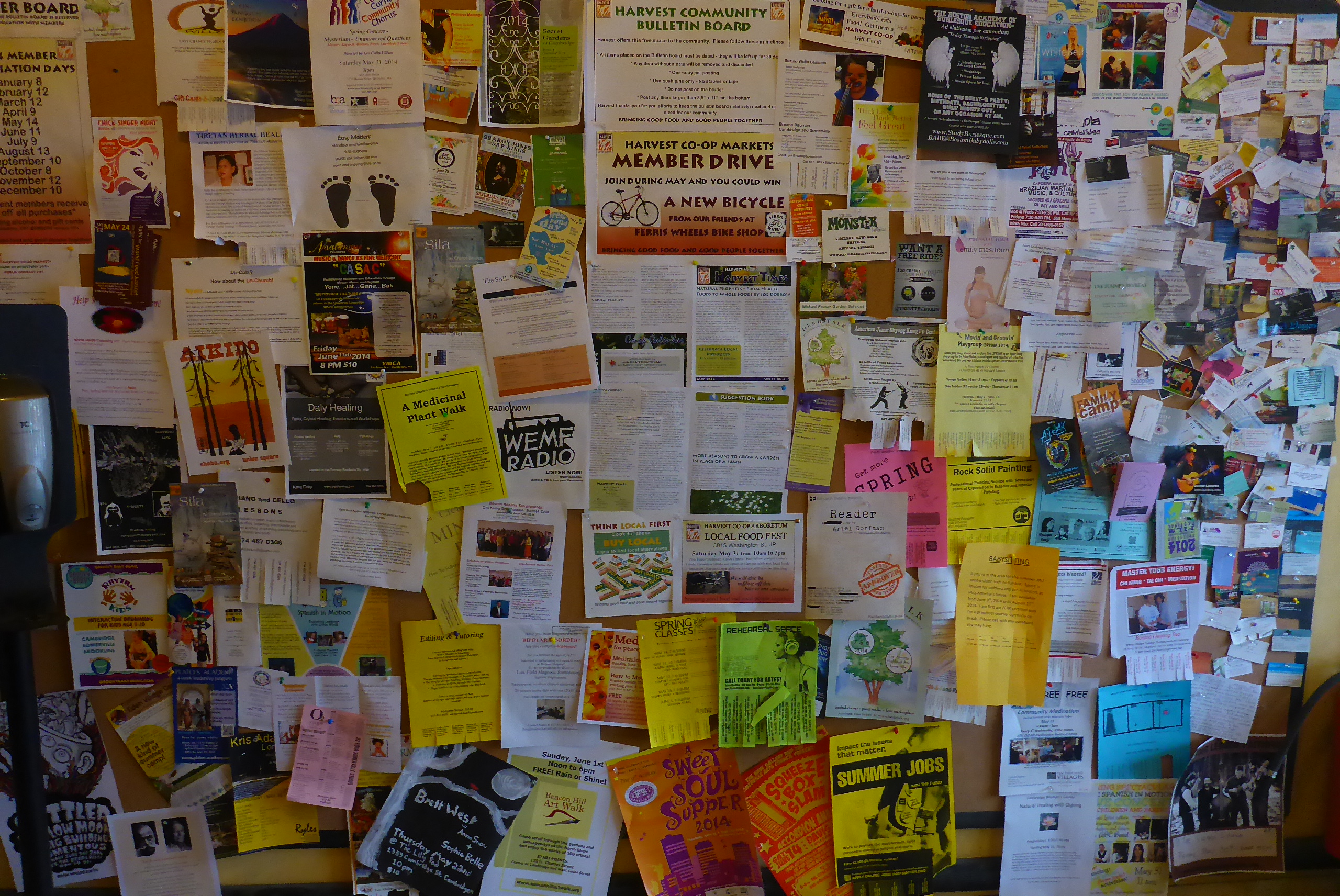
Letter Re: Heathkit Radios

Editor:

I disagree with the letter regarding the unsuitability of Heathkit (vacuum) tube radios for EMP protection. Let me elaborate:

  1. Lethal voltages: While you really don’t want to tangle with +700 VDC, the most lethal voltage in any radio is that which comes from the wall outlet: 120 VAC. AC fibrillates hearts (we use it for that purpose in cardiac surgery); DC defibrillates hearts (done that many times).
  2. Requires 120 Volts AC: Unless you get the 12 volt power supply (I have two). Or solar power / inverters.…right?
  3. No cooling fan: Well, they rarely need it! My primary rig is more than 40 years old and going strong! Digital modes do indeed have high duty cycle (though actually not 100%), so turn down that mic gain appropriately. Watch the specs on solid state rigs also; they may not be spec’d for high duty cycle either! Tubes show a nice cherry color; transistors may just quit.
  4. No easy way to turn down the power: It is possible if you know how to run the rig. For example, on the HW-101, see pp. 140-141 of the manual. If you adjust that mic/cw level control, you can pick any power you want!
  5. Yes, Heathkits are old. Yes, they may fail. Usually the same electrolytics that will eventually fail in your solid state rigs also. It is cheap to buy replacements on DigiKey. Tubes may be physically fragile, but electrically they’re far tougher than transistors or FETS. Try exceeding the max collector-base voltage and watch what happens! SWR can kill transistors! Tubes are often easy to find, whereas getting a replacement transistor can be a problem too, as there are so many of them. Costs? I own lots of both, so I know the prices. A new ICOM-718 is around $600, and then you have to buy the power supply; that money alone would purchase TWO complete Heathkit SB’s including power supplies. Vacuum tube rigs are actually inexpensive by comparison. A set of replacement tubes might run you about $120. Try buying replacements for your proprietary and single-run semiconductors!

I own probably four or five Heathkits and use two on a regular basis. I’ve already refurbished at least six, which are in service. I also own four wonderful ICOM HF rigs. Both types have their purposes. The writer missed a really important point though: when would it ever be safe to pull your EMP-fragile solid state rig out of its protective Faraday Cage? The unfortunate answer: never. There could always be another attack. Are you going to be willing to risk it? By comparison, long after my solid state rigs are fried, my vacuum tube rigs will soldier on, proven in EMP testing and published in QST. Both have their uses, but if EMP is your concern, vacuum tubes are your friend. – PrepperDoc


Odds ‘n Sods:

Migrants Committing Disproportionately High Crime In Germany – “Foreign nationals are thought to account for around 11 or 12 percent of the total population of Germany, but were over-represented in every area of crime. Illegal immigrants and asylum seekers account for around 2.5 percent of Germany’s population, but were also massively overrepresented.”

o o o

Multifuel Dirtbikes Developed for Special Forces – Sent in by G.G.

o o o

From Antonius Aquinas: Long Live the Flags of Dixie!

o o o

Obama just got one giant step closer towards creating a national gun registry – P.G.

o o o

Several dozen shootings in Chicago amid bloody holiday weekend – P.S.


Jim’s Quote of the Day:

“Trouble rather the tiger in his lair than the sage amongst his books. For to you Kingdoms and their armies are things mighty and enduring, but to him they are but toys of the moment, to be overturned by the flicking of a finger.” – Gordon Dickson, Tactics of Mistake


Notes for Monday – May 30, 2016

Today, Memorial Day, is a day of solemn remembrance in the U.S. of the many who have given their all for our freedoms. We thank those who are serving in our military and their families who have made sacrifices also, but most of all we want to honor those who gave their lives. These fine tributes were sent in by our readers:


Pat Cascio’s Product Review: Tactical Walls

If you’re like me, you hate it when someone starts out with “this is a true story” and you know it’s not. Well, I’m going to relate a true story. People who know me, know that I just don’t lie. If you tell your lie, you have to remember that lie and cover it up with another lie. I don’t have time to make up stories or tell lies, and those who know me know that. If they don’t want to hear the truth from me, then don’t ask me. Life is too short to live it based on lies.

812_PLS

Many years ago, when we lived outside of Ontario, Oregon, we lived in a house that was, at one time, an underground house. Only about a foot or two of it stuck up above ground level. As we understood, it was in the mid 1970s that whoever owned the house added a complete upper floor to it. The downstairs– the original underground house– remained pretty much the same, except a bedroom and a storage room was added. In the main room, I had my office and held martial arts classes twice a week as well as martial arts classes at three other locations.

Clock_Closed

I used to hide my guns all over the house (or maybe I “staged” them for ready access). I didn’t own enough firearms to justify buying a gun safe, so the guns were hidden. I looked for the better part of two years for a S&W Model 645 that I hid from myself. I thought maybe I lost it or perhaps traded it and didn’t remember doing so. It was driving me crazy, and in my case it was a short drive.

Clock_Open

I was writing for American Survival Guide magazine at the time, along with some firearm and knife magazines. I was expecting a check from ASG shortly before Christmas to help me do my Christmas shopping. Well, the check didn’t arrive and I contacted my editor. He was of no help. He was more than a little miffed that he didn’t get his annual $6,000 bonus before Christmas, so my meager $400 check didn’t much matter to him, and he told me so. The woman who cut the checks worked out of NYC and was gone for the holidays. There was no way to get me my check. It all came down to the fact that ASG was sold to another publishing company. That’s why my editor didn’t get his bonus. There was none.

DSCF0286

Fortunately, I was rearranging my office and when I moved a filing cabinet, there was that S&W Model 645, hidden under it. My luck was short lived. I ended up selling that gun to raise funds to pay for Christmas for the family. I did eventually get that long overdue paycheck, though long after the holidays.

This little story leads me to today. I still hide guns all over my house, but I know where they are all at. I’m within a couple steps of reaching for a loaded handgun or rifle any place in my home. The guns are “staged” ready to use at a moments notice. Between my German Shepherds, acting as my early alarm, I can reach for a gun in a second or two, in order to fend off any attacks. The important thing, as least to me, is that I remember where all these guns are, as does my family.

DSCF0272

Okay. This is a long way of introducing Tactical Walls, who produces everyday looking furniture that actually are designed to store (stage) firearms for ready use. Take the time to look over their website. You will be blown away at all the everyday looking products they produce that look like ordinary furniture and which a bad guy wouldn’t give a second glance at if they broke into your home while you were away at work. That’s nice!

DSCF0274

Tactical Walls sent me their small floating shelf and their rather large wall clock. Both products can conceal handguns, ready for use, inside of them. The wall clock can hold several handguns as well as a knife or two with some spare magazines, too. When I first received these two products, I intentionally did not read the directions on how to open them. I will admit that I was dumbfounded with the floating shelf. The wall clock, I figured out in a few minutes how to open, but the floating shelf stumped me, my wife, and our oldest daughter. So, we had to read the directions on how simple it was to secure a handgun inside and readily access it.

I requested both of these pieces of furniture in all black, to match some of our furniture in our living room. They are available in a variety of colors to match your home’s décor. In the past, in another season of life, I worked as a professional photographer. I forgot how difficult it is to photograph items that are all black. My oldest daughter and I spent the better part of a Saturday afternoon attempting to get some great pictures. We only managed to get a few usable pics, though, so some of the pics you see with this article are from Tactical Walls.

DSCF0313

First up is the 1410M Tactical Wall Clock, and it can be had in different colors and with different clock faces on it, too. As mentioned, it is a rather large clock. The hidden compartment inside is 14” wide by 10” high. It can easily hide a couple of handguns with spare magazines and a knife or two. The clock is non-locking, but it has a simple Velcro method of attaching the clock face to the hidden compartment, and you simply press on the clock face at the right area, and it opens so you can retrieve your weapons. This one sells for $175 retail, and the clock is actually a working clock, too.

The floating wall shelf is the model 812PLS, which retails for $179. It has an 8” deep by 12” wide hidden compartment, in which you can store one handgun. It is foam lined, and you need to cut the foam to fit the handgun you want to hide in it. It is a locking storage device, and I don’t want to give away any secrets, but it is a magnetic lock, and you can hide the key behind a picture that you put on the shelf. Then, inside of a second or two, you can open the hidden compartment to have access to your weapon.

Now, keep in mind that these are not gun safes of any sort. They are designed to stage your firearms for rapid access. So, take care in selecting any of the Tactical Walls products. If you have small children at home who aren’t familiar with firearms and aren’t aware of firearms safety, you might want to give serious consideration to which Tactical Walls products you purchase. Even if you have a gun safe, it is still a good idea, to my way of thinking, to have a firearm or two that you can readily access. I know, I know; some locales have passed stupid laws that require you keep your firearms unloaded and/or locked up at all times. This does the gun owner no good if someone is kicking in your door or is already in the house.

DSCF0314

I know many other gun writers who are like me in that they have loaded firearms “staged” at various locations throughout their homes and ready for use. Yes, they do have gun safes, too, to secure all the collectible and valuable firearms. I own no collectible firearms, and many would be surprised at how few firearms I actually own. Many guns pass through my hands for testing for articles, and as much as I’d like to keep them all I simply can’t afford to do so. So they are either returned to the gun company or I allow my local FFL dealer to purchase them and send a check to the gun company. This is a fairly common practice with many gun writers. The FFLs we use to receive our gun samples are doing us a service, and they charge us very little for doing the paperwork so we can get the guns for testing.

In my home, I still have firearms that are “hidden” almost in plain view and ready for use. However, the Tactical Walls products have just added another layer of “secrecy” to hiding some guns in plain sight.

The Tactical Walls products I received for testing were very well made and worth the selling price, if you ask me. A lot of thought went into designing these products, and they are executed flawlessly, too. Once again, take a close look at the Tactical Walls website. I’m betting you’ll find more than a couple of their products you’ll want for your home. My wife and oldest daughter have their sights set on getting them, too.

– Senior Product Review Editor, Pat Cascio


Letter Re: Venezuela

Hey, SurvivalBlog,

With the recent post Letter Re: Venezuela eating worse by J.D., I thought I would chime in, as I have been researching the situation in Venezuela recently. While I am not going to attempt to draw a conclusion for the situation in Venezuela, I would like to present everyone with some of the information I have found interesting with how the narratives have changed over the years and attempt to answer one of J.D.’s questions.

2005

In March of 2005, an article was written discussing that Venezuela’s environment was under stress.

2007

Former President of Venezuela, Hugo Chavez, began projecting the narrative that Venezuela was going to lead the way to save the environment by investing in energy conservation efforts.

2009

Electricity shortages began with power cuts lasting up to six hours at a time. Venezuela hosts the world’s third largest hydroelectric dam, which produces 60% of Venezuela’s power, with 74% of their power being generated by hydroelectric technology. The narrative during 2009 was comprised of two causes for energy shortages– low water levels due to drought and under-investment of infrastructure by the government.

2011

More campaigns of energy conservation with the narrative stating the cause of the shortages was a result of “rapidly growing demand for electricity that has resulted from economic growth and poverty reduction.” In short, this narrative states that because Venezuela is experiencing prosperity at such a rapid rate, the government cannot keep up with infrastructure investment.

2013

Venezuela experiences its second major power outage. The narrative from the successor of Chavez and the man who is the current president, Nicolas Maduro, stated the blackout was caused by political sabotage of his political opposition.

The narrative shifted slightly and resulted with Maduro expelling three U.S. diplomats by publicly stating, “They were involved in a widespread power outage earlier in the month. ‘Get out of Venezuela,’” he says, listing several names. “‘Yankee go home. Enough abuses already.’”

Also in 2013, the attorney general of Venezuela called on people to “remain calm, not to fall for provocations, and not to be afraid of the ‘alleged’ food shortage”, during which “hoarders” were to be arrested and imprisoned.

As events unfolded with time, there was no “alleged” food shortage but rather an actual food shortage.

2015

These two articles cover the same story. However, the narratives are very different. If you have not picked up on the concept by now, the narratives that surround Venezuela have changed very rapidly. While these two articles address Obama’s sanction on Venezuela, they serve as a good example of how narratives shape understanding.

Aljazeera

MSNBC

For those of you who are interested in individual accounts of what life has been like for people in Venezuela, consider reading these first-hand accounts.

Reddit comments

Venezuela from an outsider

Together, all of these stories attempt to detail a larger picture. Notice how the narrative changed over a ten year period? The narrative change could be a result of a number of reasons. It could be conspiracy and/or a government attempt to control a long-term issue by shaping ideology with short-term narratives. Or, perhaps, the narratives are a natural response to shortsightedness on the government’s behalf? Regardless, the end result is what many of us are interested in. But, it is important to understand that there is rarely a single cause that creates situations like the one in Venezuela. More likely than not, such a situation is caused by many issues. It could prove useful to explore these narratives with an attempt to understand if any relationship or correlation exists to other parts of the world. The world is full of examples within the past decade, from Syria, Ukraine, Tunisia, Libya, Egypt, and many more. Of course, every example I just mentioned are going to be different for different reasons. There also may be many similarities. One similarity that seems to be clear is that governments will say anything in an attempt to maintain order, which allows them to retain their power in an orderly fashion.

Here is one such example

To address J.D.’s question that served as inspiration for my reply, let us critically reflect on the question. “There’s lots of foods there that can be reproduced. Seeds in the veggies can be planted, beans can be planted, coax seeds from the onions and carrots, plant a potato, etc. Are they doing that?”

Most of the stories that I have read on Venezuela are pretty much detailing life of people from urban centers. This suggests that many of these urban dwellers may not have the knowledge and skill to grow food. They most likely may not have access to any safe land that allows them to grow food. Typically, water is required to grow food, and it is clear that Venezuela is experiencing a water shortage, for whatever reason. Also, from the first story linked in this post, it details that many of the waterways in Venezuela are polluted. This suggests that there is a probability that if a person had access to water, the water is not clean water. Such an example details that the crops could then become contaminated, which could lead to stunted growth of the crop, illness, and potential death later in life for both the crop and the person consuming the crop. What is more, planting food today does not really address hunger until it is time to harvest, which is usually months away. Agriculture on a large and even a small scale requires organization and foresight, and let us not forget to include the criminal element and the food riots that have been reported just this month alone. These people are hungry, and they will more than likely be ready to kick your face in for that potato that is not even fully ripe yet. Add in the inflation rate that Venezuela is experiencing and any surplus of food that could be harvested will most likely be worth more tomorrow than it is today. This scenario ultimately suggests that their system of organizing is pretty much over. This explains why it is difficult to grow crops. What is more, if you are lucky enough to overcome all these obstacles and create a surplus that you decide to keep, you could be classified as a hoarder, arrested, and placed in jail as one of the articles above states.

A more recent article accounts that urban dwellers are hunting dogs, cats, and pigeons as the food shortages continue.

From my perspective, what is taking place in Venezuela is nothing short of a real-time societal collapse. In this example, shortages and unrest have been taking place for many years and the government is still acting as a source of power through violence. But, again, the narratives and the early issues that have exacerbated the Venezuela unrest have been taking place for over a decade. What is more, I am consistently reminded, when I read these stories and others that are similar, how important applying our preparedness skills actually are. Just simply buying a product to store is not enough. As J.D. stated, “The time may come when we too would need to be very resourceful to increase our food supply.” Depending on our understanding, that time could very well be right now. As it is important to fully acquire the skills we value before they are needed.

I have simplified many talking points in this post. My goal is only to spur critical thought and discussion using the Venezuela example.

– N.E.


Recipe of the Week: Crock Pot Noodles, by J.G.

Ingredients:

  • 1 to 1-1½ lb. ground beef or turkey
  • 2 pints pizza sauce
  • l can mushroom soup, slightly thinned
  • l lb noodles
  • 4 cups mozzarella cheese, shredded
  • 1 medium onion, chopped

Directions:

  1. Brown meat in skillet.
  2. Cook noodles until about half done.
  3. Layer in crock pot (in this order): a portion of meat, noddles, sauce, cheese, soup, onions
  4. Repeat layers until ingredients are used. Do not stir.
  5. Cook on low for 4 hours.

o o o

Useful Recipe and Cooking Links:

Do you have a favorite recipe that would be of interest to SurvivalBlog readers? Please send it via e-mail. Thanks!