Economics and Investing:

Millennials and living at home: For the first time on record the most common living arrangement for young adults is living with a parent.

o o o

This Is Not The America My Parents Immigrated To In 1957

o o o

Euro 2016 chaos looms as French union calls for strikes in all 10 host towns and cities

o o o

Volatile Bottoming Pattern in Metals – “Because most analysts still refuse to recognize the artificial nature of gold’s bear market, they aren’t going to navigate the bottoming pattern correctly. The pendulum is going to swing wildly back and forth for a while during the bottoming process until price calms down and resumes the natural bull market trend in earnest.” – T.C.

o o o

SurvivalBlog and its editors are not paid investment counselors or advisers. Please see our Provisos page for details.


Odds ‘n Sods:

I just noticed that our spin-off website, SurvivalRealty.com, now has 242 listings– an all-time high! Congrats to my #1 Son and his wife for making the site such a great success. By providing very inexpensive advertising, they have brought together many dozens of retreat property sellers and buyers– all without charging a dime in commissions. – JWR

o o o

13, right now – Generation Z (or why I hate smart phones) – P.S.

o o o

From lifeHacker: The Benefits of Writing by Hand Versus Typing – A stark contrast to the Generation Z link. – P.S.

o o o

The Oddest, Most Ridiculous and Unsettling Anti-Campus Carry Editorial In the History Of the World Ever – T.P.

o o o

The progressive assault on American icons continues: New Campaign Aims to Make Captain America ‘Gay’?

o o o

The Senate Just Took “A Hatchet To American Liberty”


Notes for Sunday – May 29, 2016

As we approach Memorial Day this year, it is fitting that on May 29th, 2003, 35 states declared it to be Bob Hope Day, as he turned 100 years old. Bob Hope had a longtime role as an entertainer of U.S. armed forces all over the word. He was too ill to attend the ceremonies so three of his children attended the naming ceremony along with some of his younger show-business colleagues, including Mickey Rooney.

o o o

I noticed one of our advertisers, Infidel Body Armor, is having a sale on Smoke Grenades – only $14.99 each. You do have them in your preps, right?


Tea for Two Hundred, This Year and Next- Part 2, by Sarah Latimer

While “tea” is technically reserved for the plant camellia sinensis, in common language we often call many herbs by the name “tea”, especially when they are capable of being brewed into a flavorful beverage all by themselves. Additionally, there a many plants whose fruits, leaves, and flowers can be grown to add a variety of enjoyable flavors to traditional tea. Here are some we grow and use at our homestead:

Chamomile

Chamomile is probably one of my top three flavors for tea, and it has health benefits as a bonus! It has so many wonderful benefits besides being a flavor for tea. It is a relaxant and is often used in baby’s baths and for ointments, lotions, and soaps because it of its soothing properties. It has a sweet, delicate aroma, which means that it doesn’t require much, or any, sweetener. We use the flowers by themselves in tea for a straight herbal tea, or it can be used with black or green tea as a flavoring. Either way, it is extremely pleasant. You just might want to skip the green or black tea if you are drinking it right before bed. Chamomile flowers (fresh or dried) alone, seeped for ten minutes in hot water, make a tea that relaxes the body and mind for a restful night’s sleep or can sooth anxieties before a job interview, speech, or other stressful event. The small white flowers with full pin-cushioned yellow centers on delicate, lacy-leafed stems are attractive in the yard or flower bed. too. They’re not only attractive to humans but bees are attracted to chamomile and will use them to produce excellent honey, so it’s a win-win for bee keepers. Chamomile comes in two types– Roman and German; they are so similar that I can’t really tell the difference. The annual variety self seeds prolifically, so if you don’t till up your soil too much but let the dried flowers fall, it should come back the next year just fine. I have volunteer plants come up even where we lightyly till and some that grow from blown seed outside the garden boundaries, which are left to produce. They are a gift that I appreciate and not considered a weed at all! Just cut or break the flower tops off the stems, lightly rinse in a fine mesh collander and allow to dry thoroughly before storing or use fresh right away. Like most things, the fresh is best.

Lemon Balm

Lemon balm is a perennial bush. It is in the mint family, but they do not share the aggressive root system of other mints. If allowed to seed, it will likely spread and those seeds germinate into a carpet of lemon balm plants in the spring. Cut the flowering stems before they turn into seed seed, unless you want a field full of lemon balm. The lemon balm bush grows in a mounded shape with a thick covering of medium-sized, spring green-colored leaves that have a distinct lemon scent. We generally use this in dry form from new leaf cuttings. We are able to trim each bush several times each growing season, and we’ve been successful in growing it in large pots also. I prefer to freeze dry lemon balm, but I have also successfully used the dehydrator as well as used it fresh.

Lemon Grass

This is an oriental grass with distinct lemon flavor, though a bit different than lemon balm. Lemon grass seems to have a bit of a tart flavor, where the lemon balm is sweeter to me. Properly given the name “grass”, it does grow in long grass spears but from bulb-like roots rather than runners. The grass spears are the part used for tea, not the bulb or root. We have been successful in growing this in pots as well, and have used this fresh and dried. It is also used to calm upset stomachs, and we have combined it with ginger root for nausea but had good success with the ginger root alone, too.

Peppermint and Spearmint

These two plants–peppermint and spearmint– look almost identical but have a distinct aroma and flavor. I like both but have found that we prefer the peppermint over the spearmint. Both are aggressive growers, dropping seed and spreading a strong root system beyond their beds, once established. Consider putting them in an area where they are bounded and won’t interfere with other plants. These mints are very useful, fresh or dried, in tea and also in ointments, soaps, and in pest repellant. Bugs and rodents find the odor disgusting, while we like it. It is believed to induce improved memory and alertness and aid in the relief of irritable bowel syndrome, as an antispasmodic. It’s also an antibacterial, so I use a drop of peppermint oil in my cleaning spray. Rubbing mint on you can help deter ticks, fleas, and bugs. We’ll discuss how we like to combine it with other flavors for tea in another section of this article.

Lavendar

Lavenderflowers are nice flavorings for tea. Lavender can be infused in oils that are then used in bug repellant, soaps, deodorants, shampoos, household cleaners, and so may other useful products. Lavender has antiseptic and anti-inflammatory properties and its aromatherapy produces a calming effect, so its flowers can be used in bath water to sooth irritated skin after injury or abrasion. There are other medicinal purposes for lavender also. In addition to consuming it in the form of tea, it has long been used in the kitchen herbal blend known as Herbs de Provence, and I even saw that some Sonic Drive-in restaurants are now using lavender flower petals in a wildberry-lavender milkshake. It is really catching on!

Calendula

This beautiful yellow flower has been nicknamed “pot marigold” because of its use in German soups and stews, but Calendula has also been used in teas for a long time. It adds a delicious flavor and pretty color to tea. It is also very useful in alternative medicine, as it has been used topically and fight inflammation, viruses, and bacteria on the skin surface. It appears that the presence of these dried flower petals increases blood flow and oxygen to speed healing of the area where they are placed. We grow a sizeable bed of these beautiful flowers and dry their petals for future use. They’ve not only been tasty but have helped with sprained digits and healing various wounds as part of salves and in infused oil also.

Strawberries

Well, this is obvious. The dried strawberries provide a nice flavor to the tea, as do strawberry leaves. Dried strawberry leaves, which might include some stems and flower petals, are primarily used to relieve gastrointestinal distress and joint pain. They also contain essential minerals and vitamins. We sometimes have tiny strawberries mature that just seem too small to remove the crowns and stems, so those can be rinsed and dried for delicious tea flavoring.

Blackberries

Again, the dried blackberry fruit can be used in tea like strawberries, but most often we use the dried leaves. Steeping the leaves for just a few minutes produces a mild sweet flavor for our tea, but leaving it longer actually produces a fruity black tea flavor without any black tea or its natural caffeine! While, I don’t want to harm my blackberry bushes, at the end of the growing season as the leaves are just starting to turn, we strip the leaves and let them dry. Additionally, through the growing, we randomly pick some leaves to dry. This is a very popular tea and tea flavor ingredient in our household as well as among our friends.

Blueberries

The dried blueberry fruit can be used in tea and the red fall leaves can also be used for tea.

Peaches

Again, the dried fruit and the leaves can be used for tea flavoring. Peach is a popular flavor in our household also.

Apples

Dried apple pieces are used in tea blends.

Roses/rose hips

Rose petals and the fruit of the rose bush– rose hips– are used in tea blends. Rose hips are great sources of Vitamin C and a means that the early western settlers found for preventing scurvy during the brutal winter months when fruits and vegetables were unavailable. (This is always a good thing to remember as a survivalist, in the event you are lost, have a cold, and come upon an abandoned home with rose bushes that have rose hips on them. If you can boil some rose hip tea by opening the rose hips and simmering them in the water for a few minutes, you’ll have a source of Vitamin C to help your body recovery better.

Borage flowers

The beautiful blue borage flowers are filled with Omega vitamins and have a mildly sweet and nutty flavor. We prefer to use them as a garnish on our salad, but a few can also be used in tea for flavor as well. Additionally, borage stimulates production and flavor of some garden vegetables, especially tomatoes, and deters some pests.

Nasturtium flowers

These edible flowers can be used in tea. Like borage, nasturtium are edible flowers that deter pests in our gardens while offering us wholesome goodness and a pretty garden feature.


Letter Re: Long Distance Vision and Night Vision

Dear Sirs,

I really enjoy reading your blog, but I have a question to ask you. I am blind in my right eye and I am having trouble trying to find a long distant vision and night vision for a one-eyed person. Do you have any suggestions? – R.H.

HJL’s Comment: The PVS-14, carried by several of our advertisers, is an excellent choice for night vision. It is a monocle and is used on only one eye. It is commonly worn on the dominate eye, allowing the non-dominate eye to be used for peripheral vision. Without the use of your second eye, you will not have this peripheral vision, so you will need to plan accordingly. Ready Made Resources and JRH Enterprises currently have great prices on them.

You can still use regular binoculars for long vision, but you may want to look into a regular monocular type for that as well, or you can go full nautical with a hand-held telescope. My personal favorite is an antique brass telescope that belonged to my grandfather. It is not very resistant to abuse though.


Economics and Investing:

Class of Underemployed: Nearly 50 percent of recent college graduates are working in jobs where no college degree is required.

o o o

A Critical Juncture In Gold And Silver Prices

o o o

Fed’s ticking financial time bomb – Sent in by P.S.

o o o

Rauner Vetoes Bill Reducing Pension Contributions Despite Massive Underfunding, Chicago Mayor Whines – Expect more of this to come in the years ahead. – P.S.

o o o

SurvivalBlog and its editors are not paid investment counselors or advisers. Please see our Provisos page for details.


Odds ‘n Sods:

New sophisticated ransomware attack targets 100 million people – Sent in by DSV.

o o o

The superbug that doctors have been dreading just reached the U.S. – “The antibiotic-resistant strain was found last month in the urine of a 49-year-old Pennsylvania woman.”

o o o

Another privately owned drone is shot down – “Caught by surprise” is the term the pilot used, but he also states that he moved closer to people on the ground specifically to identify them. – T.P.

o o o

Arizona hiker dies after being stung by 1,000 bees – W.C.

o o o

Another reason to avoid social media? Salvadoran gangs use Facebook to track down victims – B.B.


Hugh’s Quote of the Day:

“…And when he had opened the book, he found the place where it was written, The Spirit of the Lord is upon me, because he hath anointed me to preach the gospel to the poor; he hath sent me to heal the brokenhearted, to preach deliverance to the captives, and recovering of sight to the blind, to set at liberty them that are bruised, to preach the acceptable year of the Lord. And he closed the book, and he gave it again to the minister, and sat down. And the eyes of all them that were in the synagogue were fastened on him.” Luke 4:17-20 (KJV)


Notes for Saturday – May 28, 2016

Today, we present another entry for Round 64 of the SurvivalBlog non-fiction writing contest. The nearly $12,000 worth of prizes for this round include:

First Prize:

  1. A Tactical Self-Contained 2-Series Solar Power Generator system from Always Empowered. This compact starter power system is packaged in a wheeled O.D. green EMP-shielded Pelican hard case (a $1,700 value),
  2. A Gunsite Academy Three Day Course Certificate that is good for any one, two, or three day course (a $1,195 value),
  3. A course certificate from onPoint Tactical for the prize winner’s choice of three-day civilian courses, excluding those restricted for military or government teams. Three day onPoint courses normally cost $795,
  4. DRD Tactical is providing a 5.56 NATO QD Billet upper with a hammer forged, chrome-lined barrel and a hard case to go with your own AR lower. It will allow any standard AR-type rifle to have a quick change barrel, which can be assembled in less than one minute without the use of any tools and a compact carry capability in a hard case or 3-day pack (an $1,100 value),
  5. Gun Mag Warehouse is providing 20 Magpul PMAG 30-rd Magazines (a value of $300) and a Gun Mag Warehouse T-Shirt; (an equivalent prize will be awarded for residents in states with magazine restrictions),
  6. Two cases of Mountain House freeze-dried assorted entrees in #10 cans, courtesy of Ready Made Resources (a $350 value),
  7. The Ark Institute is donating a non-GMO, non-hybrid vegetable seed package (enough for two families of four) plus seed storage materials, a CD-ROM of Geri Guidetti’s book “Build Your Ark! How to Prepare for Self Reliance in Uncertain Times”, and two bottles of Potassium Iodate (a $325 retail value),
  8. A $250 gift certificate good for any product from Sunflower Ammo,
  9. KellyKettleUSA.com is donating an AquaBrick water filtration kit with a retail value of $250, and
  10. Two cases of meals, Ready to Eat (MREs), courtesy of CampingSurvival.com (a $180 value).

Second Prize:

  1. A Glock form factor SIRT laser training pistol and a SIRT AR-15/M4 Laser Training Bolt, courtesy of Next Level Training, which have a combined retail value of $589,
  2. A transferable certificate for a two-day Ultimate Bug Out Course from Florida Firearms Training (a $400 value),
  3. A Model 175 Series Solar Generator provided by Quantum Harvest LLC (a $439 value),
  4. A Trekker IV™ Four-Person Emergency Kit from Emergency Essentials (a $250 value),
  5. A $200 gift certificate good towards any books published by PrepperPress.com,
  6. A pre-selected assortment of military surplus gear from CJL Enterprize (a $300 value),
  7. RepackBox is providing a $300 gift certificate to their site, and
  8. Safecastle is providing a package of 10 LifeStraws (a $200 value)
  9. American Gunsmithing Institute (AGI) is providing a $300 certificate good towards any of their DVD training courses.

Third Prize:

  1. A Royal Berkey water filter, courtesy of Directive 21 (a $275 value),
  2. A $245 gift certificate from custom knife-maker Jon Kelly Designs, of Eureka, Montana,
  3. A large handmade clothes drying rack, a washboard, and a Homesteading for Beginners DVD, all courtesy of The Homestead Store, with a combined value of $206,
  4. Expanded sets of both washable feminine pads and liners, donated by Naturally Cozy (a $185 retail value),
  5. Two Super Survival Pack seed collections, a $150 value, courtesy of Seed for Security, LLC,
  6. Mayflower Trading is donating a $200 gift certificate for homesteading appliances,
  7. Montie Gear is donating a Precision Rest (a $249 value), and
  8. Two 1,000-foot spools of full mil-spec U.S.-made 750 paracord (in-stock colors only) from www.TOUGHGRID.com (a $240 value).

Round 64 ends on May 31st, so get busy writing and e-mail us your entry. Remember that there is a 1,500-word minimum, and that articles on practical “how to” skills for survival have an advantage in the judging.


A Micro Solar Power System With Maximum Utility, by B.C.

Necessity being the mother of invention, I recently stumbled backwards onto an inexpensive and truly totable way to power two-way radios, shortwave, and other receivers; charge smart phones and iPads; provide lighting; quickly purify water on the go; keep night vision functional; enable electronic security systems; and pump rainwater to a gravity tank, while protecting all these functions from EMP in the interim.

I will quietly be turning 50 next month. I joined the survivalist movement in the early 1980’s, at the tail end of that upswing of interest in such things. Vietnam was still fresh in our minds, and the cold war in full gear. There were movies, magazines, and books but not the saturation made possible by the Internet today. I still have issues of Mother Earth News that I saved from the seventies and a survival book copyrighted in 1978. Having endured the Blizzard of ’78 in Ohio as a child, Hurricane Hugo in college, and been hit by the Blizzard of ’96 in Atlanta, the day after arriving for graduate school I had long recognized the necessity of radios for listening to broadcasts and so I accumulated many different ones powered many different ways. I even had a pocket shortwave receiver and hand-held scanner. Despite reading several good articles on your site over the years about the benefits of Ham radio, however, I did not recognize my need for transmitting beyond my FRS (Family Radio Service) bubble pack radios, until I began to build an off-grid cabin in the mountains of Appalachia, where I can only get a cell signal by hiking to the top of the mountain. In pursuit of OPSEC, I decided to forgo a mailbox and driveway dragging in building materials from the gravel dead-end public road across a utility easement and single-handedly building my tiny house on the rear of my property, which I was comfortable doing until I got to the steep pitched roof that allotted for my sleeping loft.

I was standing there one autumn day on the loft I had built first so I could stand on it while constructing the roof rafters before just tilting them into place. I was looking down through the hardwood forest at the rooftops of a few homes I could see in the valley when it occurred to me that if I fell off this roof no one would hear me scream; I could not call 911, because there is no cell service, and it is a quarter-mile crawl to the Jeep after which I have to navigate a locked gate. I went home that day and immediately ordered a Chinese starter radio and spent ten days on HamExam.org learning what I needed to know to pass the technician and general class tests in one sitting. I had used commercial radios as a firefighter and while running a high adventure outpost for the BSA, plus I had previous hobby electrical experience. So, when it was time to start sheathing the roof, I was carrying a radio programmed to contact the local fire department on their own repeater should for some reason my fall protection fail or I was unable to extract myself hanging from it after an accident. It even has a siren function so they could zero in on me.

Now to a man with a hammer everything is a nail, so I immediately started looking for other uses for my new hobby. For over forty years men and their sons from my hometown have been camping in the midst of the wilderness area of our national forest. Many of those who started this tradition are getting old and without the addition of a mule train that operates in the backcountry could no longer attend. A few have already died back in our hometown. When they do, we bring in climbing spikes and place a hand-carved plaque high in a tree over our campfire area where the rangers will not bother it. In the event of a medical emergency, it is a six-mile hike uphill to the parking lot, then another ten mile drive to hit a cell tower, but with my handheld Ham radio and N9TAX roll up antenna I can contact emergency services using the frequencies and PL tones provided to me by the emergency management director for that county saving valuable time and possibly a life, should one of of our company have a medical emergency.

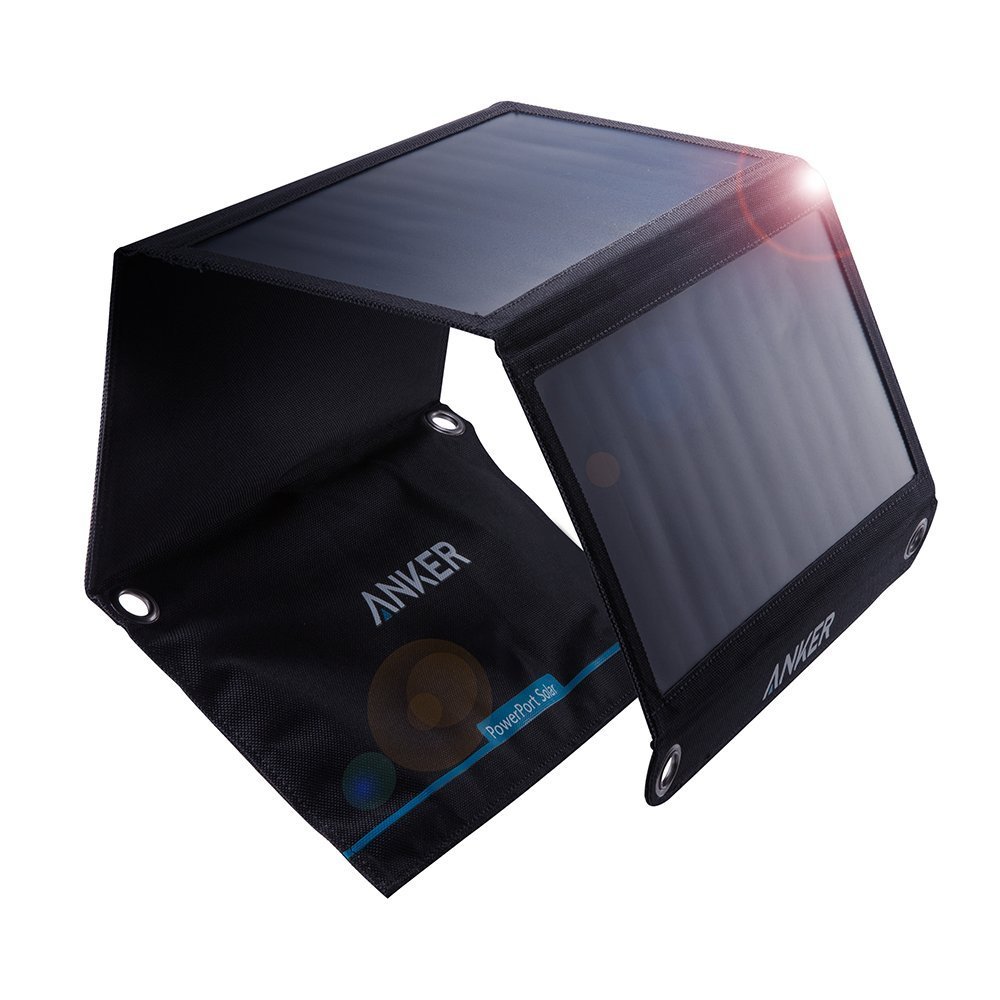
When not being used for those purposes, my Ham radio resides in a waterproof bag inside a metal container within my auto emergency kit along with a 12-volt adapter in case of a breakdown in one of the many parts of my state without cell service, but how would I power it if I had to be away from the vehicle for a period of time exceeding its rechargeable battery pack? AA and AAA battery boxes are readily available for Ham radios and rechargeable batteries are better than ever, but I needed a lightweight and reliable method of charging them. After briefly considering hand crank generators I focused my search on solar chargers and discovered those designed to charge smart phones are lightweight, plentiful, and varied. After days reading reviews, I opted to match a folding 21 watt Anker Powerport dual port USB charger with a couple of SunJack 4 AA/AAA USB chargers for a total weight of about 18 ounces. Including a dozen AAA NiMH rechargeable batteries the total cost was under $100. This configuration will charge eight batteries in about five hours of sunlight, leaving enough time to recharge my iPhone and ipad simultaneously on one of our many sunny days. It is powerful enough to still work even under full cloud cover, as long as they are white and fluffy cumulus clouds rather than dark storm clouds. After forgetting my cigarette lighter adapter, it recently charged my iPhone on the dash of my Jeep while driving down the interstate on a cloudy day. Not only do the AAA rechargeable batteries I selected fit into my Ham radio battery pack, but they will also power LED flashlights, FRS radios, portable security alarms, a cell/smart phone backup charger, and with lightweight plastic adapter shells, my AA devices like shortwave radio, night vision monocular, a Steripen Classic water purifier, and so much more. For electronics that require higher voltages, I purchased several 4 x AAA battery boxes, which by wiring in series and/or using a dummy battery (I use a 1/4” hex bolt) can produce between 1.2 volts and 24 volts DC. They can also be wired in parallel for the higher wattages necessary to power appliances like my mobile CB radio or Zodi battery-operated water pump. Are you thinking all these electronics would take up an entire bug out bag? I agree. However, also understand that from the Great San Francisco Earthquake to recent refugees traveling from Syria to Germany (like this guy), in most cases the majority of the trip is not on foot for those with the means to hire alternatives. While the media focuses on the wretched refuse waiting at border crossings, there is a cottage industry providing chartered planes to refugees who can afford to flee in style and land in their country of choice. For this reason and the fact I’m in a rural area not at risk of hurricanes, tornadoes, earthquakes, riots, and without nuclear reactors, I have a separate pack for my portable electronics. I fill up quart Ziploc freezer bags with one or more electronic devices, which I wrap in aluminum foil, write a description of the contents, and place the bag in the daypack. I place that in a larger bag with a metal layer and store it in a cardboard lined 55-gallon steel drum with clamp-on lid atop larger devices containing electronic parts that are also electrically isolated. That sits in a metal shed behind my house with a metal subfloor. Depending on one’s opinion on EMP, that may be too little or too much, but I mostly used what I had so it cost very little and adds only a minute to my response time after I’ve left the house. The $15 steel drum was originally purchased for my spare wood stove kit, and it can still be used when necessary.

While all the electronics I store in the EMP bag will not fit into a single reasonable bug out bag, many of them will. In the rare event we need to walk out of here, they will be distributed between other members of my household. They are much smaller today than the Vietnam era walkie-talkie G.I. Joe held in his kung fu grip when I was a child in the 70’s. Some space and weight is offset by substitution. My iPad mini, for example, weighs only 11 ounces, and its YouVersion app lets me download translations so I don’t need Internet access. This frees up over a pound, when compared to the Bible I used to carry in my backpack, leaving plenty of room for electronic books, manuals, schematics, and family photos that I would not be able to carry at all. Electricity has always been a labor saver– a force multiplier. Whether it’s radio communications replacing message runners, portable alarms reducing the number of sentries, faster water purification when on the move, or portable plans and schematics to start rebuilding infrastructure, electricity and electronic appliances are worth preserving as long as possible.


Memorial Day: Give it Meaning!

This weekend we celebrate Memorial Day (originally called Decoration Day), a day of remembrance for those who have died serving in the military of the United States of America.

B-24-PICT1730

In my family, we think especially of my Great Uncle Robert Kinsella, who died when his B-24D bomber “Punjab” was lost on a bombing mission over Rabaul in the South Pacific, on November 16th, 1942. It was the lead bomber on the mission. Both Group Commander (Colonel Arthur Meehan) and the Squadron Commander (Major Raymond Morse) were on board.

Memorial day is more than just a three day weekend with BBQs, folks! – JWR


Letter Re: Using EMP-Hardened HF Ham Radio

Hugh,

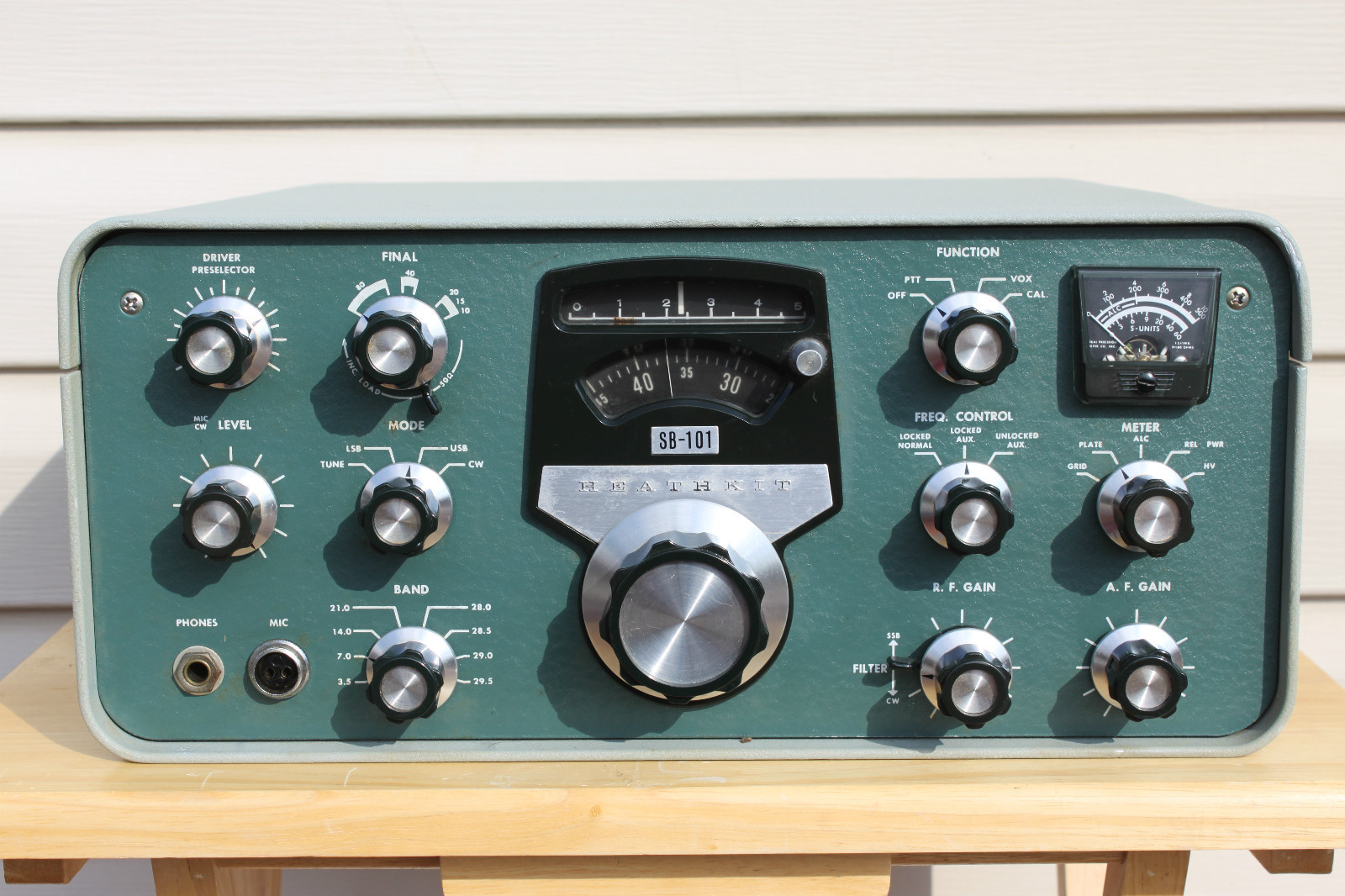
I strongly recommend against using any Heathkit rig for an emergency radio. There was one solid state Heathkit but it was a rebadged, factory assembled Yaesu. All others were built by an individual, whose attention to detail you most likely have no idea about. They are known in the hobby as “GRIEF kits” for a GOOD reason. They fail – early, and often. They have too many disadvantages for the emergency backup purpose. Besides all the ones mentioned by the original author:

  • They have high (LETHAL) voltages inside.
  • They require 120V AC power.
  • They have no cooling fan on radio, nor power supply, and these digital modes are 100% duty cycle on transmit.
  • They have no easy way to “turn down the output power”, and hence avoid detection (OPSEC), and save precious (AC) power.
  • They are old, and WILL fail. (Did I mention that before?). Tubes are fragile, if one needs to transport the rig. Tubes themselves are becoming increasingly hard to find, and costly, and it adds to the cost of a set of spares (you WILL have spares, right?)….you will soon approach the cost of a modern, solid state radio that runs on a 12V battery.

There are many more disadvantages, but these are the few that immediately came to mind as I read the article. The use of vacuum tubes is the ONLY advantage I can see the GRIEF kits have over a modern solid state radio, for the proposed use. My proposed solution is to buy a modern rig, and put it in an EMP mitigating enclosure when not in use. Or, using the prepper credo “Two is one, one is none”. Better yet– keep one in the EMP mitigating container. Make it the same as the radio you use every day.


Economics and Investing:

S&P Significant Low has Occurred – NOT Likely! – “Of course this time might be different, but it seems wise to consider the possibility of a substantial S&P 500 Index drop in coming months.”

o o o

Why $50 Oil Is Here To Stay – “As oil prices hit $50, oil traders are trying to answers the million dollar question: will U.S. drillers turn the taps back on?”

o o o

Video: Brexit – The Movie – a crowdfunded film that presents the case for Britain to leave the EU on June 23rd. – P.S.

o o o

Greece’s Journey to Redemption Remains a Long One After Aid Deal

o o o

SurvivalBlog and its editors are not paid investment counselors or advisers. Please see our Provisos page for details.


Odds ‘n Sods:

Facebook Will Now Track You and Force Feed You Ads Even If You Don’t Use It – DSV

o o o

A warning to Canadians via video: S-223 Canada’s New Gun Control Bill

o o o

Senate bill would let FBI read your emails without a court order – “All the agency would need is a National Security Letter, which lets the FBI get information from companies about their customers without alerting the person being investigated. Currently, the FBI can access phone records that way, but not emails.” – B.B.

o o o

The inmates are indeed running the asylum! Oberlin Students Demand Abolition Of Midterms, Grades Lower Than C – PLC

o o o

A critique on Venezuela: Venezuela and the Silence of the Left – J.L.