Pat Cascio’s Product Review: Taurus Model 85 Polymer Protector

My wife and I were forced, by circumstances beyond our control, to move back to the Chicago, IL area in 1982. We stayed until the middle of 1984, at which time we moved to Colorado Springs, CO. While back in Chicago, I went to work for a large private detective agency that I had worked for in the past. I was the manager of the Investigations Division, and I not only supervised a good number of Investigators I also oversaw all the big cases from the many branches we had around the country. I was also the company gunsmith and maintained all the company’s handguns, many of which were Taurus 4” Bbl .38 Spl revolvers with a mix of similar Smith & Wesson revolvers. I kept a good supply of parts for the Taurus handguns on hand at all times. Back then, in my humble opinion, Taurus wasn’t producing the best revolvers; they were always breaking.

DSCF0094

Believe it or not, Taurus has been around since 1941, when they started business down in Brazil, South America. Today, we have Taurus USA, and they handle all of the sales of Taurus firearms in the USA. Taurus started out producing near clones of the S&W Model 10, .38 Spl revolvers, as well as the Beretta Model 92. Again, they were near clones. Most parts will not interchange between the Taurus guns and the S&W and Beretta guns. Still, Taurus was copying some outstanding firearms to start with, and they were economical. They still are!

I hear some complaints about current Taurus firearms from those saying they are turning out a lot of lemons. Well, I’ve discussed this, in the past, with the former President of Taurus USA, and according to their records they have about a 1% return rate on new handguns, which is well below the return rate of many gun makers. It just appears that Taurus has a lot of “bad guns” because they sell so many. They are a leader in the western world, when it comes to firearms. So, don’t believe everything you hear or read on the Internet.

DSCF0095

I will relate a bad experience I had with a brand new Taurus Model 85, little 5-shot snubby revolver. I purchased it brand new at a local gun shop, and I examined the gun closely, or so I thought. The fit and finish was perfect, and I cocked the hammer and dry-fired the gun with no problems. When I took the gun out to actually shoot it and I attempted to fire the gun by pulling the trigger in the double-action mode, I could not. As hard as I tried, I could not get the trigger to pull and fire the gun. I could cock the hammer manually and fire the gun, but I couldn’t pull the trigger. I sent the gun back to Taurus, because they have a lifetime repair policy, and had it back in three weeks. What happened was, there was a machining operation that got missed, and the trigger couldn’t be pulled in the double-action mode! Obviously, someone missed this at Taurus in the final inspection as well as the gun shop I purchased the gun from. I myself missed this when checking out the gun before buying it.

DSCF0096

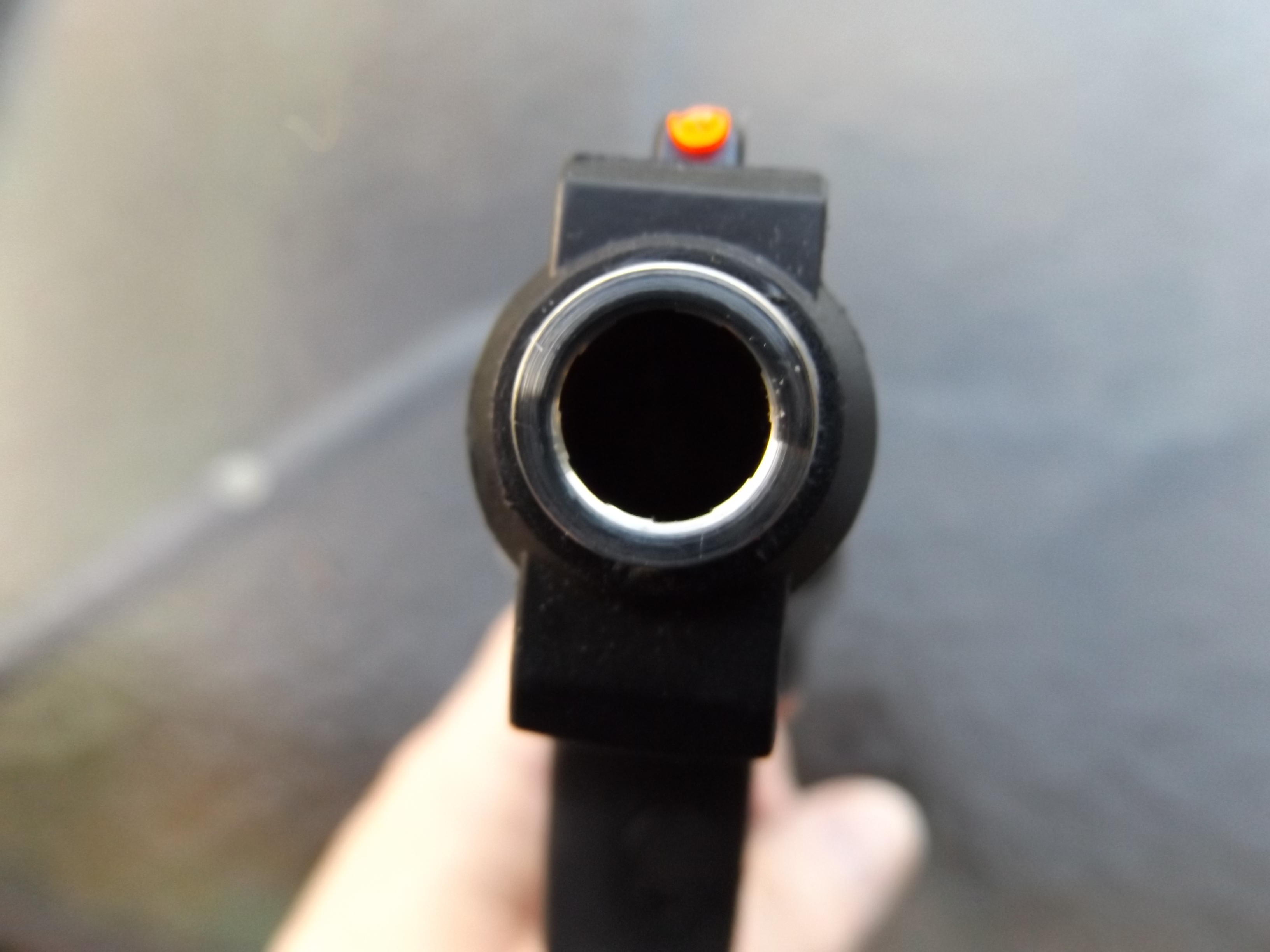
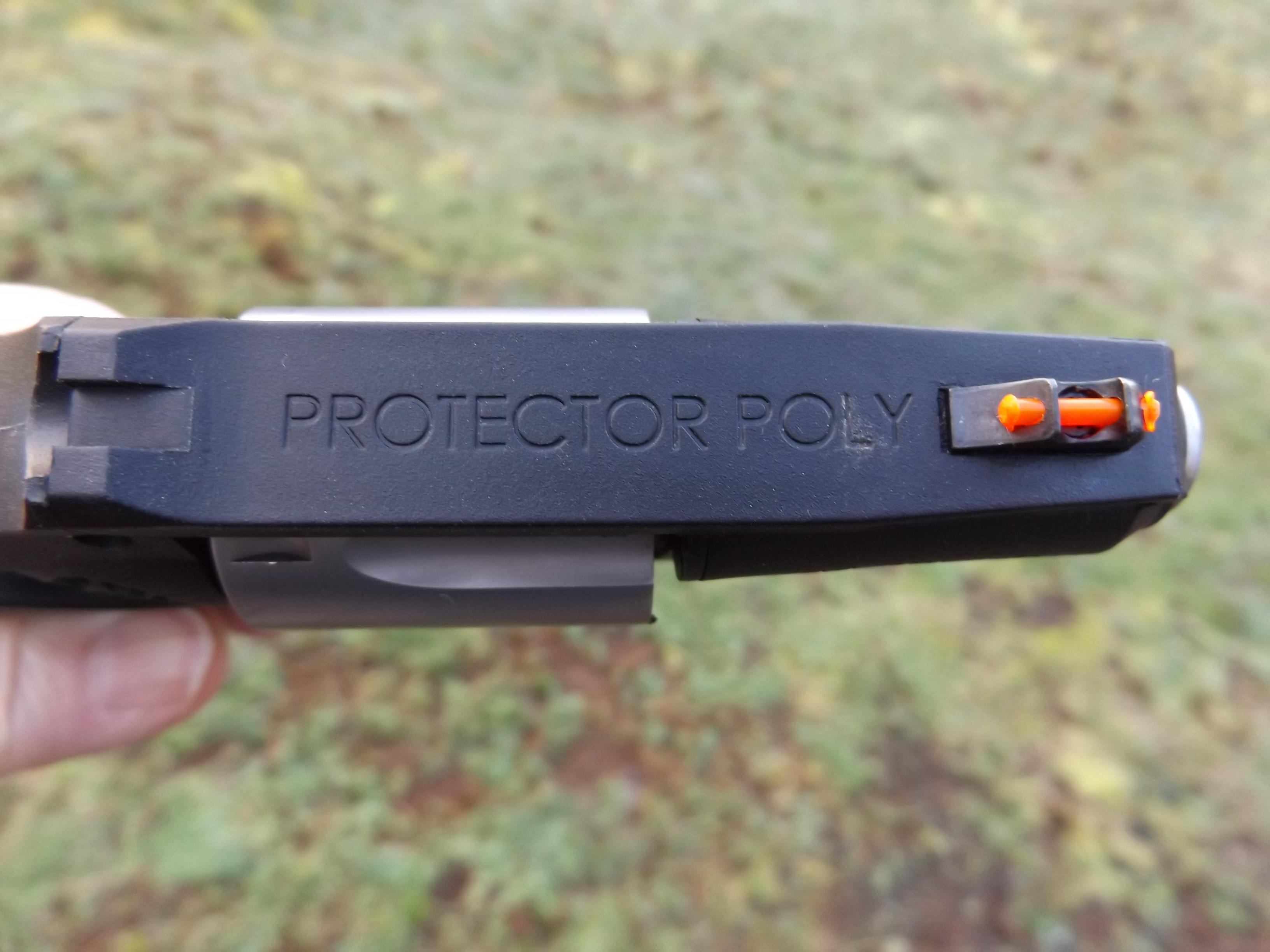
The gun under review today is the Taurus Model 85 Polymer Protector. It isn’t the old all-steel Model 85, not even close. Many readers have asked that I do more revolver articles, so here is yet another one. The Polymer Protector has a polymer frame, and the stainless steel barrel is enclosed inside of the polymer barrel shroud. The gun is traditional DA/SA, so it can be fired just by pulling the trigger or cocking the hammer. Depending on measurements and who you believe, the barrel is 1.875 inches long, 2 inches long, or 2.5 inches long. Mine measures at just about two inches.

Like most Taurus revolvers, it is rated for .38 Spl. +P loads, and in little snubbies like this I load them with +P to get a little more velocity out of the short barrel. It is a 5-shot, with a stainless steel cylinder, that looks great in the all-black polymer frame. Other colored frames are available from Taurus, even pink! Sights are fixed, and the front sight has a large red fiber optic insert that makes seeing that front sight a breeze with my aged eyes. The grips are textured rubber for a sure hold under any weather conditions, and they certainly do help absorb the recoil of those +P loads. The gun weighs a mere 18.2 oz; it’s a lightweight.

DSCF0097

I really liked the Polymer Protector. It fit the hand nicely, never missed a beat when I fired it (single-action or double-action), and it was plenty accurate out to 15 yards, for the intended purpose of self defense. However, there was one feature that I didn’t care for, on the side of the frame, where the cylinder release is at. It just sticks out a bit too much, and you can not get HKS speedloaders to fit the rounds into the cylinder. I also teach my students, and anyone who will listen, to carry a spare reload, be it a spare magazine or a spare speedloader or two. This is impossible with the Polymer Protector. You can, of course, use speed strips to carry spare rounds, however, this is a much slower process if you need to reload in a hurry!

I have a number of holsters for the Taurus. However, tightly molded leather holsters for many snubby .38s are too tight, and the Polymer Protector wouldn’t fit. The polymer frame is just a tad thicker than an all-steel frame. That’s too bad! I did carry the Taurus in a fleece jacket that has a built-in holster inside of it, and the gun rode nicely. The gun also fit a Blackhawk Products ankle holster. However, the gun was hard to get out of the holster; the rubber grips made it difficult to get my cargo pants leg up and over the gun for a decent draw. That’s not a good thing.

I had a decent selection of .38 Spl ammo for testing in the little Taurus. From Black Hills Ammunition, I had their 125-gr JHP +P load and their always accurate 148-gr Match HBWC. From Buffalo Bore Ammunition, I had their 125-gr JHP standard velocity low flash load, 110-gr Barnes TAC XP low flash, short barrel +P load, 148-gr Hard Cast Outdoorsman +P load, and their 125-gr JHP low velocity +P load. From the folks at Double Tap Ammunition, I had their 148-gr Match full wad cutter load. So, this was a good sampling of .38 Spl ammo to run through the Polymer Protector.

As mentioned earlier, there were no problems with any of the ammo, or the gun. Everything worked as it should have. Needless to say, the +P loads I fired gave quite a bit of recoil, however the rubber grips helps absorb that. The standard velocity loads were not a problem. Recoil was very manageable with each load. I fired about 300 rounds though the little Taurus, over several shooting sessions. The gun was just a lot of fun to shoot and carry in my concealed carry fleece jacket.

DSCF0098

Accuracy testing was done, standing at 15 yards, which is about the maximum distance you’ll be using a little snubby for self-defense purposes. However, that’s not to say that the gun isn’t capable of longer range accuracy. I could hit large rocks out to 50 yards, but that was the extent of it. Beyond that, the large fiber optic front sight would completely cover the target. Still, out to 50 yards is nothing to sneeze at with a short-barreled revolver.

Of course, when we speak about “survival”, as I’ve mentioned many times in previous articles, it depends on what you plan to “survive” from. In the case of the snubby revolver, I think we are talking serious city survival against two-footed criminals intent on doing you harm. And, that is what most little .38 Spl snubby revolvers are designed to do– save your bacon from the bad guys. However, the little Taurus, stoked with the Buffalo Bore 158-gr Hard Cast +P Outdoorsman load, would make a showing against some dangerous game out in the boonies. It penetrates deeply!

DSCF0099

At 15 yards, I was getting three- to four-inch groups. Again, I was standing, two-handed shooting and no rest was used. I was hoping for smaller groups, and I’m sure the gun can give ‘em, if a rest is used. There is always a winner in the accuracy department. However, the difference was so small that it was hard to measure. I only had a limited number of the Double Tap 148 gr Match Full Wadcutter loads, but this load just barely inched out all the other loads, and we are talking a very tiny difference in group sizes, measurable, but so small that there really wasn’t much difference.

I’m torn between two loads that I carried in the Polymer Protector. Those two are the Black Hills 125-gr JHP +P and the Buffalo Bore 110-gr Barnes TAC XP load. I think the Black Hills traditional JHP +P load will penetrate a little deeper, but the Buffalo Bore Barnes TAC XP will open up and expand a bit more. I don’t think you can go wrong with either load for self-defense work. The 110gr Barnes load had a little bit less recoil, if you are recoil sensitive, though.DSCF0100

The ol’ fashioned revolver isn’t dead; it’s far from it . It is still a viable choice in a handgun for self defense use in the big city. It is easily concealed, with the right holster, and as always carry a spare reload even if it is on rubber speed strips. A revolver also has an easy manual of arms. Load the cylinder, close it, and all you need to do is take aim and pull the trigger. There is very little to go wrong with a revolver, compared to a seminauto loading handgun. In many cases, a revolver is a lot less money than a semiauto handgun. The little Taurus Model 85 Polymer Protector is selling for around $300 in my neck of the woods. Add in, that Taurus also has a lifetime warranty and they offer a free one year membership in the NRA, what’s not to like here?

If you’re in the market for a good ol’ fashioned, but up-to-date revolver, check out the Polymer Protector. I think you’ll like it.

– Senior Product Review Editor, Pat Cascio


Recipe of the Week: Chicken Marengo

Ingredients:

  • 2½ to 3 ob frying chicken, cut up
  • 1 (1½ oz) package of spaghetti sauce mix
  • ½ cup dry white wine
  • 2 fresh tomatoes, quartered
  • ¼ lb of fresh mushrooms

Directions:

  1. Place chicken parts in the bottom of a slow-cooking pot.
  2. Combine dry spaghetti sauce mix with wine: pour over chicken.
  3. Cover and cook on low for 6 or 7 hours.
  4. Turn and cook on high for 30 to 40 minutes or until tomatoes are done.

Makes 4 to 5 servings.

o o o

Do you have a favorite recipe that would be of interest to SurvivalBlog readers? Please send it via e-mail. Thanks!


Letter Re: Wounding Patterns

Hugh,

I agree that the report, “The Profile of Wounding in Civilian Public Mass Shooting Fatalities,” as posted in the Journal of Trauma and Acute Care Surgery, is a bit arcane, but what would you expect? This is supposed to be the raw research methodology and data, and its actually reassuring to me to see that rather than the unsubstantiated claims often made in firearms conversations.

I’m not a trauma expert by any means, not in anyone’s wildest imaginations, though I have been trained as a Combat Lifesaver (and have taken other med courses over the years), so I have at least a basic understanding of the treatment issues. And I wouldn’t say anything further except that I think there’s something important here that we must not miss.

The point of the article is that the kinds of wounds most commonly seen in civilian mass shootings are somewhat different from what has historically been seen in combat. That’s what their research shows. More specifically, the types of wounds that could be survivable were they immediately treated are different.

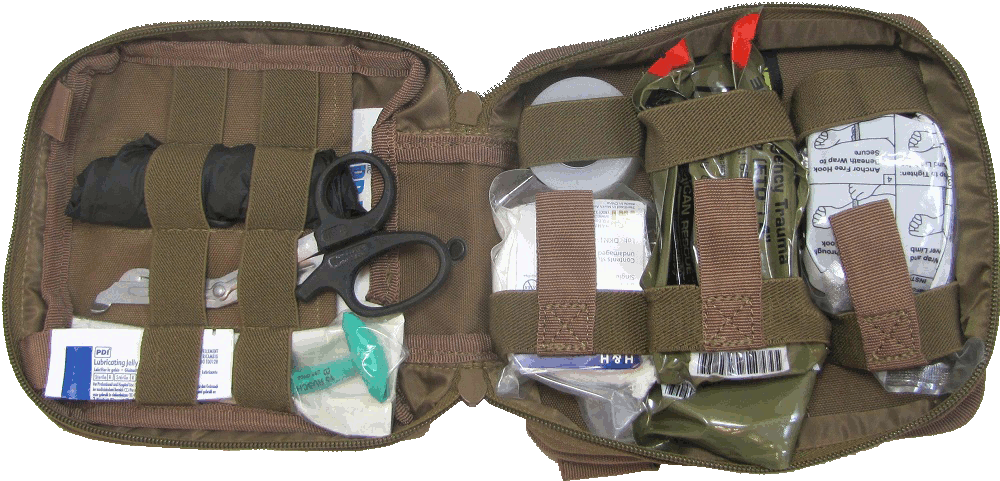
They apparently mean to encourage civilians and civilian first responders to be prepared to treat chest wounds, and based on my experience they are right. It’s been my experience that preppers who have made any medical preparations will have one or more tourniquets, but often they have nothing else (but, well, bandaids and gauze)!

What’s strapped onto the buttstock of your rifle? Is it a tourniquet, or a tourniquet and a couple of chest seals? How many preppers carry chest seals (or the materials to improvise a chest seal) with their tourniquets (wherever they keep those)? You don’t think you’re going to get shot in the chest (center of mass)? Your wife or kids aren’t going to get shot there? This study wants to broaden the training given to have a broader focus than bleeding control.

In this study, head wounds were generally fatal, and apparently the initial care that can be given (a) on the scene (b) by a civilian responder (c) for a person who’s been shot in the head isn’t much or wouldn’t make much of a difference. (Certainly there are some things we can do– treat for shock, try to minimize blood loss, treat for hypothermia, protect them from further injury, et cetera.)

And while their results show few victims (none in their study) actually die from bleeding out, the authors are clearly not dismissing the value of tourniquets. In their own words: “Does this mean external hemorrhage control for civilians is unimportant? Emphatically no!” What more do you want? Tourniquets are relatively inexpensive, effective, compact, and easy to use. It would be irresponsible to not have one on you in an environment where you thought gunfire was a possibility (even at the range). [Here’s some useful information about tourniquet usage. Print and save: .]

And who says that gunfire is the only way to have life-threatening bleeding? How many industrial or vehicle or fall scenarios could sever a major artery in an arm or leg? Don’t lose sight of the fact that tourniquets aren’t only for gunshot wounds! Shootings are just the specific focus of this research article.

Chest seals likewise are relatively inexpensive, effective, compact, and easy to use. So why not learn how to use one (front and back)? Why not learn how to improvise one from Saran Wrap and surgical tape, or the wrapper off of your gauze package, et cetera? If you know what the problem is, you can better improvise the solution.

It’s just not that hard, but it is something we should learn about in advance. People need to know to not just cover a bullet wound to the chest/side/back (ribs) with gauze or Quik Clot, which will still allow air into the chest cavity! There is zero reason why every single first aid kit in the U.S. couldn’t have chest seals. They’re just a big, really sticky “bandaid” specifically for holes in your rib cage (to oversimplify). They’re even a little hard to screw up. Even if it’s not perfect, it’s probably better than nothing, until better trained help arrives!

Seal the entrance (and exit) wound ASAP and transport them to a hospital. If help isn’t coming or is delayed, then there are other techniques that can be used as well. I’ve read that in the Civil War soldiers survived through-and-through chest wounds with nothing much more than bedrest (and covering the holes!), so don’t lose hope even in a TEOTWAWKI scenario.

Can you self-care a chest wound? I don’t see why not. The only trick would be trying to seal an open wound on your back. So recruit a bystander or a less-injured victim to do it, or figure some way to close or at least minimize the opening by leaning or laying against something. Self treatment is important, vital even. So have the right tools.

Take a class! Learn how to apply these simple life-saving techniques. You spent a lot of money on a reliable firearm, ammo, and cleaning supplies. Why would you not also drop a few bucks and learn what to do if you or yours are on the receiving end?

Trust God. Be Prepared. We can do both. – ShepherdFarmerGeek


Economics and Investing:

Will the Bubble Pop Even if the Fed Never Raises Rates? “There is no ready-made answer in Austrian business cycle theory (ABCT) to the multi-trillion dollar question now looming over the global economy and markets.”

o o o

Bond Market’s Big Illusion Revealed as U.S. Yields Turn Negative

o o o

Gold Price $2,150 Or Bust

o o o

America added 255,000 jobs in July, but unemployment rate unchanged

o o o

SurvivalBlog and its editors are not paid investment counselors or advisers. Please see our Provisos page for details.


Odds ‘n Sods:

Clinton email led to the execution of an Iranian scientist. “The senator said this lapse proves she is not capable of keeping the country safe.”

o o o

Stories of survival in SHTF: A Surreal Life on the Precipice in Puerto Rico – P.S.

o o o

Thousands of Roaming Dogs Are Cited as Problem in Poor Areas of Dallas. This may be a consideration after a SHTF for those in urban areas. Stray dogs may form aggressive packs. A weapon may be a necessity. – P.S.

o o o

8 Reasons Why Your Child’s Doctor Pushes Vaccines – DSV

o o o

Multiple staffers help unstable Hillary up stairs – The questionable health condition of Hillary Clinton should be a major issue of the 2016 campaign.


Budget Planning- Part 5, by Sarah Latimer

Cutting Costs- Some Ideas We Have Implemented

As I have said before, it is necessary to set priorities and develop a spending plan with your spouse and family in order to utilize your financial resources to achieve life goals. If you have followed along so far, you’ve documented your current income, your fixed expenses, and your flexible expenses. You have begun to consider other sources of income and maybe ways to cut expenses. Hopefully, you have also taken time to get a healthy perspective on money and its roles in your life as well as your spending habits. Have you determined that you are an emotional and spontaneous spender, a “keep up with the Jones” spender, or someone who is afraid to spend at all? Are you working to get discipline on these unhealthy habits? They are bad habits that prevent us from achieving all that we could otherwise achieve. No one has unlimited resources. We all must use them wisely, whether they are money, time, energy, or anything else. So let’s talk about some of the methods, considerations, and ideas that our family has applied and/or seen as a benefit to our friends and family.

General

Set very specific goals for how money is going to be used and allocated each month, remembering that each person may still need to have a little spending money of their own for “surprises” or “treats”. If you are well disciplined, major changes in spending can be done solely in writing and followed through written documentation, but most of us do best with tangible cash in envelopes for flexible expenses to help us literally see how much money is available for each of these budget categories. When our “dining out” money is gone, we know there will be no more meals out. When we see that the envelope for “family entertainment” is a bit heavy from saving up for a period of time, we know that we can count it and look forward to a day at the amusement park or maybe look forward to a really nice vacation, depending upon the budget envelope’s contents.

To use an envelope system, take regular envelopes and on each one write the name of a budget category and the monthly amount to be deposited in the envelope. For example, write “Groceries – $850” on the envelope that is to contain cash for purchasing the family’s groceries. The envelope may contain more than $850, if there was extra left from the previous month(s). You may be saving up for the purchase of a side of beef or seasonal sales and not need to spend your whole budget each month. However, having the monthly budgeted amount on the envelope will help on the day of the month that you withdraw cash from the bank to distribute between budget envelopes. You will know that you need to “deposit” $850 into the envelope for groceries.

You won’t need an envelope for every budget category, like the mortgage and utilities, if you pay for these electronically. However, you may need to electronically purchase some of the flexible expense items. As you may recall, I buy a lot of things from Amazon, using our Prime membership. I am able to use our credit card for these purchases and then place cash, taken out of the appropriate budget envelope(s), into a “bank deposit” envelope. This envelope’s contents are periodically deposited back into our bank account. If using a credit card versus a debit card, be sure to pay off the credit card charges in a timely manner to avoid interest fees! If you do not want to use a credit card or don’t have one but do have a debit card with a Visa/Mastercard logo for purchasing, then be sure to leave a base line balance in your bank account to cover electronic purchase amounts that might occur over the period of time until you get your budget cash deposited. If you only go to the bank once a week, you should keep a week’s worth of expenses in the account as a base line. At the end of the week, you will take the contents of the “bank deposit” cash to the bank to replenish you account for the next week of electronic purchases. In this way, we have discipline to prioritize our spending. Just this week, there were some things I really wanted but didn’t need. I have put them on a wish list until the 15th, when we will re-distribute our budget income for the month. At that time, I will decide if those items are still as important as they were and worthy of their cost. Sometimes, I find that the excitement of the items has faded and I don’t really need them at all. Other times, my desire for them remains strong and I am confident in my purchase. A little delay is usually a good thing, as it makes me think well about purchases and prioritize. I must consider the whole family’s needs, too, not just my wants as strong as my wants may be.

As you work with this budget process, be willing to talk through what is working and what isn’t. We have had to make adjustments to our budget many times. Priorities change, costs of goods change, and our circumstances change. It needs to be a dynamic plan but one that is well thought about and agreed to with eyes kept on the long-term goals and life priorities.

Home

Think about the home that you are in and your location. Do you really need this much space? Are you in the right location? Have the children grown up and you could now downsize and put some of that money elsewhere, even into a bug out location? Do you have enough land where you are located? Where you live is one of the biggest decisions you can make. Living in the city is getting more and more dangerous all of the time. Is there an option to work from home that would allow you to move to the country? Have you even explored this? Maybe this is the time to look into it and consider relocating (or at least getting further outside of the city where your friends live). Getting a few hours drive away is better than living right inside the city, and your closest friends and family would likely come visit on the weekends or you visit them, right?

If you have your budget under control and are satisfied with where you live and have extra funds, you can look at a bug out home. You might want to check out SurvivalRealty.com website for property that you or a group of friends or family members could purchase together as a vacation home and bug out location.

If you are where you want to be right now but still have a mortgage, can you begin paying off your mortgage at an accelerated rate? Check into this. You may be able to pay it off much, much sooner than you think by making an extra full or partial payment each month. Maybe this should be one of your priorities and budget goals with the monies left over each month after necessities are paid for.

If you are in a great location but frustrated with aspects of your home, could you remodel or add on less expensively than selling and moving? Could you do some of the work yourself and save money? Not only have we done this, but we have friends and family who have lived in RVs while they built (or helped build) their own fabulous homes on their property. They gathered stone off their property for use on the home and went to garage sales, antique stores, demolition specialists, and junk yards for materials. They bought scratched appliances at discount. There are many ways to save and end up with a great home!

Utilities/Telephone

Look at ways to cut costs here. Have you implemented LED light bulbs throughout the house? There are now some very good quality LED lightbulbs. Does every member of your family really need a new iPhone, or could you get by with an older model and a small AT&T family plan with limited data? We were able to significantly cut our cellular phone bill when we had multiple children in the house by having only two cell phones that had to be shared. They were only available to our children when they were away from home and then just for emergencies, texting (not while driving!), and calling home. We, the parents, tended to use them the same way, except when we had business appointments and such. Hugh would take one with him to work but bring it home and share it. We told everyone of our friends and family that our phones were shared and we didn’t necessarily answer them, especially if driving, so they should call the house or office to reach us immediately. Text messages would eventually reach the appropriate person. It was amazing how much this has freed us also. We are no longer tied to our phones, living with our eyes glued upon them, and now that the children have grown they aren’t as inclined to be as dedicated to their electronics as other young adults either. They actually can walk away and focus on the real people who are in their very presence better than most others we know.

Another thing we cut in our household was cable television. Yep. We got rid of it quite a few years ago. Those shows that are not garbage have commercials that are, quite often! We didn’t want that in our household infecting our children. It has been refreshing and freeing to distance ourselves from the bombardment of cultural numbing of our moral senses. Because of this removal of cable television, our family (including our adult children) are still shocked at seeing sexual scenes in movies. We all scramble for the t.v. remote to fast forward, if we happen upon a Netflix movie that contains inappropriate behavior. What entertainment we have is quite intentional. We kept Internet and have always had plenty of access to books and even movies, older television shows, and news. Our children were encouraged to entertain themselves outdoors and with hobbies, art, sports, games, and developing skills. It saved us money and saved our children’s minds too!

Gasoline/Transportation

If you live a ways out of town, plan your trips shopping and running errands so that multiple family members can get their errands run together, or one person can do all of the trips for everyone. If you commute to work, consider finding a ride partner.

Vehicle Repairs and Maintenance

We do much of our own, and Hugh has taught our children to do some too. There are courses that can be taken, even for women, to teach you how to change the oil and do some of the basics, which will save you labor costs while also teach you more self-sufficiency skills. There are also some good online resources for more complex repairs, too. Take advantage of learning about your vehicle’s repairs while the Internet is still available! Some of the auto part stores, like NAPA, will run computer diagnostics to determine what is going wrong with your vehicle, so that you don’t have to take it to a garage for diagnostics. Then, you can decide whether it is something you are able and willing to tackle or not. Use the resources available to you that are free or inexpensive before you go to a full-service, expensive service professional. You may end up there, but you may be able to change that air filter or belt yourself for minimal expense and learn something while you do. I have a lady friend who does all of her and her husband’s truck repairs, so this isn’t just advice for the men. Ladies, you can learn some of these things, too!

Clothing

It is time we learned to sew, mend, and repair. Those items made in China by slave labor may be less expensive, but they won’t be around forever. We need to learn how to make some of our own. In the meantime, we can also benefit from thrift stores and then altar and modify. I have found some gorgeous designer clothes at the local thrift store, some with the tags still on! I have purchased a brand new sports jacket for my son with tags from a major department store for under $10. There are a lot of rags there, but there are some jewels, too. You just have to be willing to hunt a bit. Finding a new Talbots button-up blouse for $2 is worth five or ten minutes of my time. This is especially true of children’s clothes, because they wear them for such a short period of time before out growing them. Buy things that are not too trendy and are basic at thrift stores and then accessorize with the trendy or, better yet, the handmade items. Keep things simple, functional, and durable.

Having teens, there were demands placed upon me for certain items– specific brands of expensive jeans and tennis shoes, for example. My rule was that I would contribute what seemed like a reasonable cost for “average” brand jeans and tennis shoes. If they wanted something “special” they had to contribute the extra cost with their own money. I might pay $60 toward a pair of tennis shoes, but if they wanted those $150 shoes, they had to cough up $90. Now, they weren’t contributing to the family income at this time either, but this encouraged them to have income/jobs of some kind. If they didn’t, then they got Levi’s and ***AMAZONamazon.com/dp/B00LNHRYOO/ref=twister_dp_update?_encoding=UTF8&psc=1***Adidas. It was quite the motivator for them to mow lawns, babysit, and get jobs. They wanted their “style”, and I found that they were willing to work for it. It was a win-win situation. They didn’t buy everything, by any means, but they had to contribute the “extra” for what was really important. It made them prioritize what was important to them, too.

Laundry/Dry Cleaning

We invested in a front loading washer, which uses less laundry soap and water and is more gentle on clothes as well as seems to get clothes cleaner. My dryer also does an awesome job of steaming (yes steaming) to freshen up/de-wrinkle clothing, too! I am no longer inclined to use the professional cleaners for dress shirts and other garments any longer, thanks to the ease of use and effectiveness of my laundry system. It is a significant expense up front, but I believe it is one that eventually pays for itself (not only in terms of lower cleaning bills and reduced soap/water costs but in reduced car/gas use, time savings, and increased longevity of clothing) and makes for a happier household. Also, with the Dryel (and other) dry cleaning bags/freshening cloths, I can deodorize and spot clean many “dry clean only” garments between visits to the cleaners. If you have a professional or someone who must dress up for work in your household, reducing trips to the cleaners can sure help the budget. Set up a system to make it easier and more pleasant to do the laundry at home. Get the children involved, too, in doing their laundry to help out! They can begin folding towels when they are very young. This is, after all, a family matter. Everyone wants a roof over their head, food in their belly, clothes, security, transportation, and utilities as well as many other comforts and conveniences. Get everyone involved as much as they are capable and able.

Homemade laundry detergents and deodorizers are another way to cut costs as well, especially when ingredients like Borax and Fels Naptha are purchased in bulk. There are some wonderful articles on SurvivalBlog describing just how to make laundry detergents (and other soaps for the household and personal hygiene, too). Additionally, I found online instructions on the Internet for making homemade Dryel-like freshening cloths using things like warm water, Borax, oxygen bleach, and lavender (or other) essential oils.

Gifts

It is my opinion that gifts should be about the person who is the recipient. The cost of the gift isn’t nearly as important and the thoughtfulness and how personalized it is for the recipient. It may be far easier to just spend a bunch of money on the latest trendy gadget for someone than to spend a lot of time thinking about the person, their interests, their history, and what would be meaningful to them, but it won’t have as big an impact usually on your relationship (unless they are a very materialistic person) and it will have a big impact on your budget. When it makes sense, look for things you can make or personalize that would be significant to the person. Is there something you can hunt for that is rare that they would really appreciate. Do they have a favorite author/politician/famous person? Maybe you can find a nice print photograph of this person and a favorite quote from him/her and make a wall hanging. Maybe your best friend loves all things about chickens, and you can make a chicken-shaped birthday cake and take it on a chicken platter that costs only $25. The effort and thoughtfulness will count more than the money spent! There are many ways to give a big gift without spending a lot of money. Sometimes, the way that the gift is given is part of the gift itself. Treasure hunts are great fun for the kids (and can also be fun for sweethearts, too). Use your creative resources instead of just your bank resources in gift giving. Make your gifts truly gifts of the heart and not just gifts of the pocket book! They will usually mean more.

Also, when it comes to the children, don’t spoil them with gifts and goodies every time you go to the store! Let treats really be treats and special times rather than the routine. What becomes routine becomes expected and loses meaning, while at the same time a lot of money gets wasted on “junk” and bad eating habits can be formed, too, as candy bars, lollipops, gum, and so forth get picked up at the check out line. If you have a youngster (or two or three) who gets hungry and cranky at the store, I suggest taking a healthy homemade granola bar or baggies of apple slices and/or carrot sticks from home. That way they will have a snack to keep them busy while waiting in line and you have something to give them when they each ask for the candy bar or bag of sugary treats that aren’t good for them and each cost a dollar.

While raising our children, we had responsibility charts and reward systems in place. Our children had to take care of their things. As they grew to be able to handle more responsibility, they were given responsibilities around the house and on our property, too. They got rewarded based upon their effort/performance in handling household and yard responsibilities, just as we adults get rewarded for handling our jobs. If their job wasn’t handled properly (or to the best of their ability), it was noted and they didn’t get compensated for that job. At the end of each week, they got their financial rewards in the form of “pay”. Sometimes, there were situations where they were expected to go above and beyond, because we were family and just had to help each other out. We made sure that it was clear that these jobs and responsibilities would some day be expected without pay, but while they were learning and until they could get jobs outside of the house we would reward their effort for caring for community areas and teach them how to manage money. Then, we expected them to buy what they wanted with this money. Hugh and I bought what was needed, but we didn’t buy “wants”, except on holidays and birthdays. Again, this taught them to make decisions with their money. They had to prioritize their wants. We also taught them that they had to save some of their money for gifts for their friends, too. If they got invited to a birthday party, they had to buy a gift of at least $10 (minimum) for the friend who invited them or they could not go. If they got invited by a friend to go to the movies, they had to pay for the movie. If they didn’t have the money to go, they didn’t get to go. There were some tears on occasion, but the lessons learned young were better than the lessons they would have to learn now. This taught them to put money back to be ready for opportunities that might come up. Some of our children learned to save more readily than others, but all of them eventually learned this concept.

Remember, that it is important to teach our children the life lessons we have learned (or are learning) while they are young. Better to learn when you are young than after you have more serious consequences to mistakes! I sure am grateful for the training I had, yet wish I had learned better what my parents tried to teach me so that I could have avoided more mistakes. Still, we do our best to teach our children and have to let them make their own choices and mistakes, just like I made mine. We are all hopefully growing in knowledge and getting better, day by day. I have much yet to learn!

Larder

There is so much to say here, but most of it has been said elsewhere on SurvivalBlog. Grow a garden, raise chickens and livestock as you are able. Can, dry, and freeze dry your homegrown foods. Buy beans, Band-aids, and bullets in bulk whenever possible, using Costco, Sam’s Club, Amazon Prime, SurvivalBlog advertisers, the LDS/Mormon store, and specialty wholesalers and retailers. (Also, don’t forget to buy Bibles, too.) Each month, you may need to focus on obtaining one type of food or prep supply in bulk, or you may need to set back some of your budget until you have the total you want to buy a whole order. Whatever you do, I suggest you do all you can. Watch for sales, too, at your local supermarket and in advertisers’ ads and then take advantage of those deals especially long-lasting loss-leader deals that are priced well below their normal price. I was surprised to get cans of quality black beans the other day for 39 cents each! There was a limit of eight, but each family member could buy eight and the sale was for more than one day, so I could make repeat visits to the store. Be smart. Be diligent! Keep on keepin’ on, saving one dollar at a time. It adds up!

Animals

Make treats using vegetable and meat scraps. Don’t waste! In looking for ways to use what you aren’t going to use in the kitchen, you will find that you are stretching your dog, cat, chicken, goat, or rabbit food. Just be sure that you aren’t giving them spoiled food that might make them sick. Keep tabs on your refrigerator contents. If it is losing texture or getting a few spots, give it to the animals, but if it is growing fuzz or is really old you should just toss it into the compost. There are, of course, somethings that just don’t go to the animals, like chocolate, peppers, onions, grapes/raisins for dogs, and so forth. (Check out some of the articles and letters on SurvivalBlog for treat recipes and “dos and don’ts” of feeding animals.) I try not to let anything get to the really spoiled point before it goes to the critters. I keep small buckets in the refrigerator of the “reject” vegetables from the garden and another for reject meat/cartilage/fats/oils. Later in the day or the very next morning it is given to the appropriate animal as a treat or put into the freezer to use in making batches of baked treats. We turn much of our waste into food (chickens/eggs) and security (dog), or it goes into compost. Be resourceful!

Home Maintenance

We do a lot of our own repairs, remodeling, and fixes. We look for ways to re-purpose things, too. We have a young friend who is making some nice deck chairs out of pallets. Get resourceful and see how you can stretch what you have without spending much! We also have found some great furniture buys on craigslist. Who would have thought we could buy the sofa/love seat combo I was considering buying at the furniture store (priced at over $1,300) for under $400 used? Watch clearance racks at home improvement stores for supplies that have been returned without packaging and so forth. You may get a great deal on a light fixture, tool, or something else you need in or for the house or property.

Savings

We have disciplined ourselves to set money aside each month for the future. Of course, precious metals (PMs) get purchased, junk silver, and some cash is kept also. It requires some discipline to know how much we can afford to “invest” in the future each month, as these are all for after a SHTF situation. Plan for this investment, if you have the other necessities covered, but you need to be sure you have food, water, shelter, and security secured before you set money aside for PMs. There is no benefit to you for having PMs if you don’t survive a disastrous event. Keep first things first. Still, there will be some emergencies along the way, and you will need some cash at times, so have some put back for those unexpected tires that blow out, that travel emergency to a family member, or something else. The banks are volatile and could close at any time, so be sure that you have a chunk of cash in hand, accessible to you even if the bank closes.

The Challenge

It is worth the effort to say “no” to some things, live with some older things a little longer, re-purpose something and make our own items rather than buying new, and delay a purchase in order to first fulfill a commitment and/or pursue our family priorities and life goals. It takes a bit more effort, but the savings Hugh and I accumulate through our budgetary discipline enables us to redirect our resources toward improving self-sufficiency, making family memories, increasing our Biblical training and ministry, and helping others like you learn to do the same. Are you using your resources wisely and with integrity? We don’t know what tomorrow holds, but we know who holds tomorrow and we can honor Him in how we live (and spend) today.

God bless you as you work to become better stewards of the financial resources He has entrusted you to utilize.



Letter Re: Pat Cascio’s Review of the Springfield Commander Size RO

Hugh,

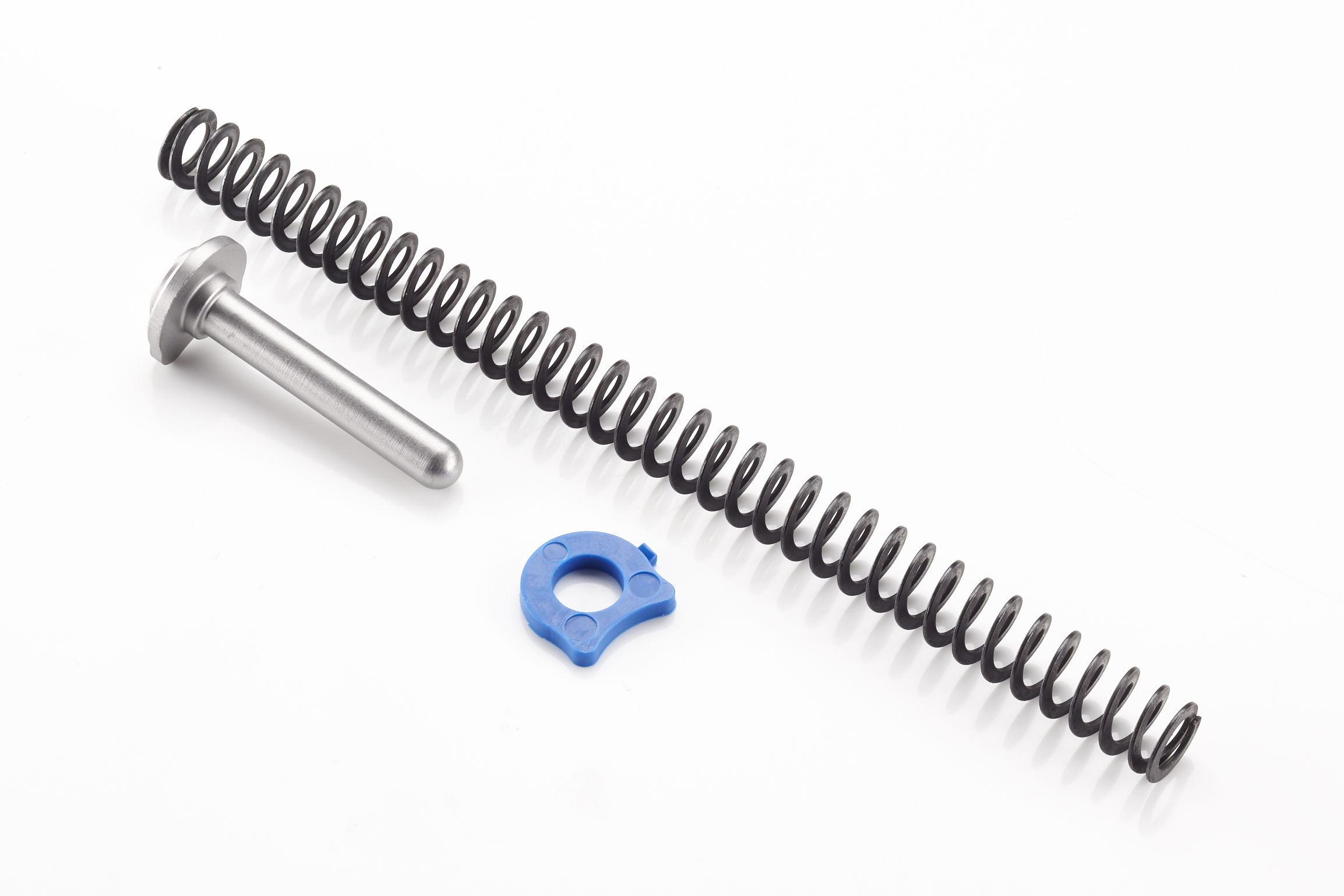
Pat was saying that he wished to change out the recoil spring for a heavier one on the commander size Springfield RO for +P loads. From what I’ve experienced Wilson Combat’s flatwire recoil spring kits for the 4 and 5 inch 1911’s are money well spent. In addition to giving More protection and control they will last considerably longer than conventional springs. Forty thousand rounds or more in comparison to the 5000 round life of conventional springs. Money well spent. – G.M.

Pat Cascio comments: Sadly, the ones made by Wilson Combat will not work in the current Springfield Range Officer. It is a completely different recoil spring set-up. By the way, Springfield is going to change the set-up. I haven’t heard what they will do, but I checked around and there are no other recoil springs that will work in this gun at present. It is a proprietary set-up!


Economics and Investing:

IRS Increases ‘Marriage Penalty,’ Unmarried Cohabitants To Get Twice The Mortgage Interest Deduction – B.B.

o o o

Deflation Is Always Good for the Economy

o o o

A Shocking Story About How One Man Lost $83 Million, Plus China, Gold And U.S. Dollar

o o o

No End Seen in Global Demand for U.S. Credit: BlackRock’s Rieder

o o o

SurvivalBlog and its editors are not paid investment counselors or advisers. Please see our Provisos page for details.


Odds ‘n Sods:

72 Types Of Americans That Are Considered “Potential Terrorists” In Official Government Documents – H.L.

o o o

Not Just Bees: All Insects Are Declining And Heading As We Head For ‘Mass Extinction’ – W.C.

o o o

Amazon Echo is the ultimate spy device that records everything you say. Excerpt: “The “Amazon Echo” device, a constantly-listening Bluetooth speaker that connects to music streaming services like Pandora and Spotify at the sound of a person’s voice, can be easily hacked and used by government agencies like the FBI to listen in on conversations.” – J.H.

o o o

The Revolt of the Media – T.P.

o o o

Belgium police machete attack: Knifeman shouting ‘Allahu Akbar’ hacks two female officers in face – G.L.


Hugh’s Quote of the Day:

“From whence come wars and fightings among you? Come they not hence, even of your lusts that war in your members? Ye lust, and have not: ye kill, and desire to have, and cannot obtain: ye fight and war, yet ye have not, because ye ask not. Ye ask, and receive not, because ye ask amiss, that ye may consume it upon your lusts. Ye adulterers and adulteresses, know ye not that the friendship of the world is enmity with God? whosoever therefore will be a friend of the world is the enemy of God” James 4:1-4 (KJV)


Notes for Saturday – August 06, 2016

On August 6th, 1945, The world was ushered into the nuclear age as the world’s first atom bomb used in combat was dropped over the city of Hiroshima. Approximately 80,000 people were killed as a direct result of the blast with another 35,000 injured. At least another 60,000 residents would be dead by the end of the year from the direct effects of the gamma dose, residual fallout, and malnutrition.

o o o

Do you have a pocket sized copy of the Declaration of Independence and the Constitution of the United States of America? Get your copy now at Camping Survival for only $1.92. This sale expires on August 9, 2016.


Guest Article: Obama’s Executive Order and the Gunsmith, by Gene Kelly

Does the recent Obama “executive order” really affect your ability to do your own gunsmithing or be a professional gunsmith?!

If you listen to the wagging tongues, supposedly all gunsmiths are going to have to register with the State Department DDTC and pay big fees. In reality, well, not so much.

The first thing I want to tell you is don’t panic. Things are not as dire as initially broadcast widely over the Internet. The current government would love nothing better than to have you throw up your hands and quit gunsmithing or stop working on your guns. In fact, this current president has only five months left. So these are acts of desperation of a fading administration. After his term ends, depending on who is elected, all of this may just blow over and go away.

So in spite of the intent of our ever-expanding government, I have good news for most of you! In fact I am going to tell you how the recent obama executive order will enable some gunsmiths to even make more money! But first, I need to tell you who I am and why our company exists. My name is Gene Kelly, and I am president of the American Gunsmithing Institute.

The American Gunsmithing Institute (AGI) was established in 1993 to preserve the gunsmithing arts and, therefore, protect our firearm freedoms. That is our mission. We have done that by training well over ten thousand Certified Professional Gunsmiths, through our study-at-home professional gunsmithing, design, function, and repair courses. Plus, we have created over 60 firearm specific armorers courses and numerous specialty gunsmithing, welding, and machining courses.

The Gun Club of America (GCA) is another entity that I started over a decade ago to expand our ability to provide individuals that want to be true firearm experts with high quality information and resources.

Now, I have to do my disclaimers: I am not an attorney. I am not giving you legal advice. Each individual’s situation is different, and you need to seek your own legal advice with regards to your individual situation. I am only giving you my well-researched opinion. With all that said, I will tell you that I have already spent numerous hours over the last several days reviewing this information and checking with some of my sources.

As you may have heard, the Obama Administration issued an “executive order”, which inspired the Directorate of Defense Trade Controls (DDTC) to issue new “policy guidance” dated July 22, 2016 on the “Applicability of the ITAR Registration Requirement for Firearms Manufacturers and Gunsmiths”. (ITAR stands for the International Traffic in Arms Regulations.)

This has caused a great deal of unnecessary concern and distress in the firearm community.

But do not panic! When you read the actual document, you will realize:

  1. These rules do not apply to hobby gunsmiths (as they are not engaged in the “business” of gunsmithing).
  2. Most gunsmiths do not have to register, as long as you are not offering and preforming specific tasks that are now classified as “manufacturing” by DDTC.
  3. There is an opportunity for the gunsmiths that do preform the services that require registration to make more money. Keep reading to find out how.

In an attempt to clarify and illuminate the actual impact of this new “guidance”, I have provided extracts of the “policy guidance” in quotes below. Emphasis is mine.

(As usual with any government agency, not everything is crystal clear, and some areas are open to interpretation. I am only providing my opinion of what I think it says. However, I am not an attorney, so this is just my opinion. If you need a legal interpretation, please contact a qualified attorney.)

First, here’s the good news: It is pretty clear that this does not apply to hobby gunsmiths that are doing their own work, as they are not someone who “engages in the United States in the business of manufacturing or exporting or temporarily importing defense articles, or furnishing defense services, is required to register with the Directorate of Defense Trade Controls under §122.2.“

So my read on this is that if you legally modify your guns for your own use and purposes, these regulations do not affect you, as you are not “in the business”. So take a deep breath and carry on enjoying your hobby! It is also clear that many licensed gunsmiths (FFL’s) will not have to register, depending on the services that they offer. The “policy guidance” also specifically exempts most things a gunsmith will need to do:

“The Directorate of Defense Trade Controls (DDTC) has reviewed and consolidated policy guidance about whether various activities related to firearms constitute manufacturing for International Traffic in Arms Regulations (ITAR) (22 CFR Parts 120-130) purposes and require registration with DDTC and payment of a registration fee. DDTC has found that many, but not all, traditional gunsmithing activities do not constitute manufacturing for ITAR purposes and, therefore, do not require registration with DDTC. The following guidance is confined to DDTC’s ITAR implementation. You must also comply with all other relevant laws”

“Registration not required, not manufacturing: In response to questions from persons engaged in the business of gunsmithing, DDTC has found in specific cases that ITAR registration is not required because the following activities do not meet the ordinary, contemporary, common meaning of “manufacturing” that DDTC employs in implementing the ITAR and, therefore, do not constitute “manufacturing” for ITAR purposes:

  1. Occasional assembly of firearm parts and kits that do not require cutting, drilling, or machining;
  2. Firearm repairs involving one-for-one drop-in replacement parts that do not require any cutting, drilling, or machining for installation;
  3. Repairs involving replacement parts that do not improve the accuracy, caliber, or other aspects of firearm operation;
  4. Hydrographic paint or Cerakote application or bluing treatments for a firearm;
  5. Attachment of accessories to a completed firearm without drilling, cutting, or machining—such as attaching a scope, sling, or light to existing mounts or hooks, or attaching a flash suppressor, sound suppressor, muzzle brake, or similar item to a pre-threaded muzzle;
  6. Cosmetic additions and alterations (including engraving) that do not improve the accuracy, caliber, or other aspects of firearm operation beyond its original capabilities;
  7. Machining new dovetails or drilling and tapping new holes for the installation of sights which do not improve the accuracy or operation of the firearm beyond its original capabilities; and
  8. Manual loading or reloading of ammunition of .50 caliber or smaller.

Activities limited to the domestic sale or resale of firearms, the occasional assembly of firearms without drilling, cutting, or machining, and/or specific gunsmithing activities that do not improve the accuracy, caliber, or operations of the firearm beyond its original capabilities (as described above) are not manufacturing within the context of the ITAR. If you are not manufacturing, exporting, temporarily importing or brokering defense articles or services, you are not required to register with DDTC. “

So if you are not offering services that constitute “manufacturing”, then you are exempt! They say it directly in the “guidance” quote above.

Also, some firearms are not covered by the ITAR.  So if the firearm is not a “defense article,” then it is not covered by this regulation. What exact firearms are “defense articles” is not clearly covered in the provided “guidance”. The definitions listed in the regulations on their website appear to be pretty broad to cover many firearms. You can check directly with DDTC to see if a type of firearm is an ITAR firearm. (However if a firearm is not covered by the ITAR, then their regulations do not apply):

“Because the GCA (Gun Control Act of 1968) is intended to cover a broader scope of domestic activity than the AECA, the ATF regulations define the term “firearm” more broadly than the ITAR. As a result, not every firearm controlled by the ATF regulations is also controlled by the ITAR.”

“Persons who do not actually manufacture ITAR-controlled firearms (including by engaging in the activities described below, which DDTC has found in specific cases to constitute manufacturing) need not register with DDTC, even if they have an FFL from ATF. “

“DDTC has found that many traditional gunsmithing activities do not constitute manufacturing for ITAR purposes and, therefore, do not require registration under the ITAR, particularly where such activities do not require cutting, drilling, or machining and do not improve the accuracy, caliber, or operation of the ITAR-controlled firearm beyond its original capabilities.”

So there are another large percentage of gunsmiths that do not need to register with the DDTC.

It is very clear though that other common gunsmithing services would require a gunsmith to register according to this “guidance”, if you are manufacturing firearms that are covered by the ITAR.  This could include: cutting, drilling, or machining, or improving the accuracy of the firearm beyond its original capabilities.

But use common sense. For example, mounting a scope might improve the accuracy of the shooter, but it does not improve the inherent accuracy of the firearm. H here is where they say it they say the difference is;

“Registration Required– Manufacturing: In response to questions from persons engaged in the business of gunsmithing, DDTC has found in specific cases that ITAR registration is required because the following activities meet the ordinary, contemporary, common meaning of “manufacturing” and, therefore, constitute “manufacturing” for ITAR purposes:

  1. Use of any special tooling or equipment upgrading in order to improve the capability of assembled or repaired firearms;
  2. Modifications to a firearm that change round capacity;
  3. The production of firearm parts (including, but not limited to, barrels, stocks, cylinders, breech mechanisms, triggers, silencers, or suppressors);
  4. The systemized production of ammunition, including the automated loading or reloading of ammunition;
  5. The machining or cutting of firearms, e.g., threading of muzzles or muzzle brake installation requiring machining, that results in an enhanced capability;
  6. Rechambering firearms through machining, cutting, or drilling;
  7. Chambering, cutting, or threading barrel blanks; and
  8. Blueprinting firearms by machining the barrel. “

The primary effect on the gunsmiths that do want to offer those services on ITAR controlled firearms that the DDTC claims falls under their purview, is that they will have to fill out a form and pay an annual fee of $2,250 as a registration fee. It’s just a fee to register, even if you do not intend to export. Actual exporting requires specific permission from the DDTC.

In my opinion this is just typical expansion of the law beyond it is intended purpose, so as to create a vehicle for harassment and financial burden on the firearms industry, with an overall goal to further suppress gun ownership if you let it.  All of this may pass away, if the right individual is elected to the presidency.

But another way of looking at this is that it is for gunsmiths that want to do this type work or provide those services, and for them it is simply just an additional “cost of doing business” that only works out to less than $200 a month, which is not really such a big deal in the overall scope of things if you actually do have to register.

Gunsmiths that do work that falls under these regulations will just have to raise their prices and be a bit more professional in operating their businesses. (Part of what we teach at AGI is how to make money gunsmithing through the appropriate application of best business practices.)

I think a simple solution for gunsmiths that don’t want to register is to job out any of the work in the above “guidance” that is “manufacturing” to gunsmiths that are willing to register.

One possible example: Gunsmith “A” does all of his non-registration required work as outlined in the “DDTC Guidance”, and when he gets in a project that falls into the “manufacturing”, he lets the customer know that he is sending that to a “DDTC Registered Gunsmith” and subcontracts it to Gunsmith “B”, who is “registered” and then receives and does the work, and then sends it back to Gunsmith “A”, who makes a mark-up on handling the transaction.

Gunsmiths that specialize in barreling and accurizing work are going to probably end up making more money as a result. As always, less competition equals opportunity to raise prices.

Our company intends to register, and I will share with you what we learn from the process. We also are retaining a law firm that specializes in this area of activity.

But you may or may not want to wait to register (if required) to see what happens in the November election. If Trump is elected, this entire problem may go instantly away. So again, don’t panic.

Hobbyists are not affected, and half to two-thirds of gunsmiths are not required to register, depending on the services that they offer.

We will be monitoring this to see where it goes. Hopefully the NRA, National Shooting Sports Foundation, and other groups can get Congress to clean up this mess by exempting Domestic manufacturing with intent for domestic sales and the related “Gunsmithing” aspects.

But for now, I want assure you that there is no reason to “jump out of the window”. It appears that many, if not most of you, who want to or are doing gunsmithing are already exempt from this registration process.

What I have stated is only my personal opinion after a careful reading of the DDTC issued “policy guidance”. I am of course not an attorney, and I am NOT offering legal advice, only my personal opinion after having read the information distributed by the DDTC. If you have specific questions, seek qualified professional legal advice.

Now I am going to give you my political opinion.

Quite honestly, unless we all work hard to elect Trump (like him or not), we will end up with a lot worse than this crippling the industry and destroying our freedoms. Hillary is toxic and will ruin the country for the rest of our lives and beyond, just with her control of the appointments to the Supreme Court. Let alone all of the other decisions and appointments that she would make. We need to give people the backbone to vote against her and to vote for Trump. We also need to open our wallets and support Trump and maintain a Republican House and Senate. I would hope that Trump would unwind many of these executive orders and overreaches.

The fact that the elites on both sides are so wound up and don’t want him is enough of a contrarian reason alone for me to vote for him.

But personally, the sweetest revenge is to make money!!

At AGI we have consistently provided knowledge and assistance to gunsmiths on how to make money gunsmithing. We have provided specialty courses and even include “The Money Makers” with our professional gunsmithing courses to help gunsmiths start making money as soon as they have their FFL.

I want to help more gunsmiths and FFL dealers make money. I want them to survive and prosper. Our country needs gunsmiths and FFL dealers! Part-time gunsmiths that properly run their business should be making a minimum of $1-2,000 per month, and full-time gunsmiths who work efficiently the way we teach them are capable of making as much as $100,000 a year or more, as a number of our students do. You need to survive and prosper.

If you are not yet a Certified AGI Gunsmith and don’t yet have your FFL, now is the time to enroll in the Professional Gunsmithing Course and apply for your FFL, while it is still easy. Get on the inside now, in case things don’t go our way in the election. People on the inside always find a way to get by.

I hope that this has been helpful to you. If you want to get more information on how to become a certified gunsmith, go to: www.AmericanGunsmithingInstitute.net or for Armorer Courses www.AmericanGunsmith.com

Best regards,

Gene Kelly

President American Gunsmithing Institute (AGI)


Letter Re: Wounding Patterns

Aloha HJL,

I have a response to the post from 30 July 2016 regarding the wounding patterns of civilian public mass shooting (CPMS) events versus military wounding patterns. ShepherdFarmerGeek sent this in, and it is fantastic to review anything regarding survivability in the coming times. I agree with the last line: “Time to reevaluate the preps and training.” That should be a daily occurrence for every one of us! But, I respectfully disagree with the view that “…we may be training and prepping wrong…”.

I read the article and was somewhat surprised by the data revealed; though I think 12 events with 139 fatalities is a very small research sample to derive definitive results and then compare and contrast against thousands of combat fatalities. Having been in three combat roles in the 80’s, 90’s, and 2000’s, most recently in Iraq with a secondary role as a medic for our Cav Troop, I have some personal experience that doesn’t fully contradict the “Study”, but does reflect different experiential results. The study assumes that the Shooter was laser-focused on mayhem and took carefully aimed torso and head shots at UNARMED victims. I can see how the Study author would deduce that a less “Massive Exsanguination” focused approach may be warranted, but I caution SurvivalBlog readers that his study assumed a different environment than what we will see in a SHTF scenario. Without someone shooting back, the Active Shooter had a much higher kill ratio than we professional Marines and Soldiers can achieve in combat. I believe many shooting incidents in a SHTF scenario will not be against unarmed victims but will involve Patriots defending their nation, family, and supplies. We should train accordingly.

Myself and my partner, who is still an active duty 18D SF Medic, teach a rather extensive trauma class titled “Grid Down Trauma Care: What to do when 911 doesn’t answer.” Our program has been peer reviewed by active duty 18D Green Beret medics, as well as by a USAF Orthopedic Surgeon, a Trauma Center ER Nurse, and a USAF Pediatrician (who is also a contributor to SurvivalBlog.) We foresee the SHTF scenario to be VERY MUCH like our collective experience in combat within the past 30 years, and possibly even worse in that there will be no Dustoff available! Therefore, we still use the TCCC format and the SMARCHRV-S algorithm to guide our “Prepper Medics”:

S- Security/Situational Awareness,
M- Massive Hemorrhage Control,
A- Airway Management,
R- Respiratory Concerns,
C- Circulation,
H- Hypothermia,
R- Recovery Position,
V- Vital Signs,
S- Stabilize, and Package for Transport.

Our assertion is that destroying the threat first, and immediately evaluating massive hemorrhaging and determining immediate tourniquet application to extremities is STILL the way to go in an austere environment. In TEOTWAWKI, few of us will have plenty of oxygen, surgical supplies, and 24 bags of IV fluids cached. (24 bags plus blood products is the average for ANY GSW trauma patient.) Thus, it will be critical to provide immediate aggressive treatment in the field in order for a trauma patient to have a remote chance for survival. There will be no 911, paramedics, trauma centers, or definitive care available only ten minutes away. There will only be the Patriot and his or her patient.

I’m not knocking the Study, just ensuring the readers have more data to make informed decisions. – S4H