SWL Receiver Considerations and Buying Advice, by Sarge B.

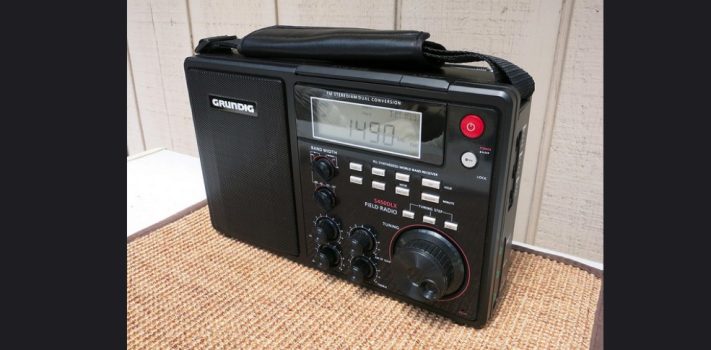
The following is my list of recommended features and some features to avoid, when looking  for a general coverage receiver. This is based upon my personal experience over the years as a shortwave listener (SWL) and Amateur Radio operator. Frequency Coverage: Look for a minimum frequency coverage of 500 kHz to 30 MHz. This covers the AM broadcast band (520 – 1710 kHz) and all of the shortwave broadcast bands (2 – 30 MHz). Coverage of the FM broadcast band (88-108 MHz) is also highly desirable. Digital frequency display: Allows precise tuning to a specific frequency. Avoid any radios with …


The Hitchhiker’s Guide to TEOTWAWKI – Part 5, by St. Funogas

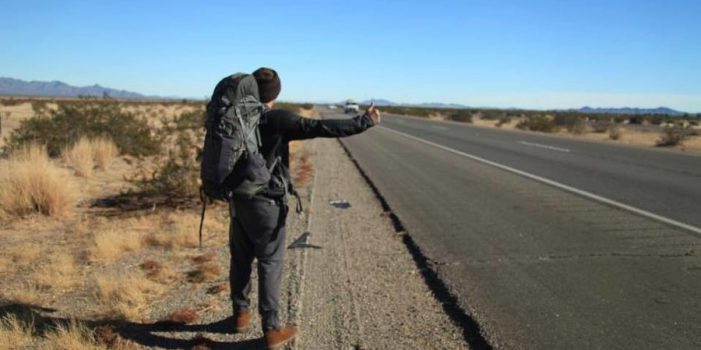
(Continued from Part 4. This concludes the article.) Truckers. Contrary to popular belief, the depiction in the movies of truck drivers being a prime source of hitchhiking rides, just isn’t true. Maybe I’ve been doing something wrong all these years but in all my hitchhiking miles I’ve only been picked up by a trucker once. He explained that between company policies and insurance regulations, they’re not allowed to pick up hitchhikers. So, even though it won’t hurt to try, don’t expect to get many rides from truckers. Comedy. Humor can also help get a ride sometimes. On a cold day …


The Hitchhiker’s Guide to TEOTWAWKI – Part 4, by St. Funogas

(Continued from Part 3.) WEAPON It’s important to always maintain situational awareness wherever we are, and even more so when hitchhiking. There was only one time in all my hitchhiking travels where I had a negative experience during a ride. It got to the point where I thought it might be necessary to calmly let the driver know I was armed. A well-dressed guy in a Lincoln Continental gave me a ride. He looked like he was on his way to an important business meeting. We chitchatted for a while and then he made a homosexual proposition. It was out …


The Hitchhiker’s Guide to TEOTWAWKI – Part 3, by St. Funogas

(Continued from Part 2.) TRAVEL LIGHT The more belongings you have, the less the chances are that you’ll catch a ride in a timely manner. A single backpack will be more appealing than a bunch of gear. One important thing to keep in mind when you get picked up is to never put your gear in the trunk of a car, if at all possible. The chance of anyone driving off with your gear is minimal but as with all things, probabilities have to be weighed against consequences. Bugging out after losing all your gear would be a huge challenge, …


The Hitchhiker’s Guide to TEOTWAWKI – Part 2, by St. Funogas

(Continued from Part 1.) THE BASICS OF TRAVELING BY THUMB To be successful, a hitchhiker must consider several things: 1. Appearance 2. Destination sign 3. Traveling light 4. Gender and group size 5. Having a map 6. Weapon 7. Food and water 8. Money 9. Just can’t get a ride 10. Shelter APPEARANCE Appearance is the single-most important qualification if you want to catch a ride in a timely manner.


The Hitchhiker’s Guide to TEOTWAWKI – Part 1, by St. Funogas

In case the Powers That Be ask our opinions about how the world as we know it should end, I’m going to recommend the slow-motion kind that takes a few weeks, rather than an instantaneous welcome-to-Teotwawkiville atomic explosion or EMP. That will give die-hard preppers time to top off their supplies and buy that extra pallet of Thin Mints, but more importantly, give those with a bug-out retreat time to get there before the final SHTF events usher us into TEOTWAWKI. For those who find themselves up Schumer Creek with no reliable means of travel to their bug-out location; for …


Using GSSF Matches to Prep, by Iowa Dave

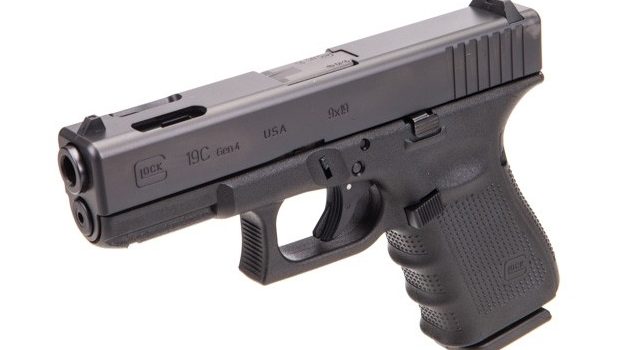
Author’s Note: I am not affiliated with Glock or the Glock Sport Shooting Foundation other than volunteering as a range officer at their matches and shooting their matches. JWR likes to say that owning a gun doesn’t make you a shooter any more than owning a surfboard makes you a surfer. You need to learn, train, and practice. Practical pistol disciplines such as International Defensive Pistol Association (IDPA) and International Practical Shooting Confederation (IPSC) are outstanding ways to practice, but they can be intimidating to the novice. That’s where the Glock Sport Shooting Foundation, or GSSF fits in. Glock started …


Prelude to World War – Part 3, by 3AD Scout

(Continued from Part 2. This concludes the article.) Timelines Given As we listen to all the chatter, day in and day out about a widening war in Europe and war with China, we can see some recurring messages in the reporting.  How many times have you heard that NATO needs to be ready for a war with Russian in 3-5 years or that China will likely invade Taiwan by 2030.  There are a few variations of the dates but regardless of the actual dates we need to ask why NATO and our Asia-Pacific Allies need to be ready by those …


Prelude to World War – Part 2, by 3AD Scout

(Continued from Part 1.) Defense Production Act The Defense Production Act was passed in 1950.  It is an important piece of legislation that we should all know about.  Why?  Before the bombing of Pearl Harbor part of Congress (GOP) was advocating an isolationist stance regarding the war in Europe.  Since Congress controls the budget, it made providing military aid to our Allies extremely hard.  The Defense Production Act aimed at making it easier for a U.S. president to prepare the U.S. for war without “permission” from Congress.  One key part of the act is the ability of the president to …


Prelude to World War – Part 1, by 3AD Scout

If you ask most Americans when World War Two started and you’ll probably get December 7, 1941, when Japan attacked Pearl Harbor, as an answer.  Another response might be September 1, 1939, when Nazi Germany invaded Poland.  These dates are significant, in that these are when open and sustained military operations commenced, but they definitely were not the start of the war.   It would be ignorant to think that Germany just up and decided to invade Poland, or Japan bomb Pearl Harbor, out of the blue on these dates.  There were prolonged periods of tension that led up to the …


Building a Simple One-Tube Radio Kit – Part 1, by Mike in Alaska

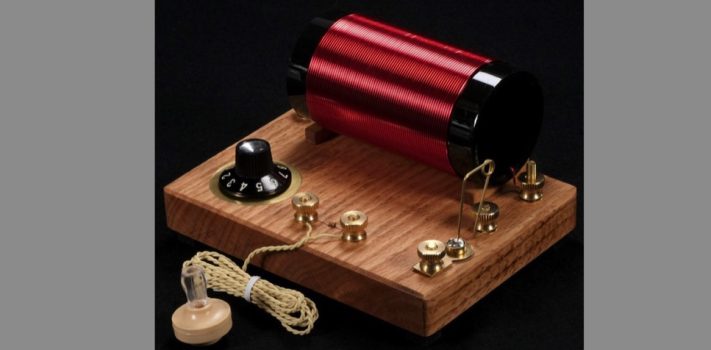
Introductory Disclaimer: I have not been paid for writing this article, and I own the radio being reviewed. Scenario: The world has gone mad, it is now TEOTWAWKI and it’s just not a pretty picture folks. And if that wasn’t bad enough, what with the power grid being down, looters and such, and some bozo declaring martial law effectively shutting down all radio, internet, and anything capable of receiving any information except what “THEY” want you to hear … hard to imagine? If you can find a holocaust survivor, or anyone who lived during WWII ask them if that sounds …


Small Scale PV Power For TEOTWAWKI, by Mike in Alaska

When it all hits the fan and the grid is gone for whatever reason, be it EMP, all out nuclear exchange, a hurricane, or possibly a tornado, snow knocking down trees, or as we say up here in the interior of Alaska the four reasons power goes out: it’s either too hot, too cold, too wet, or the dawgs pee on the phone pole, and when that happens, we are now all equally being given a ride back in time … a time of no lights to just switch on, no medical life sustaining devices, and now it’s “game-on”, folks. …


Practical Preparedness Suggestions – Part 2, by R.J.

(Continued from Part 1. This concludes the article.) 5. Self Defense This segment references reading, training and situational awareness that will be difficult for some people. Use what you can. Learn how to profile people and your surroundings. It happens in many forms, constantly. There are predators who don’t care about how nice you are. (Jeremiah 17:9 “The heart is deceitful above all things, and desperately wicked: who can know it?”) They will take advantage of the graces and courtesies that we usually employ to soften or de-escalate a problem. Learn what and how those predators think. Trust me, you …


Practical Preparedness Suggestions – Part 1, by R.J.

This article is a compilation of practical preparedness tips, insights, and lessons learned. It starts with what I call inner resources, or mindset and moves toward the hard, practical items. I offer a rather broad field of experience, including military/industrial electrical work, Christian hospitality in organized retreat settings, hospice/end of life care, and some alternative power experience. I’ll close the article with a Christian exhortation as we head into this Christmas season. Mindset You can break the preparedness mindset down into: homesteading, military, social, domestic categories, etc; or synthesize it into one grand holistic prepster/survivalist perspective. Just don’t flunk the …