Establishing Relationships in Your New Locale, by SaraSue

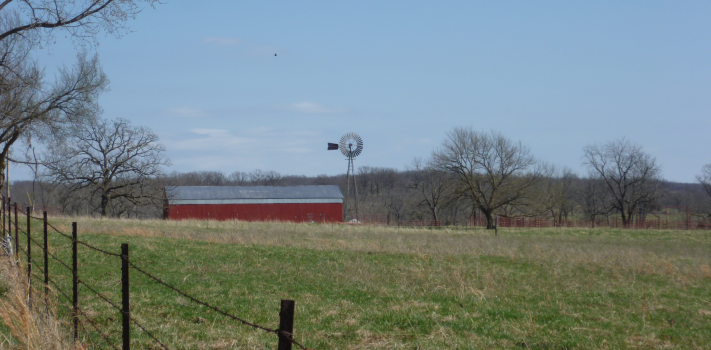
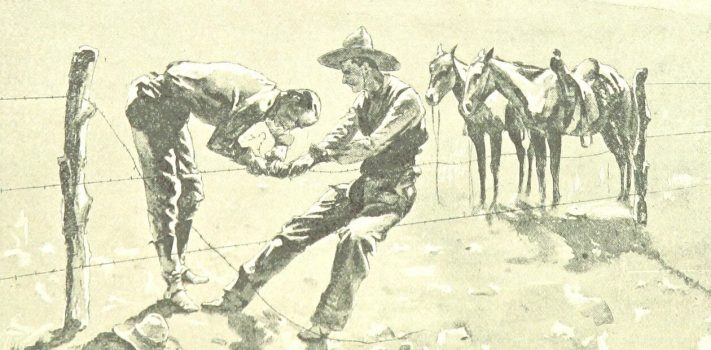
I have been on my farm for about five years, give or take.  I live outside a small town in rural Tennessee.  I didn’t know anyone when I moved here.  The closest neighbor is about half a mile away, and the rest are many miles down the road. If you are planning on moving from the suburbs or cities to the countryside, you might glean something from my experiences.  I hope this helps. The first neighbor I met was an older widow, and the circumstances weren’t great.  My big dogs (German Shepherds) had a habit of escaping the property and …


Caltrops: Making Homemade Tire Spikes, by Joe. R.

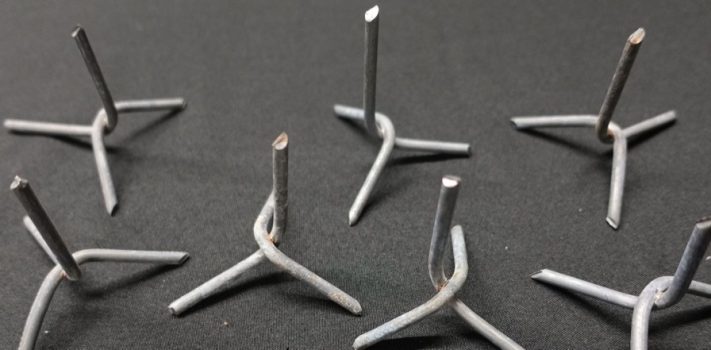
Editor’s Introductory Warning: The devices described in this article can cause great bodily injury. We live in a highly litigious society. Employing caltrops in any situation other than a “Without Rule of Law” societal collapse would invite a lawsuit that could potentially cost hundreds of thousands of dollars or perhaps even more than a million dollars in assessed damages, attorney fees, and court costs. There is also the potential for these to be stepped on inadvertently by family members, friends, pets, or livestock.  So, ONLY use them in absolute extremis, and only in a fenced-off area that will prevent the …


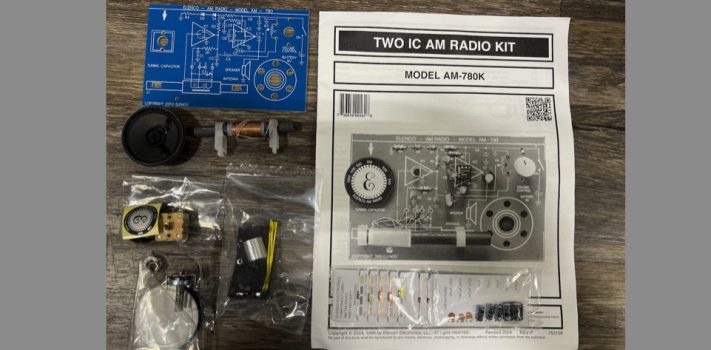
The Elenco Two-IC AM Radio Kit – Part 2, by Mike in Alaska

(Continued from Part 1. This concludes the article.) In a previous article I had described a possible need for having some form of radio communications receiver in a TEOTWAWKI situation. It is just good policy to have something you can hide, run on very low voltage, and in the case of this radio, a battery that you can recharge using a solar panel to generate a charge into a battery bank. This radio is an AM receiver set only. However, the chip set can work at much higher shortwave (SW) frequencies and I am researching the possibility of using it …


The Elenco Two-IC AM Radio Kit – Part 1, by Mike in Alaska

Introductory Note: I purchased this kit for this article and I do not represent the Elenco Company. They have not paid me or provided any materiel for writing this article. This article is a review on the Elenco Model AM-780K AM radio kit. It was designed for students in an electronics lab class, and when I was working on my associate’s degree in Electronics Engineering the college I was attending issued us both the AM radio kit from this company as well as the AM/FM version of it. The knowledge I want to pass on here is that should you …


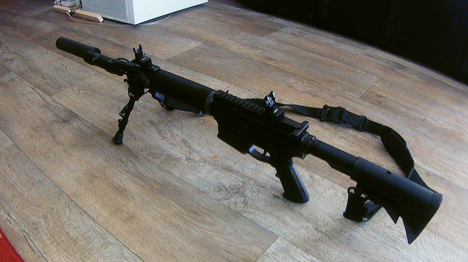
Introduction to Suppressors, by Subsonic Scribe

Effective January 1, 2026, the ATF eliminated the $200 tax on firearm suppressors. This change will undoubtedly encourage many shooters to purchase or make a suppressor. In this article, I will share information for those new to suppressors to be able to make an informed decision as to whether to pursue getting one (or several). As a disclaimer, I have no financial involvement with any companies or products mentioned here. What are firearm suppressors? A firearm suppressor is a muzzle device mounted on a shotgun, rifle, or pistol to reduce the sound made when the gun is fired. They are …


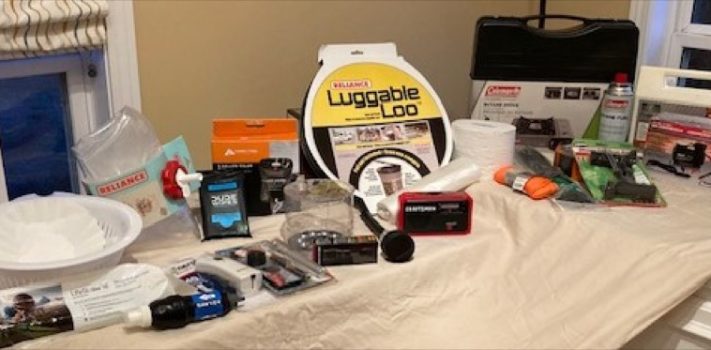
Introducing Your Community to Emergency Preparedness – Part 3, by A.F.

(Continued from Part 2. This concludes the article.) The final aspect of emergency cooking stoves that I cover are biomass units, in particular the Kelly Kettle. I appreciate the ability to configure these units to either “cook” on or quickly boil water with. The small feed openings at the bottom or the chimney opening on top of the kettle do restrict the size of materials used to feed the flames when compared to other small biomass cookers. None the less, the kettle’s speed and efficiency for boiling water as well as its lower weight and ruggedness impress me. The final …


Introducing Your Community to Emergency Preparedness – Part 2, by A.F.

(Continued from Part 1.) The next topic is water. I begin with the low hanging fruit of having water stored at all times. It hurts my soul to thoughtlessly parrot the “one gallon per person per day minimum” tripe we have all heard so many times. My recommendation is to store no less than three gallons per person per day or ten gallons each. I follow this up by encouraging each family set a goal of having a five-gallon water jug set aside for last minute filling for each person. For those who lament storage space, I recommend the collapsible …


Introducing Your Community to Emergency Preparedness – Part 1, by A.F.

Back in 2016, the organizer for a local church’s senior citizen ministry approached me regarding a program she wanted someone to present on family emergency preparedness. In the two previous years our area experienced a “thousand-year flood” and the wind effects from a passing hurricane. Several of the seniors had requested a speaker who could help them think through steps that could be taken to minimize the impacts of another storm or similar short-term disaster. This article is a summary of what that presentation has become after multiple iterations over the past ten years. My hope in sharing is that …


Lessons From a Fight at a Restaurant, by Robert E. Downing

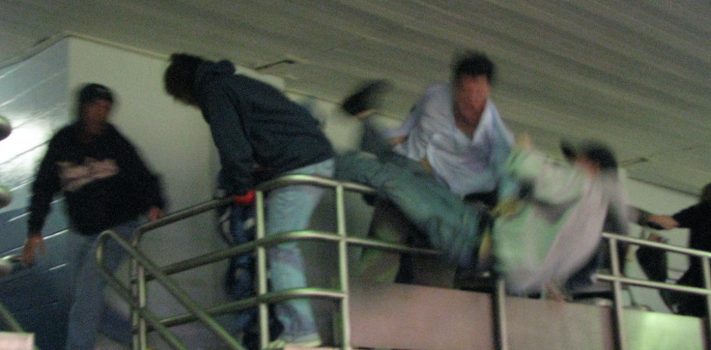
(The photo above, courtesy of Openverse, was taken by “Terren in Virginia“, a witness to a 2008 baseball team “fan rivalry” brawl at a New York sports stadium.) The following is what I learned about security at lunch one day: Scenario One Tuesday, about six weeks ago, I stopped for a late lunch at a local upscale family restaurant in Virginia Beach, Virginia, that is part of a well-known chain.  It was about 3 o’clock in the afternoon and it seemed to be a quiet place to have lunch and prepare my Sunday school lesson. I selected a seat near …


Balancing Farm Life for Success, by SaraSue

2025 was a difficult year to get through.  By the end of the year, I was not enjoying any of it.  In fact, I wanted to quit (do I feel this way at the end of every year?).  You have to laugh and find your sense of humor or you won’t make it through anything that is slightly difficult.  There were so many things that went wrong, so I had to sit down and list accomplishments to remind myself that a lot of things went right.  And once reminded of all the good, I can face the next year in …


A Crystal Radio Kit for TEOTWAWKI – Part 2, by Mike in Alaska

(Continued from Part 1. This concludes the article.) Once you have cut, stripped, and made the proper ring terminal connections to the wires, then the  next job is to solder them to the various locations as required; this will involve soldering the 6.0” wire and two other wires twisted together as one wire onto the variable capacitor of the kit. I used a dab of Kester 186 solder flux on the wires before I tinned them and then after I crimped the wires onto the terminals, I put a very small drop of the flux on the crimp connection and …


A Crystal Radio Kit for TEOTWAWKI – Part 1, by Mike in Alaska

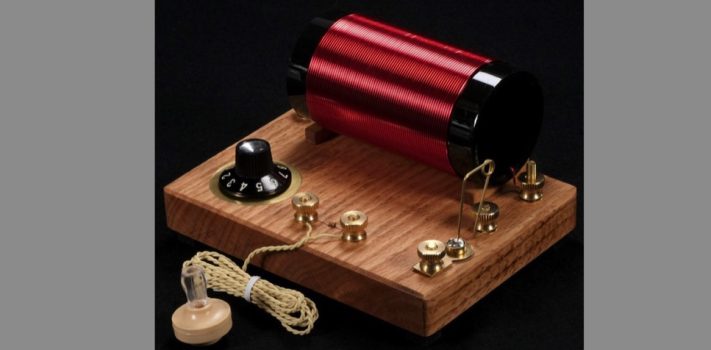
Imagine a time when radio was just some experiment in the labs or basements of inventors trying to figure out the phenomenon of sounds being heard over the air. Seems a bit of a stretch? During the period of 1904 to 1915 the first types of radio transmitters were developed which produced continuous sinusoidal waves: the arc converter (Poulsen Arc) and the Alexanderson alternator. These slowly replaced the old damped-wave spark gap transmitters. Besides having a longer transmission range, these transmitters could be modulated with an audio (voice or music) signal to transmit sound by amplitude modulation (AM) radiotelephony. So …


SWL Receiver Considerations and Buying Advice, by Sarge B.

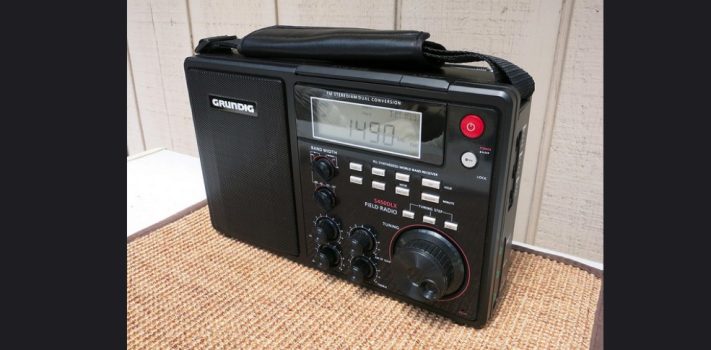
The following is my list of recommended features and some features to avoid, when looking  for a general coverage receiver. This is based upon my personal experience over the years as a shortwave listener (SWL) and Amateur Radio operator. Frequency Coverage: Look for a minimum frequency coverage of 500 kHz to 30 MHz. This covers the AM broadcast band (520 – 1710 kHz) and all of the shortwave broadcast bands (2 – 30 MHz). Coverage of the FM broadcast band (88-108 MHz) is also highly desirable. Digital frequency display: Allows precise tuning to a specific frequency. Avoid any radios with …


The Hitchhiker’s Guide to TEOTWAWKI – Part 5, by St. Funogas

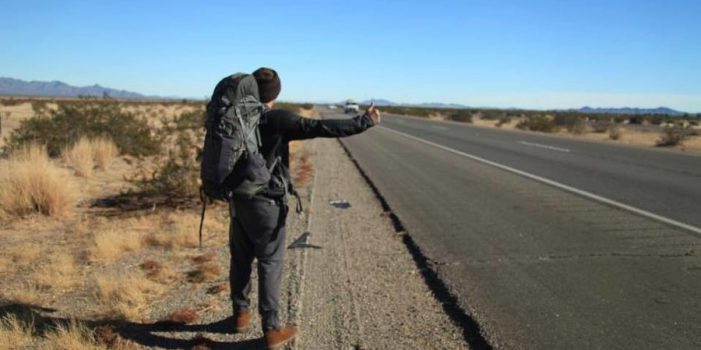
(Continued from Part 4. This concludes the article.) Truckers. Contrary to popular belief, the depiction in the movies of truck drivers being a prime source of hitchhiking rides, just isn’t true. Maybe I’ve been doing something wrong all these years but in all my hitchhiking miles I’ve only been picked up by a trucker once. He explained that between company policies and insurance regulations, they’re not allowed to pick up hitchhikers. So, even though it won’t hurt to try, don’t expect to get many rides from truckers. Comedy. Humor can also help get a ride sometimes. On a cold day …


The Hitchhiker’s Guide to TEOTWAWKI – Part 4, by St. Funogas

(Continued from Part 3.) WEAPON It’s important to always maintain situational awareness wherever we are, and even more so when hitchhiking. There was only one time in all my hitchhiking travels where I had a negative experience during a ride. It got to the point where I thought it might be necessary to calmly let the driver know I was armed. A well-dressed guy in a Lincoln Continental gave me a ride. He looked like he was on his way to an important business meeting. We chitchatted for a while and then he made a homosexual proposition. It was out …