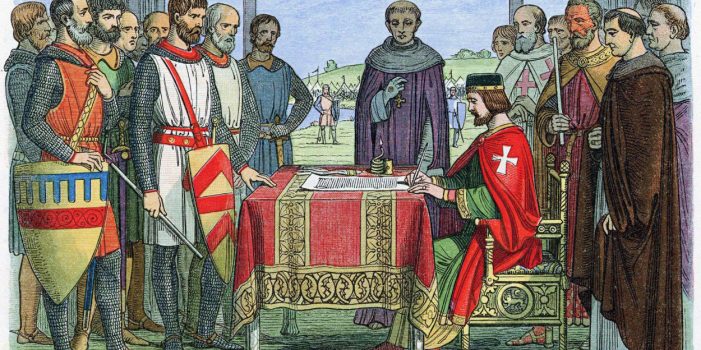
On May 12, 1215, English barons served an ultimatum on King John. This eventually led to the creation and signing of the Magna Carta.
––
May 12, 1942: A German U-boat sank a American cargo ship at the mouth of the Mississippi River. In 1942 and 1943, German submarines sank 56 ships in the Gulf region and damaged another 14. To prevent panic, the U.S. Office of Censorship limited press coverage of the sinkings.
—
SurvivalBlog Writing Contest
Today we present another entry for Round 124 of the SurvivalBlog non-fiction writing contest. This is the final round of the contest. There will not be a “Round 125”! The prizes for this round include:
First Prize:
- A Gunsite Academy Three-Day Course Certificate. This can be used for any of their one, two, or three-day course (a $1,095 value).
- American Gunsmithing Institute (AGI) is providing a $300 certificate good towards any of their DVD training courses. Their course catalog now includes their latest Survival Gunsmithing course.
- HSM Ammunition in Montana is providing a $350 gift certificate. The certificate can be used for any of their products.
- Heaven’s Harvest is providing one of their Original Heirloom Seed Kits (a $139 value.)
- Harvest Guard is providing a 200-Piece Bulk Mix Pack of their Regular and Wide-Mouth Reusable Canning Jar Lids & Gaskets. This is a $161 + shipping value.
Second Prize:
- A SIRT STIC AR-15/M4 Laser Training Package, courtesy of Next Level Training, that has a combined retail value of $679
- Two 1,000-foot spools of full mil-spec U.S.-made 750 paracord (in-stock colors only) from TOUGHGRID.com (a $287 value).
- Preparedness author Jennifer Rader is providing a $200 purchase credit for any of her eight published food storage and medical preparedness books, including the
- A transferable $150 FRN purchase credit from Elk Creek Company, toward the purchase of any pre-1899 antique gun. There is no paperwork required for delivery of pre-1899 guns into most states, making them the last bastion of gun purchasing privacy!
Third Prize:
- A Berkey Light water filter, courtesy of USA Berkey Filters (a $305 value),
- Two sets of The Civil Defense Manual, (in two volumes) — a $193 value — kindly donated by the author, Jack Lawson.
- A $200 credit from Military Surplus LLC that can be applied to purchase and/or shipping costs for any of their in-stock merchandise, including full mil-spec ammo cans, Rothco clothing and field gear, backpacks, optics, compact solar panels, first aid kits, and more.
- A transferable $150 FRN purchase credit from Elk Creek Company, toward the purchase of any pre-1899 antique gun.
—
More than $984,000 worth of prizes have been awarded since we started running this contest. Round 124 ends on May 31st, so get busy writing and e-mail us your entry. Take Note: Any article received after our editorial calendar is filled for May will be considered guest articles and not eligible as contest entries. Remember that there is a 1,500-word minimum, and that articles on practical “how-to” skills for survival have an advantage in the judging.