


Water is essential to all life. The human body can go three weeks without food but only three days without water before completely shutting down. Yet most of us find it much easier to store a year’s worth of food than a month’s worth of water. I live in the suburbs and while I have my beans, bullets and band aids pretty squared away, water has always been an area of concern for me. There is no way to store enough water for a long term outage, and I haven’t found many good options. Recently I have spent more time thinking about this and testing possible options. This article is the result of that.
Water Needs
People need around 1 gallon per person per day just for drinking. For a family of 5, that is 5 gallons per day or 150 gallons per month. At 8 pounds per gallon, that is 1200 pounds of water for the bare minimum for just one month. A year’s supply would be nearly 2000 gallons and 7 tons of water. And that is just the minimum for drinking. Water is also important for sanitation, cooking, flushing toilets, watering gardens, fire fighting and many other things. In our modern world, with water available at the turn of a tap, the average American uses from 60-80 gallons per person per day. In a SHTF situation, we would need to be careful with our water use and try to limit the waste but the true need is likely many times the 1 gallon per day commonly quoted. Realistically, 5-10 gallons per person per day is probably closer to what you need. At 5 gallons per day for a family of 5, that is 9,125 gallons per year or 73,000 pounds. From a storage perspective, this is 1,220 cubic feet of water. That is a cube 12 ft by 12 ft and 8 ft high. That would completely fill a medium sized room from floor to ceiling. Obviously, this is more than the average suburban homeowner can store.
Modern water systems
In my suburb on the outskirts of Minneapolis, our water is pulled from a well over 400 feet deep. Pumps driven by electricity pull water from the ground up to surface level. From there it is chemically treated and filtered to remove pathogens and other contaminants. Then it it pumped into water towers placed around the community and from there, gravity takes it into our homes. In normal times, this means that every time I turn on the tap, step into the shower or flush the toilet, a large, modern system brings clean water right into my house. But if that system fails, we need another way to procure this life-giving resource.
Immediate Actions
If you are home when the balloon goes up and fully understand what is happening, there are several steps you can take to buy time. Start by filling all the bathtubs in your house. Most bathtub drains are not completely watertight so putting some Saran Wrap over the stopper or better yet, using a bathtub bladder in the tub will hold the water longer. The average bathtub holds 50-60 gallons of water. If you have 2 bathtubs, this can give you enough water to flush your toilet 40 times in each bathroom at roughly 1.5 gallons per flush. Next, fill every container you have available with water. I have about a dozen 5 gallon buckets that could be quickly filled with water. I also have a number of 15 gallon totes that I use to store my prepping gear. If a SHTF event happens, I can dump the contents on my basement floor and fill these totes with water. I have several dozen of these and could easily collect several hundred gallons IF I have some awareness of a SHTF event. Any water collected in this time helps extend the time before other solutions are needed.
Long Term
Until recently, other than a case or two of bottled water, this was the extent of my water preps. I assumed (hoped) I would have some awareness of the start of an event and could quickly fill every container available to collect several month’s worth of water for my family as mentioned above. But even if I was able to fill every container in my house, I would eventually run out of water and would need other means to provide for my family. I began to look around my neighborhood for other options to gather water.
Springs: Freshwater springs pour out of the ground. Artesian springs burst out of the ground. We have a large sping about two miles from our house that runs year round and is a local favorite for good clean water. The city actually monitors it and tests for parasites and other contaminants. Driving by, there is usually a line of people waiting to fill jugs at this spring. In a crisis, this may be an option for us to collect fresh water. It is about a two-mile hike and includes a good size hill. If we have a working vehicle, it would be manageable until the fuel ran out. We could also use bikes or a wagon to haul containers of water but it would be a lot of work. The spring would also be a good target for some group to take control of and use access to the water as a means of leverage so this is not something I can count on. You may have a spring near you that you are unaware of. This website can help you locate one: Find A Spring – Locate A Spring
Ponds, Lakes and rivers: I live in a well manicured suburb with numerous drainage and decorative ponds nearby. Unfortunately, none of these is directly adjacent to my property and most are completely bordered by private homes. Additionally, most would be contaminated with all sorts of chemicals from lawn treatments common in our area. Though a filter system could be developed to purify this, I decided it was not my best option and would only be used as a last resort. This water, if easy to obtain, could however be used to flush toilets which would take pressure off other sources of water.
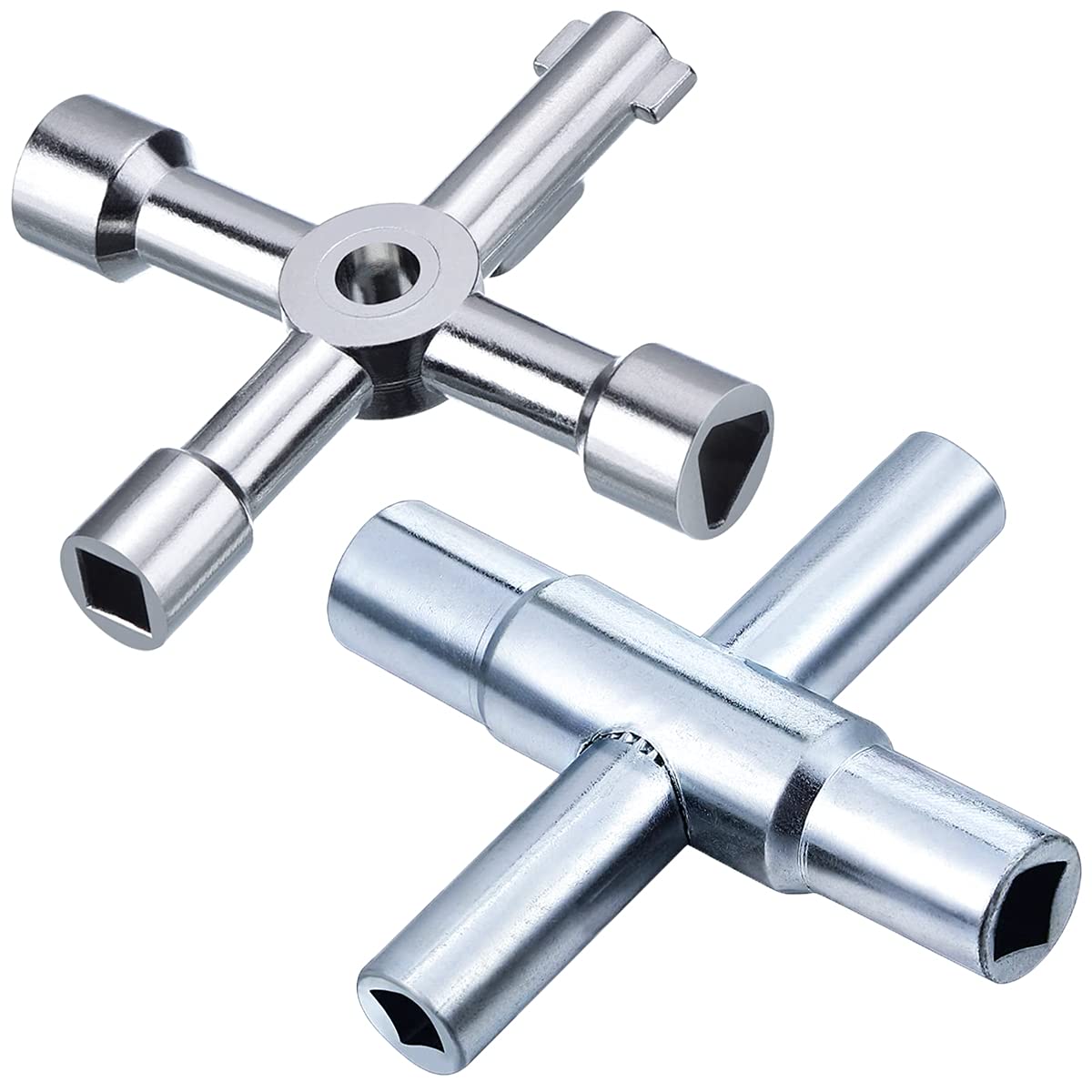 Building interior water: We all know that our water heater holds roughly 40 gallons of water that could be usable in a grid down situation, but many other buildings have a large amount of water in their pipes that can be accessed. Many buildings have spigots on the outside but lack a handle to prevent people from just taking water. Sillcock keys (pictured at tight) are universal keys to these faucets and may give you access to the water held in the building’s pipes. I live in a suburban area and am far from any large buildings so this is not a good option for us.
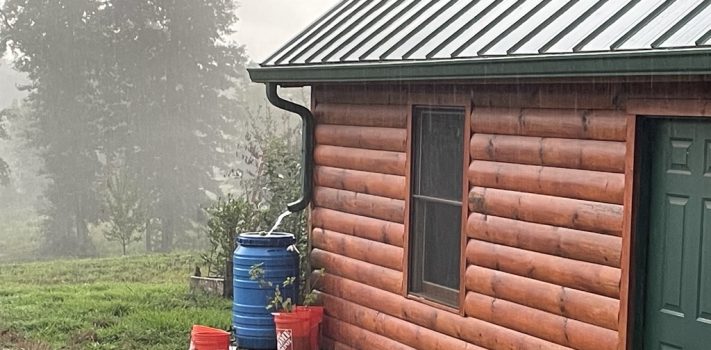
Rainwater: Depending on your location and time of year, you may be able to harvest rainwater. According to local weather outlets, our area of Minnesota receives an average of 31 inches of precipitation per year. 25 of these inches fall from April through October when it will mostly be rain. The remaining 6 inches fall from November through March when it will more than likely be snow. An inch of rain is roughly equivalent to a foot of snow so that remaining 6 inches of precipitation will fall as 6 feet of snow over the winter months.
(Converting snow to water requires a significant amount of heat energy so winter collection needs to account for this as well). A little math on the amount of water that could be collected. Our house is roughly 40’ by 40’ so an inch of water falling on our house would be approximately 133 cubic feet of water. At about 7.5 gallons per cubic feet, that 1 inch of rain would yield nearly 1000 gallons. Even a small rainstorm could easily produce several hundred gallons of water and we get at least some rain most weeks of the summer. I decided that this would be the main pillar of my water plan. Collecting even 10% of the rainfall that hits my roof each year would be more than enough for my family’s annual need.
Our emergency rain catchment system
I set out to develop a large capacity rain catchment system, that would not be obvious to my neighbors but would supply me with enough water. I didn’t want large rain barrels that neighbors might remember when the SHTF. We have a gutter system on our roof and our downspouts have flip up ends to allow for mowing. These ends will conveniently allow me to place totes or 5 gallons buckets at the end of each downspout to collect the run off. I also have a large tarp (20×30 foot) that I can attach to our deck railing and spread out over the yard to capture rainfall there. With a little creativity, I can set this to funnel water directly into a container, significantly increasing the surface area for collection. An inch of rain, falling on this tarp would yield another 375 gallons (probably slightly less as I would need to angle it down and funnel the middle into a catchment, reducing the total surface area).
This system will allow me to capture a significant amount of water with every rainfall we get. But that water is not safe to drink. Rain water contains micro contaminants including bacteria, pollution particles, micro plastics and other things that are not safe to consume. Additionally, runoff from a shingle roof will pick up contaminants from the asphalt shingles and any other things on the roof (ie bird droppings). The water collected needs to be treated in order to use.
A note about water types: We are used to all our water being safe to drink (potable) and use it interchangeably for drinking, bathing, cooking, washing a car, firefighting etc but the reality is that we don’t need the same level of ‘clean’ for all these use, You can flush a toilet or put out a fire with the dirtiest pond water but you wouldn’t want to drink it. You might be ok to bathe or wash clothes in rainwater as long as you don’t ingest it. I have traveled in many countries around the world and have been in places where they warn you not to drink the tap water, though you can use it for bathing, washing your hands and even brushing your teeth as long as you spit the water out. The point is that we don’t need to treat all water to the same standard. It would be good to think of at least 3 levels of water:
Completely untreated and only safe for flushing, fire suppression and little else – this should still be filtered through cloth or screen to remove debris but is otherwise left as collected. This category includes water collected from dirty ponds, lakes and streams.
Somewhat treated – this is water that is made as clean as possible without chemical or mechanical filter. It should be screened for debris and then possibly allowed to settle, and the cleanest water taken from the top. This can be used for washing clothes, bathing and some cleanup work. This could also be used for any level 1 activities.
Potable water – this receives a full filtering process to make it safe for drinking, cooking and anything else. Of course this water could also be used for anything the level 1 or 2 water could, but it would be a waste of resources to treat all water to that level.
We have different storage containers for the different water levels. Rainwater is collected in 15 gallon black totes. These will be our level 2 water. It will also serve level 1 water needs unless we are in a prolonged drought and need to pull water from local ponds.
To create our level 3 (potable) water, some of the collected rainwater will be placed in 5 gallon buckets and allowed to settle for several days. A spigot has been attached about a third of the way from the bottom of the bucket to draw the water from the top, and leave the settlement in the bottom. Once any contaminants have settled, the water from the top will be drawn off into a new bucket. The remaining third of the bucket will be poured back into the level 2 totes and eventually reprocessed. This water should now be relatively free from any debris but could still have viruses, bacteria and other contaminants and will need to be further treated.
I have purchased and used several types of water filter for camping trips to remote areas where water needed to be filtered. My favorite is the Sawyer 2 L water treatment system. This is a gravity fed filter and the manufacturer says this can treat 1 million gallons of water. I don’t think this exact model is still available but there are many other similar gravity flow filters on the market by other makers such as Katadyn and Life Straw. The Sawyer system uses 2 large bladders with a filter in between. The gray bladder is for the raw water and is hung up high where a line feeds through the filter which then feeds into a blue bladder (for clean water). This allows you to set it up and then let it run on its own to filter the water – no pumping required, gravity does all the work. This can filter roughly 1 liter of water per minute. This would require refilling the gray water bladder every 2 minutes when trying to purify a large quantity of water which adds a lot of manual work.
I wanted a larger system so I avoided the bladders and have a two bucket system to work with this. One bucket has a spigot on the bottom to which I attached the tubing that leads to the filter and then the other (lower) end feeds into another bucket which has a lid with a hole cut just large enough to receive the tubing.
The buckets are labeled “Gray Water” and “Clean Water”. We have a second story deck which is perfect for this set up, though a kitchen counter or a table would also work. I put the Gray Water bucket on top of the deck, run the tubing from the spigot to the filter and then from the filter into the Clean Water bucket on the ground. This allows me to filter 5 gallons of water at a time. At the same 1 liter per minute, I would only need to change buckets every 20 minutes or so and would get 5 gallons of drinkable water. Cleaning several days worth of water could be done in a few hours, while also working on other things.
While this setup is my main plan for water treatment, I also have several other options available. (“Two is one and one is none.”)
MSR HyperFlow Filter: This is a hand pumped filter that works by dropping tubing at one end into the dirty water and operating a hand pump that forces water through a ceramic filter and out the other end. This device can filter 2.5 liters per minute but I found it difficult to maintain this pace for very long. It takes considerable time and effort but produces water faster than the Sawyer gravity fed system so if you need a limited amount of water in a hurry, this is good to have.
Portable Filters:
We also have a few individual sized filters- more than one of each type for all members of the family.
Sawyer Mini: this is a small filter that screws into a small pouch. The pouch is filled with gray water and you use it like a water bottle and squeeze clean water directly into your mouth.
Life Straw: this is a portable filter that works like a straw. It is a one inch diameter tube with a filter inside. It works by putting one end in the dirty water and sucking the water through the filter like a straw.
These are great to have in a bugout bag or to use if you are traveling somewhere as you can use it to drink from anywhere but it doesn’t allow you to easily clean a large amount of water so it is better for a temporary solution for a single person. I have these in each of our bug out bags but wouldn’t want to depend on them as a main source of water.
Chemical treatment: There are several forms of chemical treatment available, such as “Aqua tabs” or “Portable Aqua”. These are small tabs you drop into a bottle of water and it will kill off harmful bacteria in less than an hour. These are another great item to carry when traveling to treat water found along the way. I have several containers of these as a back up to my backup system.
Boiling: Bringing water to a rolling boil will kill most harmful bacteria, viruses and protozoa. This can be an effective method for treating water that is otherwise free from chemicals. The main drawback of this type of method is the fuel required to do so. In a SHTF situation, having a fire to purify water will sue up scarce wood or propane that is better left for cooking and heating.
Distillation: This is likely the most effective way to purify water as it can also remove many harmful chemicals. This is a system where water is brought to a boil and the steam funneled into a coil where it is allowed to cool and drip into a second container. The resulting water will be free of nearly all contaminants. While this can produce the cleanest water, it is a complicated system to build and would require a lot more fuel than just boiling the water. I would only recommend this for either a situation where the water was heavily contaminated with chemicals or where fuel was incredibly abundant.
JWR Adds: Distilled water should not be used for drinking for more than just a few days. It lacks some trace elements that you body needs to stay healthy.
Closing thoughts
Until recently, water was a big gap in my preps. With this rain catchment and treatment system, I feel I at least have a fighting chance to provide enough water for my family in most foreseeable grid down scenarios. I hope you found it interesting.
Disclaimer: All of the products mentioned here are ones I purchased myself. I did not receive any financial or other incentive to mention any product.