
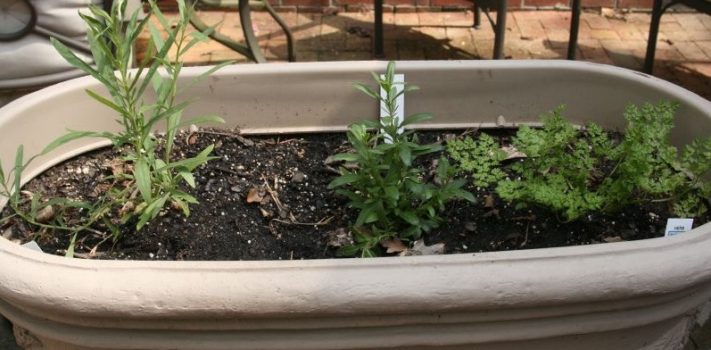


Editor’s Introductory Note: The following is an excerpt from the book Armageddon Pharmacy: Herbal Medicine When the Drugstore Is Closed. Jennifer Rader is a SurvivalBlog reader and one of our writing contest prize donors. – JWR
John D. Rockefeller, America’s first billionaire, is credited with saying “a pill for every ill.” Prior to his pervasive influence on medicine—prior to closing schools that taught natural medicine, herbs occupied a respected position in American medical practice. However, herbs can’t be patented, and Rockefeller was all about making money. Thus began our transition from herbal medicine to pills, from solving many of our own health problems to slavishly depending on doctors to treat everything for us, no matter how trivial.
The late pandemic (or however you choose to describe COVID-19) awakened many to the hazards of depending too heavily on the American health care system. Some refused to see a doctor or go to the emergency room due to fear of contracting something worse. Some couldn’t go because they couldn’t get in—because there were too many other patients or because the doctor quit. As supply chain issues developed, some couldn’t obtain their maintenance medications. We depend on a robust medical system to care for every need from cradle to grave.
Life never changed for those in developing countries, however. Even now they still have to pay out-of-pocket for absolutely everything. If they can’t afford something essential, they die. Simple as that. The life-saving and life-maintaining medications that American insurance plans provide day in and day out would quickly bankrupt the average third-world citizen. Americans in general pity the poor suckers who have to make do with herbs.
Soon, they’ll be the ones pitying us.
Because we are a first world country with first-world health issues. As my oldest son learned while serving a mission in Ukraine, Americans are fragile because we are accustomed to clean water. We are fragile because our immune systems haven’t been challenged by Third-World diseases. And we’re fragile because we don’t have the knowledge of herbal treatments passed down from our grandparents because they didn’t have to use them. They had modern medicine. When things fall apart, in contrast to our grandparents and those Third-Worlders, we’ll know we had modern medicine and be helpless without it.
Unless we prepare.
The United States is on a disturbing trajectory to become one of those third-world countries. And after we collapse, we won’t even have the internet to research alternative treatments. We need to do that now. Plants are sources of incredibly potent antibiotics, antivirals, antifungals, anthelminthics (de-wormers), etc. And they’re renewable and sustainable, unlike the fish antibiotics and other leftover pharmaceuticals that we’ve squirreled away.
Plant-based medicine
Because plant-based medicines are powerful, pharmaceutical companies pour billions of dollars into researching and isolating compounds from them. Throughout all of human history, our medicines have come from plants. But Big Pharma can’t patent plants and make money. Big Pharma can only patent synthetic compounds, so they isolate the most promising active constituents from plants and reproduce them synthetically. And charge big bucks.
Well into the 20th century the US Pharmacopeia included herbs like chamomile, dandelion, gumweed, lavender, etc. They constituted the worldwide pharmacy before we had Big Pharma. They’re what God gave us. They still work today. They are generally safer than pills, with less risk of side effects or overdosing.
(See: B. Khameneh, et al., Phytochemicals: A Promising Weapon in the Arsenal against Antibiotic-Resistant Bacteria, Antibiotics (Basel), 26 August 2021, Vol 10 No 9.)
They are not “no risk”—nothing is risk-free. Someone can always have an allergic reaction.
With the collapse of our society, we could find ourselves in the same conditions as our ancestors. But we are blessed with the critical advantage of possessing a basic understanding of the importance of hygiene, sanitation, germs, disease transmission, and nutrition. We know about essential vitamins and minerals and sources for them. We can identify many of the most common and life-threatening diseases. Unfortunately, our stockpiles will eventually become exhausted.
Without modern medicines, we will eventually be restricted to using plants. And maybe that’s a good thing. The conventional antibiotics we’ve stored will have to be administered as judiciously as possible, which means they don’t get used for trivial infections. (Not that strep throat and ear infections ever feel trivial—they surely don’t—but those will likely resolve without using the precious pills.) Herbs can step in and help here. And herbs are far less likely to cause serious allergic reactions, like penicillin can, or toxic side effects, like doxycycline and ciprofloxacin can.
Our evolving economy will affect doctors just as much as it affects the rest of us. It will affect our access to them as well as their ability to work. Without the technology they employ to diagnose disease, many will be utterly incapacitated. Most of their references are electronic, and they rely on just-in-time delivery of supplies and medications like everybody else.
We won’t have laboratories to identify disease and bacterial and viral infections. We’ll have to channel Dr. House sometimes and make our best guesses. That can be hazardous when dealing with disease. And the first rule of medicine is to do no harm. Don’t give medicines when you aren’t sure—when you don’t know if the patient is allergic and you don’t have the EpiPen to counteract anaphylaxis. When making guesses, using herbs is usually going to be safer than popping pills.
The information presented herein is only a springboard for your further research. For that reason, copious endnotes are provided [in the book’s full text] so that you can check for yourself, especially for conditions you already know you have, conditions that run in your family that you might wish to prepare for, and diseases that will return with a collapse in sanitation and clean water. References are also provided for physicians, even though they won’t be able to actually read them if the internet is down. They know herbs work—it’s where most modern medicines ultimately originate—but they like to see some hard science supporting the use. If you can provide the source at least—Buhner’s works, the NCBI database, another doctor like Joseph Alton, at the very least, or what results were obtained in clinical trials, with peer-reviewed journal references, they might be more comfortable. Maybe.
World leaders, political and otherwise, badgered us to “trust the science.” Much to their sorrow, however, many of us didn’t trust their version of the science. Perhaps because it wasn’t science. Understandably, we’ve got trust issues now. And so that is why a full 10% of this book is comprised of the references. Because when it comes to your health, you should be able to make your own decisions based on all the information available. Treatment shouldn’t be based on the unicorns and fairy dust stereotypes common to some herbal medicine practitioners. We need to be able to evaluate the sources ourselves.
- Like many physicians, some people were raised to believe all things conventional medicine, and venturing into herbs is a little unsettling. They want links to actual scientific, peer-reviewed journals and books written by Americans and Europeans.
- Some believe that those results can be manipulated and would like other sources, like:
Historical records, which is where we currently obtain much of our understanding of herbal medicine. While some of it can be supported by modern research, some cannot. To my knowledge, no one is researching the efficacy of herbs in treating smallpox, polio, diphtheria, tetanus, or measles. We have to rely on historical records and anecdotes from Native Americans, traditional Chinese medicine, and research ourselves to prepare for a resurgence of old, previously eradicated diseases. We can’t just dismiss references because they lack modern clinical research on a disease. We may not have any other options if we hope to save a loved one. - Others don’t trust anything coming out of China or third-world countries, even if the research is published in peer-reviewed journals.
- Some want a bit more than oral traditions of the Native Americans.
- Some want to see numerous sources, not just one.
Much of the research conducted on herbal medicine occurs in countries outside North America and Western Europe. These places must rely on their herbal traditions. They can’t afford advanced western technologies and research and expensive pharmaceuticals to care for so many people who live in poverty. That’s reality. Because poorer countries can’t afford Big Pharma’s prices for their designer drugs, researchers there focus more on studying the herbal folk remedies that have been used for hundreds and thousands of years.
An economic collapse, whether personal, national, or global, will force most people to alter their diet. Without refrigerated trucks shipping food to grocery stores, we’ll of necessity be eating a whole lot less fresh meat and dairy. We’ll be eating more whole grains and beans. Cooking oil will be precious and carefully rationed. So will sugar. Fresh produce will be limited to those who grow it. At the same time, we’ll be doing more physical labor. Some of us are going get those beach bodies we haven’t seen since high school, with a side order of wrinkles. There will be a lot less obesity and type-2 diabetes, high blood pressure, ulcers, and GERD. Physical labor means that it will be easier for some to fall asleep. If, however, the diet evolves to a lower fiber diet and processed foods, there will be other health challenges. If vitamins are lacking, more diseases. Fun.
As a healthier diet and more exercise reduce the need for some maintenance medications, we may develop other conditions that will need treatment—ills we hadn’t anticipated. Things like more joint pain, sore muscles, arthritis, infected wounds, snakebites, burns. A worse diet will compound health issues. If the air-conditioning disappears, more doors and windows will be open. There will be more exposure to mosquitoes and other biting insects. More time outdoors equals more time with ticks. If cities no longer provide clean water and sewage systems fail, cholera, typhoid, polio and other diseases will return with a vengeance. Will we be ready?
About The Author
Jennifer Rader is the author of several medical and food storage preparedness books. You can order them through her website, AuthorJenniferRader.com, or at Amazon.com. You can contact her directly at: PrepSchoolDaily@gmail.com if you would like to pay by check or with pre-1965 U.S. “junk” silver.