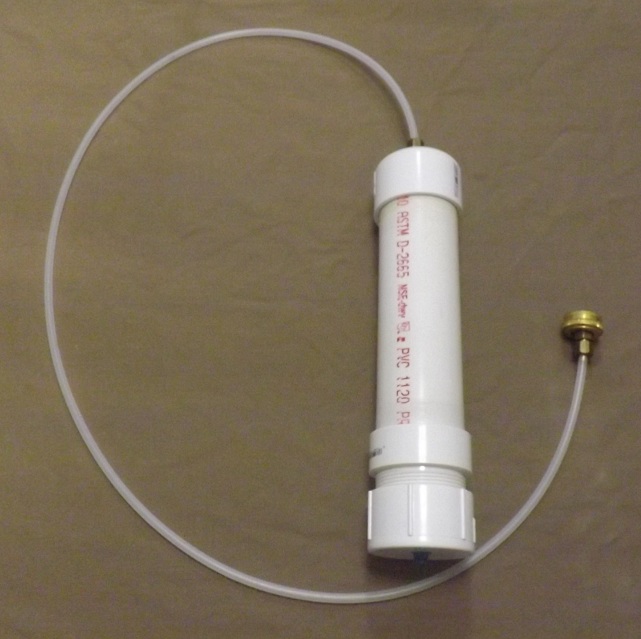
Do-It-Yourself Ceramic Water Filter, by The Architect

Years ago, while visiting the South American country of Peru, I was stunned to find that every drop of drinking water had to first be boiled, before it was considered safe to drink. In a country of 22 million people, I thought this an incredible waste of money and natural resources. There had to be a better way. On my return, I set out to design a cheap ceramic filter that could be easily constructed using simple components readily obtained from any hardware or box store.

(As a side note, on one of my trips to Peru, I was a bit careless. Suffice it to say that Montezuma has nothing on the Inca revenge.)

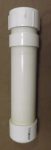
photo1

Components

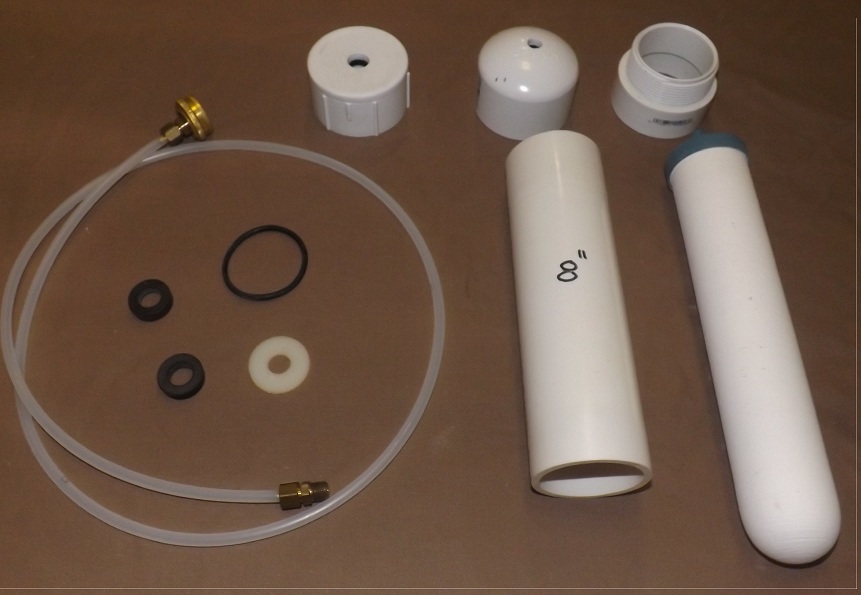
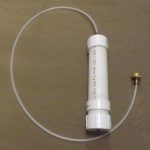
Components required to make the ceramic filter include the following:

  • 1 piece of 8” long 2” schedule 40 PVC pipe
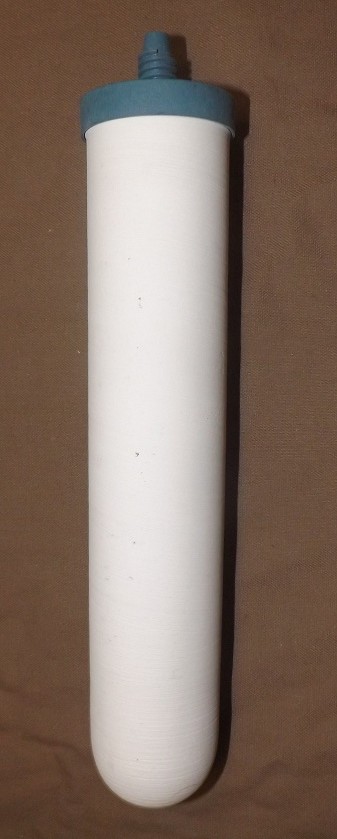
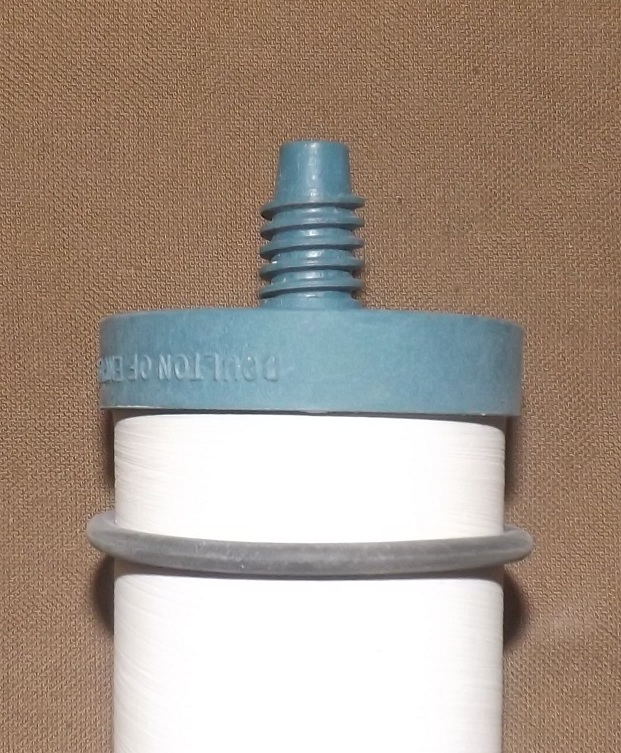
  • 2” dia. Doulton ceramic filter candle (or similar)
  • 2” PVC rounded end cap
  • 2” dia. female connector – threaded
  • 2” PVC end cap – threaded
  • 3’ ¼” I.D. plastic icemaker tubing
  • ¼” I.D. Hose Bib connector
  • 3/8” icemaker line connector
  • 2” I.D. x 1/8” thick rubber “O” ring
  • 5/8” I.D. spacers or washers

Tools

Tools and other items that will be required include the following:

  • 3/8” power or cordless drill
  • Drill bit set and additional ½” drill bit
  • Crescent wrench
  • Round bastard file
  • PVC glue and thread tape
  • Medium grit sandpaper
  • Rubber mallet (optional)

photo2

The Filter Candle

The Doulton or British Berkefeld ceramic water filter has been in use around the world since 1827. It has been proven reliable in over 150 countries to remove up to 99.99 percent of common bio-pathogens. It can also be a bit expensive, costing about $250. I was lucky enough to find an entire case of old, delaminated filters on Ebay for $5 each, but a new filter can be purchased for about $25.

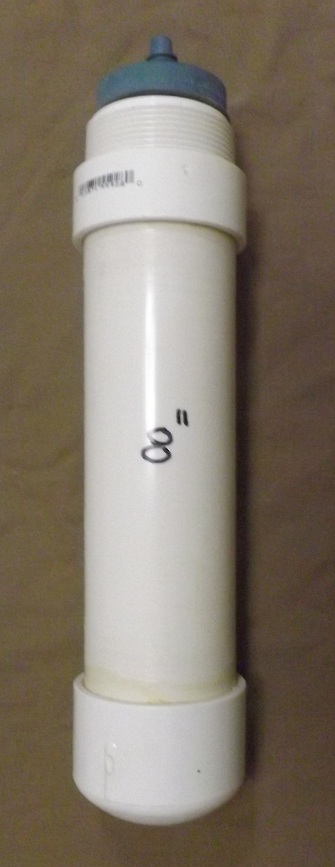
photo3

Construction

Before you begin, center drill a ½” hole in the threaded end cap. (This hole will have to be widened with a file to fit the filter post.) Also drill a 3/8” hole in the rounded end cap. Attach the Hose Bib and 3/8” connectors to the icemaker line (Photo 1).

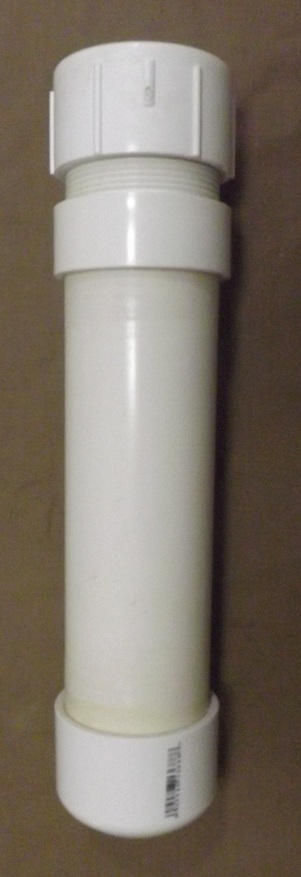
photo4

  1. With the sandpaper, roughen any PVC surface that will receive glue (interior of end caps, and both exterior ends of 2” PVC pipe). Apply glue and immediately attach end cap. Seat securely. (You may use a rubber mallet, if one is available.) Glue and attach the remaining end cap. Let stand for 30 minutes to cure.
    photo5
  2. Slip rubber “O” ring around the filter barrel and work it upwards as far as it will go. (Note: Do not forget the “O” ring, as it is a crucial part of the assembly.)
    photo6
  3. Slide the filter candle (with “O” ring in place) into the finished PVC pipe assembly. Position spacers and/or washers onto the filter post, which should equal about 3/8” or more. Attach threaded end cap to PVC filter assembly. The end cap must be tight enough to apply sufficient pressure on the “O” ring to prevent infiltration of contaminated water. (To test the seal, shake the completed filter from side to side; if you hear the ceramic filter moving, you will need to add a washer or tighten the cap further.)
    photo7
  4. Apply thread tape to 3/8 connector, and then insert and secure it to the rounded end cap. (In the event that the filter seems to be blocked, you may need to back the 3/8” connector out a bit.)

Filter Use And Care

In my case, the carbon layer inside the filter had begun to delaminate, so this design reverses the intended flow direction of the filter candle. Upon first use, I needed to run water through the filter to flush out the powdered carbon that was inside. The filter will serve nicely without the carbon pre-filter and will be effective at filtering out pathogens without it. Mine is not the only design that will work. There are multiple ways to do this. Be creative, and use a little common sense. After use, it is best to let the filter drain to remove as much water as possible.

(Important note: In the event that you need to filter pond or contaminated water, you must pre-filter the water with cloth or coffee filters to remove sediment, et cetera. Failure to do so will result in the filter becoming clogged and requiring that it be disassembled for cleaning.)

Conclusion

Some readers may rightly question the tested effectiveness of this filter. To those, I am happy to report that I did send a few of these filters down to friends in Peru, where they were used for many years, and they never had to boil their water ever again.

And finally, as we all know, the bottled water industry is a scam. Bottled water is merely municipal tap water that has been carbon filtered to improve the taste, or at best, run through a reverse osmosis system. Stop buying bottled water, and this filter will pay for itself in a matter of months, not to mention all the plastic bottles that you will no longer have to recycle or throw away.


Letter Re: What is Your (HJL and JWR) Take on the Dakota Access Issue?

I’m having difficulty understanding the Dakota Access issue. What is your take on the situation? The reporting that I’ve seen has been scarce and one-sided.

I thought I read that the initial proposed route was outside of sacred land, but the proposal was rejected. This prompted the police to intervene.

Recently I saw the new route would go right through a large watershed area. Understandably the Indigenous People are concerned.

Is this truly police overstepping their bounds and once again violating trust with Indigenous Peoples yet again?

I’ve been in and out of the hospital recently, so if you covered this already, I’m sorry to ask again. – Eric X.

HJL’s Comment: As usual, there is more than meets the eye, especially when the mainstream media is involved. In addition to the media promoting the violence that is taking place, I am hearing concerns that the Indian groups involved are basically trying to renegotiate the agreements for much higher payments. At this point, it is difficult to know the real truth, but doubting what you hear is always a good policy when it’s coming from the media.


News From The American Redoubt:

American Redoubt: Preparing for a societal storm (news television segment) One of the businesses mentioned in that news segment is Redoubt Surplus and Tactical, in Dalton Gardens, Idaho.

o o o

Here is another news segment, with the same theme: Preparing for the end of times in the Northwest—American Redoubt movement inspiring survivalists to buy property in remote areas.

o o o

And here is a follow-up interview with a back-to-the-land couple: New age homesteaders find freedom off the grid. Here is their web site: ThePreparedHomestead.org. (It includes a blog.)


Economics and Investing:

Who’s behind the war on cash? – DSV

o o o

November FOMC Minutes And Gold Price

o o o

Suckered Again: How Likely Is A OPEC Production Cut? The upcoming OPEC oil production meeting is once again moving markets, but investors would do well to remember the cartel’s history.

o o o

Wells Fargo Hit With Class Action Over Target-Date Funds

o o o

SurvivalBlog and its editors are not paid investment counselors or advisers. Please see our Provisos page for details.


Notes for Monday – November 28, 2016

On November 28th, 1520, Magellan finally reached the Pacific Ocean after navigating the dangerous straits on the southern tip of South America that now bear his name. He became the first European explorer to reach the Pacific from the Atlantic.


Zero Tolerance 0804CF, by Pat Cascio

A famous gun writer once said “only accurate guns are interesting…”, and I certain concur with that statement. If a gun isn’t accurate and reliable, I lose interest and get rid of it. It can similarly be said that “only sharp knives are interesting…”. I have no use for junk knives. If a knife isn’t up to my high standards, I won’t waste my time testing or writing about it.

dscf0448

For quite a few years, I collected (and designed) custom-made knives, and I really enjoyed it. Even though it was an expensive hobby, it was still fun. When we moved from Colorado back to Oregon, I sold off all my custom knives, even the ones I designed, to make ends meet for the long move. I certainly regret selling the knives I designed and had made. However, these days I’m still designing some knives, so my hidden talent, if you can call it that, is still active to a small degree.

I used to believe that, only custom, hand-made knives were worth owning, and perhaps twenty years ago that might have been true to a certain extent. However, today’s modern knife factories are turning out custom-quality knives in the factories at prices that are a bargain for what you are getting. Enter Zero Tolerance knives. They are producing custom-quality, hard-use folding and fixed blade knives that anyone would be proud to own. Also, on the boxes their knives come in, it says on the side “Proudly Overbuilt In The USA”. They’re actually built right here in my home state of Oregon, I might add. Zero Tolerance knives are made by Kershaw knives right in the same plant. However, as stated, the ZT line-up are all produced for hard-use, and many of their customers are military and law enforcement– those who use knives on a daily basis and demand the best.

dscf0449

The folder under review today is the Model 0804CF, which was designed by Todd Rexford, who is one of the hottest custom knife makers around these days. His knives are always in demand. The 0804CF is based on his Gamma folder, and it is a simple design with nothing complicated or “fancy” about it, and I like simple. Simple works for me. Yeah, I still like fancy designs on knives for collecting, but for use give me a simple design made with quality materials backed by a lifetime warranty, too.

dscf0452

The 0804CF has a 3.9-inch blade made out of CTS-204P steel with a tungsten DLC coating to help protect the blade from the elements. CTS-204P is a powdered metallurgy steel. For the life of me I can’t understand how you can take a powder and compress it into a knife blade, but it is being done, and it works. The blade is opened, using a flipper, and it is on KVT ball-bearings for the opening system. It is smooth, very smooth opening and very fast. It doesn’t take a lot of effort to open the blade, just some pressure on the flipper and the blade opens. It is also securely locked in the handle as well. The backspacer is made out of aluminum, which also helps keep the weight down a little bit.

This is a frame-lock blade, and the one side is manufactured out of super-tough titanium, while the opposite side is very cool-looking and tough carbon fiber. There is also a reversible pocket/clothing clip on the handle for right or left hand carry in your pants pocket, and the knife sits low in the pocket. The clip itself is slim but might be one of the thickest clips I’ve ever encountered. There is a lanyard hold on the butt of the blade, and the blade sits in the pocket, tip-up. Closed length of the knife is 4.9 inches, and opened it is 8.9 inches. For a large folder, it only weighs 5.1 oz; the carbon fiber on the handle helps keep the weight down.

dscf0453

Okay, I’m gonna admit something here; when I first took the 0804CF out of the box, it just didn’t rattle my bones. It was kind of like “ho-hum” to my way of thinking. Then again, as I stated, I like simple in a knife designed for everyday carry and use. However, in very short order, the 0804CF really grew on me. It feels great in the hand, just fantastic. For a large folder, it could also be considered a Gent’s folder. It is that nice. The carbon fiber really sets off the look on this big knife. It’s very eye-catching. Needless to say, the blade came out of the box, scary sharp! I’ve toured the Kershaw plant a couple of times in the past, and it just amazes me how fast those technicians sharpen knives, and they use newspaper to test for sharpness. The knives easily slice through the newspaper.

dscf0455

I’ve been carrying the 0804CF for well over a month now and using it for all manner of chores on my small homestead. One of the toughest things to cut are blackberry vines, and it takes a very sharp knife to cut through a blackberry vine with a single swipe. Also, the shorter the blade the harder it is to cut. Many fixed blade knives have a tough time cutting through these vines. The 0804CF easily severed the vines with a single swipe; it was not a problem at all. My wife does tend to get a bit miffed at me when I “trim” her rose bushes in front of our living room window with a knife, but it needs to be done and what better way to do it than with a knife I have for testing, right?

Almost daily, I receive boxes from FedEx, UPS, or USPS, and I use whatever knife I happen to be carrying in my pocket to open the boxes. Cardboard is pretty tough stuff and will dull a knife in short order, believe it or not. The knife was also used in the kitchen for cutting meat and veggies, and even though this is a folding knife, meant for other chores, it worked great around the kitchen. I also stabbed the knife into stacked cardboard, and it easily went all the way to the handle. It was nice!

dscf0456

I always show new knives I get for testing to the guys at the local gun shop I haunt, and they had nothing but praise for this folder, and more than one of ‘em just stuck the knife in their pants pocket, like I didn’t see that? To be sure, when there are some other regular customers in the shop that I know, I also let them handle a knife I’m carrying. Everyone loved the 0804CF as well.

Many folding knives are just too fragile, in my humble opinion, to be used for self defense or for actually military combat. They’re not knives you can trust to save your bacon, if it comes down to hand-to-hand combat and all you have is a folding knife. However, the 0804CF is one tough folder, and it wouldn’t surprise me in the least if this design isn’t already in the hands of some of our Special Forces troops– guys who operate behind enemy lines all of the time (that is, if there is such a thing as “enemy lines” these days).

dscf0457

As I always say, quality never comes cheap, and if you buy junk, you buy it over and over again because it doesn’t stand up to your everyday needs. However, when you spend your hard-earned money on quality products, you can expect the best for your money. The 0804CF doesn’t come cheap with full-retail at $350. Yeah, that’s a lot of money. However, if you check around at what hand-made Rexford Gamma folders are selling for (if you can even find one), you’ll certainly appreciate what ZT has done with the design. It is a lot of knife for the money.

Kershaw/Emerson CQC-9K Folder…

As an aside, many of us can’t afford to spend a lot of money on a knife, and I can certainly stand in that crowd. In the past, I’ve tested some of the Kershaw knives, Ernest Emerson designs, and I don’t want to rehash that here. They are a lot of knife for very little money. If you check the Emerson Knives website, you will more often than not find that they are out-of-stock on many models; they are always in demand. So, Emerson and Kershaw agreed to a collaboration, and Emerson is designing folders for Kershaw. The latest is the CQC-9K, and this is one of the bigger Emerson designs that Kershaw is producing.

The CQC-9K has a 3.6-inch blade made out of 8Cr13MoV– stainless steel, and it is made in China. Don’t let that scare you away. The knives I’ve seen from China that Kershaw is having made over there are outstanding in quality. This blade has a recurve quality to it, and it makes cutting rope and similar things easier. It really grabs and digs into material when cutting. The handle is black coated steel on one side and G-10 on the front side, and G-10 is some tough stuff.

The best thing about the CQC-9K is that it has not only a thumb stud for easy opening, it also has the Emerson patented “Wave” that allows you to draw the knife from your pocket, and its blade will be fully opened once the knife clears your pocket, if you want it that way.

Check out the CQC-9K. It is a lot of knife for $69.99, and if you shop around you can find it deeply discounted in some of the big box stores or on the Internet. You are getting an Emerson-designed folder that is very well made for very little money. I think you’ll like it, a lot!


Recipe of the Week: Pumpkin Cake, by C.S.

Ingredients:

  • 4 eggs (room temp.)
  • 2 cups flour
  • 2 tsp. baking soda
  • ½ tsp. salt
  • 2 tsp. cloves
  • 2 tsp. cinnamon
  • ½ tsp. ground ginger
  • ¼ tsp. nutmeg
  • 2 cups granulated sugar
  • 1 cup oil
  • 1 can (1lb.) pumpkin

Directions:

  1. Preheat oven to 350 degrees.
  2. Sift together dry ingredients.
  3. In a large mixing bowl, beat eggs and sugar at high speed until light and fluffy.
  4. Then beat in oil and pumpkin at low speed.
  5. Add dry ingredients, mix until combined.
  6. Pour into an ungreased 9” tube pan.
  7. Bake about 1 hour.

Cool, then remove from pan. Serve with whipped cream or ice cream.

o o o

Do you have a favorite recipe that would be of interest to SurvivalBlog readers? Please send it via e-mail. Thanks!


Letter Re: TEOTWAWKI Preps and Christianity

Dear Mr. Latimer,
After reading the article, I need to add a few points. It is well that we prepare spiritually as well as temporally for whatever calamity comes our way. Proverbs 27:12 comes to mind. One thing that must be foremost in our minds when we network with others in a church-going scenario is to look and listen before speaking. I live here in Idaho not too far from the WA state line. I am a recent arrival from the Peoples Democratic Socialist Republic of Oregon. What I saw there, I am seeing here. Make sure your Pastor, Priest, Minister, or Rabbi is NOT part of or affiliated with the FEMA Clergy Response Team. This can be done with a little sub-rosa inquiry and a few planned, well-placed and innocuous inquiries of the church members, church elders, the head honcho himself, or by reading their weekly bulletins at the service or on their website. Next, feel out how the head honcho feels about Romans 13. Is total slavish obedience to the Leviathan at all levels preached from the pulpit? If so, run the other way. Pastor Chuck Baldwin, a nationally recognized authority on Romans 13, has a small book and DVD for sale that is easy for a Bible-reading layperson to understand. He writes a regular column on the NEWSWITHVIEWS website. A government lick spittle is still a slave, whether they are quoting the Good Book or not. Finally, thoroughly vett ANYONE, church member or not, before you take them into your confidence. When I taught at a Christian school some years ago, I became acquainted with several “born-again” folks who I would not want anywhere near me or mine when the balloon goes up. Just because someone tells you he/she has accepted Jesus Christ as his/her savior and is a regular, tithing church-goer does not make them part of your tribe. The forces of darkness are not above infiltrating congregations of believers to count heads, write down license plates in the parking lot, or seek out chatty preppers at evening Bible studies, or after-service coffee fellowships. I have seen it happen. Jesus Christ said whenever two or more are gathered in My name, there I am. My tribe and I heed those words and trust in Him in a secure, closed environment while we pray and prepare. God Bless you all, and may God save our Republic. “DWEEZIL THE WEASEL” – An anonymous Anti-Federalist.


Economics and Investing:

Venezuela’s currency is so devalued it no longer fits in ordinary wallets – G.G.

o o o

China’s Central Bank Gives Warning as Yuan Continues to Fall – G.P.

o o o

What Happened When I Tried to Take $1500 Cash Out of Bank of America-Bank Holiday is Near

o o o

60% Of New Yorkers Are One Paycheck Away From Homelessness

o o o

SurvivalBlog and its editors are not paid investment counselors or advisers. Please see our Provisos page for details.


Roses Are Red and Healthful Too, by Sarah Latimer

We have had beautiful fall weather. However, my flower gardens are pretty well gone, as the brisk, cold fall winds blow and leave only a few dried flowers, seeds, and various remains to remind me of the brilliant colors that once adorned our property earlier in the year. If asked what is my favorite aromatic flower, I might say stargazer lily, gardenia, or rose. If asked what is the most beautiful flower, I would struggle to come up with just one or even three, as there are many I adore, but the rose would certainly be high on the list. If asked what is the most health beneficial flower to grow, again I would have to list several, including borage, echinacea, chamomile, lavender, and primrose. However, what are my all-around favorite flowers, I’d have to say rose and lavender, but the rose holds a tender place in my heart that no other can replace.

I have quite a few “favorite” (actually sentimental) flowers that each remind me of loved ones and special times or places. However, the dozens of rose bushes on our property remind me of Mom. Some of my earliest childhood memories are of literally following her footsteps through her rose garden, where she would spend several mornings each week during the summer pruning bushes and cutting flowers during the summer time. She would tell me the types of her various rose bushes– Abraham Lincoln, Seven Sisters, Peace, and many more. She had trellises of red, pink, and yellow as well as manicured bushes in various colors. Bowls of roses filled our home, and she also took bouquets to Daddy’s office and to friends’ homes, too. They were fragrant and beautiful. The velvet petals mesmerized this little girl, and I enjoyed watching the bees buzz around them, too, and was scolded not to bother those bees that were busy making honey for us to enjoy.

Now, as a mother and grandmother who is more practical than dreamer these days, I have grown to appreciate another aspect of roses that goes beyond their beauty and floral fragrance and even beyond the nostalgic remembrances of my dear mother. I appreciate the fruit of the rose bush– rose hips, which are sometimes also called rose haws. Now is the time they are readily available on some variety of rose bushes.

When the pollinated rose flower’s petals dry and falls off, usually a bulb-like fruit remains. This bulb eventually turns into an orange or red color and may wither and crinkle to turn brown eventually. The ideal, sweetest-flavored rose hip is one that is brightly colored, firm, and smooth on a dried stem. This rose fruit is called a rose hip (or rose haw, to some), and there are many ways to indulge in its benefits.

History

The ancient Chinese, Persians, Greeks, and Romans recognized the value of the rose fruit. Ancient uses. In AD 77, the Roman writer, Pliny the Elder, recorded 32 disorders that responded to treatment with rose preparations. Among the ancient ills treated were stomach upset, pain, headaches, diarrhea, constipation, urinary tract infections, and weakness.

In more recent history, as the English were colonizing the world with their expansive navy, the British sailors who were aboard ships for many months at a time struggled with death and serious illness from scurvy that begins with weakness, tiredness, curly hair, and sore arms and legs and progresses to reduced red blood cell development and bleeding from the skin to a more advanced stage, according to Wikipedia of “poor wound healing, personality changes, and finally death from infection or bleeding.” It wasn’t until the mid-18th century that a doctor in the Royal Navy discovered that scurvy could be prevented and treated with Vitamin C. The British navy began providing rose hips syrup for its sailors as one source of Vitamin C aboard their ships.

Health Benefits for Today

Fresh, wild rose hips are rich in vitamin C, vitamin E, vitamin K, flavonoids and other polyphenols, essential fatty acids, and carotenoids such as lycopene, beta-carotene, beta-cryptoxanthin, lutein, and zeaxanthin. Rose hips offer an excellent source for vitamin C that can be stored long term and found even in the winter or in places where other fruit rarely grows. If your vitamin C intake is inadequate, the collagen fibers in your connective tissues will become unstable, and you may experience loosening of your teeth and bleeding in your gums, bleeding under your skin, and possible pain and swelling in your joints.

As a child, my parents put me on vitamin C to boost my immune system, but I broke out in a rash each time I took this vitamin. We soon discovered that I required vitamin C supplements with rose hips because the rose hip-based vitamins did not cause a rash. My body was able to absorb the vitamin C from rose hips without issue and has been ever since. It was explained to me that the properties in rose hips enabled my body to better absorb the vitamin C and that rose hips also contain mild, natural anti-inflammatory properties that may be of benefit to me. I have never had issue with vitamin C sourced from rose hips, and as an adult I have learned to love teas flavored with rose hips, too.

The Rugusa Rose produces the best tasting rose hips. However, Dog Rose (Rosa canina) and Rugosa Rose (Rosa rugosa) both offer the highest sources of Vitamin C. Other roses provide hips with Vitamin C, but they may have less and sometimes significantly less Vitamin C than these varieties. In a survival situation, of course, use whatever is available. In addition to Vitamin C, rose hips contain high levels of antioxidant flavonoids with known anti-inflammatory properties.

Planting Roses for Rose Hips

As mentioned before, Rugosa roses (Rosa rugosa) are the best variety for rose hips with Vitamin C. Dog Roses (Rosa canina) are also excellent for rose hips with Vitamin C and are best known for their additional anti-inflammatory properties.

Rugosa roses are large, sprawling, multi-branched, rose bushes notorious for their spiny thorns. In addition to providing an excellent and tasty source of vitamin C and nutrients through their hips, these rose bushes would make good security hedges along a fence. They come in multiple varieties with small flowers of only two to three inches in diameter in various colors of red, pink, lavender, and white. They are rugged roses that are almost maintenance free. Rugosas can handle light shade, salt air, frigid temperatures, drought, and high humidity. They prefer a rich, well-draining soil with slight acidity of around 5.6 to 6.5 soil pH. However, they can tolerate poor soil, clay, and all kinds of abuse. They require little fertilizer and do not need pruning and do best when there is little competition from weeds and nearby plants. It’s best to plant them in the spring and keep them well watered until established. A bit of fertilizer is helpful while they are getting established. They do well with some support of a fence, as without pruning, they will grow long, arching branches.

Harvesting and Preparing Dried Rose Hips

It is ideal, in order to obtain the sweetest flavor, to harvest rose hips after the first freeze and while they still have some color and have not completely shriveled up. However, there will still be vitamin and mineral benefit from shriveled up rose hips if you are in a survival situation and come along some in the dead of winter in need of a source of vitamin C. In that case, use whatever is available. Just break the rose hip off the bush at the stem and take inside to work on a little later. If the rose hip is still soft, let it harden a bit. You don’t want it to be as hard as a nut but firm enough that the seeds inside won’t be mushy and make it difficult to remove the hairs, which must be removed. Remember not to harvest any roses that have been treated with pesticides (or fungicides)! Wild roses or those you have purposefully left untreated are best (safest) for edible purposes.

To process the hips, cut them in half. You may need to use strong scissors to cut them in half if they have hardened to the point that your knife won’t cut them. Then, scoop out the seeds and hairs. It is important to remove the hairs around the seeds because these hairs cause itching sensations. If you were ever the victim of the childish prank of itching powder, then you suffered the consequences of rose hip hair powder. I remember one such incident myself and don’t care to repeat it. Once the seeds and hairs have been removed, let the hulls complete their drying process. This can be done by leaving them out to air dry or using a dehydrator. Also, they can be used at this point to make tea for immediate consumption or for syrup that will be canned for future use. However, if you want to store them for long-term use, they should be thoroughly dried. In their dry form, they can be used in many ways, including to make tea and syrup or powdered and put into capsules.

Making Rose Hip Tea and Syrup

Rose fruit– rose hips– are related to crab apples, but many people say they have a flavor that is similar to cranberries. I think their flavor is a cross between cranberry and apple with a hint of mango. When cooked longer, as in the syrup, they definitely have a stronger mango flavor. They pair well with hibiscus and blackberry leaves in tea, in my opinion.

To make rose hip tea for a strong, medicinal benefit:

Use two tablespoons of crushed rose hips in two cups of boiling water. Continue to boil for ten to twelve minutes. Then, strain and consume the tea. This makes two servings. In addition, I like to add a few hibiscus flowers and a few crushed blackberry leaves, but others prefer to add mint leaves or honey. It is up to the consumer to decide for themselves what they like and also the health benefits they are pursuing. Chamomile is another option also, particularly if the “patient” is feeling anxious or having difficult sleeping, and I’ve seen rose hips added to exotic teas with lemongrass and ginger as well. It can also be added to tea flavor blends and steeped, though the full vitamin benefit may be lost if it is not left longer than tea leaves in boiling water, since rose hips are thick walled fruit. These, of course, can also be used to make iced teas in cool (or any) weather.

For rose hip syrup (makes about three pints):

Put six cups of water into a large pan; bring to a boil. Add four cups of crushed rose hips; remove from heat. Let sit to infuse water for 30 minutes. Strain into a large bowl, using a colander and muslin cheesecloth. Set that rose hip juice aside and return the rose hip pulp back to the large pan. Add another four cups of water to the pulp. Bring to a boil; once water is boiling, remove from heat and let the rose hips infuse the water for another 30 minutes. Strain through the same colander and muslin cloth again. Combine to the two batches of rose hips juice into a single large pan. Toss rose hips away. Bring your ten cups of rose hips juice to a boil and simmer until it reduces by half. Remove from heat and add four cups of baker’s ultra fine sugar, stirring until dissolved. Return to the stove and bring to a hard boil for five minutes. Pour into clean, sterilized jars and seal. The syrup can be used as a drink, when diluted with four or five parts water, or can be used straight as a syrup on ice cream or pancakes.

I’ve harvested my rose hips and am anxious to make some syrup after the Thanksgiving holiday. I expect that it, along with my elderberry syrup, will do wonders to help keep our family healthy through the holiday season, winter, and spring and until we will begin to have fresh fruits and vegetables available on our homestead once again.