Household Basics in TEOTWAWKI- Part 1, by Sarah Latimer

So, in between my homestead responsibilities, writing for SurvivalBlog, and caring for friends, family, and all of life’s responsibilities and pleasures, I’m still working on that cookbook Hugh and I have mentioned. I have several hundred recipes input into the database, but I am just not satisfied and am still working on additions and improvements. I have our family’s favorites included, but there are many ways that I make each recipe. Most of the time, I cook recipes from scratch with fresh, homegrown ingredients, when they’re in season and I have the time to cook, because that’s the healthiest and most economical way to cook. However, sometimes I also cook from store-bought fresh ingredients, canned items, and processed and packaged ingredients when I’m in need of quick short cuts that save time and have acceptable results. Other times, especially when we’re camping or traveling, I cook from homemade freeze-dried or dehydrated meals that are lightweight and quick and easy to prepare. I also use freeze-dried and dehydrated ingredients in many of my “fresh” homemade recipes, too. So, as you can imagine, it’s a challenge to put all of this together, especially when the same recipe can be prepared in all three of these manners (or more). I’ll figure it out and hopefully get it to you before the end of 2017. If not, well, it’s been a good learning experience for me, and I’m sharing some recipes here and there along the way through some of my weekly articles.

As I am writing down the things I do and thinking that some recipes are best for while we are still able to go to the grocery store and can buy canned goods, like soup concentrates and bouillon, oils, and exotic spices and herbs (as I very much appreciate having a repertoire of spices and international flavors for variety in food), I am also thinking about self sufficiency when there are no stores, or at least not stores with access to international markets and items dependent upon the grid for manufacture. My mind has been wondering lately to how I am to provide or produce some of the basics that I use regularly and might need to eventually acquire when my well-stocked pantry runs out at some point. Let’s face it; no one can put aside enough food to last the rest of their lives, unless their lives are short.

I began thinking through some of ingredients that I use on a daily basis or almost daily basis. Beyond meat, eggs, dairy, grains, fruits, and vegetables, there are quite a few basic items that we will need to be able to eventually produce on our homestead, find an acceptable substitutes for, or establish a local/regional source where I can purchase or trade to obtain them. My mind tends to go back to wonder how my great grandmother and grandmother, born in the early and mid-19th century, obtained these ingredients. My great grandfather owned a general store during the time of and after the Civil War, and my grandfather worked in it as a boy and then in another as a man after he went to bible college and studied with Dwight L. Moody to became a bi-vocational minister. How did they go about obtaining the supplies for their stores and, thus, for their small farming communities? How were these produced without electricity? It was the industrial age, using team and coal manufacturing techniques, but they did not have electricity, computers, or robotics. In the early days they had postal service and the telegraph for placing orders. I may be biting off more than I can chew in trying to answer some of my questions, and I may not answer many of them. However, I am going to investigate some of these items. I need to know what is realistic for me to produce and obtain and what is not. Maybe you and I will learn a few things along the way. I’d welcome any knowledge you have on the matter as well. Learning is so much fun!

I have begun to research some of these ingredients. My objectives:

  • Research the ingredients production/manufacturing processing history to discover whether it is practical for me to produce it.
  • Identify substitutes for it, and determine if any of these are reasonably effective; if so, then I want to know if I can I produce them and/or store them for the long term.
  • Can it be obtained through local/regional manufacturers who might be able to produce it without electricity?
  • Can I store it in quantity long term, and if so then how is it best stored for maximum effectiveness?

I’m a glutton for punishment it seems, as the first item I decided to tackle has been baking soda, also known as sodium bicarbonate. I’m not a chemist, so it has been a bit overwhelming to research this. I’ve read chemical company reports and corporate IPOs, countless articles on its history, scientific reports that were way over my head even though I hold a degree in science simply because I have not utilized chemistry much outside of the kitchen in quite some time, and I’ve even read about new production developments that are in the works, which are actually a bit intriguing but probably not practical enough to directly affect me or many households for quite some time.

Baking Soda- Sodium Bicarbonate

Baking soda is one item that I think most people take for granted. It is classified as an acid salt, formed by combining an acid and a base, and it reacts with other chemicals as a mild alkali. At temperatures above 300 degrees Fahrenheit, baking soda decomposes into sodium carbonate, water, and carbon dioxide. It’s used as a leavening ingredient in biscuits, pancakes, and other breads. When combined with an acid, such as lemon juice, carbon dioxide gas is released. As the gas expands during baking, the cell walls expand also, resulting in a leavened biscuit, pancake, or other bread. This is how I use it most, but I also use it all around the house, in the kitchen sink, in the refrigerator, all over the bathroom, in the laundry room and washing machine, and even at my dressing table in deodorant.

Baking soda has many other uses in the home, in addition to its use as a leavening agent. I use it in cleaning, deodorant, toothpaste, laundry, medicine, and neutralizing water pH. I’ve even used it to put out a small kitchen fire, as it is a fire retardant. It’s pretty useful stuff!

It’s crystalline structure makes it a good abrasive for cleaning those hard surfaces gently without scratching them. For this same reason it is used as an ingredient in toothpaste or even used as a tooth abrasion alone with just water. I find that the combination of baking soda and vinegar left to foam and sit for ten minutes on the grime and mineral deposits on my porcelain sinks and tubs before I lightly scrub with a brush and rinse works beautifully without damaging our septic system. Remember that in TEOTWAWKI, we won’t have septic pump service so it will be more important than ever to keep our delicate septic systems working. We’ll need that bacteria alive and breaking down its contents to keep the septic draining without filling up. It is my belief that we should practice now, as much as it is practical to do so, what we will need to do then so it won’t be foreign and add to the stress.

Baking soda’s odor absorbing qualities make it good as an ingredient in deodorant, for keeping a refrigerator and carpet smelling fresh, and as a laundry additive. Plus, its mild alkalinity helps break down fatty acids contained in dirt and grease into a form of soap that can be dissolved in warm water and then easily rinsed away.

So, what I’m telling you is that I use baking soda to bake with but also as an ingredient in many of the items that I make for our family that would otherwise be purchased and in a TEOTWAWKI situation unavailable. I also use baking soda to make healthier versions of household items than what is available at the big box stores, and this is important to me right now, even though I have other options available, because our family’s health is of precious value!

Those of us living in the west and certainly in the Redoubt are fortunate that the raw material used to produce baking soda is found nearby– in Colorado and Wyoming. However, it does require processing. Baking soda is not something that you are going to find lying around in the woods, be able to dig out of your back yard, or collect from a plant or animal, even though Egyptians did find natron, which contains some sodium bicarbonate, in saline lake beds that they used for cleaning, antiseptic, soap making, and even mummification. We’re just not going to find the baking soda we are used to using lying around. Sodium bicarbonate must be extracted from mineral compounds, which are usually found deep within the earth.

Production

Today, most of the baking soda that is produced comes from soda ash processed out of a mined mineral called trona. Trona is a relatively rare sodium-rich mineral, but it is Wyoming’s main export. Wyoming is a major producer of trona, which is mined and then processed into soda ash. Soda ash is a significant economic commodity because of its use in manufacturing glass, chemicals, paper, detergents, textiles, paper, food, and in conditioning water. Soda ash is an ingredient in both baking soda and in detergents. Not only did the Egyptians use natron, but they used soda ash to make glass containers. The early Romans used soda ash as an ingredient in medicines and also in bread.

Mining in Wyoming occurs at depths ranging from 800 feet to 1600 feet below the surface in trona beds that are 8 to 14 feet thick. The trona ore is recovered utilizing dry or wet methods and then processed into soda ash.

I’m not fond of this organization, but the Bureau of Land Management has quite a lot of information about the mining of trona. According to their website, “Dry mining is similar to underground coal mining; the mine workings are developed using room-and-pillar and longwall mining techniques. The mining cycle includes shearing the trona from the face with either a longwall shearer or continuous miners and then loading it onto conveyor belts. The conveyor belts move the trona to ore skips that carry it to the surface through vertical shafts. The recovered trona ore is stockpiled on the surface to be used as feed for the processing plant. Wet mining (solution mining) is done by injecting a solution from the surface into the trona deposit using a series of bore holes as injection wells. This is done in either previously unmined ground or in the mined-out areas of active operations. In both cases, the injected solution dissolves the trona ore which saturates and enriches it. Subsequently, the saturated solution is pumped to the surface through recovery wells for further processing into soda ash. Some mine operators use dry recovery methods for primary ore extraction and then wet mining methods for secondary recovery. This technique results in maximum recovery of the trona reserve, some of which was previously considered unminable.”

The above described mining process of extracting trona and processing it just gets us to the production of soda ash, which is sodium carbonate, and that’s not the sodium bicarbonate that we are using as baking soda in our households today. From soda ash, it still needs to be dissolved in water and treated with carbon dioxide in order to precipitate solid sodium bicarbonate. This is known as the Slovay process. So, baking soda is really a natural bi-product of trona, or other minerals.

Substitutions?

Historically, there have been other leavenings used in similar manner as baking soda. Hartshorn, which produces a carcinogenic ammonia during baking when combined with nuts, seeds, and whole grains, was used in the 17th and 18th centuries in parts of Europe but not likely in the U.S. as it comes from the dry distillation of oil produced from red deer bones and antlers, and these deer are not native to North America. Pearl ash, which is a more refined version of potash, was used in the making of glass, soap, and quick breads until the late 18th century, when baking soda became popular. At that time, most baking soda was produced with a process that utilized dangerous chemicals, including hydroclauric acid. The Slovay process used today is less expensive and safer to use. However, there have been some recent announcements of new ways to produce baking soda. I’ve read that the Tuticorin Alkali Chemicals plant in Indian plans to convert some 60,000 tons of its own CO2 emissions into baking soda by capturing their carbon dioxide exhaust,which improves the local air quality in the process. There’s no comment on the cost efficiency of this project. I’ve also read that some researchers are looking into converting sea water into baking soda. Still, Wyoming produces about 30% of the world’s baking soda supply.

It is my conclusion that it is beyond what is currently practical for me to produce the natural ingredients and chemicals required to precipitate the bi-product sodium bicarbonate, commonly known as baking soda. I intend to do a bit more research on pearl ash, which is produced in a kiln, but I am doubtful. I would have to do some consultation with Hugh on how to go about it. He is a far superior scientist, but it may not be practical. I do know that baking soda stores well under dry conditions. Moisture is the enemy of baking soda. So, for now, it is my conclusion that I will purchase significant quantities of baking soda and vacuum seal them inside mason jars to keep air and moisture away.

It is unknown whether the trona mines can operate without electricity and begin producing soda ash in the near term after a TEOTWAWKI situation. However, with it being Wyoming’s major export and a large employer, there is incentive for people to find alternative means to continue producing it, whether with the use of solar energy or animals or a combination of alternative powers. So, it is my hope that after a TEOTWAWKI situation that those in Wyoming would find a way to continue to mine and produce soda ash, and that those with the equipment, chemical supplies, and knowledge would manufacture baking soda in bulk and make it available to the region, if not the whole continent once again. Otherwise, we will be baking with yeast and sourdough starter and give up the idea of quick breads.

Without baking soda, cleaning and deodorizing will be another matter altogether. We’ll look at other abrasives, such as borax or salt, for scouring sinks and tubs. For deodorizing, we’ll probably use vinegar, borax, and essential oils. For toothpaste, instead of baking soda, we could use bentonite clay, eggshell powder, turmeric powder, coconut oil, neem, and/or even black activated charcoal (coincidentally, to whiten teeth). Without baking soda, vinegar and corn starch will likely become our new deodorants. These substitutions may be made well before our supply of baking soda is gone, too, just so we can extend it to still have biscuits, pancakes, and other quick breads available. I can’t quite imagine the world without Mom’s banana nut bread, but there may be a day when I run out of bananas, even freeze-dried ones.

We can only plan so far and do so much! The LORD is in control. Beyond all of this planning, stocking, researching, and preparations, I will trust in Him and adjust accordingly. I trust that He will care for us. I’m just doing my part and letting Him guide. My mind has wondered and enjoyed the journey into researching the history of baking soda, its production, uses, and alternatives. Next week, we’ll take a look at another household basic. May you be guided by God’s Word and comforted with His peace!


Letter Re: SurvivalBlog Archive USB Sticks

JWR,

Are there still memory sticks available for resale? If not, will you be getting more in? Thanks – J.

Sorry, no. That was a Limited Edition of 1,000 sticks that sold out in just a week. (All but 20 of them were mailed on February 1st, so nearly everyone should have them by February 12th, at the latest. There was one sheet of address labels that was inadvertently not printed, but those last few should be mailed by February 20th. )


Economics and Investing:

A New Front in the War on Payday Lenders

o o o

End of Fed Independence! House Financial Services Committee Sends Warning Letter to Yellen “This is Unacceptable”

o o o

Gold Holding Its Ground After U.S. Economy Creates 227K Jobs In January

o o o

The Brutal War Between Gold And The Federal Reserve – Is The Price Of Gold Really Headed To $20,000?

o o o

Veteran-Owned Black Rifle Coffee Company Stands up for Small Businesses and America, While Disgusted by Starbucks Propaganda – H.L.

o o o

SurvivalBlog and its editors are not paid investment counselors or advisers. Please see our Provisos page for details.


Odds ‘n Sods:

Apocalypse island: Tech billionaires are building boltholes in New Zealand because they now fear social collapse or nuclear war. So what do they know that we don’t?

o o o

UN Lesson Plans Teach Kids to Get Civilians to “Turn in Guns” – H.L.

o o o

Protests Against Trump and Visa Policy Turning Violent – D.B.

o o o

Good to know: U.N. Official Admits Global Warming Agenda Is Really About Destroying Capitalism – D.S.

o o o

Congress scraps Obama rules on coal mining, guns – DSV


Hugh’s Quote of the Day:

“For I have received of the Lord that which also I delivered unto you, That the Lord Jesus the same night in which he was betrayed took bread: and when he had given thanks, he brake it, and said, Take, eat: this is my body, which is broken for you: this do in remembrance of me. After the same manner also he took the cup, when he had supped, saying, This cup is the new testament in my blood: this do ye, as oft as ye drink it, in remembrance of me. For as often as ye eat this bread, and drink this cup, ye do shew the Lord’s death till he come.” – 1 Corinthians 11:23-26 (KJV)


Notes for Saturday – February 04, 2017

On this day in 1789, George Washington became the first and only president to be unanimously elected by the Electoral College. This was repeated again on this same day in 1792. Because of the way the early American voting procedure worked, the electors cast two votes with no distinction for president or vice president. Washington was chosen by all of the electors and is considered to have been unanimously elected. Of the others on the ballots, Adams had the most votes and thus became the vice president.

o o o

Today, we present another entry for Round 69 of the SurvivalBlog non-fiction writing contest. The nearly $15,000 worth of prizes for this round include:

First Prize:

  1. A $3000 gift certificate towards a Sol-Ark Solar Generator from Veteran owned Portable Solar LLC. The only EMP Hardened Solar Generator System available to the public.
  2. A Gunsite Academy Three Day Course Certificate that is good for any one, two, or three day course (a $1,195 value),
  3. A course certificate from onPoint Tactical for the prize winner’s choice of three-day civilian courses, excluding those restricted for military or government teams. Three day onPoint courses normally cost $795,
  4. DRD Tactical is providing a 5.56 NATO QD Billet upper with a hammer forged, chrome-lined barrel and a hard case to go with your own AR lower. It will allow any standard AR-type rifle to have a quick change barrel, which can be assembled in less than one minute without the use of any tools and a compact carry capability in a hard case or 3-day pack (an $1,100 value),
  5. Gun Mag Warehouse is providing 20 Magpul PMAG 30-rd Magazines (a value of $300) and a Gun Mag Warehouse T-Shirt; (an equivalent prize will be awarded for residents in states with magazine restrictions),
  6. Two cases of Mountain House freeze-dried assorted entrees in #10 cans, courtesy of Ready Made Resources (a $350 value),
  7. The Ark Institute is donating a non-GMO, non-hybrid vegetable seed package (enough for two families of four) plus seed storage materials, a CD-ROM of Geri Guidetti’s book “Build Your Ark! How to Prepare for Self Reliance in Uncertain Times”, and two bottles of Potassium Iodate (a $325 retail value),
  8. A $250 gift certificate good for any product from Sunflower Ammo,
  9. Two cases of Meals, Ready to Eat (MREs), courtesy of CampingSurvival.com (a $180 value).

Second Prize:

  1. A Tactical Self-Contained 2-Series Solar Power Generator system from Always Empowered. This compact starter power system is packaged in a wheeled O.D. green EMP-shielded Pelican hard case (a $2,400 value),
  2. A Glock form factor SIRT laser training pistol and a SIRT AR-15/M4 Laser Training Bolt, courtesy of Next Level Training, which have a combined retail value of $589,
  3. A gift certificate for any two or three-day class from Max Velocity Tactical (a $600 value),
  4. A transferable certificate for a two-day Ultimate Bug Out Course from Florida Firearms Training (a $400 value),
  5. A Trekker IV™ Four-Person Emergency Kit from Emergency Essentials (a $250 value),
  6. A $200 gift certificate good towards any books published by PrepperPress.com,
  7. A pre-selected assortment of military surplus gear from CJL Enterprize (a $300 value),
  8. An infrared sensor/imaging camouflage shelter from Snakebite Tactical in Eureka, Montana (A $350+ value),
  9. RepackBox is providing a $300 gift certificate to their site, and
  10. American Gunsmithing Institute (AGI) is providing a $300 certificate good towards any of their DVD training courses.

Third Prize:

  1. A Model 175 Series Solar Generator provided by Quantum Harvest LLC (a $439 value),
  2. A Royal Berkey water filter, courtesy of Directive 21 (a $275 value),
  3. A custom made Sage Grouse model utility/field knife from custom knife-maker Jon Kelly Designs, of Eureka, Montana,
  4. A large handmade clothes drying rack, a washboard, and a Homesteading for Beginners DVD, all courtesy of The Homestead Store, with a combined value of $206,
  5. Expanded sets of both washable feminine pads and liners, donated by Naturally Cozy (a $185 retail value),
  6. Two Super Survival Pack seed collections, a $150 value, courtesy of Seed for Security, LLC,
  7. Mayflower Trading is donating a $200 gift certificate for homesteading appliances,
  8. Montie Gear is donating a Y-Shot Slingshot and a $125 Montie gear Gift certificate.,
  9. Two 1,000-foot spools of full mil-spec U.S.-made 750 paracord (in-stock colors only) from www.TOUGHGRID.com (a $240 value), and
  10. Fifteen LifeStraws from SafeCastle (a $300 value).
  11. A $250 gift certificate to Tober’s Traditions, makers of all natural (organic if possible) personal care products, such as soap, tooth powder, deodorant, sunscreen, lotion, and more.

Round 69 ends on March 31st, so get busy writing and e-mail us your entry. Remember that there is a 1,500-word minimum, and that articles on practical “how to” skills for survival have an advantage in the judging.


How to Plan and Plant a Hidden Garden, by Survival San

I don’t know if it’s just me, but as soon as the holidays have passed my mind turns to gardening. Too soon? Not in my opinion. Spring will be on us quicker than a tick on a rainy day, and it’s best we be prepared.

It could be you’re hesitant to plant a garden because you’re worried about would-be poachers and/or vandals. Maybe you’re afraid that a garden will draw unwanted attention from wandering marauders or neighborhood children who may decide to commandeer your harvest or stomp on your tomatoes. Fear not! The solution to this disconcerting dilemma is to plant a hidden garden, or even several.

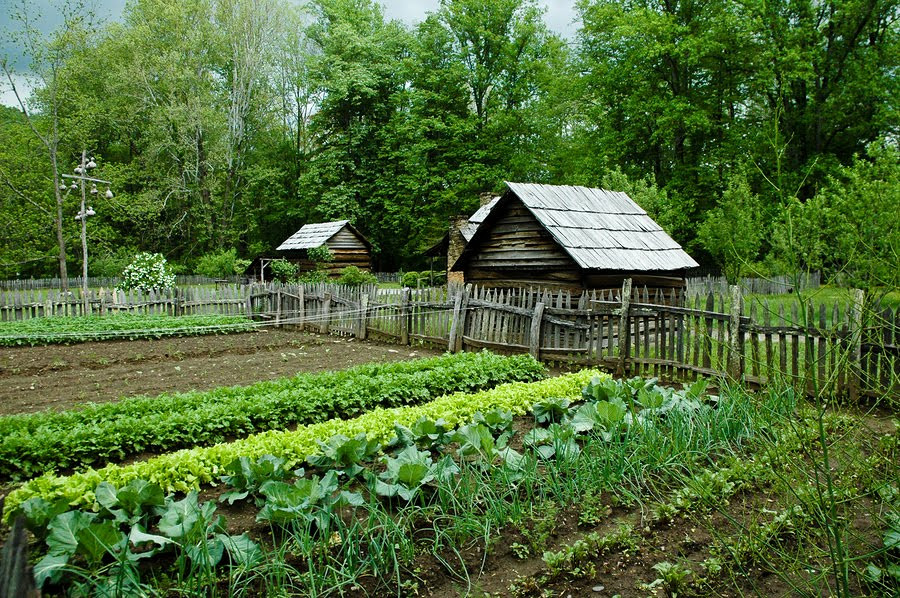
Planting a hidden garden may sound challenging or impractical, but it’s easier than you might think. In fact, it takes very little planning. Your environment will tell you what to do, or more accurately, the weeds will tell you. Most gardeners think of weeds as their enemies, but they can be our friends as well as our foes. It’s really up to you which one you want them to be. I had a field full of lambs’ quarters this past summer. Instead of pulling them, I let them grow because my chickens think they’re salad. As these weeds grew taller, I thought, hmmm, it’s a nice place to hide a garden. I started by planting low vegetables that could be easily hidden by the lambs quarters, such as squash. As the lambs quarters grew, I realized I could plant taller vegetables, such as peppers and tomatoes without their being detected. As I pulled out the lambs’ quarters to feed to my chickens, I planted tomato plants in their place. Cool. Who would have thought that weeds could be so useful? Just remember trellises and tomato cages cannot be used in a hidden garden. That would defeat the whole purpose of trying to hide it. Obviously, no scarecrows are allowed no matter how scary. Pretty little picket fences aren’t a good idea either. Barbed wire is better. Not only is it less obvious, but it can be a bugger to try and wiggle through.

I did stake a few of my tomato plants with wooden stakes, but most I just let vine out over the ground. Some of them actually climbed the lambs’ quarters! Soon plantain started growing amongst the tomatoes, which the tomatoes didn’t seem to mind at all. Who would have thought it? Of course, the plantain enjoyed some of the nourishment of the fertilizer that I fed to my tomato plants, but that was okay with me so long as the plantain did its job of helping to hide my tomato plants. Both plants grew healthy and robust. It was a true symbiotic relationship.

Queen Anne’s lace pops up like dandelions all over my property. Come to think of it, dandelions pop up too. No problem. Both are pretty to look at, attract bees, and also make the landscape look wild and abandoned, even though it secretly isn’t. On the surface (and from a distance) there appears to be nothing edible in my field. A field full of lamb’s quarters, plantain, dandelions, and Queen Anne’s lace doesn’t exactly summon up thoughts of dinner, unless you’re a cow or a vegan. Let’s not forget the goldenrod, which grows thick and tall in the places I want it (and sometimes don’t).

That’s my point. A hidden garden blends in with its natural environment. This means straight tidy rows are a no-no. Plants should zigzag and meander and basically grow as they would if left to their own devises, which in a way they are. A passerby should be able to look right at your garden and not see it. Matching leaf shape and color can help with this, such as with the combination of lamb’s quarters and tomato plants. The two look somewhat similar. Anything that causes confusion is a plus.

But my hidden garden isn’t just a jumble of weeds and brambles; that would be too easy, not to mention counter productive. There are paths snaking their way throughout my field and gardens, each connecting one to another, allowing me access to my vegetables when I need them and when I just feel like taking a stroll through the weeds.

A favorite vegetable of mine to grow is butternut squash. I planted some in the corner of my field this past summer. I was a little disappointed, at first, when I went to harvest them. I couldn’t find a single one. Then I walked around and looked a little harder and sure enough, I found one. Then I found another and another and another. I even tripped over a few. Some were even hanging from the lambs’ quarters. Who would think that something as big and bulbous as a butternut squash could be hidden? But I did it. I hid them so well even I couldn’t find them.

Another good vegetable for hiding in plain sight is the cucumber. Because of their green coloring, cucumbers can easily hide amongst the weeds. I had cucumbers growing last year that I didn’t even know about until they had reached almost a foot long. I knew I had planted some, but I sure could not find them.

Aside from being dependent on weeds to hide your garden, you can plant bushes or tall plants, such as Jerusalem artichokes, around your vegetables. Not everyone knows what a Jerusalem artichoke is and may think you’re just growing pretty flowers. These can not only help hide your produce; they are your produce.

Speaking of flowers, a flower garden can be a sneaky place to hide vegetable plants. Hungry humans are usually not interested in sampling delicate flowers, even edible ones. Edible flowers, by the way, include day lilies, hostas, and nasturtiums. A poacher could starve to death before figuring that out. Face it; hungry foragers aren’t going to be looking for dandelions. They’re going to want something more substantial, like squash and potatoes. These, however, are vegetables that can be easily hidden.

Since they grow below ground, carrots can easily be hidden from sight. It’s as if they were designed to be hidden from us. Speaking of which, don’t even try and find my potatoes. After the tops die off, only I know where the bodies are buried. If you like sweet potatoes, you’ll probably like their attractive vine—another edible that can go undetected. A poacher may never know what lies beneath.

An herb garden can also be a stealthy way to hide edibles. Not everyone is familiar with herbs that don’t come out of a spice bottle. An herb garden is a good place to hide other greens as well. Arugula produces a delicate flower top that can look quite innocent and unappealing.

Let’s talk about peas and beans. Because they produce pretty blossoms, peas can be an interesting vegetable to grow in your flower garden. Even if your peas somehow get discovered by wandering marauders or neighborhood children, you can still eat the leaves in a salad. Ha, ha. Nice try kids. Green beans are not only one of the easiest vegetables to grow but also one of the easiest to hide. Because of their deep green color, the leaves and beans have the ability to blend in nicely with rich summer landscapes. And, as an added bonus, the triple-leafed plant resembles poison ivy. Yes!

A permaculture garden can be a useful addition to a hidden garden. A permaculture garden of fruit and nut trees can blend in seamlessly with a wooded environment, so long as you remember to take off the tags.

For obvious reasons, fruit trees should be planted well away from the road where questing eyes could spot them. I planted some next to the woods behind my house. The trees innocently look like part of the forest. My shed also helps conceal them. Barns and sheds make excellent visual barriers. (I suppose that goes without saying.)

I also plant what I call a “decoy” garden. This is a garden that is intended to be discovered. Corn is hard to hide, so I plant it in my decoy garden closer to the road and well away from my more abundant plots. Sneaky, huh? I don’t worry too much about corn rustlers, because I also plant another bed of corn near the woods just in case my decoy garden gets invaded. So far, it hasn’t happened, but I’m ready.

Planting multiple beds in different places decreases the chances of a poacher (or deer) finding all of your vegetables. Don’t forget, most people are used to seeing one garden on someone’s property, rather than several.

If you’re wondering how I remember where I planted all of these vegetables, it’s simple. I draw a sketch, or map, of each garden plot telling me where it’s planted and what is planted there. However, I have to admit that sometimes I’m surprised by what I find and also surprised that I find it!

I could easily have called this article Companion Planting for the Collapse or Camouflage for Your Cauliflower or maybe even Stealthily Sowing Your Squash or Arugula for the Apocalypse. I’ll stop now. Titles aren’t important unless you’re royalty, and even then it’s doubtful anyone cares. So if you’re not planting a garden because you’re afraid someone might find it, you no longer have that excuse. Go ahead and experiment next growing season. Try switching things up. Plant carrots in a flower pot or tomatoes in a trash can. Start small and stealthy, and see what develops. You’ll be surprised by the different ideas you come up with for hiding your prized vegetable plants. You may even be able to find them afterwards.


Letter Re: Call Me 4-Eyes

Hugh,

Last week a letter titled Call Me 4-Eyes caught my attention. I agree 100% with his suggestions. As a retired Optometrist of 40+ years experience with military and civilian practice, I am concerned for contact wearers post SHTF. The very instant sanitation and personal hygiene are compromised, you should discontinue wearing contacts! Even today, most eye care providers will tell you they see several contact lens complications per week. An eye infection or corneal ulcer can be treated with good results in today’s world. When eye care is not available, a simple infection or corneal ulcer could result in loss of sight. With many of the super bugs we now experience, it could be a life threatening event. Each contact lens wearer should have multiple pairs of glasses or consider having corrective eye surgery to restore vision. Stockpiling contacts and solutions is not the best idea. Simply washing your hands in contaminated water could cause viral, bacterial, or protozoan infections if you touch the contacts. Wearing contacts post SHTF is not the prudent thing to do. – Phoroptor


Odds ‘n Sods:

Use a wireless mouse? This $15 hack could compromise your laptop. JWR’s Comment: It is high time to revert to hard-wired mice.

o o o

For those who have been waiting, MagPul has now produced AICS-compatible LONG ACTION magazines for .270, .30-06, .25-06, and similar cartridges. This sure beats paying $90+ each for original AICS-made magazines.

o o o

From Mike Williamson, SurvivalBlog’s Editor at Large: Some interesting European surplus kit at good prices, with cheap shipping to the U.S. Note that some of their “joke” products are presented with blunt language.

o o o

Growing fresh-produce shortage in Britain – P.S.

o o o

A short humor video: If gun calibers were celebrities


Hugh’s Quote of the Day:

“And the Lord spake unto Moses, saying, Sanctify unto me all the firstborn, whatsoever openeth the womb among the children of Israel, both of man and of beast: it is mine.” – Exodus 13:1-2 (KJV)


Notes for Friday – February 03, 2017

This is the birthday of writer James Michener (1907–1997), known for his very well-researched epic novels, such as Centennial. This is also the birthday of painter and illustrator Norman Rockwell (1894–1978).

o o o

Today, we present another entry for Round 69 of the SurvivalBlog non-fiction writing contest. The nearly $15,000 worth of prizes for this round include:

First Prize:

  1. A $3000 gift certificate towards a Sol-Ark Solar Generator from Veteran owned Portable Solar LLC. The only EMP Hardened Solar Generator System available to the public.
  2. A Gunsite Academy Three Day Course Certificate that is good for any one, two, or three day course (a $1,195 value),
  3. A course certificate from onPoint Tactical for the prize winner’s choice of three-day civilian courses, excluding those restricted for military or government teams. Three day onPoint courses normally cost $795,
  4. DRD Tactical is providing a 5.56 NATO QD Billet upper with a hammer forged, chrome-lined barrel and a hard case to go with your own AR lower. It will allow any standard AR-type rifle to have a quick change barrel, which can be assembled in less than one minute without the use of any tools and a compact carry capability in a hard case or 3-day pack (an $1,100 value),
  5. Gun Mag Warehouse is providing 20 Magpul PMAG 30-rd Magazines (a value of $300) and a Gun Mag Warehouse T-Shirt; (an equivalent prize will be awarded for residents in states with magazine restrictions),
  6. Two cases of Mountain House freeze-dried assorted entrees in #10 cans, courtesy of Ready Made Resources (a $350 value),
  7. The Ark Institute is donating a non-GMO, non-hybrid vegetable seed package (enough for two families of four) plus seed storage materials, a CD-ROM of Geri Guidetti’s book “Build Your Ark! How to Prepare for Self Reliance in Uncertain Times”, and two bottles of Potassium Iodate (a $325 retail value),
  8. A $250 gift certificate good for any product from Sunflower Ammo,
  9. Two cases of Meals, Ready to Eat (MREs), courtesy of CampingSurvival.com (a $180 value).

Second Prize:

  1. A Tactical Self-Contained 2-Series Solar Power Generator system from Always Empowered. This compact starter power system is packaged in a wheeled O.D. green EMP-shielded Pelican hard case (a $2,400 value),
  2. A Glock form factor SIRT laser training pistol and a SIRT AR-15/M4 Laser Training Bolt, courtesy of Next Level Training, which have a combined retail value of $589,
  3. A gift certificate for any two or three-day class from Max Velocity Tactical (a $600 value),
  4. A transferable certificate for a two-day Ultimate Bug Out Course from Florida Firearms Training (a $400 value),
  5. A Trekker IV™ Four-Person Emergency Kit from Emergency Essentials (a $250 value),
  6. A $200 gift certificate good towards any books published by PrepperPress.com,
  7. A pre-selected assortment of military surplus gear from CJL Enterprize (a $300 value),
  8. An infrared sensor/imaging camouflage shelter from Snakebite Tactical in Eureka, Montana (A $350+ value),
  9. RepackBox is providing a $300 gift certificate to their site, and
  10. American Gunsmithing Institute (AGI) is providing a $300 certificate good towards any of their DVD training courses.

Third Prize:

  1. A Model 175 Series Solar Generator provided by Quantum Harvest LLC (a $439 value),
  2. A Royal Berkey water filter, courtesy of Directive 21 (a $275 value),
  3. A custom made Sage Grouse model utility/field knife from custom knife-maker Jon Kelly Designs, of Eureka, Montana,
  4. A large handmade clothes drying rack, a washboard, and a Homesteading for Beginners DVD, all courtesy of The Homestead Store, with a combined value of $206,
  5. Expanded sets of both washable feminine pads and liners, donated by Naturally Cozy (a $185 retail value),
  6. Two Super Survival Pack seed collections, a $150 value, courtesy of Seed for Security, LLC,
  7. Mayflower Trading is donating a $200 gift certificate for homesteading appliances,
  8. Montie Gear is donating a Y-Shot Slingshot and a $125 Montie gear Gift certificate.,
  9. Two 1,000-foot spools of full mil-spec U.S.-made 750 paracord (in-stock colors only) from www.TOUGHGRID.com (a $240 value), and
  10. Fifteen LifeStraws from SafeCastle (a $300 value).
  11. A $250 gift certificate to Tober’s Traditions, makers of all natural (organic if possible) personal care products, such as soap, tooth powder, deodorant, sunscreen, lotion, and more.

Round 69 ends on March 31st, so get busy writing and e-mail us your entry. Remember that there is a 1,500-word minimum, and that articles on practical “how to” skills for survival have an advantage in the judging.


Intellectual Survival, by D.W.

“Through space the universe grasps me and swallows me up like a speck; through thought I grasp it.”[1]

-Blaise Pascal

“It is absurd to hold that a man ought to be ashamed of being unable to defend himself with his limbs, but not of being unable to defend himself with speech and reason, when the use of rational speech is more distinctive of a human being than the use of his limbs.”[2]

-Aristotle

Imagine for a moment, you have just finished eating dinner with your family. You have been living without power for months. You planned for this, of course. You have plenty of food, you are safe, and there is heat if it is winter in your part of the country. As is your family’s custom (let us assume), you take turns discussing what you are thankful for, despite the circumstances. Afterward, the table and dishes are cleaned and everyone gathers into a family room. But what are you going to do? The chores are all completed. All of the puzzles you have have been completed many, many times. The board games you have have been played many times over. Maybe some members of the family play instruments, and you have a short time of playing, dancing, and singing. Eventually, though, the mind will need something substantial to consume. Physical survival is extremely important, obviously. Is intellectual survival also important? I submit to you that it is.

I often tell my children that I have the history of Western civilization in my library. You may be thinking that I have a large library. I don’t. In fact, the books I am referring to only take up a couple of shelves. The younger ones don’t quite understand what that means, but my older kids are beginning to understand that if something were to happen to the electrical grid, we couldn’t get copies on the computer. No one could. Of course, if one has a generator (or really strong batteries) then one could still access copies that are stored on a device, but how long will the generator last? How about the batteries? In a real TEOTWAWKI situation, everything will eventually run out, except for what individuals, families, or groups of families can produce for themselves. Having hard copies of certain books is simply wise. It goes without saying that one should consider books on vital survival skills. For example, I recently received a book for my wife originally written in the 19th century entitled The Frugal Housewife.[3] The book focuses on a number of practical remedies, recipes, et cetera that one would have used over 150 years ago– a time when there wasn’t an electrical grid. My goal here, though, is to discuss books that are necessary for the maintenance and understanding of the ideologies that have produced Western civilization.[4] In a TEOTWAWKI situation, it is possible for younger generations to grow up without understanding this important history. More importantly, though, it is possible for adults, who do understand that history, to forget about it in the midst of literally just surviving.

Having a good library of quality books will make all the difference in the world, emotionally and intellectually, once the “lights” have gone off for good, or even for a considerably long time. What books should you have? One of the great enemies of the Western world, Islamic terrorism, has as its stated goal the destruction of Western civilization. It is likely that, once the grid goes down, access to what are often referred to as the “great books” could be severely limited or altogether lost. Sure, there are hard copies located in libraries across the country, but libraries are normally in cities and no one wants to go into the city in a TEOTWAWKI situation. Those books will be lost– burned or looted, likely. Some of you reading this will recall that the library at Alexandria Egypt (approximately 2000 years ago) was burned. The scrolls and works are gone forever. What knowledge did we lose from the ancient world because of the destruction there? We will never know completely. I strongly encourage families to secure, either in anthology or individually, copies of the “great books.”

Why are such books necessary? Isn’t it also important to secure good copies of quality fiction? I think good fiction would be essential in a TEOTWAWKI situation. Good fiction can be read over and over. For example, to this day I can still laugh when I read the section in The Adventures of Huckleberry Finn[5], where Jim is considered to have power over witches because of a hair ball he found. Reading Mark Twain will never get old. It is also important to note that some of the “great books” are fictional in nature. However, the “great books” are great because they address foundational issues related to human beings, God, ethics, the State, and economics. Our own system of government, for example, has its roots in Greek and Roman political life. Thomas Jefferson had recommended reading lists of the “great books” that he encouraged friends and family to read.[6] Jefferson also believed there was great pleasure in reading the classic works.

He observes: “to read the Latin and Greek authors in their original, is a sublime luxury;…I thank on my knees, him who directed my early education, for having put into my possession this rich source of delight; and I would not exchange it for anything which I could then have acquired, and have not since acquired.”[7] Jefferson read the classics not only for the knowledge acquired, but also for the mere pleasure of doing so.

Aristotle believed that human beings were meant to flourish according to their design. The word for “flourish” is the Greek word eudemonia.[8] Think of your garden you planted this past summer. If the garden had everything it needed, according to each plant’s design and need, then your garden likely flourished and you had an abundance of fresh food to eat and store away. If your garden did not flourish, then there was something absent (not enough water, good soil, or sunlight) that it needed. Or, possibly there was something present that it did not need (e.g. weeds, pests of various kinds, or, if you are like me, a giant Black Walnut tree right next to your garden). In like manner, human beings need certain things to flourish. By design, we need good food with vitamins, minerals, and clean water. However, we also need intellectual exposure to good, interesting, and meaningful ideas.

It is highly unlikely that anyone reading this did not grow up with electricity. This means that most of us also grew up with television of some kind. Many of you, like me, did not grow up with smart phones or computers, but they are clearly a part of our lives now. I submit to you that we are engaged with ideas on a daily basis from many of these different sources. Most of these ideas are not always good or meaningful. In fact, more often than not, they are simply distracting, lulling us into a false sense of security and comfort, which is the plague of the modern, contemporary world. Yet, it is enough to provide a substantial distraction for us intellectually, even if we are not necessarily flourishing. Once these devices are gone, though, then what?

In a TEOTWAWKI situation, none of us want to merely survive. In other words, we don’t want just the basics of food and water. We want variety. If one is prepared then this is possible. On my property we have at least three different kinds of meat that could be indefinitely sustained in a TEOTWAWKI situation: goats, chickens, and meat rabbits. The process of growing fruit and vegetables speaks for itself, and most of you know what that entails. But what consideration have you given to the variety that your mind will need? How will you flourish intellectually? The answer is by acquiring a set of the great books of Western civilization. In the great books we have the whole of human experience. What is happiness? How do we find it? What is the nature of justice? What is the relationship between justice and happiness in an individual? What is the nature of this relationship in the state? What is the best form of government? What is the nature of physical reality? What is the nature of spiritual reality? What is the nature of God? What is the nature of man? How should God and man relate?[9] And, of course, there are many other questions and topics we could touch on that the writers of old have already addressed centuries and millennia ago.

We must also address the cost and weight of such books. Here I can only say that the best way to approach the reality of buying and storing physical books is to consider an anthology set. It may cost more than tracking down used copies at library sales and other, reduced cost venues, but you will have them once and for all. You could also find lists of the great books on the internet. I have included a partial list below. One may also find that there can be subtle differences from one list to another, depending upon one’s emphasis and goals. Such a list can be useful if one wants to shop independently for the books. Recommendations for anthologies (by author) are below as well.

Anthologies:

  1. Great Books of the Western World by Mortimer J. Adler.
  2. Great Books of the Western World by Robert Maynard
  3. Gateway to the Great Books by Robert M. Hutchins, Mortimer J. Adler, and Fred Steffen
  4. The World’s Great Thinkers by Random House (This set is not as comprehensive, but it is very cost effective and inexpensive.)
  5. Harvard Classics by Charles Eliot

References


[1]Pascal, Blaise. Pensees. Paris: Librairie Generale Francaise, 1972.


[2]Aristotle, W. Rhys Roberts, Ingram Bywater, Friedrich Solmsen, and Aristotle. Rhetoric. New York: Modern Library, 1954.


[3]Freeman, Ruth S. The Frugal Housewife. Watkins Glen, N.Y.: Century House, 1957.


[4]Please note, I am a Christian and therefore believe that the most important book one should have in a home is a copy (or copies) of the Bible.


[5]Twain, Mark. The Adventures of Huckleberry Fin. London: Thomas Nelson & Sons Ltd, n.d.


[6]Jefferson, Thomas. Letters of Thomas Jefferson. Tilton, N.H.: Sanbornton Bridge Press, 1975.


[7]Ibid.


[8]Preus, Anthony. Historical Dictionary of Ancient Greek Philosophy. Lanham, Md: Scarecrow Press, 2007.


[9]Please note, I am a Christian and therefore believe that the most important book one should have in a home is a copy (or copies) of the Bible. However, it is also important, I have found, to be able to read some of the discussion on the development of these historically important doctrines.


[10]This list is compiled from http://academics.biola.edu/torrey/academics/reading/


Letter Re: Airport BOB

HJL,

I have traveled extensively for the last 30 years and carry these items in addition to what you listed:

  • Life straw. Clean water will be essential if you are stuck or have to walk home.
  • Israeli battle dressing. It could be essential to saving yourself or someone else.
  • Tourniquet: Can save yourself or someone else.
  • Tactical pen. Mix it in with other pens in brief case. It’s not much but better than nothing on the airplane.
  • Briefcase that converts to back pack. Brief cases are less conspicuous in the board room.

Last year, I personally saw five young Middle Eastern men rush the gate agent at LAX to board in front of first class. The lone agent was so startled that they let them on. They were in the rear of the plane. Several frequent flyers and I developed a plan to eliminate the threat. They never moved during the flight to DFW. They would not have succeeded in taking over our flight. The danger is real, and we must stay ever vigilant. – J.H.


Economics and Investing:

Ohio Couple Files Arbitration Against Chesapeake Oil/Gas Leases. I can foresee a trip to Federal Bankruptcy Court to file a “Chapter 11 Re-Organization Plan” for this huge gas and oil outfit. They have too many strikes against them already. The poor Midwest farmers who were told they would “get rich quick” are certainly not. – K.W.

o o o

Another warning on US national debt for our politicians to ignore – P.S.

o o o

Depression, Stagflation, Stag-Depress-Flation

o o o

An interesting video on Barter and Recycling: Urban Ore an Economic Model for a Material Barter Exchange Clearinghouse and Full Cycle Recycling

o o o

SurvivalBlog and its editors are not paid investment counselors or advisers. Please see our Provisos page for details.