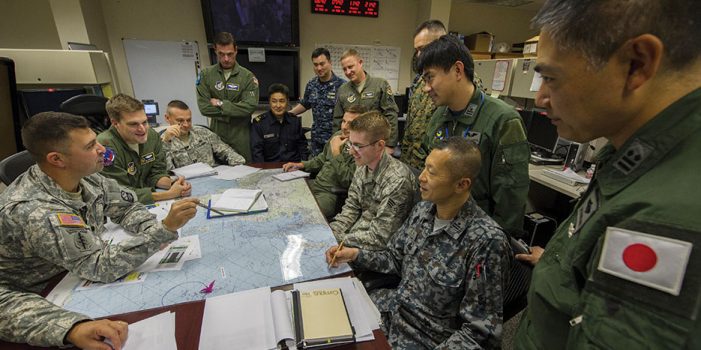
Military tactical planning has been used formally for a long time by fighting and maneuver elements. This article is a combined overview of the ground combat units’ frameworks. In part 1, We began using the BAMSIS acronym as a framework and are in the “B”, which stands for “Begin Planning”. Using the METT-TC acronym, we have gone through the M for Mission, the E for Enemy, and the first T for Terrain and Weather. Now, we will continue on with this military tactical planning framework.
Troops and Fire Support- Second “T” in METT-TC
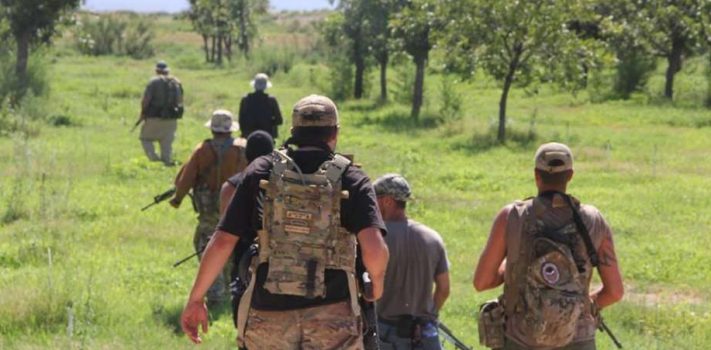
Part D is Troops and fire support, and they are the second “T” of the situation estimation analysis key words acronym “METT-TC”. Will we be operating in the smallest tactical unit of a cell or knot or perhaps up to the largest likely encountered formation of a platoon or company? More often we will probably operate as a fire team or rifle squad, but which one for this mission? What fire support is available to us, if any? Do we have a scout-sniper cell as our bounding overwatch? Do we have any crew served weapons? If so, are they direct or indirect fire types?
Are we a knot of Professionally Instructed Gunmen (PIGs), riflemen, on a reconnaissance patrol or a fire team of Hunters Of Gunmen (HOGs), snipers, laying in ambush? Are we a rifle squad sized element on a combat patrol? Are we a platoon sized element, which can use a squad as our base of fire and the other squads as maneuver elements? Do we have any anti-vehicle or anti-air capability? Are we seeing a direct attack such as a frontal assault or perhaps a flanking maneuver? What appears to be the enemy’s apparent objective through their Point Of Main Effort (POME)?
Continue reading“Utilizing Military Tactical Planning- Part 2, by Last NJ Conservative”