

“No subject of contemplation will tend more to humble the mind, than thoughts of God.” – C.H. Spurgeon
- Ad California Legal Rifles & Pistols!WBT makes all popular rifles compliant for your restrictive state. Choose from a wide range of top brands made compliant for your state.
- Ad STRATEGIC RELOCATION REALTYFOR SALE: Self-sustaining Rural Property situated meticulously in serene locales distant from densely populated sanctuary cities. Remember…HISTORY Favors the PREPARED!

Preparedness Notes for Thursday — October 1, 2020
Happy birthday to singer and actress Julie Andrews (born 1935.) Her name is always associated with The Sound of Music.
—
Naturally Cozy (one of our loyal writing contest prize donors) and Privy Paper will have a booth at the Panhandle Preparedness Expo this weekend at the Bonner County Fairgrounds in Sandpoint, Idaho. (Oct. 3-4, 2020.) North Idaho Heat will unofficially be there too, if anyone wants to talk stoves.
—
Congratulations to the prize winners in Round 90 of the SurvivalBlog Nonfiction Writing Contest! Round 91 began today. Please share your knowledge and experience by writing an article and sending it in. Thanks, – JWR
- Ad Elk Creek Company - Percussion Blackpowder Guns - No FFL Required.Elk Creek Company - Percussion Blackpowder Guns - Pre-1899 Guns - Knives - Bayonets - Magazines - The last bastion of privacy!
- Ad SurvivalRealty.com: Sell Your Remote LandAdvertise your hard-to-sell remote land to eager buters. We specialize in rural, remote, and off-grid properties worldwide. Affordable ads. No commissions are charged!

Writing Contest Prize Winners Announced: Round 90
We’ve completed the judging for Round 90 of the bi-monthly SurvivalBlog non-fiction writing contest. It was difficult to judge this particular round because there were so many great articles. So many, in fact, that I wish that we had five available “top three” prize spots. I’ve sufficed by awarding an unprecedented 13 Honorable Mention prizes.
The Prize Winners fro Round 90 are:
First Prize:
First Prize is awarded to 2A Advocate, for his article Finishing an 80% AR Lower Receiver. It was posted in three parts on September 18-19-20, 2020. Links: Part 1, Part 2, and Part 3.
- The photovoltaic power specialists at Quantum Harvest LLC are providing a store-wide 10% off coupon. Depending on the model chosen, this could be worth more than $2000.
- A Gunsite Academy Three Day Course Certificate. This can be used for any of their one, two, or three-day course (a $1,095 value),
- A course certificate from onPoint Tactical for the prize winner’s choice of three-day civilian courses, excluding those restricted for military or government teams. Three-day onPoint courses normally cost $795,
- DRD Tactical is providing a 5.56 NATO QD Billet upper. These have hammer forged, chrome-lined barrels and a hard case, to go with your own AR lower. It will allow any standard AR-type rifle to have a quick change barrel. This can be assembled in less than one minute without the use of any tools. It also provides a compact carry capability in a hard case or in 3-day pack (a $1,100 value),
- Two cases of Mountain House freeze-dried assorted entrees in #10 cans, courtesy of Ready Resources (a $350 value),
- A $250 gift certificate good for any product from Sunflower Ammo,
- American Gunsmithing Institute (AGI) is providing a $300 certificate good towards any of their DVD training course
Second Prize:
Second Prize is awarded to R., for his article Self-Defense: You Never Know When. It was published on September 23, 2020. He will receive the following prizes:
- A Front Sight Lifetime Diamond Membership, providing lifetime free training at any Front Sight Nevada course, with no limit on repeating classes. This prize is courtesy of a SurvivalBlog reader who prefers to be anonymous.
- A Glock form factor SIRT laser training pistol and a SIRT AR-15/M4 Laser Training Bolt, courtesy of Next Level Training, that have a combined retail value of $589,
- A Three-Day Deluxe Emergency Kit from Emergency Essentials (a $190 value),
- Two 1,000-foot spools of full mil-spec U.S.-made 750 paracord (in-stock colors only) from www.TOUGHGRID.com (a $240 value).
- An assortment of products along with a one-hour consultation on health and wellness from Pruitt’s Tree Resin (a $265 value).
Third Prize:
Third Prize is awarded to J.M. for the lengthy article Tactical Technology for TEOTWAWKI which was published in six parts on August 4-9, 2020. Links: Part 1, Part 2, Part 3, Part 4, Part 5, Part 6. He will receive the following prizes:
- Three sets each of made-in-USA regular and wide-mouth reusable canning lids. (This is a total of 300 lids and 600 gaskets.) This prize is courtesy of Harvest Guard (a $270 value)
- A Royal Berkey water filter, courtesy of Directive 21 (a $275 value),
- Naturally Cozy is donating a “Prepper Pack” Menstrual Kit. This kit contains 18 pads and it comes vacuum-sealed for long term storage or slips easily into a bugout bag. The value of this kit is $220.
- Two Super Survival Pack seed collections, a $150 value, courtesy of Seed for Security, LLC,
- A transferable $150 purchase credit from Elk Creek Company, toward the purchase of any pre-1899 antique gun. There is no paperwork required for the delivery of pre-1899 guns into most states, making them the last bastion of firearms purchasing privacy!
Honorable Mention Prizes:
The following 13 articles were awarded Honorable Mention prizes. They will each receive $30 Amazon gift cards:
- The Secret Salad Garden (in three parts) by D.G.
- Versatile Photovoltaic Power (in two parts), by Tractorguy
- A Physician’s Perspective on COVID-19 (in two parts), by Doctor Dan, M.D.
- Maximizing the Homestead Apple Orchard, by Eric K.
- Fighting .22 Rimfires, by Steve in Missouri
- Going Old School, by 3AD Scout
- The Reality of Aging and Prepping (in two parts) by Muscadine Hunter
- Composting Your Black Gold (in two parts), by Hobbit Farmer
- Relocating to The Yaak, by L.S.
- A Primer on UVC Light (in two parts), by Dr. David J.
- How to Safely Pressure Can Meat, by Sandi H.
- Personal Defense Weapon (PDW) Bag Guns, by Joe H.
- Intelligence Gathering at Protests, by J.D.
Round 91 ends on November 30th, so get busy writing and e-mail us your entry. Remember that there is a 1,500-word minimum, and that articles on practical “how-to” skills for survival have an advantage in the judging.
- Ad Elk Creek Company - Federally-Exempt No-Paperwork GunsPre-1899 Antique Cartridge Guns -- No FFL Required. Can be mailed to your doorstep with no Federal paperwork!
- Ad SIEGE belts: The essential go-anywhere GRAY MAN accessory. Solid 5.5-7 oz of persuasive power has saved many on their daily routines & travels. Revered "Thousand-Year Buckles" with stunning hand-crafted finishes. Complements CCW. Lear more..SIEGE STOVES: the ultimate high-performance portable survival stove. SIEGE BELTS: Use code "SBLOG" at checkout for $20 off any belt. Gifts that have saved lives. Be prepared!
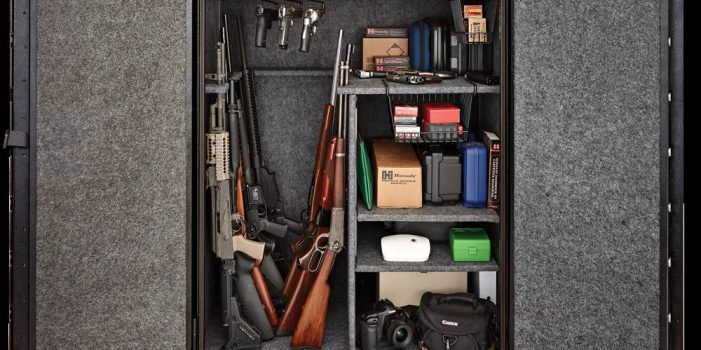
JWR’s 20 “S” Strategy for Tangible Investments
I was recently asked to reiterate my philosophy on parlaying wealth into tangibles. I emphasize tangibles in many of my writings because we need to be ready for times of inflation. Yes, inflation is coming. With multi-trillion dollar bailouts, monetization of the national debt, and chronic Federal over-spending, mass inflation is inevitable.
I must also state that I do not believe in heavily investing or any long-term investment in any “asset” that is just a piece of paper, a string of digits on a hard drive, or other abstractions that are mere promises. Promises and kind words don’t shelter and feed your family.
Our only genuine safety is putting the majority of our wealth in the form of practical tangibles. You may ask: Which tangibles? That can be pithily encapsulated in what I’ve just dubbed The Twenty “S” Investments Strategy:
- Safe to drink water, from a year-round source,
- Storage Food — several years for your family,
- Shelter (a defendable house, preferably with a bunker/vault),
- Soil (preferably 5+ acres of rich soil, in the hinterlands),
- Semi-Auto battle rifles,
- Shotshells and cartridges–in quantity,
- Semi-auto pistols in common calibers,
- Shotguns in 12 gauge, 20 gauge, and .410,
- Scoped bolt-action rifles in common calibers,
- Standard capacity magazines for your guns,
- Serviceable Pre-1899 guns,
- Scopes and night vision optics,
- Silver coins,
- Snap-On and other brands of high quality, precise, and durable tools,
- Slabbed numismatic coins (AU50 to MS60 grades),
- Sheep and other livestock,
- Seeds (preferably non-hybrid),
- Standing timber,
- Swiss watches, and
- Sixties classic cars and trucks.
That list is organized roughly in order of importance. But the single largest “S” investment for most of us will be soil–namely the real estate of our primary residences. Choose where you buy your land wisely. Personally, soil represents more than 75% of my net worth. I placed a priority on owning my ranch debt-free. It took a few years, but I now own the Rawles Ranch free and clear. I sleep well at night, knowing that.
You’ve surely noticed that I’ve waxed into alliteration, so the preceding list may sound a bit trite. But this 20 “S” strategy has some ground truth for you — at least as I see it.
You will also note that eight of these 20 “S” tangibles are firearms-related. That was no accident. Your guns are the insurance policy on your other tangible preparations and investments. This is analogous to how the Second Amendment is the insurance policy for the rest of the Bill of Rights.
I hope that you find this list useful. I look forward to your comments. – JWR
- Ad Survival RealtyFind your secure and sustainable home. The leading marketplace for rural, remote, and off-grid properties worldwide. Affordable ads. No commissions are charged!
- Ad USA Berkey Water Filters - Start Drinking Purified Water Today!#1 Trusted Gravity Water Purification System! Start Drinking Purified Water now with a Berkey water filtration system. Find systems, replacement filters, parts and more here.

September 2020 in Precious Metals, by Stephen Cochran
From Steven Cochran of Gainesville Coins:
Welcome to SurvivalBlog’s Precious Metals Month in Review, where we take a look at “the month that was” in precious metals. Each month, we cover gold’s performance, and the factors that affected gold prices.
Gold ended August on a down note, logging the first monthly loss in six months. December gold futures lost 3.7% in August, while spot gold lost 4.4%. Silver parted ways with gold in August, riding its rally by ending the month 18% higher on the COMEX, and 15% higher in the spot market.
What Did Gold Do in September?
Gold went into “consolidation mode” in September. The month started with a meltdown in tech stocks. Gold prices fell as speculators suddenly had to meet large margin calls. Gold futures, which are more liquid than physical gold, lost $44 between September 2nd and 4th. Spot gold lost $38. Both ended the week at $1934. Spot gold spent the next two weeks trending between $1930 and $1955 for the most part.
Supreme Court Justice Ruth Bader Ginsburg died the night of Friday, September 18th. Stocks had ended the week shaky over a new wave of COVID in Europe. Countries across Europe were locking down and going into crisis mode as COVID infections surged.
Everything fell when markets opened Monday. The fight over Ginsburg’s replacement on the Supreme Court so close to the Presidential election wiped out any chance of a new stimulus bill. News Monday that someone had mailed a letter containing ricin powder to President Trump frightened markets more.
If that wasn’t enough, the dollar surged on safe haven demand after China made repeated incursions over the Taiwan Strait, forcing Taiwan to scramble fighter jets nearly 40 times over the weekend.
December gold futures fell $51.50 to $1,910.60 that Monday. It would end the week down $95.80 – the worst week since the March market meltdown. Spot gold fell $36.50 to $1,912.40 on the 21st. It would end the week $87.70 lower.
Gold attempted a run at the $1,900 mark during the last few days of the month, gaining $36 over the first two days of the week.
As of the September market close on the 29th, December gold had lost $75 for the month, and spot gold had fallen $70. Continue reading“September 2020 in Precious Metals, by Stephen Cochran”
- Ad Click Here --> Civil Defense ManualNOW BACK IN STOCK How to protect, you, your family, friends and neighborhood in coming times of civil unrest… and much more!
- Ad USA Berkey Water Filters - Start Drinking Purified Water Today!#1 Trusted Gravity Water Purification System! Start Drinking Purified Water now with a Berkey water filtration system. Find systems, replacement filters, parts and more here.

The Survivalist’s Odds ‘n Sods
SurvivalBlog presents another edition of The Survivalist’s Odds ‘n Sods— a collection of news bits and pieces that are relevant to the modern survivalist and prepper from “JWR”. Our goal is to educate our readers, to help them to recognize emerging threats, and to be better prepared for both disasters and negative societal trends. You can’t mitigate a risk if you haven’t first identified a risk. Today, we look at another bear spray fail.
Another Fatal Bear Attack in Alaska: Bear Spray Fail
In The Anchorage Daily News: Wildlife officials kill 4 bears as they investigate fatal mauling near Hope. Here is an excerpt that underscores the need to carry both pepper spray and lead spray: ”
“There were no witnesses to the attack, located in a remote, hard-to-reach area, the agency said.
“An empty bear spray canister with the safety removed was found at the location of the attack, and it appeared that bear spray had been discharged at the site,” the statement said. “No attractants, such as a dead moose or a food cache, were found in a search of the area during the investigation.””
Gun Sales in Key Swing States Up Nearly 80% in 2020
Linked over at the Whatfinger.com news aggregation site, there is this at Fox News: Gun sales in major swing states up nearly 80% this year: Will it have any bearing on election outcome?
Data-Trackers Turn from Cookies to Phone Sensors
Reader C.B. sent us this: Data-trackers turn from cookies to phone sensors. Here is a snippet:
“As Google moved earlier this year to ban third-party cookies on its Chrome browsers and Apple plans to restrict tracking in its next iOS build, Abhishek Sen, cofounder of a British analytics startup NumberEight, says companies are looking beyond cookies as they explore new avenues to tap into consumer behavior.”
- Ad Survival RealtyFind your secure and sustainable home. The leading marketplace for rural, remote, and off-grid properties worldwide. Affordable ads. No commissions are charged!

The Editors’ Quote of the Day:
“I live and operate in the ‘No Excuse Zone, I don’t offer any, and I don’t accept any.’ I also am quick to tell those offering excuses that ‘Excuses are for losers.’” – Owen “Buz” Mills, Owner of the Gunsite Academy, and NRA Board Member.

Preparedness Notes for Wednesday — September 30, 2020
On this day in 1938, the Treaty of Munich was signed by Hitler, Mussolini, Daladier, and Chamberlain. This treaty forced Czechoslovakia to cede territory to Germany. The bumbling Neville Chamberlain returned to England from the treaty signing ceremony, promising “Peace in our time.” But that didn’t last long…
—
 For anyone who reads Polish, a new Polish-language edition of my book How To Survive The End Of The World As We Know It (JAK PRZEŻYĆ KONIEC ŚWIATA) is being released today (September 30, 2020). This media company is brilliantly named Kompania Mediowa. They are located in Warsaw. The founding of the company was inspired by the famed compendium book, The Whole Earth Catalog. So I can see how my book caught their attention. The company also does a lot of movie and television production. The translators for the book were Rafal Wierzbicki (“Vyezbeetsky”) and Tom Jurewicz (“Yoorevitch”.) My thanks to them! I’m humbled to see my books translated into so many languages. As I recall, this is now 12th on the list of languages, for translation of my books. Needless to say, I don’t read or speak Polish. But at least I was taught Reverse Polish Notation, in one of my mathematics classes! 🙂
—
Today we present a guest article by a fellow blogger. His blog is The Pickled Prepper. I recommend bookmarking it!
—
Keep in mind that Round 91 of the SurvivalBlog non-fiction writing contest begins tomorrow. So get busy writing and e-mail us your entry. Remember that there is a 1,500-word minimum, and that articles on practical “how-to” skills for survival have an advantage in the judging.
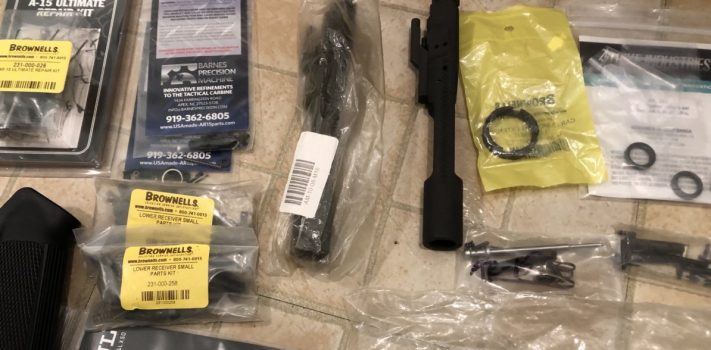
Essential Spares For Your Guns, by Pickled Prepper Pete
Don’t worry, I’m not here to recommend one gun or caliber over another, to tell you how many rounds you should store, or to insist that you have a minimum number of magazines. I do, however, want to ask if you are prepared for problems that can turn your 17-round wonder gun into a one-shot blunder or your ultra-accurate rifle into an expensive club.
I’m talking about your ability to fix your guns when something goes wrong, from a small thing such as a weak spring, a broken firing pin, a lost pin, or a damaged gas tube, to a bent op rod or a broken stock.
Here are a few problems that I’ve experienced, or seen while shooting at the range or at a competition:
- One of the hooks on the trigger spring in my Glock failed, rendering it a single shot. That’s an example of a $1 part stopping a $450 gun.
- I’ve blown the extractor out of a gun by using reloads that were loaded too heavily.
- I’ve seen the screws holding optics shear off, throwing the optic off the slide during recoil.
- I’ve seen magazine feed lips fail, resulting in all the rounds ejecting out the top of a magazine after a shooter rammed it home during a slide-lock reload. I’ve also seen the base plates fail, resulting in all the ammo dumping onto the ground.
- I’ve seen magazine floor plates break when the shooter dropped the magazine on a hard surface during a reload over a hard surface.
- I’ve seen numerous ARs fail for all sorts of stupid, mostly user-preventable reasons, including inadequate lubrication.
- And I’ve had friends call me for help because they lost a tiny part or damaged a spring while working on their AR15-style weapon.
If problems like these can happen under good conditions, then you can expect bigger problems when the SHTF and you need to rely on our guns for more than just fun. (Constant carry, in all weather.) Even if you have a back-up gun, then you need to be prepared to address common failures so your primary weapon can go back into service.Continue reading“Essential Spares For Your Guns, by Pickled Prepper Pete”
JWR’s Recommendations of the Week:
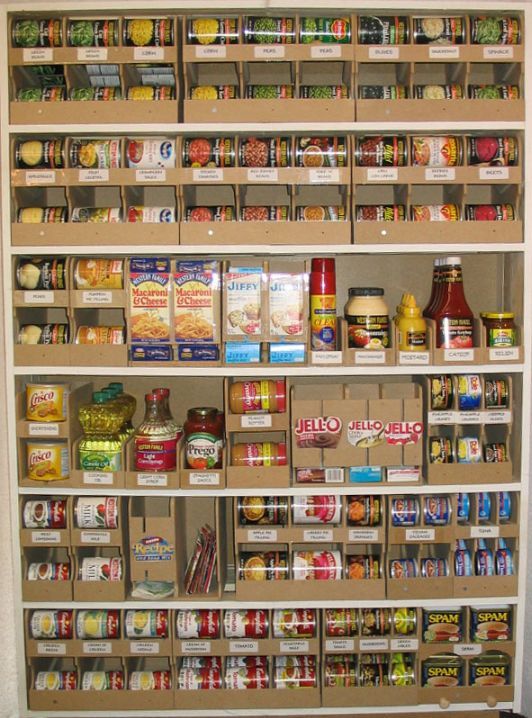
Here are JWR’s Recommendations of the Week for various media and tools of interest to SurvivalBlog readers. The focus is usually on emergency communications gear, bug out bag gear, books, and movies–often with a tie-in to disaster preparedness, and links to “how-to” self-sufficiency videos. There are also links to sources for both storage food and storage containers. You will also note an emphasis on history books and historical movies. As an Amazon Associate, I earn from qualifying purchases. This week the focus is on storage food cookbooks. (See the Books section.)
Books:
Feasting on Food Storage: Delicious and Healthy Recipes for Everyday Cooking
o o o
I Can’t Believe It’s Food Storage! Updated and Expanded Version
o o o
Here is a fairly scarce out-of-print book that is worth searching for: Marlene’s Magic with Food Storage. (Watch for reasonably-priced copies of this book this on eBay.)
o o o
And here’s the updated edition of a classic book that I’ve often mentioned: The All New Cookin’ With Home Storage
o o o

The Editors’ Quote of the Day:
“Government is more dangerous than fire. Fire can’t declare itself immune to water.” – SurvivalBlog Editor-At-Large Michael Z. Williamson

Preparedness Notes for Tuesday — September 29, 2020
September 29th, 1881, was the birthday of Ludwig von Mises. (Born 1881, died October 10, 1973.)
—
SurvivalBlog Writing Contest
Today we present another entry for Round 90 of the SurvivalBlog non-fiction writing contest. The prizes for this round include:
First Prize:
- A gift certificate from Quantum Harvest LLC (up to a $2,200 value) good for 12% off the purchase of any of their sun-tracking models, and 10% off the purchase price of any of their other models.
- A Gunsite Academy Three Day Course Certificate. This can be used for any of their one, two, or three-day course (a $1,095 value),
- A course certificate from onPoint Tactical for the prize winner’s choice of three-day civilian courses, excluding those restricted for military or government teams. Three-day onPoint courses normally cost $795,
- DRD Tactical is providing a 5.56 NATO QD Billet upper. These have hammer forged, chrome-lined barrels and a hard case, to go with your own AR lower. It will allow any standard AR-type rifle to have a quick change barrel. This can be assembled in less than one minute without the use of any tools. It also provides a compact carry capability in a hard case or in 3-day pack (a $1,100 value),
- Two cases of Mountain House freeze-dried assorted entrees in #10 cans, courtesy of Ready Resources (a $350 value),
- A $250 gift certificate good for any product from Sunflower Ammo,
- American Gunsmithing Institute (AGI) is providing a $300 certificate good towards any of their DVD training courses.
Second Prize:
- A Front Sight Lifetime Diamond Membership, providing lifetime free training at any Front Sight Nevada course, with no limit on repeating classes. This prize is courtesy of a SurvivalBlog reader who prefers to be anonymous.
- A Glock form factor SIRT laser training pistol and a SIRT AR-15/M4 Laser Training Bolt, courtesy of Next Level Training, that have a combined retail value of $589,
- A Three-Day Deluxe Emergency Kit from Emergency Essentials (a $190 value),
- Two 1,000-foot spools of full mil-spec U.S.-made 750 paracord (in-stock colors only) from www.TOUGHGRID.com (a $240 value).
- An assortment of products along with a one-hour consultation on health and wellness from Pruitt’s Tree Resin (a $265 value).
Third Prize:
- Three sets each of made-in-USA regular and wide-mouth reusable canning lids. (This is a total of 300 lids and 600 gaskets.) This prize is courtesy of Harvest Guard (a $270 value)
- A Royal Berkey water filter, courtesy of Directive 21 (a $275 value),
- Naturally Cozy is donating a “Prepper Pack” Menstrual Kit. This kit contains 18 pads and it comes vacuum-sealed for long term storage or slips easily into a bugout bag. The value of this kit is $220.
- Two Super Survival Pack seed collections, a $150 value, courtesy of Seed for Security, LLC,
- A transferable $150 purchase credit from Elk Creek Company, toward the purchase of any pre-1899 antique gun. There is no paperwork required for delivery of pre-1899 guns into most states, making them the last bastion of firearms purchasing privacy!
Round 90 ends on September 30th, so get busy writing and e-mail us your entry. Remember that there is a 1,500-word minimum, and that articles on practical “how-to” skills for survival have an advantage in the judging.
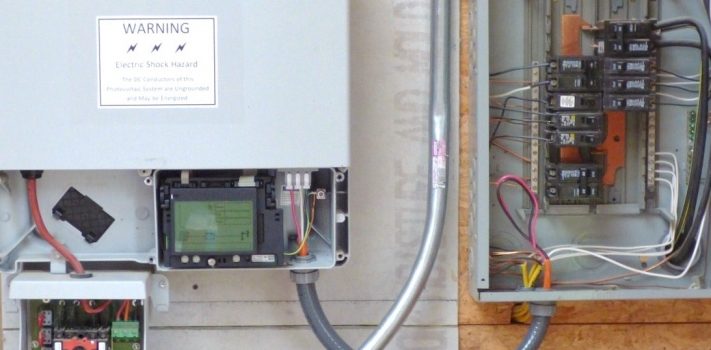
PV Solar Panels Can Pay For Themselves, by St. Funogas
Author’s Introductory Note: Grid-tied solar panel payback time is less than seven years in most of the lower 48 states, and quickest in some of the New England states, so don’t think solar isn’t for you just because you live in North Dakota or Vermont. RUN THE NUMBERS which I’ll show you how to easily do. If you don’t care about all the details of how and why, skip to the last section called “Quick Way to Figure out Payback Time.” There are only three numbers to enter on your calculator and you’ll have your payback time in years. Then you can come back and read the details if you’re so inclined.
From time to time on SurvivalBlog discussions come up about whether or not solar panels can pay for themselves. I’ve been amazed as I’ve traveled around the country and seen so few homes with solar panels, and wondered why more people don’t take advantage of nearly-free electricity. I’ve concluded that the three biggest reasons are 1.) most people are not aware of how simple it is to install grid-tied solar panels yourself, 2.) they erroneously think they need storage batteries and all kinds of complicated equipment, and 3.) they’re not sure how to do the math to figure out if solar panels are feasible in their area.
First, A Brief Tutorial
So, let’s tackle those reasons in a quick tutorial.
First, if you can hook up an electric water heater, you can most likely hook up your own grid-tied PV system in a couple of days. Second, if you can install them yourself and follow some basic rules of frugality outlined below, nearly everybody in the lower 48 can make a home, grid-tied PV (photovoltaic) system pay for itself in 3½ to 7 years.
My philosophy behind having a grid-tied PV system is this: for now, we want inexpensive electricity and something simple to get us started in solar energy and, in the event of TEOTWAWKI, we want to be able to have the ability to convert our system over to something that will at least charge some batteries to provide lighting for our post-SHTF life, and hopefully much more than that. We are not trying to save the planet so let’s avoid that topic in the comments section please. (Note on EMP/Carrington Event later.)Continue reading“PV Solar Panels Can Pay For Themselves, by St. Funogas”

SurvivalBlog’s News From The American Redoubt
This weekly column features news stories and event announcements from around the American Redoubt region. (Idaho, Montana, eastern Oregon, eastern Washington, and Wyoming.) Much of the region is also more commonly known as The Inland Northwest. We also mention companies of interest to preppers and survivalists that are located in the American Redoubt region. Today, we focus on the release of Todd Engel. (See the Idaho section.)
Idaho
First and foremost, there is this update, over at Redoubt News: Exclusive: Welcome Home Todd Engel!
(The photo of Todd Engel and Rep. Heather Scott at the top of this column is courtesy of Redoubt News.)
The editors of Redoubt News note that after four and a half years of wrongful incarceration, Engel is attempting to put his life back together. If you’d like to help him and his family, then please visit the new Engel Family GoFundMe page.
o o o
Median Ada County home sales price passes $400,000 in August thanks to dwindling inventory
o o o
Genesis Arms of Sandpoint, Idaho has introduced a new AR-10 variant in 12 gauge with a 10.5″ barrel and an arm brace. It is classified as a “firearm”–not a shotgun, nor a pistol. This is the same category as a Remington Tac-14.
o o o
A recent visit to the Seekins Precision web site shows that most of their guns are sold out, but they are taking back-orders.
Continue reading“SurvivalBlog’s News From The American Redoubt”

The Editors’ Quote of the Day:
“Ships are safe in the harbor, but ships were not made for the harbor.” – Robert Griswold, of ReadyMade Resources, quoting an old adage.