(Continued from Part 1.)
Gear and Materials:
Soil
The first trays I grew using ordinary Central Texas yard dirt and the results were good. But dirt from outdoors can introduce mold, gnats, and other insects, so I have been using potting soil ever since. Professional growers will use various mixtures which might include perlite, vermiculite, compost, or coconut coir. Some grow hydroponically. Some add fertilizers and nutrients. It’s very likely that, by following their recommendations, or through experimentation, I might increase yield or see other benefits. But I’m satisfied with the results I’m seeing for now, and I suspect in any case that, during the short period between germination and harvest, the grow medium doesn’t matter too much, and that, apart from water, warmth, and light, most of what the plant needs is in the seed.
Trays
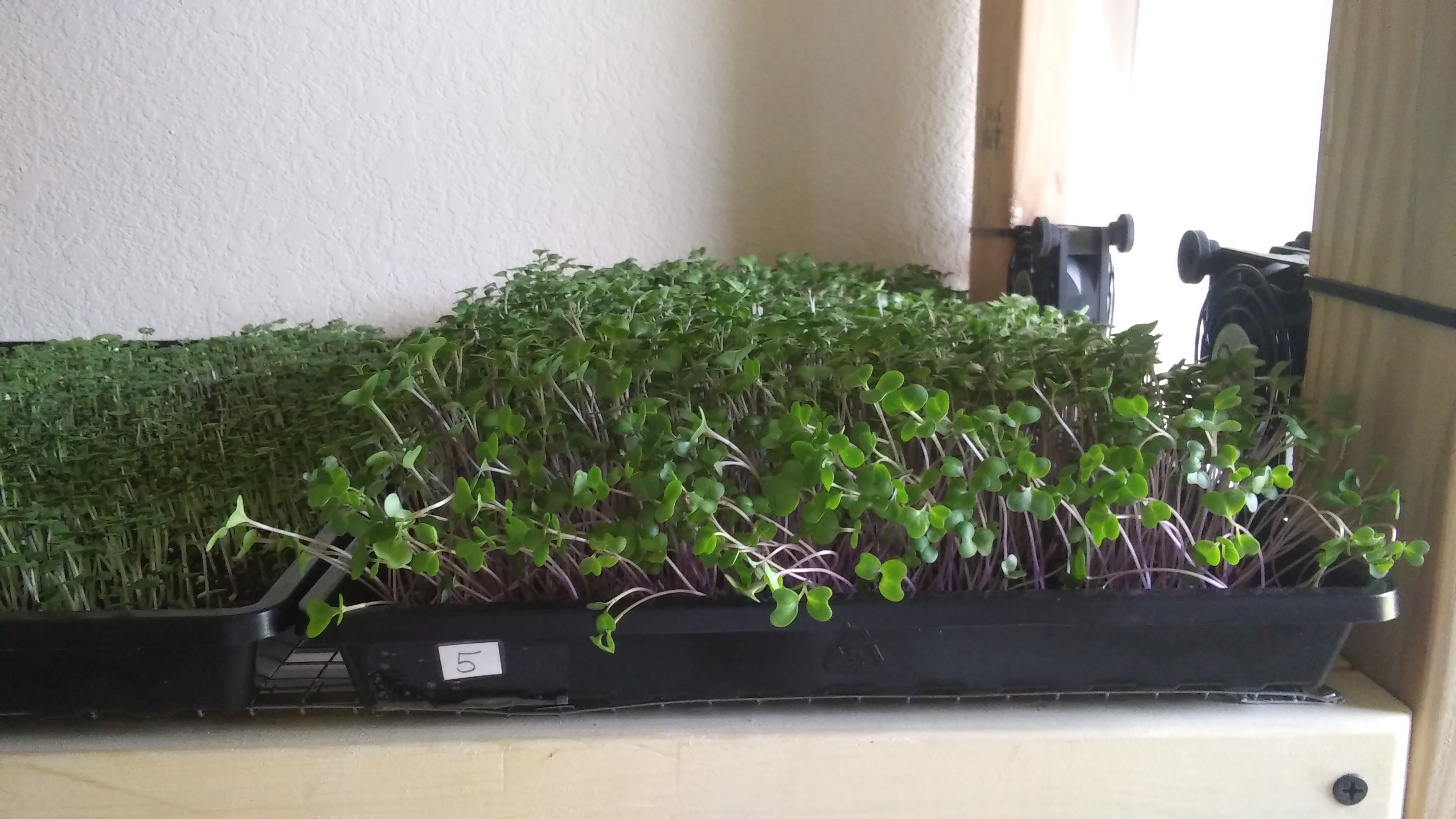
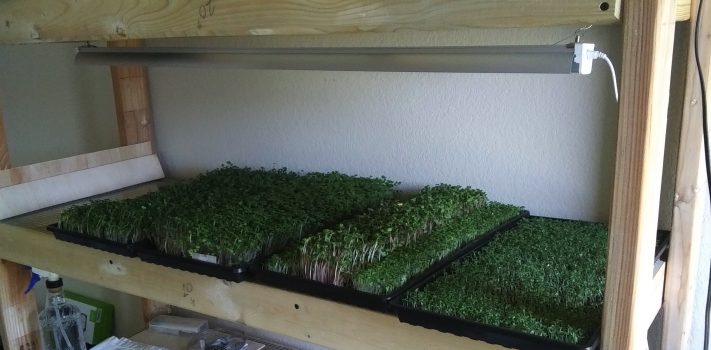
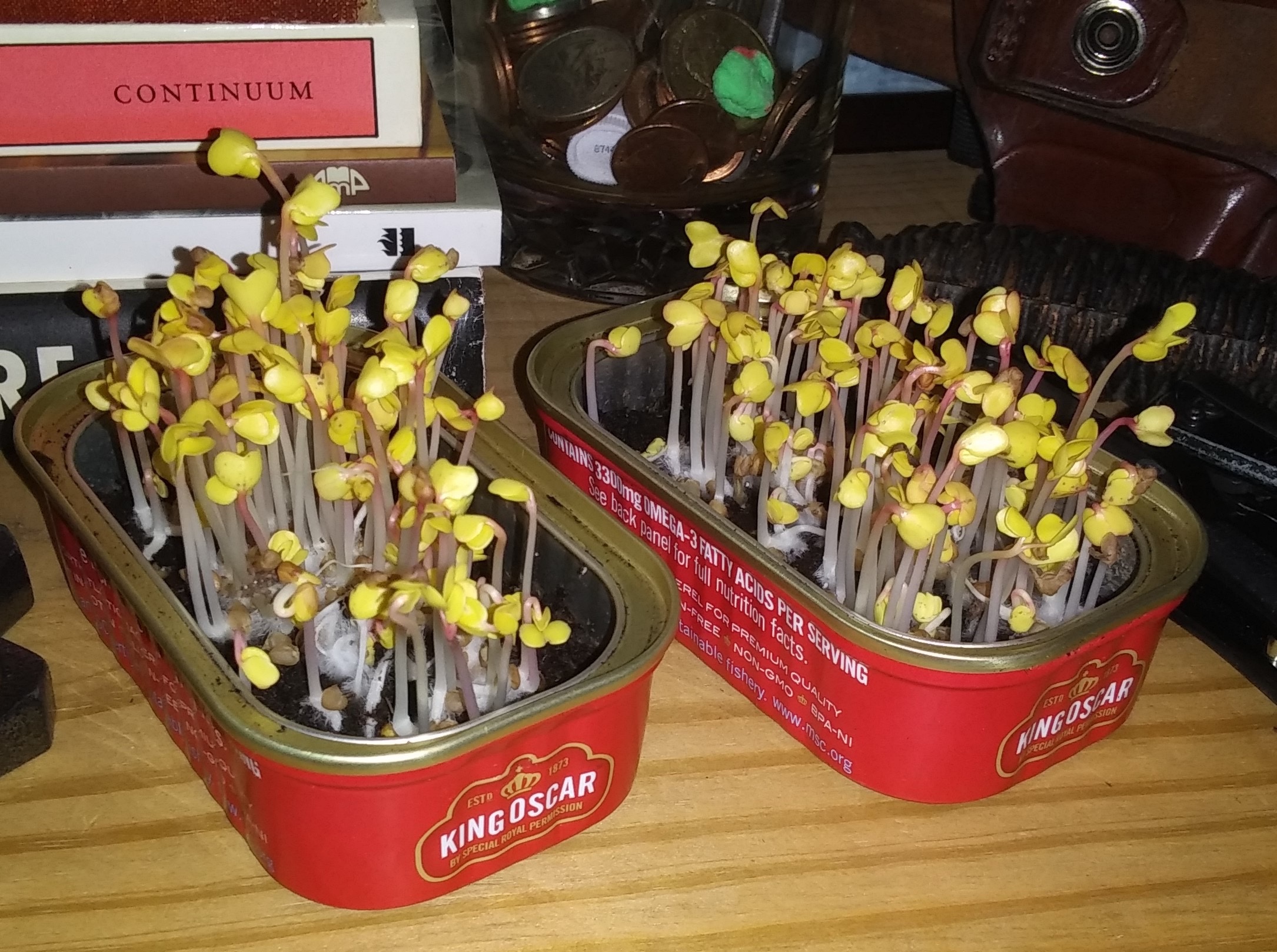
Special trays are absolutely unnecessary. Had I read Burke’s book in time I would not have initially purchased any 1020 trays. Burke uses tin foil baking pans and a variety of bowls. Really, any fairly shallow dish will work, in a height range of one to three inches (see Figures 7 and 8). I chose the 1020 shallow trays for two reasons. It is easier to get in close to the soil to harvest with scissors or a knife if you don’t have a tall rim in the way of your hand and, secondly, a high rim impedes airflow and this can foster mold.
I was concerned initially that with a shallow tray I wouldn’t have sufficient soil depth to sustain some of the plants that have a longer time until harvest, but this concern passed after I grew a couple trays of basil to a height of 4-5 inches over a four week period in only about ¾ inch of soil. And regarding drainage holes, the trays I use have none. I was concerned about this, too. Many growers, particularly the pros, prefer the trays with holes because they like to water with a technique called ‘bottom watering,’ i.e., setting the planted tray, with holes, into another tray, with water, and allowing the water to soak up into the root system from the underside.
One important advantage of this is that it prevents the development of mold. Microgreens tend to be grown densely, especially by the pros, who aim to maximize profit. Moisture is easily trapped under the ‘canopy’ when watering is done top-down. But I’ve been careful with how I water, as will be described later, and this has only rarely been a problem.
But I don’t regret the 1020’s I bought at all. I spent a little extra and got the heavy-duty variety. Barring their ad hoc use as tennis rackets I don’t expect they’ll ever crack, particularly as they are not spending any time out under our brutal Texas sun.Continue reading“The Secret Salad Garden – Part 2, by D.G.”