Composting: Microbes, Black Gold, and Growing the Best Food
A search of the SurvivalBlog archives will uncover pages and pages of articles mentioning compost and its value in gardening. However, if there was a startup composting guide I missed it. If you are an experienced composter hopefully you can still learn from this article, but everything here will be geared toward someone just starting out. Be warned I don’t use a sophisticated “fast” method. I work with God’s design, and let the microbes do the work. Well-balanced compost takes time–8-to-12 months with this method. This means you need to start a pile now, in order to have it when you need it to grow food. I’ve been running a variety of composting experiments over the past five years and am very happy with my results.
Here is what we are going to cover:
- Nature’s Fertilizer: What compost is, how compost mimics nature, and why it is so good for plants.
- Building Your Bin: How I built my bins, and suggestions for low cost bin systems.
- Managing the Pile: How to build your pile, manage your pile efficiently, and source materials for your pile.
- Using Compost: Recommendations for using compost in your garden for best results.
Nature’s Fertilizer
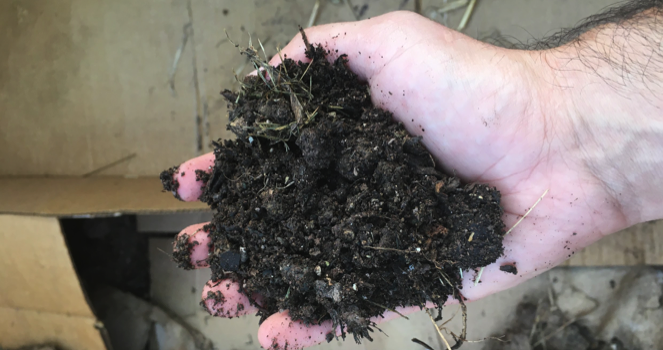
Most of you probably already know what compost is, or even if you don’t you’ve already experienced it first hand. Compost is simply organic matter that has decayed. If you have ever dug into the leaves during a hike in the woods and turned up the rich dark layer of earth underneath, that is compost and plants LOVE it! In nature compost is formed through 2 main natural processes: the aerobic process (no exercise required) in which oxygen is present and microbes break down the materials producing heat as a byproduct, and the anaerobic process which takes place in low oxygen environments and the material is broken down by fungal colonies. This article will focus on the aerobic method, which is the faster of the two and more common in gardening use.
The two main components of fertile soil are humus (dead organic matter), and rock particles. In the natural world leaves and dead plants accumulate on the surface of the soil and are slowly broken down by the bacteria, fungi, and soil organisms. This creates an upper layer of organic matter (humus) that has many benefits for the soil. The biological life in the soil is supported by this organic matter and a myriad of biological and chemical processes are triggered by this diversity of life and unlocking the nutrients in the soil. Just as bacteria play an important role in our own digestive processes, they also makes nutrients available for plants. Dumping fertilizer may work short term, but it will not improve the biology of the soil and may harm it long term. This means many of the micronutrients plants need to thrive will be absent because you have not cultivated the life of the soil. The result is weaker plants, and more disease and pest pressure (not to mention where will you get fertilizer if the supply chain breaks down?)Continue reading“Composting Your Black Gold – Part 1, by Hobbit Farmer”