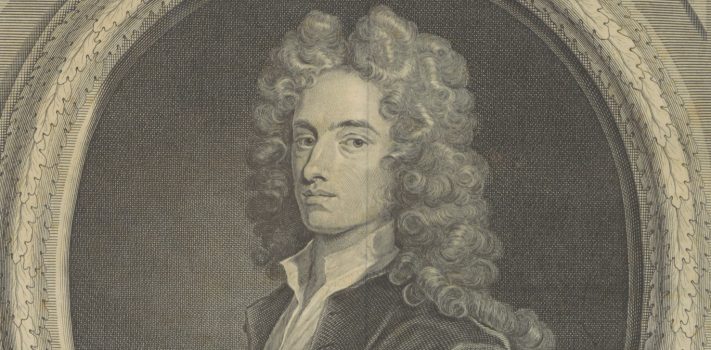
December 31st is the birthday of Alexander Solzhenitsyn (pictured) and of Frederick Selous. (He died on January 4th, 1917.)
—
We’ve just heard of the passing of actress Dawn Wells (of Gilligan’s Island fame). In her later years, she settled in Driggs, Idaho, a town famous for its view of the “back side” of the Grand Tetons. There, Wells did a stint as the town’s Mayor. So she was an honorary Redoubter.
SurvivalBlog Writing Contest
Today we present another entry for Round 92 of the SurvivalBlog non-fiction writing contest. The prizes for this round include:
First Prize:
- The photovoltaic power specialists at Quantum Harvest LLC are providing a store-wide 10% off coupon. Depending on the model chosen, this could be worth more than $2000.
- A Gunsite Academy Three Day Course Certificate. This can be used for any of their one, two, or three-day course (a $1,095 value),
- A course certificate from onPoint Tactical for the prize winner’s choice of three-day civilian courses, excluding those restricted for military or government teams. Three-day onPoint courses normally cost $795,
- DRD Tactical is providing a 5.56 NATO QD Billet upper. These have hammer forged, chrome-lined barrels and a hard case, to go with your own AR lower. It will allow any standard AR-type rifle to have a quick change barrel. This can be assembled in less than one minute without the use of any tools. It also provides a compact carry capability in a hard case or in 3-day pack (a $1,100 value),
- Two cases of Mountain House freeze-dried assorted entrees in #10 cans, courtesy of Ready Made Resources (a $350 value),
- A $250 gift certificate good for any product from Sunflower Ammo,
- American Gunsmithing Institute (AGI) is providing a $300 certificate good towards any of their DVD training courses.
Second Prize:
- A Front Sight Lifetime Diamond Membership, providing lifetime free training at any Front Sight Nevada course, with no limit on repeating classes. This prize is courtesy of a SurvivalBlog reader who prefers to be anonymous.
- A Glock form factor SIRT laser training pistol and a SIRT AR-15/M4 Laser Training Bolt, courtesy of Next Level Training, that have a combined retail value of $589,
- Two 1,000-foot spools of full mil-spec U.S.-made 750 paracord (in-stock colors only) from www.TOUGHGRID.com (a $240 value).
- Naturally Cozy is donating a “Prepper Pack” Menstrual Kit. This kit contains 18 pads and it comes vacuum-sealed for long term storage or slips easily into a bugout bag. The value of this kit is $220.
- An assortment of products along with a one-hour consultation on health and wellness from Pruitt’s Tree Resin (a $265 value).
Third Prize:
- Three sets each of made-in-USA regular and wide-mouth reusable canning lids. (This is a total of 300 lids and 600 gaskets.) This prize is courtesy of Harvest Guard (a $270 value)
- A Royal Berkey water filter, courtesy of Directive 21 (a $275 value),
- Two Super Survival Pack seed collections, a $150 value, courtesy of Seed for Security, LLC,
- A transferable $150 purchase credit from Elk Creek Company, toward the purchase of any pre-1899 antique gun. There is no paperwork required for delivery of pre-1899 guns into most states, making them the last bastion of firearms purchasing privacy!
Round 92 ends on January 31, so get busy writing and e-mail us your entry. Remember that there is a 1,500-word minimum, and that articles on practical “how-to” skills for survival have an advantage in the judging.