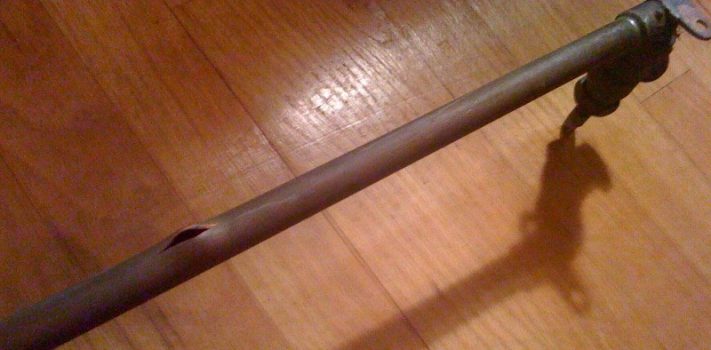
Editor’s Introductory Note: The following is the third After-Action Report (AAR) that we’ve posted in SurvivalBlog about the recent severe winter weather in Texas. Anyone who lives in a temperate region should read these AARs closely, and learn from their experiences. Make adjustments to your home/retreat’s backup power system, water system, heating sources, and insulation. If nothing else, these AARs illustrate that you need to now how to repair copper, PVC, and PEX pipe, and keep the requisite tools and repair pie and fittings on hand.
—
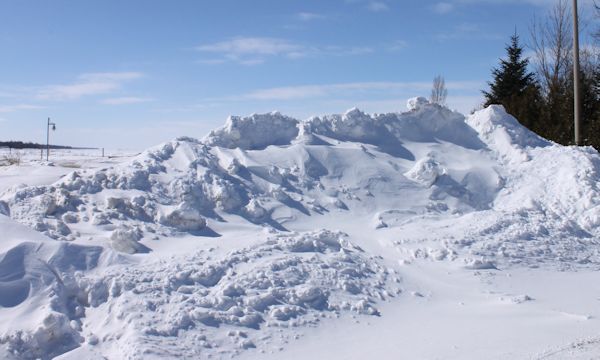
I live in a suburb south of downtown Houston, Texas. We woke up on February 15th with about 1” of snow on the ground and the power to our home was out. Power outages are common for Houston. An inch of snow is not too unusual for Houston; it may happen once every few years or every decade. What was unusual was the length of time which the temperature was below freezing and how far below freezing the temperature dropped. A “typical” winter on the Gulf Coast might have overnight temperatures dropping to 25°F but daytime temperatures hovering near or going back up over 32°F during the day. I looked at some historical weather data and an average year has 62 hours of temperatures observed below 30°F but those instances of cold temperatures would typically be spread across all of the cold winter months, not 62 hours in a row.
Our home was without power for 42 hours straight including the time when it was 11°F overnight Monday night. I estimate that temperatures were sub-freezing for about 56 hours straight. I didn’t turn on our generator. The interior of the house was down to 47°F when the power first came back on. Jackets were sufficient. Our natural gas supply was still operational but we had to break out the matches to light up the burner on the stove for cooking because normal operation is spark ignition.
Even though I grew up and lived most of my life in Southern California, I am familiar with cold weather. I spent one winter in Michigan commissioning a newly constructed power plant. I tell people that we spent the six weeks from Thanksgiving to New Year’s Day going from one spot to another thawing out frozen pipes in the power plant. The plant had started operations but the insulation of various pipes was not yet complete.
The Achilles heel for homes in the Houston area turned out to be the water piping. The pipes run through the uninsulated attic space. For information, my home has PEX piping with insulation on most of the piping. From my winter experience at the power plant in Michigan, I implemented a strategy of running the water in every faucet in the house every 4 hours to displace the water in the pipes with fresh, less cold water. There were three occurrences when I opened a faucet and the water dribbled out, then stopped completely. After waiting with the faucet open for about 30 seconds, the water started flowing again in each instance. An ice plug had started to form in the piping somewhere. What was happening was the water pressure was sufficient to push out/melt the ice plugs which were starting to form. If I had let the ice plug grow then the piping might have been damaged.
The water pressure dropped to almost zero for several hours during the second day without power. If the water had been out the whole time then my strategy would have been different and I would have shut off the water at the street and drain all of the piping in the house. That strategy would not have been ideal as there would have remained some water in low points as the plumbing was not designed with drain valves.
My home survived without freeze damage but I helped two friends deal with the broken pipes and the water damage which occurred after the ambient temperature rose above freezing. My friends who incurred damage had copper pipes that were uninsulated. I came to the conclusion that the local building code requirements only anticipate freezing temperatures overnight with warming during daylight hours. I expect that people up north in the Texas panhandle survived just fine because the construction techniques anticipate sub-freezing weather for multiple days in a row every winter. I went up in the attic of my 2-year-old home and found very poor workmanship with respect to the application of insulation to the water pipes. I observed many gaps and large sections (~10’) of insulation had fallen off. I have some work to do to get things properly insulated.Continue reading“AAR: Winter Storm Uri, by Rocket J. Squirrel”