Budget Planning- Part 4, by Sarah Latimer

Flexible Expenses

This is the list of all expenses that are generally short-term commitments and flexible in their amount. Initially, try to get a handle on where you are spending your money right now. Once you have that written down and can get the picture of how your income is being used, you can begin to make adjustments based upon your goals. So, be realistic and honest in this step! I will write more about how to cut some of these costs down in the next section, but for now get a handle on your spending. You will be able to make better decisions if you plan spending ahead of time, together with your spouse. Remember that accountability is very helpful!

During a month, try to keep track of the normal expenses within this category. However, it may be that you only make a sizable purchase to restock your reloading supplies or soap making supplies or other prepping materials, which can often be obtain at greater discount when purchased in larger bulk. Do your best to figure out what is a realistic amount you need to spend over the course of the year for these items that you only buy once or twice a year and then divide the cost into months, so you can properly determine how much of your monthly income should be set aside for those future expenses.

For gifts, list the people you buy gifts for each year and about how much you spend for each person and then total it up and divide by 12. Apply these same steps to other categories to obtain monthly estimates for each category of flexible expense. These categories (in no particular order) include:

  • Gasoline. Remember to include extraordinary use, like car trip vacations that might be taken in the summer or at holidays to see family and friends.
  • Transportation/toll.
  • Vehicle repairs and maintenance. Include tires as well as oil changes and repairs. Repairs are hard to estimate in advance, but set some money aside especially if you have older vehicle(s). More will be needed if you require a garage to do the work rather than you just buying the parts and making repairs yourself. For a seven year old truck, you are probably spending (or needing to save for future expenses) $100-200/month. If you live in town or the city and must transfer clients in your vehicle where you require a full service car wash/detail every week, then you may be adding another $40-150 per month, depending upon the services required and your location. Edmunds provides a resource to estimate the total cost of ownership of vehicles since 2010. Part of the information available on this website is estimated repairs and maintenance for various makes and models over the course of the first five years of ownership. If you have a newer model vehicle that you recently purchased, you could use this to estimate your repairs and maintenance. There are other sites as well to help find average costs.
  • Clothing. Include purchases of everyday street clothing, work clothes, hunting/survival/tactical clothing, vacation clothing, church clothes, shoes/boots, coats, gloves, hats, jackets, hunting/camo gear, swimsuits, and anything you and your family wear on your body throughout the year– winter, spring, summer, and fall. (I do list fine gold and silver jewelry separately, because it has the potential to be used for barter or trade as something of high value rather than merely a functional item, like clothing.)
  • Laundry/dry cleaning.
  • Children’s toys.
  • Entertainment/books.
  • Memberships.
  • Home school/continuing education.
  • Prescriptions.
  • Dining out. A lot of people do not realize how much they spend in this category. Keep receipts and add them up for a full month. Include breakfast, lunches, and dinners as well as those quick runs to the mini-mart/dollar store for frozen dinners, candy bars, ice cream, chips, and soda, too! Those are conveniences usually purchased at premium prices. Either place them in this category or in groceries, but do not exclude them.
  • Groceries/cleaning supplies. Keep your receipts for an entire months and total it up. Don’t modify your purchases yet.
  • Livestock/pet care/veterinarian services. Your expenses for medicines, neutering/castration, injuries/illnesses, basic first aid supplies, as well as securing their area (fencing, kennel, or cage), feeders, watering supplies, hygiene, feed/seed, vitamins, and toys, and anything else specific for your animal(s).
  • Household maintenance. Whew! Our homes need lots of TLC, don’t they? This is especially true of the older homes, but it is true of even the brand new homes. At a minimum there is the A/C and heating maintenance, light bulb replacement, battery replacement in fire and carbon monoxide detectors, but there are plumbing issues, electrical issues, and simple little functional things that need attention, like drawer sliders, door knobs, and key locks. It is conservative to say that a person should budget $100/month for household supplies, especially if you have a home that is not “newish”, and if you must hire help for even minor repairs then I recommend that you budget more. Take a look at what you have spent in the last year, if you have receipts. Some of the stores, like Home Depot, let you email your receipts to yourself and then you can electronically keep track of expenses over time, but it is best to keep paper copies in case we lose our electronics.
  • Yard/land maintenance. Do you have to mow the lawn and/or maintain a lawnmower, weed eater, hedger, edger, and/or chain saw? Is a tractor, hay baler, trailer, and/or other heavy machinery required to maintain your property? The cost of any of these items and their fuel and oil should be included in this category along with anything else required, including plants, seeds, chemicals/sprays, gates, gravel, et cetera. If you have a tractor loan, include it here, unless you want to set up a “ranch” or “farm” expense category because it is a significant separate category from the house yard.
  • Vacations. How much have you spent in the past year on trips, including weekend getaways? Do you have plans to do something extraordinary or different in the future? Consider the fluctuations in gas prices and airline tickets when projecting costs going forward.
  • Gifts. As stated earlier in the introduction, think about the holidays during which you give gifts and the list of people to whom you give gifts. Estimate the amount you give to each person throughout the year and then divide by 12 to arrive at a monthly expense. Most of it may be utilized in the months of November and December (the biggest shopping time of the year) or at some other time of year, but you will need to set money aside each money prior to these months in order to have enough when it comes time to do the shopping, so we need a monthly amount to withhold from our monthly income for gift-giving. Also, remember that you will likely have a few surprise gifts or invitations extended beyond what you know about now, so add a little extra. Try to be realistic with this budget, based on what you have done in the past and then add just a little for the “unknowns” or “forgotten gifts”. If you have used your credit cards, you may be able to go back through your receipts or history and get a good idea, particularly around the times of year that you celebrate holidays/birthdays.
  • Reloading, ammo, gun maintenance, and cleaning supplies.
  • Hobbies.
  • Religious education/conferences.
  • Larder. Include in this what you have bought beyond “groceries” for your larder. If you have purchased buckets of freeze-dried foods that you don’t normally use in your food supply, the expense of these buckets would certainly fit in here. Anything that is above and beyond what you utilize during the month and that can be stored long term should go here. It may be difficult to tell which category some things should go into (groceries or larder), but don’t worry too much about that. The main thing is to get every expense into a reasonable category. Just make the best judgment you can. If you want to combine these two, as I do, go right ahead. Going forward, it just may help if you are only beginning to build your larder and getting started with prepping to separate an amount toward buying some things that you don’t use normally, like freeze-dried items, to help you get disciplined in doing so. In spite of some who ridicule the idea, our family does eat what we store and store what we eat. We eat some wild things also, including some early spring-time dandelions in our salads and so forth, and we always eat whole grains so that our bodies will be well adjusted to the stored grains. We’ve found we prefer their taste and the health benefits, so it is now a way of life for the Latimer family, and the “larder” is simply our larger pantry with an intermediate and small pantry, too. You have to figure out what works for your family and how you make purchases. Look at receipts and begin by looking at what you are buying now.
  • Jewelry/precious metals.
  • Cash.
  • (others categories specific to you and your family.)

Take a Good Look at Your Budget

Now that you have everything written down, take a good look at where your money is currently going. Is there money left over every month, or are you going into debt each month? Ask yourself, “Am I spending my (our) hard-earned income in ways that support my (our) life goals?” Is this how God has directed you to utilize the resources He has enabled you to have? If not, you need to think about making some changes, possibly some significant ones.

Does your family know and love our Lord and Savior? Is your family emotionally close to one another and obedient to God’s Word, such that you all have a common perspective on life and priorities in this world? Do you have a secure homestead that is away from the city? Do you have multiple sources of clean water, food to sustain your family for weeks and months and possibly years in a TEOTWAWKI event, a means for cooking without utility services, power when the grid goes down, communications, defense, a bug out location, bug out gear, medical supplies/training for SHTF/TEOTWAWKI, and is your family trained and prepared spiritually, physically, and emotionally for what may come? Do you have skills that can see you through and be valuable to others in a long-term SHTF event or TEOTWAWKI time? If you can’t say “yes” to these, then maybe you ought to consider investing in achieving some or all of these goals. There are many ideas in SurvivalBlog articles about how to achieve the objectives above, including your relationship with God. Our money reflects our priorities or a lack of directed priorities. Take a good look at your own and pray about what needs to change. There is always room for improvement. I am working on some right now myself. What do you need to do differently or better?

It may seem scary and risky to make significant changes. The greatest returns on investment usually, though not always, come from things that seem to have the highest risk (or require the greatest patience). Now I do not believe in taking risk for the sake of the thrill of risk. Oh, no! However, when there is a strong reason to do something that I believe in but requires me to leave my comfort zone, I have learned that being risk-averse only keeps me from reaching my goal and ends up causing me harm. Staying in the same rut is often detrimental, though it is comfortable. If I am willing to make changes and adjust my life to accomplish something great that the Lord is calling me to do, there is reward. You, too, can make changes that will bring about great reward! In the short term there will likely be some pain and discomfort. Change seems to do this. We have to let go of some things that we have held onto for awhile. Even if they were not healthy for us, we grow comfortable with them. However, when we see that something better can be accomplished, we need to move to it. That is the case with your budget.

If you need to cut way back on your entertainment in order to increase you larder, it will be painful in the beginning. However, you’ll find comfort in seeing the larder grow. You’ll find other avenues for inexpensive entertainment, too. You might even find something that you enjoy far better that you would never have explored had you no had to search for it. I certainly had no idea how much I would enjoy gardening and herbalism, until I realized the necessity of them and began pursuing them, at first to supplement our income and improve our health. Now, they are a pleasure, though there is still a fair amount that I wish someone else would do for me. (Weeding is not high on my list of favorite past times!) Still, there is always the opportunity to listen to music or instruction while weeding to make the time pass more quickly.) What joy there is in seeing the produce come in off our garden and to taste the incomparable flavor of our homegrown, organic vegetables and herbs, given to us by the hand of God through His providential love, care, and provision and our obedience to guard His garden. We get more resourceful out of necessity, and this is a good thing as we prepare for SHTF situations.

My mother was an accountant and gave me some very good guidelines when I left home that I agree with. She and Daddy were married during the Great Depression, and she graduated in the 1930s at the top of her college class with a degree in accounting, so I think she had a good handle on finances. Though some things have changed since then, most haven’t. Her guidelines below still apply:

  • Don’t spend more than 30% of your income on your home mortgage/escrow payment and preferably only 25%, then pay extra each month as you are able to get that mortgage clear as soon as possible. Be sure not to take on a balloon mortgage or one that penalizes you for early pay off. With the banks so volatile these day and eager to foreclose, a person really needs to do their best to get their property paid for as soon as they can. However, other debts with higher interest rates may need to be handled first, if you have those.
  • Use credit cards for travel and emergencies only and always pay off the balance each and every month. Never leave a balance that requires any interest be paid!
  • Put cash aside in savings in order to pay for a few emergencies, and keep some cash at the house to cover weekends and holidays when banks are closed. While Mom’s recommendation to keep cash in the house isn’t as necessary for weekend and holiday access with debit/bank cards these days, the risk of bank closures, credit card cancellations, hackers, and possible bank account confiscation by the government are all real risks to relying on the bank to hold all of your money. It is still good guidance to keep cash or coin outside of the bank in a secure location that is accessible to you whenever you might need it.
  • Cut corners where you can, but buy quality where it matters. This was one guideline that has been profound as we got our financial and life priorities realigned. “Keeping up with the Joneses’” is fruitless. Appearances to look like you have more than you do is counterproductive, especially in SHTF situations. We do well to do the reverse. Mother made a lot of things in our home, sewed many of my clothes, repaired clothes, gardened, collected those old S&H Green stamps at the grocery store to buy her small kitchen appliances, and cooked many things from scratch. Daddy hunted, processed meat, did woodworking, and was “Mr. Fix-it” around the house as he was capable, and they both readily bartered services and products when possible. Still, we took vacations to foreign countries, had reliable vehicles, lived in a nice house, and generously helped our church, foreign missionaries, and many individuals in need. They also had a nice retirement built up and had bought farm land on which extended family were sharecroppers. Dad, being in the healthcare field, believed in buying quality shoes, but they didn’t care about brand named jeans or designer labels. Healthy, durable, functional, wholesome attributes at a good value were the criteria that mattered. They’d save up for what they needed until they could pay cash. I recall the car salesman’s eyes when they brought cash to buy a car Daddy had negotiated. Apparently, few bought that way. It was the norm with my parents. It has become the norm for Hugh and me, now, too! It is strange how things change and yet don’t, isn’t it? There is so much to learn from those who went through the Depression. I feel fortunate to have been raised by people who learned those lessons. I only regret that for a period of my life I discounted those ways, thinking we were in more “advanced times”. It would have gone better for me to have listened and applied all of their lessons earlier. The age of “gotta have it now,” indebtedness, and thinking “I deserve to have ‘it’” is not advancement. I recall when Hugh and I were shopping for my recent vehicle at a local dealership and waiting for the car salesman to return from taking our offer to his manager that we listened to a woman bawling. She was hysterical over being turned down for credit on the car that she just had to have. I honestly don’t recall seeing anyone who had just received news of a loved one’s death bawling any harder (and few as hard as) this woman. The salesman offered to check on a lesser expensive car, but she just had to have that one. That car was the only one for her, and it seemed to be the end of her world that she couldn’t afford it. Even if she had been sold that car, it would have probably been in the junk yard in less than ten years. How sad!
  • Above all, pray about purchases, especially large ones, and don’t make emotional, quick decisions to buy anything without talking with the Lord and your spouse, if you have one. When married, pray and discuss purchases together. She suggested setting a limit of how much one spouse should be able to spend without consulting the other and then sticking to that limit. Hugh and I have changed this amount as our financial situation and goals fluctuated, but for most of our married years we have rarely spent more than $100 without consulting the other one first. Many times the other one has served as a good consultant to ask the questions that guided the one considering the purchase away from making a mistake and toward making a much better investment elsewhere. Two heads are better than one, and the one that isn’t in front of the salesman or the shiny, new toy can sometimes be more clear headed to think through the considerations and the other items higher on the family’s “need” list competing for the family’s resources, too. I have so many times been grateful for Hugh’s wise counsel on purchases I was considering! I think he would say the same thing about my advice. We have “family” goals, yet we also desire for the other one to have hobbies and be satisfied, too, so there is no selfishness involved. We aren’t trying to deny one another but to help each other make good choices for the benefit of the family and our common goals. Sometimes, I have advised Hugh to upgrade his purchase consideration, which usually shocks salesmen of tools and guns, as apparently most wives are not generous, but I like Hugh to have the tools necessary to get the job done right! Working together to set family goals and taking actions that help the family reach those goals is key, but we each also need to have a little flexible spending money, too, to pursue our individual interests and spontaneous desires or opportunities. That limited amount should be determined in advance and respected. Mom and Dad did a good job of this. They had a separate compartment in their wallets for their “personal” money, and I sometimes, if not often, saw them take their personal spending money and use it for others. Dad bought a sandwich for a “ho bo”, and Mom bought some perfume for a lady in the nursing home. Sometimes, they would buy me some candy with it or we’d all go out for a banana split or malted shake, which of course I didn’t mind at all. It was all the Lord’s anyway, and they considered themselves simply good stewards who got the benefit of enjoying it and enjoying sharing it. Hugh and I have to agree that there is a great pleasure in caring for others and sharing what we have with those who appreciate it and have true needs.

In the next article, I will address goals and specific cost-cutting ideas for various categories that we have implemented and that might help you to cut your costs and achieve your budget goals. Thanks for hanging around for this long series articles. I truly hope it helps.


Letter Re: Sawyer Water Filter Additional Information

Hello,

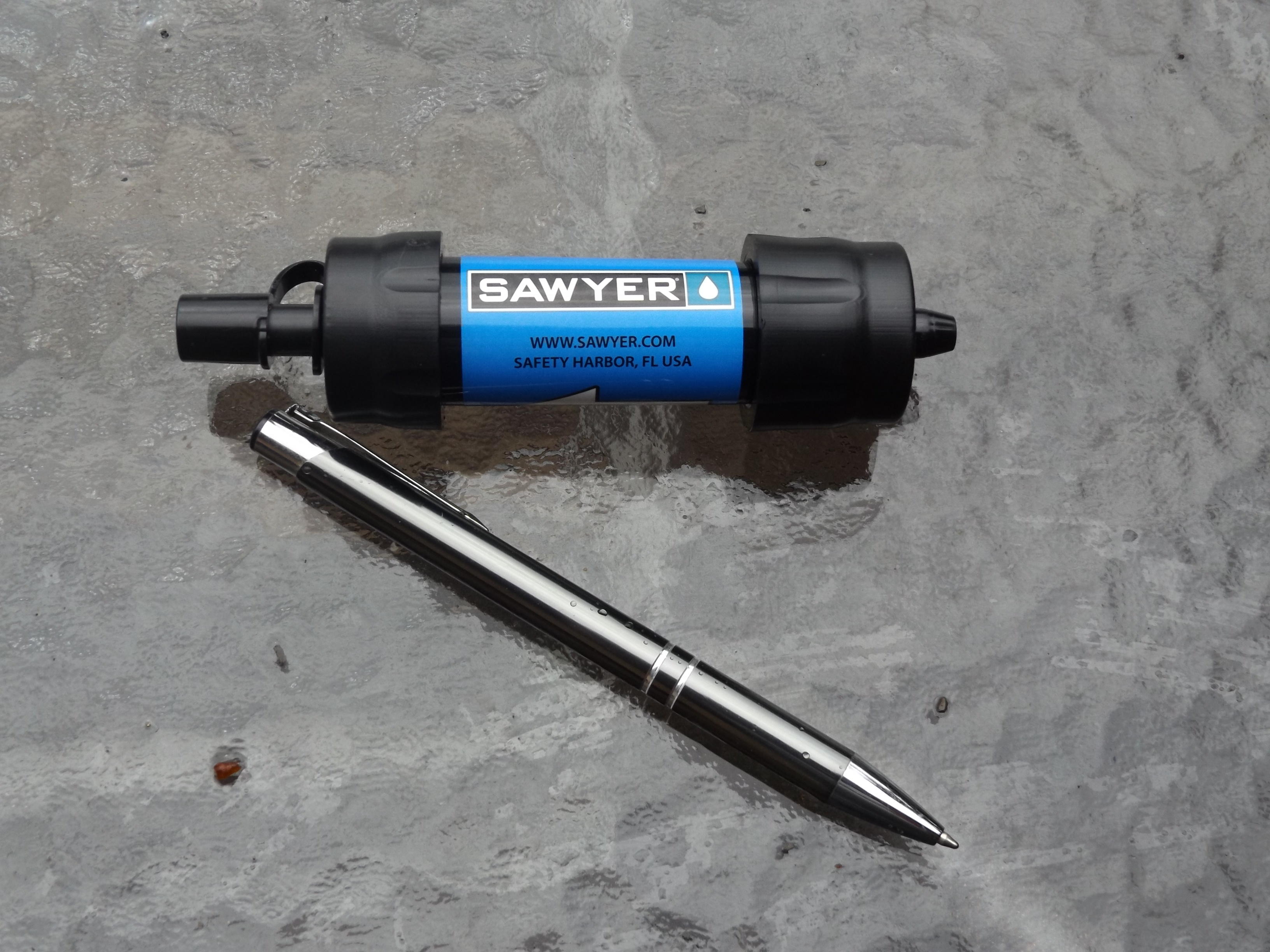
I would like to add some information about the Sawyer water filter. One of the readers mentioned that the Sawyer filter use to be 1,000,000 gallons, and now it’s 100,000. Those are two separate filters. The 1-million gallon filter is the larger version. The 100,000 gallon is the mini version, which I personally have used since it came on the market. I do a lot of hiking, backpacking, and exploring in the outdoors. I like to carry my Camelback for ease of drinking and carrying my water. What I recommend is to buy the Mini Sawyer filter, cut the Camelback tube in the middle, and install the filter there. Just fill the Camelback and go back to hiking. It makes the suction a little tougher to get the water, but it’s not hard whatsoever. I have never had any issues, and I have found this is has been the easiest way to get clean water in the back country. It’s also lighter than a lot of hand-operated filters. Most filters are susceptible to freezing temperatures, including the ceramic ones. I like to take a zip lock baggie with me and put the Mini Sawyer filter in it at night, which I then put at my feet in my sleeping bag. You will never have a frozen filter, it won’t make a mess, and it’s still super light to carry around. I highly recommend buying a few to keep with your supplies. – D.S.


Odds ‘n Sods:

Turkey cancels 50,000 passports as President Erdogan tightens noose around suspected dissidents after failed coup

o o o

This unusual new listing in Texas posted over at SurvivalRealty.com caught my eye: Former Military Base – Nike Missile Site.

Note: It is just one of more than 275 retreat properties available, through the site. Take a look. You will be amazed by many of these properties!

o o o

Hillary Is a Menshevik. The Bolshevik/Menshevik crisis we saw in the first stages of the Russian Revolution is bubbling to the surface in our country through the Democratic Party. – H.L.

o o o

President Obama Just Signed The DARK Act Into Law – B.B.

o o o

The Treason of the Congressional Central America Caucus – B.B.


Hugh’s Quote of the Day:

“And the Jews’ passover was at hand, and Jesus went up to Jerusalem, and found in the temple those that sold oxen and sheep and doves, and the changers of money sitting: and when he had made a scourge of small cords, he drove them all out of the temple, and the sheep, and the oxen; and poured out the changers’ money, and overthrew the tables; and said unto them that sold doves, Take these things hence; make not my Father’s house an house of merchandise. And his disciples remembered that it was written, The zeal of thine house hath eaten me up.” John 2:13-17 (KJV)


Notes for Saturday – July 30, 2016

Today we remember the birthday of author Reginald Bretnor. He was born Alfred Reginald Kahn on July 30, 1911, in Vladivostok. He died on July 22, 1992 in Medford, Oregon. In addition to penning many witty science fiction novels and short stories in his characteristic style, he also wrote nonfiction articles for Mel Tappan’s P.S. Letter.


SurvivalBlog’s Orwell Awards – 2016

As promised (but after a delay) we are announcing our first set of Orwell Awards. These are awarded to individuals and organizations who have abused the English language with Newspeak distortions in ways that degrade our liberty, our dignity, our heritage, and the truth, in the past year. Our thanks to the many readers who e-mailed us their nominations. We plan to issue these awards annually. The winners are:

First Place: Barack Hussein Obama, for his “Gender Identity Mandate“. Under Obama’s twisted logic, any school, organization, agency, or business will be denied Federal funds or contracts if they don’t allow boys to use the girls bathrooms and vice versa. The guidelines, announced in May, 2016, are designed to ensure that “transgender students enjoy a supportive and nondiscriminatory school environment” (regardless of how the chromosomes of every cell in their bodies identify them).

Second Place: On July 5, 2016, FBI Director James Comey, for exonerating Hillary Clinton’s repeated gross national security violations, claiming that she and her staff were merely “…extremely careless in their handling of very sensitive, highly classified information.” In effect, he exonerated her (declining to refer her for prosecution) by detailing her guilt in these crimes.

Third Place: In April, 2016, Attorney General Loretta Lynch, for admitting that there have been discussions within the Department of Justice about possibly pursuing civil action against so-called “climate change deniers”.

Dishonorable Mention

The Library of Congress, for dropping any use of the term “Illegal Alien” and substituting the amorphous term “Undocumented”.

Dishonorable Mention

The World Bank, for abandoning precise terms, such as “now”, “recently”, and “later” in their reports.

Dishonorable Mention

Barack Hussein Obama, for describing the Muslim San Bernardino and Orlando terrorists and as “self-radicalized“. (In Obama’s view, the Imams at their mosques had no role in them becoming radicals.)

Dishonorable Mention

Hillary Clinton (long famous for using the euphemism “humanitarian intervention” in place of the word “invasion”) has coined the term “smart power” to describe a hawkish, interventionist foreign policy.


Letter Re: Keeping Children Safe

Hugh,

The author did not explain that during emergencies, public schools will sometime remove children from the school and relocate all the children to a safe location. The local school should have the predetermined safe location address.

(Obviously, if there is a big fire at the school or other emergencies, the school does not leave the children in the school or school yard.)

You might want to mention this fact in some added on information by the SurvivalBlog editors.

During Red Cross training at work, the Red Cross representative asked everyone in the room (100 people) if they know the address or location of, the predetermined safe location for their children`s school. Everyone sat there like dumb turkeys.

During these dire times, children should be homeschooled (or attend a religious school). It is not just the possible emergencies that could cause problems but the dire times involve we face, what is being taught in the schools, and what the children are learning from the other children too. – S.A.


Economics and Investing:

The Gold Price Correction Is Over…And A Trader’s Tale

o o o

Gas Taxes Keep Rising to Quell a Different Kind of Road Rage

o o o

Get ready for America’s new $29 trillion debt

o o o

Yellen Searches for U.S. Wage Gains With Georgia On Her Mind

o o o

The Abbot and Costello version of unemployment numbers: Absolutely Brilliant – B.B.

o o o

SurvivalBlog and its editors are not paid investment counselors or advisers. Please see our Provisos page for details.


Odds ‘n Sods:

A bit technical in reading, but ShepherdFarmerGeek sent in this link to a study analyzing fatal wounding patterns of civilian active shooter events vs military fatal wounding patterns. The conclusion: “We found that the overall wounding pattern and the fatal wounding pattern following civilian active shooter events differ from combat injuries. There were no deaths from exsanguinating extremity wounds. As such, we discourage the current myopic focus on hemorrhage control for civilians. Instead, we urge that the tenets of civilian-based TECC be implemented across the entire prehospital trauma spectrum, and we further recommend studying this strategy to affirm its benefit.” – In other words, we may be training and prepping wrong for the type of potentially fatal wounding that the average civilian may encounter. Time to reevaluate the preps and training.

o o o

Why Civil Defense Still Matters – T.Z.

o o o

From Socialist Utopia To Slave-Nation – Venezuela Unveils Shocking “Forced Labor” Law – C.S.

o o o

So much for gunsmithing: Obama regime targets gunsmiths with new executive order – T.Z.

o o o

The Average Full-Time College Student Spends 2.76 Hours Per Day On Education-Related Activity


Hugh’s Quote of the Day:

“And as he lay and slept under a juniper tree, behold, then an angel touched him, and said unto him, Arise and eat. And he looked, and, behold, there was a cake baken on the coals, and a cruse of water at his head. And he did eat and drink, and laid him down again. And the angel of the Lord came again the second time, and touched him, and said, Arise and eat; because the journey is too great for thee. And he arose, and did eat and drink, and went in the strength of that meat forty days and forty nights unto Horeb the mount of God.“ I Kings 19:5-8 (KJV)


July in Precious Metals by Steven Cochran of Gainesville Coins

Welcome to SurvivalBlog’s Precious Metals Month in Review, by Steven Cochran of Gainseville Coins where we take a look at “the month that was” in precious metals. Each month, we cover the price action of gold and examine the “what” and “why” behind those numbers.

What Did Gold Do in July?

The usual summer doldrums in precious metals were nowhere to be seen in July. Gold started the month on the right foot, rapidly hitting prices not seen since March 2014. Silver prices also accelerated right out of the gate to hit a 22-month high. Stocks reversed their declines in the middle of the month, rallying to hit new record highs. This impacted precious metals and other safe haven assets, as money was pulled out and moved into stocks. Gold slid to test important long-term support at $1,315 an ounce on the 21st, pressured by the US dollar hitting a 7-week high.

Precious metals ended the month on a high note, as the dovish Fed policy statement on the 27th sent gold $20 higher to $1,340 an ounce. This gives gold a gain of $140 an ounce since the lows seen in May. Gold is up 26% so far this year, and silver is up by a huge 48%.

Factors Affecting Gold This Month

Non-farm Payrolls

The non-farm payrolls report showed 287,000 new jobs were added in June. This is over 100,000 more than expected. The huge jump in new jobs had surprisingly little effect on precious metals, aside from some immediate volatility. In fact, gold gained $20 an ounce shortly afterward. While the non-farm payrolls had no real effect on gold prices, the fact that it didn’t is worth noting as a measure of the strength of gold.

Terror Attacks In Europe

Another area that has had surprisingly little affect on gold prices is the multiple terrorist attacks this month in France and Germany. It seems that “maximum terror safe haven” has been hit.

Staged Coup In Turkey

Turkish president Tayyip Erdogan staged a coup attempt in Turkey on July 15, using it as an excuse to purge the army, the police, the courts, and the media of people critical of his regime. He has used this false flag operation as an excuse to consolidate even more power unto himself, including putting the nation’s military and intelligence services under his personal control. (How do you say “Reichstag fire” in Turkish?)

These developments roiled European markets that were already trying to deal with Brexit and the imminent failure of Italy’s banking system.

Central Bank Failures

Central banks around the world have cut interest rates a combined 659 times since Lehman Brothers filed for bankruptcy on Sept. 15, 2008, says Michael Hartnett, Chief Investment Strategist at Bank of America Merrill Lynch. All this has done is bring bond yields below zero, destroying retirees’ lives and forcing pension funds into the stock market bubble in an attempt to make money for workers. As a result, it would now take 107 years for an American saver to double his money in a 1-year deposit account at the bank. It would take a Japanese saver nearly 7,000 years to just double his money.

There’s been $24.6 trillion dollars of quantitative easing (aka money-printing) by all central banks, and the average Joe doesn’t even get a t-shirt. The writing on the wall is so plain to see that even the big investment banks are telling people that the Fed, ECB, and Bank of Japan are now powerless to stop the next recession.

Europeans are still heavy buyers of gold, since Mario Draghi and the European Central Bank have destroyed the European bond market.

And in case you thought that the Fed were professionals, we find out from Reuters that it was just dumb luck that the NY Fed didn’t give hackers all of the $1 billion they were trying to steal from the account of the central bank of Bangladesh.

On the Retail Front

2016 American Silver Eaglesales continue to slide this summer, with just 1.37 million sold in July. The year-to-date total of 27.6 million coins still beats the full-year total for every year from 1986 through 2008.

After a one-year hiatus, the U.S. Mint has struck a bullion version of the American Platinum Eagle coin. 18,400 coins were sold in the first two days of availability. The bullion Platinum Eagle was not produced last year, due to a shortage of blanks. In fact, this year is only the second year since 2008 that the Platinum Eagle has been minted.

Across the pond, the Royal Mint in Britain announced that its 2015-2016 fiscal year resulted in the highest annual revenue in its 1100-year old history. This was due in large part to a 87% increase in profits for its bullion sales.

Sales of the Perth Mint’s newest silver bullion coin, the 2016 1oz Silver Kangaroo, are already double the expected demand of five million coins and going strong.

China is back at the gold hoarding game, purchasing 500,000 troy ounces of gold for its official reserves. This moves the official total (which we all know is far from the real numbers) to 58,620,000 troy ounces, or roughly 1,823 metric tons.

Market Buzz

“Bond King” Bill Gross blames the world’s central banks with destroying the global economy through their “worship of false idols.”

David Stockman tells readers that “helicopter money” is just a code word for “monetization of the public debt”. The concept is so crazy in actuality that even Japanese prime minister Shinzo Abe repudiated the idea. Stockman notes that the Fed probably could never implement helicopter money, not from any attack of reason but because the big Wall St banks would no longer get their cut.

Japan

Ordinary Japanese have no faith in Abenomics and are crowding into physical gold before the government depreciates the yen into oblivion. Sales in June were 60% higher than May. Tetsushi Kudo, a 50-year-old office worker, has started buying his daughter a 1 ounce gold coin for her birthday every year. “She will thank me for the gift when she grows up because gold will have value wherever she goes.”

Other Japanese investors have decided to send their gold to Switzerland for safekeeping. They aren’t going to risk their wealth with a government financial policy that seems to get crazier by the month.

The Tokyo Commodities Exchange (TOCOM) is introducing a new physical gold contract and revising the “Rolling Spot” contract to have the option of physical gold settlement instead of cash settlement.

Staying in Asia, we hear that “Big Mammas” from Mainland China are buying physical gold in Hong Kong at five times the previous rate.

Think that the “Big Boys” are using COMEX silver futures contracts to suppress prices in the face of a physical silver shortage? Steven Knight at Blackwell Global Investments Ltd has your back.

We take a look at the current bull market in gold, including a chart showing top 20 gold reserves in the world at our news blog.

Famous fund manager Jeffrey Gundlach says that gold remains the best investment in these shaky, dangerous times. Calling the European banking system “heading toward insolvency,” he remarked. “Banks are dying and policymakers don’t know what to do,” Gundlach said. “Watch Deutsche Bank shares go to single digits and people will start to panic.”

Warning that the end of fiat currencies may happen sooner than you think, James Rickards opines that gold is the only option when paper currencies die.

The world’s best gold forecaster says we will see $1,425 gold this quarter, where it will pause to see if the Fed is going to hike interest rates in December. Piper Jaffray analyst Craig Johnson sees gold continuing to rally, with $1,525 in the cards.

Swiss super-bank UBShas upgraded its short-term forecast for gold prices from $1,250 to $1,400. Bank of America/Merrill Lynch analysts take a slightly longer timeframe and forecast gold hitting $1475 by the end of 2017.

Doug Casey takes it to another level, predicting $3,000 gold by the end of 2017.

TD Asset Management reveals this month that they went “maximum overweight” on gold in the second quarter with their $230 billion fund, which seems to have been a pretty smart move. Chief Investment Officer Bruce Cooper notes the high levels of stress and volatility in markets across the world, telling Bloomberg, “Job one today is about capital preservation. It’s not about shooting the lights out.”

If you don’t think that the world is on crazy pills by now, how about Alan Greenspan calling for a gold standard?

Looking Ahead

Brexit jitters seem to have calmed down for the moment, but there are signs that the EU is going to play hardball with Britain in negotiations over the UK’s exit from the Union.

In the U.S., we get to suffer through endless political ads as the presidential race kicks into high gear. Watch for any big economic policy reveals by either candidate to move gold prices.

The Fed doesn’t meet in August, but central bankers from all over the world will fly in to Jackson Hole, WY for a policy conference.

We end this month with the news that scientists in India have found gold in cow urine (and no, this is not a joke).


Letter Re: Getting to Your Children

Hugh,

This is very good information, but if I, as a police officer or a designated reporter (nurses, doctors, teachers, and the like), found someone with lots of observations and detailed notes and maps about the movement of children, I would be considering whether to assert control for some questioning, since some parents are legally restrained from contacting (kidnapping) the children – male and female, and this is exactly what a predator pedophile needs.

The absentee parent is in an awkward position, and God help them if there is conflict of any sort. A casual comment of frustration can tip the questioning to controlling. – A.L.