Using Military Principles to Improve Civilian Radio Comms – Part 2, by Tunnel Rabbit

(Continued from Part 1.) Emergency Communications The Emergency level (the “E” of the PACE acronym) methods of communications are used exclusively during recovery or for link up in the field where no electronic means are possible or desirable. The injured may need to use a whistle as their only means to call for help. Linking up in the field is a very dangerous situation that carries the threat of ambush with it, or even casualties from friendly fire. How the Emergency PACE level methods are used to signal using a code or a procedure only known to friendly participants must …


Using Military Principles to Improve Civilian Radio Comms – Part 1, by Tunnel Rabbit

Introduction In my recent SurvivalBlog multi-part article, Communications Options for the Common Man, I looked at how to use commonly available license-free radios in a way that provided a low level of communication security by following a few basic rules, by mostly untrained people. Included in that article was the use of field phones that are easy to use, and provide the highest level of communication security that could be available to both untrained and trained personnel. In this article, I will describe methods that could only be used by trained and disciplined personnel who can maintain higher standards, and …


TEOTWAWKI Signals Intelligence – Part 2, by Mike in Alaska

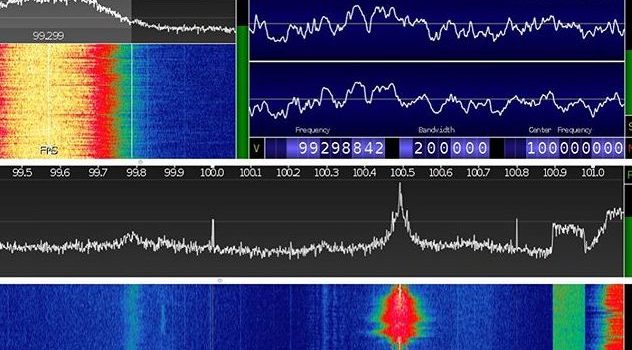
(Continued from Part 1. This concludes the article.) I will devote the rest of this article to a USB “dongle” type radio receiver that I have on hand, and the amazing things you can do with it. I also intend to make mention of a device called a “Tiny SA” a signal analyzer that was made more for spectrum analyzing signals on the test bench but can also be used for SIGINT as well. The USB dongle I am currently using is the RTL2832U. This is a low-price unit costing just $40. But I do advise you consider buying the …


Expatriating to the Philippines: 12 Years to Reflect, by M.B.

Twelve years ago, I moved to the Philippines to escape U.S. economic pressures—tax hikes, healthcare mandates, and a struggling economy. Now, with over a decade of experience, I’ve gained a perspective on life here. This guide, refined for aspiring expats, covers natural disasters, construction, security, education, a unique location in Subic, and critical considerations for accessing specialized services like medical care. The Climate and Agriculture The Philippines offers a year-round growing season, but gardening is tough. Red clay soil demands effort, and ants and weeds are relentless. The dry season—hot and arid—requires irrigation or hydroponics. Fresh produce prices spike during …


Communications Options for the Common Man – Part 6, by Tunnel Rabbit

(Continued from Part 5. This concludes the article.) Field Phone Line Circuits: The Platoon Hot Loop This method can to be used if the layout of LP/OPs is favorable. This method of connecting phones is referred to as the Platoon Hot Loop, yet the connection can be made to string the phones together, not in a circle but all along a singe line be it straight or in a circular shape that resembles a perimeter. The ‘loop’ is actually the electrical path created the connections made in a series in the same way Christmas tree lights were once supplied with …


Communications Options for the Common Man – Part 5, by Tunnel Rabbit

(Continued from Part 4.) The Swedish M37 field telephone is an example of a good middle-of-the-road approach that is relatively lightweight, affordable, adequately durable, and mostly found to be in good operational condition.  These are not as sophisticated and suitable for silent operation as either the TA-312 or the TA-1, yet they can be fitted with a 12 VDC grain of wheat sized red LED that pulses when an incoming call is made to the phone or a peizo buzzer that softly chirps and closely duplicates the TA-312 reduced volume ‘ringer’ merely by connect either to the terminals.  Disconnect the …


Communications Options for the Common Man – Part 4, by Tunnel Rabbit

(Continued from Part 3.) Applying P.A.C.E. to a Commo Plan For every communication requirement, always have an alternative or substitute option to accomplish the same task. For example, hand and light signals and whistles are appropriate alternatives for a security operation. As a last resort, a signal fire, fog horn, or air raid siren could be for emergency communications.  However, I should let the user make the final decision.  Stay off the beaten path as much as possible and increasingly so as the threat conditions escalate.  As threats learn and evolve, so should we.  Continually improve your security operation and …


Communications Options for the Common Man – Part 3, by Tunnel Rabbit

(Continued from Part 2.) Low-Power Radio, Communications Planning, and SOI Several radio types that are relatively easy to use can used to complete a commo plan. To start, choose a primary platform such as either FRS, GMRS, MURS, or CB, and then choose an alternative to standardize on. Then select a primary and alternative channel for both your primary and alternative radio services.  Expect to be jammed and be prepared with a set of Signals Operation Instructions (SOI) so that all understand when and how to quietly switch to the alternative channel or radio service. For longer ranges, GMRS and …


Communications Options for the Common Man – Part 2, by Tunnel Rabbit

(Continued from Part 1.) I’ve busted other Ham buddies who were not FCC compliant with an embarrassing phone call.  It is a fun and a useful exercise and practice of a poor man’s version of what is referred to by the military as Signals Intelligence (SIGINT). Intelligence of any kind, from Human Intelligence (HUMINT) to SIGINT is needed, because intelligence gathering in general is essential to our security operation. Intelligence from all sources should drive our security operations.  I (and others) will be listening for radio traffic as that is the easiest form of intelligence available to the survivalist.  As …


Communications Options for the Common Man – Part 1, by Tunnel Rabbit

We live in uncertain times where tens of millions of foreign invaders comprised largely of military-aged males have recently and in organized fashion crossed our borders. They were assisted by U.S. government-funded NGOs south of the border. We certainly should wonder about their intent. And there are many other significant threats that we should be concerned with particularly as the world is rapidly becoming unstable, both economically and geopolitically. At some point in the near future, World War 3 will break out and the economy at home will suffer greatly, causing riots in the streets that would further destabilize this …


Post-SHTF Lighting: Portable Power Stations – Part 3, by St. Funogas

(Continued from Part 2.  This concludes the article.) HOW TO POWER LIGHTS USING A PPS Now let’s take a look at various ways to power lamps, lights, and flashlights. 1. Rechargeable Lights There are lots of options with rechargeable lighting so it shouldn’t be too difficult to find something that appeals to you. Here are some things to look for when buying rechargeable lights. These features will be listed on the box or in the product description if shopping online. Battery capacity – The higher the better. The larger the battery capacity, the longer it can provide light without needing …


A Simplified Disaster Network – Part 2 by J.M.

(Continued from Part 1. This concludes the article.) Synchronizing The second useful capability I wanted this solution to support is the ability for various applications I use to synchronize their data with a single ‘master’ copy. That allows multiple individuals to read, edit and update information and ensure everyone has easy access to the latest version. For example, in my article on setting up a laptop for use after a disaster I mentioned the use of tools like Obsidian and/or Joplin for managing things like intelligence information, basic note-taking, inventory management, etc. Both of these applications support the ability to …


A Simplified Disaster Network – Part 1, by J.M.

Having an operational computer network running in a post-SHTF world may seem frivolous to some people. But if you have any plans to use computers, tablets, or cell phones as part of your post-disaster operations, it can provide the capability for those devices to communicate, share data and synchronize their activities. It can also provide some support for important things like WiFi security cameras and WiFi sensor monitoring. In a previous article (parts 2, 3, 4, 5) on SurvivalBlog I discussed how to set up a mobile WiFi/Ethernet network running a local cloud server (NextCloud) in a box for use …


Retreat Security: What We Can Learn from Israel – Part 2, by Don Shift

(Continued from Part 1. This concludes the article.) If you have a large property or a self-contained housing tract, layered defense could work well. Imagine an outer barbed wire fence, maybe one of those extra-sturdy five or six strand ones along an Interstate. Next, there would be (ideally) 100 yards or more of open ground with little to no cover that is easily observed from defensive fighting positions. The inner perimeter has a wall or tough, tall chain link and barbed or razor wire fence. Gates are ramming-resistant. If someone gets past that, the inner compound is further subdivided for …


Retreat Security: What We Can Learn from Israel – Part 1, by Don Shift

Introduction It’s every prepper’s fantasy: living in (mostly) a self-sufficient secure compound surrounded by liked-minded individuals living off the land just out of reach of the ravaging hordes. For novelists and daydreamers, living on the frontier in a simpler way is an appealing escape from the often-disheartening humdrum of ordinary life. Rather than worry about politics and taxes, you worry about raiders and if this summer’s crop will come in. But in the pages of fiction or the corners of our imagination, the good guy always prevails. Reality is much more stark. Those who lived on Israeli kibbutzim—collective compound-style communities— …