The Prepper’s Storage Dilemma, by Pat Cascio

Storage of your voluminous preps can be a real problem. We don’t live in a large house, it is only about 1,600 Square Feet. It has two bedrooms, one is extremely small, and is used as my office. The home we used to live in, on the dry side of Oregon, was quite a bit bigger, it was originally an earth-sheltered house, with most of it underground. And, at some point, in the 1970s, there was another level added and it became a more traditional house. However, the below-ground portion of the house was totally useable. Half of the “basement” …


WIN: Whip Inflation Nonconformably

In recent months, I’ve had several consulting clients ask me about how they might protect themselves from the ravages of inflation. The official rate of inflation is now at 9.2%, but everyone knows that the real-world rate is somewhere north of 14%. I’m offering some concrete suggestions that I will relate in this essay, but first, let me digress into some history: According to the Wikipedia article about the WIN campaign: “[President Gerald] Ford had taken office in August 1974 amidst one of the worst economic crises in US history, marked by high unemployment and inflation rising to 12.3% that …


Alternative Ways to Source Food, by SaraSue

I was thinking how different my shopping habits are now than what they used to be. I used to go grocery shopping once a week, and didn’t think twice about running into a grocery store during the week for something I forgot or ran out of or needed for a new recipe. Now? I rarely go to a grocery store. Last year, I was popping in once every week or two just to grab a gallon of milk or a pound of bacon, but I don’t even do that anymore. Part of the reason is that I stocked up on …


An Illustrative Family Reunion Camping Trip, by MacHam

Editor’s Introductory Note: The following article illustrates the difficulties of what I often label “group dynamics.” Anyone who plans to operate a post-Schumer retreat with more than just two families should pay close attention! – JWR I have just returned from a four-day family reunion and here are my observations. To set the stage I arranged for a four-day family reunion with several families of men, women and children. The time was end of July and into August 2022. The place was a much coveted remote Forest Service Group Site that could hold up to 200 people. The site was …


Providing Pictorial Gear Manuals for Your Group, by R.H.

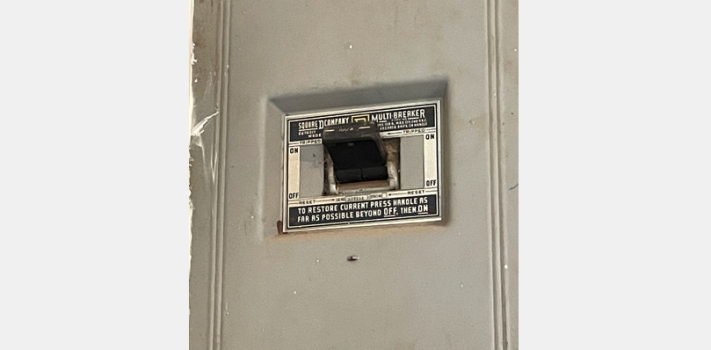
Introduction The generator sputtered one more time, the noise only slightly louder than the un-Christian commentary coming from my mouth. The quarterly test-run for my generator checkout was not going well. I have a Robin 11 HP generator that provides electrical backup for critical circuits in my house through a transfer switch and separate Circuit Breaker box. I can place the generator outside my garage, connect the cable from the generator to the junction box in the garage, start the generator, change the source isolation transfer switch in the basement circuit breaker box and start turning on the breakers to …


Canning Potatoes, by Patrice Lewis

If you remember, early in May I put up a blog post asking for reader input on canning potatoes. You all came through beautifully in sharing your wisdom.           Well, I just tried canning them myself, and what do you know … they came out very well. Ironically, the day I canned potatoes was a day I had absolutely no interest in canning. Our weather has done a great big celestial 180 degrees this week, and we went from cool and rainy to hot and dry. Who wants to can anything in hot weather? But I …


Task-Driven Preparedness Planning, by J.M.

At it’s core, preparedness is a planning activity – we think about what bad things can or may happen and take steps to help ensure our survival if one or more of those events does occur. But what is it that drives that planning? Many of us tend to take a list-driven approach – we identify the types of resources we think we’ll need to survive such as food, water, medical supplies, plans, skills, etc., evaluate relevant factors such as our location, weather, family and finances, then make or find lists of what we think we’ll need to increase our …


Assembling Advanced Medical Cabinets, by K.B., M.D.

No doubt, we all have a medicine cabinet of some size. Lately, I reorganized and consolidated our medical supplies with the major assistance of my kind talented husband who built a set of floor-to-ceiling cabinets dedicated to that purpose even though he dislikes doing carpentry. (Thank you!) Because I am a retired and disabled physician, I obtain supplies to mainly care for those under our roof in a TEOTWAWKI situation. Of course, we all are very aware of recent supply shortages (masks, hand sanitizer, medications-both over the counter and prescription) but what about the possibility of a decline in the …


Grow Food in Summer That Lasts All Winter – Part 2, by J.T.

(Continued from Part 1. This concludes the article.) — Cabbage: One cabbage plant only produces one head weighing about two and half pounds. We like coleslaw, cabbage rolls, cooked cabbage with potatoes, and stews with cabbage. One cabbage each week should be sufficient for eating. Like broccoli, cabbage will not survive after year end, so we will plan to harvest only about 8 heads. (I harvested one cabbage in December. It lasted in our refrigerator until it was eaten 8 months later). These plants will need an area 5′ by 6′ of garden space for 8 plants placed 2′ apart …


Grow Food in Summer That Lasts All Winter – Part 1, by J.T.

Gardeners: You can grow crops in your summer garden that will feed your family during the non-growing season. It’s all about the proper timing for starting your seeds and knowing which plants can make it through the winter. When summer comes to an end and you no longer have those wonderful veggies that came from your garden, what are your options? Well, for many of us gardeners, we are at the mercy of shopping for produce at Safeway from November until next year’s summer crop which won’t become available until June or July. Therefore, through winter and spring you will …


Handling Trash and Garbage at a Remote Home, by Mrs. Alaska

Editor’s Introductory Note:  This article will prove to be instructive for anyone preparing for a grid-down societal collapse,  where public services are disrupted. — Living off-grid, a 20-minute flight from the nearest road means not only that we receive no electricity, but also no municipal services at all, including those for disposal of garbage, trash, sewage, and gray water. So we have become very intentional about what we buy, make, and use, because we have to figure out how to dispose of or repurpose what remains. The following are some examples of what we do with wood ash, packaging, vegetable …


Update: In-Town Versus Isolated Retreats

This feature article is an update to a SurvivalBlog article that I wrote back in August of 2005: — There are two distinct modes of fixed location survival retreats: ”In Town” and “Isolated.” The former depends on some local infrastructure while the latter is designed to be almost entirely self-sufficient and self-contained. Isolated retreats are also often termed “remote” retreats. Not everyone is suited to tackling the tasks required for self-sufficiency at an isolated retreat. Advanced age — with the inevitable loss of muscle mass — physical handicaps, lack of trustworthy family or friends, or chronic health conditions could rule …


Shortages, a 7-Year Food Supply, and Beating Inflation – Part 4, by SaraSue

(Continued from Part 3. This concludes the article.) As discussed previously, I followed two important principles in achieving a 7-year food supply using basic foods. First, let “everything from scratch” be your motto, avoiding processed and genetically modified foods. Second, buy in bulk. These two principles together will contribute to good health and definitely get you ahead of the steep inflation curve. Take the time to read the book, Nourishing Traditions, that I refer to as the “food Bible”. It will help you understand the real nutritional needs (“nutrient dense foods”) of adults and children, give you recipes, and help …


Shortages, a 7-Year Food Supply, and Beating Inflation – Part 3, by SaraSue

(Continued from Part 2.) Food Basics In 6 months, I was able to stock up on basic, healthy, foods for a single person relatively inexpensively. You won’t necessarily have to take what I did and multiply it by the number of people in your household because it depends upon food needs and tastes. I avoid “emergency food supplies”, which are basically either dehydrated or freeze-dried foods at a premium price, because the budget matters to me. I avoid processed foods unless I see an exceptionally good sale, and know that these items will be good for the purposes of bartering …


Shortages, a 7-Year Food Supply, and Beating Inflation – Part 2, by SaraSue

(Continued from Part 1.) For many of us, the following are well-known concepts that we try to implement in our day-to-day living. I share my spin on them. I don’t cover OPSEC in this series because there are individuals with far more security experience than I, who can speak to it. Suffice it to say, I have implemented layers of security. The Basics: Water, Shelter, Tools, Energy, and Food Water: If you live in an urban or suburban area, your sources of water are very limited. However, you can get smart about water storage, storage containers, water filtration, and even …