Converting Diesel Vehicles to Run on Waste Vegetable Oil, by Polar Bear

Editor’s Introductory Note:  This article was posted in SurvivalBlog in September, 2007. Given the recent spike in fuel prices, I thought that it would be apropos to re-post it. – JWR — When Rudolph Diesel invented his internal combustion engine, he used refined peanut oil as fuel. The reasoning behind it was that farmers could essentially grow their own fuel for their tractors. Diesel cars have been widely manufactured and used all over Europe, but never really caught on in the United States. Diesel pickup trucks and Big Rigs are common in the US, and are renowned for their torque …


Ballistol Multi-Purpose Lubricant, by Thomas Christianson

Ballistol is a gun cleaning oil. If my sources are correct, it is composed of white mineral oil, potassium oleate, ammonium oleate, benzyl alcohol, amyl alcohol, isobytyl alcohol, benzyl acetate, and anethole. One key characteristic of Ballistol is that it emulsifies with water. This makes it an excellent cleaner for firearms that use black powder or corrosive primers. The best solvent for black powder and the salts left by corrosive primers is hot (almost boiling) water. Ballistol works well in conjunction with that hot water. Ballistol is also non-toxic, and can also be used on wood and leather as well …


Notes on Constructing a 12 VDC Fuel Transfer Pump

  JWR’s Introductory Note: This is an update to a reply to a letter that I posted in SurvivalBlog back in February 2007.  Given the recent spike in gasoline and diesel prices, I thought it would be apropos to re-post it. — Every well-equipped retreat should have at least one “field expedient” 12 VDC fuel transfer pump. These pump rigs are popular with dirt bike, ATV, and snowmobile enthusiasts. They are very simple to construct. Here are the materials that you will need: 1 – An automobile or truck electric fuel pump. (The least expensive pumps come from automobile wrecking yards.) …


The Price of Beef, by Patrice Lewis

Editor’s Introductory Note:  This guest article was written by our friend and fellow blogger, Patrice Lewis. Her entertaining and informative Rural Revolution blog has been published several times a week since 2009. We highly recommend bookmarking it. – JWR — The price of beef has been on everyone’s mind lately. According to the USDA, the average price of beef jumped from $8.40 per pound in March to $10.10 by December 2025. A number of recent articles reflect these concerns: Food inflation in America RFK Jr. Urges U.S. Ranchers to Ramp Up Beef Production The cost of this grocery staple is …


Homestead Fuel Storage and Rotation, by NC Bluedog

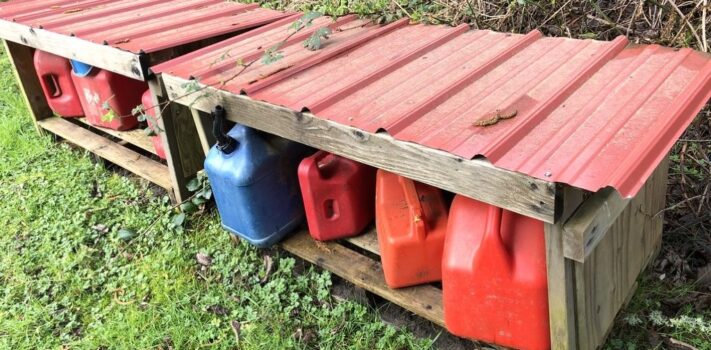
Editor’s Note:  This is a re-post of a SurvivalBlog article from May, 2008.  Given the recent fuel price spikes and the many e-mails that I’ve recently received asking about fuel storage, I thought that it was apropos to dig up this practical article from the blog’s early archives. Given that liquid fuel costs are climbing dramatically, and likely to continue rising, I would like to share some of the practices for fuel storage we employ. For our homestead, liquid fuel equates to four items, namely: Propane, diesel fuel, kerosene and last but not least gasoline. For each fuel, there are …


Beyond Organic: Biological Systems Gardening for Food Security – Part 2, by Hobbit Farmer

(Continued from Part 1.) Principle #1: You Are a Microbe Farmer Do you want to sustainably grow healthy, nutritious, produce? Congratulations . You are now a microbe farmer! The first principle of biodynamic gardening is you are no longer growing plants, you are raising trillions upon trillions of microbes. If you can create an environment that supports a healthy soil ecosystem full of bacteria, fungi, and other soil organisms then ANY plants adapted to that environment will thrive. The Bionutrient Food Association (BFA) spent 3 years surveying nutrient quality across 21 crops. They compared the soil samples with the crops …


Fuel Storage for Survival Retreats, by Flighter

Editor’s Introductory Note: The following is a re-post of a 2007 SurvivalBlog article. Given the recent spike in gasoline and diesel fuel prices, I thought that is was apropos to re-post a few articles related to fuel from SurvivalBlog’s early days. — The world runs on petroleum. Imagine a post-apocalyptic period when the local gas station is closed, and has been for two years. How will you carry out your daily activities? Generate electricity? Pump water? Plow your garden, or fields? All of these can be done by hand, and have been for thousands of years. Modern life has given …


Construction and Design of a Remote, Off-Grid Residence – Part 3, by Mrs. Alaska

(Continued from Part 1. This concludes the article.) Storage A big challenge when living in small homes is storage space. In a climate with dramatic temperature swings like ours, we have, for example, different mittens, boots, parkas and hats for +30, 0, and -30 degrees. All of these are bulky. We also have special clothing for hunting, fishing, and rain, and various accoutrements for outdoor activities. So, we built lots of storage shelves in various outbuildings to hold labeled totes of out-of-season clothes. In our cabin, I store things under, over, behind, and beside furniture. For example, my husband built …


Construction and Design of a Remote, Off-Grid Residence – Part 1, by Mrs. Alaska

We bought undeveloped land in rural Alaska, in a region with no municipal infrastructure within a 20-minute flight to the nearest community. So, we built everything from scratch, after we hauled all the requisite supplies in by snowmobile trailer or by float plane. We made many mistakes in our design and construction, as well as a few good decisions. I actually think that people who buy a property that has an old-timer’s cabin, layout, and tools, may have an advantage in making future adjustments. The following are my suggestions for considering how to build and design property in a remote …


Necessity is the Mother of Improvisation – Part 2, by 3AD Scout

(Continued from Part 1. This concludes the article.) At one auction, I found some very odd tools for some type of woodwork.  Upon research they were used by wheelwrights to make wooden wagon wheels.  I have an interest in several old trades but wheel making is not one of them.  On a trip to Holmes County, Ohio (in Amish country) I took those old wheelwright tools and traded them for some other tools (blacksmithing and chisels) that I did want at the Colonial Homestead Store, in Millersburg.  This store offers old but usable tools from many old trades.  Just walking …


Necessity is the Mother of Improvisation – Part 1, by 3AD Scout

We have all seen the post-apocalyptic movies where improvise armored vehicles with machine guns roam the landscape.  These Hollywood creations make for great entertainment but are such cobbled together machines just fantasy?  The civil war in Somalia introduced the world to “Technicals”, or utilizing civilian vehicles, like decades old Datsun and Totota Hilux pickup trucks, as a platform to mount heavy machine guns, like the Soviet era DShK 12.7mm.  Thirty years later and such vehicles are now being used on the battlefields of Ukraine.  Not only has Ukraine made improvised war wagons out of civilian pickup trucks but they have …


Home Pressure Canning, by Mrs. Alaska

The following describes my approach at pressure canning meat and dairy products, with some comments on fruit, vegetables, and other preservation methods Pressure canning cookbooks, like Ball’s Blue Book, include recipes for making and canning meat broths, but, in my experience, most do not for meat itself. Similarly, they lack recipes for canning most dairy items. However, families have canned both for generations. Below, I share my positive experience of canning meats, cheese, and butter, for shelf-stable pantry items, based on the advice of friends whose families have done so for decades, and from my own experiences over many years …


Introducing Your Community to Emergency Preparedness – Part 2, by A.F.

(Continued from Part 1.) The next topic is water. I begin with the low hanging fruit of having water stored at all times. It hurts my soul to thoughtlessly parrot the “one gallon per person per day minimum” tripe we have all heard so many times. My recommendation is to store no less than three gallons per person per day or ten gallons each. I follow this up by encouraging each family set a goal of having a five-gallon water jug set aside for last minute filling for each person. For those who lament storage space, I recommend the collapsible …


Regional and Seasonal Camouflage Clothing and Gear

As 2025 draws to a close, I’d like to revisit a topic that often comes up in SurvivalBlog: camouflage clothing and equipment. Note: To see examples and variants of the camouflage patterns that I’ll mention in this article, see the comprehensive Camopedia.org website. They are to be commended for maintaining a great reference site. I will begin with some history: Camouflage uniforms were not standard issue for all but a handful of the world’s armies until the mid-1960s.  Experimentation with modern printed camouflage fabric as we now know it began with the German Wehrmacht and Waffen SS, circa 1942-1945.  They …


Prelude to World War – Part 3, by 3AD Scout

(Continued from Part 2. This concludes the article.) Timelines Given As we listen to all the chatter, day in and day out about a widening war in Europe and war with China, we can see some recurring messages in the reporting.  How many times have you heard that NATO needs to be ready for a war with Russian in 3-5 years or that China will likely invade Taiwan by 2030.  There are a few variations of the dates but regardless of the actual dates we need to ask why NATO and our Asia-Pacific Allies need to be ready by those …