Mid-Scale Grain Gardening in Alaska- Part 4, By Alaskan Gardeners

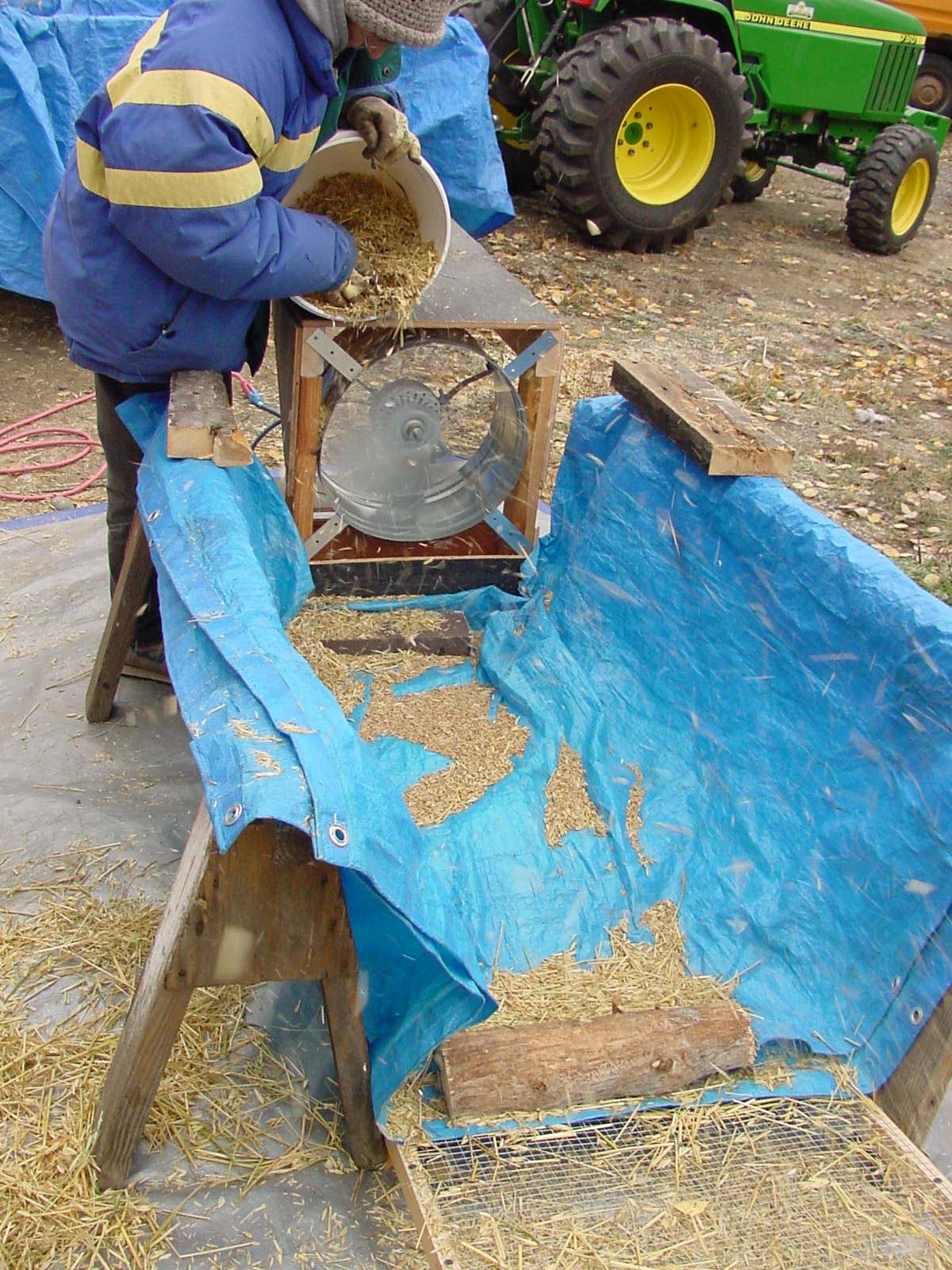
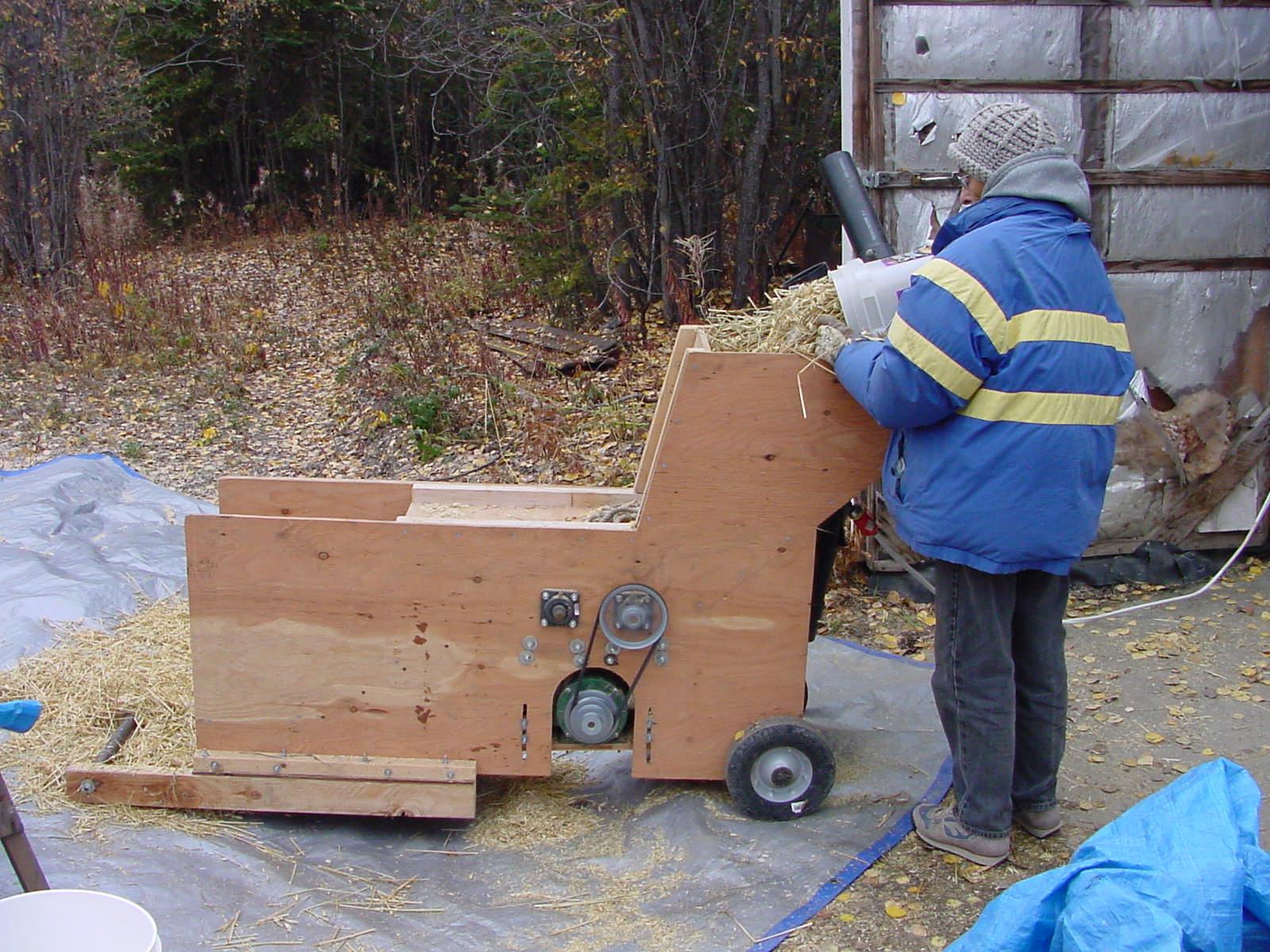
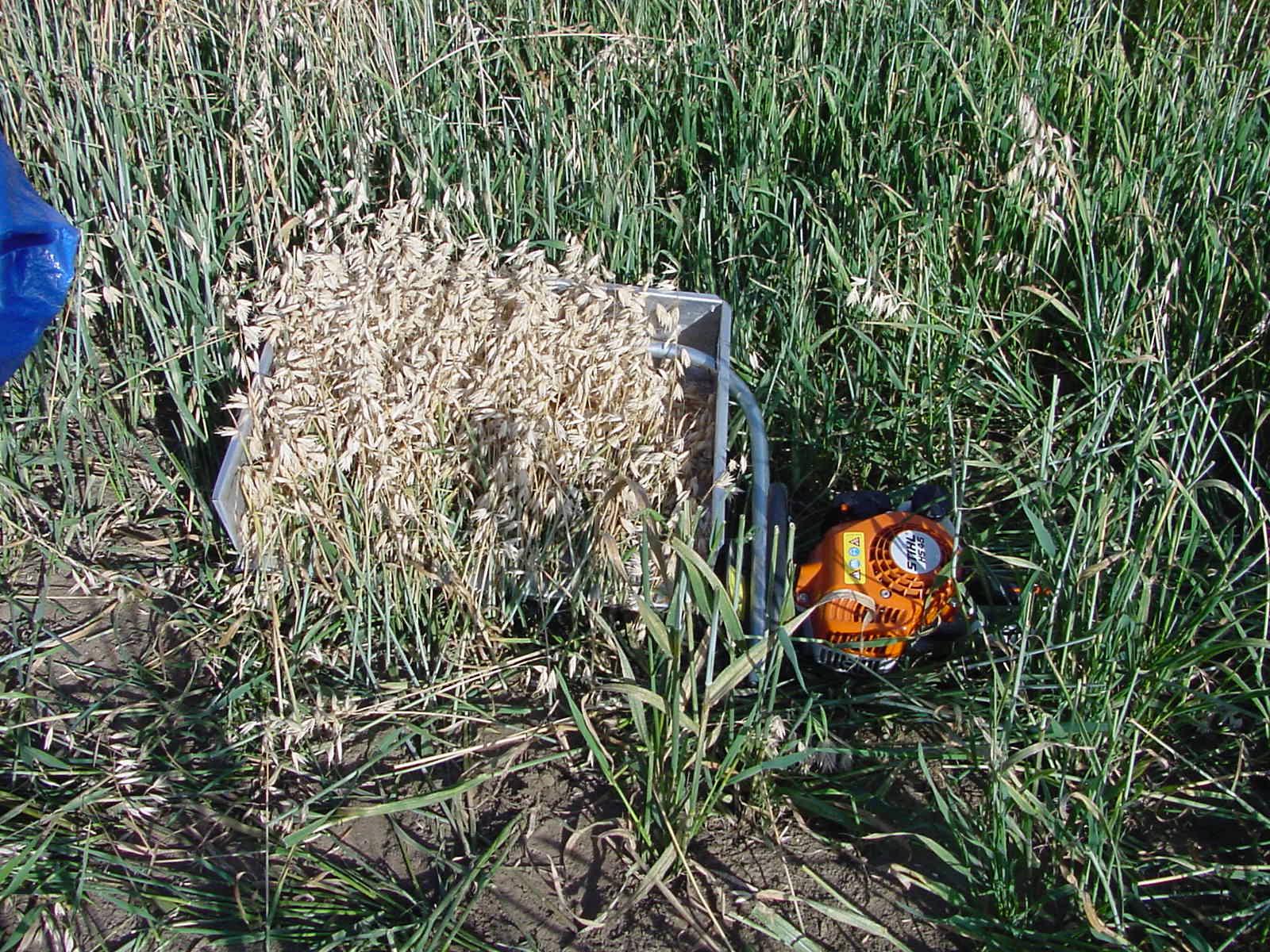
My wife and I have developed a mid-scale grain garden and have shared much of the crop operations earlier in this article series. We are in the middle of disclosing modifications to the Rodale Thresher as part of our Threshing and Winnowing operation. Let’s continue. Threshing and Winnowing (continued) Exit Modifications To Avoid Lost Grain I used ½” galvanized hardware cloth for the exit screen as shown in Figure 10. Most of the grain lost from the thresher is via sweeping out seed along with threshing debris. Counter this by installing finished 1” X 1” boards across the screen to …


Mid-Scale Grain Gardening in Alaska- Part 3, By Alaskan Gardeners

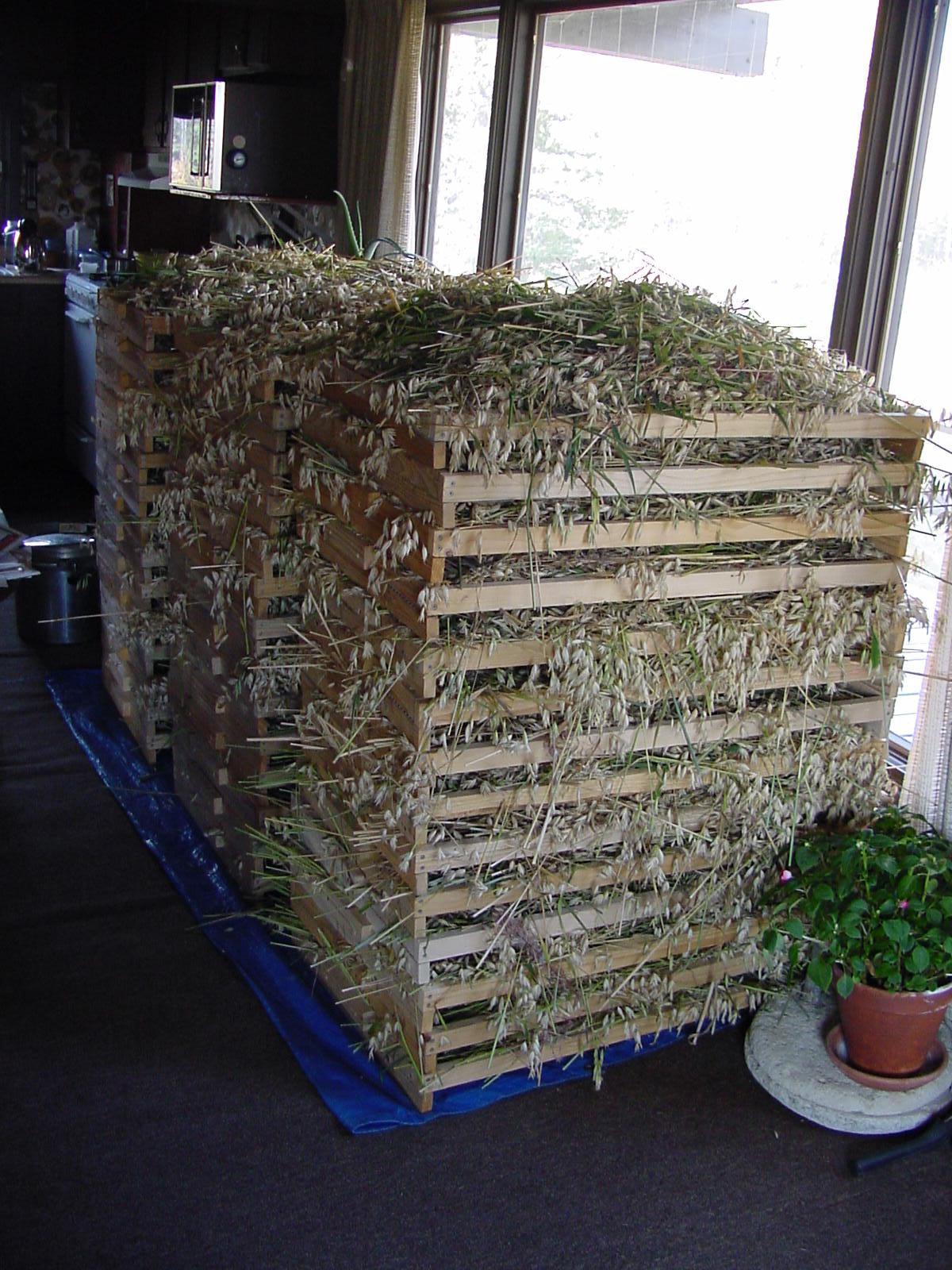
My wife and I are convinced we need to pursue self sufficiency, and a large part of that is food self sufficiency, including providing our own protein, vegetables, and grain. I’m writing about our family’s grain gardening and am in the midst of detailing our crop operations. We’ve gone over soil preparation, planting, and reaping. Let’s now continue with drying. Reaping and Drying (continued) Mild fall weather during harvest time as shown in Figure 3 is unusual in the Copper River Valley, Alaska. It’s usually cold and sometimes wet; we had three inches of snow on the ground during our …


Mid-Scale Grain Gardening in Alaska- Part 2, By Alaskan Gardeners

We are continuing on with this article about my wife’s and my journey in mid-scale grain gardening. Yesterday, I explained our reasons for believing it was time to build self-sufficiency, and now let’s move on to the food production part, specifically our grain gardening efforts. Definition of Mid-Scale Grain Gardening Grain plots may vary in size, ranging from, at the minimum, a small plot using a rototiller or shovel and rake for soil preparation, hand sowing the grain, reaping with a scythe or sickle, threshing with a flail, and winnowing with a kitchen fan or a windy day. The small-scale …


Mid-Scale Grain Gardening in Alaska- Part 1, By Alaskan Gardeners

Food sufficiency is a large part of self sufficiency, so my wife and I pursued mid-scale grain gardening, though our home was in Alaska. Here is our story and how we have done this. Breakdown of My Article My article will cover the following: Preamble: Why We All Should Become Increasingly Self-sufficient– The First Steps Definition of Mid-Scale Grain Gardening Crop Operations Reaping and Drying Threshing and Winnowing Scaling Up Harvesting Operations So, What To Do With All This Grain? Disclaimer Preamble: Why We Should All Become Increasingly Self-sufficient People’s outlook and actions are largely a product of their experiences, …


Preparing for Infectious Diseases, by Maple

While there are many good articles out there on preparing for pandemics, there is little information that really breaks down infectious diseases and how to alter your actions depending on the disease. There are also conflicting reports on exactly what actions to take and if/when to take antibiotics and in what dosages. I hope this article will provide you with the tools you will need to decide what actions to take. This article will cover some basic infectious disease terms and patterns and then two resources you can use to decide what actions to take and when. Infectious Diseases When …


Hope With A Temporal Leftist Regime- Part 2 , by JRV

We have reflected upon the situation of the leftist influence and pressures in our culture. It goes beyond pressures to now forcible ideology in some instances. It is, as Jacques Mallet du Pan (1749—10 May 1800), wrote about the first leftist reign of terror, in his 1793 essay that “…the Revolution always eats its own children.” In Part 1, I wrote of many examples in history of socialists doing just that as communist and socialist leaders collided. I also wrote about the cultural marginalization and the game the leftists are playing. But the optimistic twist about leftists or fascists is …


Hope With A Temporal Leftist Regime- Part 1 , by J.R.V.

Recognition of the inevitability of comprehensive bureaucratization does not solve the problems that arise out of it.—Joseph Schumpeter, Capitalism, Socialism and Democracy Many of us—including me—worry about the downward arc of liberty, ethics, and economic freedom and contemplate where we might find hope. If you are taking the time to read this article, in all likelihood, I needn’t detail the myriad challenges we face for you either. Rather, the question is: is there any hope? Or are we fated to descend into a new Dark Age, aided and abetted, in the famous words of Winston Churchill regarding National Socialism, by …


God’s Perfect Bounty: Our Natural Survival Garden- Part 3, by D.M.

Today, I’m finishing my article on some of the plants God provided for our survival. I’ve written on the American beautyberry and its medicinal, culinary, and decorative uses, including recipes. Most recently, I’ve been talking about the Seminole squash (or pumpkin, as it is sometimes called), which also has many uses. I’m currently sharing about culinary uses. Seminole Squash (continued) Ways to Eat Seminole Squash Young stems, flowers, and leaves of Seminole squash can be eaten as a green vegetable or added to soups. The squash can be eaten raw, stuffed, fried, baked, mashed, roasted, steamed, boiled, or dried. The …


God’s Perfect Bounty: Our Natural Survival Garden- Part 2, by D.M.

I have been telling you about God’s provision for our survival through nature and specifically writing about the many uses of the American beautyberry. They are edible, medicinal, and decorative berries. In part 1, I shared a recipes for insect repellent, tea for skin ailments, and more using various parts of the American beautyberry plant. I also told how I made juice with the berries. Now, let’s move on to more culinary uses for the American beautyberry and take a look at another multipurpose plant as well. American Beautyberry Jelly After much experimenting with several jelly recipes (some twice), I …


God’s Perfect Bounty: Our Natural Survival Garden- Part 1, by D.M.

When God made the heaven and earth, he made them perfect. He provided everything we need for our survival, from nutrition to medicine for both humans and animals, from knowledge and natural instinct to even giving us beauty to behold. Knowledge of Survival Lost And Forgotten The knowledge of survival using God’s perfect bounty has been lost and forgotten over time. While gaining new knowledge with the advent of modern grocery stores and medicine we’ve forgotten God’s natural survival garden. There are many varieties of plants that grow naturally without any help from us. Many are disease-, drought-, and pest-resistant, …


The Texas Church Shooting Aftermath, by Sophie in Texas

Being from a small town (population 450) outside of San Antonio, Texas and one who regularly attends Sunday services at an evangelical church, it was devastating news to hear of the evil inflicted on the Sutherland Springs congregation. Our hearts and prayers went out to the families that suffer and to the community that lost so many souls. Churches Formulate a Response In the aftermath of such pain, many churches and Texans began to formulate a direct response to the evil that occurred. You may know about the 26 churchgoers killed and another 20 wounded, but my story is how …


Potatoes—A Staple for Food Storage With No Refrigeration, by Back Yard Gardner

Growing and storing potatoes in the Northwest through the winter months always brought unsatisfactory long-term storage results. It didn’t matter how I stored the potatoes after digging, whether in dry sawdust, under a layer of newspaper, on a dark cool dry shelf, all had similar results of shriveling and sprouting potatoes before the stored crop was used up. An Experiment For Stored, “Fresh” Potatoes I tried an experiment with the 2016 potato crop. Once I dug the Kennebec potatoes in April of 2017, the results of wonderful plump potatoes spurred me to store the 2017 potatoes crop the same way. …


Our Family’s Garden Grain Experiment- Part 2, by Wild BillB of OR

Our family did an experiment to see how we could grow wheat and oats in a garden setting. In part 1 of this article series, we shared that we used two different garden plots, one that was well fertilized and one that had never been fertilized or used for a garden. Additionally, I told about our seeds and how we protected our growing areas from animals. We began describing the tools that we tested to harvest wheat and how we found, for us, that the sickle worked best. Also, because the naked oats we grew dropped seed more readily, we …


Our Family’s Garden Grain Experiment- Part 1, by Wild BillB of OR

This is an account of our family’s experience and learning while experimenting with growing oats and wheat in a garden setting. Storing food and preps are important; but, for us, the primary role of food storage is for the immediate emergency or to get us through the first year of a serious crisis. What then? No one can store sufficient food for a serious, long-term disaster. The Key Is Growing and Gathering Your Own The key is growing and gathering your own, and our favorite staples to grow are potatoes and corn. Living on the “wet” side of Oregon we …


A Lesson in Preparedness Satirical Humor in Very Poor Taste, by Old Bobbert

In the beginning of creating this piece, my thoughts were somewhat messy in that I wanted to relate through humor some of the unhappy moments experienced while talking about preparedness with the “unprepared” over the course of more than 20 years. There is a special emphasis on the Y2K event. Informed Risks of Y2K Computer-Generated Collapse My oldest son and our son-in-law were then, and even now are, very well informed concerning AI and computers. Their advice was simple and was based on their personal experiences. They said that the industry had been quietly working for years and spent billions …