Preps and Practice- Part 2, by ArmedSafety

In A Disaster, Remember To Listen To Your Body If you ever find yourself in a disaster recovery situation, keep in mind to “listen to your body”. Whether you ride out a storm or evacuate and come back later, guess what? The mess will be there. August and September in south Texas aren’t fun for anyone that must work outside. Those that do work daily in the heat and oppressive humidity get somewhat acclimated to it. Others may have an inside job and spend very little time in the heat. The clean-up seems daunting at first, but always be sure …


Preps and Practice- Part 1, by ArmedSafety

Prepping for the Inevitable “Zombie Apocalypse” I have, for years, been a student of prepping for the inevitable. The inevitability could have been one of many options– CME, economic collapse, civil unrest, or one of many more called collectively “The Zombie Apocalypse” by me and my family. We all have our reasons for making our preps. For some it may be relatively simple preps for an ice storm that causes power loss for a few days, to those who go above and beyond to survive a nuclear holocaust. The preps that I have fall somewhere in the middle, which is …


Too Many Answers Or Not Enough Questions?, by Old Bobbert

This is Bobbert’’s piece on “how to do success” in the creation of our new society. Remembering that not everything we need to do as preppers is a physical or procedural item, I am endeavoring to speak to the post-SHTF issues of the new society’s lifestyles and some related covenants, specifically those enduring agreements between peoples and the special agreements between persons and God. Preppers Owing Much to Nation’s Founders We are the preppers! We are the folks who are working now so as to have an acceptable future for ourselves and possibly some others. We call ourselves the preppers, …


Radio Communication Methods During Emergencies- Part 5, by R. in NC

So far, you’ve learned about the FCC and non-FCC license communications devices and equipment that is used with them. I touched on the use of Ham devices in an emergency, if you don’t yet have your Ham license. Now, let’s wrap up by learning how you can obtain your Ham license and move on to establishing and planning your communications. Getting Your License Ham radio licenses come in three levels, increasing in complexity of test and allowable frequencies. The FCC does not charge for the license, but your local Ham radio club usually has a $14 fee for giving the …


Radio Communication Methods During Emergencies- Part 4, by R. in NC

We’ve previously covered non-FCC license dependent communications devices and are wrapping up our examination of FCC license dependent communications options, with special consideration for their use in an emergency. Today, we’ll also begin looking at resources and accessories that help us improve communications. VHF/UHF Radios Almost all of the “base station” VHF/UHF radios are designed as car Ham radios. Because of this, they can be very flexible in usage. Most of these are 25-50 watts, and some are even stronger. With the limited range of VHF/UHF, I think that going over 50 watts is probably not needed. FM is the …


Radio Communication Methods During Emergencies- Part 3, by R. in NC

We just took a look at non-FCC License Dependent Communications, including use expectations and purchase considerations. Today, we begin examining FCC license dependent communications devices. FCC License Dependent Communications GMRS GMRS radios operate on the same frequencies as FRS along with a number of additional channels. They can use up to 50 watts, and the FCC allows for better antennas and repeaters. GMRS will require a license. No test is needed, and the FCC license covers all residents of a household. On last check, the license cost $85 dollars. Pros and cons, along with distance, are similar to FRS, with …


Radio Communication Methods During Emergencies- Part 2, by R. in NC

Today, we’re continuing to look at communications devices in this communications overview section of the article. So far, we’ve look at Ham radio/licensed devices, but now we’re moving into non-FCC license dependence communication devices to consider. Cell Phones – Using During An Emergency and Improving Reception During an emergency it is very common that the local cell phone towers become saturated. Many people attempt to connect at the same time, resulting in busy signals. In addition, some cell towers have special equipment that restrict public use and dedicate additional bandwidth to emergency services. This section covers how to get a …


Radio Communication Methods During Emergencies- Part 1, by R. in NC

Communications Overview and General Guidelines About This Article A modern two-way radio combines transmit and receive components together and is known as a transceiver. In this article I will use the terms radio and transceiver interchangeably. I’m also trying to write this to the largest audience possible and for that reason I may sacrifice technical accuracy in order to express the concept. Not all emergencies will require advanced communications equipment. Common usage technologies, such as email, voice mail, and SMS texting, should not be ignored. The more options you are able to take advantage of, the better your chances of …


Commuter’s Get Home Bag, by M.M.

Packing a Get Home Bag How do you prepare a get home bag when you commute more than 100 miles each day for work? Let’s for a moment presume that you have no idea that some sort of event is about to happen that will render your job irrelevant, your vehicle useless, and your location being close to your office, to which you commute each day, when it occurs. How and what in the world would you consider packing in a go bag and then heading home? I received a perfect example of your travel day changing due to a …


What I Learned Living Through Harvey, by M.S.

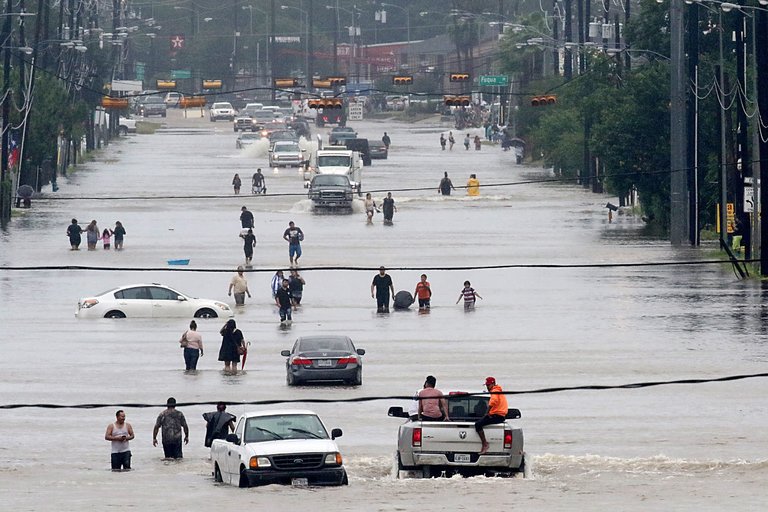
I’ve lived through several disasters and learned some thing. The worst events, in my experience, were the World Trade Center attack, Hurricane Sandy in New York City, and then most recently Hurricane Harvey in Beaumont, Texas. South East Texas was hit with life threatening, devastating rain fall, which put entire cities under water, turned towns into islands, and crippled the municipal water system of Beaumont. The following is a list of lessons I learned during this experience. 1. I’m not overly paranoid. I’ve been freedom oriented and interested in prepping for a while, and many of my family and friends …


Do We Have Your Full Attention Yet?- Part 2, by Old Bobbert

Experienced Preppers Fall Short As Great Teachers There seems to always be that cursed word “but”, where the experienced preppers usually fall just a little short of the mark of a great teacher. They never seem to actually talk much, or show much, about the “how” to actually do these necessary/important stuff. Their road map is kept to themselves. They never seem to realize that we all live in different worlds of experience with different needs and different financial positions. And we have different and often difficult family responsibilities, et cetera. How I Researched The Specific Article Illustrated Earlier So …


Do We Have Your Full Attention Yet?- Part 1, by Old Bobbert

Let me get your attention by sharing this fact: “Life expectancy is going up everywhere except in the U.S.” This opening statement is supposed to be the “grabber” and should make the reader want to read the entire article. Okay! Here we go with your bad news of the day in two parts. The first part is short, simple, and terrifying. It’s the one liner in quotes above. And the second part is worse yet. This part says that the life expectancy news today will be worse tomorrow, and every American is subject to the same bad news. However, there …


Reload Your Own Ammo, If You Want To Be A Good Shot!, by Steve Collins

Common Sense and Facts About Shooting Common sense tells us that if you want to be a good shooter, you need to shoot often. Facts tell us, though, that our wallets won’t allow us to shoot as often as we want or need to. While resorting to the .22 caliber firearms is often cited as an acceptable alternative, at some point you need to shoot your primary gun. The answer to buying factory ammo is to reload your own. I started reloading in 1984 when I got my first Colt 1911 .45 auto. Shortly thereafter I received a Smith & …


After Action Report On Hurricane Irma, by Florida Dave

The Prep Prepping Our prepping to deal with Hurricane Irma was done in a series of steps based on the probability of a strike affecting my area. I wrote about this in a previous article posted on SurvivalBlog. My preps for a Hurricane started two weeks prior when I notice a storm taking a track towards Cuba and local meteorologists saying, “We need to watch this one.” I had recently completed a quick inventory and tested the generator, lanterns, and camping stove. So my two week prior check was done, or so I thought. Pre-Labor Day Preliminary Prepping On the …


Stalking the Night- Part 2, by Mark B.

Yesterday, I wrote about my experience where I needed night vision while being stalked on the mountain “alone”. I also wrote about the various generation technology advancements of night vision. Let’s proceed to outline the details of night vision technology and what it means. Understanding Resolution and Signal-to-Noise Specifications The two most important specifications for any night vision device are resolution and signal-to-noise ratio. In fact one of the main parameters for determining whether a night vision device can be exported is the multiple of these two specifications, also known as “Figure Of Merit”. If the NVD you are considering …