
“Often, for undaunted courage, fate spares the man it has not already marked.” Beowulf – Seamus Heaney version W. W. Norton & Company publishers copyright 2000
- Ad Civil Defense ManualClick Here --> The Civil Defense Manual... The A to Z of survival. Looks what's in it... https://civildefensemanual.com/whats-in-the-civil-defense-manual/
- Ad Survival RealtyFind your secure and sustainable home. The leading marketplace for rural, remote, and off-grid properties worldwide. Affordable ads. No commissions are charged!
Notes for Tuesday – November 15, 2016
After 16 months of debate, the Continental Congress, sitting in its temporary capital of York, Pennsylvania, agreed to adopt the Articles of Confederation and Perpetual Union on November 5th, 1777. Of course, the last of the 13 states, Maryland, took until March 1, 1781 to ratify the agreement.
Also on this day, Charles Dickens published the final installment of A Tale of Two Cities in Dickens’ circular.
o o o
Ruh-Ro! Shipping disaster looms as UPS workers vote to strike
- Ad California Legal Rifles & Pistols!WBT makes all popular rifles compliant for your restrictive state. Choose from a wide range of top brands made compliant for your state.
- Ad Trekker Water Station 1Gal Per MinuteCall us if you have Questions 800-627-3809
Easy Fire Starting, by A.H.
Next to water, fire is one of the most essential needs for survival. No doubt you have six different ways to start a fire you call favorites and another twenty more you could use in a pinch. Here’s a twist on an old tried but true method.
I first learned this method from Boy’s Life many, many decades ago. I wasn’t even a Boy Scout. (They didn’t want me, but that’s another story.) Anyway, I’ve always liked this method for it’s simple elegance. However,, I thought of one tweak to make it an awesome choice.
Making the traditional fire starter is easy as pie. You’ll need an old newspaper, some paraffin or beeswax, and some string. You’ll also need two pans and a source of heat to melt the wax. I recommend using something disposable for the wax. Even a steel can should work. Make sure you have some tongs or some other way to handle the can.
Note, many prefer beeswax to paraffin. While one can list good arguments for both, why not experiment on your own? What stops some is a good, inepensive source of beeswax. The fact is, there is an excellent source right under your nose! Go to your nearest hardware store or building or plumbing supply and pick up a beeswax toilet ring. It won’t set you back more than a couple of bucks and will work just fine.
Wax is best melted “double burner” style. Put some water in the pan and heat it. Once the water is near boiling, put your can with the wax in the water to melt it. Your wax will melt, and you need not worry about burning it.
While the water is heating, cut some newspaper strips about two inches wide. Roll each strip tightly and secure with the string. You don’t need a super tight roll; leaving it a bit loose may actually help your fire starter work better. Leave enough of a “tail” so you can use it to dip the roll in the wax. Let it sit long enough to soak the newspaper well. Pull it out and leave it on a piece of paper to dry.
These fire starters are light and easy to pack or stuff almost anywhere. They burn well enough to get most any fire started with little effort. For better results, push the center of one out a bit before lighting it to make a cone. And now for the twist…
Roll a self-striking match into the center of the fire starter. I prefer the larger ones. Make sure the head of the match sits about an eighth of an inch from the end so it is well protected. If you want further protection, lay a small strip of paper over the head end of the matchstick. The goal is to keep it from rubbing against anything and lighting up when you don’t want it to.
Don’t worry about the other end breaking off. It can and does happen. Even so, you’ll have enough matchstick to push the match head through the end. You can strike the head on a rock or even a rough piece of bark to start your fire.
Now you not only have a waterproof fire starter, you have a built in lighter. It’s easy, inexpensive, and effective. What more could you ask for? How about adding some fuel to the fire?
Before you set your fire starter ablaze, you’ll want to make sure you put it to the best possible use. You’ll need some fine, dry stuff– tinder– to catch fire, some kindling and, of course some larger pieces of firewood. If you are trying to make it in the woods, I suggest you head for a stand of pines. Larger stands are often best, but you don’t want to get too picky if your life is on the line. A pine stand by itself can provide decent shelter, but more importantly it can provide enough fuel to burn a fire for several hours or even days.
For tinder you want the lightest, driest stuff you can find. However with this fire starter, great tinder is not crucial, as it will burn long enough to get some smaller kindling started. Even so, if you can find some dry fluffy stuff or an old bird’s nest, all the better. Otherwise, look for some dry pine needles at the base of the pine trees. If you are in a good stand, chances are you can find a tree with a sheltered portion to provide the dry spot you are looking for. Certain types of fungus fit the bill too, so don’t be afraid to check out what you find growing on the side of the trees.
For dry kindling, look in the trees. Pine trees often have dead branches that have not yet fallen to the ground yet. They are easy to break off and often dry as a bone. Some may even have some dead needles still attached. You may also find an entire tree that died and forgot to fall down. This could provide enough fuel to keep you going for a while.
Back in my youth, we would spend days camping and fishing by a small river. A campfire was often the center of activity. Wood was never a problem, as there was always plenty of dead branches and tress around. (My personal favorite was what we called “ironwood”. The trees were small scrub trees, possibly a variety of locust. They are sinewy and tough. The branches tended to burn well and last fairly long because the wood itself was pretty dense.)
While wood was plentiful, extended rain or a spring snow could make it hard to find anything dry. We quickly learned to find places to stash hunks of wood so it would stay out of the weather. Covering a pile with pine boughs helped a lot. While we were never in a survival situation, no campfire could easily send us packing for home. All we needed was enough to get a fire going. From there we could “dry out” the rest. Keep in mind that while wet wood is terrible for starting fires, it is not so bad for keeping a fire going, especially with a soft wood like pine that tends to burn fast. Soggy wood needs to burn off the water. This slows down the burning process somewhat, and that may not be such a bad thing after all.
My point is once you have a fire established, it would be a good idea to prepare for the unexpected downpour or any other situation that could drench your wood. As mentioned above, damp, soggy, or even wet wood is not much of a problem if you have a good fire going already. If you need to start or restart your fire, it pays to have some “fixin’s” stashed to help things along. The first place to keep your stash is at the bottom of your woodpile. You may want to keep this stuff off the ground a bit, as a heavy downpour could seep under and soak all your good work. In any case cover it up with a good hunk of wood to keep the rain off the top too.
How big should your fire be? It seems like most folks love a big blaze. I think this is a huge mistake. Big fires waste fuel, and that means you’ll spend more time hunting for something to burn instead of hunting for food or saving your energy. Your fire should be big enough to keep you warm and not much bigger. You don’t need much to cook or boil water. While a big fire may be a comfort for some and may even help to discourage predators, I see too many downfalls to justify going large.
Depending on your situation, you may or may not want your fire to disclose your location. If you require stealth, then the last thing you need is a raging blaze with lots of smoke. It’s best to keep it tiny and use the driest wood you can find. Again, building your fire under the cover of a pine stand can help as the heat and smoke can dissipate somewhat if it first drifts up through some pine boughs.
However, if you are looking for a rescue or need to otherwise signal your location, you can use some green boughs or pieces to keep your fire smokey. In this case, you’ll want your fire in a more open area or on the edge of the pines. You shouldn’t need much, as anyone looking for you should notice even a slim thread of smoke and move to investigate. The same goes for aerial searches. However, in that case I think the situation justifies a larger presence. I would want to be sure I could be seen from the air.
While my “easy fire starter” is compact and reasonably foolproof, I do not recommend relying on just one method to start a fire. You should have a good but inexpensive magnesium fire starter. It’s something you can keep with you at all times. Another great idea is to keep a 9-volt battery with a handful of #0000 steel wool. Jamming the terminals into the steel wool will start a small blaze that burns very hot. You can keep the terminals covered with a bit of electrical tape. Even better, cut down an envelope to fit the battery in and secure it with tape. You can then put the battery and the steel wool in a Ziploc bag. The steel wool will compact down fairly well so the whole unit will fit most anywhere.
With any of these methods, be sure to have your kindling and some burnable wood ready. No matter what method you deploy, you can use the ideas in this article to keep you warm dry and alive.
- Ad Click Here --> Civil Defense ManualNOW BACK IN STOCK How to protect, you, your family, friends and neighborhood in coming times of civil unrest… and much more!
- Ad Ready Made Resources, Trijicon Hunter Mk2$2000 off MSRP, Brand New in the case
Letter Re: Ruger P Model
Again, Pat Cisco has covered a handgun that is close to my heart. Thanks, as always. The 9mm Ruger P-89 is actually the first handgun that I went and bought myself back in the late eighties. To this day I love this bulky “Tank” of a gun. 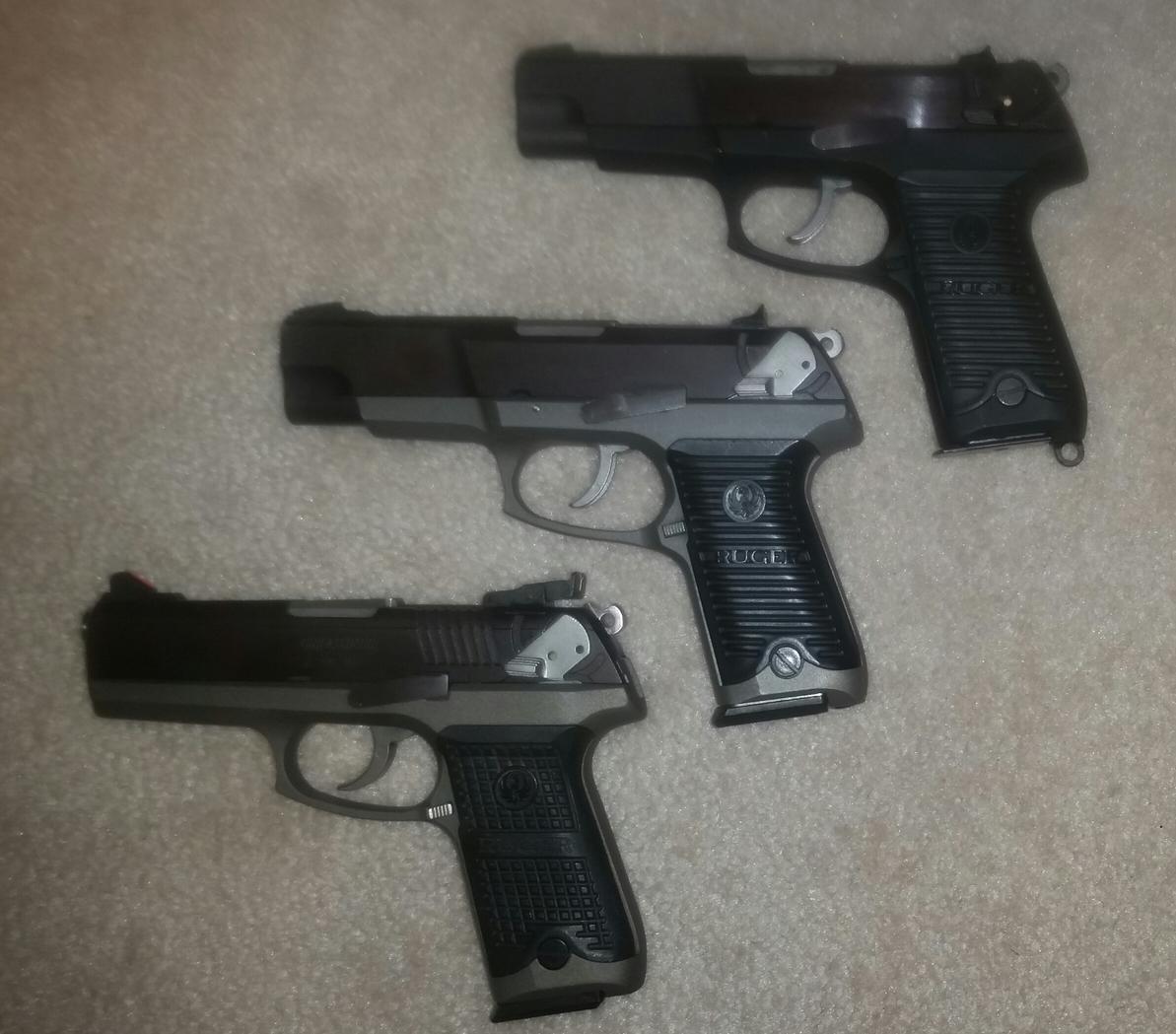 I am so comfortable with it that I also bought a P-94 in .40 caliber and a P-90 in .45 caliber. I remember when I bought the P-90 it was a used gun and was listed for just over $300. I offered $300 cash out the door, and that is what I got it for. To me these models are just good solid guns. I’ve never had any issues with them in performing, and if all else fails I can use the big solid gun as a weight to knock an assailant in the head with. If you find one of these in the gun store, try it out, and if you like it then buy it. You can’t go wrong with it, IMHO. I’ve added a picture of the three guns mentioned with the P-89 (9mm) on top, the P90 (.45) middle, and the P-94 (.40) on the bottom.
- Ad USA Berkey Water Filters - Start Drinking Purified Water Today!#1 Trusted Gravity Water Purification System! Start Drinking Purified Water now with a Berkey water filtration system. Find systems, replacement filters, parts and more here.
- Ad Don't wait - get the ultimate US-made ultra-high performance US-made SIEGE Stoves and stunning hand-crafted SIEGE belts for Christmas. For stocking-stuffers see our amazing fire-starters. Gifts that can save lives. Big Sale!Every bespoke SIEGE buckle goes through an hours-long artisanal process resulting in a belt unlike anything else, with blazing fast performance and looks and comfort to match.
News From The American Redoubt:
Kristie Wolfe builds underground home & sets rural Washington hamlet. (Off-grid, of course!)
o o o
Eight takeaways from ‘Draining Oregon’: The big water giveaway
o o o
Joe Robertson Thrown In Solitary Confinement
o o o
Here is some news about a small company in Laramie, Wyoming: Vertical gardening is growing into the wave of the future
o o o
New program allows veterans to help each other heal in Montana wilderness
- Ad STRATEGIC RELOCATION REALTYFOR SALE: Self-sustaining Rural Property situated meticulously in serene locales distant from densely populated sanctuary cities. Remember…HISTORY Favors the PREPARED!
- Ad LifeSaver 20K JerryCan Water PurifierThe best water jerrycan you can buy on the market! Mention Survivalblog for a Free Filter ($130 Value)
Economics and Investing:
GrubHub Loses MILLIONS After CEO Demands Trump Voters Resign – W.C.
o o o
Chinese Steadily Buying U.S. Entertainment Businesses – H.L.
o o o
India’s War on Cash and the Poor
o o o
o o o
SurvivalBlog and its editors are not paid investment counselors or advisers. Please see our Provisos page for details.
- Ad USA Berkey Water Filters - Start Drinking Purified Water Today!#1 Trusted Gravity Water Purification System! Start Drinking Purified Water now with a Berkey water filtration system. Find systems, replacement filters, parts and more here.
- Add Your Link Here
Odds ‘n Sods:
Video Tour: Ultimate Bug Out Vehicle
Here is another video with more rugged approach: Military Five Ton B.O.V.
o o o
A great 11-minute video: TOP TEN PREPPER “BUG IN” MISTAKES!
o o o
SurvivalBlog readers in the northeast who are looking for a 4WD vehicle should check out this auction in Pennsylvania, for a Humvee Ambulance. The long wheelbase ambulance variants only very rarely come up for auction!
o o o
France Plans to Implement Universal Biometric IDs – H.L.
o o o
The Far Left Is Planning The Biggest Political Protest In United States History For Inauguration Day
Hugh’s Quote of the Day:
“There are decades when nothing happens, and there are weeks where decades happen.” – Vladimir Ilyich Lenin
Notes for Monday – November 14, 2016
On November 14th, 1985, the Nevado del Ruiz Volcano erupted in Colombia, killing over 20,000 as nearby towns are buried in mud, ice, and lava. Scientists studying the volcano believed an eruption was imminent and had recommended an evacuation of the area, which was largely ignored, resulting in the high number of casualties.
Pat Cascio’s Product Review: Remington R51
Most readers probably believe that gun writers get specially picked firearms to test for their articles. I used to believe it myself, until I started writing about firearms. If I ever received a hand picked firearm from a gun maker, I sure didn’t know it. To the best of my knowledge, all my guns came off the shelves at the gun companies without being checked over or hand picked. As a matter of fact, I’ve had more than my share of lemons in the 25 years of writing about guns, and that is probably because I’ve tested so many different firearms. Some bad ones slipped through and got into my hands.
When testing firearms, I like to give the gun companies the benefit of a doubt. If I believe that I simply got a “bad” gun for testing, I’ll give the gun company a chance to correct it, and the gun gets sent back for repair or replacement. However, if I get another gun with problems I’ll report it as such in my article. I think that is fair enough. I don’t care which gun maker it is, some bad guns slip through. It may be a loose rear sight or a bad magazine came with the gun, loose grips, a heavy trigger pull, or whatever it might be; it does happen. A bad gun slips through, period!
A short story that I might have written about before. I purchased a brand new Taurus Model 85 .38 Spl snubby revolver at a gun shop. Again, this was a purchase and not a gun sent to me as a writer’s sample. I examined the gun at the shop, pulled the hammer back, dry fired it, and bought it. I took the gun out to shoot, and I could not pull the trigger in the double-action mode. I could cock the hammer and pull the trigger in single-action; however, in the double action mode the trigger couldn’t be pulled. The gun was sent back to Taurus, and in a couple of weeks it was returned repaired. Somehow one of the internal trigger parts didn’t get completely milled and the hammer couldn’t be pulled in the double-action mode! Like I said, a lemon slips through every now and then, and I don’t hold that against any gun maker.

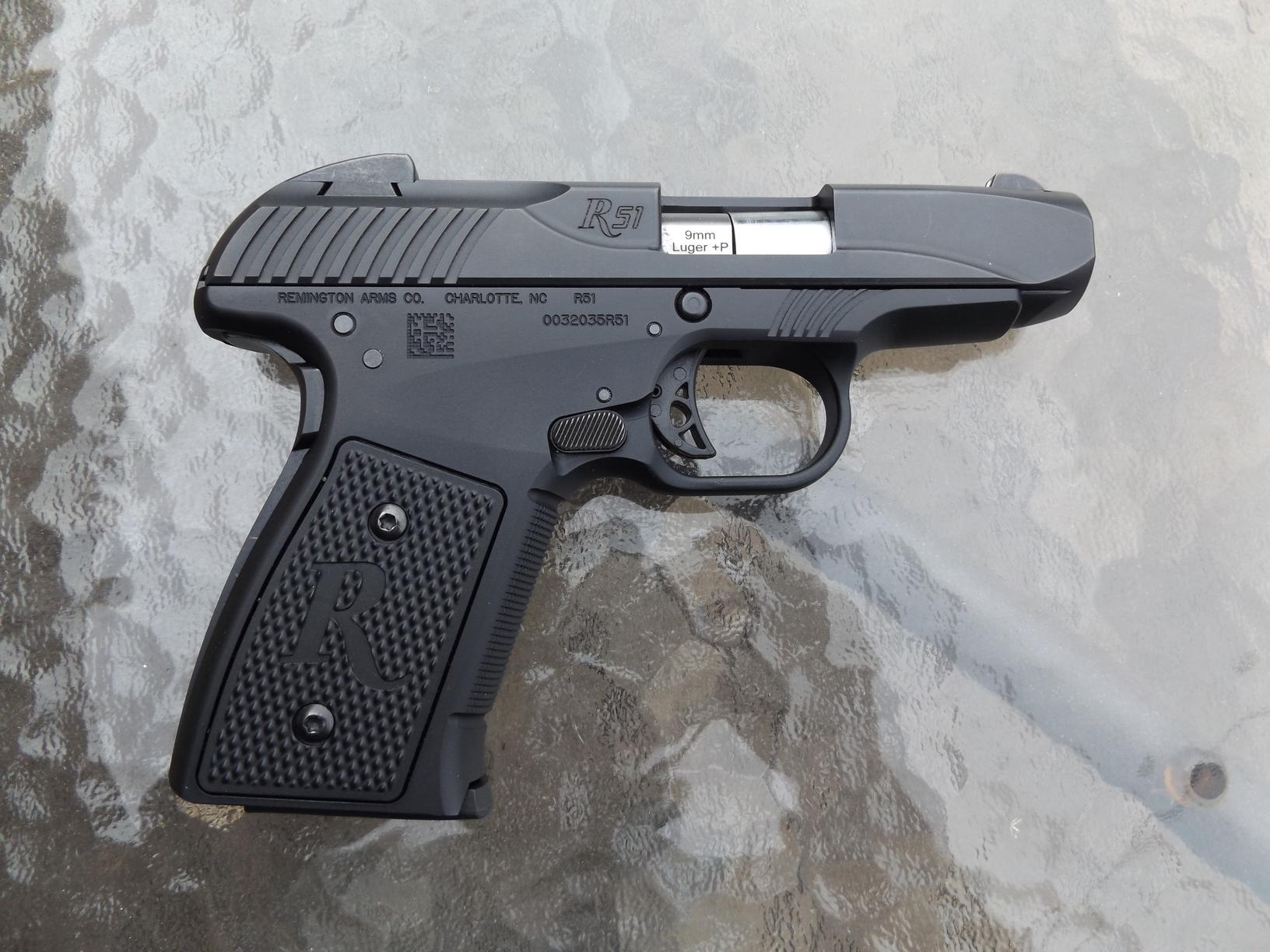
Enter the Remington R51 semiauto handgun. The R51 is loosely based on the Remington Model 51. Don’t get confused here. The R51 is based on the old Remington Model 51 that came out around 1918 and was discontinued around 1927. It was a hot-selling gun in those days, too. It was based on the Pederson device, which in the case of the Model 51 allowed the breech block to slide rearward a little bit upon firing and the barrel was fixed in place. If interested, our readers can do the research on the Pederson device for complete information.
Remington came out with the R51 about two years ago, and it was a total disaster for them. I’m not talking about some “bad” guns slipping through to the consumer. I’m talking about guns that just didn’t work, period! Well, I guess some, but not many, guns did actually work most of the time. However, there were reports of the sights falling off the guns, guns that wouldn’t feed any type of ammo, guns that had a horrible trigger pull, and the list went on and on. Remington recalled the entire batch of guns with the intent of repairing them. Instead, Remington went back to the drawing board and completely went through the gun and improved it. Now, every now and then, when guns are recalled they are repaired or a part or two is replaced, but with the first batch of R51 pistols they just couldn’t be fixed. So, Remington engineers went and redesigned the gun. I applaud Remington for doing this. It’s not very often a gun maker will admit “oooops, we really messed up on this gun design…”
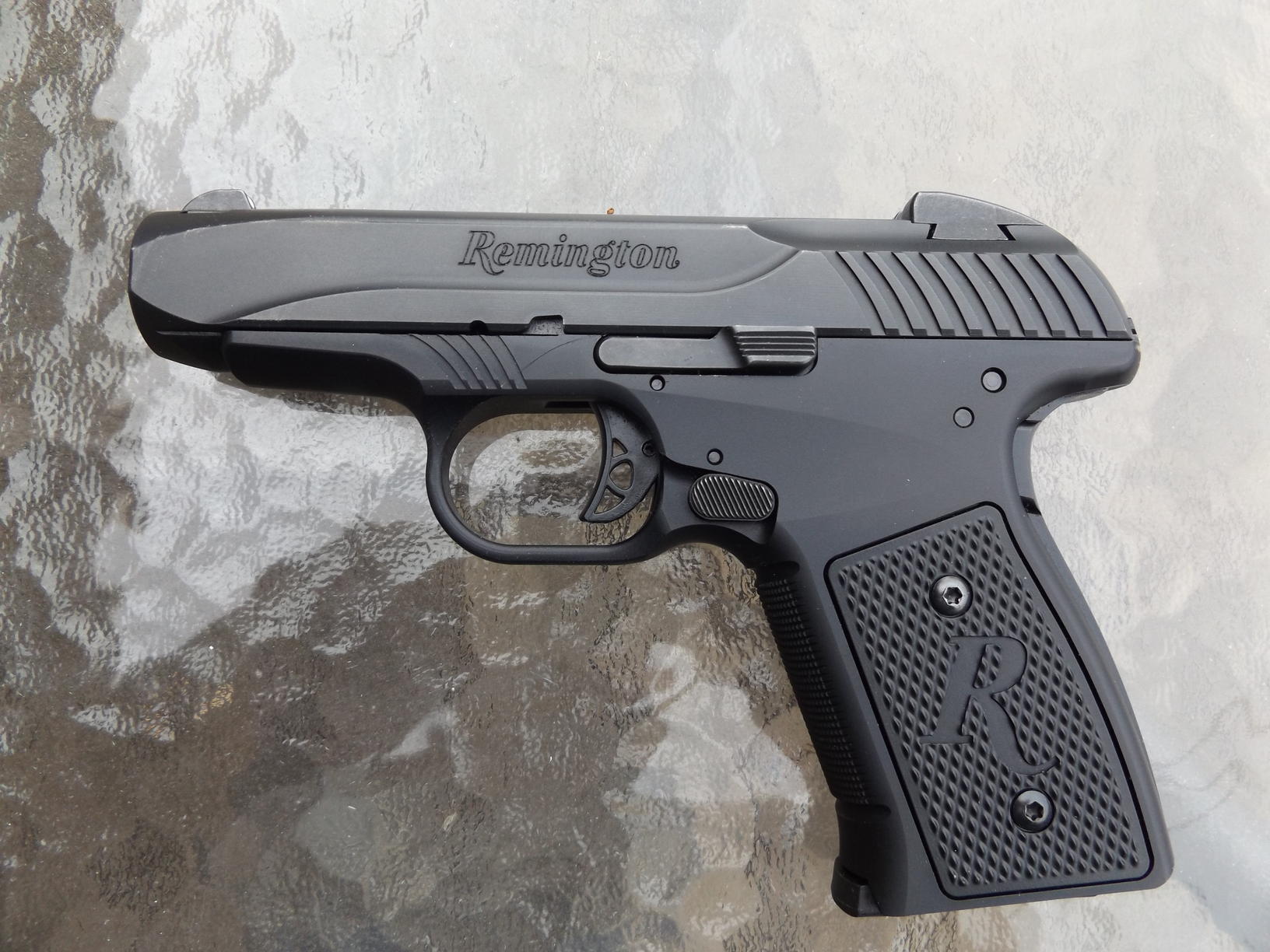
My local gun shop got in the newly reengineered R51, and I checked it out over and over again for a week. I worked a trade and took the gun home! Now, I really, really wanted to not like the R51. I checked it over closely, working the action, pulling the trigger, and dry firing it! I could only find a couple things I didn’t like, but overall I was rapidly falling in love with the gun. Remington calls the R51 a “sub-compact”. We can certainly agree to disagree on this point. It is a compact by my standards, not a sub-compact. A sub-compact is a gun I could carry in a cargo pants pocket. The R51 ain’t it!
The Remington R51 is at once a futuristic looking handgun as well as something that reminds me of guns from the early 20th century– retro! I like it, a lot. The R51 comes with two 7-rd magazines, and they both have stout springs. It takes a little of effort to fully load the mags. The black plastic follower has a raised “rib” in the front of it to get the 9mm rounds up into the chamber of the fixed barrel. (I have more on the barrel shortly.) The R51 weighs 20 ounces empty, and it has a frame that is made out of anodized aluminum, not polymer, as is the trend these days on semiauto handguns. The slide is forged steel and black in color to match the frame. The black checkered polymer grips are actually inserts. They fit nicely in the frame. They are not raised above the frame. There is a full-time ambi magazine release, not one that you switch from side-to-side. It is full-time and plenty big enough, not overly small, as found on many handguns.
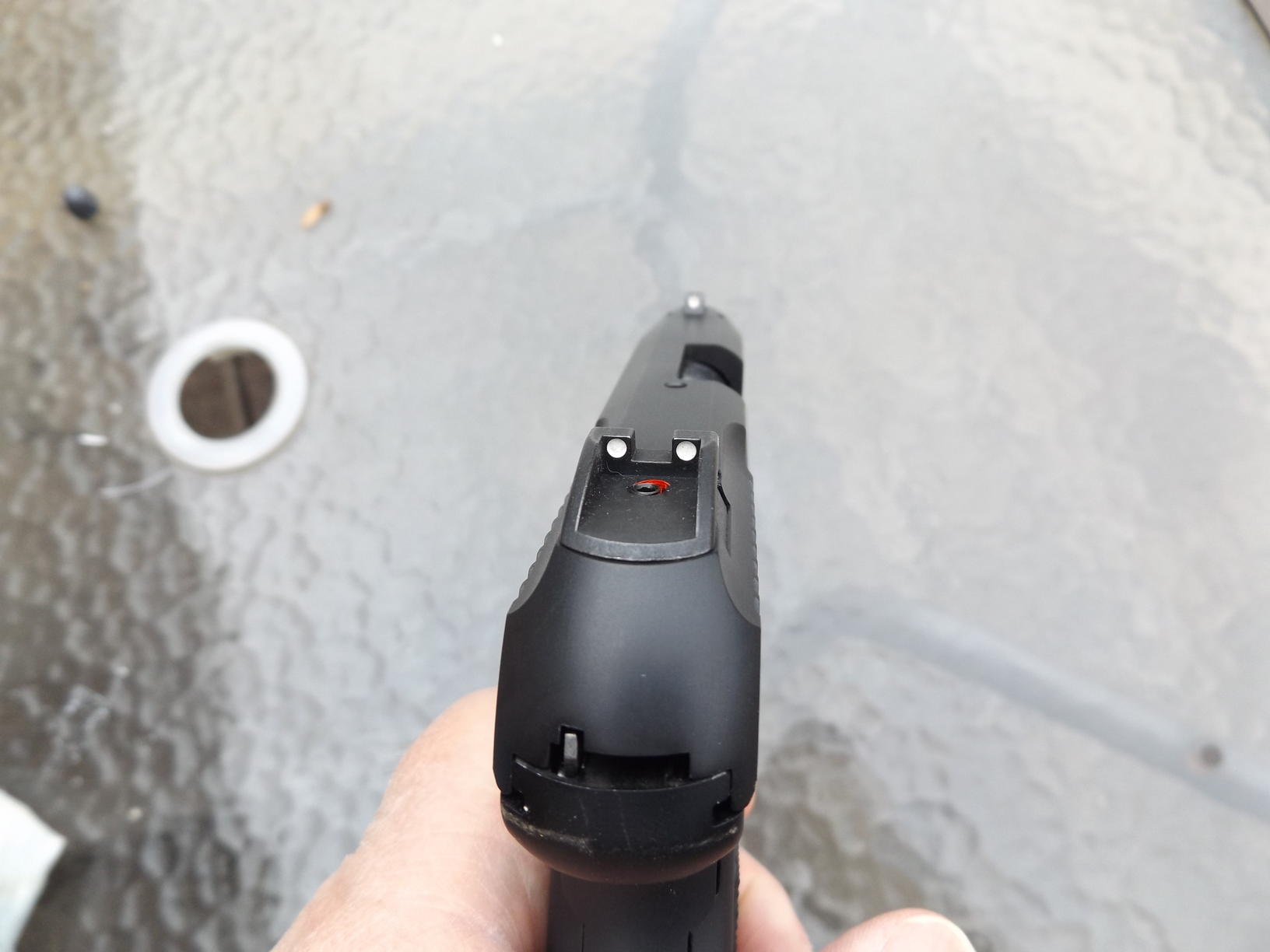
The R51 has a white, three-dot sight system, and it is very fast to pick up. However, the rear sight can cause a slight, ever so slight, problem. Remington made the rear sight very futuristic and slick. It rises from the rear of the slide and gets higher as it gets further forward on the rear of the slide. The two white dots are nestled in the front of the sight, so much so that if there is sunlight or any light off to the side of the rear sight it can slightly shadow one of the white dots. I tried to capture this event with my camera, but the camera pics just wouldn’t cooperate. While this really isn’t a problem, with one of the rear white dots being a little bit shadowed, when the light is off to the side of the rear sight, I still thought it was worth mentioning.
The polymer trigger, at first, seemed a little bit on the small side; however, it really isn’t. It works perfectly, and the trigger pull is very crisp, releasing at 5.5 lbs. There is a tiny bit of take up and then resistance, and then the trigger breaks cleanly. My second small complaint is the grip safety. It makes a “click-clack” noise when you depress it and release it. It is more annoying than anything. Unlike the grip safety on a 1911, this one is hinged on the bottom of the frame, instead of up towards the top of the frame. It doesn’t operate nearly as smoothly as that on a 1911. Still, it gets the job done, and it depresses with about a pound of pressure. After firing the gun during my testing, I noticed that the “click-clacking” sound wasn’t nearly as noticeable, and it seemed to smooth out a bit, too.
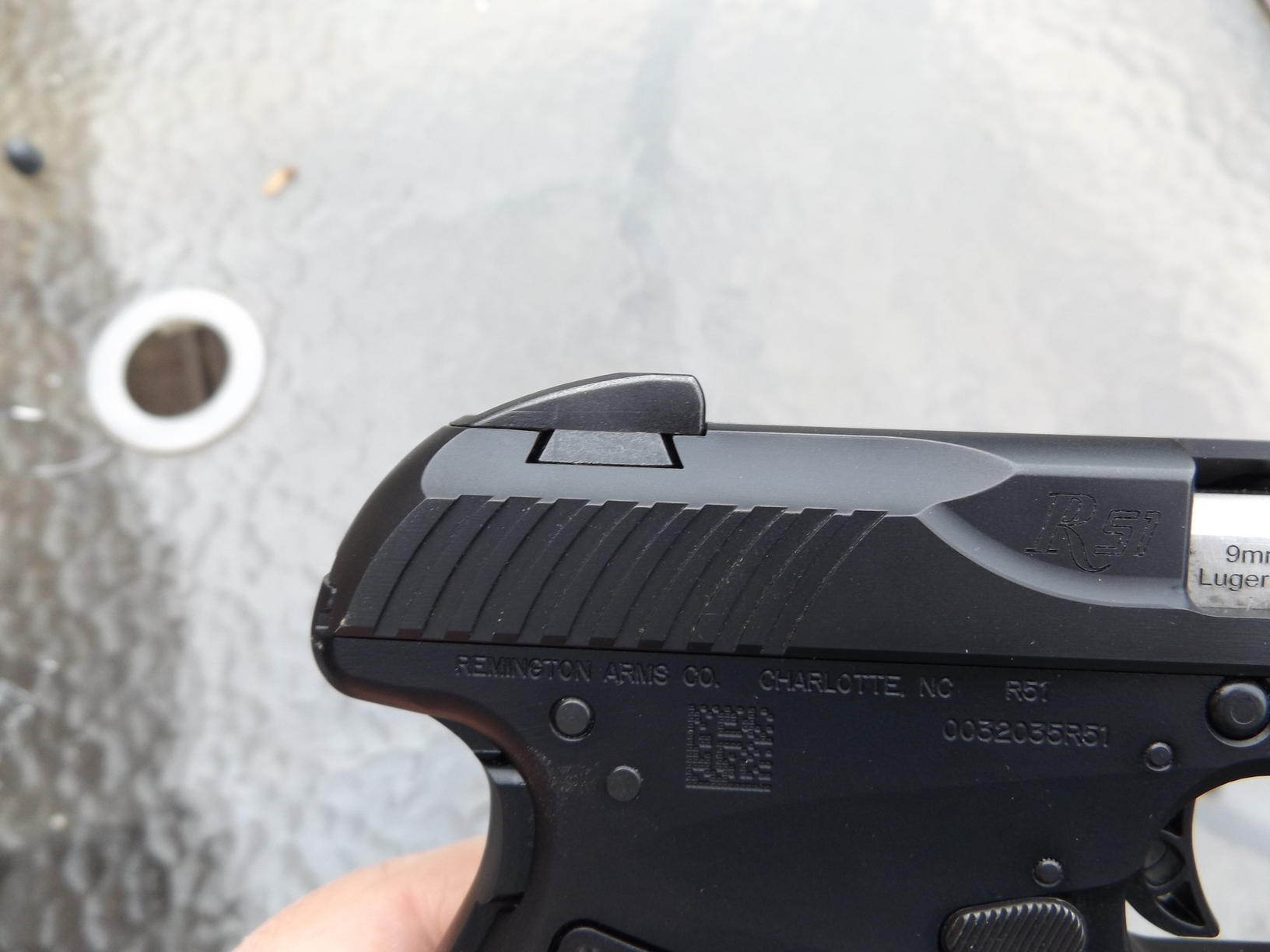
On the front of the grip frame is some nice checkering at about 20 lines per inch. This is a nice touch. The grip safety has no checkering. The trigger guard is big enough for my trigger finger to get in there, just the perfect size. There are angled slide serrations on the back side of the slide for a sure grip when chambering a round. The ejection port is large. There are no worries about an empty piece of brass getting caught up in it. The slide release dropped the slide with a simple push on it.
Remington advertises that there is 25% less recoil, because the slide sits extremely low in the hand compared to other designs. And, to be sure, the gun rides nice and low, with the slide only about a quarter inch above the web of the hand when properly gripping the gun. That’s nice! It does have a very low bore-to-axis in the hand. I’m not sure if there is 25% less recoil. It’s hard to measure that type of event, but I’m sure there is less recoil compared to similar 9mm handguns. I will say that the R51 does get you on-target very fast, and it points extremely well. I’m a huge advocate for the lost art of Point Shooting, and the R51 does point naturally. When you bring the gun up to eye level, you are on-target! For more information on Point Shooting, check out my DVD from Paladin Press. My video is entitled “Tactical Point Shooting”. While it was done more than 20 years back, the information is still up-to-date. The DVD has myself, Sheriff Jim Wilson, and the late John McSweeney demonstrating three different methods of Point Shooting.
Remington says the grip angle is 20 dgrees, and it feels like it. I don’t recall any gun that points more naturally than the R51 does for me. The gun feels absolutely fantastic in the hand. Everyone who handled it said the same thing. Great job, Remington!
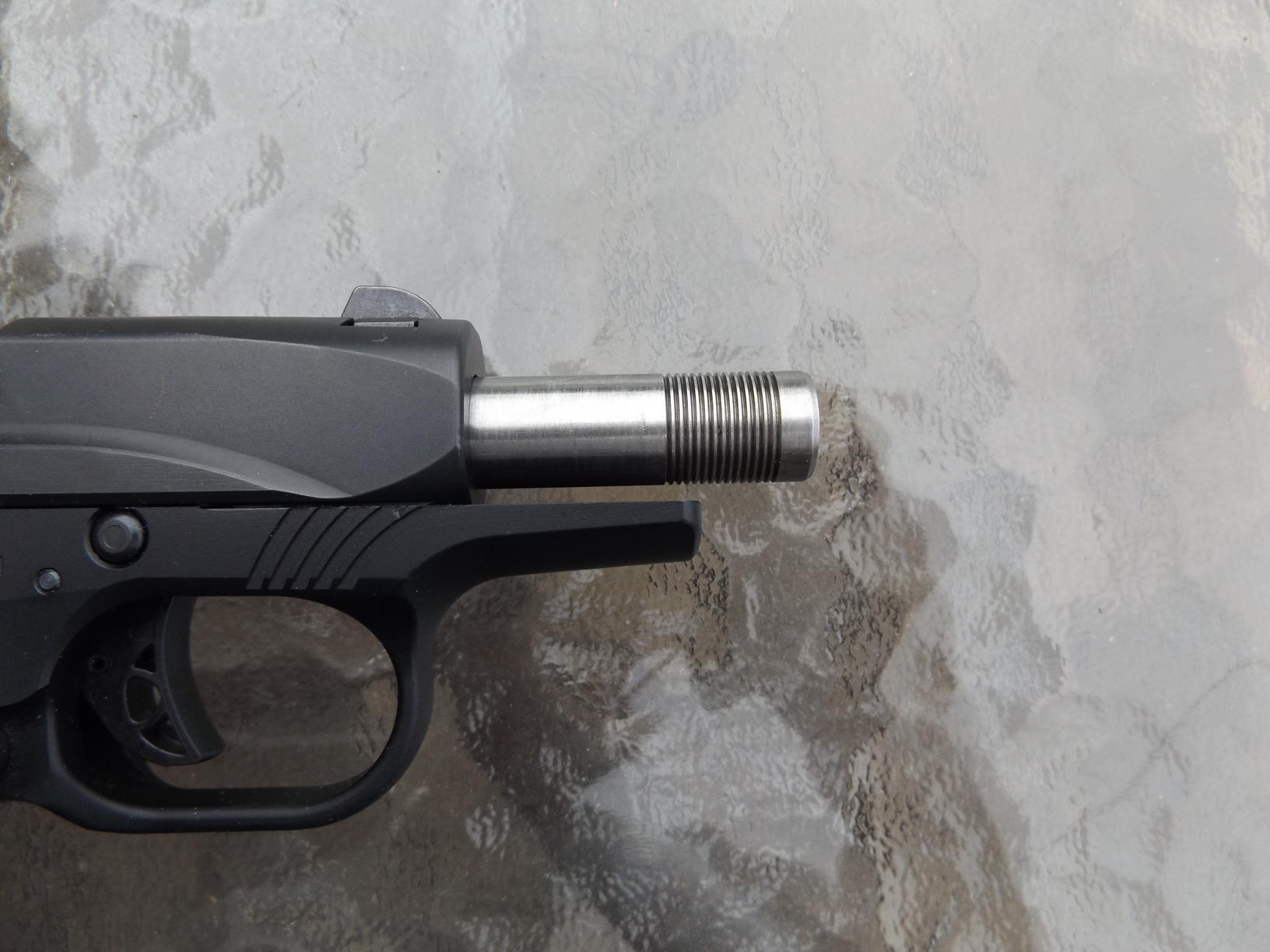
Now, to the 3.4-inch “fixed” barrel that Remington advertises. Not so fast there, Remington. The barrel is “fixed” in place when the gun is assembled and fired. However, the barrel is not permanently fixed to the frame. When you disassemble the R51 for routine maintenance and cleaning, the barrel is removed from the slide/frame. The barrel is fixed to the frame via the slide stop/release when the gun is assembled. The barrel does NOT move back and forth or up and down upon firing. A fixed barrel gun is almost always more accurate than guns that have barrels that move during firing.
My one main complaint, and it is still a minor complaint, is the disassembly of the gun. It is more than a little bit tricky, to be sure. Instead of my trying to explain it, go to https://www.remington.com/handguns/remington-r51 and watch the four and a half minute video that shows how to disassemble and reassemble the R51. Don’t get discouraged. It really isn’t all that hard after you’ve done it a few times. Practice! BTW, the “threads” you see on the barrel, they are not for attaching a suppressor. They are there to aid you in disassembly of the R51.
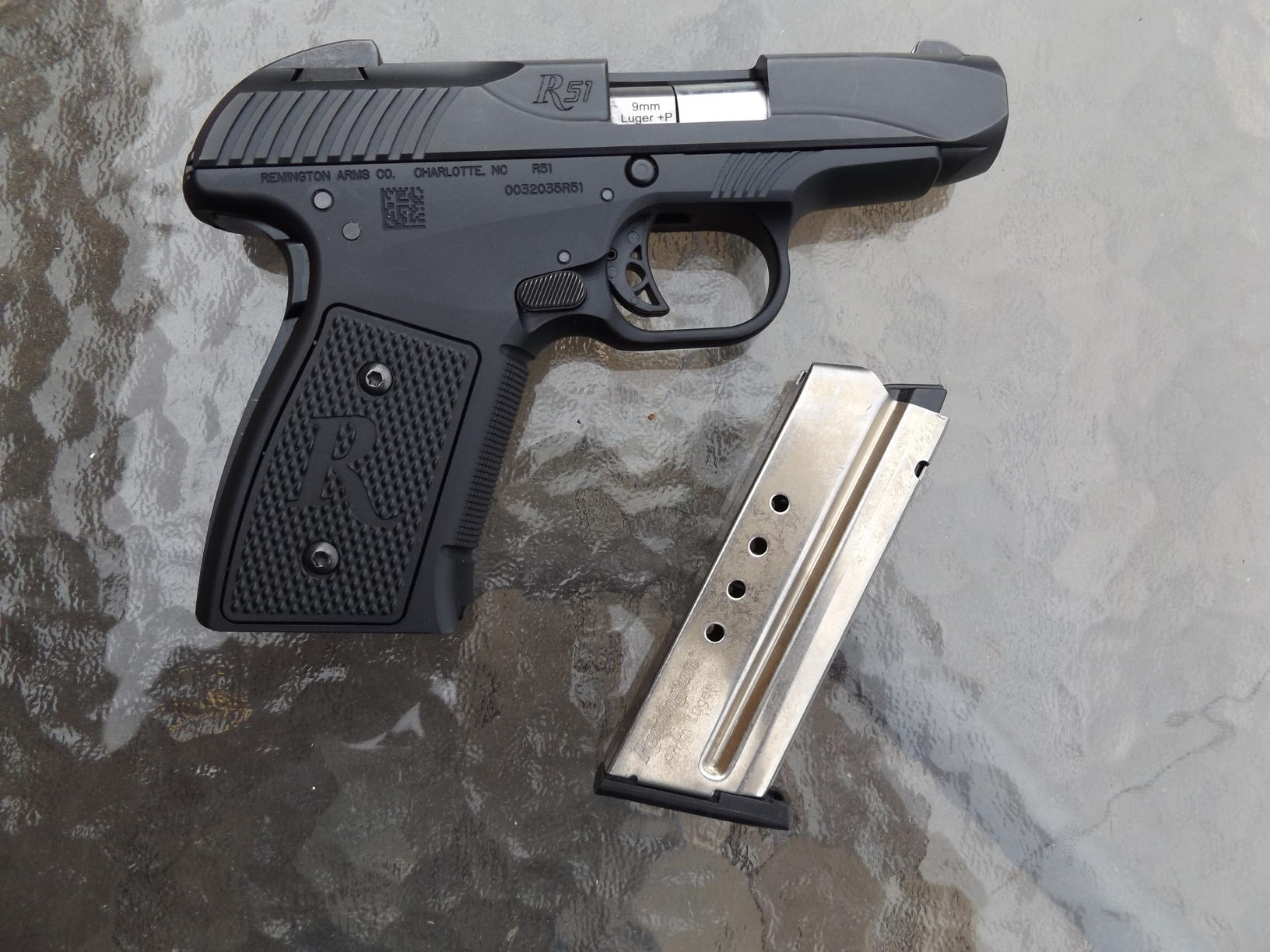
The barrel of the R51 is marked 9mm Luger +P. I don’t recall seeing any 9mm handguns that were specifically marked for +P ammunition. While owner’s manuals will advise you can shoot +P ammo in many 9mm chambered handguns, they also advise that it shortens the life of the gun. However, this gun thrives on 9mm +P ammo, and I did test some +P+ ammo in the gun. I had not a single problem with this hotter ammo. I had but one malfunction, and that was in the first magazine where one round didn’t fully chamber. Again, this was in the first mag, and no other problems were observed.
For my testing, I had a great selection of 9mm ammo on hand. From Buffalo Bore Ammunition, I had their 147-gr JHP Subsonic Heavy load, 147-gr +P Outdoorsman Load, Hard Cast FN +P load, 115-gr Barnes TAC-XP all-copper hollow point +P+, 95-gr Barnes TAX-XP all-copper hollow point +P+, and their 124-gr FMJ FN +P+. From Black Hills Ammunition, I had their 115-gr JHP +P, 124-gr JHP +P, 115-FMJ, 115-gr EXP (Xtra Power) hollow point, and their 115-gr Barnes TAC-XP +P load.
The R51 just seems to run a little bit smoother with the +P and +P+ loads, compared to standard velocity loads. Go figure? The lone malfunction I had was with a FMJ load, and as mentioned it was the first magazine I fired through the gun. The round didn’t fully chamber. After that, I had no problems. As to accuracy, I tested the gun rested over a sleeping bag on the back of my pickup with the target at 15 yards. I had groups as small as two inches. They were with the Black Hills 124-gr JHP +P and the Buffalo Bore 124-gr FMJ FN +P+ loads. That is outstanding accuracy from a 3.4-inch barrel handgun, and I believe with more use and practice, I can get groups well below two inches. The gun showed a lot of potential. All the other loads didn’t exceed three inches. In all, I fired 300 rounds of ammo during my testing for this article and even more rounds after my testing that were not recorded.
I tried, I really tried to not like the R51, but the gun just grew on me. The more I shot it, the more I liked it. The more I handled it, the more I liked it. The few minor complaints, like the problem with the rear sight dot being shadowed and the grip safety making a little bit of noise plus the take-down procedure– those are very minor complaints to my way of thinking. The gun is super slick. There are, no sharp edges or corners. It is fast in the hand and very fast on follow-up shots, too. Full retail is $448 but can be found for under $400. This one is a keeper. Did I happen to mention how much I loved this gun? Yeah, I thought so.
– Senior Product Review Editor, Pat Cascio
Recipe of the Week: Glazed Corn Beef, by J.T.
Ingredients:
- 3½ to 4 lbs corned beef
- Water
- 2 Tbsp prepared mustard
- 1½ tsp horseradish
- 2 Tbsp red wine vinegar
- ¼ cup molasses
Directions:
- In a pot, cover corned beef with water.
- Cover and cook on low for 6 hours (making sure the water always covers the meat; add more water if necessary).
- Drain the cooked corned beef and place on a broiler pan or oven proof platter.
- Combine mustard, horseradish, wine vinegar, and molasses.
- Brush sauce on all sides of meat.
- Brown in 400° oven for about 20 minutes or until it begins to brown; brush with sauce several times while browning.
Makes 6 to 8 servings.
o o o
Do you have a favorite recipe that would be of interest to SurvivalBlog readers? Please send it via e-mail. Thanks!
Letter Re: Purchasing Power
HJL:
That was a great article series. I personally work to create things with my knowledge, skill, and labor that will ride with inflation. Since I do it myself, my labor goes into the thing that rides with inflation without being taxed. I’ll also note that insurance companies watch very carefully what they will have to pay to fix your car or your house and adjust rates accordingly. My income is a percentage of that premium. My income is therefore indexed. The other side of the coin is that when business activity drops by half, like it did in contracting in 2008, premiums drop by half and I have to give back compensation long since spent. Oh the joy! Any merchant type activity gets you indexed income with vigilance.
No plan is foolproof. So there is no perfect solution, but you have to figure out how to index and lawfully avoid the taxes. JWR’s Tools for Survival figures into this. When I build a project, probably 70% of the hardware comes from current inventory. I grimace when I replace the used items, as the prices have risen, but it represents a hedge. Also, in acquiring the tools, you are schooled to learn how to use them. Up goes the value of your property as you practice. Down goes the cost to live, assuming your project made it less expensive or more convenient at your property. Likewise, my stored fuel keeps me from anxiety along with having to run down to the gas station and pay any price when there is a fire in Alabama disabling the pipeline that serves Atlanta. For the record, I did go top off but only after judging that the price was reasonable. Up goes your confidence when you embrace the capabilities you command that are so essential to navigating this very difficult world. – RV
Economics and Investing:
Silver advances boost demand – DSV
o o o
Why President Trump Will Fumigate the Fed
o o o
Markets Are Changing, And People Are Going Crazy
o o o
Whistleblower Andrew Maguire – This Is What The Commercial Banksters Are Up To In The Gold Market
o o o
SurvivalBlog and its editors are not paid investment counselors or advisers. Please see our Provisos page for details.
Odds ‘n Sods:
Here is an oddity: Dr. David Powers, a USMC veteran, has compiled and published a collection of nonfiction extracts from my first novel, Patriots. He never asked for my input, so he misconstrued a couple of items. But overall, it seems to be the product of a man with an exacting mind. – JWR
o o o
Here is another video with some ideas that are applicable to Bug Out vehicles: Vanlife with no filter: couple records work/life on wheels
o o o
An interesting interview with an American serving alongside the Kurds: Interview With an American Peshmerga – W.C.
o o o
Several readers have written in to remind us that the election isn’t actually over yet. The Electoral Votes still have to be cast, on December 19th. History shows that Electoral Vote defections, while rare, do happen. However, never in the history of the United States has there been a mass defection resulting in a different president. – HJL
Jim’s Quote of the Day:
“Hillary Clinton did not hit a glass ceiling, she hit a ‘lead’ ceiling. America’s gun owners turned out to vote and made the Second Amendment great again.” – Second Amendment Foundation founder Alan Gottlieb