Notes for Saturday – December 10, 2016

Trying to stock up on fish antibiotics? Camping Survival has created a coupon code “fish10”, which will get you 10% off of all these antibiotics until December 31st, 2016.

o o o

SafeCastle is currently having a sale on Lindon Farms products with up to 50% off. The sale ends December 15th.

o o o

Today, we present another entry for Round 68 of the SurvivalBlog non-fiction writing contest. The nearly $15,000 worth of prizes for this round include:

First Prize:

  1. A $3000 gift certificate towards a Sol-Ark Solar Generator from Veteran owned Portable Solar LLC. The only EMP Hardened Solar Generator System available to the public.
  2. A Gunsite Academy Three Day Course Certificate that is good for any one, two, or three day course (a $1,195 value),
  3. A course certificate from onPoint Tactical for the prize winner’s choice of three-day civilian courses, excluding those restricted for military or government teams. Three day onPoint courses normally cost $795,
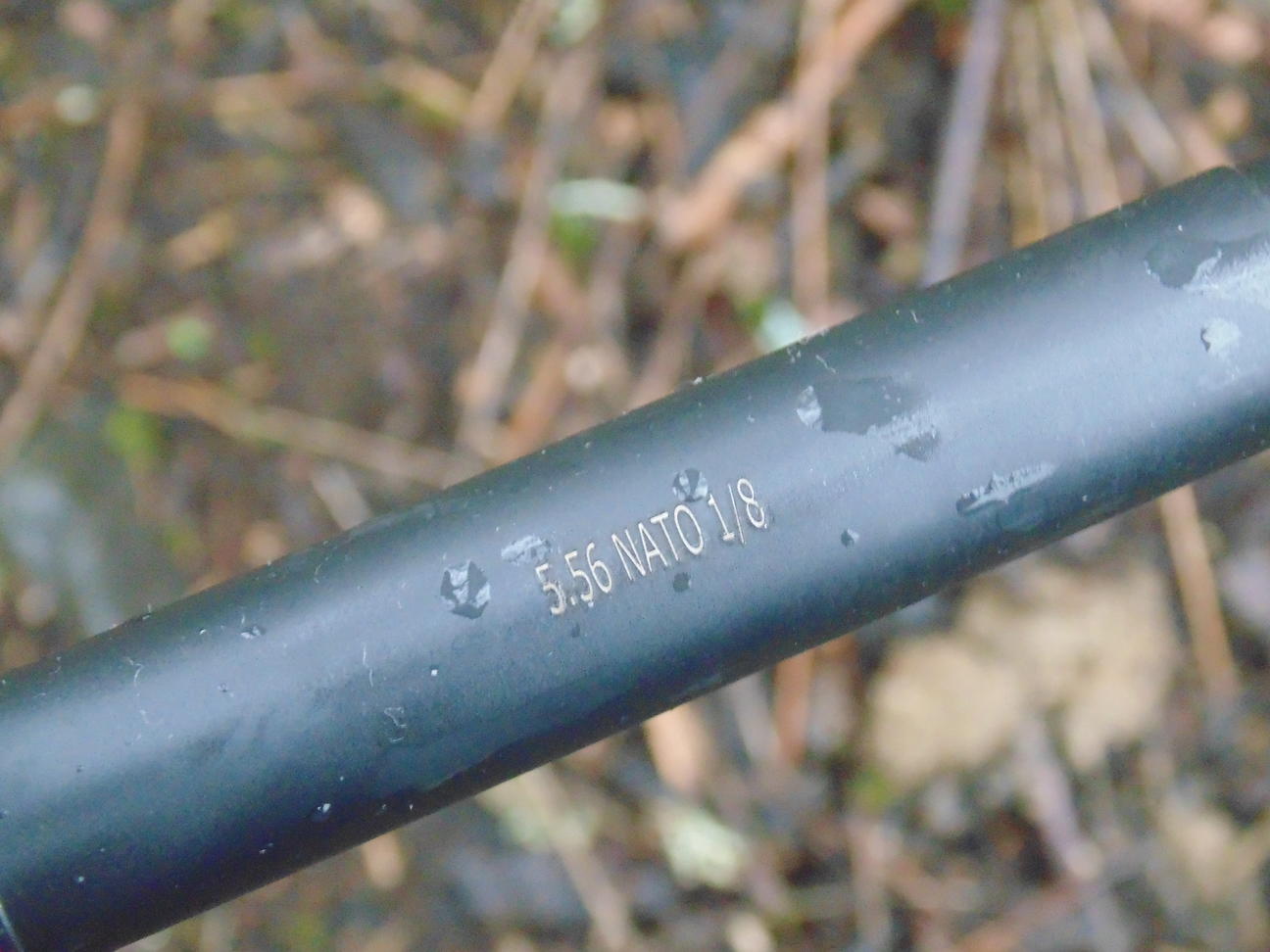
  4. DRD Tactical is providing a 5.56 NATO QD Billet upper with a hammer forged, chrome-lined barrel and a hard case to go with your own AR lower. It will allow any standard AR-type rifle to have a quick change barrel, which can be assembled in less than one minute without the use of any tools and a compact carry capability in a hard case or 3-day pack (an $1,100 value),
  5. Gun Mag Warehouse is providing 20 Magpul PMAG 30-rd Magazines (a value of $300) and a Gun Mag Warehouse T-Shirt; (an equivalent prize will be awarded for residents in states with magazine restrictions),
  6. Two cases of Mountain House freeze-dried assorted entrees in #10 cans, courtesy of Ready Made Resources (a $350 value),
  7. The Ark Institute is donating a non-GMO, non-hybrid vegetable seed package (enough for two families of four) plus seed storage materials, a CD-ROM of Geri Guidetti’s book “Build Your Ark! How to Prepare for Self Reliance in Uncertain Times”, and two bottles of Potassium Iodate (a $325 retail value),
  8. A $250 gift certificate good for any product from Sunflower Ammo,
  9. Two cases of Meals, Ready to Eat (MREs), courtesy of CampingSurvival.com (a $180 value).

Second Prize:

  1. A Tactical Self-Contained 2-Series Solar Power Generator system from Always Empowered. This compact starter power system is packaged in a wheeled O.D. green EMP-shielded Pelican hard case (a $2,400 value),
  2. A Glock form factor SIRT laser training pistol and a SIRT AR-15/M4 Laser Training Bolt, courtesy of Next Level Training, which have a combined retail value of $589,
  3. A gift certificate for any two or three-day class from Max Velocity Tactical (a $600 value),
  4. A transferable certificate for a two-day Ultimate Bug Out Course from Florida Firearms Training (a $400 value),
  5. A Trekker IV™ Four-Person Emergency Kit from Emergency Essentials (a $250 value),
  6. A $200 gift certificate good towards any books published by PrepperPress.com,
  7. A pre-selected assortment of military surplus gear from CJL Enterprize (a $300 value),
  8. An infrared sensor/imaging camouflage shelter from Snakebite Tactical in Eureka, Montana (A $350+ value),
  9. RepackBox is providing a $300 gift certificate to their site, and
  10. American Gunsmithing Institute (AGI) is providing a $300 certificate good towards any of their DVD training courses.

Third Prize:

  1. A Royal Berkey water filter, courtesy of Directive 21 (a $275 value),
  2. A custom made Sage Grouse model utility/field knife from custom knife-maker Jon Kelly Designs, of Eureka, Montana,
  3. A large handmade clothes drying rack, a washboard, and a Homesteading for Beginners DVD, all courtesy of The Homestead Store, with a combined value of $206,
  4. Expanded sets of both washable feminine pads and liners, donated by Naturally Cozy (a $185 retail value),
  5. A Model 175 Series Solar Generator provided by Quantum Harvest LLC (a $439 value),
  6. Two Super Survival Pack seed collections, a $150 value, courtesy of Seed for Security, LLC,
  7. Mayflower Trading is donating a $200 gift certificate for homesteading appliances,
  8. Montie Gear is donating a Y-Shot Slingshot and a $125 Montie gear Gift certificate.,
  9. Two 1,000-foot spools of full mil-spec U.S.-made 750 paracord (in-stock colors only) from www.TOUGHGRID.com (a $240 value), and
  10. Fifteen LifeStraws from SafeCastle (a $300 value).
  11. A $250 gift certificate to Tober’s Traditions, makers of all natural (organic if possible) personal care products, such as soap, tooth powder, deodorant, sunscreen, lotion, and more.

Round 68 ends on January 31st, so get busy writing and e-mail us your entry. Remember that there is a 1,500-word minimum, and that articles on practical “how to” skills for survival have an advantage in the judging.


How To Talk Politics, Preserve Unity, And Focus On Preparedness, by C.B.

Being American once meant surviving through extraordinary difficulty and thriving in the cradle of extraordinary promise. Beating the odds stood as a badge of honor worn proudly along with the red, white, and blue. Today, the need for mental toughness hasn’t diminished, but the payoff for perseverance is hardly the same. The gauntlet is a heavy burden to bear. Between unemployment, underemployment, increasing taxes, Constitutional mutiny, civil unrest, deteriorating returns on educational investment, family unit destruction, and an elite few staging the destiny of the entire planet, the citizenry has grown restless with washed up political promises.

In the age of perversion, inversion, and distortion of truth, actions have consequences, inaction has dire consequences, and words have catastrophic consequences. It’s hard completely dismissing the verbal vitriol being flung around with reckless abandon and the hypersensitivity of others to what should otherwise be well-disposed observation. Do we even recognize our country anymore?

The challenges confronting the American people are igniting passion and underscoring the collective loss of intestinal fortitude that once made us exceptional as a nation.

If we were to agree on one thing, it might be that the current geopolitical winds and social unrest couldn’t precipitate any finer of an opportunity for our own unraveling. The mix of toxic social, economic, and existential ingredients are beyond what any natural born American has likely experienced. On the event horizon we bare witness to rhetoric on immeasurable dangers that are hard to quantify, leaving the public dubious about the shadowy motives behind the leaders pushing the narratives. These dangers include threats of climate disasters, economic peril, and nuclear war. Did we mention the food, fuel, medical, and water shortages?

How do we preserve our most valuable relationships among family and friends? How do we ensure those we care about most are sufficiently prepared, despite a growing internal divide between the informed and the uninformed within our own circles?

American statesman Daniel Webster once said, “Wisdom begins at the end.” Does it have to?

We can parse the facts until (insert your idiom here about wasting time), but the debate is over. Edmond Mbiaka once ruminated, “The problem with a lot of people is that they procrastinate as if tomorrow doesn’t have some tasks of its own.”

Isn’t it that, the obvious is only obvious when it’s happening to someone else? America is in trouble, and the time to prepare is now! When massive things are in motion, the little ones get hurt, which is especially true if the little ones are who’s driving the movement. It’s clear from watching recent political events that movements within our republic are underway. It’s also evident that money and global interests from outside are funding a third and more insidious political objective.

We’re watching the rebirth of classical liberty. An uprising, driven by disgust for elected and appointed bureaucratic looters bent on concealing their crimes behind the power vested in them from the American public– financial, political, and military power that was largely built on the hard work, sacrifice, and backs of our ancestors. We are fighting for our liberty, but that doesn’t mean the pain on the other side of the battle won’t be significant, win or lose. We have to be ready to sustain ourselves for both. Many of us still seek simple prosperity. But is that even possible when our instincts tell us to substitute preparation for prosperity and preservation for righteous preeminence? The state of the union has left hard working Americans asking bitter questions. There’s plenty of unanswered questions and plenty of blame to spread around. Why are hard working people carrying the rest of the country at a nearly 1:2 ratio based on working age people? Should we blame the people, the politicians, or the elite?

There’s as much conjecture as fact and more opinions than the latter two elements combined. Preservation begins with acknowledging some important details about our current political circus:

  • The vitriol of the recent election has been tantamount to civil war without the weapons.
  • Why lose friends or family over something that is not in your control?
  • Avoid being a keyboard warrior on social media.
  • The controllers are using divide and conquer; they’re balkanizing America.

Is preparation really necessary? How are we so sure disaster is imminent? The answers expand well beyond the scope of this article, but important historical insights can help ensure we’re asking the right questions.

America is in the last of seven major stages seen with the rise and fall of all great nations, according to Sir John Glubb, author of The Fate of Empires and Search For Survival:’

  1. The Age of Pioneers
  2. The Age of Conquests
  3. The Age of Commerce
  4. The Age of Affluence
  5. The Age of Intellect
  6. The Age of Decadence – America has arrived and this stage includes: Defensiveness, pessimism, materialism, frivolity, influx of foreigners, the welfare state and a weakening of religion, which are all due to excessive wealth and power for too long, selfishness, love of money and the loss of a sense of duty.

Many of the empires including ancient Assyria, Greece, the Roman Republic, Arabia, Mameluke, Ottomon Spanish, Romanov Russia and Britain, lasted approximately 250 years. Others lasted just over 200 years.

In the year 1787, Alexander Tyler, a Scottish history professor at The University of Edinborough, expanded on “The Fall of The Athenian Republic.” Tyler explained that “a democracy is always temporary in nature; it simply cannot exist as a permanent form of government. A democracy will continue to exist up until the time that voters discover that they can vote themselves generous gifts from the public treasury. From that moment on, the majority always votes for the candidates who promise the most benefits from the public treasury, with the result that every democracy will finally collapse due to loose fiscal policy, which is always followed by a dictatorship.”

Alexander Tyler differed from Sir John Glubb in his progression of a great civilization but not by much:

  • From bondage to spiritual faith. Equivalent: Europeans broke away from British rule.
  • From spiritual faith to great courage. Equivalent: We had the American Revolution.
  • From courage to liberty. Equivalent: We declared our independence and crafted the Constitution.
  • From liberty to abundance. Equivalent: Start of the Industrial Revolution
  • From abundance to complacency. Equivalent: Period following WWII
  • From complacency to apathy. Equivalent: Period of Woodstock through the 1980’s
  • From apathy to dependence. Equivalent: 1990’s – present and continuing
  • From dependence back into bondage. Equivalent: Actively happening with destruction of U.S. Constitution, social welfare dependence, and credit debt

Additional harbingers that America is on the brink of a catastrophe include:

  • In the first six months of this year, foreign central banks sold (dumped) a record of $192 billion of U.S. Treasury bonds. (U.S. Debt used to operate the government) –Source: CNN Money
  • Investors are moving toward precious metals because paper isn’t safer these days.
  • The U.S. dollar depends almost entirely on petroleum to prop up its own value. Crude is trading at or below $50 a barrel, which is not only unsafe, but unsustainable
  • Nations are increasingly trading currencies outside of the dollar. Consider the Gold Trade Note now traded by the BRICS nations.
  • Deutsche Bank, one of the world’s largest banks, is close to complete failure holding a whopping $75 Trillion in derivatives, the very cause of Lehman Brothers failure. Just for perspective, the U.S. banking system was bailed out with a mere $13 Trillion.
  • Russia has moved ships into the Baltic and is headed toward the Mediterranean Sea with eight nuclear-armed ships to prepare for war with the United States.

No wonder the citizenry is on edge. If you’ve been feeling like things just weren’t right, you’re correct. The list we provide here is just the tip of the iceberg.

Preparation begins with a reality check. We live in a time of giants, and it’s going to demand guts, the guts to confront the persistent evil devouring our common struggle with the falchion of tyranny. However, being a giant isn’t measured only in how we fight large-scale battles. We’ll depend more on our communities and our networks to sustain ourselves during difficult times. How we handle friends and family today, who don’t share our political views, will largely determine the outcome tomorrow.

Q: Where do we go from here? How do we begin to solve our differences?

A: Consider sticking with the Constitution and the tenants of time-tested faith by focusing on a Higher Power to guide your reason. Despite the spread of online lies, our Founding Fathers based the U.S. Constitution and the Declaration of Independence on Ancient Israel and their belief in God. There is nowhere in our Constitution that you’ll find the words “separation of church and state.” Those were words written by Thomas Jefferson in a letter he wrote in 1802. Of course, you can find quotes from John Adams and others about the church, but you’ll find many more with talk about belief in God. Any argument against God is for the sake of argument rather than a legitimate constitutional basis for destroying religious freedom.

Q: What about the U.S. Supreme Court?

A: Its only job was and is to ensure that new laws are consistent with the Constitution. Robust arguments persist online about the Founding Fathers intentions. Were they against God and people of faith in government? As many thrust themselves into their newfound fame on social media and use it to attack the system we’ve known, by substituting of their own version of reality, patriotic Americans are left with the proverbial head-scratch. We’re forced to ask how many times we need to revisit the law of the land that was settled just over 225 years ago.

Q: How do we make room for everyone at the table when the lines are already drawn?

A: Consider treating others how we expect to be treated and respecting their God given rights– those same rights that progressives argue originated from Godless men and thus can be taken away. Don’t forget the part of the Declaration of Independence that says “We hold these truths to be self-evident, that all men are created equal, that they are endowed by their Creator with certain unalienable Rights.”

When someone’s attacking your faith by calling it a fairy tale or myth, just remember believing that everything is random and somehow worked out this way has no scientific basis with any substantiated evidence. Guess what that’s called? A fairy tale!

Q: How do we have discussions with relatives and friends that are adversarial? Knowing how their positions are formed, helps tolerate their intolerance. Modern progressive logic is built on three major tenants:

1. Insisting that what’s wrong is right.

2. Believing the truth is lie and a lie is the truth.

3. That stereotype labels used by the Main Stream Media are facts and constantly using them as reason enough to avoid further discussion.

A: Take the George Patton approach: “Lead me, follow me, or get out of my way.” Remember, the debate is over and even progressives will admit that the outlook isn’t good, even if they disagree on the solutions.

I recommend following five critical preparedness tips:

  • Extend the olive branch before you eat the olives.
  • Understand, it’s never wrong to do the right thing. Live it, teach it, and encourage it in others.
  • Correct critical shortfalls and come together. Which skills are missing in your community? Learning brings us together and instills pride in what we provide.
  • Lead by example. Never attack those you care about in front of others. Show restraint until you’re in private.
  • Set priorities and stick to them to ensure survival. When we’re hungry, thirsty, and short on supplies following a major systemic failure, it won’t matter who won the argument.


Letter Re: Manoline

Hugh,

For larger volumes: A Deli Slicer. This is one with a rotating blade with adjustable depth. I don’t know about the above, because I got mine from a second hand store, and it’s an old one built like a tank. It helps for freeze-drying as well as dehydrating. The problem with Mandolin slicers is the pressure or movement for some things to slice and limited capacity, and I even have one with a ceramic blade. The deli slicers make short work of large blocks of food. – T.Z.


Odds ‘n Sods:

Reader J.R. reports that he tried to sign up with Simbi (mentioned yesterday) and was informed that a social media account was required as proof of identity (to avoid “fake” accounts). If you don’t have a social media presence, they require your full legal name, zip code or address, and a “selfie” of you holding a government issued ID. Given this level of privacy intrusion and the questionable value of the data for the stated reasons, SurvivalBlog cannot recommend Simbi to its readers. (See this legal brief filed with the Supreme Court of the United States in regards to the National Commodity And Barter Association relating the dangers of giving this information out.)

o o o

A video, just for fun: Ken Block Drifts London – EXTENDED Director’s Cut – Top Gear – BBC

o o o

Reader DMS sent in this followup video link on the preppers who got robbed in Cleveland.

o o o

SurvivalBlog reader K.S sent in this link of Geography of Commutes in the United States as a possible “Golden Horde” predictor.


Hugh’s Quote of the Day:

“And, behold, the Lord stood above it, and said, I am the Lord God of Abraham thy father, and the God of Isaac: the land whereon thou liest, to thee will I give it, and to thy seed; and thy seed shall be as the dust of the earth, and thou shalt spread abroad to the west, and to the east, and to the north, and to the south: and in thee and in thy seed shall all the families of the earth be blessed. And, behold, I am with thee, and will keep thee in all places whither thou goest, and will bring thee again into this land; for I will not leave thee, until I have done that which I have spoken to thee of.” – Genesis 28:13-15 (KJV)


Notes for Friday – December 09, 2016

December 9th, 1914 is the birthday of Maximo Guillermo “Max” Manus. He was one of the few Norwegians who had the testicular fortitude to put his life on the line, fighting the Nazi occupiers. (There surely would have been more active resistance fighters, but fearing widespread reprisal executions by the Germans, King H7 asked the civilian populace to stand down.) Max Manus passed away in 1996. I would have liked to have met him. His exploits are fairly accurately shown in the movie Max Manus: Man of War.

o o o

Godspeed, John Glenn!

o o o

Today, we present another entry for Round 68 of the SurvivalBlog non-fiction writing contest. The nearly $15,000 worth of prizes for this round include:

First Prize:

  1. A $3000 gift certificate towards a Sol-Ark Solar Generator from Veteran owned Portable Solar LLC. The only EMP Hardened Solar Generator System available to the public.
  2. A Gunsite Academy Three Day Course Certificate that is good for any one, two, or three day course (a $1,195 value),
  3. A course certificate from onPoint Tactical for the prize winner’s choice of three-day civilian courses, excluding those restricted for military or government teams. Three day onPoint courses normally cost $795,
  4. DRD Tactical is providing a 5.56 NATO QD Billet upper with a hammer forged, chrome-lined barrel and a hard case to go with your own AR lower. It will allow any standard AR-type rifle to have a quick change barrel, which can be assembled in less than one minute without the use of any tools and a compact carry capability in a hard case or 3-day pack (an $1,100 value),
  5. Gun Mag Warehouse is providing 20 Magpul PMAG 30-rd Magazines (a value of $300) and a Gun Mag Warehouse T-Shirt; (an equivalent prize will be awarded for residents in states with magazine restrictions),
  6. Two cases of Mountain House freeze-dried assorted entrees in #10 cans, courtesy of Ready Made Resources (a $350 value),
  7. The Ark Institute is donating a non-GMO, non-hybrid vegetable seed package (enough for two families of four) plus seed storage materials, a CD-ROM of Geri Guidetti’s book “Build Your Ark! How to Prepare for Self Reliance in Uncertain Times”, and two bottles of Potassium Iodate (a $325 retail value),
  8. A $250 gift certificate good for any product from Sunflower Ammo,
  9. Two cases of Meals, Ready to Eat (MREs), courtesy of CampingSurvival.com (a $180 value).

Second Prize:

  1. A Tactical Self-Contained 2-Series Solar Power Generator system from Always Empowered. This compact starter power system is packaged in a wheeled O.D. green EMP-shielded Pelican hard case (a $2,400 value),
  2. A Glock form factor SIRT laser training pistol and a SIRT AR-15/M4 Laser Training Bolt, courtesy of Next Level Training, which have a combined retail value of $589,
  3. A gift certificate for any two or three-day class from Max Velocity Tactical (a $600 value),
  4. A transferable certificate for a two-day Ultimate Bug Out Course from Florida Firearms Training (a $400 value),
  5. A Trekker IV™ Four-Person Emergency Kit from Emergency Essentials (a $250 value),
  6. A $200 gift certificate good towards any books published by PrepperPress.com,
  7. A pre-selected assortment of military surplus gear from CJL Enterprize (a $300 value),
  8. An infrared sensor/imaging camouflage shelter from Snakebite Tactical in Eureka, Montana (A $350+ value),
  9. RepackBox is providing a $300 gift certificate to their site, and
  10. American Gunsmithing Institute (AGI) is providing a $300 certificate good towards any of their DVD training courses.

Third Prize:

  1. A Royal Berkey water filter, courtesy of Directive 21 (a $275 value),
  2. A custom made Sage Grouse model utility/field knife from custom knife-maker Jon Kelly Designs, of Eureka, Montana,
  3. A large handmade clothes drying rack, a washboard, and a Homesteading for Beginners DVD, all courtesy of The Homestead Store, with a combined value of $206,
  4. Expanded sets of both washable feminine pads and liners, donated by Naturally Cozy (a $185 retail value),
  5. A Model 175 Series Solar Generator provided by Quantum Harvest LLC (a $439 value),
  6. Two Super Survival Pack seed collections, a $150 value, courtesy of Seed for Security, LLC,
  7. Mayflower Trading is donating a $200 gift certificate for homesteading appliances,
  8. Montie Gear is donating a Y-Shot Slingshot and a $125 Montie gear Gift certificate.,
  9. Two 1,000-foot spools of full mil-spec U.S.-made 750 paracord (in-stock colors only) from www.TOUGHGRID.com (a $240 value), and
  10. Fifteen LifeStraws from SafeCastle (a $300 value).
  11. A $250 gift certificate to Tober’s Traditions, makers of all natural (organic if possible) personal care products, such as soap, tooth powder, deodorant, sunscreen, lotion, and more.

Round 68 ends on January 31st, so get busy writing and e-mail us your entry. Remember that there is a 1,500-word minimum, and that articles on practical “how to” skills for survival have an advantage in the judging.


Prepping For A Five Star EOTWAWKI Experience- Part 2, by T.H.

Oils

Oils are another important culinary product to pay attention to. To start, I want to address one issue with oils– they will turn rancid. They don’t store a long long time before this happens; a few months is enough in the wrong conditions. That being said, rancid oil is still okay to use. It will just have a slightly off flavor that many Americans are already used to. (Google Americans Rancid Oil and see what comes up.) The risk of eating oil that has turned are cancer-causing free radicals, but that is a whole different issue.

Regardless, oil is important to our diets and to your EOTWAWKI preparation for two reasons. The first is that a post-apocalyptic America is likely to be lacking in the fats and oils we commonly consume today, many of which are essential to life. You need to have some on hand until you get a supply of bear fat or other natural oils. The second is that oil is needed to perform many of the more advanced, and delicious, culinary techniques. Boiled rice is fine but add a little sesame oil (Asian flavor profile) or olive oil (Mediterranean/European flavor profile) and it is much more palatable and nutritious. Taken to the next level, plain old rice is fine to survive on, but fried rice or hash is a meal.

An Old Chef’s Saying: “The fat is were the flavor is.” Most of the flavors we know are in fact some form of fat or lipid. Think of the difference in flavor between a lean piece of beef and a well marbled rib eye; it’s different, right? Using oils to cook will unlock food flavors; heat spices or herbs gently in a pan with a drizzle of oil before adding vegetables, and then use a drizzle of oil when sauteing meat or vegetables to get some of the “brown” on them. The brown bits in the bottom of the pan, known as fond, is loaded with flavor and should never be discarded and always encouraged. At culinary school, we were taught that we’re “fond” of it”, especially when making hearty stews and soups. It is by far the easiest and simplest way to flavor food.

Perhaps the best oil to stock up on in bulk is peanut oil, due to its clean flavor and high smoke point (it doesn’t burn as easily), although you will need to take into consideration any allergies that may exist in your group. Five gallons of this will cost about $30. My next choice would be a safflower, corn, sunflower, or other common vegetable oil, which will each cost about the same for a 5-gallon container. After this there are some other oils nice to have around. I’ve already mentioned sesame oil for Asian style meals. One liter will cost about $12, but be sure to get toasted sesame oil since the plain variety is just another vegetable oil. There are some other varieties such as grapeseed, flax, avocado, and various nut oils. They each have culinary purpose but are not overly important in terms of enhancing your ability to create great flavors.

Olive oil comes in a variety of qualities, ranging from blended oil to pomace oil to virgin and extra virgin. There is the difference. Blended oil is a blend of some type of olive oil and a regular vegetable oil. When buying, be sure to note what the blend is 80/20, 70/30, pomace, virgin, or other. Extra Virgin Olive Oil is the highest quality; it is made by gently pressing the olives so that only the best oil is recovered. It is often a deep green color, due to vegetable impurities, which give it flavor and make it bad for cooking. (Extra virgin olive oil has a very low smoke point, actually the lowest.) Virgin olive oil take the process a little further, helping the oil to come out of the olives with extra pressure and perhaps a little processing. After the virgin pressing of the olives about 5%-10% of the oil remains. This is removed using industrial methods and is called Pomace Oil. Extra Virgin may cost $45 to $65, depending on where it is from, as the region and olives affect flavor. Virgin will be a little less, and Pomace is the least expensive at about $10 to $15. Yes, it is possible to buy Genco Olive Oil (from the Godfather, Genco Pura Olive Oil Company), but it’s not quite the same thing.

One Man’s Spam Is Another’s Paté

Canned and preserved products should not be overlooked. They can provide an intense range of flavors, fill nutritional gaps, are packaged to last, and can be handy trade items. An added bonus of canned/preserved items is the medium in which they are packed, usually oil or brine, and their salt content. These items not only enhance the flavor and nutritional value of foods you are preparing but they bring much needed oils and salts that may otherwise be missing from your diet.

Two things that immediately spring to mind are tahini and green peppercorns. Tahini is sesame seed paste or sesame seed butter. By itself it has a very strong, bitter flavor that when mixed with garlic, lemon, and chick peas becomes hummus. You may be thinking, “So what. I’m not gonna grow chick peas, and I don’t plan on laying up a store of canned chick peas.” The point is that hummus can be made from any type of beans. Black eyed peas hummus is very very good, and tahini is highly nutritious. Sesame seeds are one of the worlds great super foods. One tablespoon of sesame seeds contains 12% of the USDA of fats/oil, 5% of recommended protein, 5% of your calcium, 3% of your magnesium, and 7% of your iron requirements. Most importantly though is that tahini, like peanut butter and other nuts, makes a complete protein when eaten alongside beans and legumes and can fill the void when meat is not available. A 16 oz jar of tahini, found at most major grocery stores, will cost about $10 and will make 10# or more hummus.

Green peppercorns are the unripe berries of the peppercorn tree. They have a sharp, spicy but not hot flavor that is excellent with meat. They can be found both dried and canned. I prefer the canned variety for flavor, but dried is fine too. Considering that during the end times it’s likely you will be eating a lot of game and free-range meats, I highly recommend getting some. I like to use them in sauce and gravy, but they are also good in stuffings for fowl, rubs, and marinades for meats and in salad dressings. I usually see them in 3 or 4 oz cans. You’ll use a ½ oz or less to make a pint of sauce, and they cost a few dollars. A case of cans, 24, will cost $50 to $60 dollars and will last a very long time and come in an easy to trade container.

Olives are an important addition and bring both salt and oil to the equation. Olives come from around the world, range in flavor from creamy mild to robust and pungent. They are preserved in just about every manner imaginable. The most common are brined, oil cured, and air dried. California olives in the can are okay as a source of fats and oils, but they have the worst flavor. A one-gallon jar of pitted black kalamata olives (the kind you get with your Gyro sandwiches) costs about $40, a one-gallon jar of green Manzanilla olives (Spanish, small, mild salty flavor) about $10.

Recipe Tip – The Muffaletta is a classic American sandwich hailing from New Orleans. It is basically a toasted grinder or combination cold cut sandwich on a large round loaf. Aside from the loaf, the number one distinguishing characteristic of this sandwich is the condiment– a vinegarry olive and herb spread comparable to a French tapenade. To make, combine ½ cup green olives with ¼ cup red wine vinegar, 1 Tbls dijon mustard, 1 Tbls chopped red onion, 2 Tablespoons herbs (oregano, thyme, basil, marjoram, parsley as you have them), 4 cloves garlic, and 2 Tablespoons olive oil. Place all in a blender or food processor and process until finely chopped and spreadable. Serve on sandwiches or as a dip for crudités, on salads, or with grilled meats and fish.

Canned seafood, and I don’t mean tuna, is yet another great canned product that should be included in this category. For general prepping purposes of course include canned tuna and salmon, and include both water and oil packed varieties. For flavoring, morale, and health enhancing purposes, add things like diced clams, sardines, cockels (from Spain and Portugal), Abalone, and caviar. Again, don’t worry too much about the cost. Most of these items can be purchased for only a few dollars per can and are intended to be used as an ingredient in food rather than as a main dish, so they will use up only a small portion of the total food prep budget. Think about it like this; it may take 32 oz of chopped claims to make clam chowder for a family of four, but a simple 2 oz can is enough to add flavor, salt, protein, and fats to any meal.

Most of these items can be found at the local grocery store. More exotic items are easily purchased online. The one item that may be expensive is the caviar but only if you insist on buying the highest quality black beluga. Many varieties of caviar including trout, salmon, lumpfish, and paddlefish are readily available for a few dollars per ounce.

The final ingredient group that needs special attention is the spirits and liquors. I’ll be honest; most of these have very little in the way of nutritional value, but they all can take a simple meal and turn it into gourmet cuisine. The obvious choices are of course red and white wine. Avoid the cheap cooking brands and go for the least expensive of the table varieties. Box wine is fine for cooking and imbibing.

Cooking tip: Use wine to deglaze a pan after sauteeing or pan frying. Remember before, when I was talking about the fond? A shot of wine tossed into a hot pan will help lift the fond off the bottom of the pan so that it can be fully incorporated into your gravy, sauce, stew, or soup, and it will impart its own flavor as well.

After the wine, there are four spirits a well-stocked pantry should have– marsala, sherry, port, and whiskey. Each can be used to deglaze for sauces and the like, each comes with a unique flavor, and all go well with meat and fowl. Inexpensive varieties used for cooking may cost $5 to $10 per liter, and a liter will last long enough to flavor gallons of sauces and soups.

My Simple Approach To Pantry Prepping

My recommendation is to devote 5% of the monthly food prep budget to buying these types of items. Don’t worry about trying to buy them all at once; it will cost hundreds of dollars, at least, and may take days or weeks to complete. Simply buy one or two each week, when you go to the grocery store, and by the end of the year you will have a nice collection of pantry items to rival even the highest quality 5 star restaurants. When it comes to cooking, try to stay out of a rut. I try and use a different ingredient each week and make a challenge of learning new dishes. To wrap this up, my final suggestion is to include a few cook books in your pantry preparations. Try to choose ones that are rich in recipes and less on the pictures, those that teach an actual cuisine such as Mexican, Thai, Basque, or Greek, and get a variety of them.


Letter Re: Mandoline

Hugh,

R.T. may change his mind. I bought a Swissmar mandoline and don’t like it at all. I’m now looking at metal mandolins with legs to hold it up away from the food and not so many parts. I found the Swissmar difficult to use and unnecessarily complicated. Also, the plastic “pusher” is breaking already. Excalibur has a couple that look good.


Economics and Investing:

Simbi– Welcome to the Symbiotic Economy – Barter system online. – G.P.

o o o

Oil Markets Not Convinced OPEC Deal Can Kill The Glut. Oil markets are less convinced that the recently reached OPEC deal can actively reduce the glut as hedging increases and the contango is shrinking

o o o

Dallas Police and Fire Pension Halts Withdrawals in Solvency Crisis, Lawsuits Await

o o o

California is land to the $100k minimum wage state worker: 220,000 highly-compensated state employees cost the public $35 billion.

o o o

SurvivalBlog and its editors are not paid investment counselors or advisers. Please see our Provisos page for details.


Odds ‘n Sods:

The folks at Cold Steel just mentioned that they now have less than 100 of the limited Edition Rawles XL Voyager knives left in stock. After those have sold, your only chance to get one will be from second-party vendors, or on the used market. The law of supply and demand is inescapable, so buy yours while they are still reasonably priced. – JWR

o o o

Authorities charge two teens in Gatlinburg wildfires – W.C.

o o o

Swedish developers have come up with a handy solution to those who wish to completely remove themselves from the web. – DMS

o o o

Mexican Cartel Manufactured Grenades in Texas, Say Police – B.B.

o o o

War On The Homeless: Cities All Over America Are Passing Laws Making It Illegal To Feed And Shelter Those In Need – H.L.


Notes for Thursday – December 08, 2016

Next Level Training is having a winter sale with a 10% discount on any SIRT (Glock laser training pistol) order, and they will throw in a kit that contains two extra magazines, a soft carrying case, and shooting glasses.

o o o

Today, we present another entry for Round 68 of the SurvivalBlog non-fiction writing contest. The nearly $15,000 worth of prizes for this round include:

First Prize:

  1. A $3000 gift certificate towards a Sol-Ark Solar Generator from Veteran owned Portable Solar LLC. The only EMP Hardened Solar Generator System available to the public.
  2. A Gunsite Academy Three Day Course Certificate that is good for any one, two, or three day course (a $1,195 value),
  3. A course certificate from onPoint Tactical for the prize winner’s choice of three-day civilian courses, excluding those restricted for military or government teams. Three day onPoint courses normally cost $795,
  4. DRD Tactical is providing a 5.56 NATO QD Billet upper with a hammer forged, chrome-lined barrel and a hard case to go with your own AR lower. It will allow any standard AR-type rifle to have a quick change barrel, which can be assembled in less than one minute without the use of any tools and a compact carry capability in a hard case or 3-day pack (an $1,100 value),
  5. Gun Mag Warehouse is providing 20 Magpul PMAG 30-rd Magazines (a value of $300) and a Gun Mag Warehouse T-Shirt; (an equivalent prize will be awarded for residents in states with magazine restrictions),
  6. Two cases of Mountain House freeze-dried assorted entrees in #10 cans, courtesy of Ready Made Resources (a $350 value),
  7. The Ark Institute is donating a non-GMO, non-hybrid vegetable seed package (enough for two families of four) plus seed storage materials, a CD-ROM of Geri Guidetti’s book “Build Your Ark! How to Prepare for Self Reliance in Uncertain Times”, and two bottles of Potassium Iodate (a $325 retail value),
  8. A $250 gift certificate good for any product from Sunflower Ammo,
  9. Two cases of Meals, Ready to Eat (MREs), courtesy of CampingSurvival.com (a $180 value).

Second Prize:

  1. A Tactical Self-Contained 2-Series Solar Power Generator system from Always Empowered. This compact starter power system is packaged in a wheeled O.D. green EMP-shielded Pelican hard case (a $2,400 value),
  2. A Glock form factor SIRT laser training pistol and a SIRT AR-15/M4 Laser Training Bolt, courtesy of Next Level Training, which have a combined retail value of $589,
  3. A gift certificate for any two or three-day class from Max Velocity Tactical (a $600 value),
  4. A transferable certificate for a two-day Ultimate Bug Out Course from Florida Firearms Training (a $400 value),
  5. A Trekker IV™ Four-Person Emergency Kit from Emergency Essentials (a $250 value),
  6. A $200 gift certificate good towards any books published by PrepperPress.com,
  7. A pre-selected assortment of military surplus gear from CJL Enterprize (a $300 value),
  8. An infrared sensor/imaging camouflage shelter from Snakebite Tactical in Eureka, Montana (A $350+ value),
  9. RepackBox is providing a $300 gift certificate to their site, and
  10. American Gunsmithing Institute (AGI) is providing a $300 certificate good towards any of their DVD training courses.

Third Prize:

  1. A Royal Berkey water filter, courtesy of Directive 21 (a $275 value),
  2. A custom made Sage Grouse model utility/field knife from custom knife-maker Jon Kelly Designs, of Eureka, Montana,
  3. A large handmade clothes drying rack, a washboard, and a Homesteading for Beginners DVD, all courtesy of The Homestead Store, with a combined value of $206,
  4. Expanded sets of both washable feminine pads and liners, donated by Naturally Cozy (a $185 retail value),
  5. A Model 175 Series Solar Generator provided by Quantum Harvest LLC (a $439 value),
  6. Two Super Survival Pack seed collections, a $150 value, courtesy of Seed for Security, LLC,
  7. Mayflower Trading is donating a $200 gift certificate for homesteading appliances,
  8. Montie Gear is donating a Y-Shot Slingshot and a $125 Montie gear Gift certificate.,
  9. Two 1,000-foot spools of full mil-spec U.S.-made 750 paracord (in-stock colors only) from www.TOUGHGRID.com (a $240 value), and
  10. Fifteen LifeStraws from SafeCastle (a $300 value).
  11. A $250 gift certificate to Tober’s Traditions, makers of all natural (organic if possible) personal care products, such as soap, tooth powder, deodorant, sunscreen, lotion, and more.

Round 68 ends on January 31st, so get busy writing and e-mail us your entry. Remember that there is a 1,500-word minimum, and that articles on practical “how to” skills for survival have an advantage in the judging.


Prepping for a Five Star EOTWAWKI Experience- Part 1, by T.H.

Prepping for the apocalypse, whatever its form, is an important task. Depending on how the Schumer hits the fan, it may be necessary to have 20, 30, or more years of supplies laid up for you and your family. The easiest and most cost effective way of doing this is to buy large quantities of stable, storeable food products, such as rice, beans, grains, pastas, and other dried items.

Once you’ve taken care of the bulk of your preparation, it becomes time to focus on the level of comfort of your preparation, because let’s face it rice and beans can only take you so far. Think about this: thirty years of plain rice and beans will keep you alive, but you have to eat plain rice and beans for the next 30 years.

Variety, it’s the spice of life, right? You prep a variety of weapons and ammo to meet different needs. You prep band aids for cuts and field dressings for GSW’s. There is no reason not to prep a wide variety of food products, too. It will help ensure your health, your sanity, and your survival.

In my previous submission I discussed the need to stock up on herbs and spices when preparing your food stores. There are many reasons, but the two most important I think are morale and health. Herbs and spices can help alter the flavor of your rice and beans, bring some variety to your daily life, and will even help your group maintain a higher level of health. After all, the first doctors were herbalists, and the first medicines were herbs and spices. In this submission I will expound on this idea, widening the idea to include dozens of flavors and products, so that you too can include healthful, delicious, cost effective, long lasting, and multi-purpose food products to your pantry.

Prepared Foods Are Made To Store; Dried, Pickled, Salted, Cured

The first thing to remember is that most of the world’s great food products are inherently made to be stored, either dried, pickled, salted, and/or cured. These are the words of the gourmet culinarian as much as they are the devoted prepper. In times past, everyone was a prepper because that was how you lived; you worked, you produced, you stored, and along the way we learned to appreciate the unique flavors and processes that have become the buzzwords of modern 5-star cuisine.

Mustard

I’m going to start with mustard, because it is one of my favorite culinary products and leads me into ketchup, which is another one of my faves. Mustard is one of the most useful culinary products in the kitchen and even has application outside of food preparation. In terms of food science, mustard is an emulsifier. This means it breaks down water tension and allows the mixing of oil and water. In the kitchen, this process is used to emulsify salad dressings so that they don’t separate, to make mayonnaise, hollandaise, and many other sauces, as well as to add flavor. A teaspoon of mustard, dry or prepared, is enough to emulsify between two and three cups of vinaigrette; a tablespoon or two is enough to make that vinaigrette into Dijon Vinaigrette.

There are a wide variety of mustards and each has a unique flavor and application. Yellow mustard, such as French’s, is great for basic uses and for emulsification. It’s great in deviled eggs and tuna salad. Add to this a few jars of Dijon (French flavor profile, which can also be substituted anywhere a recipe calls for yellow mustard), spicy brown, like Guldens (German/European), German-style spicy senf (no better mustard in my opinion, if you like it hot), and a Chinese variety. Each of these will cost $3 to $5 dollars for a name brand jar about 12 oz and will last for decades unopened and many years opened. In order to maximize your mustard prep, I recommend adding ground dry mustard as well as dry mustard seeds, both brown and yellow.

Cooking Tips: Use mustard in marinades for meats, especially game meats and fowl. It can also be used as the “glue” that holds a crust or rub onto your meat. A tablespoon of Dijon, or the mustard at hand, in a pint of gravy turns it into Diane Style, a classic steak dish with mustard-mushroom gravy.

Ketchup (Mustard Is Really Ketchup)

I could segue into ketchup a number of ways, who doesn’t associate these two condiments together. I like to start out by saying the mustard is really ketchup. Yes, that’s right; it’s really ketchup. Let me explain. Ketchup, by definition, is a vinegar-based sauce with a single primary flavor ingredient– usually a vegetable product. Mustard is a vinegar-based sauce flavored primary by mustard seed– a vegetable product. Like mustard, ketchup is made to be stored and will last for decades unopened and for a ridiculously long time after opening. (It is basically pickled ripe tomatoes, salt, and sugar– what I call preserved tomatoes.)

Ketchup has a long and distinguished history as well, another reason why I like it. It dates back several thousands of years to Asia, where it was known regionally as ke-tsiapp, a sauce made of fermented fish similar to today’s Thai fish sauce. (Get a bottle of this, too; you’ll use it a teaspon at a time, and it’ll last you the rest of your life and help make delicious Thai and Vietnamese inspired cuisine.) It was “discovered” by Dutch, English, and Portuguese sailors during the eastward expansion. These fellas, sick of eating moldy hard tack and wormy salt beef, embraced the pungent sauce and its preparation, put their own spins on, took it back to Ye Olde Worlde, and now we have dozens of inspired sauce condiments, including Worcestershire Sauce and A-1 to thank for it. Ever wonder why the label says “Tomato Ketchup”? It’s because commonly made ketchups include mushroom and walnut among many others. One gallon of Heinz Ketchup will cost about $6 and can be purchased in #10 cans, plastic jugs, or bags.

Random facts: Ketchup is the world’s #3 condiment behind salt and pepper; the ketchup industry spends less on advertising relative to its income than any other food industry.

Ketchup Can Save Your Life. A typical one tablespoon packet of tomato ketchup has 20 calories, 125 mg of salt, 2 grams of sugar, lycopene (cancer fighting antioxidant) and trace amounts of necessary vitamins and minerals. A few of these in your pocket are the equivalent of a power bar, gel, or half of a pb&j sandwich and can mean the difference between making it out alive and completely bonking. I’ve used them myself after big bike rides when I ran out of other food.

The unifying theme between mustard and ketchup is vinegar and that is another area of your pantry that needs attention! The bulk of your vinegar needs will be met by white distilled vinegar, but it is not the only one you need. It has the highest acid content of any commercial vinegar, the most neutral flavor, and is widely used in preservation, pickling, and canning. After this you are going to need a number of other vinegars, each of which imparts a unique flavor, has unique uses, and special flavor profiles.

Vinegars

The next most commonly used vinegar is cider vinegar, made from apples. It is a high acid vinegar, has a potent flavor, and is also good in pickles and basic vinaigrettes. After this, go after wine vinegar, both red and white, and splurge a little. Avoid the cheap $2 brand, and go for the $3 or $4 brand. You will notice a difference. These are very good for vinaigrettes and to go on sandwiches, like subs, hoagies, grinders, po’boys, heroes and Dagwoods. Also good for marinating cucumbers or onions to go on the table.

Recipe Tip: Take a 1-gallon jug of Apple Cider Vinegar and remove 1 cup; reserve that for another use. To the jug add 2–4 tablespoons of crushed red pepper or whatever dry chili product you have, adjusting heat to taste, 1 tablespoon of dry garlic, 1 tablespoon of dry onion, and ½ cup of brown sugar. Shake vigorously and then allow to sit, until you are ready to use it, and voila! You have Eastern NC BBQ sauce great for marinating, brushing on to grilled meats (that monster boar you shot last fall?), and sprinkling on cooked foods.

After this the options for vinegar open immensely, but I will pick Balsamic as the next choice; it is well known, can be found in any grocery store (usually several brands and qualities), and is relatively low cost. It is good in vinaigrette, marinating vegetables, marinating meats, and is really good served with cheese and fruit. To serve with cheese or fruit, I recommend a higher quality that is thicker, sweeter, and has a better flavor; for general use, get a lower quality. Other vinegars that are useful to have include Sherry vinegar (adapts well to Asian and European style flavor profiles), Champagne Vinegar (excellent for dressings or applications using raw vinegar ie cukes, onions etc), Rice Wine Vinegar (great for Asian flavor profile, has the lowest acid and sweetest flavor, adapts well in many situations) and Malt Vinegar (Fish and Chips!, and other condiment situations).

Balsamic comes in two classifications and a number of subqualities. Those labeled Balsamic Of Vinegar Of Modena are made for commercial purposes and export. They may be blended with red wine vinegar or other and come in four levels or leafs. One Leaf being the lowest and good for everyday use, Four Leaves the highest and recommend for drizzling over fruit, ice cream, cheese and special recipes. One leaf varieties may cost $4 or $5 a gallon, Four Leaf may cost as much as $30 a pint. Balsamico Tradizionale is the real deal, top shelf balsamic made by slowly allowing reduced verjus, unfermented wine grape juice, to evaporate from within a sealed wooden barrel. This is not a true vinegar but an intensely flavored, sweet-acidic, syrupy grape juice with a flavor you will never forget. It can only be made using traditional methods, is aged for at least a dozen years, and must be judged acceptable before labeling. It’s only to be used with your besties; five ounces of 12-year-old may cost $30, the same bottle of 30 or 40 year Balsamico may cost upwards of $300.


Letter Re: Easy Fire Starting Article

Hugh,

I found the recommended easy fire starter posted a couple of weeks ago to be very interesting. That recommendation involved rolling 2-inch wide newspaper and soaking it in bees wax obtained from a toilet seal ring. My first attempt produced a marginal flame. I realized that I needed more wax absorption. On my second attempt, I used rolled up paper towel. This gave better but still just not adequate results. From the sight of the rolled up paper towel I came up with a better idea– tampons! As a 66 year old widower, I sucked it up and hid a box of tampons among the coffee and beer in my grocery cart. I also decided to use paraffin from candle wax. I tried a couple different techniques, but it is best I just list the procedural steps that worked:

  • I took several tampons out of the wrapper and out of the plastic holder.
  • The wax candles were from tall 2” diameter hurricane candles (Votive style) from the dollar store. I had a case on hand for post hurricane light.
  • I eventually used two candles for lots of starters. I found the best way to break the glass was with a gentle squeeze in a vice. (Okay! Use safety glasses and gloves, of course.)
  • The wax was melted in a tin can in a pot of simmering water. I initially tipped the can edge up and slipped a teaspoon under the edge to release bubbles and get better circulation under the can.
  • A soft drink box was prepared as a dryer support with one end cut out. Once all of the wax was melted, I took one tampon and looped the string over a bamboo grill cooking stick. A long fireplace match also works well.
  • Initially, just the string was dipped into the wax, then it was re-dipped followed by twisting the two strands together while maintaining the small loop in the end around the stick.
  • Set this aside for a couple minutes to cool and harden and prepare a few more, dipping the strings only. Slip two of the tampons on a bamboo grill stick or fire place match by the loop in the string.
  • Lower the two hanging tampons into the candle wax. They will float horizontally momentarily. Then they will swing vertical and sink as they release tiny bubbles.
  • After a few minutes, inspect and let cool just a few seconds. Replace the tampons into the wax again, if necessary. When they are fully saturated the cotton texture will be smooth wax and the size will be about 20% bigger.
  • Remove tampons (remaining on sticks) from wax and hang over empty box to cool and harden.
  • Repeat.

For a couple burn tests I laid them on the edge of a vertical concrete block with the wax string hanging down. The vertical “fuse” readily lights. The cotton end is next to burn. Within 30 seconds the flame propagates along the top and down the 2-inch length. The robust triangular flame will be two inches by five inches (or more) for TEN MINUTES followed my another five minutes of taper off flame. When blowing on the flame, it immediately recovered.

I also tried soaking them still inside the plastic holder. This works but prevents 20% expansion and produces 20% less flame in a side-by-side test. They also had to be cut out rather than pushed out as hoped.

Like the original author, I also was not a Boy Scout, but I was a juvenile fire bug and that led to actually being a proverbial “rocket scientist”– engineer. – Rocket Man