
Prep Your Ride- Part 2, by J.U.

3. A Generic Car-Emergency Kit: Most of these car emergency kits come with a basic tool set (that usually borders on worthless), but most have jumper cables, reflective triangles, a good bag to use to carry your own custom kit, and a cigarette lighter powered tire pump (which can prove useful if you’re not going to spring for the Powerpack or a unit of similar capability.) I bought my car-emergency kit for the bag and then built my own kit into that bag. The useless tools from the original kit make great presents for your brother-in-law.

What To Put Into The Customized Car Emergency Bag:

  • A Custom Tool Set: You need to replace the cheaply made “Made in China” tools with as reliable, last-a-lifetime tools as you can. Certainly inexpensive tools are better than none, but you have to understand that if you have to use tools to work on your car, it’ll probably be beside the road or in a dark parking lot. Oh, and it’ll be raining. Do you really want the added issue of pliers that are so cheap that they won’t grip properly or screwdrivers that snap under the torque of regular use? Buy Craftsman, DeWaltt, or some other respected name brand, and save yourself in the long run. Yard sales can be a great place to pick up name brand tools on the cheap.
  • Duct Tape/Electrical Tape: Buy several rolls of both duct tape and electrical tape. This stuff can fix almost anything from temporarily sealing a leaking hose to securing a hood that won’t latch closed after an accident. I once actually secured a bumper to a car with duct tape after it had partially come off following an accident.
  • Fix-A-Flat or Slime: Both Fix-a-flat and Slime come in aerosol cans and, in my opinion, is so great as to be defined as “necessary.” Slime is better in that flattened tires filled with it can be patched and reused whereas Fix-A-Flat can’t be cleaned out of tires and you’ll end up buying a completely new tire if you use it. If you have a flat in a bad area or just need to make it down the road to the service station, use either one. In TEOTWAWKI, Slime is the better option because the tire can be repaired. Keep at least two cans onboard, because if you have one flat, well, you get the idea. (Editor’s note: It is important to clean the gunk out of the tire as quickly as possible. Because most modern wheel assemblies are tubeless, the liquid can often encourage the corrosion and degradation of the wheel. If you use it in an emergency, get it cleaned out as soon as possible.)
  • MagLite or Streamlight Flashlight (with appropriate battery size): There are lots of flashlights out there. Most of them are cheaper than either of these brands. Again, however, you have to think that if you ever need a good light, nothing else will do, and both Maglite and Streamlight are companies who have a proven track record for making a quality product that stands up to hard use. That’s why they put their name on their products, why people pay more for them, and why you can legitimately expect high quality from them. Paying less is fine, but if the cheaper gear doesn’t work when you need it, you might as well not have spent anything on it at all, right?

    The big D-Cell MagLites can also be used as a very effective club when needed. This is a fact I can attest to from my days as a law-enforcement officer. These have an added benefit for those of you who live in “liberal” states that try to restrict your ability to defend yourself in that they may be carried in your vehicle and not perceived of as a “weapon” by the easily-panicked, limp-wristed liberals who are all around you.

  • Knife/Multi-tool: Again, purchase quality. I carry a Leatherman multitool and a Kershaw, Boker, or SOG knife on my person, every single day.

    There are lots of good, high quality knives out there. Just a pocketknife will do most of the time. Just make certain it is sharp and holds a good edge. If you live in a restrictive, liberal “nanny” state, only refer to your knife as a “safety device”. Calling it a “seatbelt cutter” seems to work well in everyday conversation, but poking a murderous assailant with a “safety device” or restraining their actions with the active use of a seatbelt cutter’s edge tends to be as effective in real life as if you had used, well, a knife.

  • Kidde Fire Extinguisher (FX 511 or equivalent): If your car (or someone else’s) starts to belch smoke from under the hood, the flames aren’t far behind. Trust me on that one. Do not risk your life trying to be a firefighter, if you’re not one. Get everyone out of the car and far enough back to be safe from any possible explosion.
  • Water (bottled): Buy the inexpensive stuff here. Dollar store bottled water works as well as any other kind. In fact, use an old sports bottle with tap water for your car water. If sealed, it remains potable for weeks. It can be used by you, your family, or someone you are helping. It can be drunk, be used to clean minor wounds, or serve as emergency engine coolant.
  • Blankets (wool and emergency): A wool blanket is useful to use as padding, to cover an injured person (as a first step in treating shock), or even to drag injured people out of harm’s way in extreme emergencies. (Military surplus blankets are a great and inexpensive option.) Emergency blankets (usually made of some type of mylar) are small and compact, but are usually a “use once” option. Still, they are inexpensive.
  • Laminated Emergency Contact/Personal Medication List: This is necessary because, in the event of an accident in which you are rendered unconscious or incapacitated, responding emergency service workers will be able to more quickly contact your family/friends regarding what has happened.

    If you regularly take medications, you should list that on the card, so LEOs/EMTs have an idea about their treatment options for you. Likewise, any known intolerance for medications should be on the card. You should include any other medical information that might be pertinent to someone trying to treat an unconscious you with no idea of your personal medical history. Having this is the equivalent of the military method of having a strip of duck tape on your gear with your blood type sharpie-marked onto it so the medic/corpsman doesn’t have to waste precious time trying to find that information if you get hit and go down.

    This list should be laminated so it doesn’t get smudged, marked with large red crosses or blue EMS crosses to get the visual attention of a first responder, and kept easily visible in your purse or wallet next to your license, or in the glove compartment or console. This is because, in the event of an accident in which you are rendered unconscious or otherwise incapacitated, responding LEOs (law enforcement officers) are very likely to look in those places for your license, your insurance, and your registration anyway.

    It would ideally also include the telephone number and address for your mechanic and preferred wrecker service. That way the card does double duty for you and is useful whether you’re unconscious or not in the aftermath of the wreck. In most jurisdictions, if you do not specify a wrecking service in the event of an accident, the wrecker that shows up will be the next one on that jurisdiction’s rotation list. You’re usually better off taking an active role in such decisions if you have any information on which to base your choice.

  • $100 in $20 Bills: This can also be hidden under the seat, kept in the console, et cetera. Just make sure it is out of sight, unless you want to return to your car with a window smashed out and your $100 gone. Why do you need this? There are two main reasons. Number one is that most wrecking services prefer cash if you have to get a tow. Number two is that, in the event of an electrical outage, stores and gas stations have no way to process your credit or debit cards. They may want to sell you what you want and need, but plastic won’t cut it when all the lights go out. If you can afford $200, make it $200.
  • Wrecking tool/small crowbar (optional): This is optional, but such implements can be very useful. It’s the kind of thing that you would rarely need, but if you did almost nothing else will do. Think “low-tech Jaws of Life”. These devices also make effective weapons, again without the stigma of keeping weapons in your car.
  • First Aid Kit: Unless you’re willing to spend several hundred dollars to get a good quality pre-assembled kit, you’re going to have to assemble your own. That’s actually better, because it allows you the opportunity to customize your kit to your needs and your skill/training level. You (and everyone over the age of seven) needs to have at least a basic and working knowledge of first aid. If you help someone in need of medical aid who is not immediate family or close friend, you should exercise all due care to avoid blood-borne pathogen contamination.

    Lots of people don’t feel comfortable putting on nitrile gloves before treating bleeding victims. These days, assume anyone you treat that you don’t know intimately has some contractible disease, and take all necessary precautions. When training for treating an injured person, do what EMS professionals do. When I was an EMT, I began every approach in training with the statement “BSI (body substance isolation), scene safe.” That way when you do it for real, you will be thinking about putting your gloves on and the safety of a scene before rushing in to play hero and render aid.

    I carry a pair of nitrile gloves in my wallet with me everywhere. Go with nitrile, as some people have a severe allergic reaction to latex. Also, if you treat someone who is not a close family member or friend, treat them as best you can using the “Check, Call, Care” matrix. Under “normal” conditions, once you’ve checked the scene and the victim and determined to render treatment, do it to the best level to which you’ve been trained after making sure the cavalry is on the way. Unless you’re an EMT or more in the medical field (and even if you are), you want the professionals with the equipment and the hospital nearby to get there and take over treatment. Don’t play doctor unless you are one. If you are one, you already know the victim (and you) are better off with that injured person in an ambulance and on the way to an equipped and staffed ER.

  • Reflective Vest: You need one of these because changing tires/dealing with breakdowns are the sorts of events that tend to happen in the dark and under less than optimal visual conditions. We’ve all driven down the road in the dark and seen someone walking beside the road in dark clothing.

    You, therefore, should understand how hard it can be for drivers to see people standing near a broken down car in the dark. Add to that the fact that cars tend to “drift” where their drivers are looking, which will be at your broken down car by the side of the road. You can see why a $3 reflective vest in your car emergency bag is a sound investment. Becoming a road ornament for that sedan that’s driving through an active accident scene at 50 MPH is only going to add to your list of problems.

  • Automotive Oil (whatever weight your manual recommends): Two bottles should be sufficient. The reason for having two is that, regarding survival situations and the gear for dealing with them, “two are one and one is none.” People whose cars leak oil usually drive around with a whole case of oil in the trunk. People whose cars don’t regularly leak oil seem to assume that an oil leak will never happen to them and their car.
  • Cigarette Outlet Car Cell Phone Charger: Make sure it fits your current cell phone. Enough said.
  • Small Funnel: This is for oil, coolant, et cetera. That is, unless you like the smell of burning oil after it drips onto your hot engine block and the ensuing potential risk of fire.
  • CB radio/emergency scanner: While optional items, these can be very useful. CB radios are fairly inexpensive; basic scanners are too. However, the ones you’ll need to pick up “trunked” frequencies that many agencies use are (naturally) more expensive. CBs offer you an alternate form of communication/information. Having options is always tactically sound. The more you have, the better off you are. Truckers often have a good idea about why you’re at a standstill on the freeway and what mile marker that accident is at. This is good to know, so you can make informed decisions about whether to seek an alternate route or just wait it out in the gridlock.

    The same is true of scanners. They provide you with more information that can help steer you away from areas the looters are rampaging through or sections of streets in your city that are flooded et cetera. To effectively use your scanner, you’ll need to develop at least a basic working knowledge of “10 Codes” used by your local departments. For some reason, there is not a national standard for these codes, although they are often fairly similar from department to department and even region to region. Just listening to the chatter will help you pick up most of it, at least for most “normal” everyday situations.

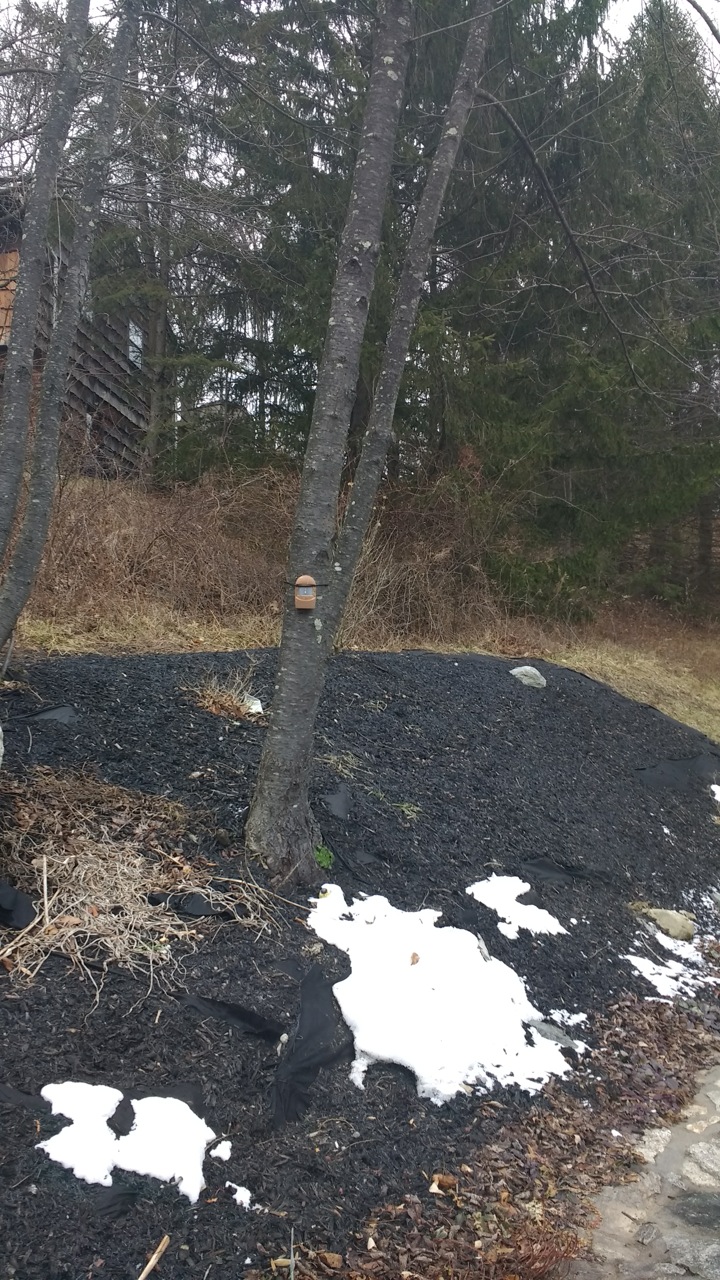

Letter Re: Harbor Freight Motion Alarm

Gentlemen,

I have been reading the comments on the Harbor Freight motion alarm in the past few entries. I have had one of these units monitoring my driveway for the last 10 years or so. It works flawlessly. I had an old plug laying around that fit the receiver, so I only use batteries in the monitor. You can see in the attached photos that I spray painted it brown to camouflage the look, although I moved it from a more brown colored tree to a more grey colored one after my neighbor got a dog, which kept setting off the alarm when he was in his front yard. I haven’t gotten around to repainting it, but it is still not that noticeable even with the black zip tie holding it up. When it goes off, my ankle biter dog charges up onto the couch, and her resulting bark tells me if it is a person coming to the door, a deer wandering through, or the occasional squirrel that runs up that tree. I can’t recommend it highly enough. – Spotlight


Economics and Investing:

British consumers borrow at fastest rate in 11 years as inflation threat rises

o o o

What Is This “Neutral” Interest Rate Touted by the Fed?

o o o

Items from Mr. Econocobas:

‘Audit the Fed’ bill gets new push under Trump

Federal Debt Climbs $1,054,647,941,626.91 in 2016

50 days of pain: What happened when India trashed its cash – I do like how it shows you the value of cash taken out and the value of the cash put back in and how to explain this is supposed to work?

o o o

SurvivalBlog and its editors are not paid investment counselors or advisers. Please see our Provisos page for details.


Odds ‘n Sods:

The Titanic Sails at Dawn: Warning Signs Point to Danger Ahead in 2017 – B.B.

o o o

Heads up: NOW is the time to buy Forever Stamps – price increase on Jan 22 from $0.47 to $0.49

o o o

17 Prepper Uses For Used Motor Oil (Editor’s Note: Be aware that used motor oil is classified as a carcinogen.) – J.N.

o o o

From the Desk of Mike Williamson, SurvivalBlog’s Editor at Large: New survival community

So, it’s not a “community”; it’s a “real estate promotion”. $1000 a month isn’t bad at all for that much secure space. Leasing from someone else in a readily locatable position isn’t a great idea. How reliable will the neighbors be when push comes to shove? Will they stand by you with a rifle? Or vote democratically to “Share” your supplies? With no utilities, where will water come from? How is the hunting? It looks sparse. What crops can be easily grown?

It all sounds more like an attempt to cash in than to provide a viable community.

o o o

When you have to bug out with a baby – G.P.

HJL’s Comment: I like the concept; I just wonder about the wisdom of a tactical baby carrier that looks like body armor?


Notes for Wednesday – January 04, 2017

January 4th is the birthday of George Hyde, who was born “Heide” in 1888, in Arpfingen, Germany. He was the chief gun designer for the Inland Division of General Motors (GM) in Dayton, Ohio during World War II. Hyde was best-known as the co-designer of the M3 “Grease gun” SMG and the Liberator pistol, but he also designed the Bendix-Hyde Carbine and the M2 Hyde submachinegun. He immigrated to the United States in 1927. A gent at the Nitro Express Forumsmentioned some details on his life before World War II: Before 1935 Hyde was the shop foreman and metal man at Griffin & Howe. He quit there and went into business for himself. Samuel A. “Harry” Leonard teamed up with Hyde, and their rifles are marked “Leonard & Hyde New York” on the barrel. In May of 1935 [school teacher and New York National Guard Major N.H.] Ned Roberts and his father-in-law [well-known carte-de-visite photographer] W.G.C. Kimball went into business together as “Roberts and Kimball” in Woburn, Massachusetts. Their idea was to make high-quality sporting and varmint rifles on Mauser actions in the then-popular cartridge that bears Roberts’ name, the .257 Roberts. Metal work on these Roberts & Kimball guns was done by George Hyde, and the stocking was done by Harry Leonard. Some information suggests that Leonard and Hyde did not relocate to Massachusetts but that the work was sent to them in New York City. Roberts & Kimball company lasted less than a year, and their rifles are not found very often.

o o o

Pantry Paratus has an online video review of the Stove Lite Pro, a thermoelectric generator (TEG) that is affordable, durable, and practical. They are perfect for a lot of homesteaders and survivalists hoping to move towards off-grid living.

o o o

Today we are interrupting the three-part article on Prepping Your Ride so we can bring you Steve Cochran’s Month in Review.


December in Precious Metals, by Steven Cochran of Gainesville Coins

Welcome to SurvivalBlog’s Precious Metals Month in Review, where we take a look at “the month that was” in precious metals. Each month, we cover the price action of gold and examine the “what” and “why” behind those numbers.

What Did Gold Do in December?

Gold started December at $1,177 an ounce, a 10-month low. The Trump Rally in both stocks and the dollar showed no sign of slowing down, with precious metals and bonds taking a hit. Gold fell 1% after the far-right candidate’s loss in December 5th’s Presidential election in Austria eased safe haven demand in Europe.

The Fed finally stepped up to the plate on the 14th and raised the Fed funds interest rate by a quarter-point. This gave more fuel to the rallies in the dollar and the stock market. Things improved near the end of the month, when gold hit two-week highs the last few days of the year. At press time, gold was showing a 8.5% gain for the year, while silver notched nearly twice the gains, at 16%.

Factors Affecting Gold This Month

TRUMP RALLY ON WALL ST

Stocks continued to rally in December, pushing toward new records. The financial sector has gained the most from the expected actions of the incoming administration. Trump has promised to repeal banking regulations, such as Dodd-Frank, put in place after the global financial crisis. His plans for massive infrastructure projects will involve massive deficit spending, which will cause higher inflation. Higher inflation helps banks increase profits as the rates between borrowing and saving widens.

Energy sectors, such as oil drilling and coal mining, have also risen to new highs based on Trump’s promises. They are expecting the abolishment of many EPA rules, which will reduce expenses. Also, Trump has promised to allow drilling on all Federal land and to bring jobs back to the coal mining industry.

The defense sector is seeing their stocks rise in general, except for companies like Lockheed Martin, that saw its stock price tumble after Trump tweeted about the massive cost overruns of the next-generation F-35 jet fighter. Even before the inauguration, Trump is shaping policy through Twitter and public statements, especially to pressure companies over cost overruns on government projects.

All that projected spending will mean more well-paying jobs in construction and industry. Add to this the promised tax cuts, and common people across America will have extra money to spend. This scenario is lifting stock prices for consumer goods and entertainment companies.

THE DOLLAR STANDS ALONE

While predictions of higher inflation should make the dollar fall, an improving U.S. economy versus economic slowdowns in the rest of the world has lifted the dollar to 14-year highs. This has pulled down the prices of commodities traded in dollars (which is nearly all of them). As each dollar is worth more, it takes fewer of them to buy commodities on the global market.

TOUGH TIMES FOR SAFE HAVENS

Of course the enthusiastic response to Trump’s “Make America Great Again” plans have tossed safe havens to the curb. Bonds have seen some of their worst losses in years, while gold has fallen from a 2016 high of $1,378 an ounce in July to $1,130 in mid-December.

However, both sectors reached oversold conditions by late December. At the same time, the huge rallies in the dollar and stocks was running out of steam. This was a matter of “too far, too fast” but in opposite directions.

As the dollar eased lower and stock prices trended down, both bonds and gold gained. Part of this is also attributable to the account-squaring that always happens the last week of December. Gold ended 2016 at $1,160 an ounce, about $100 higher from the start of the year.

On the Retail Front

On December 9th, the U.S. Mint announced that it had sold out of 2016 Silver Eagles, as well as 1oz, 1/4oz, and 1/10oz Gold Eagles. The last time the U.S. Mint sold as many gold coins as it did this year, gold was $1,900 an ounce. Combined sales of American Gold Buffalo and American Gold Eagles of all sizes totaled more than 1.2 million troy ounces in 2016. The last year that U.S. gold coin sales exceed this number was in 2011, when 1.6 million ounces were sold.

The 37.7 million 2016 Silver Eagles sold was 9.3 million less than the record 47 million sold in 2015. Silver Eagles missed setting a new record in 2016, due to lagging demand last summer. Part of the reason for that lagging demand in the middle of the year was from substantial action in the secondary market. Silver stackers cashed in their Silver Eagles as prices hit a two-year high, selling hundreds of thousands of them to dealers. This led to smaller Silver Eagle orders from dealers with the U.S. Mint throughout the summer.

China’s central bank surprisingly made no major gold purchases in November, though the Russian central bank bought another 34 metric tons (approximately 1 million troy ounces). The World Gold Council updated its data on central bank gold reserves on December 8th. Not counting the IMF, Russia is in 6th place in national gold reserves, while China is in 5th place.

It is notable that China’a 1,842 tonnes of gold only makes up 2.3% of its total reserves. This compares to the United States’ 8,133.5 tonnes, which makes up 75.3% of total reserves. This means that China’s gold reserves are only 22% of U.S. gold reserves, by weight. Of course, this is using China’s official numbers, which anyone who seriously follows the gold market believes is far below its actual holdings.

Market Buzz

Speaking of China’s real level of gold demand, Asian gold expert Koos Jansen lays out how Thomson Reuters GFMS is allegedly misrepresenting Chinese gold demand to its own advantage.

This month, we have fresh evidence that the “conspiracy theory” of gold manipulation is actually fact: German megabank Deutsche Bank settled a class-action lawsuit charging them with gold manipulation for $60 million. The suit was brought by investors who said that Deutsche Bank’s manipulation of the gold market caused direct harm to private investors and even DB’s own clients. As part of a settlement of an earlier silver manipulation lawsuit, Deutsche Bank agreed to hand over internal communications to the plaintiffs. This included online chat records between their traders and the traders at other banks. These records were made public in December, implicating nearly every Too Big To Fail bank. Called the “Manipulation Smoking Gun,” the data includes chat logs of Deutsche Bank silver traders conspiring in real time with employees of UBS and other big banks to break the market. They would agree on whether to buy or sell and at what price. Then they would countdown in the chat room and execute their orders all at once. In one instance, a UBS trader tells his counterpart at Deutsche Bank “If we are correct and do it together, we screw other people harder.”

On the subject of gold manipulation, the Shanghai Gold Exchange announced that the maximum transaction size on the exchange would be cut in half, beginning January 1st. The largest amount of orders that can be placed at one time will be 500kg (16,075 troy oz), instead of 1000kg (32,150 troy oz). This was done to slow down attempts to “flash crash” the market in order to make illegal profits. This won’t stop market dumps, but it will slow them down, giving other traders time to react. This will mean that it will take more gold sold over a longer period to approach the desired results. Of course, 500kg of gold is still over $20 million of gold that can be bought or sold in one transaction.

The Shanghai Gold Exchange continues to grow. 3.4 million kg (109.3 million troy oz) of gold changed hands on the SGE in November, the most in a year. The Chinese government wants to shift the center of power for the global gold market from London to Shanghai.

We could be approaching Peak (Mined) Gold, as these charts from Bloomberg show. It seems that all the easy to reach gold in the world has already been found. This means less new supply coming to market each year, which will raise prices. These higher prices will be needed to make exploiting smaller, more remote gold deposits profitable.

Maybe the higher prices we’ve seen for gold in the last week of December are from people heeding the advice of famous economic adviser Mohamed El-Erian. He says it’s time for investors to take profits on this huge Trump Rally and reduce their risk. While El-Erian is holding 30% of his total investments in cash, we of course like the bargain prices of gold lately.

Peter Schiff is of similar mind, saying that when interest rates start rising, the stock markets are going to give back the gains from the Trump Rally. He says we’re already seeing home sales slow down as mortgage rates climb.

James Rickards isn’t too bullish on the market going forward, either. He predicts a major recession soon, perhaps as early as 2018, and Trump won’t be able to stop it because the banking lobby won’t allow the necessary reforms.

Rickards says that giant investment banks, like Goldman Sachs and JP Morgan, need to be broken up and the types of derivatives that destroyed the market in 2008 be outlawed. He doesn’t think that Trump can win a fight against the banking lobby, since so many Federal banking regulators are former executives from those same Wall St banks. Large amounts of banking lobbyist cash also flows around in Congress, giving the financial sector allies there as well.

The evils of civil forfeiture (how has this not been knocked down as unconstitutional?) has spread to Europe. Border police will soon be able to declare travelers a “suspicious person” and seize all the cash and/or gold they are carrying. Of course, this is to “fight terrorism”.

This article at Casey Research gives a rundown on all the ways the Federal government is stepping up its war on gold.

Last month, International Man talked about the advantages of getting a second passport, in addition to your U.S. one. This month, he warns about passport scams and what to look out for.

In the “So Crazy It Might Just Work” department, the President of Peru wants to mine the nation’s largest aquifer for gold. The river that flows into the aquifer begins in the gold fields in the mountains. He says the aquifer needs to be dredged anyway and the resulting silt is estimated to hold more gold dust per ton than the gold concentration in ore at the nation’s largest gold mine. (The cities that rely on the aquifer for drinking water aren’t sold on the idea.)

Looking Ahead

Considering how the economy in 2016 has ended exactly opposite of how it began, any predictions for the new year would be difficult. A few things are pretty certain though. The European Union will be stretched to the breaking point as populist, anti-corruption political parties win majorities in France, Italy, and the Netherlands.

President Trump will likely have a hard time getting the Republican Congress on board for all of his infrastructure plans, though he will likely get some of it passed. His plans to beef up America’s military will get a warmer reception.

A sticking point will be getting deficit hawks in the House to agree to bust the budget to pay for these stimulus measures. Increased deficit spending will raise inflation, making the nation’s debt a lot harder to service.

Interest rates will also see upward pressure from the Federal Reserve, if it actually follows through on plans to raise interest rates three times next year. Since there are only four FOMC meetings per year that include a press conference by Janet Yellen, any rate hikes will likely be on March, June, September, or December.

Speaking of the Fed, there is more than one person on Trump’s economic advisory team that would like to see the Fed abolished completely. There is support in Congress for this measure as well. Rumors are already circulating that Yellen may be forced out as Fed Chairman before her term expires in February 2018.

This month, we close with the story of a beautiful gold ring dating back to the time of Robin Hood which was actually found this month in Sherwood Forest.


Letter Re: Perimeter Security

HJL,

Regarding the recent articles on perimeter security, I’d like to add my two bits. Get a solar powered motion detector light from Harbor Freight,

Instead of driving the light, have the unit power an HF frequency clock chip like this.

When the security light detects motion, it will power the RF transmitter, sending signals to your HF receiver. All that is needed is the chip, 5.1 volt zener diode with load resistor or 5 v regulator like 7805 or two diodes in series to drop the 6V to 5V just, and an antenna. – MH in Texas


JWR’s Recommendations of the Week:

Books:

Atlas Obscura: An Explorer’s Guide to the World’s Hidden Wonders by Joshua Foer, Dylan Thuras, and Ella Morton

Earth Abides by George R. Stewart

Movies:

Seabiscuit

Victory at Sea (The complete documentary series on three DVDs)

Television:

Survivors (The BBC remake of the Terry Nation television series. This series shows lots of poor choices, which are self-evident. Lesson one: Be armed, constantly.)

John Adams (Miniseries)

Music:

Cold Mountain Soundtrack

20th Century Masters: The Best Of Hank Williams

Instructional Videos:

Gunsmithing – How to Clean a Rifle Barrel Presented by Larry Potterfield

How to Field Strip a Glock

JWR Adds this safety tip: Safe gun clearance is crucial with Glocks because the pistol must be dry-fired before field stripping.

Gear:

Trijicon RS20-C-1900008 AccuPower 3-9×40 Riflescope

Yaesu FT-857D Amateur Radio Transceiver – HF, VHF, UHF All-Mode 100 Watt


Notes for Tuesday – January 03, 2017

On this day, in 1521, Martin Luther– the father of the reformation and founder of Protestantism– was officially excommunicated by Pope Leo X from the Roman Catholic Church.

o o o

Today, we present another entry for Round 68 of the SurvivalBlog non-fiction writing contest. The nearly $15,000 worth of prizes for this round include:

First Prize:

  1. A $3000 gift certificate towards a Sol-Ark Solar Generator from Veteran owned Portable Solar LLC. The only EMP Hardened Solar Generator System available to the public.
  2. A Gunsite Academy Three Day Course Certificate that is good for any one, two, or three day course (a $1,195 value),
  3. A course certificate from onPoint Tactical for the prize winner’s choice of three-day civilian courses, excluding those restricted for military or government teams. Three day onPoint courses normally cost $795,
  4. DRD Tactical is providing a 5.56 NATO QD Billet upper with a hammer forged, chrome-lined barrel and a hard case to go with your own AR lower. It will allow any standard AR-type rifle to have a quick change barrel, which can be assembled in less than one minute without the use of any tools and a compact carry capability in a hard case or 3-day pack (an $1,100 value),
  5. Gun Mag Warehouse is providing 20 Magpul PMAG 30-rd Magazines (a value of $300) and a Gun Mag Warehouse T-Shirt; (an equivalent prize will be awarded for residents in states with magazine restrictions),
  6. Two cases of Mountain House freeze-dried assorted entrees in #10 cans, courtesy of Ready Made Resources (a $350 value),
  7. The Ark Institute is donating a non-GMO, non-hybrid vegetable seed package (enough for two families of four) plus seed storage materials, a CD-ROM of Geri Guidetti’s book “Build Your Ark! How to Prepare for Self Reliance in Uncertain Times”, and two bottles of Potassium Iodate (a $325 retail value),
  8. A $250 gift certificate good for any product from Sunflower Ammo,
  9. Two cases of Meals, Ready to Eat (MREs), courtesy of CampingSurvival.com (a $180 value).

Second Prize:

  1. A Tactical Self-Contained 2-Series Solar Power Generator system from Always Empowered. This compact starter power system is packaged in a wheeled O.D. green EMP-shielded Pelican hard case (a $2,400 value),
  2. A Glock form factor SIRT laser training pistol and a SIRT AR-15/M4 Laser Training Bolt, courtesy of Next Level Training, which have a combined retail value of $589,
  3. A gift certificate for any two or three-day class from Max Velocity Tactical (a $600 value),
  4. A transferable certificate for a two-day Ultimate Bug Out Course from Florida Firearms Training (a $400 value),
  5. A Trekker IV™ Four-Person Emergency Kit from Emergency Essentials (a $250 value),
  6. A $200 gift certificate good towards any books published by PrepperPress.com,
  7. A pre-selected assortment of military surplus gear from CJL Enterprize (a $300 value),
  8. An infrared sensor/imaging camouflage shelter from Snakebite Tactical in Eureka, Montana (A $350+ value),
  9. RepackBox is providing a $300 gift certificate to their site, and
  10. American Gunsmithing Institute (AGI) is providing a $300 certificate good towards any of their DVD training courses.

Third Prize:

  1. A Model 175 Series Solar Generator provided by Quantum Harvest LLC (a $439 value),
  2. A Royal Berkey water filter, courtesy of Directive 21 (a $275 value),
  3. A custom made Sage Grouse model utility/field knife from custom knife-maker Jon Kelly Designs, of Eureka, Montana,
  4. A large handmade clothes drying rack, a washboard, and a Homesteading for Beginners DVD, all courtesy of The Homestead Store, with a combined value of $206,
  5. Expanded sets of both washable feminine pads and liners, donated by Naturally Cozy (a $185 retail value),
  6. Two Super Survival Pack seed collections, a $150 value, courtesy of Seed for Security, LLC,
  7. Mayflower Trading is donating a $200 gift certificate for homesteading appliances,
  8. Montie Gear is donating a Y-Shot Slingshot and a $125 Montie gear Gift certificate.,
  9. Two 1,000-foot spools of full mil-spec U.S.-made 750 paracord (in-stock colors only) from www.TOUGHGRID.com (a $240 value), and
  10. Fifteen LifeStraws from SafeCastle (a $300 value).
  11. A $250 gift certificate to Tober’s Traditions, makers of all natural (organic if possible) personal care products, such as soap, tooth powder, deodorant, sunscreen, lotion, and more.

Round 68 ends on January 31st, so get busy writing and e-mail us your entry. Remember that there is a 1,500-word minimum, and that articles on practical “how to” skills for survival have an advantage in the judging.


Prep Your Ride- Part 1, by J.U.

“The best gun is the one you have with you when you actually need it.” We’ve almost all heard or read that old saying at some point in our lives. It is such a common saying because we all recognize the simple truth inherent in those words. It doesn’t matter how many “tacti-cool” guns you have at home in the safe if you’re miles or just blocks from where you live when you suddenly need to defend your own or someone else’s life. The gear you have with you (or close at hand) is the stuff you’re going to war with when the next emergency, disaster, riot, civil disorder, or whatever craziness to happen kicks off.

Our personal vehicles are absolutely central to our everyday lives. Nearly all of us spend a great deal of time in our vehicles. Our modern life as we know it would not be possible without them. While a reality-TV viewing audience would insist that the best way to spend money on a vehicle would be to “pimp their ride,” equipping it with flashy rims, a bounce-to-the-house hydraulic system, and a stereo that rattles the neighborhood, you can get the jump on any number of TEOTWAWKI-scenarios by “prepping your ride” instead.

Effectively preparing your vehicle for involvement in an emergency scenario is like everything else. It requires some forethought and planning. You already plan and train to defend yourself and your family at home, and you need to put some consideration and training into doing the same thing when you’re on the road.

It’s the old “P6 principle” at work— proper prior planning prevents poor performance. As a former LEO, I’ve gained great insight into “auto preparedness” and am convinced a large percentage of the population never gives any thought whatsoever to their course of action should they experience the unexpected while on the road. Many even have little idea of what to do with difficulties as commonplace as how to change a tire or jump start their car, much less how their vehicle should fit into something as “extreme” as having a survival plan.

Let’s assume you’re someone who sees the benefit of thinking about your vehicle and how you can equip it (and yourself) to operate more effectively from it in the event of a crisis. Let’s first ask a few critically important questions.

Does It Run Reliably?

Maintenance:

We’ll assume your vehicle already runs, as having one that doesn’t is about as effective as trying to eat a soup sandwich under a fire hose. The real question here is, have you maintained your vehicle in good, mechanical working order? The fanciest bug-out kit in the trunk of your car is actually less important under most conditions than your car being a reliable source of transportation. That’s what a car should do, now and under TEOTWAWKI rules, right? If your vehicle can get you from point A to B, you’ll likely never need to use that bug out bag in the trunk.

A poorly-maintained vehicle can leave you and/or your family members stranded by the side of the road at the wrong time and in some bad areas. In other words, poor maintenance and insufficient care of your vehicle’s normal operating requirements can actually create a crisis for you. Society does not have to be collapsing all around you for a situation to be dangerous for you or your family. A simple flat tire or breakdown in the wrong part of town or at the wrong time of day is potentially as dangerous a situation to you personally as a riot or civil disorder might be.

Gas: Your car is going nowhere without gasoline. Given that we all already know that, why do so many people consistently drive around with less than a quarter tank of gas in their car? In a disaster there will be no gas in the affected areas and even in surrounding regions. We all know that people hoard in crisis situations, or even in situations they perceive to be a crisis.

Even a regular power outage means no gas, as nearly all pumps are powered by electricity, and only some stations have a backup source of power—i.e. a generator. Also, without electricity, that credit and debit card in your wallet are nothing more than rectangular pieces of plastic. So, unless you are clairvoyant and know exactly when the next disaster or crisis will strike, it’s a good idea to keep your tank as close to full at all times as possible. It’s an even better idea to have a regularly rotated supply of stored gas treated with a fuel stabilizer on hand. Treated fuel is good for six months to a year before it should be used and replaced by fresh fuel. You need at least ten gallons of treated fuel on hand at home.

Oil/Coolant: Without being lubricated by the proper weight auto oil your owner’s manual recommends, your engine will seize up and your car will go…that’s right you guessed it, nowhere. Ideally, you should know how to change your own oil, but, at the very minimum, you need to know how to find the dipstick and determine whether or not you need to add oil. It should go without saying that you also need to know where to pour the oil into your engine. You should have at least two unopened bottles of the oil your engine requires somewhere in your vehicle. Hopefully, that would be enough to at least get you and your vehicle down the road and out of harm’s way in the event that your car began leaking oil. Know where to pour your coolant if you need to do that. Make sure you have some good heat resistant gloves in your vehicle if your engine has been running. Mechanix gloves are a must for your car’s kit, and they do great “double duty” as tactical shooting gloves too.

Tires: It is the friction between your tires and the ground that makes your car move. If your tires are excessively worn, you are placing your life and the lives of everyone around you in needless jeopardy every single day. In short, you are creating the groundwork for a crisis/emergency. As any law enforcement officer can tell you, even people who change their oil and perform basic maintenance often overlook their tires. They don’t ever look at them, don’t rotate them, and are driving around on borrowed time, riding on bald tires.

You should know (from your vehicle’s manual) what the recommended psi for your tires is and do your best to keep it close to that. You should get into the habit of doing a brief walk-around before you enter your vehicle. This not only allows you to take note of hazardous-to-tires materials on the ground, like broken glass, (and potentially avoid them) but also to do a quick visual check of the state of your tires and of your vehicle in general.

You should know where your car’s jack, the jack’s turn-handle, your lug wrench, and your spare tire are located and how to use them. If the only spare-tire you can locate while in your car is around your waist, you need to train, both physically and with regards to your car and the location of its equipment. I’d definitely recommend buying a 4-way lug wrench to keep in your car. They make removing rusty or pneumatically-tightened lug nuts much easier than the standard lug wrenches that come with your vehicle. It is a good idea to determine which head on the 4 Way lug wrench fits your car’s lug nuts, and then spraypaint that head to allow you to efficiently distinguish it from the three other heads when you’re changing a tire at night beside some poorly-lit stretch of road.

Some Emergency Items Every Vehicle Should Have:

  1. Good Jumper Cables: Train in the use of good jumper cables. Write down the procedure on a 3×5 index card and laminate it. Punch a hole in the card’s corner and attach it to the cables with a zip tie or paracord. You may already know how to use things like jumper cables, but does your wife? Does your daughter? How about under stress in the dark while it’s raining?

    Think about anyone who might have to use such equipment, and never assume they know how to use it safely and properly. It’s like the saying goes, “Never assume anything.”

    One of the best alternatives to jumper cables are battery packs, like Duracell’s Powerpack 600. They can be safely stored in your vehicle and can be used to quickly jump start your engine without the need to find someone willing to give you a jump. The Duracell powerpack can also inflate tires and more, so the end-user (you) has extended capability out of this single platform. Buy two of them, because as the saying goes, “two is one and one is none,” and because you can keep one being charged at home and swap it out with the one riding around in your vehicle every few days.

  2. A Spare Gas Can: A five-gallon size should be more than sufficient. Two to three gallon size cans are likely better, as they take up less room in your trunk and carrying a full five gallon can might prove challenging for smaller and weaker individuals, especially if they have to carry it over any distance. Remember, if you’re using this piece of kit, you’ll be walking. While an empty gas can is light, humping a full one on the way back to your car will be a different story. Most service stations don’t carry such cans regularly; selling snacks and soft drinks is a more profitable use of their shelf space. You can’t count on someone happening along anytime soon who will have one that they’ll let you use.


Letter Re: Growing Pineapples

Mr. Hugh,

This is a very good post on growing pineapples. We have grown them in similar manner for several years. We don’t root ours in water but place them in large (3 gallon) pots with very moist potting soil. They are repotted as needed into larger pots to complete their growing time. Be sure to let the base of the “top” dry out as G.J. says. We prefer raising them in the pots because they can be moved easily to a warmer location as needed, weeds aren’t a problem, and the moisture is better controlled during times of drought. As G.J. said, they taste unbelievably good. We have a person in our group who visits Hawaii regularly. When she tasted a bite, her eyes lit up and she said “Wow, it tastes like it is fresh from the field”. It was cut and sliced two hours earlier. This plant is a very good antidote to monotony in a food shortage. Plus, by replanting the top, you always have a renewable “seed source”. M.R.