
North Dakota governor, Doug Burgum, just signed legislation allowing law-abiding citizens to carry a concealed handgun if they have possessed a valid North Dakota driver’s license or state ID card for a least a year. Constitutional carry marches on: Burgum signs “constitutional carry” bill into law
- Ad LifeSaver 20K JerryCan Water PurifierThe best water jerrycan you can buy on the market! Mention Survivalblog for a Free Filter ($130 Value)
- Ad Trekker Water Station 1Gal Per MinuteCall us if you have Questions 800-627-3809
Household Basics in TEOTWAWKI- Part 8, by Sarah Latimer
I’m continuing my journey to consider some of the pantry basics (beyond meat, eggs, dairy, grains, fruits, and vegetables) that I will want to have available in the event of TEOTWAWKI. We’ve covered other pantry essentials, including baking soda, yeast, vinegar, salt and pepper (and other spices and herbs), coffee, and sugar/sweeteners to determine how we will provide them for our families in a TEOTWAWKI scenario. Some of these we will have to have stock piled, barter for, or find alternatives for, until they are manufactured again. Yet, other items are those we can make or produce for ourselves. This week’s basic item and possibly the final item on my list is oil, and it is a two-part article.
Oil
We use various types of oil for so many things on our homestead. In the kitchen, we use various types of oil for baking breads and treats, sauteing vegetables and meats, frying meats and vegetables, browning foods, making salad dressings and dips, and infusing herbs. For health and hygiene, we use oil for skin care, hair care, teeth, eye lashes, nails, digestion, to get rid of lice, for earache pain, soap making, deodorant, and more. In the home, oil can be burned for light and heat and is used for polishing metals and nourishing woods and well as for lubricating machines and hinges.
Foreign and Domestic Manufactured Oils
Just as with sugar in a TEOTWAWKI scenario, when the electric grid goes down, fuel is not available for mass transportation, and ships are only sailing rather than running by engine, we will not be the beneficiaries of the massive quantities and varieties of oils that are brought to us in North America from around the world.
Corn and Canola (Rapeseed) Oils/GMO Oils. While the U.S. has long been a major producer of corn, much of that corn production has been reallocated for non-food purposes, such as fuel, and what corn is grown is predominantly a genetically modified organism (GMO) variety as well. Rapeseed, used to make canola oil, is also generally a GMO also. Now, I don’t want to delve into the GMO debate in this article, but I know that I am not comfortable with the fact that scientists are cross breeding insects and plants to increase production and build plant strains that are not harmed by sprays used to kill weeds in the fields. In TEOTWAWKI, we won’t have our healthcare system available to us, and our bodies will be under much more stress than they currently are. In that time, we will need to feed ourselves and our families with the absolute healthiest, most whole, and pure subsistence we can make available. I avoid, or certainly limit, GMOs in our household currently, so I will not be storing or seeking GMO oils in a TEOTWAWKI situation, if there are any other options available.
Other than corn and canola (rapeseed) oil, which are predominantly GMO, what oils might still be produced in the United States or in our various regions? The U.S. produces a good quantity of peanuts. Peanuts are grown in the southeast, south, and all the way west to New Mexico. In fact, they are grown in 13 states– Alabama, Arkansas, Florida, Georgia, Louisiana, Missouri, Mississippi, North Carolina, New Mexico, Oklahoma, South Carolina, Texas, and Virginia. According to the National Peanut Board, there were roughly 7,000 peanut farmers in 2010 and the United States produced between 200,000 and 250,000 metric tons of peanuts in 2010. The great news is that the U.S. exported more peanuts that the nation imported, so it sounds like our nation produces enough peanuts for our demand. However, not all of this peanut use is related to peanut oil, and when other imported oils are unavailable, we may find ourselves with an oil shortage. In addition to their use in making peanut oil, peanuts are used for peanut butter and making peanut brittle, and just roasted to eat alone as well as many, many other purposes. Just read about George Washington Carver for some of the hundreds of uses he discovered for the peanut. He was quite the survivor, student, clever scientist, teacher, and an inspiration to many of us who have read about him!
In a nut shell, I don’t believe that peanut oil will be able to solve my oil supply dilemma. I won’t be able to grow peanuts, and I don’t expect that peanut oil will be distributed to me or at least not to all of us in adequate supply when there is no grid to power the massive hydraulic presses and no fossil fuel-supported transportation system to distribute the oil and supplies. Even though I have no interest in corn or canola oil, these mass produced oils will have the same production and distribution issues as those I described for peanut oil– no power for the factories and no fuel for trucks.
Favorite Oils
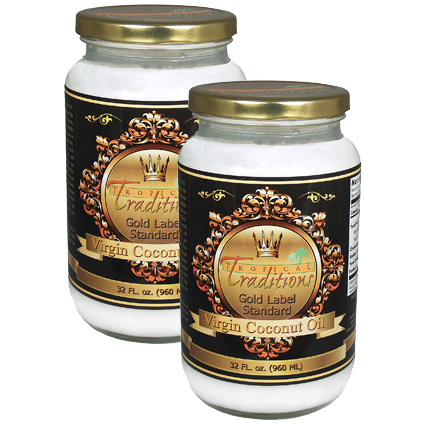
I am a particularly big fan of coconut oil and olive oil for their taste, multi-purpose use in the kitchen and home, as well as their health benefits. They moisturize and nourish the skin, so spilled oil gets wiped up and rubbed on dry legs, elbows, and knees. I use these in cooking as well as in homemade healthcare/hygiene, infusing herbs in oil, and for home care purposes too. Coconut oil is imported, but it stores fairly well. I rotate multiple 5-gallon buckets of coconut oil in my garage/cellar, stored for two years without a problem. My absolute favorite coconut oil is Tropical Tradition’s gold label. I watch for their sales and/or free shipping and then buy it during the cooler months to ensure safety of the product during shipping. Tropical Traditions has wonderful service, and I feel great supporting their business and small, family farm producers!
I also like quality olive oil. Like coconut oil, it is imported, or at least a majority of it is imported in the U.S. Some olive oil is produced in California, Arizona, Texas, and Georgia, but this domestic production meets only a tiny fraction of the demand– 6 metric tons produced of the 335 MT consumed in the United States, according to the USDA query search on olive oil production as compared to consumption in the U.S. for the year 2016. That means these four states only produced 1.8 percent of the olive oil consumed in the United States last year and tells us that even if the current producers of olive oil were able to continue producing it after TEOTWAWKI (and many will not), we’d still have an enormous shortage plus access/distribution issues on top of that. I can’t grow olive trees where I live, so stocking up on and freezing olive oil into TEOTWAWKI is my best option for having it available for as long as possible.
Stocking up on coconut and olive oils may get me through the first two, three, or even four years of conservative use in TEOTWAWKI, but then what do we do? I’ve been looking at other oils that I can produce myself as well as oil alternatives, too.
For baking, I recognize that there are many recipes, such as for cakes, where apple sauce will substitute for vegetable oil quite nicely. I already use it in some recipes with pleasant results. This will work to reduce my demand for oil, but I will still need oil for other purposes, such as to saute vegetables and pan fry corn muffins and pancakes as well as for home use, healthcare and hygiene products, and so forth. I need to be self-sufficient in producing some kind of oil for this. Additionally, a healthier, unsaturated oil is preferred over one that is a saturated fat. I’ve been doing research into this for awhile. It has been an issue that has come up before in our household, but I really put my “problem solving cap on” to address this and am working toward this with great optimism. I think we are close, and I’ll gladly report when we have completed our full process of oil self sufficiency, though it will be a very small scale operation.
We own a Piteba cold-press oil expeller . According to the Piteba website, there are many seeds, beans, and nuts (some of which I am unfamiliar) that can be used to produce consumable oil. The website’s list includes: argane, almond, barbassu-kernel, beechnut, chia seed, cocoa beans, coprah (coconut), groundnut (peanut), hazelnut, hempseed, jatropha, linseed/flaxseed, moringa, niger seed, oil palm kernel, perilla seed, pistachio nuts, pumpkin seed, rapeseed (canola), safflower, sesame seed, soya bean, sunflower, tea tree, and walnut. We have several from this list that we can grow and use to produce oil, but like everything it is important to evaluate and test the process before depending upon it in a serious situation. Next week, we’ll continue looking at the solution for producing our own oils in TEOTWAWKI, and I’ll share my experiences in doing so and plans for continued oil self sufficiency.
I wish you well, until we meet again next week on SurvivalBlog!
- Ad California Legal Rifles & Pistols!WBT makes all popular rifles compliant for your restrictive state. Choose from a wide range of top brands made compliant for your state.
- Ad USA Berkey Water Filters - Start Drinking Purified Water Today!#1 Trusted Gravity Water Purification System! Start Drinking Purified Water now with a Berkey water filtration system. Find systems, replacement filters, parts and more here.

Letter Re: Surviving Custer
HJL,
Almost all vehicles have a purely mechanical lock in the door for when the battery is dead or similar failure, and these are the simple flat keys which you can just keep with you in your wallet or keychain or hidden somewhere instead of the fat remotes and can be duplicated most places that do other keys. If you get a spare security key, you can keep it in the (locked) glove compartment or some other secure place; you’ll need the anti-theft feature of the fat key to start the car. There is also the common scenario where you lock your key in your car. – T.Z.
- Ad USA Berkey Water Filters - Start Drinking Purified Water Today!#1 Trusted Gravity Water Purification System! Start Drinking Purified Water now with a Berkey water filtration system. Find systems, replacement filters, parts and more here.
- Ad Ready Made Resources, Trijicon Hunter Mk2$2000 off MSRP, Brand New in the case

Economics and Investing:
Why This Market Needs To Crash – And likely will. – G.G.
HJL’s Comment: As the article points out, since 2009 over $12 trillion of new money has been injected into the world creating a massive price bubble everywhere. When it finally pops, it will be impossible to hide data, and the financial markets will implode. Eventually the bankruptcy will happen.
o o o
Interview: Bix, Bitcoin, and the Bigger Picture. William Lehr had Bix on his show for an analysis of the bitcoin fork as it applies to the bigger picture of the impending banking collapse and the need for efficient transactions.
o o o
Pension Crisis Too Big for Markets to Ignore – DSV
HJL’s Comment: Bringing this home – We have all heard that the pension crises will cause a financial crises for businesses, but what happens to the families that depended on the income that just won’t be there?
o o o
Federal Premium Ammunition Lays Off 110 Workers at Anoka Federal Premium Plant, Cancels State Funding Incentives. It’s sad, but people have stopped buying and companies are laying off and who knows what’s left. It seems that since the election, many have bought much less and thus may cause businesses to close. They won’t need to write laws to control firearms, as the companies will all be gone. Be careful what you wish for. Business boomed before the election. Now look at what’s going on. ?- DSV
o o o
Venezuela asks UN for help as medicine shortages grow severe – Link sent in by Prepared Grammy
o o o
SurvivalBlog and its editors are not paid investment counselors or advisers. Please see our Provisos page for details.
- Ad Civil Defense ManualClick Here --> The Civil Defense Manual... The A to Z of survival. Looks what's in it... https://civildefensemanual.com/whats-in-the-civil-defense-manual/
- Ad Survival RealtyFind your secure and sustainable home. The leading marketplace for rural, remote, and off-grid properties worldwide. Affordable ads. No commissions are charged!
Odds ‘n Sods:
Reader T.P. sent in this snitch linkwith this comment from the official NYC web site: “You can make a complaint about businesses that sell toy or fake guns that are not brightly colored. It is illegal to sell or offer a toy or fake gun that looks like an actual gun, unless the toy is brightly colored. Fake guns that are black, silver, or camouflage-colored are prohibited.” Another reason to flee the insanity!
o o o
They Can See a ‘Stick of Butter from Space’ — The Billion Dollar Spy Agency You’ve Never Heard Of. The National Geospatial-Intelligence Agency (NGA) is to pictures what the NSA is to voices, and they are used domestically as well as internationally.
o o o
If ever there was a reason to raid an organization: Immigrants Find Sanctuary In Growing Austin Church Network (The First Unitarian Universalist Church of Austin) – W.W.
o o o
The America You Don’t Know. “There is a subterranean river of anger, rage and violence that flows just under the daily currents of American public life. It flows, unseen, much like the great rivers that live within our oceans and which control so much of the earth’s weather and climate.” – B.B.
o o o
Alone in the Wild for a Year, TV Contestants Learn Their Show Was Canceled. “The remaining contestants on a reality television series have emerged after surviving 12 months in the Scottish wilderness — fending off hunger, infighting and fatigue — only to learn that the show stopped broadcasting after four episodes, the last of them in August.” – H.L.
- Ad Click Here --> Civil Defense ManualNOW BACK IN STOCK How to protect, you, your family, friends and neighborhood in coming times of civil unrest… and much more!
- Ad STRATEGIC RELOCATION REALTYFOR SALE: Self-sustaining Rural Property situated meticulously in serene locales distant from densely populated sanctuary cities. Remember…HISTORY Favors the PREPARED!
Hugh’s Quote of the Day:
“But this I say, He which soweth sparingly shall reap also sparingly; and he which soweth bountifully shall reap also bountifully. Every man according as he purposeth in his heart, so let him give; not grudgingly, or of necessity: for God loveth a cheerful giver.” 2 Corinthians 9:6-7 (KJV)
- Ad Don't wait - get the ultimate US-made ultra-high performance US-made SIEGE Stoves and stunning hand-crafted SIEGE belts for Christmas. For stocking-stuffers see our amazing fire-starters. Gifts that can save lives. Big Sale!Every bespoke SIEGE buckle goes through an hours-long artisanal process resulting in a belt unlike anything else, with blazing fast performance and looks and comfort to match.
- Add Your Link Here
Notes for Saturday – March 25, 2017
March 25th National Medal of Honor day is officially observed on March 25th of each year.
On March 25, 1944, RAF Flight Sergeant Nicholas Alkemade survived a jump from a Lancaster bomber from 18,000 feet over Germany without a parachute. His fall was broken by pine trees and soft snow, and he suffered only a sprained leg.
This is the birthday of English film director David Lean, (of Doctor Zhivago fame), born in Croydon, England in 1908.
o o o
Today, we present another entry for Round 69 of the SurvivalBlog non-fiction writing contest. The nearly $15,000 worth of prizes for this round include:
First Prize:
- A $3000 gift certificate towards a Sol-Ark Solar Generator from Veteran owned Portable Solar LLC. The only EMP Hardened Solar Generator System available to the public.
- A Gunsite Academy Three Day Course Certificate that is good for any one, two, or three day course (a $1,195 value),
- A course certificate from onPoint Tactical for the prize winner’s choice of three-day civilian courses, excluding those restricted for military or government teams. Three day onPoint courses normally cost $795,
- DRD Tactical is providing a 5.56 NATO QD Billet upper with a hammer forged, chrome-lined barrel and a hard case to go with your own AR lower. It will allow any standard AR-type rifle to have a quick change barrel, which can be assembled in less than one minute without the use of any tools and a compact carry capability in a hard case or 3-day pack (an $1,100 value),
- An infrared sensor/imaging camouflage shelter from Snakebite Tactical in Eureka, Montana (A $350+ value),
- Gun Mag Warehouse is providing 20 Magpul PMAG 30-rd Magazines (a value of $300) and a Gun Mag Warehouse T-Shirt; (an equivalent prize will be awarded for residents in states with magazine restrictions),
- Two cases of Mountain House freeze-dried assorted entrees in #10 cans, courtesy of Ready Made Resources (a $350 value),
- A $250 gift certificate good for any product from Sunflower Ammo,
- Two cases of Meals, Ready to Eat (MREs), courtesy of CampingSurvival.com (a $180 value).
Second Prize:
- A Tactical Self-Contained 2-Series Solar Power Generator system from Always Empowered. This compact starter power system is packaged in a wheeled O.D. green EMP-shielded Pelican hard case (a $2,400 value),
- A Glock form factor SIRT laser training pistol and a SIRT AR-15/M4 Laser Training Bolt, courtesy of Next Level Training, which have a combined retail value of $589,
- A gift certificate for any two or three-day class from Max Velocity Tactical (a $600 value),
- A transferable certificate for a two-day Ultimate Bug Out Course from Florida Firearms Training (a $400 value),
- A Trekker IV™ Four-Person Emergency Kit from Emergency Essentials (a $250 value),
- A $200 gift certificate good towards any books published by PrepperPress.com,
- A pre-selected assortment of military surplus gear from CJL Enterprize (a $300 value),
- A selection of canned meats containing a 10 pack of 28oz cans of Premium Beef and a 5 pack of 28oz cans of Premium Pork from Wertz’s Farm Market (a $300 value),
- RepackBox is providing a $300 gift certificate to their site, and
- American Gunsmithing Institute (AGI) is providing a $300 certificate good towards any of their DVD training courses.
Third Prize:
- A Model 175 Series Solar Generator provided by Quantum Harvest LLC (a $439 value),
- A Royal Berkey water filter, courtesy of Directive 21 (a $275 value),
- A custom made Sage Grouse model utility/field knife from custom knife-maker Jon Kelly Designs, of Eureka, Montana,
- A large handmade clothes drying rack, a washboard, and a Homesteading for Beginners DVD, all courtesy of The Homestead Store, with a combined value of $206,
- Expanded sets of both washable feminine pads and liners, donated by Naturally Cozy (a $185 retail value),
- Two Super Survival Pack seed collections, a $150 value, courtesy of Seed for Security, LLC,
- Mayflower Trading is donating a $200 gift certificate for homesteading appliances,
- Montie Gear is donating a Y-Shot Slingshot and a $125 Montie gear Gift certificate.,
- Two 1,000-foot spools of full mil-spec U.S.-made 750 paracord (in-stock colors only) from www.TOUGHGRID.com (a $240 value), and
- Fifteen LifeStraws from SafeCastle (a $300 value).
- A $250 gift certificate to Tober’s Traditions, makers of all natural (organic if possible) personal care products, such as soap, tooth powder, deodorant, sunscreen, lotion, and more.
Round 69 ends on March 31st, so get busy writing and e-mail us your entry. Remember that there is a 1,500-word minimum, and that articles on practical “how to” skills for survival have an advantage in the judging.
The Accidental Survivalist, by Athena
Allow me to first apologize for all of my ignorant assumptions about a survivalist lifestyle. I grew up in a life of prudence and subsistence, and I swore I’d never put myself in a position to have to homestead or subsist again.
During the hot summer at the canning tables and fish smoking racks, I swore I’d grow up to live in cities with abundant grocery outlets, fancy cafes, and pastry shops on every corner near my cute little apartment. Never again would my life rotate around a harvest schedule or my weekends spent in hunting tents. But life is funny and makes other plans, often without warning.
For twenty years I enjoyed city life, travel, and the modern conveniences of out-of-season foods with ridiculous transportation costs. Then a string of failed jobs and relationships made me re-think the direction I was moving. I took a job on the wild Oregon coastline and tried to remember what my own voice sounded like. Where had all the windswept tree music and tidal tones been for the last twenty years?
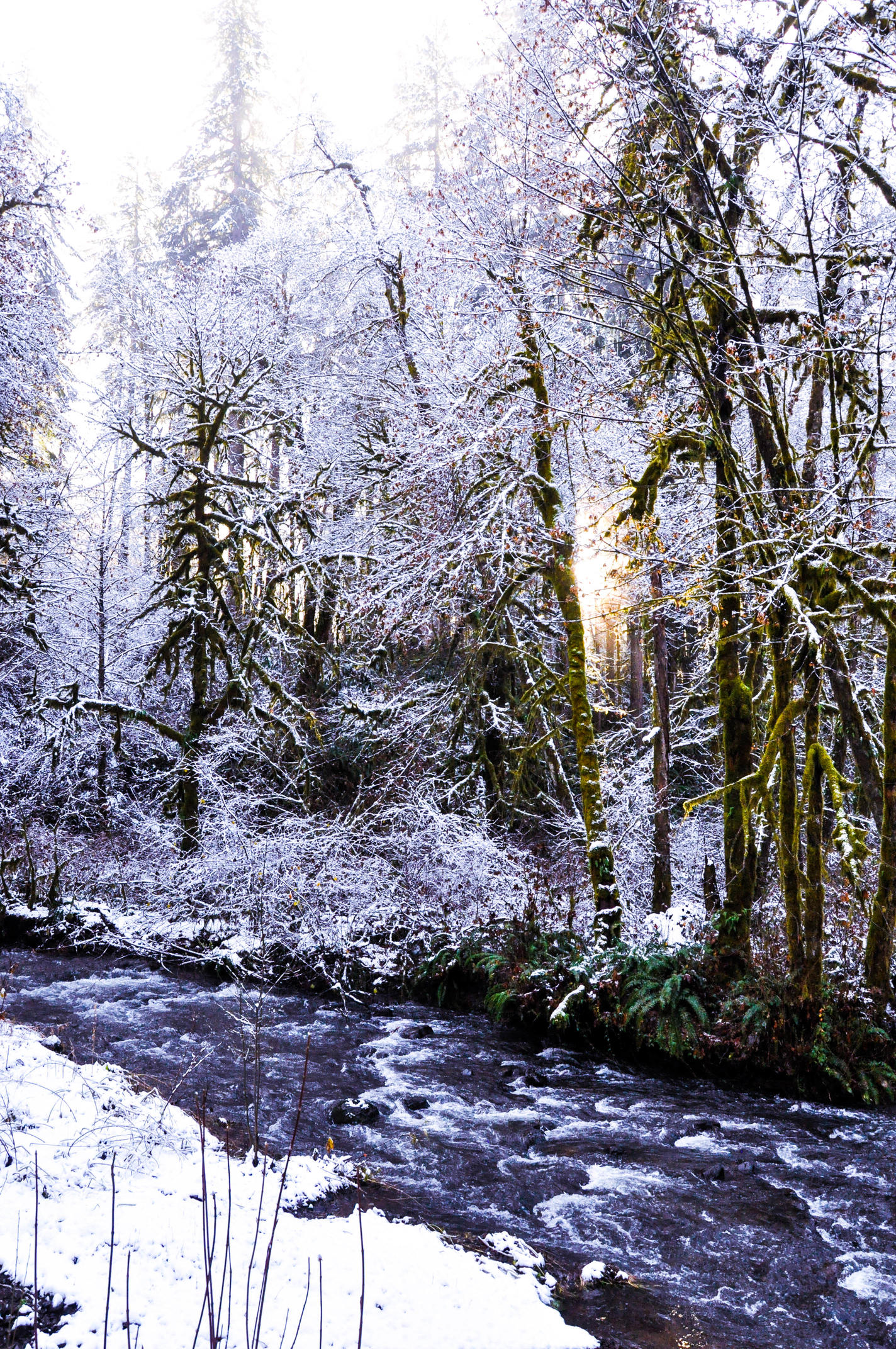
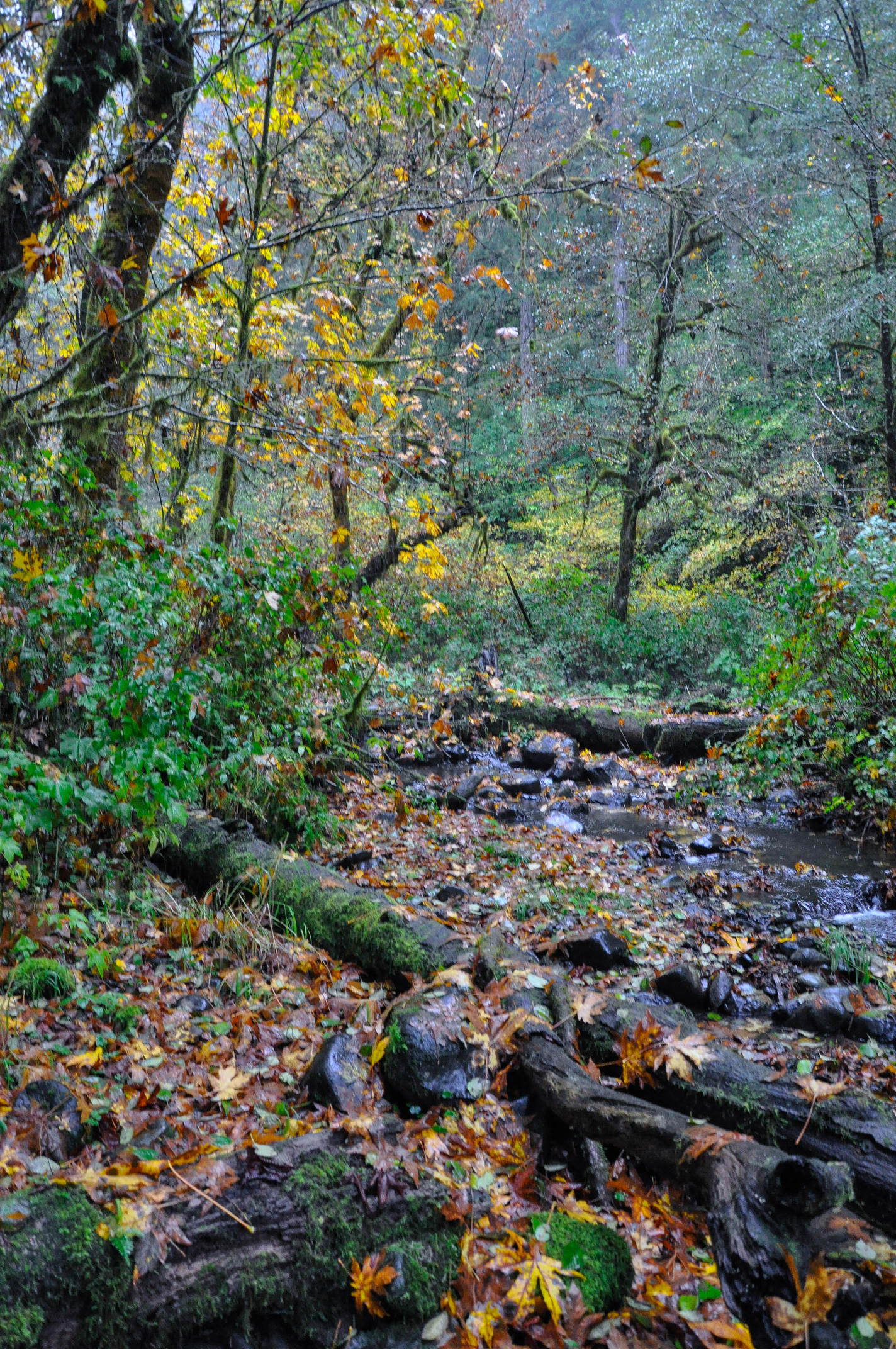
Then, by luck or accident, I stumbled across a piece of land in the Siuslaw National Forest. It was love at first sight, deep and powerful and full of a remembered magic from a childhood I’d tried to escape. I bought a cottage on a creek in the middle of nowhere. There is no cell service and patchy utilities with barely passable roads. There is no internet access or even cable TV. No, that means no satellite access either, due to the density of the forest. I was cut off from the city, my social life, and all commonly accessible conveniences. My agent tried to talk me out of it. My friends warned against it. Locals shook their heads and offered unsolicited advice on firearms I should purchase and opinion on the insanity of a single woman moving to the middle of the wilderness. Still, I was in love with the land, and it seemed like a good idea at the time.
The purchase process was long and convoluted. Getting resources out to the location was a much bigger challenge than expected. Service providers and contractors consistently turned me down for the difficulty of reaching the area.
Within the first month, I needed emergency roof repair from storm damage. The water heater blew and flooded the back room. The water pump went out, followed by the furnace in the worst part of the beginning winter chill, and I didn’t have a wood stove for backup. Then the road suffered several landslides, ice sheeting, and finally a couple of old growth trees across the powerline.
I suddenly, quiet by accident, realized-my childhood of subsistence and homesteading would not only save my life but provide a foundation for rebuilding my future in a more sustainable and positive way. But how would I make that happen?
After a bottle of whiskey and yet another emergency relocation of a rather large forest rodent that I couldn’t identify, plus another warning from the locals about a wildcat in the area, I decided it was time to make a plan. Repair bills were adding up and the list of improvements were chaotic and difficult to prioritize. I was over my head.
On New Year’s Day, 2017, I sat down with my bills, a list of improvements, and a long-term planning spreadsheet. I made notes on the things I thought I could remember how to do by myself and what things I knew I’d need help with. Then, I built out a goal to have my property become entirely self-sustaining by my 40th birthday. How could I earn extra income to help pay for expenses, while lowering my cost of living? How could I be off the unreliable power grid and still be safe and warm through the winter?
Self-sustainability was always a long-term goal of mine, but I’d imagined it as independent wealth and world travel while pursuing my writing dreams. Okay, I needed to make a quick change of plans. Now self-sustainability will be a homesteading capability with producer options, while pursuing my writing dreams. It’s the same end goal but a different pathway to success. I put my project management skills to work and mapped out the order of events needed to turn a one and a quarter acre lot in the woods into a small homesteading paradise.

By my 40th birthday, I hope to be producing for myself, and for friends and family: Eggs, poultry, honey, trout, canned foods, seasonal mushrooms, and wine. I expect to have a guest tiny home and an artists loft on the lot for visitors and guest artists. I hope to be running on hydroelectric power from the creek and be heated only by wood throughout the winter.
It’s with this plan that I intend to be able to focus on my writing and publishing house, and I’ll be supporting myself financially through those means while my property supports my physical needs.
It’s a long way from the Paris cafes of my imaginings, but my love affair with the land and the desire to focus on my passion has re-configured my ideas about survivalist lifestyles. Being thirty miles from resources means, if I’m going to really make this work I need to prepare better. Preparation and prudence can offer me a chance to focus on my real work and afford me the chance to live in a small paradise to boot.
I realized that my childhood of subsistence and land work made me believe the survivalist lifestyle was misunderstood; because we were poor, I assumed survivalist living was about poverty. Because my father was anti-large government, I believed homesteading was about paranoia. Because my mother was anti-relationship, I thought self-sufficiency was about non-community and an introverted mentality. Hence, the apology at the beginning of this story. I was wrong on so many levels. I’m truly sorry for the assumptions of my childhood.
Basically, I’d drawn the wrong conclusion about being independent. It means a lot of different things to a lot of different people. It is whatever you need it to be, and because of the versatility it appeals to all types for a multitude of reasons. Essentially, preparation and prudence is the gateway to a kind of independence that’s entirely new to me.
That being said, there’ve been no shortage of voices trying to convince me to return to the city and give up this life of forest and self making. They’re reminding me nearly daily that the coastal range forest is no place for a single woman. Yet it’s the promise of self making that draws me onward, shushing the arguments and asking instead for solutions to the challenges that don’t involve throwing in the towel.
I broke the process down to reflect the time needed for longer duration needs, such as applying for water permits in the state of Oregon for the hydroelectric turbine, and things like the garden, which will take time to establish. Short term and seasonal tasks can be woven into the timeline based on available funding and level of urgency.

For sure, I’m still figuring out how to be efficient. I’m still figuring out the weather patterns and road conditions, which are currently the most difficult piece of the puzzle. I’m still improvising the basic necessities when the power is out and the phone lines are down, which is fairly regular. I’m still figuring out how to navigate politely around the conversations of people intent on telling me I’m making a huge mistake or have no business being so far out of town. It’s a more frequent unsolicited topic than it should be, but it reaffirms my desire to be successful in the adventure.
Ultimately, the moment I saw the land, the creek, and the forest, I knew I was meant to live here. I was smitten. I didn’t mean to be a survivalist; I hadn’t planned on setting up a homesteading plan. It caught me by complete surprise. Hours on the Internet at the library and loads of books are helping me remember the basics. I’m certain that my childhood prepared me for the things I’ve needed to quickly acclimate to, and I’m grateful for the early teachings. I owe my parents a huge thanks, while I chow a lot of humble pie.
The more I build out the plan, the more I realize the gaps in my education, skills, and resources, and it’s forcing me to be more inventive, creative, and resilient. The adventure isn’t without irony or humor. The first time I chased the thieving raccoon through the woods in my skivvies to retrieve the vent cap, or danced across the kitchen to escape a lizard that had made his way up through the plumbing access, or the moment I found myself buying a chainsaw from a stranger in the parking lot of the furniture store, I realized I’m a long way from my old sense of normal. Normal needs a new relative.
When I walked into the hardware store and a helpful associate asked what he could grab for me, I said, “I need a gallon of rat poison, a tarp, and an axe.” He froze and looked momentarily worried. I realized, I may have been in the woods alone too long and added with a laugh, “Oh, don’t worry, I’m not a weirdo. I’m a writer.” He didn’t make eye contact for the rest of my visit. Perhaps I need to re-evaluate my approach.
This entire accidental survivalist enterprise is forcing me to rethink my early formative years in a new and appreciative light. It’s redefining my memory of my parents and what they gave me in preparation that I never thought to thank them for. This adventure is pushing my comfort zones wider and harder than any test I’ve ever set myself to, and I can’t help but admit I really enjoy the challenge.

Letter: Border Update
Our family lives near the Texas border and must pass border patrol check points periodically when traveling the state. This gives us a front row seat to see what is happening along the southern border.
We have noticed recent border patrol changes and wanted to give your readers an update.
In the past few years, we have been through many different border patrol check points. For those not familiar with border patrol checkpoints, there are U.S. border stations immediately upon entering from Mexico. There are also border patrol stations located along the Texas border as you drive nearby the border.
When we visit the popular tourist destination of South Padre Island, our family in west Texas, or travel along the highway near our home, we are routinely subject to questioning at each check point. Multiple cameras take pictures of your vehicle and everyone inside, while dogs sniff for drugs during questioning by border agents.
While going through a border patrol station last weekend we noticed an attitude change of the Border Patrol agents that was worth mentioning. In the past several years, as you entered the single file car line to be stopped and checked for questioning, the border agent would ask “Are you all U.S. citizens?” If you answered “yes”, they waved your car through.
Then as the prior administration began their catch and release of illegal aliens, the mood at the border patrols went south (no pun intended). With little Federal support, the agents then began asking “Are you all Texans?” and again if the answer was “yes”, they waved you through.
Finally, during the last few years when it was your turn at the front of the line, if they saw you were a blond, blue-eyed Texan they just waived you through without so much as a question. All that has changed.
Last weekend, our border patrol check was unusual, simply due to the sheer number of agents at the border station, typically just a handful. On my left there were at least six to eight agents alongside the station talking near a patrol car. The few agents not working the cars were walking briskly from one area to another. To our right the enclosed office had an agent standing up drinking coffee, eyes on the cars. When we arrived at the front of the line, I said with a smile “So I hear you have a new boss”, to which the agent smiled brightly and said “why yes we do”.
My husband asked when they get their new “toys” and when the new 5,000 agents would be on the job. He said excitedly that he didn’t know when but hoped it would be soon. The excitement in his voice and enthusiasm about their new leader wasn’t all that had changed. They were really doing their job, not just a cursory question of status.
The car in front of me had its trunk open with an agent searching the contents; another agent was asking real questions and another agent walked around the car with the drug sniffing dog. This took a few minutes, whereas typically it was less than 10 seconds. The agents were really energized and taking their jobs seriously again. The station patrol agent asked if he could open the back of my SUV and check the contents. A second agent walked the dog sniffing us for drugs, and we were asked if we were U.S. citizens.
Clearly, the new President supporting the border patrol is having a positive effect on the agency and its agents. With a new pro-agency boss, more funds and additional hiring have made a once demoralized agency suddenly get back in the game.
Border patrol stations are our first line of defense against violent drug cartels and others who intend to harm U.S. citizens. Please give them the respect they deserve. God Bless America! – Sophia in TX
Economics and Investing:
Steve Saville: ‘Real’ Performance Comparison
JWR’s Comment: As you can see from the chart, in the long term both the Dow Jones Index (which as an Exchange Traded Fund can be bought, as “DIA”) and gold had about the same return. Gold is a safer bet than any stock, since a stock can go to zero (like my mother’s shares of Pan-Am Airlines did), but gold will always have some value. Presently, silver and platinum are undervalued and are “buys”.
o o o
Russian Roulette, Central Banks, and Gold “Grab your ultra-reliable 357 magnum revolver and load the cylinder with six, not one, rounds of ammunition. Point the gun at your head if you are a member of the struggling middle-class. Imagine pulling the trigger and hoping …”
o o o
HAGMANN REPORT: Precious Metals To Protect Wealth During The Global Energy Collapse
o o o
Video: Financial guru Tony Robbins says plan now for what’s to come. Things may be looking rosy on Wall Street as of late, but the crash will come. – G.G.
o o o
OPEC Be Warned: Russia Battens Down the Hatches for Oil at $40. If oil heads down to $40 USD and remains there, then there will be further challenges for Alberta, Norway, Saudia Arabia, Venezuela, and more.
o o o
SurvivalBlog and its editors are not paid investment counselors or advisers. Please see our Provisos page for details.
Odds ‘n Sods:
I just noticed that SurvivalBlog’s Editor At Large Michael Z. Williamson has greatly expanded his line of custom knives. Take a look! – JWR
o o o
Video: A Texting Guy Almost Runs Into A Wild Bear – W.A.
JWR’s Comment: If news stations in Alaska sent out a helicopter for every sighting of a bear near a house, then the news broadcasts would seem very repetitive and they’d burn up a lot of fuel. This video serves as a reminder to maintain situational awareness.
o o o
Whatever Happened To .32 Caliber? The great thing about the new. 327 magnum is the Ruger that is currently made for the round can fire H and R magnum, S and W Long, and S and W short. S and W did make the model 632 but only for a short time. I did just find out about it because I thought it would be nice to have since I already have an old S and W model 30-1. But S and W no longer is making it! The new Federal magnum sounds like a good round, and the best part is the weapons that fire it can fire all the other [shorter cartridges]s. – DSV
o o o
Kansas cattle ranchers struggle to recover from devastating prairie fires. Is fire mitigation in your plans and preps? – T.J.
o o o
Sarrah Le Marquand: It should be illegal to be a stay-at-home mum – Really? Do these people have any idea why society is falling apart at the seams? Or is that their plan? – P.M.
Hugh’s Quote of the Day:
“Thus did Moses: according to all that the Lord commanded him, so did he.” Exodus 40:16 (KJV)
Notes for Friday – March 24, 2017
March 24th is the birthday of Dr. Art Robinson, who was born in 1942. Robinson is an American biochemist, conservative activist and politician and currently runs a laboratory known as the Oregon Institute of Science and Medicine along with publishing the Robinson Self-Teaching Home School Curriculum.
o o o
Today, we present another entry for Round 69 of the SurvivalBlog non-fiction writing contest. The nearly $15,000 worth of prizes for this round include:
First Prize:
- A $3000 gift certificate towards a Sol-Ark Solar Generator from Veteran owned Portable Solar LLC. The only EMP Hardened Solar Generator System available to the public.
- A Gunsite Academy Three Day Course Certificate that is good for any one, two, or three day course (a $1,195 value),
- A course certificate from onPoint Tactical for the prize winner’s choice of three-day civilian courses, excluding those restricted for military or government teams. Three day onPoint courses normally cost $795,
- DRD Tactical is providing a 5.56 NATO QD Billet upper with a hammer forged, chrome-lined barrel and a hard case to go with your own AR lower. It will allow any standard AR-type rifle to have a quick change barrel, which can be assembled in less than one minute without the use of any tools and a compact carry capability in a hard case or 3-day pack (an $1,100 value),
- An infrared sensor/imaging camouflage shelter from Snakebite Tactical in Eureka, Montana (A $350+ value),
- Gun Mag Warehouse is providing 20 Magpul PMAG 30-rd Magazines (a value of $300) and a Gun Mag Warehouse T-Shirt; (an equivalent prize will be awarded for residents in states with magazine restrictions),
- Two cases of Mountain House freeze-dried assorted entrees in #10 cans, courtesy of Ready Made Resources (a $350 value),
- A $250 gift certificate good for any product from Sunflower Ammo,
- Two cases of Meals, Ready to Eat (MREs), courtesy of CampingSurvival.com (a $180 value).
Second Prize:
- A Tactical Self-Contained 2-Series Solar Power Generator system from Always Empowered. This compact starter power system is packaged in a wheeled O.D. green EMP-shielded Pelican hard case (a $2,400 value),
- A Glock form factor SIRT laser training pistol and a SIRT AR-15/M4 Laser Training Bolt, courtesy of Next Level Training, which have a combined retail value of $589,
- A gift certificate for any two or three-day class from Max Velocity Tactical (a $600 value),
- A transferable certificate for a two-day Ultimate Bug Out Course from Florida Firearms Training (a $400 value),
- A Trekker IV™ Four-Person Emergency Kit from Emergency Essentials (a $250 value),
- A $200 gift certificate good towards any books published by PrepperPress.com,
- A pre-selected assortment of military surplus gear from CJL Enterprize (a $300 value),
- A selection of canned meats containing a 10 pack of 28oz cans of Premium Beef and a 5 pack of 28oz cans of Premium Pork from Wertz’s Farm Market (a $300 value),
- RepackBox is providing a $300 gift certificate to their site, and
- American Gunsmithing Institute (AGI) is providing a $300 certificate good towards any of their DVD training courses.
Third Prize:
- A Model 175 Series Solar Generator provided by Quantum Harvest LLC (a $439 value),
- A Royal Berkey water filter, courtesy of Directive 21 (a $275 value),
- A custom made Sage Grouse model utility/field knife from custom knife-maker Jon Kelly Designs, of Eureka, Montana,
- A large handmade clothes drying rack, a washboard, and a Homesteading for Beginners DVD, all courtesy of The Homestead Store, with a combined value of $206,
- Expanded sets of both washable feminine pads and liners, donated by Naturally Cozy (a $185 retail value),
- Two Super Survival Pack seed collections, a $150 value, courtesy of Seed for Security, LLC,
- Mayflower Trading is donating a $200 gift certificate for homesteading appliances,
- Montie Gear is donating a Y-Shot Slingshot and a $125 Montie gear Gift certificate.,
- Two 1,000-foot spools of full mil-spec U.S.-made 750 paracord (in-stock colors only) from www.TOUGHGRID.com (a $240 value), and
- Fifteen LifeStraws from SafeCastle (a $300 value).
- A $250 gift certificate to Tober’s Traditions, makers of all natural (organic if possible) personal care products, such as soap, tooth powder, deodorant, sunscreen, lotion, and more.
Round 69 ends on March 31st, so get busy writing and e-mail us your entry. Remember that there is a 1,500-word minimum, and that articles on practical “how to” skills for survival have an advantage in the judging.
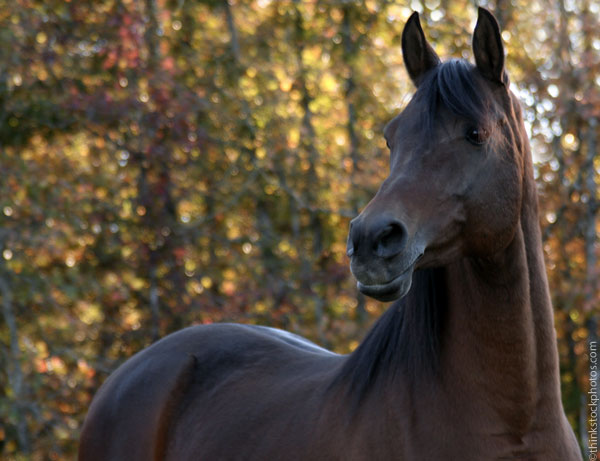
Equestrian Survival For Bugging Out, Recon, Rescue, Projection of Force, or Hunting- Part 4, by R.M.
You can buy a lance head and boot at Cotswoldsport to make your lance. Bamboo is a good staff to use, but other woods work. Your ability to control the lance can be influenced; it’s the weight.
I don’t really know western gear. I was trained in the European tradition– German, Austrian, and English styles. So I use that kind of gear. Saddle, cinch, stirrups, bridle with snaffle and bit (eggbut/something soft on the mouth). Know your horse’s teeth. If they need to be floated, do it. All western bits look too hard on the mouth to me. You might know better. If you are controlling your horse (hard mouthed horse) mostly by the mouth, you might not have a horse you can count on in stressful situations. If that’s all you’ve got, make do.
I bring a rasp and prefer a horse who doesn’t need shoes. You can shape his hooves if anything happens to prevent cracks.
I use a small collapsible brass hoof pick, which works quite well and fits in a normal shirt pocket or small pocket on your rig. Pick out the hooves at the start and end of the day as well as any time you think something might have gotten caught up in there. Anything you can do to prevent lameness is worth it.
I bring a curry comb and brush. If gear becomes a problem, you can bring just the brush. Comb and brush the horse at the beginning of the day, and do it again at the end of the day’s labors after removing the saddle.
Hobbles go on now and are an important item to pack. For most horses a halter and lead is a good idea. If you have to hide, you might want to have this to tie the horse away from any action. Some people put these over the regular leather bridle with the lead coiled and tied to the saddle while riding, if there is not enough room to store them elsewhere. This can have a negative effect on your horse’s performance and response to signals.
As you probably know, the halter does not go in the mouth, so it’s used to tie the horse at night. If I am fairly confident of seclusion, I won’t use a halter, just hobbles. In capture the flag exercises, it was better to have a halter, but I must admit I hate bringing a halter and lead on long rides. Having a pack horse eases the issue, but water can be a problem. If you think your horse will be found out, let him graze while you rest out of sight. If you have enough people for a watch, you should be good. If you have a good dog, you should be good. Another issue is what kind of socializer your horse is. If they try to say “hello” to other horses within earshot, they might not be the best choice. I had to train Cloud not to do that. It was slow going and required a lot of patience, but he stopped. The worst thing is to be in the deep forest when your horse decides to say “hidey ho” to a passing horse you can neither see nor hear. Cloud would do that, and this is a good way to get caught.
Fritz has a back pack for his gear; however, I prefer not to use that. You can get a collapsible fabric food/water bowl for your dog. There’s a lot of fancy MOLLE rigs out there for dogs.
You can get a three-day pack for your back, if you don’t have saddle bags or in addition to saddlebags. Compensate for that weight when signaling the horse.
For saddle bags, cavalry style are my choice. You can make them and stitch them together with raw hide strips, or buy some really nice ones. But…yet another but, you have to see how your horse relates to weight on his back. The bags go on behind the saddle, and a water bag might have to go on top of that. If your horse doesn’t like unexpected weight on their back, start slow; hopefully, they will get used to it. Add empty bags at first, then slow degrees of weight introduction. A fit horse should not have a problem with this. They have to know it’s okay.
The same is true for weapons. When you shoot a bow, you have to get the horse used to the bow. Put some of its slobber on the bow. Take a few shots while dismounted. Show them the slobbered bow after each shot. Let them smell it. Pet them. Tell them all is okay. Then mount up with someone on the ground holding the horse, reins on the saddle. Take a shot. The horse is encouraged and rewarded. Progress in kind. Apply this with all weapons and gear if there is a weird response to them.
For example, when running a course of heads on poles for sword practice, a green horse in this practice needs its slobber on each pole. Walk him through it. All is good. There is nothing abnormal, and he will realize a good time as you weave at a full gallop between poles practicing your clean cuts or knocking down heads. Tent pegging is a good way to practice with the lance. Spear throwing or lancing animal targets where the lance is left in the animal all may require the horse’s scent on the weapon, so the horse gets used to it. My experience is, horses are smart. Once they know there is nothing to fear, they deem a thing normal, just an extension of the fun of riding.
The M1913 Patton Sword is good for horse. It can be used as a lance as well. Forward cut back cut at the charge was the common use, but it performs well as a sabre too. There was a company making new ones for $200, and several on sale on Ebay.
For archery gear, use two quivers mounted on a belt around the waist, one on each side with a bow case attached to the saddle. The bow remains strung all the time you are out. Remember an extra bow string and wax, stored in the bottom of your quivers.
A bar of saddle soap* is a good thing to have, depending upon weather conditions. If it’s dusty or wet, you definitely want to soap your leather. Bridles get saddle soap at the end of every day. If sweat goes through saddle pads, the saddle has to soaped. In war-like situations, the bridle always gets cleaned; the saddle can wait, as long as any mud is cleaned off. I prefer cleaning all tack at the end of every day.
Don’t let your horse eat with a bit in his mouth. If you don’t clean it fast, it’s hard to clean. If you put it in his mouth the next day dirty, it may irritate the horse’s mouth, which is a sure way to force yourself into uncomfortable situations.
Your personal gear is a matter of choice. What you might need in addition to these things is based upon your horse’s individual needs. Most people will opt for one long gun and one hand gun. You inevitably have to assess the situation, your comfort levels, your estimate of your horse’s abilities and stamina. You will have to determine how much ammunition you will need, based upon what demands could most likely be placed upon you. How many mags you need and quantity of rounds for potential use of the different arms you bring will again vary.
If you are riding with others, techniques of covered withdrawal, of organized lanes of fire, overwatch teams, techniques of spontaneous ambush, and other 4GW methods are advised, and skills and expectations of your point (should have dog) person, should be understood and incorporated into normal routine for your group. A firm set of signals with people is as important as signals between you and your horse. Simplicity is best in most circumstances. Don’t confuse the help. Also realize that it is better to get off the horse to shoot. Try to plan accordingly. Practice shooting on horseback, because you might not be able to dismount.
Hope I haven’t taken too long. I could probably add more, but I tried not to over do it. The picture I’ve tried to paint is that there’s many wonderful things to do on your horse. They are smart companions and an important part of the war band. If nothing else, lots of skills can be learned through them. Be careful. All the practices I have described can be dangerous for the inexperienced. Be constructively critical of your abilities and performance.
Though we may be passing through apocalyptic times, we should rejoice at the coming of the Messiah and the final Judgment. We must pass through the tribulation in order to embrace the resurrection and the light. There is an inexhaustible number of possibilities, and we must all do our part in preserving and enjoying God’s creation.
SurvivalBlog Resources: Liquid Fuels Storage and Transfer
Introductory Note: The following is the first of a series of articles by JWR that will profile some of the thousands of archived SurvivalBlog articles, grouped topically.
Storing and transferring liquid fuels is topic that often comes up in conversations with my consulting clients and in letters from SurvivalBlog readers. There seems to be a lack of knowledge or misinformed voodoo out there in the general public about liquid fuel shelf life, flammability, containers, and how to transfer fuel when the power grids are down. But those questions have all been “asked and answered” in SurvivalBlog, over the course of the past 11 years.
To begin, it is important to understand that the general rule about distilled oil products is: With the exception of LPG, the more highly refined the fraction, the shorter its shelf life.
Let me back up for a moment, and describe how refining works: In its rudiments, at a refinery crude oil gets heated to around 700 degrees Fahrenheit and it transitions to a gas. These heated gasses are ported into the bottom of a distillation column (commonly called a crude tower) and as they move up the height of the column, they cool and at certain levels they can be shunted off into fractions. As the gasses cool—that is, below their boiling points–they condense into liquids. The liquid feedstocks are then shunted off the distillation column at measured port heights. The fractional heights range from heavy “resids” (like asphalt, coke, and tar) at the very bottom, to raw diesel fuel/heating oils fuels in the middle sections, and raw gasoline at the top of the tower. The raw fractions are then processed further to create variously-named fuel products.
Only about 35% of each barrel of oil will naturally becomes gasoline, which is the highest demand product. However, based on the normal volume of sales, to meet the demand for gasoline, in the end about 50% of each barrel needs to become gasoline. To accomplish this, other fractions get re-worked (“converted”) into gasoline. This conversion is done by several methods including reforming, catalytic cracking, and isomerization—which are three different ways to break big molecules into small molecules—with the desired effect in most cases being creating gasoline. The more sophisticated refineries can also do secondary processes like coking, hydrotreating, and hydrocracking.
But to get back to the general rule: Bulk heavy lubricants that don’t have detergents added can be stored almost indefinitely. Moving up the fractions scale, home heating oil and diesel fuel can be stored for 10+ years IF you add an antibacterial growth agent, such as PRI-D. (Yes, there are microbes that can digest diesel fuel!) Farther up the scale you get gasoline which can be stored for only a couple of years before it starts to break down and then tars, gums, and esters become present, eventually making the gasoline unusable. But gasoline additives such as Sta-Bil and PRI-G can greatly extend the storage life, to as much as six or seven years, but only if proper containers are chosen to avoid water contamination. (Typically water contamination happens because of condensation in a container that is not kept 100% full. The more air volume above the gasoline, the greater the risk of condensation.) Contact with oxygen also contributes to the chemical breakdown of the fuel. This is one reason why steel containers are preferable over plastic ones, since plastics are gradually permeable to oxygen. Big temperature swings are also a problem, since that of course contributes to condensation.
Delving into the SurvivalBlog Archives, you will find many articles like these:
- Letter from “The Army Aviator” Re: Dual Fuel Carburetors for Generators
- Natural Gas in Your Backyard
- Running Engines on Drip
- Letter Re: Ethanol and Aviation Fuels
- Letter Re: Winter Fuel Blends and Fuel Storage Life
- Letter Re: Can I Burn Off Road Diesel Fuel in a Modern Diesel Engine?
- Letter Re: Can I Burn Off Road Diesel Fuel in a Modern Diesel Engine? (Follow-up)
- Letter Re: Advice on Storing E85 Ethanol Fuel
- Converting Diesel Vehicles to Run on Waste Vegetable Oil, by Polar Bear
- Letter Re: Running Chainsaws on Ethanol & Home Alcohol Production Stills
- Letter Re: A Combustion Temperature Reference
- Letter Re: E85 Ethanol Compatible Vehicles
- Letter Re: Some Practical Experience with WVO Conversions for Diesels
- Letter Re: Advice on a 12 VDC Fuel Transfer Pump (JWR’s Design)
- Letter Re: Advice on Fuel Drums and Fuel Transfer Pumps?
- Letter Re: Bulk Diesel Fuel Antibacterial and Stabilizer
- Letter Re: Some Thought on Dual-Fuel LPG Vehicles
- Letter Re: How Do I Transfer Propane Between Tanks?
- Letter Re: Notes on Fuel Transfer Pumps and Fuel Filters
- Letter Re: Home Brew Biodiesel Versus Vegetable Oil
- Letter Re: Mobile Fuel Storage System
- Letter Re: Unleaded Spout Solution for NATO Gas Cans
- Letter Re: Do It Yourself Oil Extraction
- Letter Re: A Safe Way to Carry Extra Gasoline in a Vehicle
- A Prepper’s Guide to Beginning Ethanol Fuel Distillation, by Mr. C. in California
- Letter Re: Natural Gas “Drip” Condensate
- Prepping with Natural Gas From My Own Well, by Y. Sam
- Two Letters Re: Refurbishing Dead Gasoline
- Letter Re: Can I Burn Home Heating Oil or Kerosene in a Diesel Engine?
- Letter: Buying Gas for Storage
- Propane as an Energy Source- Part 1, by JB
Closing Note: You can use our recently improved Search box in the blog’s right hand column to find even more articles. The ones that I’ve linked to are just a sampling.)
-JWR