Notes for Thursday – April 06, 2017

This is the birthday of Lowell Thomas

o o o

Today, we present another entry for Round 70 of the SurvivalBlog non-fiction writing contest. The nearly $15,000 worth of prizes for this round include:

First Prize:

  1. A $3000 gift certificate towards a Sol-Ark Solar Generator from Veteran owned Portable Solar LLC. The only EMP Hardened Solar Generator System available to the public.
  2. A Gunsite Academy Three Day Course Certificate that is good for any one, two, or three day course (a $1,195 value),
  3. A course certificate from onPoint Tactical for the prize winner’s choice of three-day civilian courses, excluding those restricted for military or government teams. Three day onPoint courses normally cost $795,
  4. DRD Tactical is providing a 5.56 NATO QD Billet upper with a hammer forged, chrome-lined barrel and a hard case to go with your own AR lower. It will allow any standard AR-type rifle to have a quick change barrel, which can be assembled in less than one minute without the use of any tools and a compact carry capability in a hard case or 3-day pack (an $1,100 value),
  5. An infrared sensor/imaging camouflage shelter from Snakebite Tactical in Eureka, Montana (A $350+ value),
  6. Two cases of Mountain House freeze-dried assorted entrees in #10 cans, courtesy of Ready Made Resources (a $350 value),
  7. A $250 gift certificate good for any product from Sunflower Ammo,
  8. Two cases of Meals, Ready to Eat (MREs), courtesy of CampingSurvival.com (a $180 value).

Second Prize:

  1. A Model 175 Series Solar Generator provided by Quantum Harvest LLC (a $439 value),
  2. A Glock form factor SIRT laser training pistol and a SIRT AR-15/M4 Laser Training Bolt, courtesy of Next Level Training, which have a combined retail value of $589,
  3. A gift certificate for any two or three-day class from Max Velocity Tactical (a $600 value),
  4. A transferable certificate for a two-day Ultimate Bug Out Course from Florida Firearms Training (a $400 value),
  5. A Trekker IV™ Four-Person Emergency Kit from Emergency Essentials (a $250 value),
  6. A $200 gift certificate good towards any books published by PrepperPress.com,
  7. A pre-selected assortment of military surplus gear from CJL Enterprize (a $300 value),
  8. RepackBox is providing a $300 gift certificate to their site, and
  9. American Gunsmithing Institute (AGI) is providing a $300 certificate good towards any of their DVD training courses.

Third Prize:

  1. A Royal Berkey water filter, courtesy of Directive 21 (a $275 value),
  2. A custom made Sage Grouse model utility/field knife from custom knife-maker Jon Kelly Designs, of Eureka, Montana,
  3. A large handmade clothes drying rack, a washboard, and a Homesteading for Beginners DVD, all courtesy of The Homestead Store, with a combined value of $206,
  4. Expanded sets of both washable feminine pads and liners, donated by Naturally Cozy (a $185 retail value),
  5. Two Super Survival Pack seed collections, a $150 value, courtesy of Seed for Security, LLC,
  6. Mayflower Trading is donating a $200 gift certificate for homesteading appliances,
  7. Montie Gear is donating a Y-Shot Slingshot and a $125 Montie gear Gift certificate.,
  8. Two 1,000-foot spools of full mil-spec U.S.-made 750 paracord (in-stock colors only) from www.TOUGHGRID.com (a $240 value), and
  9. Fifteen LifeStraws from SafeCastle (a $300 value).
  10. A $250 gift certificate to Tober’s Traditions, makers of all natural (organic if possible) personal care products, such as soap, tooth powder, deodorant, sunscreen, lotion, and more.

Round 70 ends on May 31st, so get busy writing and e-mail us your entry. Remember that there is a 1,500-word minimum, and that articles on practical “how to” skills for survival have an advantage in the judging.


The Human-Powered Veggie Garden- Part 1, by J.A.

A small amount of land, in some cases as little as half an acre if managed correctly, could supply a bountiful vegetable garden even without the luxuries of fossil fuel-driven technology or animal power. The key to the survival of an individual or a family who is either under-prepared or through the course of events is somehow unable to use any fossil fuel-driven technology or animal power is being able to quickly produce edible crops on the ground that they have using nothing but hand tools. The methods necessary to do this are inexpensive to implement, physically rewarding, and beneficial to the long-term health of your garden. Implementing them on a small-scale now will be immediately beneficial to your health via increased nutritional quality and physical activity. You will also gain the confidence of knowing that if gardening should ever be forced upon you as a full-time job, you would be able to put food on the table for the people who are relying upon you for protection and guidance.

I will detail my own experience, gathered over the course of the last four years, which was inspired by the book, Gardening When It Counts by Steve Solomon. It is a brilliantly presented, scientific, yet accessible step-by-step guide to maximizing the production and minimizing the chemical input (to zero, in his case) of your garden. This guide will be a description of how to do it on a small scale. Deciding how to implement it is really up to you and depends on a lot of factors, all of which will vary from one person to the next.

The double dug garden is not a new concept, but it is rarely practiced. Most people use rototillers. Generally speaking, that works given that the power is on and the modern, relatively intense gardening practices can be kept up. (I have more on this later.) Double dug means that all the digging is done with a shovel by hand. Double means you do it twice, until you can bury the entire head of your pointed shovel in loose soil. Does it sound like a lot of work? It is, but after I describe the technique in detail, I will tell you a little more about why it is worth the effort.

Location

To begin, a location must be chosen. If you already have a garden established, you can either use a part of that one or expand it nearby with this technique. For those using this as their first garden, the top priority when choosing a location should be sunlight. Be realistic, and make sure to account for spring growth and summer foliage when looking at nearby tree shadows. Enough sunlight is relative. Read up on what you are growing, considering how often you get a day of full sun, and choose a place where you can generally expect to get at least six full hours of direct exposure to the sun. In the northern hemisphere, orienting towards the south or southeast exposure is the best. I like having the morning sun hit my garden, because I can water it early in the day and the roots get warmed up relatively soon. Drying off the dew early in more humid climates will also benefit the health of your crops when it comes to mold. An easily overlooked but very important aspect of site selection is proximity to the house. The closer you are to your tools and your plants, the better care you will give them and the more and better food you will get in the end.

Tools

Speaking of tools, here are the bare essentials:

That’s pretty much it. There are things that would make life easier, but if that’s all you have you can garden.

Sharpening Tools

So, to get started, the single biggest effort and time saving advice I can give you is to grab that file and sharpen the hoe and pointed shovel. Most of the hand tools you buy, in fact any of the ones I have seen for sale even if they are of fine quality, are not sharp. The difference between having a 1/8” piece of flat steel of a sharpened bevel at the end of your implement many seem trivial, but when it comes to slicing through hard ground full of rocks or simply flicking your wrist to kill a weed with the corner of the hoe, the effort pays off immediately and requires little initial input and even less upkeep. Sharpening these tools is pretty simple. Secure them with one hand and a sturdy object like a workbench, and file a bevel onto the leading edge of your pointed shovel up to about five or six inches out from the point. Do the same to the working edge of the hoe. The first filing takes a few minutes, since you have to grind through the thickness of the metal to bevel it, but once the edge is ground maintaining it after a day’s work takes literally seconds.

Killing the Sod

Now that the site is chosen and you have a sharp shovel, it’s time to kill the sod, which is a mat formed by the grass and its intertwining root system. Ideally, the ground breaking takes place in fall, but with proper timing you should be able to follow this advice and still at least grow some summer and fall crops, even if you have to start this project after the ground thaws in the spring. Killing the sod is pretty simple. Using the pointed shovel, start at the “top” edge of your garden. You will be advancing to the rear as you dig, so keep in mind that going downhill, if grade is even slightly a factor, is much easier. Using your foot, drive the shovel through the sod. There is no need to go for big chunks of dirt. The only goal at this step is to turn shovel-sized chunks of sod over roots up so that the grass dies. Lay the first row of sod on the ground in front of you, laying subsequent rows onto the bare ground that is now where the first row of sod was growing. Repeat for the entire length of your growing area and after all the sod is turned over, you can walk away for a week to ten days to let it die.

Check Out Soil and Gather Amendments

During this time, check out your soil and gather your amendments. For me, amendments fall into two categories: nutritional and water/root management. Nutritional amendments, like fertilizers, compost, and wood ash, feed the plants throughout the growing season. Amendments, like peat moss, vermiculite, and sand, are used to alter the quality of your soil regarding how roots can grow in it and how water is held and drained. Since everyone’s needs are different, I will describe the amendments that went into my garden. I had a lot of rocks to deal with and a slight tendency towards clay but nothing that wouldn’t drain. I decided to add approximately an inch of peat moss across the entire garden to give some improvement in water retention and also to help break up some of the clay. I could have used more, but since my nutritional amendment, composted alpaca manure, would also help with soil tilth I decided an inch would suffice.

Compost

Compost is a touchy subject and opens up huge debates that I’m not going to weigh in on. The stuff I use is made from the composted manure of my parents’ alpacas. When their pens get shoveled out, the “beans”, straw, and whatever urine is mixed in gets piled in rows about four feet at the base and maybe three feet tall. I turn them and let them sit for a few weeks; then, I turn them again until it reduces down to a dark brown, highly potent, all-natural fertilizer that has never failed to grow large and bountiful versions of whatever plant I nurture with it. There are plenty of other ways to make compost, and depending on the quality of the stuff you end up with you may or may not need other methods of fertilization. For my garden, the compost I make is the bulk of the nutritional input. I also dig in some fall foliage to the garden bed, and both wood ash and plant waste are tossed onto the manure pile throughout the year.

After the week has passed, spread half of your amendments onto the overturned sod, which should be mostly dead anyway. You are about to finish it off for good on the first of two rounds of real digging. Start in the same position as when you were removing sod. Drive the shovel through the amendments, dying sod, and as much soil as you can bite off with a good kick. Rock the shovel a little to free any small stones and scoop the load forward, away from you, just like you did with the sod. Unless they come up easily, disregard any large stones you clang the shovel off if they are more than a couple inches down. They will be dealt with in the next round. Once you finish a row, you should have a small trench dug with a pile of dirt in front of it. Go back about six inches, or half a shovel head length, and dig the next row, using the materials you turn over to fill in the trench you just dug. Take your time to chop up any big chunks of sod that are left and cover anything green that happens to have survived. Do this for the entire garden. It’s tough work but not the worst, and when you are finished with this round you will already have a result on par with rototilling. An adult man in decent shape should be able to dig a 10×5 area in about an hour, maybe 90 minutes. In subsequent years, the input is significantly reduced, so don’t fear that this admittedly difficult part of the process will have to be repeated annually. After digging, cover with the second half of your amendments, and get ready for the final dig.


Letters Re: My Family Preparedness Plan – Part 1, by R.S.

SurvivalBlog had an overwhelming number of people write in about this article. We’ve tried to pick a few of the letters

Reader PWS has a pretty good grasp of the whole EMP issue:

There is much mythology around EMP. Based on testing done by the Congressional Commission To Assess The Threat of EMP To the U.S., only about 6% of the national light vehicle fleet will be EMP-ruined. The main problem for most will be fuel. Second, EMP will not damage solar panels in a significant way. Some suffered up to 10% degradation but kept working just fine. The charge controllers are a different story, but by minimizing the exposure of conductors in the system (panel-to-controller) we can probably prevent damage to the circuit cards in them, as well. Metal conduit or flex will be good shielding for this. Grid-tie solar systems are toast because of the flashover effect from EMP coming in off the grid. Stand-alone solar systems will fair pretty well in my view, especially if one has spare components.

The greatest issue for most Americans will be safe, plentiful drinking water and sanitation, assuming they have some access to food. Be thinking about how your family will be able to get water for the next one to two decades. Backpacking filters will fail quite soon. I recommend taking a look at the Lakewater Filter sold by Equinox in Michigan. (I don’t sell these but use one on my property to filter stream water.) Reasonable amounts of safe water can be processed for minimal expenditures in electricity. It is designed to process pond, lake, or stream water for culinary use. The main carbon filter has a life expectancy of 700,000 gallons. Energy and water are top priorities for most any national crisis. Depend on utilities at your own risk.

However, the issue isn’t as straight forward as it seems. While there is a large amount of ridiculous hype around an EMP event, answers just can’t be known definitively. The amount of damage to a device depends upon the amount of energy dumped into its circuits. Basically, the longer the antenna, or the stronger the EMP field, or the weaker the circuits protection, the more damage that will be caused. Your cell phone or watch will probably survive because those circuits have such small antenna areas and have a base level of protection built into them. If you are close enough to a blast to have issues with small electronics, you probably have other, more pressing issues to deal with. However, the telcom or power distribution utilities have massive amounts of antenna (literally thousands or hundreds of thousands of miles of wire), so even a relatively weak EMP can cause significant damage. If your electronic devices are plugged into their chargers at the moment the blast occurs, you can probably kiss them goodbye. Cars are known to have noisy RF environments and generally have a greater amount of protection, making them more robust. Less expensive electronics probably have less protection. Unless the manufacture reports what they have, you have absolutely no idea what to expect.

Reader B.T. gave a description of what he does to help his odds:

For Faraday cages, I use metal 35-gallon trash cans with towels or blankets lining the inside so my gear does not touch the inside walls.

I built a Faraday cage on my deck by making a table out of 1×6 cedar decking. It is like a box table 3’x8′ long x 4′ high. Then I lined the inside on all four sides with 1/4″ wire mesh and metal screen mesh stapled to the sides. It’s easy to do if not in a hurry. I keep my gas generators in there and solar well pump and solar panels too. I even have two solar fans, costing $100 each. And when I entertain, this is where I serve the BBQ. I keep batteries, radios, short wave, and Honda 2000 watt generator inside the trash cans along with extra wire for solar on roof. Solar is up on roof but not protected. Components are in a basement small cabinet to which I also added wire mesh inside to protect components from EMP. Hope this helps all.

Reader Gigiwigi wrote:

In a grid down scenario, it would take time for the cascading failure, maybe not a lot of time but only a few hours. A few hours could buy time to buy last minute supplies, fill up the water BOB, and can what is in the freezer. This would be in stark contrast to the EMP, which would be immediate. So, a different set of actions would follow the realization this was a cascading grid down situation. Let me know your thoughts.

It would probably take less time than you think for the failure to cascade. The power switching electronics and most likely a significant number of large power transformers will not fare well for the reasons given above. While the system is fairly robust at handling cascading failures from small single point failures, an EMP event would cause multiple failures. Assuming connected networks are not brought down by the energy absorbed and transmitted on the power lines themselves, the transfer load would be considerable. Even assuming undamaged circuits, the cascading failure would be fairly rapid because of the multiple points of failure.

Reader Carl wrote:

I maybe wrong, but I think a lot of the talk of issues from an EMP are over blown. An EMP or CME causes damage because it causes a electrical surge in long wires, i.e. power lines or other antenna. Your computer, phone, car, or anything not connected to the grid would more than likely not be affected. Granted, if the grid goes down you won’t be able to charge your phone or computer and you won’t be able to fill your car at the gas station, but your car is not going to die in the middle of the highway like is shown in the movies.

I would agree that issues to smaller electronics and vehicles may be overblown, but how often do you have your small electronics (phone, radio, computer, laptop, et cetera) connected to their chargers? If it’s connected to the power grid, it’s probably toast. Cell phones without cell towers are pretty worthless. There are some options for local use but not really anything that works well. Furthermore, the long-term issues present some significant logistics problems. Most grocery stores do not have more than about 24 to 48 hours of food on the shelves in normal conditions. If there is no fuel, then there is no trucking or rail. How will they restock? How will a large city feed itself if they don’t have gardens or livestock? In addition, the large power transformers likely to be destroyed on the power distribution are heavy, expensive, and usually custom built. How will they be replaced if there is no trucking or rail service? How will we replace as many as could be destroyed if there are not that many spares within the boundaries of the U.S. boarders?

Reader M.A. wrote:

Good morning HJL!

I was just checking on my regular web sites and emails this morning when the first Survival Blog entry/post from R.S. caught my eye. I had been asked to give some classes on Emergency Management and Preparedness and I was starting to work on my initial slide deck. I have a lot of left-leaning folks who have suddenly seen the light for some reason. RS’s opening is perfect for the first class! I have other material I would put in there as well, but his opening is a great summation, and I wanted him to know how much I appreciated it.

Reader OneGuy wrote:

I think the risk of and from an EMP is overblown. First of all, I do not think that anywhere near 100% or even 50% of the electric generation/distribution system will go down or even stay down. Secondly I don’t think it will result in 90% deaths or even 1% deaths. I know that in the event of damage to the electric grid that there are 1000’s of linemen and others who will work around the clock to restore service. I think the EMP is a prepper’s wet dream in that it doesn’t kill them outright but allows them to survive exactly because they prepped thus validating all their beliefs. For this reason it is typically at the top of a vocal prepper’s list.

Refer to the explanations above for the type of damage that can be caused. The 90% deaths are, of course, an estimation, but they are not directly attributable to the blast. It is the aftermath that would cause the casualties. No electricity, no sewer, no food, no transportation, and no preparations will cause the majority of casualties through disease and starvation. Remember, if the entire country’s power distribution is down, there will be no help coming. You are on your own. How long can you go without having to purchase something at the grocery store? What will you do with our waste or the inevitable filth and disease that results when you can’t dispose of it? What about heating your home when it is freezing weather? Yes, people lived without electricity and oil for a long time, but we have our habits, and we have formed our lives around these things. Changing your lifestyle to live without those is no small thing.

Reader Gabriel wrote:

Just wanted to note that it’s not known entirely if cars will cease to function. Some may; some may not. I believe it depends on the model, how dependent the vehicle is on its computerized systems, and how powerful the EMP is. That’s not to mention Providence. My point? Cars could be an asset in a post-EMP event. As for coins and precious metals, I personally don’t think a post-EMP society will use that form of currency. Let me ask you. Will you trade grain or seeds for some gold or silver coins or would you trade it for cans of food or duct tape? I think old school bartering will come back and in force. Keep in mind, the average Joe won’t understand gold and silver values and so forth. And then, not everyone will have these coins, so getting change for a gold coin won’t be realistic. Those are some of my thoughts.

Reader just_AC also wrote:

Re the article, one thing I am always saying is don’t worry about stocking gold. Why? If 90% of the population is dead as reported, how many tons of gold will there be available on the fingers and necks of the dead?

This is one of the reasons that we recommend other preps first. When you’re hungry, you can’t eat gold and silver, so take care of food, meds, and protection (bullets, beans, and band-aids) first. After you have those taken care of, then you can talk about precious metals. Those precious metals are to ensure your wealth survives “The Crunch”, and then on the other side when the PMs have value again you have a leg up. History has shown that PMs will not just be lying around on the fingers and necks of the dead. If you are in a position to collect such valuables, you are probably causing (or involved in) those deaths, and that’s an ethical/moral issue.


Economics and Investing:

After having great success in finding silver half dollars, the intrepid young “Silver Searcher” is still at it. Most recently he found a bank in Oregon that had $2,800 in Eisenhower (“Ike”) dollars available. He really should be searching more carefully, for rare date coins. – JWR

o o o

When the broader markets crash, the value of the precious metals will really take off: Massive Stock Correction To Send Metals Surging & Elites Lose Control

o o o

What I learned about the US real estate market this week

o o o

Short And Sweet: Fed’s New Policies A Longer-Term Positive For Gold Price

o o o

SurvivalBlog and its editors are not paid investment counselors or advisers. Please see our Provisos page for details.


Odds ‘n Sods:

One of my consulting clients was complaining that he was having trouble finding the once-plentiful Czech 26.5mm flare cartridges for his HK flare pistols. Well, here is one company that still has them available: Dan’s Ammo. (This company, located in Pennsylvania, has an amazing warehouse full to the rafters with military surplus ammunition, including some scarce varieties. They are highly recommended.) – JWR

o o o

Sen. Ron Johnson of Wisconsin said on MSNBC, when asked about North Korea, that we need to harden our defenses against an EMP! He said they may be far away from ICBM capabilities but may not be far aware from detonating a nuke in orbit. And of course, no one asked a follow up to that. No good solutions with North Korea, says senator (starts at the 2:00 mark) – P.C.

o o o

Here is a rebuttal by Dr. Peter Pry, regarding the critical article in Popular Mechanics by Kyle Mizokami “No, North Korea Can’t Kill 90 Percent of Americans” (March 31, 2017): Popular Mechanics Publishes “Fake News” On North Korean Nuclear Threat – M.M.

o o o

News Corp chief: Orwellian algorithms of Google and Facebook put us on ‘slippery slope of censorship’ – H.L.

o o o

After Youtube Terminated His Account Twice, Hickok45 Found A New Home – H.L.


Notes for Wednesday – April 05, 2017

On this day in 1614, Pocahontas married John Rolfe which ensured peace between the Jamestown settlers and the Powhatan Indians for several years.

o o o

Thank you for the overwhelming response to the “Letter to the Editor” form. The feedback has been tremendous. – HJL

o o o

Today, we present another entry for Round 70 of the SurvivalBlog non-fiction writing contest. The nearly $15,000 worth of prizes for this round include:

First Prize:

  1. A $3000 gift certificate towards a Sol-Ark Solar Generator from Veteran owned Portable Solar LLC. The only EMP Hardened Solar Generator System available to the public.
  2. A Gunsite Academy Three Day Course Certificate that is good for any one, two, or three day course (a $1,195 value),
  3. A course certificate from onPoint Tactical for the prize winner’s choice of three-day civilian courses, excluding those restricted for military or government teams. Three day onPoint courses normally cost $795,
  4. DRD Tactical is providing a 5.56 NATO QD Billet upper with a hammer forged, chrome-lined barrel and a hard case to go with your own AR lower. It will allow any standard AR-type rifle to have a quick change barrel, which can be assembled in less than one minute without the use of any tools and a compact carry capability in a hard case or 3-day pack (an $1,100 value),
  5. An infrared sensor/imaging camouflage shelter from Snakebite Tactical in Eureka, Montana (A $350+ value),
  6. Two cases of Mountain House freeze-dried assorted entrees in #10 cans, courtesy of Ready Made Resources (a $350 value),
  7. A $250 gift certificate good for any product from Sunflower Ammo,
  8. Two cases of Meals, Ready to Eat (MREs), courtesy of CampingSurvival.com (a $180 value).

Second Prize:

  1. A Model 175 Series Solar Generator provided by Quantum Harvest LLC (a $439 value),
  2. A Glock form factor SIRT laser training pistol and a SIRT AR-15/M4 Laser Training Bolt, courtesy of Next Level Training, which have a combined retail value of $589,
  3. A gift certificate for any two or three-day class from Max Velocity Tactical (a $600 value),
  4. A transferable certificate for a two-day Ultimate Bug Out Course from Florida Firearms Training (a $400 value),
  5. A Trekker IV™ Four-Person Emergency Kit from Emergency Essentials (a $250 value),
  6. A $200 gift certificate good towards any books published by PrepperPress.com,
  7. A pre-selected assortment of military surplus gear from CJL Enterprize (a $300 value),
  8. RepackBox is providing a $300 gift certificate to their site, and
  9. American Gunsmithing Institute (AGI) is providing a $300 certificate good towards any of their DVD training courses.

Third Prize:

  1. A Royal Berkey water filter, courtesy of Directive 21 (a $275 value),
  2. A custom made Sage Grouse model utility/field knife from custom knife-maker Jon Kelly Designs, of Eureka, Montana,
  3. A large handmade clothes drying rack, a washboard, and a Homesteading for Beginners DVD, all courtesy of The Homestead Store, with a combined value of $206,
  4. Expanded sets of both washable feminine pads and liners, donated by Naturally Cozy (a $185 retail value),
  5. Two Super Survival Pack seed collections, a $150 value, courtesy of Seed for Security, LLC,
  6. Mayflower Trading is donating a $200 gift certificate for homesteading appliances,
  7. Montie Gear is donating a Y-Shot Slingshot and a $125 Montie gear Gift certificate.,
  8. Two 1,000-foot spools of full mil-spec U.S.-made 750 paracord (in-stock colors only) from www.TOUGHGRID.com (a $240 value), and
  9. Fifteen LifeStraws from SafeCastle (a $300 value).
  10. A $250 gift certificate to Tober’s Traditions, makers of all natural (organic if possible) personal care products, such as soap, tooth powder, deodorant, sunscreen, lotion, and more.

Round 70 ends on May 31st, so get busy writing and e-mail us your entry. Remember that there is a 1,500-word minimum, and that articles on practical “how to” skills for survival have an advantage in the judging.


My Family Preparedness Plan- Part 2, by R.S.

Grid Down (continued)

Given the specific differences in this scenario, the steps would vary post-event. This event will be different in its onset. With an EMP event, panic will set in much more quickly. When everything ceases functioning simultaneously, even if people don’t know what’s happened, they are going to know something has happened, and mobs don’t usually react with calm reasoning. If the power goes out, even a widespread outage, it isn’t a huge cause for alarm initially because people are used to power outages. Thus, you’ll have a bit more time to get things in order.

What to do:

  1. Get fuel. This is of first importance, because the shortages will likely set in quickly. The challenge will be whether or not the pumps will still work, but give this a shot first. You might get lucky. This is also a good reason to keep fuel on hand in your storage cache.
  2. Get supplies. (See EMP scenario.)
  3. Get home and contact your group. While the grid may be down, land line phones should still operate. Ham radios and CB radios should also continue working. The longer the event lasts, the worse it will get. If communications are down for 24 hours, pre-determine a place to meet your group and make a determination as to where you’ll going to ride it out.

How it could play out (a reasonable look):

Day 1

The beginning will seem like a vacation for many people. They will see it as an excuse to stay home from work and enjoy the down time. There will probably be less-than-usual activity at grocery stores and other retail establishments, as they will likely close and send employees home.

Day 2

Many people will start to realize that they don’t have much food and nothing is open to re-stock. There will start to be massive lines at gas stations and grocery stores.

Day 3

The first bit of desperation will begin. Some people will have run out of water to drink and likely be near the end of their normal food supplies. Looting will likely have started, causing violence in the streets. Writer Alfred Henry Lewis once said, “There are only nine meals between mankind and anarchy.” Day three would represent this threshold.

With looting and other criminal activity, fires will likely be set, which may not be responded to in a timely manner or at all by the Fire Departments. Police will be stretched extremely thin. As bad as the activity will be, the lack of information might be even worse. We are accustomed to knowing everything that is going on around the world in real-time. Many people will react badly when they no longer know what is happening during the most significant crisis of their lives.

Day 4

By this time, it will likely start to sink in that this is not simply a short-term crisis. Many people will have exhausted their food and water supplies and will have come to the realization that finding food and water will be extremely difficult. If they can be found, it is likely that food and water are only available from non-traditional outlets and for exorbitant prices. Parents desperate for the welfare of their children may become irrational in their need to provide.

Countless people will assuredly be waiting for the government to arrive. Ask the people of New Orleans how that worked out. FEMA was ill-equipped to manage a disaster that affected a single city. They simply cannot immediately and indefinitely provide for an entire country or even part of it. (Note: Do not under any circumstances allow yourself to be relocated by the government to a FEMA camp or any other installation.)

Natural Disaster (flood, snow/ice storm, tornado)

This is the one we would all be the most familiar with. There’s no need to go into lengthy explanations. I just have a couple of things to note. In almost all scenarios, stay home, assuming your home is intact. If a tornado wipes it out, it will be localized, and you can stay with nearby family. If it is a flood, the same thing applies. Hunker down in ice and snow storms. We are not likely to be seriously impacted by an earthquake. If a super volcano erupts or an asteroid hits the earth, we’re all doomed anyway. Being ready for natural disasters is pretty much all about being ready in advance. Have a source of food, water, and heat (in the winter).

Economic Collapse

Some would argue that this has already begun. We have the steady accumulation of debt, rising interest rates that will trigger inflation, slow new home buys, a derivatives market that in almost unfathomable, continued pressure from the Chinese, and threats from the Middle East. The threats to our economy are almost limitless. A global or even domestic collapse would likely have to be triggered by some event and supported by cascading events and would take time, but it could be no less catastrophic.

Much of the preparation for this kind of collapse would also need to take place in advance. Some of these pre-event preparations include:

  • Money. As inflation rises your dollar will be worth less tomorrow than it was yesterday. Many pundits and the global elite are flocking to silver and gold as safe harbors for their wealth. There is even a small boutique industry that helps convert your 401K(IRA) to physical gold! While that may be a bit drastic for most, if the dollar evaporates, you’d be the one laughing last. Short of that, holding some amount of precious metals is prudent in any case.
  • Food. Stocking long-term food is a good idea, but in this scenario so is growing food. In each case, those who have not will come looking for those who have, so you will have to be prepared to defend what you have, whether stored or grown.
  • Defense. Stockpile standard calibers of ammunition for your weapons (assuming you’ve stockpiled weapons). Ammo will be difficult to come by after the collapse. Investing in reloading equipment and supplies is a good idea. While you’re stockpiling, be sure to practice. They won’t do you any good if you don’t know how to use them. Then practice cleaning and repairing them.
  • Fuel. Fuel is difficult for most people to store for any amount of time. Simple solutions for most would be to fill up before you get to ¼ tank in your car and keep four or five 5-gallon containers of gas on hand. It won’t last long if the pumps go dry, but it is better than nothing.

This is the one event that you’ll see coming from the farthest away. It may be the easiest to overlook, because everyone will be telling you that, a) it’s not that bad, and b) it’ll get better soon. That will lead most to wait much too long to do anything about it.

What to do:

  1. Get your money out of the bank and convert it to things that can be used as currencies: gold, silver, food, ammo.
  2. Talk to your group and come up with a plan. Depending on the velocity of the event is could be a very slow descent or could erupt and escalate quickly. Either way, it shouldn’t interrupt communications. Get in touch with your group, and figure out what you want to do. Should you get together in one place, bug out, et cetera?

Terrorist Attack

This one is difficult to predict. Aside from 9/11, the attacks on U.S. soil have been limited in scope. Any small scale attack will be dealt with by local law enforcement and will have almost no long-term impact. A large-scale event will likely have no personal impact; however, the fallout could take any number of forms, including grid failure, EMP, and martial law. See those sections for how to approach the situation.

Martial Law

This one is probably the most insidious. The government has been preparing containment camps for years. While I think it is far less likely under a Trump administration than an Obama/Clinton administration, the possibility exists, should one of the other events above call for it. Given the level of social unrest that exists in the country today, it is not unrealistic to think that martial law could be declared following a major uprising.

What to do:

I think it is fairly unlikely that Martial Law would be declared nationwide. Should it happen locally, find someplace to go. Do not let yourself be detained by the government.

  1. Get in touch with your group and come up with a plan.
  2. If you have to leave, take as much with you as you can and get your money from the bank.
  3. Avoid detainment at all costs.

Pandemic

This one is really tricky. The very nature of a dangerous pandemic is that we have not yet anticipated it. Your steps for avoidance will depend on the nature and communicability of the disease. Clearly, staying away from others is of paramount importance. Contact your group immediately and determine a stay or go plan depending on the information available.

If you stay, get inside and begin sealing your house. Consider creating a clean room by sealing it off with plastic sheeting and duct tape. Have your masks and nitrile gloves handy, and use them at all times. Sterilize everything and ensure your water sources are clean.

If you go, avoid others and go directly.

Conclusion

I realize that this may all seem like the plot of a dystopian movie, but as the saying goes, “Hope for the best, plan for the worst.” I definitely did not cover every single scenario and likely missed some steps, but you’ve now been warned. It’s up to you what you do next. Be intentional about your planning, and remain situationally aware. A dam burst in California recently forced the immediate evacuation of nearly 250,000 people. I’m guessing many of them are wishing they would have had a plan just in case.


Letter Re: Austere Dentistry

HJL,

Thanks for pointing this issue out. In retrospect I should have developed purchasing in greater detail in the article. Additionally, this article has been sitting around for a while on my hard drive before being sent in, and at the time of writing purchase restrictions were not that common.

On Amazon, search Zinc oxide and eugenol, and you will find vendors who will sell ZOE without restrictions. When I searched today, I found brand name Temerx as well as generic ZOE.

On EBay, despite the disclaimer about sales only to dentists, I have rarely been challenged by U.S. vendors. If you are unwilling to attempt to buy from a U.S. EBay vendor, my advice is to deal with foreign vendors on EBay. Israelis are quite strict, but Chinese and Indian vendors have few, if any, restrictions.

Before drafting this reply today, I searched EBay for “zinc oxide eugenol” and zinc oxide, and ZOE temporary filling material all with good results as far as restrictions. Some vendors call it ZOE temporary cement, which is the same product as the filling material. When you search, you may or may not find the IRM or Temerex brand, but this is a very low tech item that has been used for many years in dentistry, and I am personally not concerned with generic or expired ZOE.

In addition to ZOE, I also found numerous vendors for glass ionomer. I would be more concerned about generic glass ionomer than generic ZOE. Several vendors had Fuji brand glass ionomer. I do not believe there is enough profit in glass ionomer to bother counterfeiting it and so would be comfortable with gray market Fuji glass ionomer.

Today’s searches also turned up cavit and cavit-type temporary filling materials, which should not be used. I hope this clarification helps. – J.D. DMD


Economics and Investing:

The market marches on to oblivion, ignoring the warning signs: Stupid Is As Stupid Does

o o o

Permian Pipeline Bottleneck Forces Steep Discounts. Oil production in the Permian Basin has been rising rapidly, and now the pipeline capacity in the region is struggling to keep up, forcing producers to provide discounts.

o o o

Gold Price Forecast: Getting A Read Of The Next Quarter

o o o

Record $10 Trillion Paper Gold Trading Market Continues To Depress Price

o o o

The Next Subprime Crisis Is Here: 12 Signs That A Day Of Reckoning Has Arrived For The U.S. Auto Industry Excerpt: “In 2008, subprime mortgages almost single-handedly took down the entire financial system, and now a new subprime crisis is here. In recent years, the auto industry has been able to boost sales by aggressively pushing people into auto loans that they cannot afford. In particular, auto loans made to consumers with subprime credit have been accounting for an increasingly larger percentage of the market.”

o o o

SurvivalBlog and its editors are not paid investment counselors or advisers. Please see our Provisos page for details.


JWR’s Recommendations of the Week:

Books:

The Stranger in the Woods: The Extraordinary Story of the Last True Hermit

Hillbilly Elegy: A Memoir of a Family and Culture in Crisis

Movies:

The First World War: The Complete Series. (Now that 100 years has gone by, it is time to reflect on how The Great War changed our world, and set the stage for later conflicts.)

Doomsday Preppers: Season 1 Note: While still not quite rivaling Netflix, many movies and television shows are now available through Amazon Prime)

Instructional Videos:

Secret Room in My House

Very Cheap and Easy Secret Room/Safe

10 Secret Hiding Places Already in Your Home

Podcasts:

Econ Talk (Russ Roberts)

School Sucks Project: The Philosophy of Stoicism (With Bill Buppert)

Blogs:

At Bill Buppert’s ZeroGov blog, don’t miss this essay: Code Blue: Setting the Conditions for Insurgency by Bill Buppert

Hurried Year (A van-dweller’s experience, with full specifications on his van conversion. A walk-through video of his van is also on line.)

.357 Magnum Blog

Gear:

A couple of months ago, I spent a fruitless 10 or 15 minutes searching through “The wall of gloves” at my local North 40 farm and ranch store. I was disgusted find that ALL of them were made in mainland China. Every stinking pair of them! So I went home and searched online and found some leather work gloves that are made in U.S. of A., from genuine American buffalo hide. These tend to “run large”, so if you normally wear a size Large, then order “Medium.”

Uniden HomePatrol-2 Phase-2 Digital Scanner with Pre-Programmed Database

2-in-1 First Aid Kit (120 Piece) + Bonus 32-Piece Mini First Aid Kit: Compact, Lightweight for Emergencies at Home, Outdoors, Car, Camping, Workplace, Hiking & Survival


Odds ‘n Sods:

All of the talk in the MSM about a potential conflict with North Korea seems to be overlooking one thing: Donald Trump is a master negotiator. To gain the upper hand, Trump needs to parlay with China, not North Korea. Don’t be surprised if you soon hear about high level talks between the Trump Administration and China. Trump will be counting on the fact that the Chinese government shares the common view that Kim Jung Un is a spoiled child who is mentally unstable. – JWR

o o o

Can Maple Syrup Eliminate Superbugs? Note also that in 900 AD a simple home remedy found in an Anglo-Saxon book was tested and found to kill 90% of MRSA (I think ONLY real 100% Maple Syrup would be best) – H.L.

o o o

DOJ Seized 541 Guns From This Man With No Charges Filed, But He Fought And Got Them All Back!

o o o

What’s Wrong With Socialism? Socialism at its Best! “We were once the Middle Class, but now the Lower Class.”, “The government has their homes, cars, and food!” – J.H.

o o o

Stefan Molyneux: What P****s Me Off About The Susan Rice Unmasking Scandal – A really good summary. – D.B.


Jim’s Quote of the Day:

“It wasn’t communism that brought down the Soviet Union and it isn’t socialism that’s ravaging Venezuela. Not directly. It’s corruption. It will be corruption that takes us down too. Inflation, deflation, bubble implosions, fiat currencies and central—formerly: king’s—banks, they’re all visible pustules of the underlying malady. The world’s economies and governments have all but forfeited their legitimacy. They’re being outed for what they most nearly are: criminal enterprises with a dress code, looting their lands and, at the end, each other.” – ‘Ol Remus, Editor of the Yer’Ol Woodpile Report blog


Notes for Tuesday – April 04, 2017

On April 4, 1968, civil rights leader Martin Luther King Jr., 39, was shot to death in Memphis, Tenn. (Next year will be the 50th anniversary of that dark day in American history.)

o o o

Seed for Security is having a sale right now. All eight of their collections are now 15% off. Plan ahead, plant a garden, learn how to save seeds, or store fresh seeds for future gardens. This offer is for a limited time.

o o o

Trump Towergate: Susan Rice requested to unmask names of Trump transition officials, sources say

JWR’s Comment: It is time for President Trump to call for a Special Prosecutor. I suspect that this scandal of the Obama Administration will go down in history on a par with Watergate.

o o o

SurvivalBlog is testing an easy-to-use form to help readers submit “Letters to the Editor” on our feature articles. If you have something to contribute to the conversation, try this form. Entries from the form are sent to our email address and tagged with the respective article that the form was related to. Letters are not automatically posted. They must first be reviewed by an editor. Please keep OPSEC in mind whenever you send a letter to the editor, since it might be posted. – HJL

o o o

Today, we present another entry for Round 70 of the SurvivalBlog non-fiction writing contest. The nearly $15,000 worth of prizes for this round include:

First Prize:

  1. A $3000 gift certificate towards a Sol-Ark Solar Generator from Veteran owned Portable Solar LLC. The only EMP Hardened Solar Generator System available to the public.
  2. A Gunsite Academy Three Day Course Certificate that is good for any one, two, or three day course (a $1,195 value),
  3. A course certificate from onPoint Tactical for the prize winner’s choice of three-day civilian courses, excluding those restricted for military or government teams. Three day onPoint courses normally cost $795,
  4. DRD Tactical is providing a 5.56 NATO QD Billet upper with a hammer forged, chrome-lined barrel and a hard case to go with your own AR lower. It will allow any standard AR-type rifle to have a quick change barrel, which can be assembled in less than one minute without the use of any tools and a compact carry capability in a hard case or 3-day pack (an $1,100 value),
  5. An infrared sensor/imaging camouflage shelter from Snakebite Tactical in Eureka, Montana (A $350+ value),
  6. Two cases of Mountain House freeze-dried assorted entrees in #10 cans, courtesy of Ready Made Resources (a $350 value),
  7. A $250 gift certificate good for any product from Sunflower Ammo,
  8. Two cases of Meals, Ready to Eat (MREs), courtesy of CampingSurvival.com (a $180 value).

Second Prize:

  1. A Model 175 Series Solar Generator provided by Quantum Harvest LLC (a $439 value),
  2. A Glock form factor SIRT laser training pistol and a SIRT AR-15/M4 Laser Training Bolt, courtesy of Next Level Training, which have a combined retail value of $589,
  3. A gift certificate for any two or three-day class from Max Velocity Tactical (a $600 value),
  4. A transferable certificate for a two-day Ultimate Bug Out Course from Florida Firearms Training (a $400 value),
  5. A Trekker IV™ Four-Person Emergency Kit from Emergency Essentials (a $250 value),
  6. A $200 gift certificate good towards any books published by PrepperPress.com,
  7. A pre-selected assortment of military surplus gear from CJL Enterprize (a $300 value),
  8. RepackBox is providing a $300 gift certificate to their site, and
  9. American Gunsmithing Institute (AGI) is providing a $300 certificate good towards any of their DVD training courses.

Third Prize:

  1. A Royal Berkey water filter, courtesy of Directive 21 (a $275 value),
  2. A custom made Sage Grouse model utility/field knife from custom knife-maker Jon Kelly Designs, of Eureka, Montana,
  3. A large handmade clothes drying rack, a washboard, and a Homesteading for Beginners DVD, all courtesy of The Homestead Store, with a combined value of $206,
  4. Expanded sets of both washable feminine pads and liners, donated by Naturally Cozy (a $185 retail value),
  5. Two Super Survival Pack seed collections, a $150 value, courtesy of Seed for Security, LLC,
  6. Mayflower Trading is donating a $200 gift certificate for homesteading appliances,
  7. Montie Gear is donating a Y-Shot Slingshot and a $125 Montie gear Gift certificate.,
  8. Two 1,000-foot spools of full mil-spec U.S.-made 750 paracord (in-stock colors only) from www.TOUGHGRID.com (a $240 value), and
  9. Fifteen LifeStraws from SafeCastle (a $300 value).
  10. A $250 gift certificate to Tober’s Traditions, makers of all natural (organic if possible) personal care products, such as soap, tooth powder, deodorant, sunscreen, lotion, and more.

Round 70 ends on May 31st, so get busy writing and e-mail us your entry. Remember that there is a 1,500-word minimum, and that articles on practical “how to” skills for survival have an advantage in the judging.


My Family Preparedness Plan- Part 1, by R.S.

We live in an uncertain world. Riots have popped up in cities across the United States under the guise of righteous protests of elections or officer-involved shootings. Terrorists have taken to the streets in attacks both large and small. Hurricanes, floods, and tornadoes have wiped out entire cities. Our economy is under siege from within and without. Ebola, Zika, West Nile, and H1N1 have dominated headlines, though admittedly done little damage. The ability and precedent for grid failure are ever present. And finally, and maybe most nefariously, our very own government waits in the wings for any one of these events to transpire with devious plans already devised for containment of the populace through martial law.

Each of these scenarios presents unique challenges. While much is made of what to do in advance of any of these events (and rightly so), ultimate survival could depend on what you do in the minutes, hours, and days immediately following an event.

I originally wrote this guide for my family and close personal friends. Many of them have little understanding of the scenarios discussed. My hope was to bring some awareness to the issues in hope that, should an event transpire, they would have taken the necessary steps and know what to expect and what to do.

If anyone else can benefit from what is, admittedly, a beginner’s introduction to preparedness, so much the better!

Events:

  • EMP
  • Grid down
  • Natural disaster (flood, snow/ice storm, tornado)
  • Economic collapse
  • Terrorist attack
  • Martial Law
  • Pandemic
  • EMP

EMP

This is probably the worst-case scenario, so I’ll start here. An EMP (Electro Magnetic Pulse) can occur in two ways: a coronal mass ejection or nuclear blast.

First, EMPs can occur naturally when a coronal mass ejection (CME) erupts on the sun. These CMEs occur quite regularly; however, the intensity and direction vary. Some of them fire off away from earth. The vast majority are of a low enough intensity that we never notice them.

Significant CMEs do occur and can cause massive damage. In 1859, a CME hit Earth’s magnetosphere and induced one of the largest geomagnetic storms on record. Observed by astronomer Richard Carrington, this is known as the Carrington Event.

The auroras were so bright that it awoke gold miners in California who thought the sun was rising. The EMP was so powerful that it melted telegraph lines in places, while other telegraph operators were still able to send and receive messages, despite their power supplies being disconnected.

Less severe storms have occurred in 1921 and 1960 when widespread radio disruption was reported. The March 1989 geomagnetic storm knocked out power across large sections of Quebec. On July 23, 2012, a “Carrington-class” Solar Superstorm (solar flare, coronal mass ejection, solar EMP) was observed; its trajectory missed Earth in orbit. (Source: Wikipedia)

While previous incidents have caused little damage and appear as a footnote in history. A “Carrington-class” event in the present day would be catastrophic. Unlike life in 1859, nearly every aspect of modern society is reliant upon technology. EMPs, while not directly dangerous to humans, are specifically destructive to small-circuit technology. This is why only telegraphs were affected in the Carrington event.

An EMP can also be generated artificially by detonating a nuclear warhead in the atmosphere above Earth. This matter was the subject of a congressional inquiry a few years ago. Some well-respected members of the military and intelligence communities consider this one of the most likely types of major threat we face.

The height of the blast impacts the diameter of the blast zone and thus the area of impact. In this scenario, the farther from the epicenter the lesser the impact of the EMP. Depending on the placement and power of the device, vast swaths of the United States would be affected. Because the device is detonated in the atmosphere, there would be no radioactive fallout. But, as we have discussed, the long-term effects would be catastrophic. The congressional study concluded that a major EMP attack on the U.S. would result in 90% loss of life within one year of the event.

Tactically speaking, this is a better option for an attack that a traditional nuclear strike. First, it would kill more people over time. Second, without communication networks and basic infrastructure, it would be nearly impossible to determine the origin of the device and thus even know who attacked us.

Imagine a scenario where all communications and grid power simultaneously becomes unavailable. Most cars manufactured after 1980 would likely stop functioning. By extension, deliveries of all kinds would cease. Specifically, that includes fuel and food. Grocery stores stock a three-day supply of food. Even in a mild panic, stores would empty in a matter of hours. ATMs would cease to function, and banks would be closed. Cash would essentially cease to exist. Credit cards would not be able to be processed. You would be left with the physical cash in your possession.

All systems requiring electricity would be offline indefinitely as electric substations would have experienced massive hardware and software failures. The providers of the major parts for electric sub-stations are all overseas and take months to replace in the best of conditions.

Running water would stop running. Furnaces would stop working. Essentially, every minute of every day of life as you know it would be catastrophically affected. As I said, this really is the worst case scenario.

So, what do we do?

As with each of these scenarios, we need to break our preparation up into two categories: pre-event and post-event.

I’m going to focus on post-event for the purpose of this document, as it is designed to be an action plan and not a shopping list. It’s safe to say, the pre-event plan would be reasonably similar for each event. That would cover stocking food, water, self-defense items (guns and ammo), communications equipment, clothing, and other assorted gear.

Without a post-event plan, however, even the most well-stocked bunker could be of little significance if you can’t get to it!

While I don’t want to dwell on pre-event preps, there are a couple things that I want to call out specific to an EMP event: cash, coins, and cages.

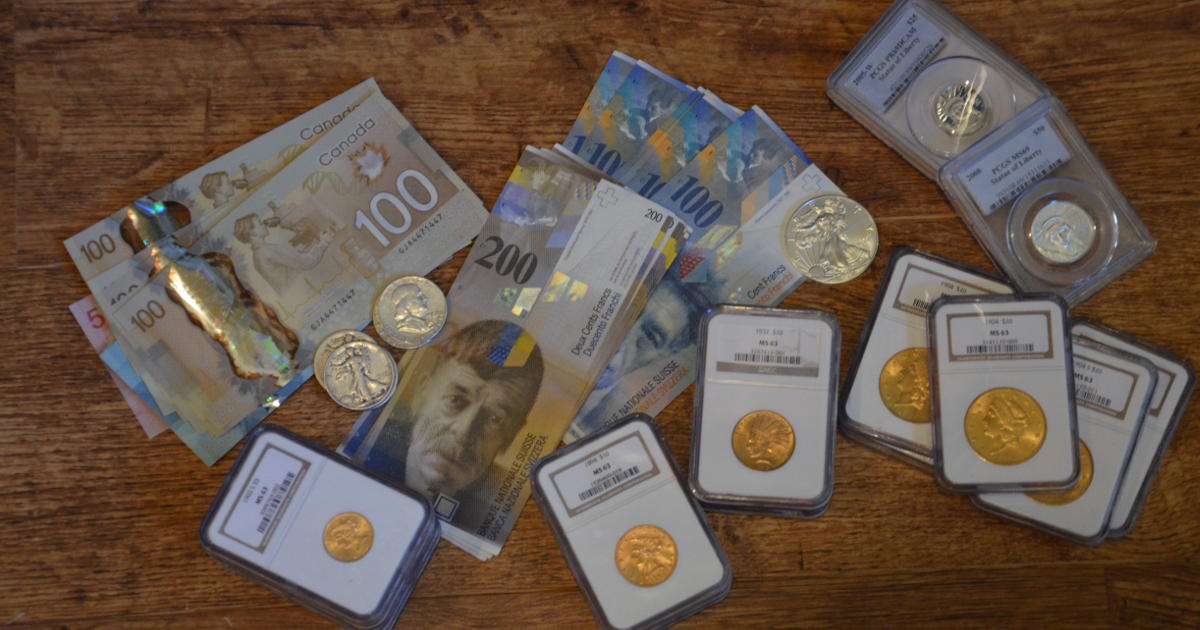
Cash. If the power goes out, conventional wisdom suggests that while credit card payments won’t be accepted, many merchants would accept cash for a short time. The closer to the event, the more reasonable the prices. As people become more aware of what’s happening, prices will inflate as resources become scarce. Eventually, people will realize that cash has no value and will look for alternative methods of payment, like…

Coins. Many believe that trade will (d)evolve into precious metals as currency and barter. Obviously, by the time of an event, it will be too late to acquire gold and silver. While gold will hold its value, it will be difficult to segment out for smaller transactions. Having a stash of silver will be the most beneficial, in my opinion.

Cages. It is possible to make a Faraday cage. This is essentially a container that protects against the effects of an EMP. It is somewhat impractical to build a large cage and, realistically, only helpful for a few things. For example, putting a cell phone in there won’t do you much good as the cell networks would be down, but putting Ham radio equipment in would be helpful if others in your network did as well.

Now that you have a few things in order pre-event, here’s what I would suggest once the lights go out.

What to do:

  1. Get home. Your first priority should be getting home and making sure your family is home. You should always have a plan to get home. This should be fairly easy to plan from your normal places of visitation. You should think through how you’d get home on foot from work, church, et cetera. You should also have supplies in your car at all times that you’d need along the way. (For example, keep a pair of sturdy shoes or boots in your car, should you need to get home in the winter.)
  2. Get supplies. Using the cash you’ve stocked away, get to the closest stores and buy everything you can using the money you have. As discussed, prices will likely inflate quickly, and at this point you have to assume that resources are now finite. You’re looking for food that keeps, possibly water, depending on what you can transport. It would be best to develop a list so you don’t have to think about it at the time.
  3. Stay vigilant. Things will get bad. The good news is that if you’re paying attention, then you’re more prepared than 95% of the population to deal with the situation. Security will be increasingly important, so develop a plan that works for your location and given your resources.

Grid Down

This scenario is a slight twist on an EMP scenario. Many elements hold true; others do not.

A grid down scenario could come about in a couple of ways. The first and most likely is a cyber-attack. This has already happened in a number of places around the world in varying scale. Maybe the most notable was in Ukraine, where large areas of the country were affected. Malware has already been detected in a variety of grid systems across the U.S. and Canada. The nature of our aging infrastructure is such that a major attack would likely cause a cascading outage. As one system goes down and others try to help with the load, more systems would become overwhelmed and then go down.

The second scenario entails a physical attack on the grid in key locations. Targeting the actual infrastructure would have a similar crippling effect. It would take multiple coordinated attacks to cause widespread outages, but as we saw on 9/11, large scale attacks must be considered viable.

The possibility exists that a large scale attack could entail both cyber and physical attacks.

If we assume a successful attack, then we must consider partial to total grid failure. In this case, many of the failures from an EMP would still be present. Communication networks would fail, credit cards won’t work, ATMs won’t function, and banks won’t be open.

Some things will be notably different, however. Cars will continue to operate. Electronic devices will continue to work as long as they are charged. Generators would operate as long as they are fueled. As long as it is powered, any microprocessor will continue to function, which lends credence to having a backup power source, like solar.