Reader JCC sent in this link to Ferfal’s site with the new SERE manual (Survival Evasion Resistance Escape) in pdf form.
o o o
A couple of weeks ago, we requested someone to advise on using old flash Magicubes as a perimeter security alarm. Our friend Robb Moffett from Robb’s Homemade Life purchased a few off of eBay and created a simple HOWTO video on manually triggering them. By the way, if you have any other ideas like this you would like to see explored, just post them in the comments.
o o o
History is a wonderful teacher! A 1,389 Year-old ‘Phobia’? Why history is one of the best antidotes to Muslim apologetics.
Find your secure and sustainable home. The leading marketplace for rural, remote, and off-grid properties worldwide. Affordable ads. No commissions are charged!
#1 Trusted Gravity Water Purification System! Start Drinking Purified Water now with a Berkey water filtration system. Find systems, replacement filters, parts and more here.
#1 Trusted Gravity Water Purification System! Start Drinking Purified Water now with a Berkey water filtration system. Find systems, replacement filters, parts and more here.
We’re continuing this section of the series on household basics, and I’m sharing my research on oil. I didn’t expect it would be a three-part section, but I did spend a lot of time researching and testing it, so you are joining me on this journey and getting the plan.
I’ve shared that we have a Piteba seed/bean/nut oil expeller press that we plan to use as our primary means for oil. I’ve ruled out GMO grains and also lard, though I might use some beef tallow but want to keep it to a minimum for health reasons. Tallow is very useful in the homestead, but we are looking for vegetable oils that we can produce.
Black Oil Sunflower Seeds
Furthermore, whatever we were going to grow for producing vegetable oil needs to be produced in our high elevation climate and harvested without fuel-dependent machinery, as fuel might be unavailable or eventually our supply exhausted. I did research about growing some of these options and concluded that black oil sunflowers to produce sunflower oil was the most attractive solution for us. My research from a variety of people who have grown these black oil sunflowers suggest that we can confidently grow these for making oil. As further reason for encouragement, I recall that when we purchased our property and moved here, there was a patch of sunflowers growing here. An article I found details how to grow black oil sunflowers and suggests adding borax, a mineral, during the midsummer period to boost the size of the seed head. I will likely experiment with borax on some of the plants to see if this makes a difference, and if so what difference it makes. The garden spot is prepared, and as soon as the soil is warm enough the black oil sunflower seeds are going into the garden to be grown for the first/test year. My plan for harvesting is to cut the seed heads along the stem after the petals fall and when the seed head begins to look downward; we’ll put the seed heads in buckets or boxes where they can finish ripening before the seeds begin to fall. I don’t intend to lose many seeds in the garden to birds, and I believe that once the seed heads are dry we can simply shake them to release the seeds, wash them, let them dry, and store them for pressing into oil. There are plenty of other seeds in the garden for the birds in winter, and there will likely will be some sunflower seeds that fall but none intentionally. I have read that cheesecloth bags can be placed over the flower heads to catch any seeds as the flower heads dry, but that seems a little tedious to me. We’ll see if it is required or not.
Pressing Black Oil Sunflower Seed Oil
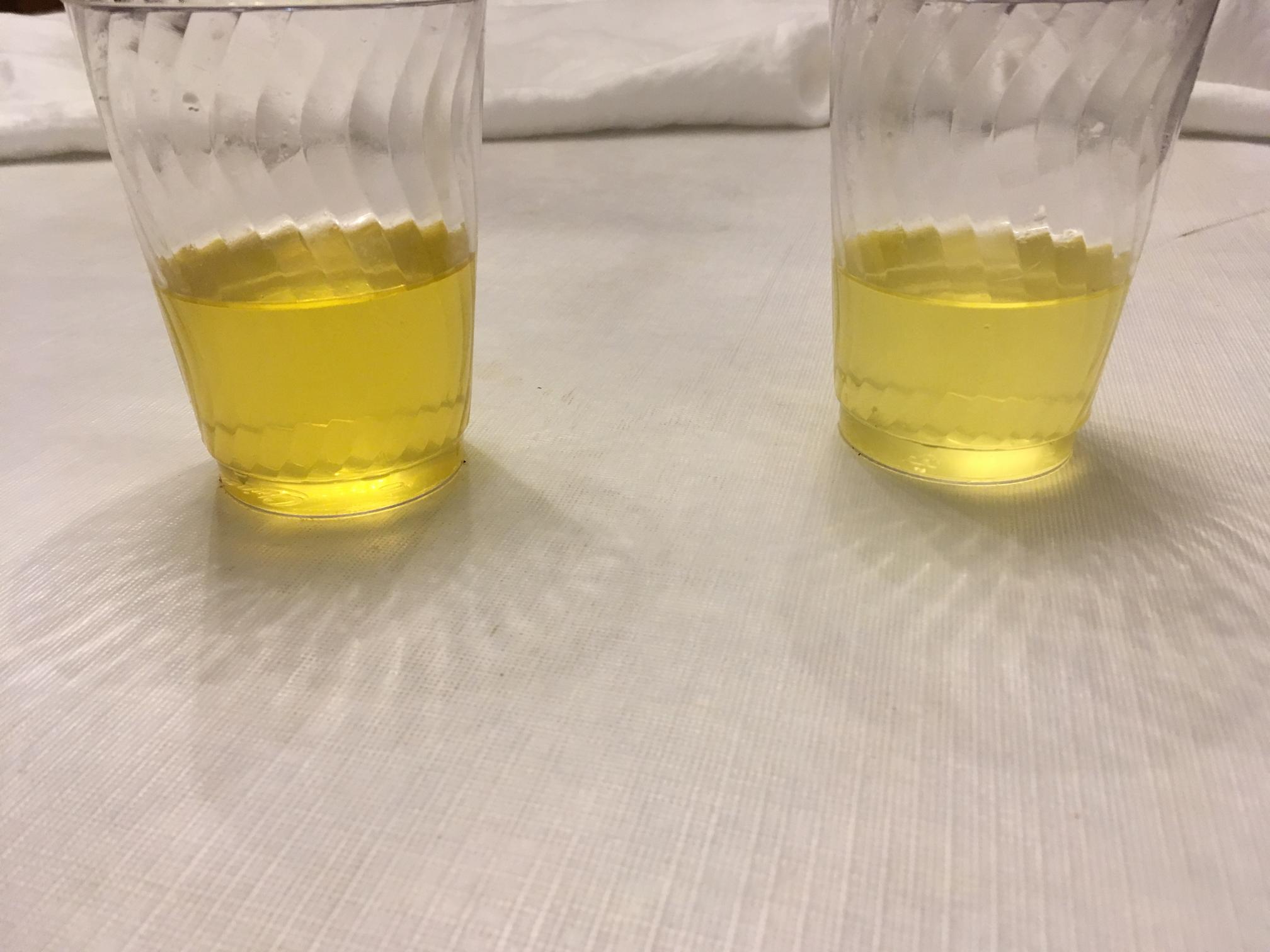
Though I have a plan for growing black oil sunflowers, before committing precious time, energy, and garden space to growing them, I wanted to be sure that we could successfully and satisfactorily press oil from their seed and enjoy that oil. So, using some of the seed I plan to plant, we ventured into using our Piteba oil press for the very first time, ever. As a general rule, it’s not enough to have equipment if we don’t know how to use it and haven’t practiced with it. Let me say right up front that it was more of a challenge that I had hoped or expected. Yet, this is true of many homesteading activities that I have now mastered, or at least feel I can do proficiently, including gardening, flour milling, bread making, candle making, and more. In the beginning, many of these tasks were tedious and frustrating. We had the basic knowledge required initially; however, though, we had to eventually develop the feel for how these simple processes and machines, with their settings, best worked. Then, they became simple, really. I am confident now that we can express oil, but it did take several attempts and hours to get it to work properly and produce our bit of oil. In hindsight, our main failure was in not letting the press and seeds heat up long enough before pressing and then not cleaning everything out well enough when we started over once it heated up. After we started over from the beginning with everything cleaned out, let the press and initial seeds heat up well, cranked down the end cap all the way, learned not to hold back the press cake too much, and got our crank rhythm going, the oil began to dribble quite nicely. Sometimes the press cake would build up in the press and we would have to clean it out before continuing, but we managed to produce more than a half of a cup of oil from approximately four cups of sunflower seeds (though I cannot be sure of the measurement of seeds because we had a few spills in my fumbling around getting used to our cranking/seed adding team system). I’m not sure about the time it took, because we had so many re-starts, but I am sure that we accomplished the production of this oil in less than one hour, after getting the oil production started. It takes a good deal of effort to crank though! Unless we find a way to power it with a motor (solar, hydro, or wind), we won’t be producing oil by the half gallon to deep fry food during TEOTWAWKI! Yet, we will have what is absolutely necessary for our basic cooking, hygiene, and household needs. We let the oil sit for a few days and then strained it through a coffee filter. It was thick enough that it took a good while to filter through, but it eventually came through looking quite similar to olive oil and tasting nice, too. Additionally, the chickens enjoyed the sunflower paste, after I added a little water. This was a bonus, since I really dislike waste.
Black oil sunflowers are not the same as those you buy at the store to snack on for yourself. For our testing, I purchased organic black oil sunflower seeds. These black oil sunflower seeds are very oily, with almost 50% more oil than those in our snack bags, and are what you most likely see in the bird feed mix you might buy. They truly are black and oily, living up to their name.
Pressing Raw Peanut Oil
We tested pressing hulled, raw peanuts to make peanut oil, too. We were able to do so, but it seemed to take more effort to produce peanut oil than with sunflower seeds. So, this effort combined with our inability to grow peanuts means that this is not a good option for us; however, peanuts may be a good option for you. We found that it was more challenging to feed the hulled, raw peanuts into our Piteba than the sunflower seeds. At times, the peanuts wedged together and got caught in the funnel instead of dropping into the Piteba press, requiring that I shake the funnel to allow a peanut to drop ahead of the other. Once, I had to shake so vigorously that I caused the funnel to release from the Piteba press and drop peanuts onto the floor. (I was not happy about my mess, but I chalked it up to learning.) The initial peanut oil was very murky and creamy looking, but after a few days it settled into a clear oil that closely resembled what we find at the grocery store. Also, I roasted the peanut press cake and fed that to the chickens, too. They gobbled them up. It smelled so good that I almost dug into it myself. I might look into uses for it. I was of thinking candy, maybe something like peanut brittle. Anyone have any experience using your peanut press cake for something tasty?
Sunflower and Peanut Oil
The peanut oil we pressed was later used for frying some of the best homemade oriental orange chicken we’ve ever had. Our peanut oil was a huge success. I’m glad I bought a good supply of raw peanuts so we can give this a whirl again, even if we can’t grow our own. (They are sure expensive though to have shipped!) It’s making me wish I knew of a way to grow them in our cold, high elevation.
Our Other Seed Oil Options and Storage
You might want to research some of the other seeds/beans/nuts that produce oils, listed at the Piteba website and consider your locale to see what best grows where you live and what is practical for you to harvest and utilize. Some seeds and beans and also oils cannot be stored for long, so you will need to take this into consideration. Sunflower seeds store well, but with the amount of energy required and currently doing it manually, we will likely press oil once every week or two for the amount that we need during this time frame. We’ll keep plenty of dry sunflower seed in storage in 5-gallon buckets to prevent mice, birds, and other animals from raiding our supply. In this manner, we won’t have the concern of oil spoilage when there is no refrigeration. Pumpkin seed and even flax seed are both additional options for us to consider, but we have not pressed either as a test yet. It’s good to know we have options though!
I highly recommend the Piteba oil press and that you spend some time watching YouTube demonstrations and working with your own press. It’s my recommendation that, if you buy one, you also buy lamp oil for heating your press and go ahead and get the Piteba spare parts and spare expeller screws, because we know that two is one and one is none. These are the parts that are likely to wear out or break over time. Again, please get some practice in now so that it isn’t a foreign and frustrating learning curve during a stressful TEOTWAWKI scenario!
Ladies, the great news is that we won’t have to live with dry skin, frizzy hair, or squeaky doors. We won’t have to live without sauteed vegetables and salad or sandwich dressings and sauces in TEOTWAWKI either! We can have vegetable oil!
It just takes some planning, resources, and practice with these resources, like many other things. However, after going through this series, I’m feeling much more confident in thinking through some of the basics that aren’t common topics for TEOTWAWKI. Thanks for bearing with me on this pursuit! As always, I look forward to hearing from our SurvivalBlog community, too, on your ideas, resources, and experiences. It has been such a pleasure and a joy to hear from so many of you, and I thank you for your great contribution on the topics we’ve tackled these past few months.
I wish you well, until we meet again next week on SurvivalBlog!
FOR SALE: Self-sustaining Rural Property situated meticulously in serene locales distant from densely populated sanctuary cities. Remember…HISTORY Favors the PREPARED!
I read your recent article on diabetes management with much interest, as I am a 64 year old diabetic myself. The problem with being insulin-dependent is access to insulin after things crash.
Walmart (of all places) sells Relion Diabetes management products, which include insulin over the counter with no prescription needed. Relion makes different insulins that are equal to the same insulins that sell for over $250 per bottle at the pharmacy.
Their insulins are very reasonable at $28.44 per 10ml vial. I went to my local Walmart in Michigan, and sure enough I was able to buy Relion Novolin R (to replace my Humulin R) with no questions asked!
The pharmacist told me I could buy up to four bottles at a time, and the expiration date of the product I purchased on 4/5/2017 is April of 2019! Relion has a full line of diabetes management products that are ridiculously inexpensive with no prescription needed!
A long term prepper could buy four vials of insulin every few weeks or months and build up a very nice supply that would last years.
In some states, like Indiana, a prescription is needed, but in many it is not. Check your local Walmart. – J.C.
Click Here --> The Civil Defense Manual... The A to Z of survival. Looks what's in it... https://civildefensemanual.com/whats-in-the-civil-defense-manual/
Every bespoke SIEGE buckle goes through an hours-long artisanal process resulting in a belt unlike anything else, with blazing fast performance and looks and comfort to match.
We’ve covered this subject fairly extensively in the pages of SurvivalBlog, but reader G.G. sent in a link to PeakProsperity for another article on the subject: Prepping With A Reluctant Partner
o o o
More documents released showing the Obama administrations animosity and behavior towards those presumed to be “enemies” using the IRS as the weapon of choice: New Obama IRS Scandal Documents – D.S.
Rucksack Rob informed us of this little jewel: NOS Surplus Swedish Surgical Sets – It’s a decent price and shipping to the USA is reasonable.
o o o
Reader T.J. keeps us updated on several boat projects. The latest from Quidnon was A Houseboat that Sails. For those who like the idea of bugging out via boat, this looks promising.
“I beseech you therefore, brethren, by the mercies of God, that ye present your bodies a living sacrifice, holy, acceptable unto God, which is your reasonable service. And be not conformed to this world: but be ye transformed by the renewing of your mind, that ye may prove what is that good, and acceptable, and perfect, will of God.” Romans 12:1-2 (KJV)
April 8th is the birthday of the late Ian Smith, Prime Minister of Rhodesia, (born 1919, died November 20, 2007).
o o o
SafeCastle is offering a free membership to their site for SurvivalBlog readers. You get extra savings on top of already discounted prices along with several other benefits. Use code: EFREEMEM
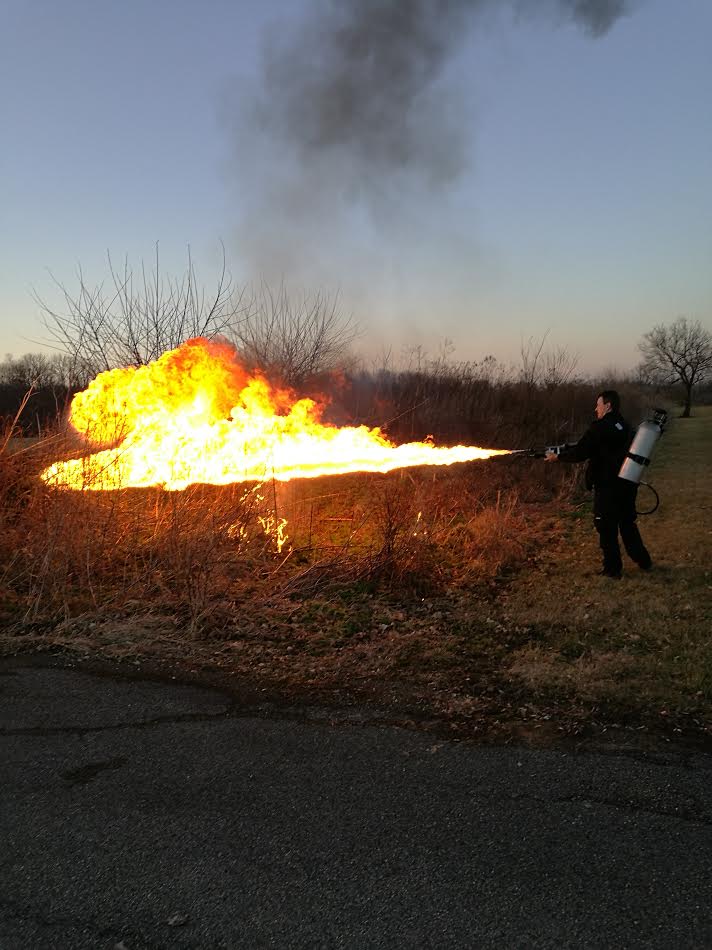
Flamethrowers are primarily a tool and, accordingly, are not regulated under federal law as a weapon. As they do not fire a projectile from a fixed cartridge, they are not restricted under BATFE regulations.
The FlamethrowerPlans.com flamethrower will be recognized by some as kitbashed from various industrial components. This, however, does not make it any less effective. You can buy the plans (as the site indicates), components, or a finished unit. I opted for the finished unit. The package is surprisingly compact considering the contents. There is the fuel tank, projector, hose, and pressure hardware. The instructions are very clear and simple. Also included is a modified propane torch as an igniter. All that is required is to charge the CO2 tank, fill it with fuel, and attach a propane bottle.
Safety is obviously paramount with something that projects burning fuel. The instructions recommend a wet test with water first, to verify function safely. We did this, and we measured a range of right at 50 feet and a firing time of right at one minute. This is a shorter distance than historical military models but with a longer burn time.
Fuel can be kerosene, diesel or gasoline, and thickeners can be added to increase range and effectiveness. Diesel or kerosene are recommended both for safety, due to a higher flash point than gasoline and because they will offer a bit more range. Thickened with left over motor oil and such, the mix approximates the Russian napalm from WWII. I’ve tested it successfully with motor oil and vegetable oil. It’s important to agitate the mix for good blending. I had the best results with about 3:1 fuel to thickener.
A ratio of 3:1 diesel to gasoline gives more range and a hotter flame without undue risk. I have not tested a thickened gasoline mix, but it can be made by using grated soap (not detergent). The best is Ivory soap that is oven dried, grated, and then blended and agitated with the fuel.
CO2 is available at many sporting good shops that handle Airsoft or paintball, for about $5 locally. If you have access to nitrogen, it will offer a bit more pressure and range.
Once charged live, we tested it by burning off brush around a drainage pond. There is actual recoil, or more accurately thrust, from firing this. The operator remains relatively cool, but the flame emits radiant heat to the sides that is palpable at quite some distance.
The pond was about 50 feet by 20 feet in size and was surrounded by heavy greenery and weeds. It took less than two minutes (two charges) of both working and playing about to clear a five foot swath all the way around.
I then tested it on one of my property’s abandoned animal runs, which was about 20′ square. It was full of trash, trees, weeds, and brush. One tank and about 60 seconds cleared it down to ash and stalks, making it much easier to finish clearing with shears and loppers.
We kept a fire extinguisher handy, and I strongly recommend doing so for safety. It wasn’t needed, but if it becomes so it would be critical. As fun as it is to operate, this is not a toy.
For brush removal around a position to clear a field of fire, it would be much faster than hand tools, assuming the fuel is available. For igniting debris, even when wet and cold, it is hard to beat. Caution: Do not inhale fumes from burning debris if it might contain toxic chemicals, or if it contains toxic plant matter, such as poison ivy.
For a defensive weapon, it would be hindered by the prep and loading time as well as the limited burn time and range. However, for protecting an emplaced position, it would work very well to deny large swaths of ground to any attackers, for firing existing burn piles for cover or concealment, and for direct distraction and concealment behind a huge ball of flame and smoke. It could be used to corral attackers into a chosen area of effect. It would not instantly stop a vehicle, but any unhardened vehicle would be rendered inoperable in seconds. In extremis, it would be instantly incapacitating and lethal within its range, causing traumatic, contaminated burns. In enclosed spaces, such as bunkers, sheds, or entryways, it consumes most of the oxygen, leaving any occupants with a lungful of smoke and carbon monoxide. I caution that this would have to be during a siege or mass attack when law and order has broken down. Any use as a weapon with existing legal infrastructure would probably constitute pre-meditation, would definitely attract unfavorable government and media attention, and least of all but certainly an EPA bill for cleanup. But if it was to hand when your life was threatened, it’s a trump card of psychological magnitude and terror.
We found occasional ignition issues with pure diesel, the fuel blowing right across the igniter without catching. Releasing the trigger and re-firing usually corrected this at once, and the projected fuel then lit from the second shot. With mixed fuel and oil, there were no ignition problems at all.
There are improvements that could be made. The igniter would benefit from a fabricated attachment rather than hose clamps. While the pressure bottle was secure enough, a clamp assembly would be sturdier than relying on the fittings. However, I’ve had no trouble with reliability.
Photo links below show the short range and effectiveness of straight diesel.
I rate it excellent for brush removal. It’s unexcelled for fun, if you like controlled fire. As a weapon, it’s limited in utility but devastatingly psychologically effective.
There are other models out there, but I have found this to be the most cost effective, range effective, and capacity effective model. To the best of my research, flamethrowers are unrestricted in 48 states, prohibited in Maryland, and require fire marshall approval to use in California, which given the risk of brush fires isn’t entirely unreasonable in this case.
Note: I purchased my own model and use it on my property for brush removal. I was not compensated in any way for this review.
Introductory Note: The following is another in a series of articles by JWR that will link to some of the thousands of archived SurvivalBlog articles and letters, grouped topically.
Today, we address the broad issue of retreat security measures.
In my estimation, many preppers have a tendency to over-buy on their gun budget and under-buy on their night vision and intrusion detection budget. I would much rather own just a few guns and have a full complement of other key retreat security gear. After all, humans can’t see well at night with un-aided eyes, and we can’t be vigilant 24 hours a day. Many of the following articles address such gaps in retreat security planning, gear, and training. And some of your most important “gear” might be very low tech or even “no tech”—such as trip flares, bells, and well-trained guard dogs.
Thee following are just a sampling of the articles and letters on retreat security that have been posted over the past 11 years:
Closing Note: You can use our recently improved Search box at the top of the blog’s right hand column to find even more articles. (The ones that I’ve linked to are just a sampling.) The new Search tool is much more useful that the old one. When searching, use quote marks around terms that need to appear together, for example: “photovoltaic panel”. You can also use the word “and” in search phrases to combine multiple search terms, such as “seismic and detection”. – JWR
As the article observes, silver will be more useful in small denominations. My question is: How will sellers recognize that “junk silver” has more than face value, and how will that value be determined? – RJB
HJL’s Comment: Junk silver has the advantage of being widely recognizable, and the smallish value as well as the wear and tear that it already has makes it harder to counterfeit. It certainly has a distinctive look to it and is easy to evaluate. It will not take long for that value to be recognized and established. As to what that value is? Whatever it takes for the seller to part with the silver and whatever the buyer is willing to spend. It’s only worth what you can sell it for.
o o o
HJL,
I was raised without electricity or running water pretty far out of any town. I will go back to that way of life and plan on living a simple, cautious life. It isn’t difficult if you have patience and appreciate the simple life. – puzltock
HJL’s Comment: Having already experienced that lifestyle, you have an advantage, but it may not be as simple as most think. My family always had a large garden (~100′ x 100′) while I was being raised, but when I made the decision to have my own garden I discovered that a lot of wisdom had not been passed on to me (or I just simply didn’t listen; children have than tendency.) Having my first garden was certainly not as easy as sticking a seed in the ground and watching it grow. It probably took me three or four years before I began to see a reasonable return on my labors in the garden. Most living skills are like that. While you can alleviate most issues like this by simply having a small garden that you practice with and enlarging it when the time is right (or whatever skill it is), there are some living skills that only get practiced when creature comforts are not available.
Time To Hedge State Reserve Funds With Gold. Excerpt: “Financially prudent individuals set aside surplus funds to protect against unforeseen expenditures. This way, when faced with loss of income, house repairs, car trouble, or anything else, they will have a buffer against unanticipated downturns.” – H.L.
SurvivalBlog reader T.N. joined in the conversation of EMP and our nation’s difficult-to-replace power transformers with this impressive news item from 2015 about one of the huge transformers being delivered to southern Utah: Huge transformer to arrive in Monticello Monday. This certainly puts the problem in perspective!