March in Precious Metals, by Steven Cochran

Welcome to SurvivalBlog’s Precious Metals Month in Review, by Steven Cochran of Gainseville Coins, where we take a look at “the month that was” in precious metals. Each month, we cover the price action of gold and examine the “what” and “why” behind those numbers.

What Did Gold Do in March?

Gold started March on pretty good footing, having gained over 3% in February. However, better than expected economic data in the early part of the month soon sent the dollar and stocks soaring and gold falling below $1200 an ounce on expectations that the Fed would certainly hike interest rates at their March meeting. Prices recovered sharply after the rate hike, though, because Yellen sounded like she didn’t want to raise rates again anytime soon.

Precious metals put in a strong performance to end the quarter. Palladium was in first place on the Barcharts YTD Futures chart by far, ending the first quarter $115.50 higher, a gain of 16.89%. Silver earned the #2 spot, posting a 13.42% gain for the quarter. Gold ended the first quarter 7.61% higher, gaining $87.90 an ounce, while platinum continued to sink into the middle of the pack, with a 4.03% gain.

Factors Affecting Gold This Month

European Populism

The European establishment was panicking ahead of the March 15 elections in the Netherlands, as right-wing radical Geert Wilders’ anti-immigration Freedom Party (PVV) was expecting to win. Voter turnout was high, due to frightened Dutch voters not wanting to see a Nexit (Netherlands exit from the EU). This caused the PVV to fall short of victory, but they did ride the total collapse of the Socialist Party to second place. This makes Wilders the opposition leader in Parliament, giving him plenty of power to prepare for victory in the next election.

The next big battle for the anti-EU movement in Europe will be French presidential elections in April. Marine Le Pen, leader of the far-right National Front, has been polling well. If she wins, she pledges to dump the euro and put France back on the franc as well as seal the nation’s borders against immigration, even if it means a “Frexit” from the European Union. If France does follow the UK out of the EU, the entire thing will collapse, and the euro will basically be a new German deutschemark.

A report released in late March said that global populism is at its highest levels since the 1930s, and that populism will have a greater effect on world economies than any fiscal or monetary policy this year. Since this will be bad for international corporations, the establishment naturally sees this as a Very Bad Thing.

Terrorism

March was a very busy month for the real bad guys, as terrorism spread from the Middle East to other targets. Over a three-day period in France, a letter bomb sent to IMF headquarters in Paris injured one; a man shouting “Allah u Akbar” slit the throats of two men; and a gunman shot and seriously wounded three police officers before being shot dead by two soldiers at a Paris airport.

The worst terrorist incident in Europe last month was the Westminster attack at the British Parliament. Criminal-turned-Islamist Khalid Masood drove a rented SUV through a crowd on Westminster Bridge, killing four and wounding at least 49 others before crashing into the security fence around Parliament. He exited the car with two knives and murdered an unarmed policeman before being shot dead.

India witnessed three bombings, four gun attacks, and an assassination in March, leaving 23 dead and at least 36 injured.

Wedding Season In India

Gold imports spiked in India in March, as the nation’s one billion Hindus celebrated spring festivals and the spring wedding season shifted into high gear.

It’s A Brexit

British Prime Minister Theresa May pulled the trigger on Brexit on March 20, beginning the countdown on two years of “divorce negotiations” with the EU. With no idea what will happen, European markets will remain volatile, with safe haven runs on gold possible at any time.

On the Retail Front

Recent spikes in precious metal prices are impacting sales at the U.S. Mint, leading us to wonder if the low mintage of the 2017 American Silver Eagle will make it a “key date” for those who collect the bullion coin every year.

In news about upcoming designs, the Mint revealed that five WWI commemorative silver medals, one for each branch of the military, will be released next year to honor the 100th anniversary of America’s entrance into the “War to End All Wars”. These will be in addition to the 2018 WWI commemorative silver coin.

Market Buzz

Central Banks

This month’s changes in central bank gold reserves seems to point out that the agreement to cut oil production is starting to bite in the Persian Gulf oil monarchy of Qatar. They sold 4.3 metric tons of gold in March. Brunei, another small Muslim oil producer, sold 0.1 metric tons (100 kg) of gold.

Argentina continued selling its sovereign gold reserves as its economy continues to crater, sending five metric tons out the door.

In the “win” column, we once again find Kazakhstan, which added another five metric tons to the vaults in March. Jordan is a new face in the market, purchasing 5.6 metric tons of gold last month. Apparently they are moving to protect their economy in case the war in Syria spills across the border. Naturally, Russia was a buyer again in March, to the tune of 10 metric tons.

Lawrie Williams predicts that Russia’s gold reserves may surpass China’s this year, if Moscow’s buying binge continues. It should, since the Kremlin is buying domestic gold production that is blocked from export by international economic sanctions.

Moe Zulfiqar thinks he’s figured out the reason for all this central bank gold buying: diversification away from fiat money that will lose its value during “competitive devaluation” (currency wars) between the U.S., EU, UK, Japan, and China.

Silver

Michael Lombardi at the Lombardi Letter says, don’t be surprised if silver doubles in price this year.

SRSrocco Report is also anticipating a big move up for silver, as more institutional investors move into the market.

It’s expected that silver is going to need to come from existing stocks, as newly-mined silver production is falling as copper and zinc mines reduce output or close altogether. More than half of the world’s silver each year comes as a by-product from mining industrial metals, such as copper.

And speaking of silver mining, this video on the Top Silver Producing Countries in the world will probably surprise you.

CME and Thomson Reuters resign from the London Silver Fix only 2-½ years after winning the contract.

Doug Casey says, “If you think inflation is low, take a look at your candy bar.” Instead of raising prices, companies are shortchanging you on the amount of product in their packages.

Gold

Peter Schiff looks at the returns of holding $3,500 in cash for 50 years, compared to buying $3,500 worth of gold 50 years ago. (I think we all know how that turns out.)

SRSrocco Report reveals the information about another reason for manipulation of the international gold market in the 1970s, that most people don’t know about.

Plans for the Texas Gold Depository continue to move forward.

More states are scrapping sales tax on precious metal purchases, which is always a good thing to see.

Thanks to the Mexican version of the Freedom of Information Act, hard money advocate Guillermo Barba has received the actual inventory list of the 7,265 gold bars the Bank of Mexico holds in vaults at the Bank of England. While most of the Mexican central bank’s gold has been leased out (maybe multiple times?), this is the first time a central bank has provided the serial numbers for any of the bars in its gold reserves.

Economy

Bloomberg notes that the international Too Big To Fail banks have been fined $321 billion since the global financial crisis. The sad part is, these banks made far more than that in illegal proceeds and just consider the fines part of doing business.

Economist Albert Edwards warns of “Volcker II, Monetary Boogaloo,” if Fed follows through with planned pace of rate hikes.

Looking Ahead

With no Federal Reserve policy meeting in April, Janet Yellen and her crew will be relying on press interviews and speeches to move the markets. Stocks seem to be running out of steam, as the Trump Rally fades. Clashes between hard line conservatives and more corporatist Republicans over the plans to repeal and replace Obamacare have Wall St worried that the deregulation and tax cuts promised by the Trump Administration may be delayed.

Anxious stock markets on both sides of the Atlantic, plus increasing terror attacks in Europe, should give gold a safe haven demand boost. April 23rd is also the first round in the French presidential election, where anti-EU/anti-immigration candidate Marine Le Pen has a good chance of winning. This has establishment types even more worried than they were over the Dutch or Austrian elections. If Le Pen wins and pulls France out of the EU, the whole thing will collapse.

Our favorite treasure story this month comes from the Holy Land, as a stash of 1,400 year-old bronze coins were found in Israel, in the newly-discovered ruins of a Christian settlement that served as a rest stop for pilgrims traveling to Jerusalem. Archaeologists believe the coins were stashed in a secret hole in the wall of the building by terrified Christians fleeing an invasion by the Persians in 614 AD.



Letter Re: The Human-Powered Veggie Garden, by J.A.

Hugh,

I would offer these suggestions to enhance the ease of preparation of the garden area. First, double digging the ground is a tried and true method, but it can be labor intensive. This can present a challenge to older persons or anyone with physical limitations. An alternative would be to use the layered or “lasagna” approach to change the sod into a garden. The book Lasagna Gardening by Patricia Lanza covers this in detail, but a brief summary is to cover the grass with wet newspapers or cardboard and then build up layers of compostable material, allowing enough time to decay before planting. This kills the grass and helps to soften the earth below to make digging and planting much easier. One possible disadvantage is that the layers may not build enough heat to act as a compost pile, so weed seeds could still germinate . If time is short, then cover the cardboard with well-rotted compost and plant directly.

Second, I would suggest using old tires to create a raised bed. Most tire shops will give away old or damaged tires that they have removed from cars and trucks, after they cut the sidewall down so it cannot be used on a vehicle. Take a drill and start a hole in the remaining sidewall, then use a jigsaw to completely remove it. You could also use a handsaw if power is not available. Place the tire on top of the cardboard and cover with compostable material and soil. This gives about 2-3 square feet of planting area that will absorb heat more effectively, possibly allowing planting to start earlier. A trellis could also be added and covered with plastic sheeting to create a mini-greenhouse. Kurt Saxon discussed this method in detail in his writings if more detail is needed. – Le Chat Noir


Economics and Investing:

An uncomfortable conversation on a plane ride: How to cut your taxes no matter what your situation

o o o

Is Another Bust Looming Over The Oil Industry? Global demand growth has been slowing over the last decades, which could spell trouble in the coming years if the oil industry does not plan for the change.

o o o

War on Cash: ECB, EU on collision course with Germany – DSV

o o o

Toshiba Warns Westinghouse Nuclear Losses Jeopardize Its Future. “The disclosure came Tuesday as the Tokyo-based company took the unusual step of reporting third quarter earnings without approval from its auditors.”

o o o

SurvivalBlog and its editors are not paid investment counselors or advisers. Please see our Provisos page for details.


JWR’s Recommendations of the Week:

Books:

A well-written book was just recently released aimed at prepping newbies: Self-Sufficient Home, by Nancy Hoffman. (It’s not recommended for advanced preppers, but it’s a great one to hand to your newbie neighbors and friends.)

The Edgemaster’s Handbook: A Comprehensive Guide to Choosing, Using, and Maintaining Fixed-Blade and Folding Knives (I haven’t yet read this book, but it was written by Len McDougall, who authored the highly-rated book The Self-Suffcient Manifesto, so I can safely assume that this new one is well-written.)

Movies:

London Has Fallen (This movie has a high quotient for “suspension of disbelief”, but it is very entertaining. There are a few brutal sequences, so it is definitely not one for the kids.)

Jason Bourne (Billed as the final installment in the Bourne film series, this latest one answers a few questions and of course delivers the requisite globetrotting, amazing stunts, and car chases.)

Instructional Videos:

10 Steps on How to Build an Adventure Van

Dirty Jobs’ Mike Rowe on the High Cost of College (Full Interview)

Podcasts:

North Country Farmer (Scott Terry—He’s back on the air, following a three month hiatus.)

Woodshop 101 #74 : Material Decision

Blogs:

Pure Living for Life

The Homestead Survival

Gear:

Hornady Lock-n-Load Hot Tub Ultrasonic Gun/Parts Cleaner

For anyone with severe allergies, this is one of the best available: Jet DC-1100VX-CK Dust Collector 1.5HP 1PH 115/230-Volt 2-Micron Canister Kit

Note: Some mail order vendors, like Amazon, offer deep discounts on “open-box” and used sports and camping equipment


Odds ‘n Sods:

I noticed that the NAPA Auto Parts chain stores are having a “Spring Filters Sale” from April 9th to 22nd, 2017. Some filters sold under the NAPA Filters label are priced at discounts as deep as 60% off. This is s good chance to stock up on oil and fuel filters. If you buy any for use as, ahem, “solvent traps”, then be sure to pay in cash, so that you don’t leave a paper trail.

o o o

‘Ol Remus recommended this thought-provoking essay by Bill Buppert: T.E. Lawrence and the Coming American Civil War

o o o

Thank you, Hillary: Migrants are being sold at open slave markets in Libya (Note: The site contains an auto-start video that is unrelated.) – H.L.

o o o

Lake City Ammunition Plant Explosion. Note: Lake City is a major contractor for the U.S. government and NATO for ammunition. – W.W.

o o o

Most SurvivalBlog readers probably know this, but it’s good to be reminded: Reader DSV sent in this link to a news story showing how 911 operators are changing how they respond to calls regarding cars sinking in water: If Your Car Sinks In Water Do This Immediately!


Notes for Tuesday – April 11, 2017

April 11th is the birthday of John Milius, who was born in 1944. He both wrote the screenplays and directed the films Dillinger, The Wind and the Lion, Big Wednesday, Conan the Barbarian, Red Dawn, Farewell to the King, and Flight of the Intruder. He also wrote the screenplays of the first two Dirty Harry movies as well as the first draft of the screenplay for Patton (before Francis Ford Coppola turned it into a vaguely anti-war commentary laced with references to reincarnation). Milius is JWR’s favorite Hollywood writer and director, in part because he stands for everything that Hollywood doesn’t.

o o o

Today, we present another entry for Round 70 of the SurvivalBlog non-fiction writing contest. The nearly $15,000 worth of prizes for this round include:

First Prize:

  1. A $3000 gift certificate towards a Sol-Ark Solar Generator from Veteran owned Portable Solar LLC. The only EMP Hardened Solar Generator System available to the public.
  2. A Gunsite Academy Three Day Course Certificate that is good for any one, two, or three day course (a $1,195 value),
  3. A course certificate from onPoint Tactical for the prize winner’s choice of three-day civilian courses, excluding those restricted for military or government teams. Three day onPoint courses normally cost $795,
  4. DRD Tactical is providing a 5.56 NATO QD Billet upper with a hammer forged, chrome-lined barrel and a hard case to go with your own AR lower. It will allow any standard AR-type rifle to have a quick change barrel, which can be assembled in less than one minute without the use of any tools and a compact carry capability in a hard case or 3-day pack (an $1,100 value),
  5. An infrared sensor/imaging camouflage shelter from Snakebite Tactical in Eureka, Montana (A $350+ value),
  6. Two cases of Mountain House freeze-dried assorted entrees in #10 cans, courtesy of Ready Made Resources (a $350 value),
  7. A $250 gift certificate good for any product from Sunflower Ammo,
  8. Two cases of Meals, Ready to Eat (MREs), courtesy of CampingSurvival.com (a $180 value).

Second Prize:

  1. A Model 175 Series Solar Generator provided by Quantum Harvest LLC (a $439 value),
  2. A Glock form factor SIRT laser training pistol and a SIRT AR-15/M4 Laser Training Bolt, courtesy of Next Level Training, which have a combined retail value of $589,
  3. A gift certificate for any two or three-day class from Max Velocity Tactical (a $600 value),
  4. A transferable certificate for a two-day Ultimate Bug Out Course from Florida Firearms Training (a $400 value),
  5. A Trekker IV™ Four-Person Emergency Kit from Emergency Essentials (a $250 value),
  6. A $200 gift certificate good towards any books published by PrepperPress.com,
  7. A pre-selected assortment of military surplus gear from CJL Enterprize (a $300 value),
  8. RepackBox is providing a $300 gift certificate to their site, and
  9. American Gunsmithing Institute (AGI) is providing a $300 certificate good towards any of their DVD training courses.

Third Prize:

  1. A Royal Berkey water filter, courtesy of Directive 21 (a $275 value),
  2. A custom made Sage Grouse model utility/field knife from custom knife-maker Jon Kelly Designs, of Eureka, Montana,
  3. A large handmade clothes drying rack, a washboard, and a Homesteading for Beginners DVD, all courtesy of The Homestead Store, with a combined value of $206,
  4. Expanded sets of both washable feminine pads and liners, donated by Naturally Cozy (a $185 retail value),
  5. Two Super Survival Pack seed collections, a $150 value, courtesy of Seed for Security, LLC,
  6. Mayflower Trading is donating a $200 gift certificate for homesteading appliances,
  7. Montie Gear is donating a Y-Shot Slingshot and a $125 Montie gear Gift certificate.,
  8. Two 1,000-foot spools of full mil-spec U.S.-made 750 paracord (in-stock colors only) from www.TOUGHGRID.com (a $240 value), and
  9. A $250 gift certificate to Tober’s Traditions, makers of all natural (organic if possible) personal care products, such as soap, tooth powder, deodorant, sunscreen, lotion, and more.

Round 70 ends on May 31st, so get busy writing and e-mail us your entry. Remember that there is a 1,500-word minimum, and that articles on practical “how to” skills for survival have an advantage in the judging.


Cache and Carry, by Highlander

Like many of you, I consider having buried caches a critical part of being prepared. However, I don’t have the land or finances necessary to bury multiple 55-gallon drums full of food, guns, and ammo miles from my house, and in a time-sensitive situation spending an hour or two digging up a huge cache may not be possible. I’m not saying that larger caches are a bad idea (I have a few spread around), but like all of my other preparations, having a multi-layered approach makes the most sense for me. I live in a rural-suburban area, with 1-2 acre lots, and lots of woods and lakes within a few miles of my house. I plan on bugging-in and have taken steps to enhance the security of my house and land in a disaster scenario, but I also want to be prepared in case I’m forced out of my house post-SHTF by fire, natural disasters, overwhelming attackers, et cetera and need to evac the immediate area quickly. I even acquired and installed the components to set up a zip line from a second story window out to the woods behind my house so we can evacuate quickly and quietly if we have to!

My goals for this cache are to have supplies that a) I can access at a safe distance from my house in five minutes or less under almost any conditions, with the countdown starting the moment I leave my house, b) be easily transportable as carried by myself and/or one other person for a distance of up to one mile through wooded terrain, and c) have enough supplies to allow us to get by for 1-2 weeks under primitive conditions.

Container

I wanted something that was rugged, waterproof, and relatively easy to carry if I had to grab it and run. I considered metal ammo cans, but I was concerned about the ability of larger ones to withstand lateral pressure without bending/unsealing and possibly rusting. I also looked at large-diameter PVC pipes, but they’re hard to find and expensive where I live. I settled on some military surplus 25mm plastic ammo cans; they’re incredibly strong and waterproof, and they have carry handles built-in. You can usually find them at your local military surplus store or on the web for around $25 each. This place currently has them for $40 for two, including shipping. I used two for my cache, since I figured that’s what I could easily carry for a reasonable distance if I had to move quickly to evac the immediate area. Even though they had waterproof rubber seals I added a bead of exterior-grade silicone sealant around the lip before sealing them. Obviously the size of what you decide to cache is going to drive what you use for a container and how many of them you’ll need.

One note: The 25mm plastic cans have nylon carrying handles, which will probably degrade over time. So, I included some nylon/Velcro carrying straps on top of everything else inside each can. That way I can quickly pull them out and replace the failed straps if I have to. If the situation’s too hot for even that, I can still carry the cans under my arms for a short distance.

Location

One nice thing about the ammo cans I chose is that you really don’t even have to bury them if you don’t want to; they’re completely waterproof and super strong, and they can stand up to long-term exposure to the elements. You could hide them in some thick bushes, under a brush pile, or in a hollow tree. Just make sure they’re still hidden in the winter when the leaves are gone! The down side of having them above ground is that you won’t get the advantage of temperature leveling that you’d have by burying them, so the items may be more subject to temperature swings and condensation. I decided to bury mine shallowly on the side of a 20’ tall dirt ridge about 75’ into the woods behind my house. (It’s still on my property but out of sight of the house.) The ridge has bushes and some trees growing on it, so I selected a reasonably open spot about half way up and buried the boxes about 12” down. We have a 3’ frost line in the winter, so I didn’t want to bury them on flat ground and have to break through a lot of frozen ground to get to them. Once a month or so I go check on them by sticking a thin rod into the ground to make sure they haven’t shifted. (This also helps me remember where they are.) I also practice navigating to the location at night and in bad weather so I’m comfortable I can find them in an emergency under any conditions. Keep the path to your cache clear of twigs and other things that can make noise or trip you up if you’re trying to get there surreptitiously at night. The goal is to have them in a location where you can get to them quickly, even under bad conditions. I experimented last winter after several weeks of freezing temperatures and snow to make sure I could easily dig down one foot in my selected location using just a branch I picked up to dig with. Note that by burying them up on the side of a ridge, I don’t have to worry about a rising water table floating the cans out of the ground.

Contents

For the contents I’m assuming that we’ll get out of the house with nothing but the clothes on our backs and whatever is in our hands/pockets. (There’s a good argument for always having clothes and an EDC on/near you, even when sleeping.) I followed the standard disaster planning categories for what I selected– defense, first aid, shelter, water & food, plus what I call “utility”. The insides of the 25mm plastic ammo cans have a little over ½ cu. ft. of space, which is actually quite a lot if you’re careful. I stored items that are more subject to degradation inside vacuum-sealed Mylar bags with moisture or oxygen absorbers as appropriate.

Defensive

For defense I chose a Polymer 80 Glock 17 clone that I built about a year ago. I put several hundred rounds through it at the range to make sure everything worked smoothly, then thoroughly cleaned it, and stored it inside a ZCORR anti-corrosion bag, along with two magazines. I included a decent nylon holster (since I didn’t want to have to ghetto-carry it in my waistband), a small cleaning kit, and a small tool kit. The last two probably aren’t critical for short-term use, but they’re both really small so I figured, “Why not?”. I also packed 200 rounds of 9MM JHP in plastic cases, sealed with silicone sealing tape.

First Aid

For first aid I included a basic homemade first aid kit, an Adventure Medical Kits Professional Trauma Pak Kit with QuikClot, a couple of Israeli bandages, several pairs of nitrile gloves and some extra odds and ends. I think the first aid items that most people tend to understock for disaster situations are anti-diarrheals and pain relievers like Ibuprofen (or as my Army dad used to call them, “light infantry candy”. So, I packed a bunch of extras of both inside Mylar bags with oxygen absorbers. I’ll probably need to rotate the meds every few years.

Shelter

For shelter I stocked a Yukon Outfitters Walkabout Rainfly 9’ x 11’ tarp, a two-person SOL survival blanket, a couple more inexpensive Mylar survival blankets, 100’ of paracord, and a bunch of reusable zip ties. With the tools discussed below, I’ll be able to handle setting up a quick and efficient shelter.

Water

I’m actually pretty lucky in terms of water. I live next to a decent sized lake, and there are four other large lakes and a river within three miles of my location. Obviously, I’ll still need to filter it, so I added a Sawyer Mini filter, 100 Oasis water purification tablets, and a couple of soft folding 1-liter water bottles. I also threw in one of the straw-type Survivor Filters, which is small and allows you to get a quick drink from a water source without having to take the time to fill and filter a larger container. It also has a carbon element, which can handle VOCs.

Food

Food is a little bit tougher, since it tends to be a lot bulkier. I compromised by storing a couple of Datrex 2400 calorie survival “bricks” for quick meals and then some kits for obtaining food in the wild, such as a Vigilant Trails Pocket / Survival Fishing Kit. (Once again, we have many lakes and rivers close by.) I also included a copy of the “Edible Plants of the Eastern Woodlands” folding guide (because no matter how much I practice I still can’t remember all of the plants), a couple of slingshot bands, and a homemade snare kit. For cooking, I have a 500ml titanium cup, an Esbit folding pocket stove, several feet of folded aluminum foil, ferrocerium rods, a waterproof plastic container with a bunch of strike anywhere matches (coated in wax), a pocket Fresnel lens, and an assortment of tinder (cotton balls in petroleum jelly, cotton pads covered in wax, magnesium rod, et cetera). As much as I’d like to include a lighter, I’m not sure how many years it would last. I also tossed in two plastic sporks.

Utility

This includes all of my tools and other bits that help me accomplish various tasks. These include the following:

  • Knives – I have a large fixed-blade Becker BK3 Tac Tool, which isn’t really a traditional knife, but I got it as a gift and don’t use it a lot so I included it in the kit. I figured that the pry blade might come in useful, since there are a number of light industry/warehouse buildings within a few miles we can seek cover in, and it actually does a nice job for light chopping and digging. If you don’t want to bury an expensive knife for years but still want something large and hefty, you can include something like an MTech MT-086, which you can get for around $15. I also included two decent folding knives and a small pocket knife sharpener.
  • Multitool – A spare Gerber Suspension that I had laying around got thrown in. You could use one of the inexpensive ones you can find at Wally World or elsewhere.
  • Light – I included a pair of single AA flashlights (a spare Fenix E12 I had and a cheap Chinese one), eight AA batteries sealed inside two plastic cases, a LuminAID PackLite Nova Solar Inflatable Lantern, and a couple of Cyalume light sticks. I chose single AA flashlights, since they’re small but provide adequate and long-lasting lighting, and AA batteries are probably going to be the easiest to find. Obviously you don’t want to store the flashlights with the batteries inside!
  • Sawing – For this, I included a UST SaberCut pocket chainsaw.
  • Transport – I chose a folding 35L Outlander backpack to carry everything in once we’re in a secure location and can empty and unpack the ammo cans and one of those super compact nylon reusable shopping bags you can buy at the grocery store for some extra carrying capacity. I also included a bunch of Ziploc bags for dry storage of kindling, et cetera, and a 5’ length of nylon webbing with a couple of slides. The nylon webbing is useful for rigging various carrying straps.
  • Entry – A set of lock picks/shims/shove knife were included in case I need to gain entry to an empty building. I’m not planning on it, but you never know.
  • Safety/Protection – Two pairs of leather gloves, a couple of fold-flat N95 masks, two pairs of safety goggles, and a couple of bandanas were included.
  • Navigation – A small compass and a folded topo map of my area were put in. I’m not planning on any long distance travel, but you never know.
  • Repairs – I included a roll of 1” Gorilla tape, wire, and various types of thread and needles.
  • Personal Care – For this, I included some small camp rolls of toilet paper, baking soda sealed in Mylar, some compressed EZ Towels, some BrushPick toothpicks, salt and pepper packets sealed in Mylar. None of this is really critical, but it takes up almost no room and can easily fit into any gaps you have left over, plus it can make roughing it a lot more bearable, even if it’s only for a week or so.

With some careful packing all of this, it can fit into the two ammo cans with some leftover space. I filled the gaps with small odds and ends that might be useful, including some carabiners, plastic tarp clips, some of those Readyman survival cards I had received as a gift , et cetera. Remember, the goal is to help me and mine quickly evac and then survive for a week or two until we can either return and recover our home, safely access our bigger caches near the house, or travel to our backup BOL (a friend’s house about 15 miles away). Note that I regularly practice with and/or use every single item in this kit, and a lot of them are duplicates of what I use when I go backcountry camping, so I’m comfortable with all of it. I also do a lot of walking/hiking in the woods in our area and have identified several temporary “bug out” locations that are well-hidden, easily protected, and have good access to water.

What you choose to store in your cache and carry kit and where you choose to store it will obviously depend a lot on your location and situation. If your attitude is “I’ll die defending my property” then this obviously isn’t for you, but if you want to add another layer of survivability to your preps, then it might be worth considering.


Letters Re: The Human-Powered Veggie Garden

HJL,

Try straw bale gardening. It’s a lot less work and very productive. I had more tomatoes, peppers, and cucumbers than I could handle in my first season. It also takes up less space and saves the back pain of bending over so far or kneeling to weed or trim et cetera. You can garden on your patio or roof, or just about anywhere. I’m 68, and I’ll never use another method of gardening. Note! Use straw bales, not hay! – GSS

o o o

HJL,

Respectfully, double digging is a bad idea. It will destroy the soil structure. It is an idea left over from times when heavy chemical fertilization and peat moss were used in suburban gardens. It destroys the microorganisms in the soil as well as the natural soil structure. Adding 2-3 inches of compost on top of the soil each year is much healthier for the plants, worms (who will “till” the compost in by themselves), and microorganisms and fungi that exist and live at SPECIFIC layers in the soil and should not be disturbed. Steve Solomon is not the person to listen to. This article explains further on what a healthy ECO system for gardens and plants is. – PM

o o o

Hugh,

My experience with double digging is that you bury the sod layer upside down at the bottom of the second dig trench. Generally, simply turning sod upside down for ten days won’t kill it, and it is still viable. – OneGuy

HJL’s Comment: I’ve never actually seen double digging done that way. I’m familiar with John Jeavons “How to Grow More Vegetables” where he describes the double digging in detail and the top layer of soil remains on the top in his version. (I have the 1995 edition, but there are updated versions out.) I have used his version with great success on an herb garden I put in for my wife, turning a patch of sand into usable dirt in the first year and by year three, it was the highest yielding soil on my property. The last five years, the plot has been filled with perenial plans, so disturbing the soil is not an option, but the first three years gave it such a head start that it still yields more than any other patch on the property. While it is high yielding, it is also labor intensive and for the majority of garden work, we use a 4 foot rototiller behind a small tractor to till the top layer of soil. It’s certainly faster, but obviously not as good as the manual double dug beds.


News From The American Redoubt:

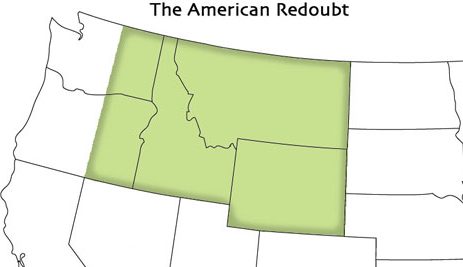
The Australian press reports: People are flocking to a region of America so they can survive the end of the world.

JWR’s Comments: Although I spent nearly an hour on the phone with Australian journalist Matt Young fully describing the American Redoubt concept and the various threats to modern society, he put together a scattered article with a mish-mash of old and new quotes from me (some of them out of context) and a video link to what was one of the most poorly-prepared and antagonistic interviews that I’ve ever endured, with the late liberal American journalist Alan Colmes. (Colmes, known for his satirical wit, passed away from cancer on February 23, 2017.) In that interview Colmes didn’t even get my given name right—though he had my book right on his desk. And then he plunged into an interrogation on the comma in my name. By the way, the mis-captioned photo that Matt Young chose for the top of the article isn’t of me. It is a photo of a Redoubt real estate agent. The juxtaposition of that photo and that radio interview makes it look as if I gave that interview from an unfinished basement.

o o o

12-year-old Wyoming boy trapped by boulders rescued

o o o

A great Redoubt video: 4,000 elk, 15 tons of hay per day in one cool, time-lapse video

o o o

We’ve mentioned this reputable coin shop in Montana once before in SurvivalBlog: Missoula Gold & Silver Exchange. Reader “Mr. X. from Lolo” sent this note of recommendation: “These are good folks with a broad inventory and low mark-up. They are also very fair about buying back what they sell, and also making fair ratio trades—such as swapping gold for silver.”

o o o

I heard about a family-owned company in Eastern Oregon that has a great inventory of AR-15 parts and other items of interest to shooters, many of which they manufacture themselves: Crosshair Customs. They recently moved their machine shop into a new 5,000 square foot building in Baker City, Oregon. You can often meet them at their tables at gun shows all around The American Redoubt.

o o o

Montana from Above – Three Breathtaking Minutes Montage (Video)


Economics and Investing:

The U.S. Rig Count Is An Over-Rated Indicator Of Future Oil Prices. There are many other forces at play in global oil markets other than how a rising U.S. rig count and allegedly massive advances in rig productivity will suppress oil prices forever.

o o o

Cash Is Dead. Long Live Cash. The push to end hard-currency payments in favor of digital ones keeps hitting speed bumps – P.S.

o o o

U.S. Gold Bullion Exports To Hong Kong Surge, 82% Of Total Shipments

o o o

IMF Plan to Force a Cashless Society On World Unfolding – Here’s How – DSV

o o o

SurvivalBlog and its editors are not paid investment counselors or advisers. Please see our Provisos page for details.


Odds ‘n Sods:

Investing in precious metal – Soviet T54 Armor with installed Gold Bullion: Tank collector shocked to find £2million gold bullion hidden in the fuel compartment of his £30,000 vehicle – T.P.

o o o

Sweeping Iowa Gun Bill Up For Gov. Approval – P.M.

o o o

13 Foods You Can Buy Once & Regrow Forever – Most gardners are aware of these easy to grow plants, but those just starting out may want to take note. – DSV

o o o

More evidence that Islam is not a peaceful religion, but harbors too many fanatics and they are a danger when they travel in mobs. Sydney has no go zones as does much of Europe:

‘F*** Jesus!’ Muslim Gang Beats Couple on Train Excerpt: “…four men of Middle Eastern appearance ripped his cross from his neck, stomped on it, and rained kicks and punches on his face, back, and shoulders. Two women attacked his girlfriend when she tried to protect him.”

Officials Warn Australians: Cover Up Your Crosses in Public

Note this sentence as well in the first article: “Sydney Trains defended the transports officers who stood by as the attack took place, telling the Telegraph their main responsibility is tackling fare evasion and that they are trained to observe from a “safe space” if passengers are assaulted.” – In other words, you are on your own! – H.L.

o o o

Is this really worth not having to pick up your live round from the ground? Let it fall! Watch Your Hands When You Unload And Show Clear – W.W.


S&W Model 15, by Pat Cascio

We are continuing to followup on the many requests for more revolver articles from our readers, and we are more than happy to comply. As I pointed out in previous articles, there are some shooters who believe that the “old” revolver isn’t a viable option for self-defense work, and I couldn’t disagree more. Now, we aren’t necessarily talking about a SWAT team clearing a building of an active shooter or a terrorist. We are talking about everyday people who carry concealed or want a home defense handgun, and for whom the revolver might just be the perfect answer.

In 1980 or 1981, I traded a customer in my gun shop out of a S&W Model 15; it’s also called the K-38 Combat Masterpiece. This was my first exposure to this particular model in a full-sized service revolver, and the gun was for my own personal use. Over the years, I’ve owned quite a few revolvers, from S&W, Colt, Ruger, and other gun makers. Most were snubby revolvers, as I carried those guns doing Private Investigative work. The Model 15 that I traded into didn’t have the skimpy small wood grips that came on most models; instead, it had a nice pair of custom-made, hand-filling grips. I don’t know who made those grips, but they fit my hand perfectly.

A quick run down on the Model 15 is in order, before reporting any further. This model holds six rounds of .38 Spl in the cylinder, and it is usually found with a 4-inch barrel; however, there were some 2-inch barreled guns. You’ll usually encounter a Model 15 with a 4-inch barrel. Many police departments, back in the 1960s and into the 1970s, carried this model of gun. The gun comes with a fully adjustable rear sight, for windage and elevation, and early models had a plain black, ramped front sight. The frame is called the “K” frame and is a medium-sized frame. The “J” is a small frame, and the “L” and “N” frames are bigger. The Model 15 is a double-action/single-action revolver, and you can fire the gun by simply pulling the trigger or cocking the hammer for a crisp and lighter trigger pull. Many police departments removed the hammer spur, so the guns could only be fire in the double-action mode. There were liability concerns, ya know.

Weight on the Model 15, with the 4-inch barrel, is right around 34 oz, which is just about perfect, if you ask me. It’s not too heavy and not too light. The standard finish was a nice shinny blue, and the gun was right pretty if you ask me. The trigger is grooved, and I prefer a smooth faced trigger. It is easily corrected by any competent gunsmith. I never cared for the checkered walnut service stocks/grips; they were and are too skimpy for a good grip on the gun for the most accuracy you can wring out of it. The barrel is a medium thickness, and the entire gun just is about perfect in many respects.

I know, I know. I can hear the detractors already saying, “It only holds 6-rds.” That’s true; however, you can reload the gun in a few seconds, using speed loaders from HKS, and if you have expended 6-rds and there is still a threat, you should be behind cover and reload from there. We don’t stand toe-to-toe and keep firing. We should always seek cover whenever possible. So, remember to keep a spare speed loader or two on your person if carrying a revolver, or if this is a house gun, have at least one spare speed loader on hand. Let’s get back to my first full-sized Model 15. Hands down, it was without question the most accurate revolver I ever shot. It didn’t matter what kind of ammo I was using, the gun would easily shoot 2-inch groups at 25 yards, if I did my part. The custom-made, grooved wooden stocks really helped in the accuracy department. They were smooth, not checkered; however, it had finger grooves. To this day, I regret no longer having that gun. I must have sold or traded it, and I honestly don’t remember.

In 1974, I ran across a S&W Model 15 with a 2-inch barrel. It was nickel plated, and I carried it for the longest time in a Safariland upside down shoulder holster. It was a super-accurate revolver, considering it was a snubby model. I’m still trying to find one just like it. My local gun shop has standing orders, if they find one at a gun show to buy it for me. I understand that this model, with the 2-inch barrel and nickel finish, is extremely rare these days.

Over the years, I’ve owned and carried many different types of revolvers for duty work, either as a police officer or in private security. I’ve had S&W Model 19s – .357 Mag, Colt Python – .357 Mag, Colt Trooper MK3 – .357 Mag, and several different types of Rugers in .38 Spl and .357 Mag. However, none have proven as consistently accurate as the S&W Model 15 with a 4-inch barrel.

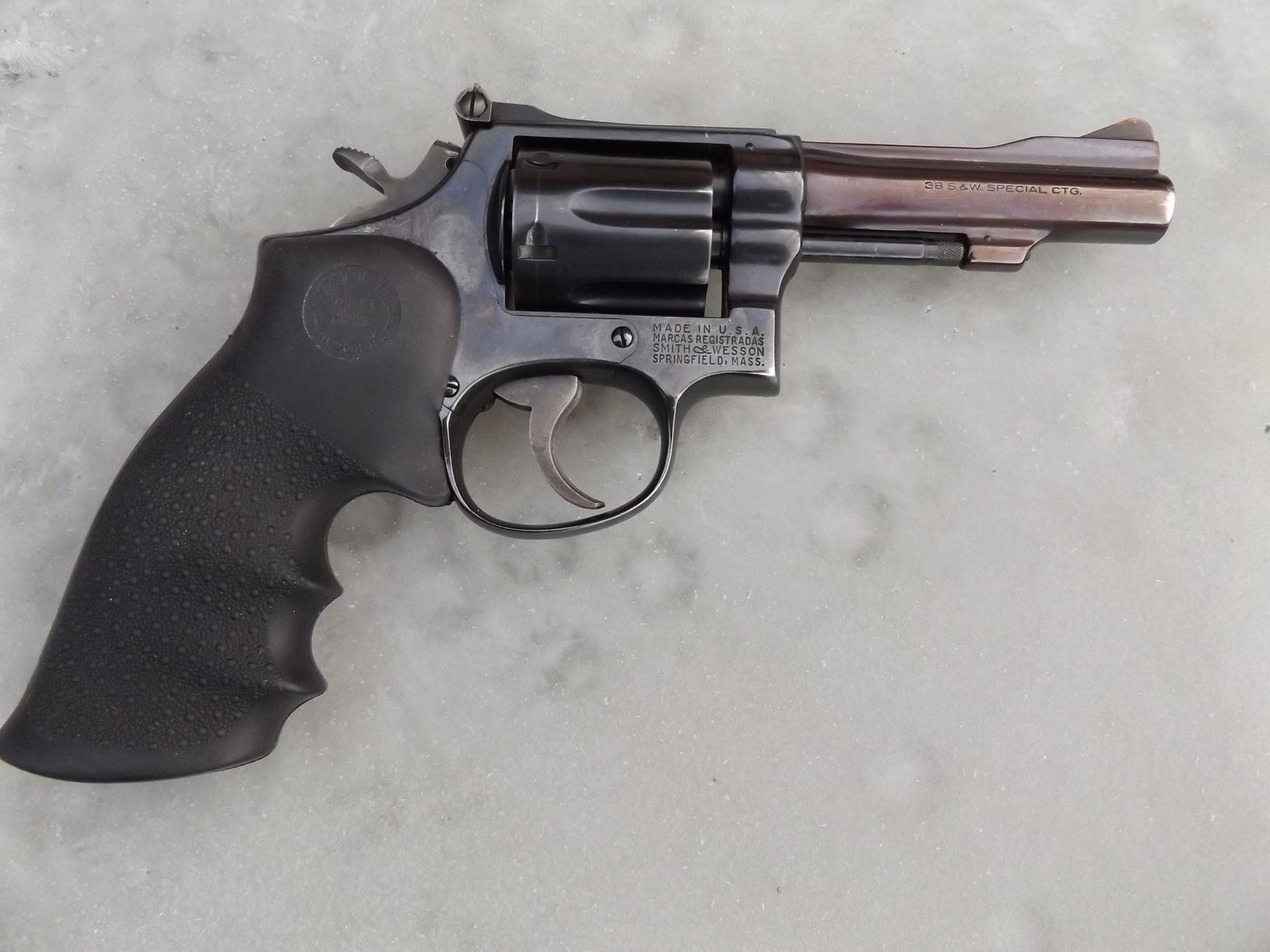
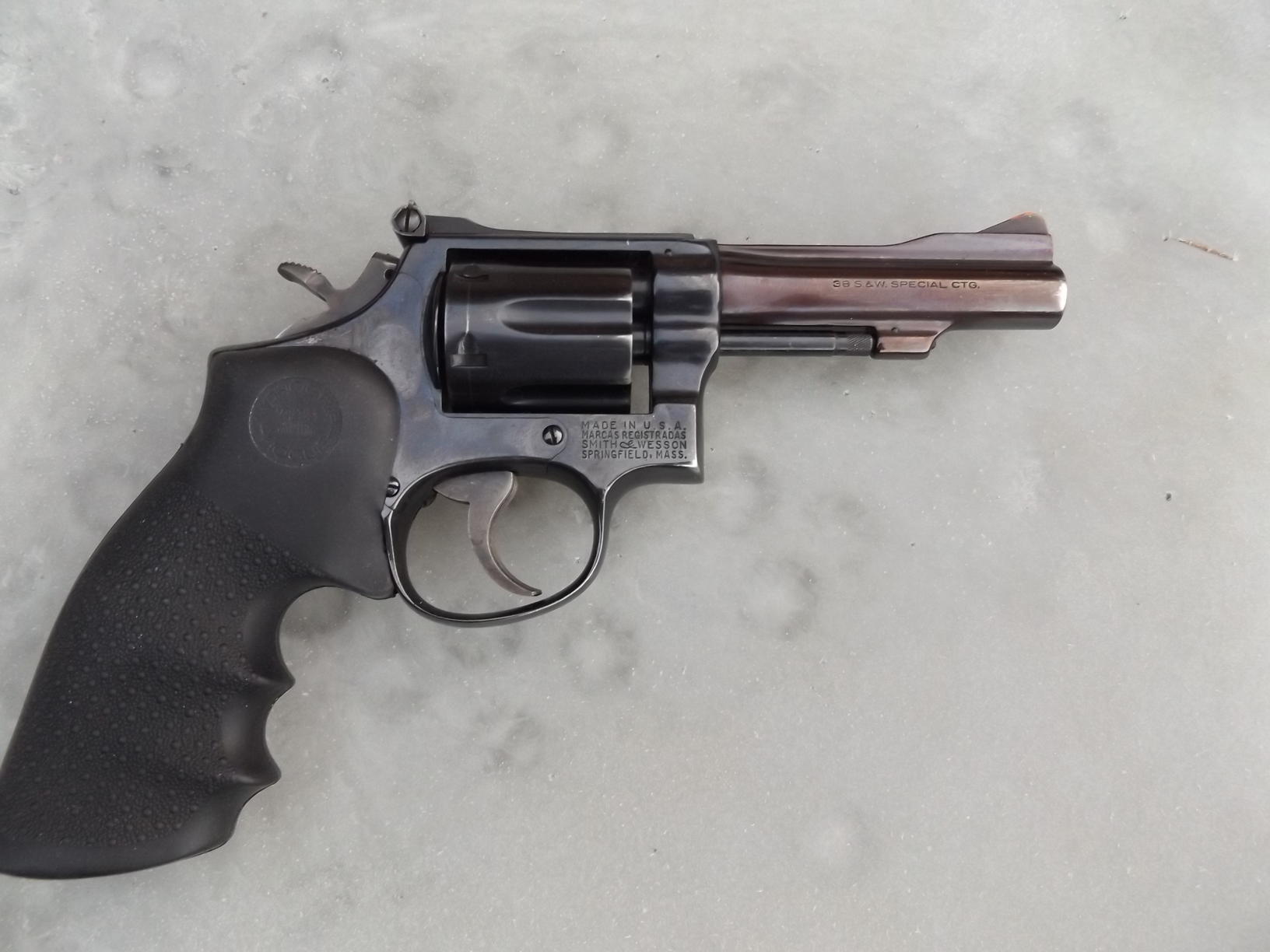
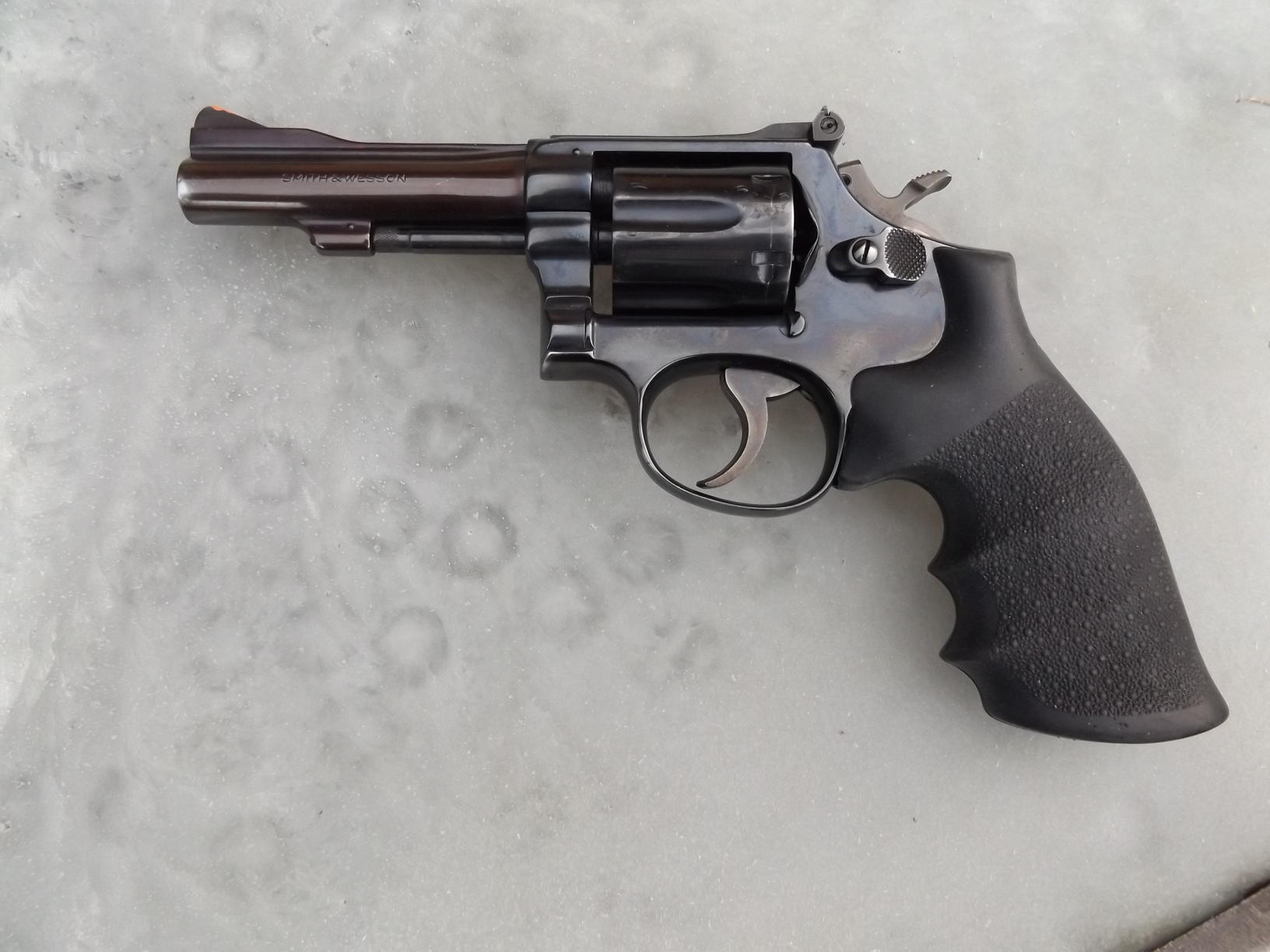
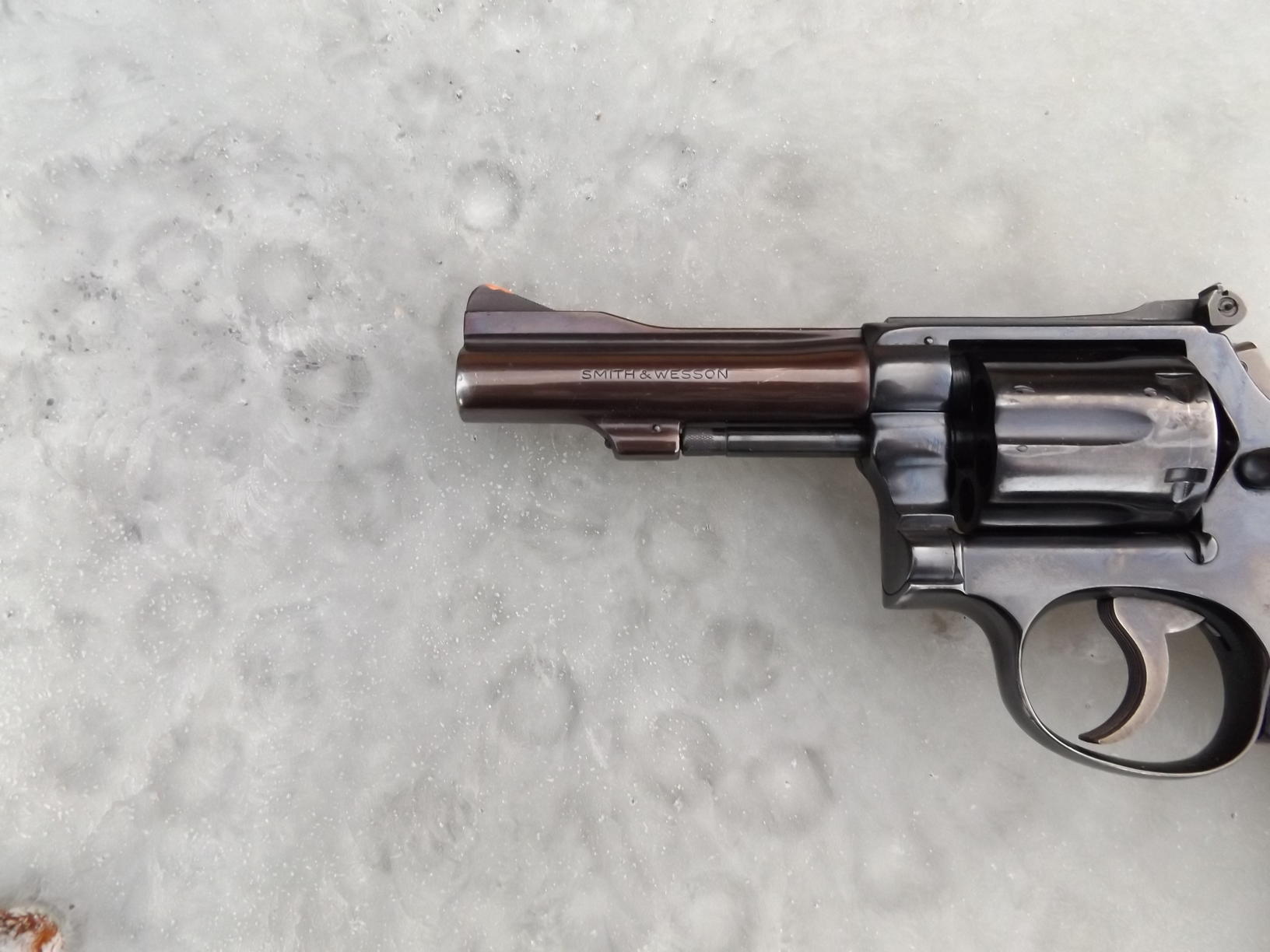
Some time back, my local gun shop had a used S&W Model 15 with a 4-inch barrel, and it was a little bit on the rough side. It had some holster wear and a little bit of pitting, and it was dirty inside and outside. I couldn’t pass on the price, which was $319. The one thing that detracted from the overall appearance of the gun was the barrel, which was plum colored. There were several reasons for this. Either the barrel wasn’t left in the bluing salts long enough or the bluing salts were starting to lose their potency. In any event, I didn’t really care about the plum colored barrel. I have seen it on a number of S&W revolvers over the years. I wanted the gun for a shooter, not a show piece!

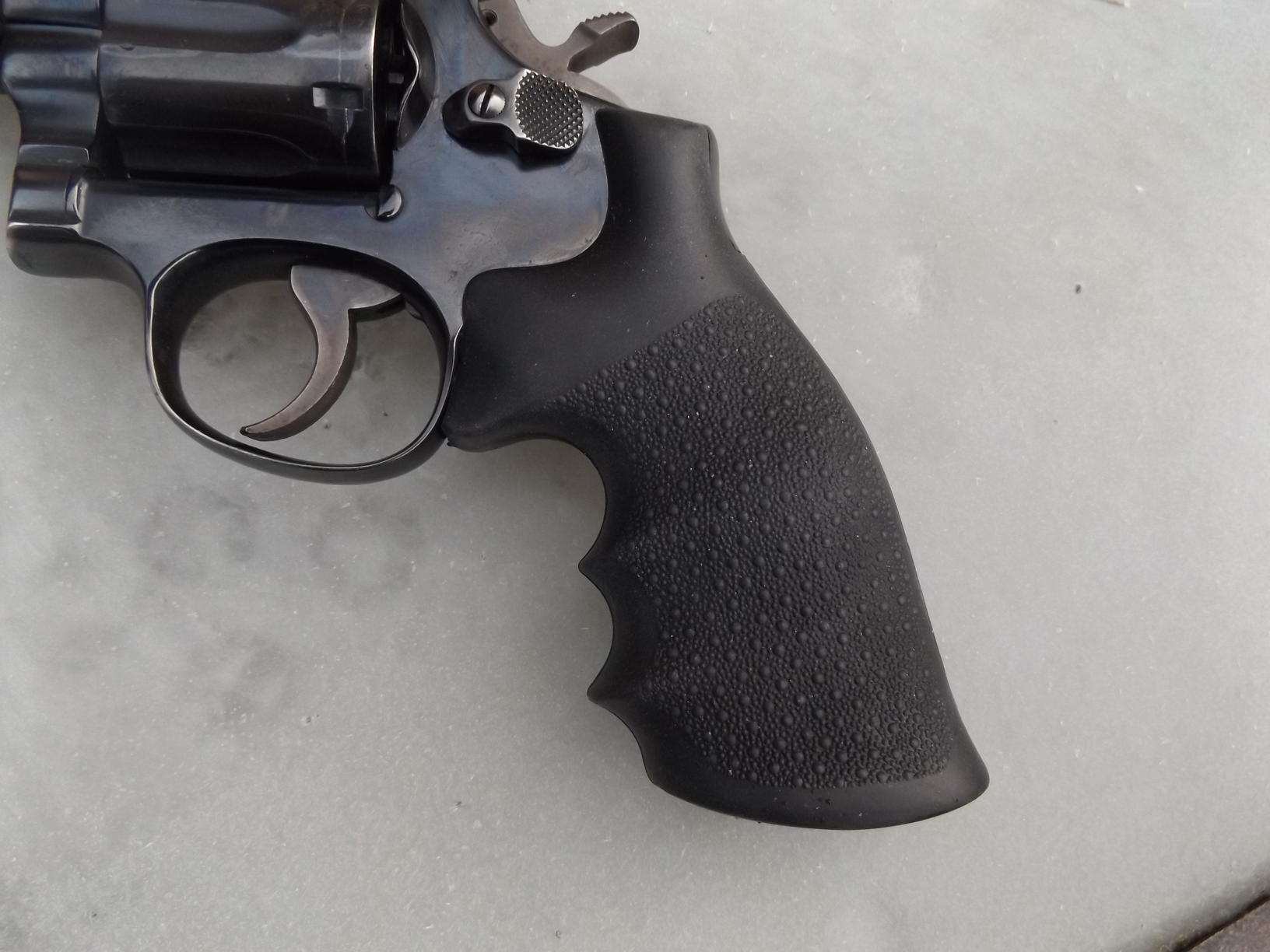
I completely stripped the gun down to the bare frame, removed the inner workings, and gave it all a good cleaning, and lubed it with some Italian Gun Grease , which is my favorite firearms lube bar none. I used some extra-fine steel wool to clean up the minor pitting on the frame and touched-up some of the wear spots on the end of the barrel, where the bluing had worn off. I painted the front sight with some bright orange paint for my aged eyes, and the gun was ready for some shooting. The gun came with a well-used pair of Hogue grips, rubber grips, that didn’t fit the gun any longer, and I swapped them out for a new pair. What a difference in how the gun felt, and it looked much better, too.

I also found some HKS #10 speedloaders in my “everything else” box and an HKS ballistic nylon double speedloader case to carry the speedloaders in. And, in the bottom of one of my holster drawers, there was an old generic ballistic nylon holster that fit the gun nicely. We are talking about a really nice “trail gun” setup, if you are out hiking in the wilderness, just a perfect setup!

From Buffalo Bore Ammunition, I had their 158-gr Hard Cast +P Outdoorsman load, 158-gr Lead Semi Wad Cutter Hollow Point +P, 125-gr Low Velocity JHP, and their 110-gr Barnes TAC-XP all-copper hollow point +P load, which is designed for short barreled revolvers. From the folks at Black Hills Ammunition, I had their brand new 100-gr Honey Badger +P load (see pic of this one) and their 125-gr JHP +P load. Plus, the guys at the local gun shop gave me a partial box of .38 Spl. Reloads.

All shooting was done at 25 yards, over the hood of my pickup truck, resting the gun on a jacket. In single action, the trigger pull was crisp and right at 3 lbs; in the double-action mode, it was super-slick and about 10-lbs with a very, very smooth trigger pull. In the single action mode, I could keep my groups down to two inches or slightly over with all loads tested. Some loads shot spot on; some a bit lower. The lighter weight bullets shot a little lower. The 158-gr Outdoorsman +P load from Buffalo Bore was stout. Everything else ran just fine. I’d restrict my shooting of the +P loads for self defense against two or four legged critters. While the gun was tight, a steady diet of +P will loosen-up the gun, and we don’t want that. The overall winner in the accuracy department was the Black Hills 125-gr JHP load, and right on the heels was the Buffalo Bore low velocity JHP load. Both loads, when firing from the single action, was dead-on at 2-inches if I was doing my part.

Firing double-action, I could still keep all the groups down there around three inches, and many were well under three inches, which is outstanding accuracy. This particular Model 15 was made in the mid 1960s, too. I don’t know what I didn’t like about this particular used revolver. If I were still doing PI work back in Chicago and we were restricted to using a 4-inch Bbl .38 Spl revolver, this would be a top choice for daily carry. For many years, the law in Illinois read that PIs and security officers could only carry a 4-inch Bbl revolver. If you carried a .357 Mag, you were restricted to loading it with .38 Spl ammo. Everyone ignored this for many years, but the state came down hard and mandated that everyone in security carry only what the state said you could carry. I’m not sure of the regulations these days, but if restricted to a 4-inch Bbl revolver for duty use, I’d have no problem carrying this Model 15 with a good JHP load.

So, if you’re in the market for a really nice .38 Spl revolver with a 4-inch Bbl, check out the S&W Model 15. Just don’t expect to find one as inexpensive as I did.

– Senior Product Review Editor, Pat Cascio