Preparedness Notes for Saturday – September 09, 2017

On September 9, 1492, Columbus’ fleet set sail west. The rest, you know as history, or is that revisionist history.

o o o

On a sad note, SurvivalBlog received word today that one of our favorite Science Fiction authors passed away. Jerry Pournelle had many novels published under his own name and with the collaboration of others like Larry Niven, John F. Carr, Steven Barnes and Michael Flynn and more. He is also credited with having the first and longest-running blog on the Internet–long before it got the name “blogging.” One item that will probably be overlooked in the obituaries published about him in the next few days is that Jerry was a life-long prepper. For several years he wrote article for Mel Tappan’s P.S. Letter newsletter. (Published from 1977 to 1982.) Jerry Pournelle’s memory will live on in our hearts.


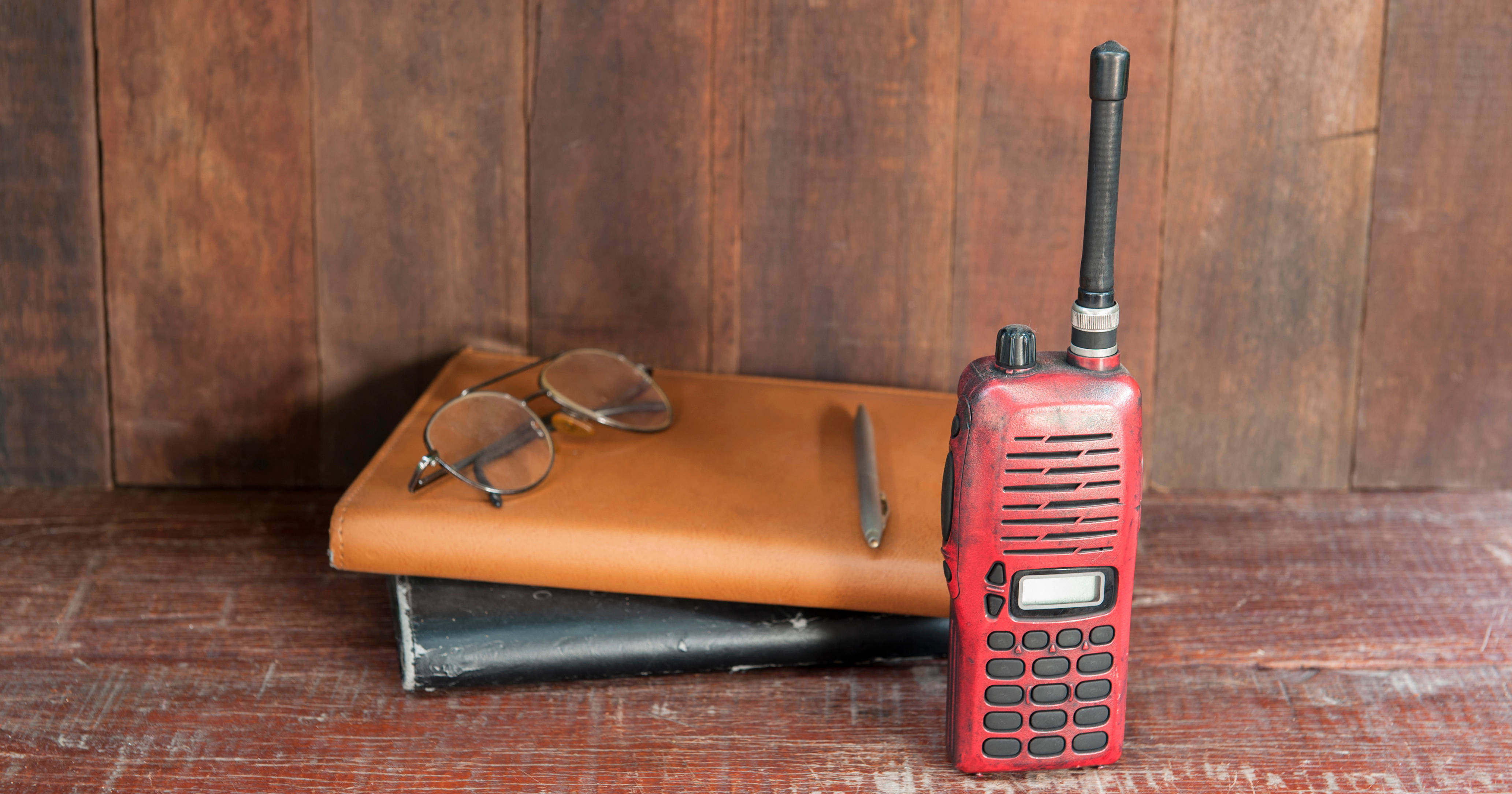
Preventing Failure to Communicate- Part 5, by JMD

We’re continuing to evaluate how to prevent a failure to communicate when we do not have wireless electronic communications available to us. We’ve been exploring our options. Yesterday, I wrote about the different types of communications and types of interference to communication. I wrapped up yesterday’s part of the article by introducing what you should do to prepare. The first part, of course, was plan. Let’s take a look at the second part and conclude the article with the subsequent steps to prepare.

Document

Once you’ve got a good handle on your requirements and solutions, you should create a couple of important documents. The first is referred to by the military as a “Standing Operating Procedure” (SOP). This will be the “bible” for all of your communications. It should cover all of the elements for your communications, such as types, encodings, handshakes, feedback, watches, et cetera. This will probably change as you practice, learn, and evolve, so make sure you keep it up to date. You should print off multiple hardcopies of the document and keep them in separate safe locations. Note that this doesn’t have to be (and probably shouldn’t be) a huge hundred-plus page document. Just cover the areas that are most relevant to you. You may want to make the document modular and keep it in a three-ring binder. Then you only need to replace the pages that change.

The next potential document is a training plan. You probably want to avoid just handing the SOP to people and saying, “Read and learn this”, especially to kids. Put together a realistic plan for getting everyone involved. (See the “Practice” section for more details.)

Continue reading“Preventing Failure to Communicate- Part 5, by JMD”


The Editors’ Preps for the Week

To be prepared for a crisis, every Prepper must establish goals and make long-term and short-term plans. Steadily, we work on meeting our prepping goals. In this column, the SurvivalBlog editors review their week’s prep activities. They also share their planned prep activities for the coming week. These range from healthcare and gear purchases to gardening, property improvements, and food storage. This is something akin to our Retreat Owner Profiles, but written incrementally and in detail, throughout the year. We always welcome you to share your own successes and wisdom in the Comments. Let’s keep busy and be ready!

JWR

Dear SurvivalBlog Readers,

This week was fairly typical for us for this time of year, with lots of firewood splitting and stacking.  We are wrapping up our outdoor gardening season, but will continue in the greenhouse for at least another month. This week we processed 10 quarts of tomatoes. We are beginning to harvest potatoes, but the main harvest won’t be until after the first frost. We are getting back into our regular homeschooling schedule. Jim cut down three more dead-standing Western Larch trees, but that wood will probably be stacked in place for the winter. We also picked up several gallons of honey from a local apiary.  – Avalanche Lily Rawles

HJL

Chickens

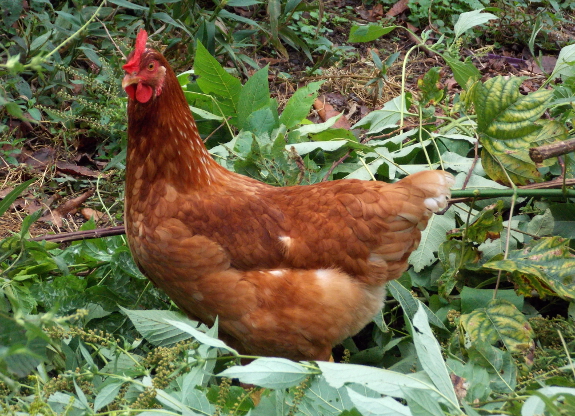
This week at the Latimer Homestead, we will be cleaning out the garden of expended plants and weeding around the fall plantings. Also, its time again to clean the chicken pen. We are closely monitoring the behavior of chicks and chickens, as they are gradually integrated. The chicks are now with their protector, their rooster, getting friendly. He’s struttin’ his stuff and letting them know who is king around them, but we are hopeful that he will be a good guardian and manager, as well as a father to future lines of chicks for us. We are spending a good deal of time out there with them and feeling a bit like chicken therapists, as we work to reduce stress and “make friendly” their environment. So far, adult hens are still laying well, which is the main goal, and chicks are getting big and seem healthy and strong.

Gardening

We remain quite busy putting up our daily garden product. Tomatoes are put up every other day by the gallons, and many other vegetables are also put away, mainly through canning but also freezing, freeze drying, and dehydrating, too. The winter squash are beginning to mature in massive quantities. In past years, we have only had a few make it past the squash bugs, so we are pleased with this bumper crop. Our battle efforts have won out against those pesky creatures. We’re still battling grasshoppers, but the population seems to be dwindling now that we are regularly baiting with NOLO.

Bugout Practice

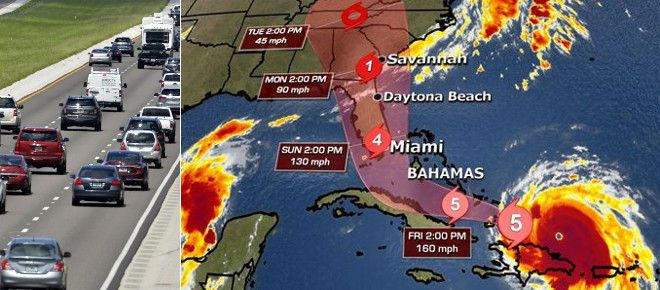
With the Hurricanes in the Southeast and forest fires in the Northwest, we also have plans to test out our new generator and work on our portable water treatment system this week. We can’t assume things will work as we plan unless we periodically test them and practice using them!

o o o

Again, please share your own successes and wisdom in the Comments.



The Survivalist’s Odds ‘n Sods:

SurvivalBlog presents another edition of The Survivalist’s Odds ‘n Sods— a collection of news bits and pieces that are relevant to the modern survivalist and prepper from “HJL”. Have you ever wandered exactly what data Facebook was collecting from you? Now you can know.

Election Politics

Here we are, 10 months after last years presidential election and the topic is still as hot as it ever was. On one hand, we have Hillary releasing her book “What Happened” which is probably more aptly titled “It wasn’t my fault”. I’ve yet to see a blurb from it where she takes any kind of responsibility for her lack of integrity or lack of policies (other than get rich quick.) Now we have a report out of New Hampshire that their same-day-registration may have swung the vote for Hillary and the Democrats. While Trump didn’t really need it, the republican Senator could have been that single vote needed to repeal Obamacare.

Hurricane Recovery

The Citizens Committee for the Right to Keep and Bear Arms (CCRKBA) is saying to follow SAAMI guidelines for the care of your flood damaged guns. SAAMI offers a very useful guide called: “Guidance on Firearms That Have Been Submerged or Exposed to Extensive Amounts of Water”. Basically, you need to disassemble them, clean them and apply a moisture displacing lubricant to the metal parts. SAAMI also recommends no attempt to salvage ammunition that has been submerged in water. Thanks to Reader D.B. for the link.

o o o

Superesse has published a list of resources that may be helpful for those recovering from Harvey and Irma: Prepping for a Hurricane and tips for the aftermath. Note that this list has some North Carolina specifics in it, but you can still use it as a guide. If you live in another state, you can replace the NC specific links with those from your state and county and store it in your safe along with keeping a copy handy while traveling.

Continue reading“The Survivalist’s Odds ‘n Sods:”


The Editors’ Quote of the Day:

“This day the Lord thy God hath commanded thee to do these statutes and judgments: thou shalt therefore keep and do them with all thine heart, and with all thy soul.  Thou hast avouched the Lord this day to be thy God, and to walk in his ways, and to keep his statutes, and his commandments, and his judgments, and to hearken unto his voice.” – Deuteronomy 26:16-17 (KJV)


Preventing Failure to Communicate- Part 4, by JMD

We’re continuing to evaluate how to prevent a failure to communicate when we do not have wireless electronic communications available to us. We’ve been exploring our options. Yesterday, I wrote about various channels of communications. Today, we’ll move into various forms of communications to consider.

Electronic

In the beginning of this article, I mentioned that it was about alternatives to wireless electronic communications. However, that doesn’t rule out wired forms of electronic communication. Wired communications tend to be point-to-point, are very hard for anyone to intercept, and can send large amounts of information. The biggest disadvantages are that they require electricity and they are both relatively complex equipment to function (complex relative to a fire or whistle) and generally limited to certain locations and distances (the maximum length of your wire).

  • Telephone – You can set up a relatively simple point-to-point telephone system using some used military field phones.  You can buy these at a military surplus store, and some commo wire. You can even build one yourself using some old wired telephones, a battery, and a few electronic parts. One advantage to this type of channel is that it allows you to use plain language and exchange a lot of information quickly.
  • Telegraph – A telegraph is similar to a telephone, except that it only allows simple dots and dashes to be transmitted (which is what Morse code was invented for). The telegraph can be considered the distant forerunner of the Internet. It allowed a lot of information to be exchanged over very long distances. One advantage to the telegraph is that it is much simpler than telephones, and you can build an entire system from parts you probably have laying around your house.

Continue reading“Preventing Failure to Communicate- Part 4, by JMD”


Freeze Dried Friday

Filtering Oil

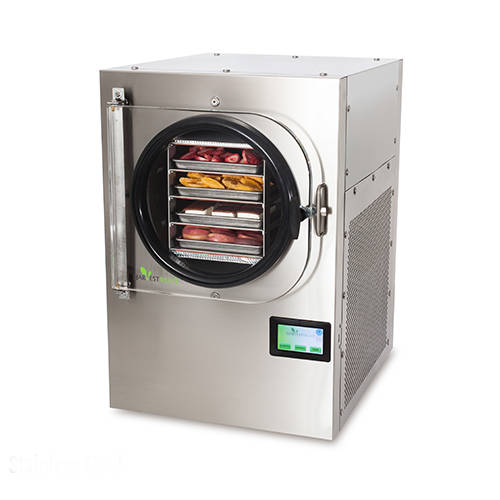
This was a slow week for the freeze driers again. We just fired one of them up on Wednesday to run a batch of basil. Today we are finishing up a batch of tomato sauce. However, I’d like to ask SurvivalBlog readers a question.

We currently filter our oil after every run through a simple oil filtering setup made out of plastic jars and an automotive oil filter. The issue with the current design is water in the oil. If you allow water to enter the oil filter, it will not exit until the filter is full of water. At that point, you have to either change the filter or tear the setup apart and drain the water out of the filter. I’ve seen two ways to get the water out.

  1. Use a capture jar with a shoulder on it when you drain the oil from the pump. Then let it sit for about an hour and the water will settle to the bottom. You can then carefully pour the oil into the filter, leaving the water in the shoulder of the jar as you pour. Because of the design of Mason jars, you can’t get a perfect pour and avoiding all water means you will lose about 1/4″ of oil. We currently get around that by not dumping that water/oil until the jar has been used for many oil changes and the water accumulates to a larger amount.
  2. Freeze the jar of captured oil. The water will solidify and the oil will get slugish. You can then up-end the jar when you pour into the filter without having to worry about the water. This method certainly avoids all water, but the sluggish oil doesn’t pour very well from the jar and you end up wasting about the same amount of oil in the long run. It also takes much longer as you have to add in the freezing step.

So, how do you avoid water in your filtered oil?


Letter: Thoughts on Prepping, Harvey & Irma

HJL,

Thanks in part to my experience learned from living through Hurricane Dolly years ago and also thanks to this Blog my family and I were mainly prepared by the time Harvey hit. ( We live in the Houston Metro Area). We shared our knowledge with neighbors and like everything else, some listened, some asked for help and info and some…well…they already knew everything. We came through everything very well. However a few things stand out:

Continue reading“Letter: Thoughts on Prepping, Harvey & Irma”


Economics & Investing For Preppers

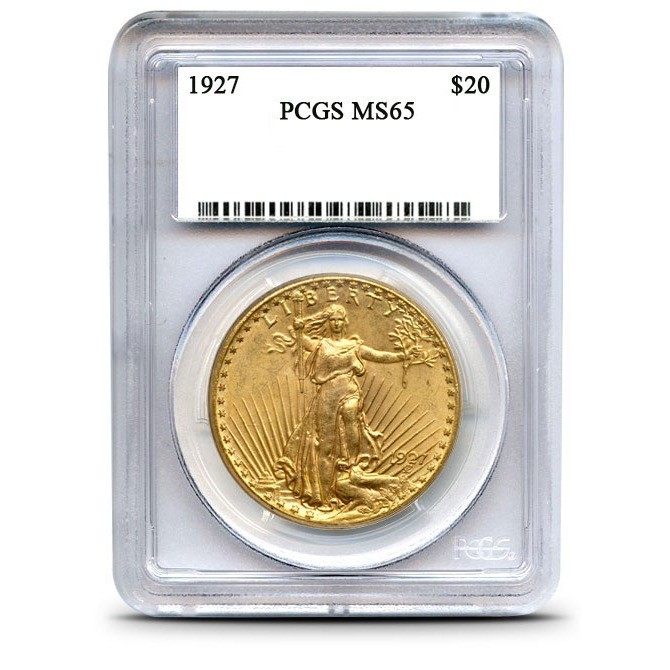
Here are the latest items and commentary on current economics news, market trends, stocks, investing opportunities, and the precious metals markets. We also cover hedges, derivatives, and obscura. And it bears mention that most of these items are from the “tangibles heavy” contrarian perspective of JWR. (SurvivalBlog’s Founder and Senior Editor.) Today’s focus is on numismatics. (See the Tangibles Investing section, near the end of this column.)

Precious Metals

First up, at Sharps-Pixley: Silver, the Bargain of the Century, sure to Explode after Gold Breakout

o  o  o

The futures contracts for gold are still reflecting a lot of uncertainty, globally. (The recent hydrogen bomb test in North Korea seems to be the source of considerable angst.)


Stocks:

Moving on to stocks: No great surprise, but the share price of Home Depot is up 2.37%, even before Hurricane Irma reaches the U.S. mainland.

o  o  o

Harvey, Irma And Trump: Strong Tailwinds For Infrastructure Stocks


Commodities:

From sugar mills to hog farms, U.S. agriculture braces for Irma

o  o  o

Hurricane Irma Could Affect Crops in Southeast

o  o  o

And over at Oil Price:  Hurricane Irma Could Destroy Oil Demand


Forex:

Whether the BoC Hikes or Not, USD/CAD And Crosses Will Move

o  o  o

Sound as a Pound? GBP/USD Daily Fundamental Forecast

Continue reading“Economics & Investing For Preppers”


Preparedness Notes for Thursday – September 07, 2017

Today is the birthday of Dr. Ludwig Vorgrimler (born 1912 in Freiburg, Germany; died 1983). Vorgrimler was the designer of the Spanish CETME rifle, from which sprang a plethora of roller-lock descendants from HK, including the G3, HK21, and MP5. His bolt design was also copied by the Swiss for their excellent PE57 and SIG 510 rifles. (Although the Swiss felt obliged to mount a “beer keg” charging handle on the right side of the receiver, for the sake of familiarity to Schmidt-Rubin shooters.)

o o o

Solar Flare

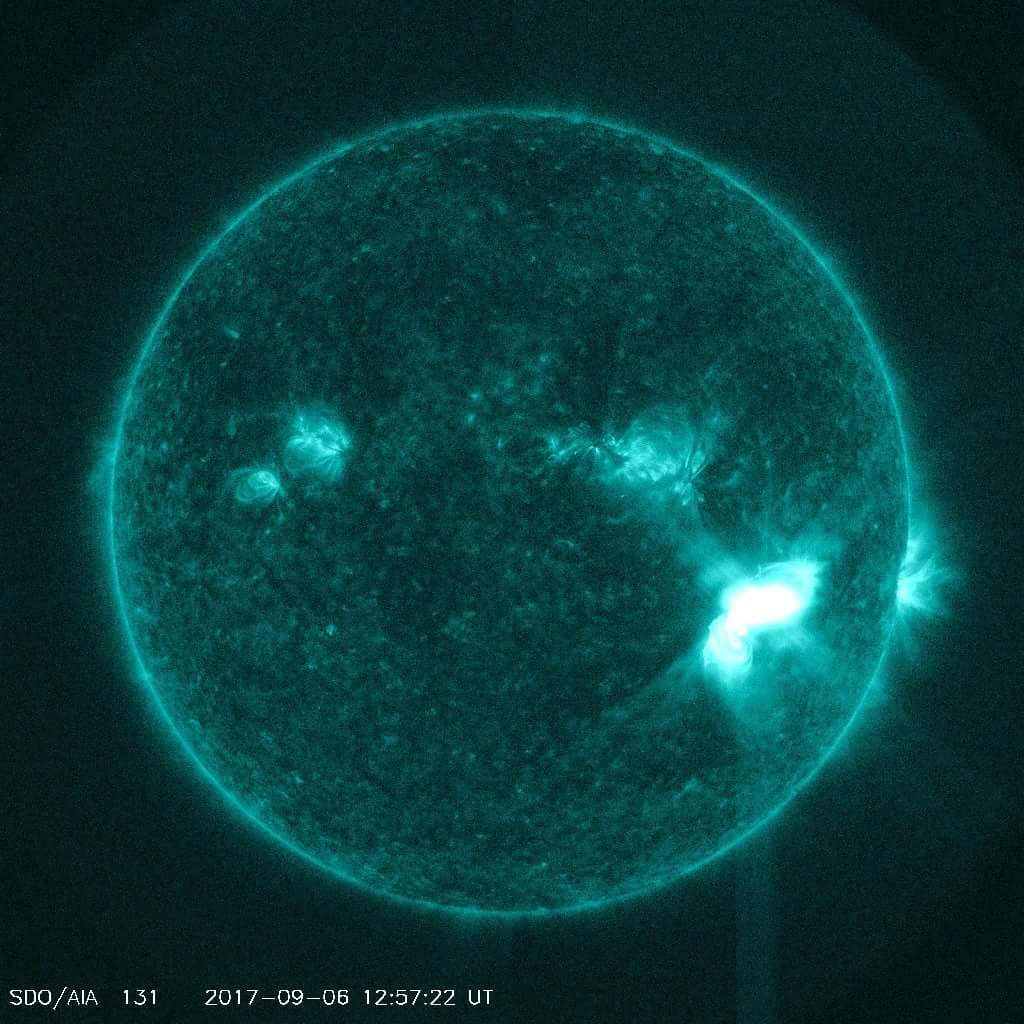
Sunspot AR2673 unleashed a major X9.3-class solar flare (the strongest solar flare in more than a decade.) The X-rays and UV radiation created a strong radio blackout over Europe, Africa and the Atlantic Ocean. But yesterdays CME didn’t have a significant impact on Earth’s magnetic field. However, another CME is on the way and is more potent. Strong G3-class geomagnetic storms are possible. If you have Faraday protection for your sensitive electronics, you may want to store them starting September 8th before the CME hits Earth.


Preventing Failure to Communicate- Part 3, by JMD

We’re continuing to evaluate how to prevent a failure to communicate in the event that our normal, electronic communications equipment are not available to us. We are exploring our options. Yesterday, I wrote about common content items and encoding. Let’s continue.

Medium

The medium defines what carries the communication through the channel. For written communication, the medium will usually be paper. For most signal-based communications, the medium will be inseparable from the channel. In the case where communications is sent by a flashing light, light is the medium.

Channel

The channel is critical to all communications. It determines how the message is actually transferred to the receiver. Thus, how much bandwidth is available and how noise may impact the communication. It also tells us likely it is the communication will be noticed/intercepted by someone other than the intended recipient. Channels can also be mixed to improve the overall communications process. For example, say you’re out on a roving patrol and need to use semaphore flags to send a message to someone. How do you know they’ll be watching and see your message?

One option would be to send up from your location a certain color flare. This would alert the receiver that a communication will be coming. They should grab their binoculars and look for flags in the area the flare came from. The receiver can then send up a different color flare when they’re ready to receive communications. (This would be a “handshake” using an alternate channel.) The following sections highlight some potential communications channels along with their pros and cons.

Visual Communications Channels

Visual communications channels are one of the most common forms of communications channels. Human beings tend to be heavily driven by visual influences. Their biggest advantages are that they can typically be seen over long distances by anyone with reasonable vision or binoculars. They tend to be easy to transport and use. Their biggest disadvantages can be that their effectiveness is subject to environmental conditions. Particularly the amount of available light. They can be difficult to restrict to just the desired recipient. A good example of the latter is when you shine a flashlight in the fog. Another example is when there are a lot of suspended particles in the air (pollen, dust, et cetera). The beam of light becomes very visible to everyone around.

Continue reading“Preventing Failure to Communicate- Part 3, by JMD”


Letter: Second Redoubt Area?

HJL,

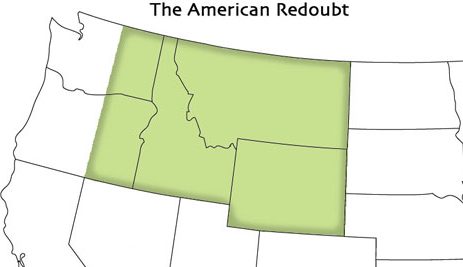
I have been reading your page for years. The wife and I have decided that it is way past time to get out of Kalifornia (we live way out in the desert). We originally looked at the Redoubt areas. I quickly learned that my body simply could not handle the cold weather. I wish I could but it is too painful. We are now looking at East Texas. (Not Austin) I was hoping you may know somebody that could write an article or provide more information regarding warmer climates for places to retreat / homestead/ ranch. Your Redoubt would be my first choice, but my body just cant handle the cold. Thanks for the great Blog and God bless. – R.

HJL’s Comment: I’m not aware of any in the east Texas area. I do know that there is a redoubt like movement in the Ozark mountains. Look up Pastor Joe Fox on YouTube to see some of his stuff talking about that. He is not the only one in that area, but I am familiar with his work.


The Survivalist’s Odds ‘n Sods:

SurvivalBlog presents another edition of The Survivalist’s Odds ‘n Sods— a collection of news bits and pieces that are relevant to the modern survivalist and prepper from “HJL”. Leading the news today is the U.S Virgin Islands governor’s violation of the U.S. Constitution.

Violation of the U.S. Constitution

Governor Kenneth E. Mapp, of the U.S. Virgin Islands, has issued an unconstitutional order to activate the National Guard and given them the authority to confiscate the personal firearms and ammunition of U.S. citizens living within this territory. U.S. Territories do not get to have all of the Constitution applied to them because they are not a “state” and the provisions of the Constitution that apply to states is typically not applicable. However, all the other provisions are applicable, including the first and second amendments. It is unconscionable that an active governor would take such steps in such a crises leaving the population without any protection of themselves. Thanks to R.V. for the link.

o o o

For those interested, Reader T.D. informed us that there is a petition on Whitehouse.gov to remove Governor Mapp from office for authorizing such a violation of the Constitution. You can view and sign this petition and if it garners 100,000 votes by October 6, 2017, the White House will review and respond to it.

Continue reading“The Survivalist’s Odds ‘n Sods:”