Ingredients:
- 5 to 6 knockwurst links
- 1 onion, thinly sliced
- 1 coarsely shredded, small head of cabbage
- 1/2 tsp salt
- 1 tsp caraway seeds
- 2 cups of chicken bouillon
Continue reading“Recipe of the Week: Knockwurst and Cabbage, by R.V.”

Continue reading“Recipe of the Week: Knockwurst and Cabbage, by R.V.”
Here are the latest items and commentary on current economics news, market trends, stocks, investing opportunities, and the precious metals markets. We also cover hedges, derivatives, and obscura. And it bears mention that most of these items are from the “tangibles heavy” contrarian perspective of JWR. (SurvivalBlog’s Founder and Senior Editor.) Today’s focus is on the National Debt.
Andrew Hecht: Precious Metals Continue To Offer Opportunity For Those With Patience
o o o
Gary Wagner: It’s A Mad, Mad, Mad World
Jim Cramer blames a ‘group of complete morons’ for blowing up the market. Nobody rants about the stock market quite like Jim Cramer. Who could ever forget his classic “Open the Discount Window!” rant, back at the outset of the 2007-2008 credit crisis?
Moving on to this at FXEmpire: Commodities Daily Forecast
“Every good citizen makes his country’s honor his own, and cherishes it not only as precious but as sacred. He is willing to risk his life in its defense and its conscious that he gains protection while he gives it.” – Andrew Jackson
February 11th is the birthday of the late Burt Blumert (born February 11, 1929 in New York City, died March 30, 2009). He once owned Camino Coin Company (as did Dr. Ron Paul).
o o o
This has been another entry for Round 75 of the SurvivalBlog non-fiction writing contest. The nearly $11,000 worth of prizes for this round include:
Round 75 ends on March 31st, so get busy writing and e-mail us your entry. Remember that there is a 1,500-word minimum, and that articles on practical “how to” skills for survival have an advantage in the judging.
Why in the world are you writing an article about fruit cake? Is it just because of Christmas? No, there are good reasons for writing about fruit cake and how it can supplement your food supplies. (I started the article during the Christmas season and have been delayed in completing it.)
Well, believe it or not, fruit cake should be, or at least could be, a part of your rations to keep you going during difficult times. Whether it is a hurricane, a blizzard, an EMP, economic collapse, or an attack of zombies, a fruit cake can help you to survive.
Oh, sure. What? Do you throw the fruit cake at the zombies, or shoot it out of a cannon or something?
No. You eat it. What!?! Eat fruit cake? You are crazy! Yeah, crazy like a fox.
Fruit cakes have undergone a lot of jokes over the years, but you may not know why there are fruit cakes.
There is some interesting history on how fruits cakes came about. Once upon a time, especially in northern Europe, the northern parts of the United States, and in Canada, during the hard winter months fresh fruits were not available. At that time, there was not the current world-wide trade, which brings in fruits and produce from other parts of the world that are in season. There was no refrigeration, and you couldn’t get canned or frozen fruit in whole form or as juice. We are talking about in the 1800s, when fruit cake was becoming more than a regional, popular Christmas treat.
Continue reading“Fruit Cake? Are You Crazy?, by NMSourdough”
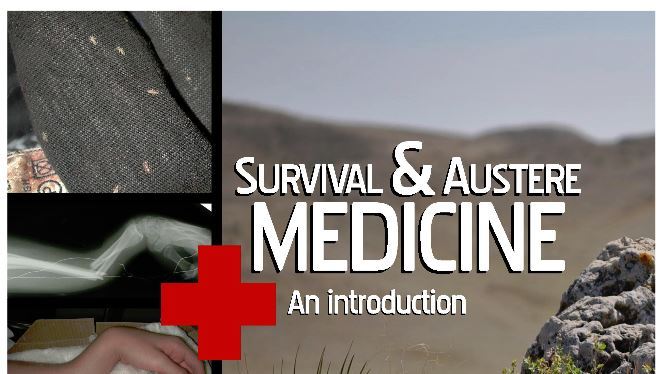
As many of your readers already know, the newly revised, highly recommended book, Survival & Austere Medicine: an Introduction, has been published free online in .pdf format (click the picture!). There are several editions online. Make sure you download the 2017 3rd edition edited by the group collectively known as RAWTWMDBM.
And now this 2017 edition (589 pages) has been published in hardcopy by Lulu. It’s available in hardcover with black & white illustrations for $29.25; paperback black & white for $19.28; paperback with full color illustrations for $111.91; and hardcover full color for $126.35. This is the update to the 2014 edition. (The black and white editions are quite adequate; you probably don’t need to pay extra for the full color editions.)
I would be remiss not to mention that there are also a wide variety of medical references available free online, and I continue to appreciate The Survival Medicine Handbook by Dr. Alton and Nurse Amy, as they’re known. (2016, 700 pages, $37.99)
Continue reading“Letter: Updated Survival & Austere Medicine Book”
SurvivalBlog presents another edition of The Survivalist’s Odds ‘n Sods— a collection of news bits and pieces that are relevant to the modern survivalist and prepper from “HJL”.
Reader G.P. sent in this news article showing that in the last couple of weeks, influenza deaths have accounted for 10% of the total number of reported deaths from all causes in the United States. While the particular strain of influenza attacking the population has not mutated enough to be considered a new strain, its fatality levels are approaching those of which a new virulent strain typically causes. The numbers are approaching those of the swine flu which swept the globe in 2009 and 2010. The CDC expects the numbers to keep rising as the flu season continues.
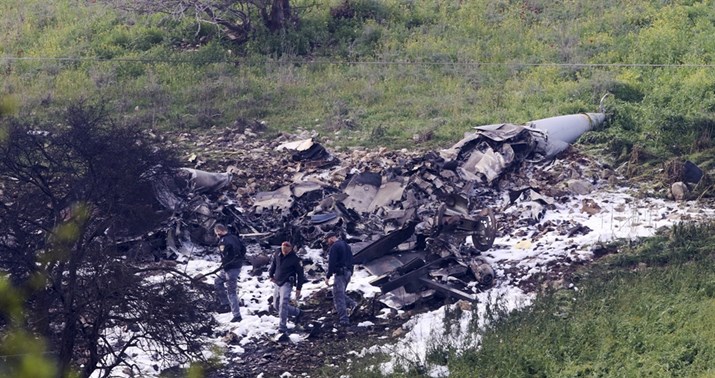
The Middle East is beginning to heat up again. Israel downed an Iranian drone that violated it’s airspace and in return Israel attacked Iranian military targets located within Syria, possibly losing one of it’s own jets in the raid. The Syrian fighting seems to be winding down, but Iran has an emboldened military presence in the region now (thanks to Obama). Iran wants to be a regional power and all of their efforts seem aimed at destroying Israel. Israel’s fear is that Iran will use Syrian territory to create a channel for funneling equipment to Hezbollah to attack Israel. Thanks to B.L. for the link.
“Ye have heard that it hath been said, An eye for an eye, and a tooth for a tooth: but I say unto you, That ye resist not evil: but whosoever shall smite thee on thy right cheek, turn to him the other also. And if any man will sue thee at the law, and take away thy coat, let him have thy cloke also. And whosoever shall compel thee to go a mile, go with him twain. Give to him that asketh thee, and from him that would borrow of thee turn not thou away.” Matthew 5:38-42 (KJV)
February 10th is the birthday of Zvi Zvika Greengold (born 1952), a Centurion tank commander who was one of Israel’s most notable heroes of the Yom Kippur War. He was awarded the Medal of Valor.
Continue reading“Preparedness Notes for Saturday – February 10, 2018”
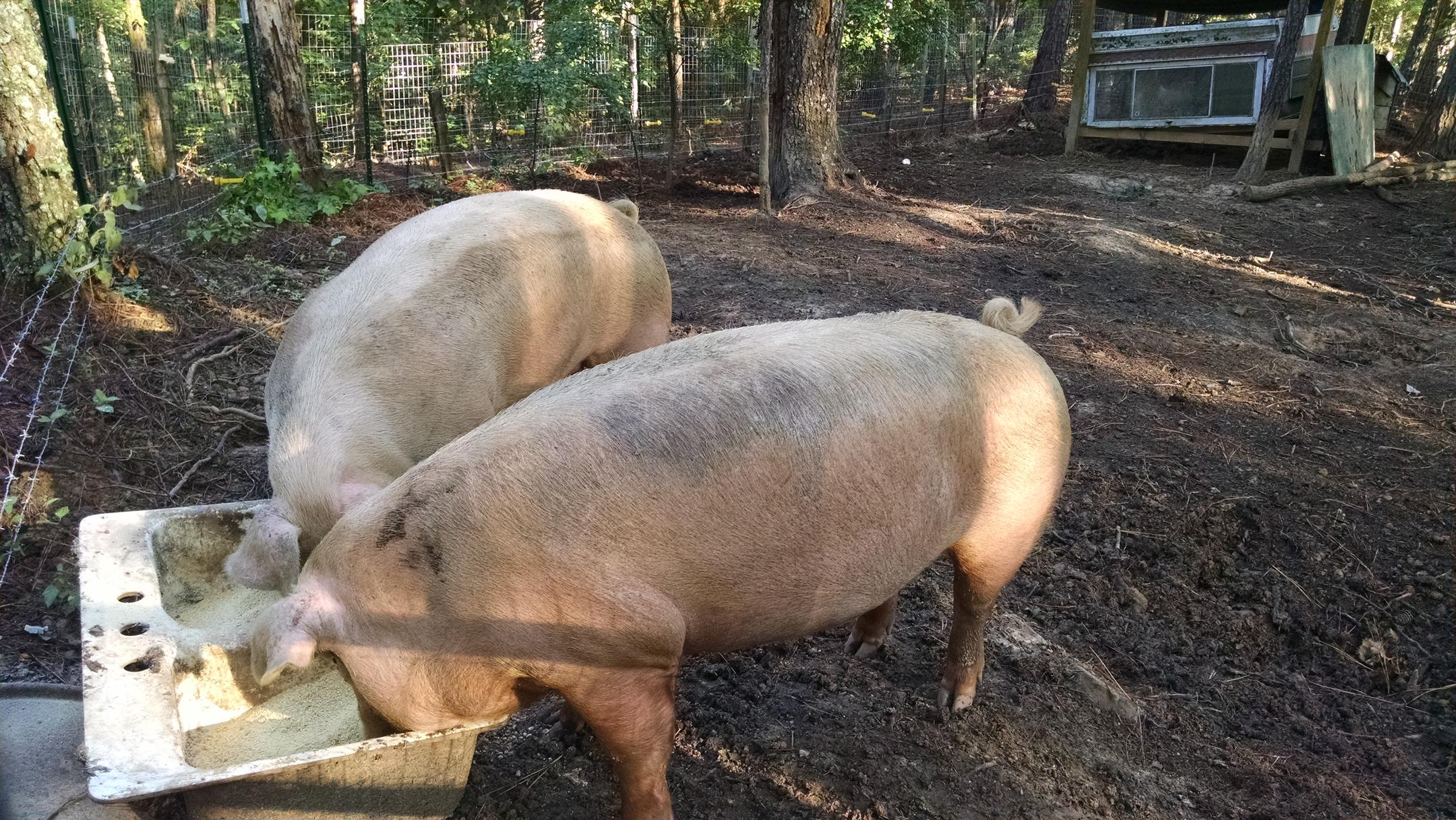
I’m a grandmother who has plunged into raising pigs, and I’ve worked with them from the time they were piglets all the way until they were full grown 400 pound hogs. Then, I’ve butchered two females and processed the meat myself. In the four proceeding parts, I have described this journey– from the animal selection to providing a secure pen, food, and water as well as developing my plan for butchering and processing. There has also been a difference between the plan and reality, and I’ve explained both. Well, actually, I’m now describing my real experience with processing. So, let’s wrap this up.
We have gone over curing and processing hams and curing bacon. Currently, we are in the midst of talking about my favorite– bacon! I gave you a recipe for maple flavored bacon in the last part of this article series. Now, let’s talk about improving it further with smoke.
If you have a smoker, you can use it to smoke your bacon. I like to use hickory or apple/fruit wood shavings for flavor. Follow the directions of your electric, gas, or propane device. Smoke the cured bacon until it reaches an internal temperature of 150°F. Watch the temperature carefully or your product will be dry and tough. I have never used a home-made, fire-fueled smoker, so I can’t give you much counsel on it, except to check the internal temperature and humidity frequently.
Continue reading“From Piglets to Bacon- Part 5, by Animal House”
To be prepared for a crisis, every Prepper must establish goals and make long-term and short-term plans. Steadily, we work on meeting our prepping goals. In this column, the SurvivalBlog editors review their week’s prep activities. They also often share their planned prep activities for the coming week. These range from healthcare and gear purchases to gardening, property improvements, and food storage. This is something akin to our Retreat Owner Profiles, but written incrementally and in detail, throughout the year. We always welcome you to share your own successes and wisdom in the Comments. Let’s keep busy and be ready! This week’s emphasis is on Spring cleaning
Dear SurvivalBlog Readers,
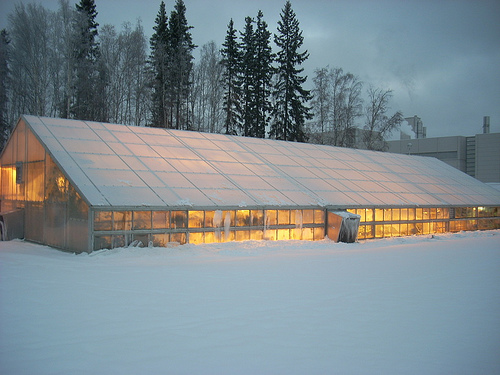
We’ve had fairly mild weather for the past week here at the Rawles Ranch. Despite some recent dustings, the snow is now melting faster than it is accumulating. And of course the days are starting to get longer. We can see spring on the horizon. My darling wife (Avalanche Lily) is getting her typical late winter itch to start the vegetable garden. Given our northern climate, that will be mostly sprouting indoors until March, and then only starts inside the greenhouse until at least May.
On Thursday we rotated our horses and cattle into a new winter pasture. We typically do this in the late winter each year, to get them off of any sodden loafing areas. The intent here is to reduce any risk of hoof rot. As usual, when we turned them out to change pastures there was much joyous galloping around and kicking up of heels (well, hooves, that is). That little ritual is always fun to watch. This time, one of our Jersey cross heifer calves was feeling particularly rambunctious. She started to chase a pair of doe mule deer around the newly-occupied pasture. This brief, playful chase took place on about a foot of compacted snow. Seeing that gave us a good chuckle.
All but one of our pastures at the ranch is partially wooded. In the new pasture there are plenty of clear spots (with no snow) beneath fir and cedar trees. Hopefully these fresh loafing spots will keep hooves healthy.
We have been doing some spring cleaning and organizing at the ranch house. We are all feeling a bit of Cabin Fever. We can hardly wait for the snow to come off. It will be great to be able to get out away from the house and tackle some chores like fence maintenance and firewood cutting.
SurvivalBlog presents another edition of The Survivalist’s Odds ‘n Sods— a collection of news bits and pieces that are relevant to the modern survivalist and prepper from “HJL”. Front and center today is devastating news on the Browning Hi-Power.
We received very sad news today from reader S.M. that Browning has decided to end Hi-Power production. One of John Moses Browning’s finest co-designs has long been a standard and no other handgun has come close to it’s popularity and production. It actually served on both sides of the war in WWII and has seen service duty in more countries than any other handgun. It is still my favorite firearm today and I consider it one of the most beautiful and refined designs ever made. I hope that Browning brings it back due to public outcry. You can still obtain them as there are many in current dealer inventories, but they are now technically out of production.
Waterotor Energy Technologies has a rotor designed to extract energy from slow moving water sources. The rotor is reportedly able to extract half of the available energy and does supposedly does not impact wildlife because of the slow moving design. If you have a retreat that has a body of slow moving water on it, this may be an interesting energy option for you. Combined with modern inverter technology, this could potentially power an off-grid retreat with ease. Thanks to B.H. for the link.
“Thus saith the Lord; If my covenant be not with day and night, and if I have not appointed the ordinances of heaven and earth; then will I cast away the seed of Jacob, and David my servant, so that I will not take any of his seed to be rulers over the seed of Abraham, Isaac, and Jacob: for I will cause their captivity to return, and have mercy on them.” – Jeremiah 33:25-26 (KJV)
February 9th is the birthday of Major George Charles Nonte Jr. (Born 1926, died June 30, 1978.) I had the privilege of attending ROTC Basic Camp at Fort Knox in the same company with his daughter Yvette, in 1981. Some of the stories that she told me about her father were amazing. He was quite a guy. Cadet Yvette Nonte went on to a career in Army Intelligence, retiring as a Colonel. – JWR
o o o
We’ve been overwhelmed by the strength of the pre-orders for the waterproof blog Archive USB sticks. An unexpectedly large number of readers are availing themselves of our flat rate postage offer and ordering 2, 3, 5, and even 10 sticks at a time. We’ll go ahead and place a re-order with the USB stick contractor, to try to meet the demand. We are very grateful!
Continue reading“Preparedness Notes for Friday – February 09, 2018”
I’m a grandmother who has raised her own small livestock and grown two female piglets into full grown hogs. This is my story. In the first three parts of this series, I have told how I began raising pigs, the selection process I went through, preparing their pen and securing them, growing them, and my plan for butchering them. The process didn’t go exactly as expected, and I’m in the midst of telling you what actually ended up happening and what I learned along the way.
Butchering is something I have never done so I was flying blind. With my book next to me, I tried to follow the step-by-step directions. Several hours later, by the time I got both sides divided into legs, loin, hams, ribs, belly, and sides as well as the spine and trotters cut, I was exhausted. We put the parts into clean hunting bags and put them in two coolers. Even though the overnight temperature would be in the 30s, we covered everything with ice and transported the coolers up to the garage using the UTV for the next day’s processing and packaging effort.
Most hogs are processed at 200 or 225 pounds; my hogs were over 400 pounds. So when I say “shoulder”, it was two hour’s work to cut one into smaller, more normal size portions and then process and wrap those in freezer paper. I cut the Boston butt into three portions. I deboned most of the shoulder chops and loin, as I was saving the bones for bone broth. The pork tenderloin on this hog was 23 inches long and over four inches in diameter, and I cut it into portions for my family size. I divided the ribs and left an extra thick layer of meat on them. Then I had to figure out how to cut the pork belly for bacon. This took more time, because I was constantly referring to my book. The book now has well-greased fingerprints and slighty pink spots on many of the pages.
Continue reading“From Piglets to Bacon- Part 4, by Animal House”