(Continued from Part 4.)
Water
Staying hydrated when performing any strenuous activity in the winter is critical, since dehydration can cause you a whole host of problems. One big issue is that dehydration can reduce your appetite, and I’ve mentioned before how critical calories are to staying warm. However, there are a number of factors that are harder to overcome in the winter when it comes to staying hydrated:
- Our thirst reflex tends to be reduced in the winter, which means we tend to drink less water
- Water can be harder to obtain, process and transport
- Water tends to freeze easily
- Low humidity results in sweat evaporating faster
- Cold weather typically results in more frequent urination, due to a mechanism called cold diuresis (your body squeezes water out of your blood to reduce blood pressure and make it easier to circulate)
So to begin with you need to make sure you drink plenty of water throughout the day. I try to drink at least 2 ‘glasses’ at breakfast, then at least a gallon or so during the rest of the day. You should also avoid drinking any diuretics like alcohol or herbal teas, since those will force water into your urinary system faster. Coffee is not actually a diuretic like many people believe, but you should still avoid it as mentioned earlier.
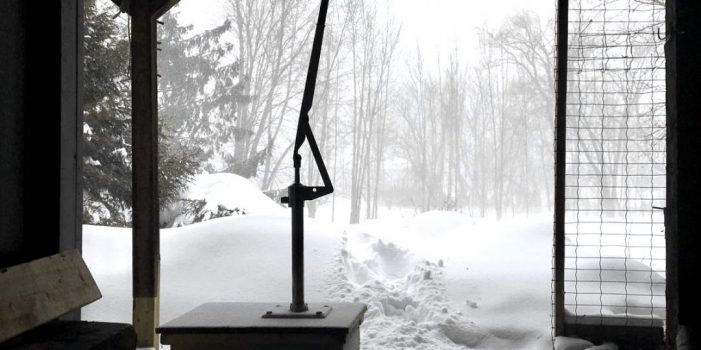
So where do you get enough water to stay hydrated in the winter? If there’s snow on the ground that’s one obvious source, although you should never put snow directly into your mouth – water is mostly air, so you’d have to consume a ton just to get a small drink, and it robs you of a lot of body heat. As a matter of fact drinking any cold water will force your body to warm it up, so keep it as warm as possible. Fresh snow on the surface should be safe to convert directly to drinking water, but you should look for discolorations or particles first to make sure it isn’t contaminated. You can melt it in a pot over a fire, which only needs to be slight warm (not hot) to melt snow, but that may take a while since you’ll need to keep adding more snow as it melts. One trick that we use sometimes is to bring a dark heavy-duty trash bag, fill it with snow and place it in the sun. In anything but the most freezing temperatures the sun will warm the bag and melt the snow faster than the outside temperature can re-freeze it. You can open up the bag and keep topping it off as the snow melts. Another option would be to place the bag near (but not too near) a fire. Either approach tends to give you a decent amount of drinkable water pretty quickly.Continue reading“Cold Weather Considerations – Part 5, by JM”