January 2nd, 1776 is the anniversary of the initial display of the first revolutionary flag (the Grand Union Flag).

January 2nd, 1776 is the anniversary of the initial display of the first revolutionary flag (the Grand Union Flag).
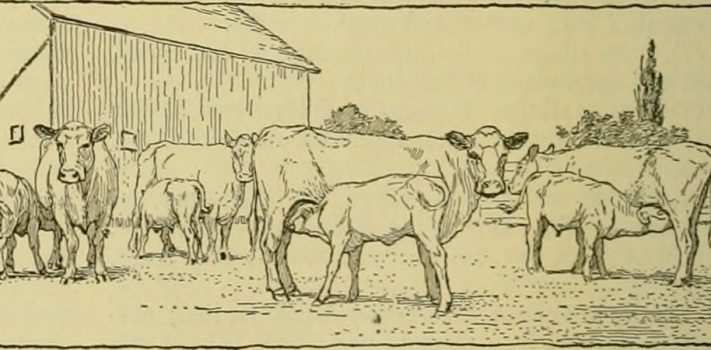
On a moonless night, a few nights ago, I was concerned about the safety of our newborn calf, so I decided to camp out with our cows and horses. In doing so, I learned a few things about both livestock behavior and my night vision.
To begin, this past Friday morning, I went out to feed the animals and saw that my Matriarch cow had not shown up. I called and called and called her. I heard her mooing at a low volume. I went looking for her and found her on the edge of the woods next to the driveway with a newborn calf, just barely standing and very wobbly. I watched a few moments until, it nursed. To see the rest of this part of the story please go back and read, “The Editor’s Prepping Progress” column, for last week.
I made two attempts on Friday to get mama and babe into the corrals for safety from predators and easy access for de-horning in a few days, but was unsuccessful. So I decided to spend the night out with them to add to the protection level.
So about ten o’clock on Friday evening I began to prepare to go outside. I wasn’t sure if I’d spend the whole night out with them or just a few hours. I was a little bit nervous about it. The temperature was about 34 degrees Fahrenheit and was expected to get down to 24 degrees Fahrenheit with about two inches of snow on the ground in the open areas and only a trace under the trees. I wore my LL Bean flannel lined jeans, a pair of socks, Bogger’s garden shoes, cotton-t-shirt, Cashmere sweater, Aran Irish wool sweater, my light puffy down jacket, fleece-lined hat and mittens. I brought my inflatable sleeping pad, my ancient LL Bean qualophill 20 degree sleeping bag (that washes very easily), a big MagLite flashlight, water bottle, and my .45 Glock Model 30.Continue reading“A Cowgirl’s Night Out, by Avalanche Lily”
Each year, I only post one reminder, encouraging voluntary Ten Cent Challenge subscriptions, and this is it.
Hopefully, some readers appreciate the fact that SurvivalBlog is one of the last of the daily “Old School” blogs without any of these annoyances and intrusions:
SurvivalBlog is not sporadic. I’ve only missed two days of posting in nearly 15 years, and those were just after my first wife passed away. And I have never stooped to the assorted marketing and data-mining trickery that has become so commonplace on the web. No, we are still truly Old School. And we will never sell your e-mail address. We don’t even maintain any e-mail lists for our own use.
Everything at SurvivalBlog–including the full archives–is available free of charge. And we certainly do not harass you with droning week-long PBS-style pledge drives.
Please keep in mind that to operate SurvivalBlog we have considerable expenses for bandwidth, web hosting, maintaining our backup server, software, and legal fees.
If you find that you get more than 10 cents worth of value per day in reading SurvivalBlog, then please donate 10 cents a day ($36.50 per year) to help cover the blog’s costs. And by the way, even with inflation, that suggested donation amount hasn’t changed since the blog’s inception, back in 2005.
There are several payment options including PayPal, cash, checks, booklets of “Forever” U.S. postage stamps, and even mailing us a few silver dimes or quarters. Many folks thoughtfully send some pre-1965 silver dimes or quarters taped to a piece of cardboard.
Only about 1% of readers are Ten Cent Challenge subscribers. Please join in, and do your bit. Your contributions are needed and greatly appreciated.
If sending your subscription by mail, then please use this address:
James Rawles
P.O. Box 303
Moyie Springs, Idaho 83845
Note that unless I have my Amazon Associates account suspended (like Claire Wolfe did), or my PayPal account suspended (like Joe Biggs and Laura Loomer did) then this post will be my only mention of the Ten Cent Challenge, in 2020. I won’t pester you.
Lastly, please consider other ways that you can help support SurvivalBlog. Even just placing links helps a lot. And if you sell food storage, communications, night vision, body armor, alternative energy, shooting, or other preparedness-related products or services, then please consider either advertising or becoming a writing contest prize donor. You’ll find the publicity beneficial to your business, as well!
Many Thanks!, – JWR
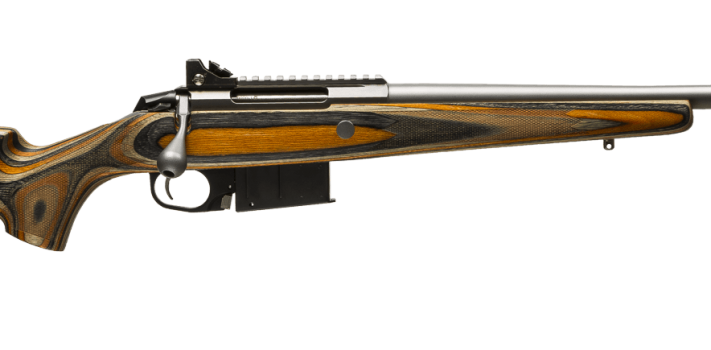
SurvivalBlog presents another edition of The Survivalist’s Odds ‘n Sods— a collection of news bits and pieces that are relevant to the modern survivalist and prepper from “JWR”. Our goal is to educate our readers, to help them to recognize emerging threats and to be better prepared for both disasters and negative societal trends. You can’t mitigate a risk if you haven’t first identified a risk. Today, we look at the announced issue of Tikka T3x Arctic rifles, in Canada.
An interesting video from Bloke on the Range (a British ex-pat who lives in Switzerland): Tikka T3x Arctic / Canadian Rangers C19 Rifle, 7.62 / .308 Winchester. JWR’s Comment: I think Jeff Cooper must be smiling, up in heaven.
An Active Self Protection (ASP) video: Using Your Vehicle In Self Defense Is Almost Always A Great Option
NASA – Earth at Night. Dozens of PDFs with high resolution (zoomable) photos. JWR’s Comment: My advice is to move to where you don’t see a lot of lights at night. There, your main concern will be four-legged predators–not the two-legged variety. (Thanks to Ol’ Remus, who linked to this in his Yer Ol’ Woodpile Report blog.)
I spotted this at Whatfinger.com: 100 Years of Immigration to The U.S., 1919 to 2019Continue reading“The Survivalist’s Odds ‘n Sods”
“Antifa posers with fantasies of a Civil War II need to worry more. ATF says more than half of all rifles sold were scary semiauto carbines. Combine these so-called “assault rifles” with the current Big Thing for traditional bolt action rifles: shooting very small targets at very long distances, and with more powerful ammo. Then explain to the campus commandos they do this as a hobby, for fun.” – Ol’ Remus, in his Yer Ol’ Woodpile Report blog.
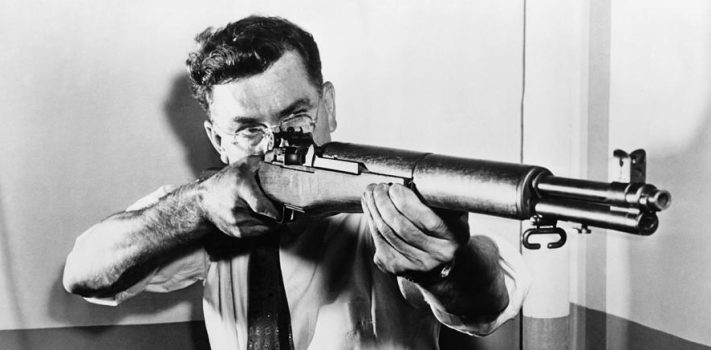
A notable birthday: John Cantius Garand was born January 1, 1888 in St. Rémi, Quebec. John Garand designed one of America’s best known battle rifles, the M1 Garand. General Patton praised Garand’s design, writing to Chief of Ordnance Lt. Gen. Levin H. Campbell, Jr., (January 26, 1945): “The M1 rifle is the most deadly rifle in the world.” Garand died on February 16, 1974.
—
For those who have asked, here is an update on our upcoming release of the SurvivalBlog 2005-2019 archive waterproof USB sticks. To summarize:
As we begin the year 2020, I’d like to reflect on what I’ve seen and experienced, since I was born in 1960. In my novel Patriots, a couple of my characters used the now-cliched phrase: “Hindsight is 20/20.” But I must say that in many ways that it truly is. With the benefit of some hindsight, I have formulated a few observations for 2020 — a year of 20/20 hindsight:
When I was growing up, computers were enormous lumbering beasts that were primarily batch-programmed with Hollerith punched cards. I had the advantage of attending Livermore High School, where those of us enrolled in a computer class could log on to one of the four Cray-designed Lawrence Livermore Laboratories mainframe computers. (As I recall, two of these were the CDC-7600 model.) Starting in 1977, we did so via a Texas Instruments Silent 700 terminal with an acoustic phone handset coupler. (Remember those?) Following high school, I still wrote all of my college papers on an electric typewriter. The first Apple Macintosh computer wasn’t released until the year I graduated from college: 1984. In 1986 I bought my first Apple. It was a Macintosh Plus — the faster, “big memory” upgraded model with 1 MB of RAM and a 8 MHz Motorola 68000 processor. That cost around $1,800. Over the winter of 1990-1991, I wrote the first iteration of my novel Patriots on that Mac, and released it as shareware, under the title The Gray Nineties. At the same time, I was using a “fast” 4,800 baud modem to access AmericaOnline (AOL). This was all before the first web browser became available for Macs, in 1993. By today’s standards, this recitation may seem quite Stone Age. But back then it was considered cutting edge home computing.
I’m writing this in the last week of 2019. Computers are now so ubiquitous that most people carry them around in their pockets. A $200 smartphone has the processing speed of a million dollar Cray mainframe of the 1970s. It also has more storage capacity than a wall rack full of 10.5-inch memory tapes.
One of the key benefits of new technology is what some term the velocity of data retrieval. When I was growing up, people would get into arguments about history or trivia. These tiffs could only be settled with either a check in a Book of Facts, a set of encyclopedias, or a phone call to the library. There, they had someone on staff with the job title of Reference Librarian. She sat a desk strategically near the library’s Reference section. She had a phone with an extra long handset cord — a 25-foot-long phone cord. She was a miracle worker. Our local Reference Librarian, named Beverly, seemingly knew just where to look. Sometimes after a multi-minute delay, she’d be back on the phone, with a cheery: “I found what you needed…” Back in the 1960s that was considered very fast fact-checking. But the serious, detailed fact checking was done by mail. Today, of course, most urbanites carry a smart phone, and they can retrieve arcane facts and figures in just seconds. The main concern now is that people depend on Wikipedia, which has a notorious liberal sociopolitical bias, and is also notoriously pranked and vanadalized.
All of the advance in computing and surveillance technology that I’ve described is a two-edged sword. The same tools that are driving our economy and solving crimes can be used to target us for tyranny. Surveillance cameras are now ubiquitous. When I was growing up in the 1960s I remember seeing just one surveillance camera in our town. It was trained on the door of our local bank, to identify exiting bank robbers. There are now cameras built into almost every computer screen, every smartphone (sometimes two cameras!), and most television screens. Worst of all, are the A.I.-enabled surveillance systems working in the background, parsing billions of images and looking for patterns of behavior.Continue reading“2020: A Year of Perfect Hindsight”
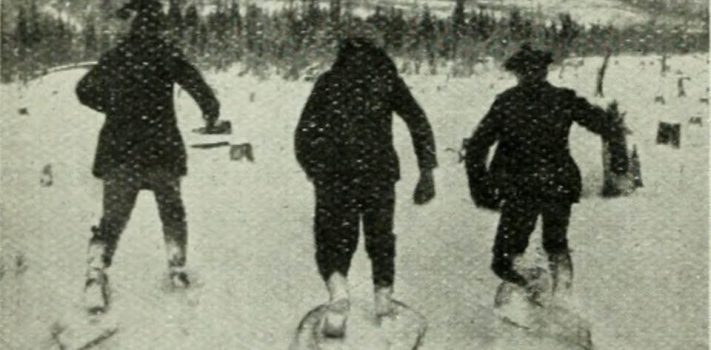
Here are JWR’s Recommendations of the Week for various media and tools of interest to SurvivalBlog readers. The focus is usually on emergency communications gear, bug out bag gear, books and movies–often with a tie-in to disaster preparedness, and links to “how to” self-sufficiency videos. There are also links to sources for both storage food and storage containers. You will also note an emphasis on history books and historical movies. As an Amazon Associate I earn from qualifying purchases. This week the focus is on snow gear. (See the Gear & Grub section.)
Snow Travel: Skills for Climbing, Hiking, and Moving Over Snow
o o o
Free to Choose: A Personal Statement, by Dr. Milton Friedman
o o o
Build Your Own AK: Vol. II: Building the Parts Kit (Volume 2). JWR’s Comment; If you are one of the thousands of American shooters who bought an AK parts set an “never got around to building it”, then this is the book for you. This book is quite detailed, and well worth the cover price.
o o o
Ghost Soldiers: The Epic Account of World War II’s Greatest Rescue Mission
o o o
50 States, 5,000 Ideas: Where to Go, When to Go, What to See, What to Do
“Foolish liberals who are trying to read the Second Amendment out of the Constitution by claiming it’s not an individual right or that it’s too much of a public safety hazard, don’t see the danger in the big picture. They’re courting disaster by encouraging others to use the same means to eliminate portions of the Constitution they don’t like.” –
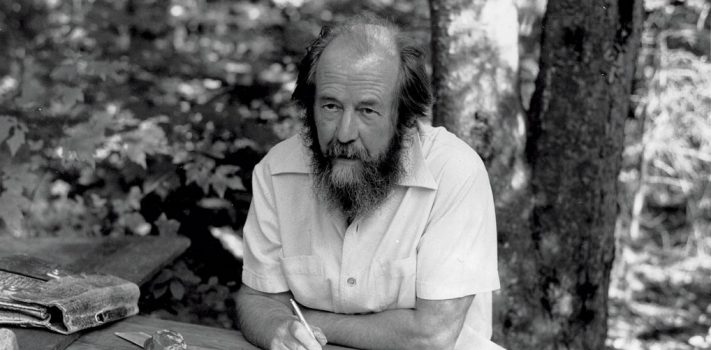
December 31st is the birthday of both Alexander Solzhenitsyn (pictured).
—
And December 31st, 1851 was the birthday of Frederick Selous. (He died on January 4th, 1917.)
–
This is also the birthday of Dr. Cynthia Koelker, SurvivalBlog’s Medical Editor.
Editor’s Introductory Note: This article is a guest post that I selected from a contrarian economist and investment advisor. It first appeared at the Lyn Alden Investment Strategy web site.
—
Due to the ongoing trade dispute between the United States and China, as well as between certain other nations, the concept of a trade deficit is now front and center in financial media.
This article takes a look at why trade deficits (eventually) matter, and how they can factor into an investment strategy.
The short version is that trade deficits, along with a few other factors, tell us whether a country’s
currency is more likely to strengthen or weaken going forward.
However, it often takes several years for trade deficits to matter for a currency, which means that for the vast majority of investors and traders, trade deficits aren’t really factored into their analysis. Trade balances are not usually a short-term piece of trade-able data, in other words.
Instead, understanding trade deficits is more actionable in regards to long-term portfolio positioning.
Trade Balance- A country’s trade balance measures the value of goods and services it exports compared to the value of goods and services that it imports. A country that exports more than it imports (i.e. produces more than it consumes) has a trade surplus. A country that imports more than it exports (i.e. consumes more than it produces) has a trade deficit.
For example, if the United States buys $500 billion worth of goods and services from China each year, and China buys $200 billion worth of goods and services from the United States each year, then the United States has a $300 billion trade deficit and China has a $300 billion trade surplus. A country’s overall trade balance is measured by adding up all the various trade surplus and trade deficits it has with all of its trading partners.
Current Account Balance- A more “complete” picture of a country’s inflows and outflows. The current account balance includes the trade balance, plus investment income between nations, plus cash transfers. A country with a current account surplus has more value flowing into it. A country with a current account deficit has more value flowing out of it.
For example, if the United States has a $300 billion trade deficit with China, but owns enough companies in China that they receive $100 billion worth of dividends each year, then the United States only has a $200 billion current account deficit with China, and China has a $200 billion current account surplus with the United States.
Net International Investment Position (NIIP)- Private citizens and government organizations of a country may own assets of other countries, like real estate, shares of corporations, bonds, and so forth. A country’s net international investment position is determined from the total amount of foreign assets its citizens and government own minus the total amount of domestic assets that foreign citizens and governments own.
For example, suppose United States citizens own $1 trillion worth of Japanese real estate, Japanese citizens own $2 trillion of U.S. real estate, and Swiss citizens own $1 trillion worth of U.S. real estate and $1 trillion of Japanese real estate. In this example, the United States has a -$1 trillion negative international investment position, Japan has a $0 net international investment position, and Switzerland has a +$2 trillion positive net international investment position.Continue reading“Why Trade Deficits Matter, by Lyn Alden”
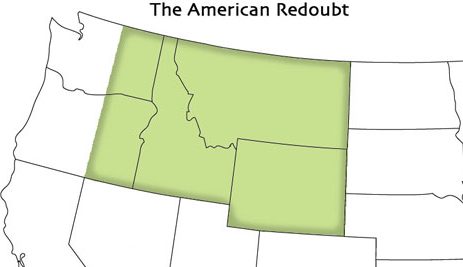
This is the final News From The American Redoubt column for calendar year 2019. I’m taking this opportunity to briefly express my thanks and give recognition to some of the key leaders and promoters of the American Redoubt movement. They include:
My sincere thanks to all of you! It is gratifying to see that our internal migration movement has been so successful. The in-migration of conservative Christians and Jews to the Redoubt states is growing larger every year. In sheer numbers, our growing movement has absolutely dwarfed the concurrent in-migration of liberals from various coastal states. Conservative newcomers out-number liberals by at least a four-to-one ratio. And to further bolster our numbers, Redoubters demonstrably have larger families. So we are definitely winning, demographically!
I’d also like to recognize the efforts of René Holaday and the other organizers of the Liberty State partition movement. Although it is a completely separate movement, the goals of the Liberty State movement dovetail nicely with those of the American Redoubt movement. By the way, I recommend that you take a listen to the new Liberty State Radio podcast. There are now 15 archived episodes.
Likewise, I want to recognize the pioneering efforts of Boston T. Party and the Free State Wyoming project. It too has a lot of common goals with the American Redoubt movement. Free State Wyoming pre-dated the Redoubt movement by many years.
This may sound odd, but I’d also like to give a hat tip to the leftist journalists of The Inlander and The Spokesman-Review. Without realizing it, even with their biased reporting they have given the American Redoubt movement some valuable publicity. Their many failed attempts to smear us are evidence that the Law of Unintended Consequences has not been repealed.
Lastly, I want to express my sincere gratitude to the native born land-owners of the Redoubt states. Thank you for making your many new conservative and libertarian neighbors feel welcome.
For those of you who live outside of the Redoubt: If you feel convicted to do so, then make the move, soon.
And to all of my readers: Please pray for the Redoubt, daily! – JWR
“America is a country founded on guns. It’s in our DNA. It’s very strange but I feel better having a gun. I really do. I don’t feel safe, I don’t feel the house is completely safe, if I don’t have one hidden somewhere. That’s my thinking, right or wrong.” – Brad Pitt (2012)
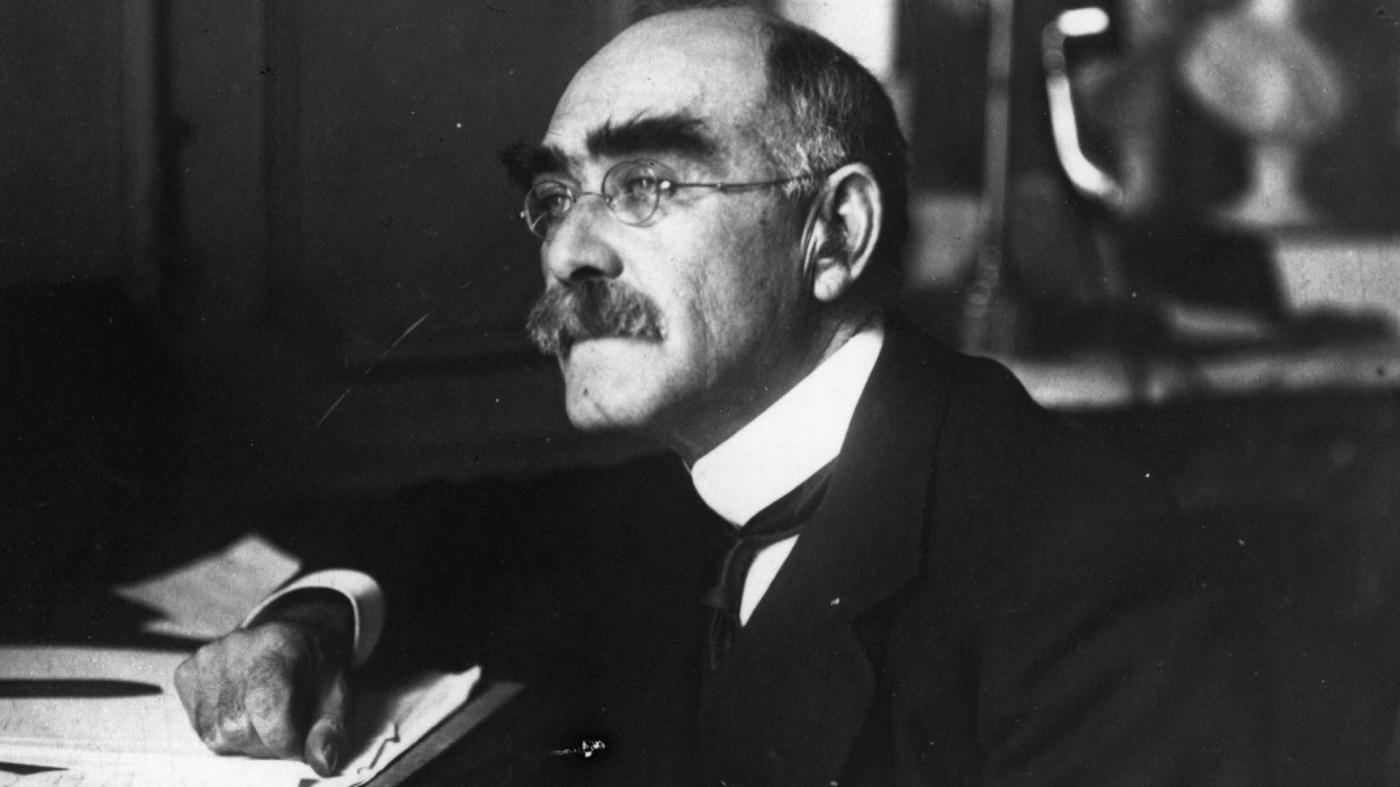
December 30, 1865 was the birthday of Rudyard Kipling. His writings are now favorites among British, Australian, and American officers and NCOs deployed to Afghanistan.
—
Today we present another review by our Field Gear Editor, Pat Cascio. But first, some breaking news (with commentary):
Armed church members shoot active shooter inside packed Texas church during a livestreamed communion.
JWR’s Comment: Chalk up one for the Good Guys. Without their prompt response, this probably would have been another bloodbath.
“Clothes make the man (or woman)” and I couldn’t tell you how many times I’ve heard someone say that, or where it came from. However, I believe, they are talking about dressing-up, as in a suit coat and trousers, for a man; or in the case of a woman, perhaps a really nice-looking dress. The last time I had my suit on was when my oldest daughter graduated from college – about 18 years go – I doubt it still fits me, and I know that I don’t own a pair of dress shoes to go with it.
I’ve held two jobs in my life where I had to wear either a suit or sport jacket. One was when I worked in the advertising department of a large downtown department store – Marshall Field & Company. (Now part of Macy’s) And, in the other, I was the investigations manager of a detective agency, with offices all over the country. II was in-charge of all major investigations we had, as well as investigating charges brought against our uniformed guard division for using excessive force. If I never wore a suit, ever again it would be too soon. For me, the “uniform” of the day, is cargo pants, hiking shoes or boots, and a T-shirt, with a button down shirt over it in the summer months, to conceal my handgun. So, I’m not quite sure if “Clothes make the man…” applies to my usual clothing.
For many years, I wore a photographers vest to conceal my handgun on my hip, and then everyone started wearing these vests, to conceal their handguns on their hip – it was sort of a “badge” and whenever you saw someone wearing that vest, you could be sure they were carrying a concealed handgun on their hip, and then if you looked closely you could usually spot the gun or the outline of the gun. So I stopped wearing a vest. I went to wearing a sporty-type button down short sleeve shirt in the summer months. But it is never buttoned, so I can have fast access to my handgun on my right hip.
I wear cargo pants because they are comfortable, and give me more freedom in the overall fit of the pants, and it helps conceal a back-up handgun, on my ankle, too. These pants are some what baggy, and that helps conceal a gun in an ankle holster.
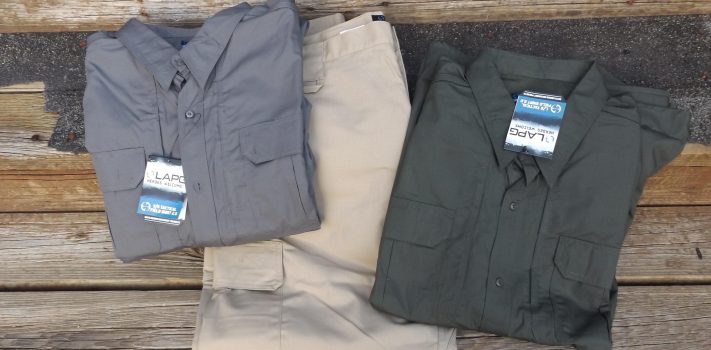
This brings us to some clothing, cargo/tactical pants and shirts, from LA Police Gear that I’ve been testing. For years, especially when I was a police officer, or doing private security, I purchased products from LA Police gear, because they have always had a huge assortment of just about everything and anything you could use in this line of work. Secondly, their prices are more than fair. I don’t know how they can sell so many products at the prices they sell them for. Some of their clothing is made in China, but there’s no way around this on a lot of things – most folks don’t realize that, about 95% of our footwear comes from China. Heaven help us, if we go to war with China. If we don’t win right away, we’ll be barefoot in short order. Products from LA Police gear are not made in a lao gai slave labor prison. No, they are made in reputable factories. If you buy clothing at Walmart, odds are that much of it is made in China. [JWR Adds: And Walmart sources from hundreds of Mainland China factories, so we have no certain guarantee that none of theirs is made with slave labor.]Continue reading“LA Police Gear: Clothing, by Pat Cascio”