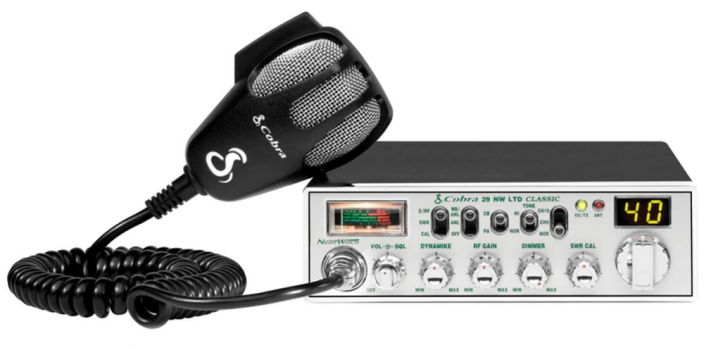
I have been interested in radios since I was about 12 years old. Long before cell phones were ubiquitous, the adult leaders in my Boy Scout Troop all had CB radios installed in their vehicles on road trips, and I witnessed them being used to good effect for communication between vehicles. I know now that the 11 meter band and the AM operating mode of those radios is a suboptimal choice for that kind of short-range voice communication, but it was the practical choice when CB was about the only unlicensed radio service available.
A couple of the scout leaders I knew also had amateur (ham) radio licenses, and I once watched one of them produce a handheld radio from his belt and make a phone call via a telephone patch system operated by the local ham club. Needless to say, he had my interest. That was long before I ever saw my first cell phone. Ham radio was out of my financial reach at the time, but I never forgot it.
When I got a little older, I had a few mobile CB radios, which I installed in various vehicles I owned. At the time I knew nothing about standing wave ratios or antenna tuning but got them to work. Later, I was briefly involved as a volunteer first responder in New York City around the time of the 9/11 attack. I bought a used Motorola Saber radio off eBay and learned how to program it with an old computer and some even older software.
My interest continued to grow, and I continued to tinker with radios. The 9/11 attacks, or more specifically the way the city government reacted to them, caused me to end my sojourn in NYC and return to Virginia. After more public safety work and more tinkering with radios, I eventually revived my interest in amateur radio. I took and passed the Technician exam (which by that point no longer required Morse code), and I bought both a 50 watt VHF (very high frequency) radio for my truck and a small VHF/UHF (very high frequency/ultra high frequency—capable of operating on both bands) handheld (called an HT for handie-talkie by amateur radio folks). I learned more by doing and by making mistakes.
I also quickly realized that through my ham endeavors, I knew more about radios and how they worked than anybody in the county emergency communications center or in the administration of the sheriff’s department I was working for. I am not an engineer by training, but I could read and tinker, and I have always been reasonably handy with computers. Over time, I upgraded my ham license to General Class and then finally to Amateur Extra—the top-level license in the US.Continue reading“Radios for Emergency and SHTF Use – Part 1, by Rufus King”