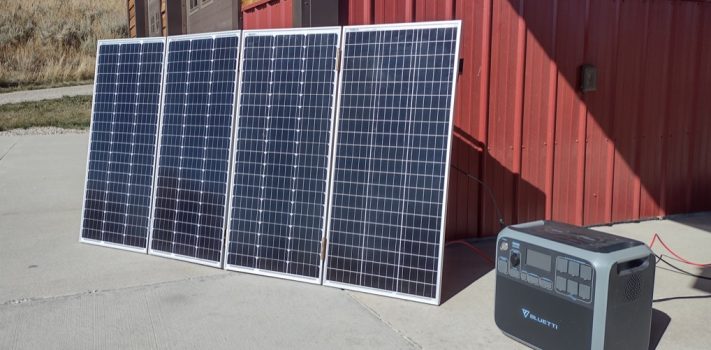
As we moved onto our current rural retreat some years ago, one of our first steps was to install a set of grid-tied solar panels, very similar to the system described in the Survival Blog article by St. Funogas on September 10 and September 11, 2022. Similar to the author of that essay, we figured that we would use that system, along with isolated single panels for single applications, until we goft up the nerve to build a full-scale off-grid solar system. However, since that time new products have come out and my thinking has shifted. There is a new kid on the block that has shifted the paradigm for producing electricity in remote areas: the portable power system. These are often marketed under the misnomer “solar generators”.
Why a Portable Power System?
A portable power system takes in power from various sources, stores the energy, and then provides the outlets to use that energy in a number of ways: DC-to DC power, and DC-to-AC, with and inverter. For example, I can charge our portable power system with photovoltaic (PV) solar panels, a house 120 Volt AC outlet, or even a running car engine; and store that electrical energy in the battery. Then I can use that energy later for anything that runs on DC or AC electricity.
Portable power systems have been available for some time. Four years ago, we bought a small solar-powered battery that can recharge our cell phone remotely. It was a cool gadget, but it had limited usefulness because of its small scale. But with the advent of LiFePO4 battery technology (Lithium Iron Phosphate), portable power systems can be much larger, more efficient, and last longer. Now they can power major appliances, workshops, medical devices, office data emergency backup, you name it. Also, these batteries are good for 3,500-6,000 charging cycles, as opposed to the 500 cycles of lead-acid batteries.
Why does this change my thinking about providing power for my remote electrical needs? I used to see the solution for retreat-wide self-sustaining electrical production as simply installing the number of solar panels and batteries that I would need to cover my current electrical use. But that involves considerable cost, and at some point that would involve several hundred pounds of batteries that not only require an amount of money roughly equal to the amount invested in PV panels, but also ongoing maintenance costs. Additionally, those batteries need to be replaced because they have a limited life span.
Instead of thinking of a large-scale solution, now I am seeing the value of more portable, flexible small-scale solutions that can cover a wider range of needs–both anticipated and unanticipated. The long lifetime and portability of the LiFePO4 battery power systems mean I can use fewer solar panels, certainly no more than the ones I have already, and move that portable power system to where the power is needed.Continue reading“Portable Power Systems: Providing Remote Energy, by K.R.”