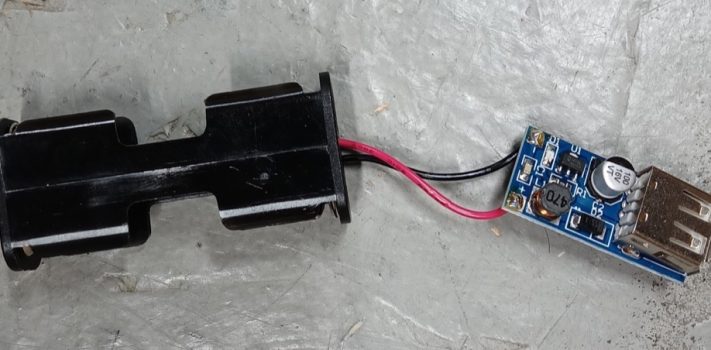
There have been numerous articles on SurvivalBlog.com about the use of various pieces of electronic technology such as flashlights, cell phones, night vision devices, radios, drones, etc., in disaster and survival situations – ‘Tactical Technology for TEOTWAWKI’, ‘Technology After TEOTWAWKI’, ‘Survival Electronics’, ‘Surviving With Electronics’, ‘Survival Electronics’, ‘How To Use a Baofeng UV-5R’ and many others. (Some of those were written by me.) As part of my general effort to lighten up my load and develop a lightweight modular approach to my mobile kit, I recently started focusing on how to power the various electronics I’m carrying. To that end, I’ve developed a common approach that meets my needs by being lightweight and able to provide me power from a wide range of sources under different scenarios, including regular business/vacation travel, backpacking trips and getting home after a disaster.
USB Power
The foundation of my plan is to have all of my electronics support USB-based charging, which gives me an interchangeable interface and power source for everything. The move away from removable AA/AAA batteries towards built-in USB charging for mobile electronics has been increasing for the last few years, and almost every type of electronic device comes with USB charging these days. For me, this includes a Fenix LD15R flashlight, a Nitecore NU25 headlamp, my cell phone, a Radioddity Raddy RF760, a micro-drone, and many others. For any older devices that require a round DC power plug for charging there are USB-to-barrel plug adapters, which can also provide higher voltages for devices that don’t use 5V, and for the few devices I have that use AA/AAA batteries there are USB-rechargeable batteries available, so I don’t have to carry a separate battery charger.
One potential issue with this approach is that the built-in rechargeable batteries can only be recharged a limited number of times (usually in the hundreds), so one of the things I always do when I get a new rechargeable device with a built-in battery is to either do some research or open it up to identify the type of internal battery it uses and order at least one replacement. I store the replacement batteries in a cool and dry location, and I swap the built-in batteries on my devices every 2-3 years, depending on how much I use them. This should provide me with a useful battery life of anywhere from 10 to 20 years for my devices with regular use.Continue reading“Compact Power To Go – Part 1, by J.M.”