
December 19th is the birthday of physicist Albert A. Michelson (born 1852, died May 9, 1931), who was the first American to be awarded a Nobel Prize in science, for measuring the speed of light.
- Ad SurvivalRealty.com: Sell Your Remote LandAdvertise your hard-to-sell remote land to eager buters. We specialize in rural, remote, and off-grid properties worldwide. Affordable ads. No commissions are charged!
- Ad California Legal Rifles & Pistols!WBT makes all popular rifles compliant for your restrictive state. Choose from a wide range of top brands made compliant for your state.
Product Review: Enola Gaye Smoke Grenades, by Pat Cascio
Many years ago, I used to teach SWAT to police and security agencies, and I even co-authored a book SWAT Battle Tactics with my late friend, American Kenpo Karate Grand Master John McSweeney. The book, published by Paladin Press, is in need of a serious re-write, as there was some material added in the manuscript after I approved the galley copy. Still, the basic material is strong and one can build a SWAT team using the basics.
When conducting SWAT training, I would often booby trap a house/building or an area where the team would be entering using various types of traps, including smoke grenades, military-grade smoke grenades. They were very expensive back then, and they still are. However, there was no question or debating when someone tripped a smoke grenade booby trap; the high volume of smoke told the story.
As many long-time readers will recall, I served an apprenticeship with the late Col. Rex Applegate. I worked for the good colonel for three years, and during that time he taught me all manner of military and law enforcement techniques, as well as handgun firing. In particular, he taught me point shooting, and Paladin Press sells my DVD entitled Tactical Point Shooting, which has rock solid information in it. One thing many people didn’t know about Applegate was that he was an expert in riot control methods. His book Riot Control Methods And Materials is still in print. Many big city police departments would do themselves a favor if they purchased the book, with all the riots that recently took place after Donald Trump won the presidential election.
I happen to know a little bit about riot control, as I served in the Illinois National Guard in Chicago, IL in the early 1970s, and we had more than our share of call-outs for riots. One piece of kit that was always used was tear gas grenades as well as smoke grenades. Most rioters didn’t know the difference between the two at the onset. When they saw smoke, they would run and disperse! Applegate also served as a general in the Mexican Army shortly after WW2; in this role, he was one of the original 12 staff of instructors at the OSS– the forerunner to today’s CIA. Without giving away any secrets, at least not too many, Applegate worked as a sale rep for Remington Firearms in Mexico, and he also trained the Mexican military in riot control techniques. One such covert technique was to have either tear gas or smoke grenades in the front pockets of baggy trousers, and he would walk through a crowd of rioters and release these grenades through a hole in his pocket. The grenades would fall to the ground, and no one knew where they came from. Then, Applegate would fade into the background.
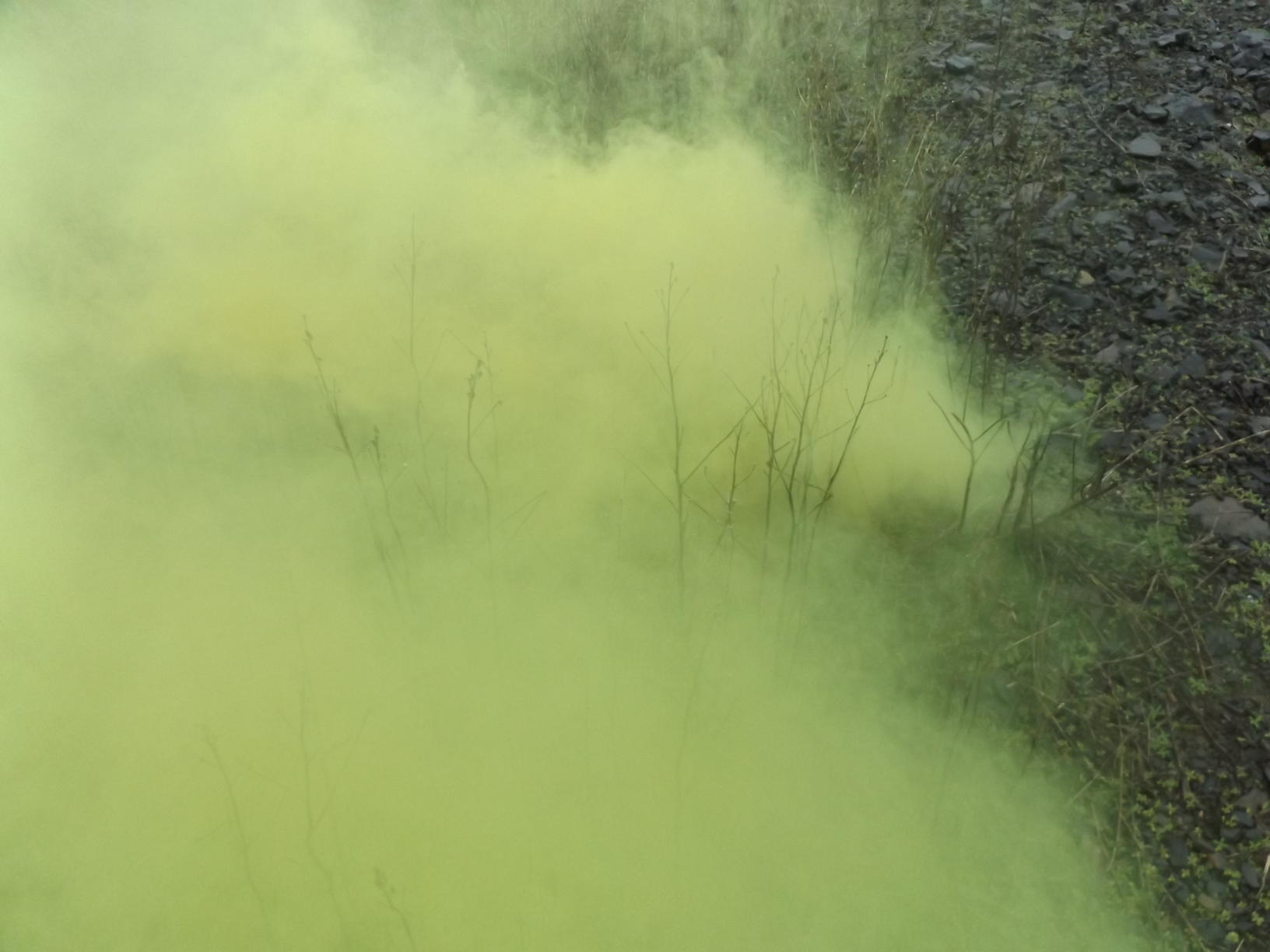
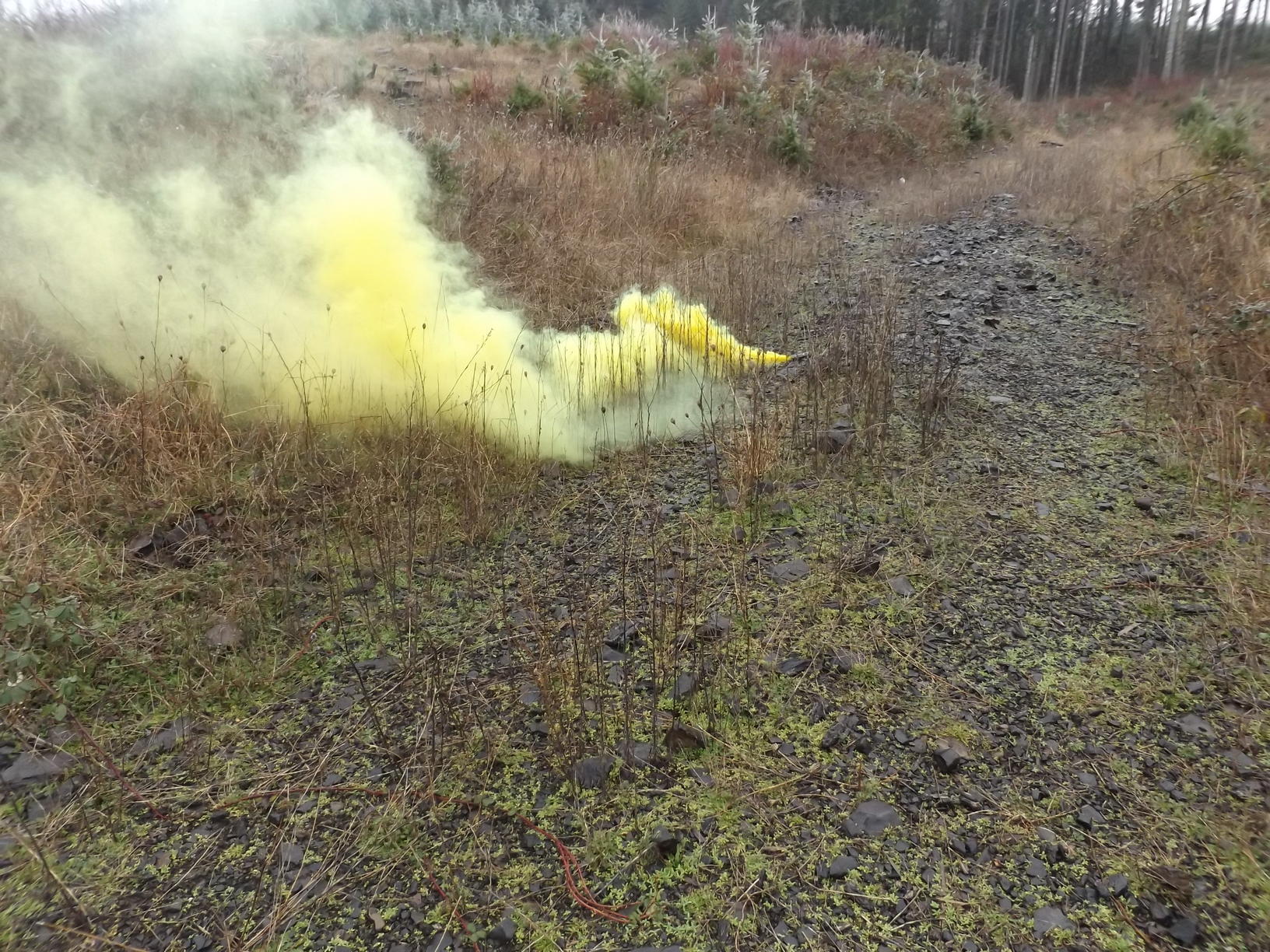
Military-grade smoke grenades are very expensive and extremely hard to come by, especially for civilians. Of course, there are less expensive smoke grenades that you have to ignite by lighting a fuse, which is more than a little bothersome, and they don’t put out a lot of smoke. The good folks at U.S. Tactical Supply in Albany, OR are always on the lookout for cutting-edge professional equipment and gear. There is no junk at this store, and they are some of the nicest people you’ll ever deal with, too. They alerted me to their newest piece of kit– Enola Gaye smoke grenades, and they were kind enough to have one of their employees actually deliver them to my home, because I’ve just been buried in work.
Now, what use would you possibly have for professional-grade smoke grenades, you might ask? Well, several uses come to mind. First off, a quality smoke grenade can be carried in your Bug Out Bag or your hiking or backpacking bag. In the event you get lost, and don’t say it won’t ever happen to you, you can pop one of these smoke grenades to alert a search and rescue team to your location. In my neck of Oregon, we have dense forests where you can easily get lost, and it is even harder for someone to pin point your location. A quality smoke grenade will sure let them know where you are.
In a survival situation, you might want to cover your escape and evasion with smoke. Dense smoke can confuse your pursuers as well as give you a chance to put some distance between you and them. If things go terribly wrong and you some how find yourself engaged in a firefight (and you want to avoid this if at all possible), some heavy smoke can cover your strategic retreat, too. One can also use smoke grenades in firearms training, believe it or not; I’ve done it in the past. It makes your students become more positive of their target, before pulling the trigger. If you can’t make out your target, you keep your finger off the trigger. It’s as simple as that.

Let’s take a closer look at the various smoke grenades that US Tactical Supply is selling. Go to their website for complete information. There are two large smoke grenades, and two smaller grenades, and there are several different sub-categories. Some grenades emit the smoke extremely fast and for a shorter period of time, while some emit smoke a little slower over a longer period of time. In my testing of the large and smaller smoke grenades, I was impressed with the huge volume of smoke the smaller grenades put out; I was very impressed.
The two larger smoke grenades, the EG18X and the EG18, are similar; however, the EG18X has a faster burn time of 50-60 seconds, so it emits a lot of smoke quickly. The EG18 burns for 90-120 seconds, so the smoke is emitted slower. Both come in eight different colors: black, green, white, purple, blue, yellow, red, and orange.
The two smaller grenades the WP40 and Burst are only “smaller” in size. They both put out an incredible amount of smoke. The WP40 has a 90-120 second burn time and is available in the above eight colors. The Burst model has a burn time of 20-30 seconds for a massive amount of smoke, and it only comes in seven colors. There is no black smoke for some reason with this model.
I didn’t intentionally pick some of the worst weather to do some of my testing of the smaller smoke grenades; it just happened that way. We were having some freezing rain in our area. Actually, at my small homestead, it wasn’t freezing rain just yet. I elected to go to my usual shooting spot, which is about seven minutes away up on a small mountain of only about 3,000 feet in elevation. As I was approaching the peak, I noted all the trees were covered in a thick layer of ice. When I reached my regular shooting spot, everything was covered in ice. The freezing rain wasn’t just coming down hard; it was blowing almost sideways, too. When I popped two of the smaller grenades– the WP40 and the Burst– the smoke was dense and blowing completely sideways. Did I happen to mention how hard it was raining? The Enola Gaye smoke grenades are water resistant, and they both worked as advertised.
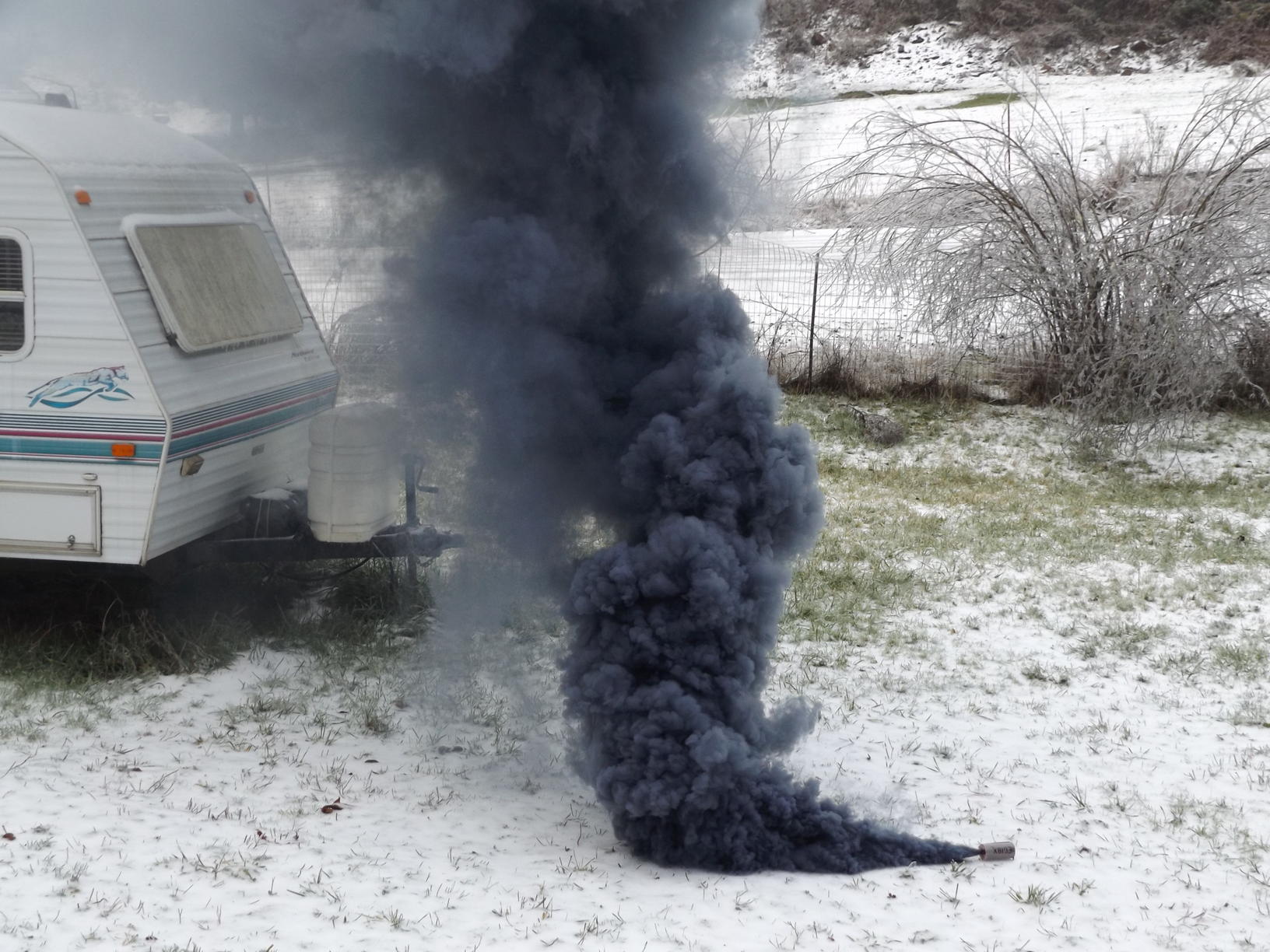
Inside of only a few minutes, my pickup truck windows were completely iced over so the testing ended. The next day, we had even worse weather. On top of the freezing rain we had the day before, we got snow. Then, on top of the snow, we got more freezing rain. It was horrible driving conditions, and I elected to do some testing in my own front yard early in the morning before there was any traffic out. There was none, and all the neighbors were still sleeping. I tested the two larger smokers– the EG18X and the EG18.

Something very curious took place in my testing, not with the smoke grenades themselves but with the weather. While both smoke grenades worked as they should have, we had an updraft in the front yard. I couldn’t feel it, but I sure saw it when I popped the smoke grenades. The smoke from both grenades rose directly upwards, and I mean straight up. It was rather interesting to watch. The smoke would normally just disperse and stay close to the ground but not in this case; it just rose straight upwards. I walked to where I tossed the grenades, but I couldn’t feel any updraft at all. It was strange!
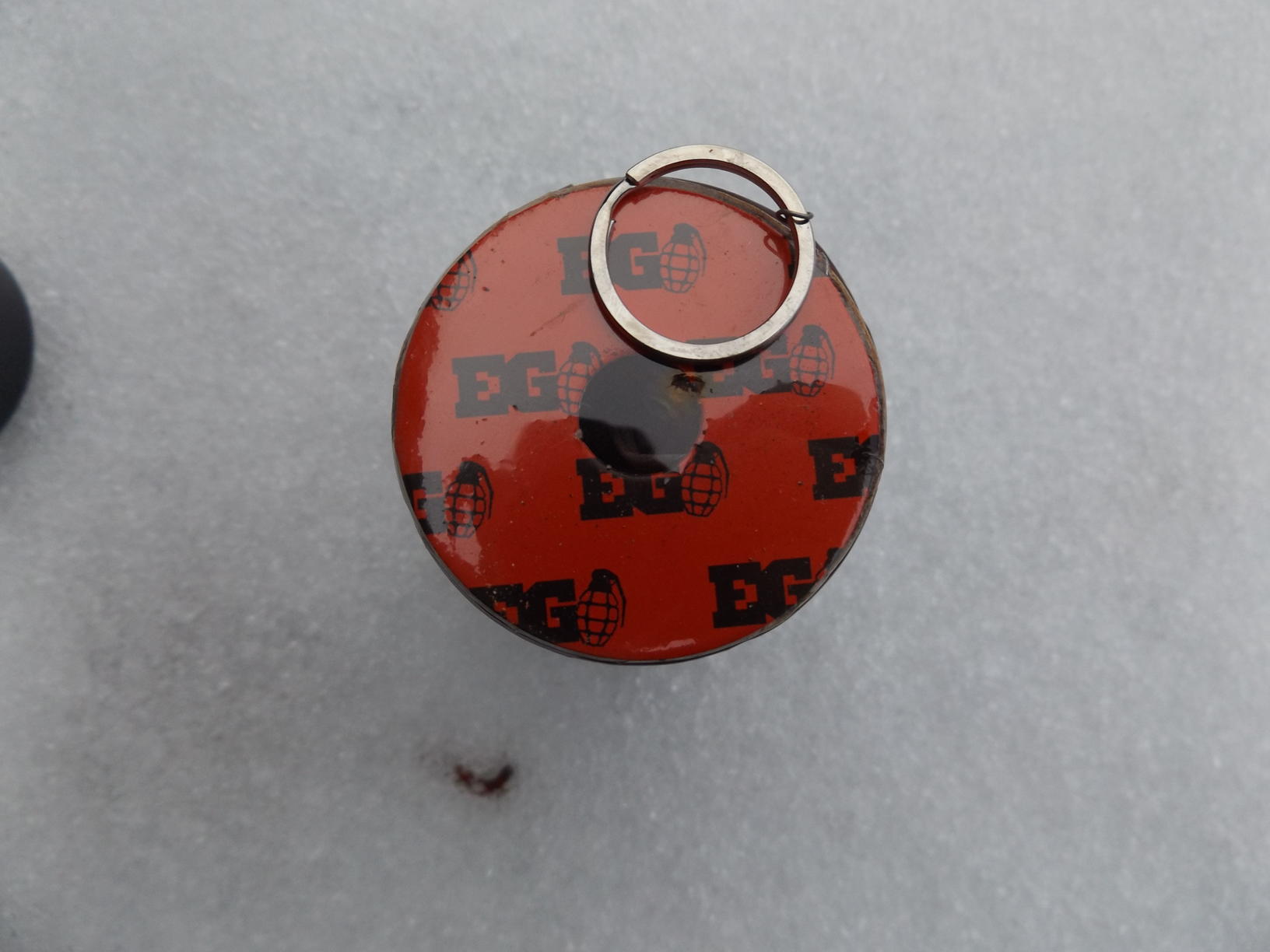
US Tactical Supply ships the Enola Gaye smoke grenades in zip-lock plastic bags, and you would be wise to keep them in the bags; the grenades are water resistant, not water proof. The grenades are ignited by a pull ring, and it takes considerable effort to pull the ring and get the grenades going. You only have about two seconds before they start to smoke, so be sure of where you want to toss the grenades. They do burn hot, so do not hold them in your hand after pulling the ring to ignite them. The pull ring is located under a plastic cap that is easily removed. The body of the grenades is made out of some kind of rigid plastic. Additionally, these babies are manufactured in the United Kingdom, of all places.
I pulled out my A.L.I.C.E. gear. I’m old school and carry my combat gear on a pistol belt with suspenders and magazine pouches that hold three thirty-round AR-15 magazines. These ammo pouches have two pockets on the side for carrying anti-personnel grenades. I was hoping the large smoke grenades would fit in those pockets, but I had no such luck. However, while I’m old school, I also have some tactical assault vests, and the larger grenades easily fit into the magazine pockets. I have some old AR-15 magazine pouches with the divider ribbons that have ripped, and I can fit one of the larger smoke grenades inside or two of the smaller grenades, and it can be attached to my pistol belt.
Once again, I would advise that you store and carry the Enola Gaye smoke grenades in the zip-lock plastic bags they come in. As stated, they are water resistant, not water proof. We get a lot of rain on the west side of Oregon, and I wouldn’t want to need to use one of these smoke grenades only to find out they got wet and won’t ignite. So, be advised. If you are out backpacking/hiking, you would be well suited to carry a couple of the smaller smoke grenades in your pack in the event you need to signal for help. Remember, they do burn hot, and make sure when they are ignited that they are not on ground that would catch shrubs on fire. The last thing you need is a wild fire, if you are hoping to get rescued.
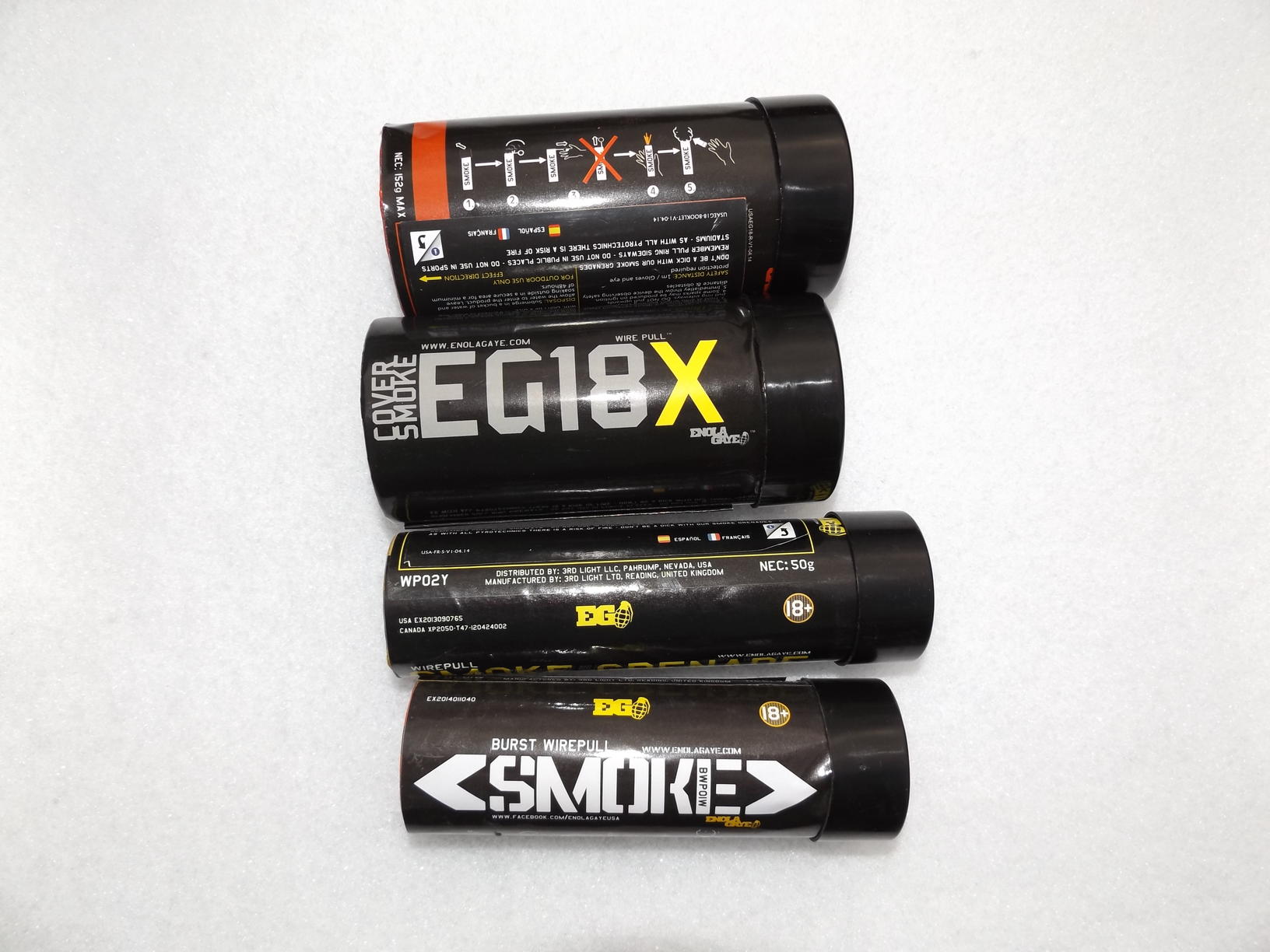
Now for the good news, the EG18S sells for only $14 (black is $15) and the EG18 sells for only $12. The smaller grenades are only $6 each. That is a deal. And, in my limited testing, I was more than a little impressed with the total volume of smoke the smaller grenades put out.
For the price, these smoke grenades are one heck of a buy. I plan on stocking-up on plenty of them in the very near future. You just never know when, you might need the cover of smoke for a hasty retreat or something like red smoke to signal rescuers who might be out searching for you. Get ‘em while you can!
– Senior Product Review Editor, Pat Cascio
- Ad Survival RealtyFind your secure and sustainable home. The leading marketplace for rural, remote, and off-grid properties worldwide. Affordable ads. No commissions are charged!
- Ad Prepare for chaos with the essential SIEGE belt. Perfected for CCW with flexible, no-stretch, high-grip custom HD ballistic nylon and capabilities unmatched in any other belt. Go anywhere. Solid 5.5-7 oz of persuasion has saved many. Save $20!SIEGE STOVES: in a fuel crisis twigs are free and abundant. Ultra-compact high-performance portable survival stoves. Enter "SBLOG" at checkout for $20 off any belt. USA-made.
Recipe of the Week: Turnip Whip, by G.L.
Ingredients:
- 4 turnips, peeled and quartered
- 4 potatoes, peeled and quartered
- 2 Tbsp minced onion
- 1 Tbsp salt
- Water
- 1/4 cup light cream
- 2 Tbsp soft butter or margarine
- 1/2 tsp salt
- 1/8 tsp pepper
Directions:
- Combine turnips, potatoes, onion, and 1 Tbsp salt in a slow cooking pot.
- Cover with water; then cover and cook on low for 6 to 8 hours or until vegetables are tender.
- Drain well.
- Mash; then add cream, butter, 1/2 tsp salt, and pepper.
- Beat until fluffy
Makes 6 servings.
o o o
Do you have a favorite recipe that would be of interest to SurvivalBlog readers? Please send it via e-mail. Thanks!
- Ad USA Berkey Water Filters - Start Drinking Purified Water Today!#1 Trusted Gravity Water Purification System! Start Drinking Purified Water now with a Berkey water filtration system. Find systems, replacement filters, parts and more here.
- Ad Click Here --> Civil Defense ManualNOW BACK IN STOCK How to protect, you, your family, friends and neighborhood in coming times of civil unrest… and much more!
Letter: Tor Software Vulnerability
HJL,
A recent article detailed the FBI using secret software to exploit vulnerability in the Tor Browser. The government set up a child porn site in the dark web and nabbed some folks that were using Tor. Agents used a “Network Investigative Tool,” or NIT to identify information from people who logged into the porn site. This is found in an article in the Seattle Times paper of Dec. 14th. The government refuses to detail the workings of the secret software. – D.C.
JWR Replies: The editors of SurvivalBlog certainly don’t condone child pornography, but the case that you cite provides a good illustrative teaching point.
- Anyone who believes that anything they do via the Internet is “private” is fooling themselves. Even if someone uses both Tor and VPN, there is still the risk that law enforcement or intelligence agencies could uncover their location and identity. Encrypted e-mail is similarly at risk. This recent case in Washington should be a lesson for preppers. Illegal activities, or even legal activities that might be deemed illegal at some future date, should never be discussed via e-mail. Nothing on the Internet is either safe or secure.
- There is no such thing as a “private” Internet purchase, even if it is paid for via Bitcoin. Some books and some varieties of ammunition should only be bought face to face with cash. This is just another reason to attend gun shows and to visit independent used bookstores when you travel. Likewise, some communications should never be trusted to ANY electronic means (radio or Internet.) There is no secure substitute for face to face meetings or hand-delivered hard copy letters.
HJL Adds: An important point to note is that “secret software” wasn’t necessary used here and may well just be a red herring. The article in the Seattle Times details how the FBI actually seized and ran the server that people were logging into. With that level of access, there is no “secret software” necessary to track users down.
- Ad USA Berkey Water Filters - Start Drinking Purified Water Today!#1 Trusted Gravity Water Purification System! Start Drinking Purified Water now with a Berkey water filtration system. Find systems, replacement filters, parts and more here.
- Ad Elk Creek Company - Percussion Blackpowder Guns - No FFL Required.Elk Creek Company - Percussion Blackpowder Guns - Pre-1899 Guns - Knives - Bayonets - Magazines - The last bastion of privacy!
Economics and Investing:
Six Steps Trump Can Take Toward Better Monetary Policy
o o o
Ukraine Nationalizes PrivatBank to “Preserve Stability” (Hide Insolvency)
o o o
o o o
Prelude To Global Collapse And How Swiss Refiners Just Exposed The Big Lie In The Gold Market
o o o
SurvivalBlog and its editors are not paid investment counselors or advisers. Please see our Provisos page for details.
- Ad Survival RealtyFind your secure and sustainable home. The leading marketplace for rural, remote, and off-grid properties worldwide. Affordable ads. No commissions are charged!
- Ad Elk Creek Company - Federally-Exempt No-Paperwork GunsPre-1899 Antique Cartridge Guns -- No FFL Required. Can be mailed to your doorstep with no Federal paperwork!
Odds ‘n Sods:
Owners of Rawles XL Voyager knives may have already heard about the excellent horizontal and vertical sheaths made by Marek Wilczy?ski (of Wicek Leather Company), in Poland. Available via mail order through eBay, these sheaths are VERY robust and fairly inexpensive, given their quality. I recently had three more of these made for my family’s use. – JWR
o o o
Gray Man – Gender Camouflage When The SHTF – Camouflaging Feminine Features In A Collapse
o o o
At Least 14 US Coalition Military Officers Captured by Syrian Special Forces in East Aleppo Bunker – S.B.
o o o
Top 3 DIY Survival Projects That Could Save Your Life in the Coming Collapse – T.J.
o o o
DIY Media Device for personal library – G.P.
o o o
- Ad STRATEGIC RELOCATION REALTYFOR SALE: Self-sustaining Rural Property situated meticulously in serene locales distant from densely populated sanctuary cities. Remember…HISTORY Favors the PREPARED!
Jim’s Quote of the Day:
“Well, in the first place an armed society is a polite society. Manners are good when one may have to back up his acts with his life. … But gunfighting has a strong biological use. We do not have enough things that kill off the weak and the stupid these days. But to stay alive as an armed citizen a man has to be either quick with his wits or with his hands, preferably both. It’s a good thing.” – Robert Heinlein, Beyond This Horizon, 1948
Notes for Sunday – December 18, 2016
December 18th is the birthday of Charles Wesley (18 December 1707 – 29 March 1788). He wrote more that 1,700 hymns. Today is also the birthday of Jørgen Haagen Schmith (born December 18, 1910, died October 15, 1944). He was better known under the codename Citron and was a famous Danish resistance fighter in occupied Denmark. His biographical sketch at Wikipedia describes his death, after he was tracked down by the Nazis: “German soldiers arrived at the house to arrest or kill Schmith. He fought for hours against an overwhelming force of enemy troops killing 11 and wounded scores of others before the house was set on fire and he was shot attempting to escape the flames.” His exploits were dramatized in the movie Flame and Citron.
Holiday Gift Ideas, by Sarah Latimer
For so many of us who are inspired to give gifts this time of year to let our loved ones know we care, we are running out of time. However, if you have access to Amazon (and money/available credit), you still have time and I have a few recommendations.
For The Homestead Gardener On Your List- Garden Rocker or the Hula Ho
I look for ways to do things as comfortably as possible while also being efficient. There are two products that have been great tools, for efficiency and for saving my back and knees. They may be well appreciated by someone on your gift list.
Bending up and down is difficult on my back, so when I’m going to work low to the ground or in the soil itself, I prefer to have a comfortable, low seat from which to do this. If I sat on the ground, I’d crush some plants, as my rows are narrow in order to maximize the produce grown in my limited garden space. I don’t want to have to get the tractor out to haul a wheelchair-like device to my garden in order for me to work in my garden comfortably. Something large would require that I waste precious garden space on wide rows to accommodate such a device, too. I want something light and easily transportable that allows me to comfortably sit and do the work that needs to be done low to the ground, whether it is working the soil or tending to vines and plants.
One of the best gifts I’ve received in awhile has been the Garden Rocker, because it fits my needs perfectly. The Garden Rocker is a sturdy, lightweight seat that sits on a single pedestal atop a small, curved base. The footprint is small, so it doesn’t threaten my plants. It’s called a rocker because of its curved base, allowing you to lean from side to side or forward and twist and turn it around without having to pick it up. The seat is contoured for comfort, and some models have cushions attached to the seat. Another option is to buy the hard, contoured seat and either make or buy a washable bar stool pad that has a drawstring to hold it in place around the seat. The seat is thinner than most bar stools but wide enough to be comfortable, measuring approximately 16 x 12. Your feet help to stabilize you, but you do have to be careful with this. While it has a protrusion on the back to reduce the danger of falling backward, it does not eliminate the danger of this happening altogether. You do have to use good sense and not lean backward or lean too far to the side on a wet slope. Also, it is wise to hang onto it as you sit down. I have tipped over twice when I positioned it on a wet slope and sat down without holding onto it. I didn’t quite understand what had happened the first time, but I well learned my lesson the second time as I analyzed the situation and determined not to let that happen again. I was fine, because this little rocker seat is not that far off the ground and my garden is nice and soft. I just didn’t like that I crushed a few tender plants. Fortunately, it was early in the season and I was able to replant and not lose benefit from that garden space for the whole season. That’s really the only negative I can think of and it really has to do with proper use rather than any defect in the product.
It’s been comfortable and sturdy for me, and I’m not a small woman either. According to the manufacturer, it is rated to handle up to 350 pounds. The height of the seat is adjustable, so whether you are tall or short, you can use one of the four height settings to suit your individual needs. For those who prefer a rolling version, the same manufacturer make the Rolling Garden Rocker that is $46 with free shipping for Amazon Prime members.
In my opinion, the Garden Rocker is well worth every penny, at under $50 for a cushioned version and under $39 for the contoured plastic version. I started out with the plain, contoured plastic version and have used it heavily for the past two growing seasons with no problems. It has even been left out in some intense weather and has shown no damage. I fully expect to get good use from it throughout many more growing seasons.
Another tool for working the garden to control weeds is the Hula Ho*, which is on sale in this off season, for only $24. The Hula-Ho seems like a simple concept. It merely drags lightly under the soil’s surface to disturb roots of young weeds without pulling dirt out of its position. It is so easy to maintain the exposed areas between rows during the garden season using the Hula Ho or to eliminate young weeds that begin growing in the garden bed in the fall or early spring, using this simple tool. You just lightly drag it through loose soil to lift roots and small, tender plants that are beginning to grow where they should not. It’s so much easier than having to pull weeds by hand or hoe and then reposition the soil, which is a process than often results in digging beyond necessary depths and exposing soil to air and thereby unnecessarily risking the loss of moisture and nutrients.
For the Herbal Tea Drinker- Teablee Stainless Steel Extra-Fine Tea Infuser for Loose Leaf Tea
This little infuser is the best I’ve found. If you’ve been following my articles for awhile, you know I enjoy tea for both health and comforting pleasure. Many of the teas that I enjoy are homegrown or purchased in loose tea form. I sometimes buy mixed teas, but usually I buy loose teas and tea flavorings in bulk, and I try to grow or locally source as many of our teas and tea flavorings as possible, so that should TEOTWAWKI occur we will still be able to continue to enjoy tea in our homestead. These loose teas can be put into paper tea bags, which are very convenient, especially for travel or for gift giving, but I don’t have a local (or even a good USA-based) supplier for fine paper tea bags. I have tried tea balls, tea spoons, and many infusers. Most of the fine infusers are a plastic mesh, which eventually gets crushed and stained. The fine metal mesh tea balls get bent up. The solid tea spoons are often small and operate on springs so that it is difficult to get all of the tea inside where none will sneak out and the leaves can expand. Plus, I do not enjoy having floaties in my cup! Everything I’ve tried thus far has either seemed to work for awhile but not been very durable in my high use kitchen or has been unable to keep the floaties out, that is until I found the Teablee Stainless Steel Extra-Fine Tea Infuser. It is solid enough that it doesn’t get bent up in my tea utensil basket (or even in the dishwasher!), and it does not allow floaties to escape. It is the best of all worlds for the tea drinker. The teablee infuser is made by a family-owned company and their products are manufactured in the USA, too! This infuser comes in a nice gift-quality box and is priced at under $15 with free shipping for Amazon prime members!
For the Knife Enthusiast- The Rawles Voyager Tanto-style Knife by Cold Steel
This knife is almost always by my side and just can’t be beat. If you can find one, get it! We’ve given a few away as gifts to very special people, and each and every person who has received one has repeatedly thanked us for it and said they’ve never had a better knife. Several have said that they’ve downright tried to abuse the thing and it still is performing well. I don’t abuse mine; I respect it, because it is razor sharp and dangerous, especially for anyone who might try to harm me. It has been used many times for all kinds of purposes, from cutting rope to cutting flowers and vegetables out of the garden. I’ve even used it in my camp kitchen to slide tomatoes and such. I can slice some beautiful tomatoes with that sharp blade, even after using it on paracord! I have no doubt that if you can find one of these knives, your knife enthusiast will appreciate it, whether they are survival minded or not. Believe me, it is no sissy kind of a knife! Its blade is 5.5 inches in length. Pat Cascio provided a thorough review last year and provides all of the details about the Tri-Ad locking mechanism and excellent blade metal and handle material. Check it out!
For the Humanitarian and Friend of Israel- Items Made in Israel or Donation to Those Who’ve Lost Everything In Recent Terrorism Fires
You can make purchases from Israel or make a direct donation in support of families who have lost everything in the recent fires in Israel by going to the United with Israel website. The website says, “Israelis were in shock as blazing wildfires raged throughout the land. Caused in part by arson terror, the fires forced nearly 100,000 Israelis to evacuate their homes. Communities were destroyed. Lives ruined. Help fight incitement and provide relief to Israel’s neediest victims. The time to support Israel is is right now! Meuchadim Im Yisrael is an Israeli non-profit organization (Reg# 580549137). Online donations from the USA are tax-deductible, processed through Americans United with Israel (501c3, Tax ID# 45-2517014).
At this time of year, our gifts should be more from the heart than ever, and this is one way to do just that in honor of our Lord and His people! At SurvivalBlog, we support Israel! Of course, if there are people (especially the older widows and the orphans) in your own neighborhood and community in need, do not forget them either!
As you go about making your final purchases to spread some joy, I hope these suggestions will help you. God bless you. Until next week, keep prepping and pressing on.
Letter Re: Copper as an Ebola Killer
Dear Hugh,
After reading the letter and the attached article, I was interested in the feasibility of having copper contact surfaces, such as doorknobs or push plates. JW mentioned copper plating, so I did a quick search and found this video. I thought this might interest people because of the ease with which you could plate items, and my guess is a majority of readers would be able to do this with supplies they have on hand.
Regards, RM
Economics and Investing:
John Williams: The Federal Government’s Fake News
o o o
Reflections on the War on Cash
o o o
Welcome back debt! Total household debt rose by $63 billion last quarter, pushing total household debt to $12.35 trillion. More than half of the debt increase came through auto loans.
o o o
Gold Ignores 4.7% Drop In U.S. Building Permits In November
o o o
SurvivalBlog and its editors are not paid investment counselors or advisers. Please see our Provisos page for details.
Odds ‘n Sods:
Got ammo? Americans Bought ‘17,850 Tons’ of Ammo in Last 12 Months – DMS
o o o
101 Uses of Silver in Everyday Life – DSV
o o o
Hate Speech Hysteria at the University of Oklahoma – D.S.
o o o
Dave Hodges Common Sense Show Podcast: James Wesley, Rawles-The Christian Foundation of the Patriot Movement.
o o o
Highest Islamist Terror Threat Environment Since 9/11 ISIS Threatens Attacks On Christians – D.B.
Hugh’s Quote of the Day:
“And he cometh unto the disciples, and findeth them asleep, and saith unto Peter, What, could ye not watch with me one hour? Watch and pray, that ye enter not into temptation: the spirit indeed is willing, but the flesh is weak.” – Matthew 26:40-41 (KJV)
Notes for Saturday – December 17, 2016
December 17th, 1905, was the birth day of Simo Häyhä, who was the world’s most successful sniper. Using an iron-sighted Mosin–Nagant in Finland’s Winter War, he had an astounding 505 confirmed sniper kills. He died April 1, 2002.
o o o
Trying to stock up on fish antibiotics before the end of the year? Don’t forget Camping Survival has created a coupon code “fish10”, which will get you 10% off of all these antibiotics until December 31st, 2016.
o o o
AGI is having a Christmas sale on Gunsmithing Courses. Save from 33% to 70% on subjects like Armorer Courses, Customizing, Tuning and Accurizing and even the Certified Gunsmithing Courses.
Guest Article: Surviving A Collapse: The Gold and Silver Game, by Capt. William E. Simpson II
Do Americans really need to worry about a financial collapse in world money markets leading to national rioting and chaos? History shows it has happened before in many countries around the world and many so-called experts say we do, but they are leaving out the most important details.
Of course, when the media voices the opinions of the “experts”, that alone builds some worry into financial markets. Some astute observers may ask if this is by design and if by doing so they intentionally create niche markets for the products and services they sell related to gold and silver hedges and financial advice. Still, even if this is by design, the facts on the ground in regard to record national debt and quantitative easing are of themselves creating a situation where instability is a natural result; going too far out on any limb will ultimately cause the stress on the limb to exceed its breaking strength.
Central banks and equity markets around the world today are operating with hair-triggers, and nobody wants to be the last one out when the music stops; however, the music must stop soon. There is no such thing as unlimited debt and growth; corrections must and will come, one way or another. And since the markets have been manipulated to keep them afloat, when the correction (polite term) comes, it will now be far more devastating.
The people (elitist-globalists) who are directly and indirectly holding all of world debt ($20 trillions of which is owed by the U.S. government) will at some point have to be re-paid, one way or another, and therein is the big worry. Of course at the same time, the debt holders also see that the odds of these debts being repaid, which have already been re-structured many times, are growing dimmer by the day.
So these same elitists are setting themselves up to profit from a coming world crash. They are now marketing and selling their gold and silver, which they acquired at market-lows, and are now selling it back to the masses at market highs, while they quietly diversify into other essential commodities that people and governments will require. The point of this visionary strategy is to be in a position to wait-out a market collapse and the ensuing chaos and then, during that chaos and instability, buy back all of the gold and silver at new market lows. But why would gold and silver go into the tank? Some may ask this question, and there is a very good reason why that may happen related to market demand.
First of all, we must remove the selective perception that the marketing psychologists have instilled into the masses via media– “gold and silver yield security” in tough times. For average people, this is false. For the purposes of intergovernmental trade, yes there is some logic to this, if there is an agreed-upon value for these metals. It’s important to keep in mind that the intrinsic value of these metals only relates to their industrial, medical, and vanity jewelry uses, nothing more. But through the use of crafty psychological marketing, the elite have built a perception that gold and silver are now more valuable than the things people really need, like water, food, shelter, and other items that actually support life. Gold and silver are actually little more than illusions of wealth created by highly intelligent people who know how to manipulate the masses, as they have for millennia. And as history shows, for those who take the time to learn it, there is a cyclic pattern used by elitists who have extremely long-term wealth and power building models that are literally generational in nature, where one generation sets things into motion and the next generation follows the plan and reaps the benefits. By keeping the masses financially and educationally oppressed (much of the brainwashing starts in school), the masses have great difficulty in emulating a generational wealth building strategy. Adding to the advantages of the elitists over the masses is that they have been employing their wealth-building strategies for many hundreds of years. This is why we see the same names over and over again as being the wealthiest people in the world.
Between hungry people who are defending their belongings from outside threats, which may include neighbors who are also doing without the essentials of life as a result of a massive breakdown of the financial and supply-chain infrastructures, gold and silver will never fill an empty stomach or warm a freezing child. So who among these people would accept a gold coin in such conditions for a case of tuna fish, a warm coat, or a pack of cigarettes? The real answer is none of them. The reality is, as we saw during the period (1919-1933) of the Weimar Republic, society collapsed and descended into poverty and despair, where it took sacks-full of cash to buy a loaf of bread, while elitists bought-back gold and silver at huge discounts. But this time around, it will be brutally worse, because we now find ourselves in a world packed with needy people and desperate nations all around, nations desperate for the resources owned and controlled by the U.S.
During the collapse of the Weimar Republic, the world population was about one-fourth of what it is today, about two billion people. Today we have a world population of about 7.5 billion people, and all of these people require the same resources– drinking water, food, shelter, clothing, medicine, and other items to support life. The demand for these resources is now at the very limits of the new “just-in-time” supply chain infrastructure, which is extremely vulnerable to a myriad of potential points of failure, including but not limited to any financial collapse.
I will put it bluntly; if you fail to read When Money Dies, you will remain uninformed and in the dark.
And when a correction (nice way to articulate a collapse) comes, the effect of that collapse will be devastating this time around for many reasons that did not exist previously, as we now begin to understand. The parallels we now see unfolding between what happened in the Weimar Republic and the United States today are truly unsettling, and these conclusions are not being drawn with some product or service marketing agenda associated. Quite frankly, they fly in the face of those people working for the elitists who are touting gold and silver as a safe haven for average people. I personally couldn’t disagree more. Ask yourself this simple question: If gold and silver is so hot and is going to go up in value, why would they be selling any of it? It’s not like it will spoil or cannot be stored. The simple reason is the correct reason,–the elitists are now diversifying and dumping gold and silver at market highs. They are getting out while the getting is good, while the masses are being sold on what a great investment it is. Of course, this is typical behavior by these people; they feel they are superior to the masses and we only need to know what they want us to know. But the easily observable facts tell the truth.
First, we have huge population centers that are already disenchanted and ripe with unrest and lawlessness. The infrastructure of these cities is at the breaking point. This includes the supply-chain infrastructure, which provides the basic needs for life– water, food, health and sanitation, law enforcement, et cetera. And it won’t take very much to trigger a complete failure of these integrated services, where one affects another like dominoes.
Sadly, the current role models in power over the past eight years at the top of the American government are morally repugnant and have failed to lead by a positive example. Worse yet, they allow the continued media brainwashing of the people via the psychologists who craft all of the political and marketing messaging that is poured out onto Americans via all of the media outlets, which they control.
Some people are placing all their bets on the newly elected government in America, because hope is all they have. It’s the hope that someone, anyone new, might make the changes needed to make America great again, as coined by president-elect Donald J. Trump.
There was a song by the band The Who titled “Won’t Get Fooled Again”, which has the lyrics “Meet the new boss, same as the old boss”. As we watch the government appointments being made by Trump, the question that currently stands in American is this; will Trump do what he promised Americans he would do, or did he just say what he knew Americans wanted to hear? And will he instead embark upon the path that was preordained by the elitists? Americans voted for Trump because they believed in his campaign promises.
Americans who make up a large percentage of our total population are currently living at or near the poverty level and have reached the end of their wits. As a country, we have reached a level of desperation never seen before. These people are not a tiny isolated pocket of the population; they number in the many tens of millions, and many of those are illegal immigrants who have not been assimilated into America and retain their own cultural set of values, which dictates their behavior in any society. They see leaders at the top of American government who are benefiting from corruption and lawlessness, while they barely manage to eat. This same group of so-called leaders at the top have in many ways, through speech and action or lack thereof, condoned lawlessness by making excuses for the criminal behavior of political activists who seek to foment more unrest in the interest of creating an environment where they may have a chance to rise to power again via a violent revolution. There are without a doubt outside forces that have infiltrated the highest posts of American government (radical Islamists) and who also see unrest and instability in America as “opportunity”.
But for the average American family, in the final analysis, the acquisition of gold and silver over the essential commodities of life is a failed strategy and plays into the hands of the elitists who intend to buy back all of the gold and silver in the hands of the masses at huge discounts when the markets collapse and people become desperate for the commodities they really need just to stay alive!
For the people who live in the cities and who are fortunate enough to have some discretionary funds, my opinion is that land, which can provide sustainable living, is now the best investment for an uncertain future. A place to live that is not dependent upon banks or just-in-time supply chains, a place with a garden, some chickens and pure water would be hard to beat in tough times.
Hope and pray for the best, but prepare for the worst in response to what history teaches us; of course, revisionist historians are hard at work deleting those inconvenient clues.