Cold Weather Considerations – Part 5, by JM

(Continued from Part 4.) Water Staying hydrated when performing any strenuous activity in the winter is critical, since dehydration can cause you a whole host of problems. One big issue is that dehydration can reduce your appetite, and I’ve mentioned before how critical calories are to staying warm. However, there are a number of factors that are harder to overcome in the winter when it comes to staying hydrated: Our thirst reflex tends to be reduced in the winter, which means we tend to drink less water Water can be harder to obtain, process and transport Water tends to freeze …


Cold Weather Considerations – Part 4, by JM

(Continued from Part 4.) Sleeping Once you’ve got your shelter set up you’ll probably want to get some sleep. You need to start with ensuring you’re as insulated from the cold ground as possible. Earlier I mentioned that if there’s snow on the ground that can actually help insulate you, since snow is mostly air. Another trick is to place leaves or pine boughs down before you lay down your tent’s ground cloth/footprint to add another layer of insulation. Next you’re going to want some kind of sleeping pad to increase your comfort and add even more insulation. Companies like …


Cold Weather Considerations – Part 1, by JM

(Note: This Part 1 of a six-part series.) If you live in the northern hemisphere then it’s that time of the year when things are getting cold and, depending on how far north you live, covered in white stuff. Around Thanksgiving I start planning my various winter outdoor activities such as hiking, camping, skiing and snowshoeing trips, and I thought it would be a good time to review some considerations for surviving and operating in winter conditions. Why would anyone want to be outside in the cold and snow? Because in a post-disaster scenario you may not have a choice, …


Prepper Complacency, by Wood Tamer

In this writing I will be referencing Hurricane Michael. This is not just a narrative about my experiences with this hurricane but rather a reflection on my life experiences as a prepared individual, family, and neighborhood. Throughout my life I could probably be defined as an individual more prepared for unexpected events than most others. That was not necessarily by design but rather necessity and lifestyle. I was raised in a large family and we always needed to make ends meet. As an adult I have been blessed with an abundant life without much adversity or concern until I heard …


Eight Lessons Learned From the Polar Vortex Plunge

The recent plunge of the Polar Vortex deep into the American Midwest should serve as a wake-up call for those who are preparedness-minded. Here are some recent headlines: Polar Vortex Triggers Coldest Arctic Outbreak in at Least Two Decades in Parts of the Midwest Minneapolis could break low temperature records originally set in the 1800s, and Chicago could challenge its all-time record low of minus 27 F, set on Jan. 20, 1985. (BBC): Polar vortex brings deadly cold snap to US states (BBC): Polar vortex: Ice quakes, burning railways and other quirky effects Polar vortex brings coldest air in a …


Should We Brace for Severe Winters Ahead?

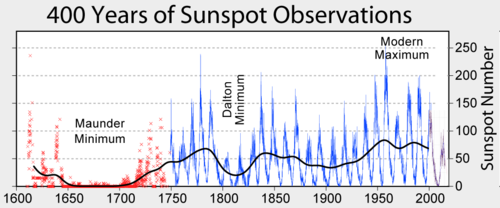
You may have missed a few brief mentions of an emerging threat in the mainstream news: The face of the sun has gone mostly blank in the past few years, with an extremely low number of sunspots. There have only been sunspots visible on the the sun for 133 days in the past year. The last three solar cycles have become progressively weaker. There is now a legitimate concern that because there have been several very weak solar cycles in succession, that we could tip over into another Grand Solar Minimum (GSM). This potentially developing GSM could be something similar …


Letter: Weather Station Recommendation

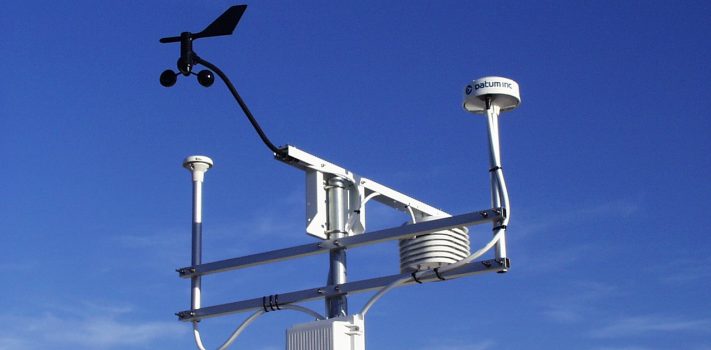
HJL, Do y’all have any recommendations on home weather stations? On searching I found a lot of references to using HAM and FM to get NOAA data but nothing for on site weather stations. Is this viewed as a valuable addition to the retreat or just a toy? – M.P. HJL’s Comment: With the advent of solid state sensors weather stations have become commodity items. Sadly, all the affordable ones that I know of are made in China. If the desire is just to have some basic data, any of those that you see on Amazon will work. You might …


Letter Re: Oregon Snow

Hugh, Many years ago we had a winter in the Spokane area that was threatening to put nearly three feet of snow on our rooftop. Roof rakes sure looked like a lot of work to use, and they raised the question of damage to the roof shingles (though the nicer rakes have wheels). So I hunted for a better solution and found the Roof Razor. This amazing tool makes me laugh every time I use it (which hasn’t been in a while!). For less than $150 I’ve got a tool that can clear my one-story roof of 2+ feet of …


Prepare to Be Prepped – Sometimes You Have to Survive Daily Life, by Just-Do-It Jane

Most of us in the U.S. have been touched by winter storms. If you live in the South like I do, then you’ve probably tossed your hands in the air and said to yourself, “Wait a minute! What happened to mild winters?!” Fortunately for me, my friend “Survival Messenger” has had the foresight to help me (and many others) understand why we should prepare for come-what-may scenarios. She has shared everything from her favorite high-tech gadgets to trusted and ingenious homemade solutions for everyday problems. I’ve been the thrilled recipient of handy buckets and bags filled with so many helpful …


Letter Re: Hurricane Matthew–Some Lessons Learned

Good Morning, SurvivalBloggers, SurvivalBlog recently had a very good list of hurricane preparation tips in Hurricane Matthew–Some Lessons Learned, written by a Florida resident. As a former 20+ year Florida resident I’d like to add to his excellent piece. In Florida, hurricanes are a way of life, and the period from June 1 to November 30 is known as “hurricane season.” The period from December 1 to May 31 is known as “not hurricane season.”  “Not hurricane season” is when one should be doing their preparation for the other six months. During “not hurricane season” one can find plywood on …


Letter: Another View of Alaska as a Survival Location

My family and I arrived in Alaska in 1974 while I was in the U.S. Army. I was stationed at Ft. Richardson (now part of Joint Base Elmendorf/Richardson. JBER). I spent five years at Ft. Rich. A 3-year tour, with two one year extensions. In 1980 I left the Army and moved my family back to Anchorage, where I currently reside. I grew up in mid-eastern Pennsylvania and spent two summers working on dairy farms in that area. I agree with some of what S.J. had to say in regards to whites not welcome in native villages as well as …


Hurricane Matthew–Some Lessons Learned

Dear Editor: Although I shouldn’t have been, I was once again amazed at the panic and last minute attempts to prepare, as Hurricane Matthew approached Florida. Florida’s geography dictates that there is only one way to travel to get out of the state, and that is north, unless you own a boat or plane.  The interstate freeways and highways get a lot of traffic and the stores get cleaned out, by hurricane refugees.  The parking lot of the Walmart that I visited was full of recreational vehicles (RVs).  Many of their owners were standing around with nowhere to go.  When …


Lessons From the Oklahoma Ice Storm of 2006, by Dr. Prepper

What I have found most useful from many useful articles on SurvivalBlog are the ones that honestly deal with personal experiences of stressful events, for example, those who have gone through hurricanes, floods, other natural storms, or man-made events. While it is useful from a planning perspective to speculate how things might be in an event that changes the world for us, there is nothing like learning from other’s experiences and what they thought went well and not so well. My family and I discovered first hand the value of preparation as well as the cost of the lack of …


Letter: Fall Season Prepping

Dear Mr. Rawles and Mr. Latimer: Since the Autumnal Equinox has passed us by, may I offer a link to a relevant string of articles? I have been contemplating seasonal adjustments to my preps, and Cheaper Than Dirt has a series of blogposts that I found useful in provoking thought. I hope folks find this useful, as we tune our plans for the changing seasons. Thank you for your blog, and all you do. – Skyrat


Base Layers and Their Differences – Part 2, by A.S.

If you recall from the first installment of this article which was posted early this month, I discussed the start of base layering principle which I am sure most people are very familiar with–especially those who read this blog. I also brought up the types of material used such as Polypropylene, Merino wool and the new fibre Tencel. In this installment I want to break down some information on the other layers involved and give my thoughts from long time use of garment materials that work in longevity. Goretex jackets are great for hikers and for those who take trips …