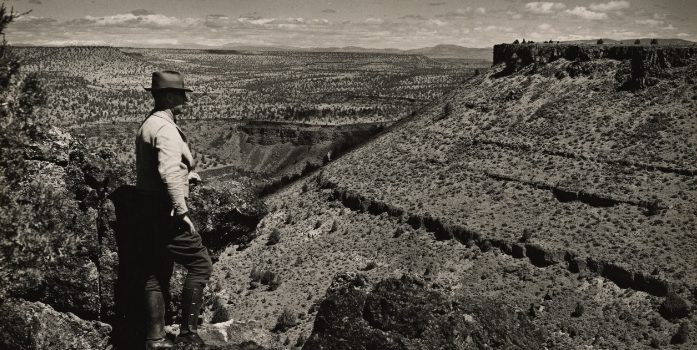
Living Off The Grid – Part 2, by V.F.

(Continued from Part 1. This concludes the article.) In October of the first year, I remember going out to take a shower in the “shower room” outside. By the time I had finished I was sobbing, crying incoherently, full of pity for myself. You see, it was already freezing cold and while I thought of solutions like adding a heater and so forth, I realized that I just didn’t want to have to deal with this anymore. But I had made my bed and I was going to have to sleep in it as the old saying goes. I let …


Living Off The Grid – Part 1, by V.F.

When I was a child, my mother moved to a very remote area of Eastern Washington and we lived off the grid. This was long before the term had been coined, as far as I know. The property did not have a house. We lived in a little travel trailer. We went to town once a month and did laundry at the laundromat. We boiled water from the creek to wash dishes. The creek was also our refrigerator. We ran a PVC pipe in the creek and placed a horse trough in the creek. This is where we kept drinks …


Survival Hunting – Lessons Learned – Part 2, by O.V.

(Continued from Pat 1. This concludes the ariticle.) The last animals I want to discuss are all the rest of the animals that come to the corn. That’s just about everybody in your area. Because they want to eat the corn, or the deer and other animals that do. So you’ll have turkeys plus predators of all kinds and especially raccoons! I don’t eat them myself, but the survival experts say they are a critical piece of survival food, with a lot of essential at. They are a pain for me because I do animal control work on a nature …


Survival Hunting – Lessons Learned – Part 1, by O.V.

I’ve hunted since the late 1970s and I thought I’d pass along some knowledge I’ve accumulated albeit not in a polished format, but more of a “if you just want the answer to the test format.” It will probably come across a little bit choppy reading, but I want to hit the high points and mention the low hanging fruit. And by the way the SurvivalBlog readership wants TEOTWAWKI usefulness, so that’s the slant of this article. First off are a couple of things to get out of the way — number one being equipment. Good stuff is a help …


Outdoor Survival: Of Belts and Tins, by Randy in S.C.

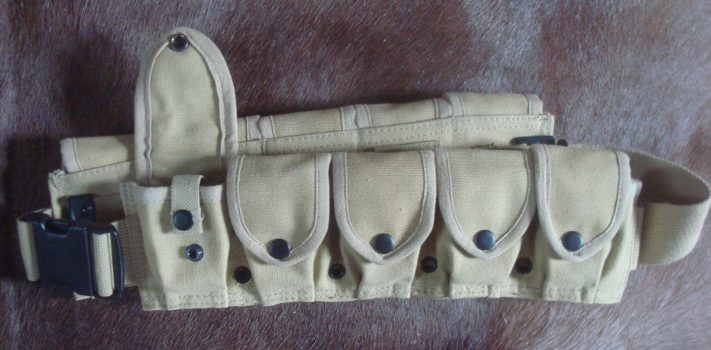
M1 Garand cartridge belts and Altoids tins are a match made in prepper’s heaven. You may already have some of these vintage items gathering dust. If not, they are easy to find. Together they can be a literal lifesaver, more capable than smaller survival kits and far less bulky than the typical bugout bag. The M1 cartridge belt is an adjustable canvas belt with 10 snap-closure pockets, each measuring approximately 3 ¾” x 2 ¾” x 1”. It was standard issue from about 1910 until the full adoption of the M14 rifle in the late 1950s. The belt was originally …


Brewing My Own Kombucha, by S.C.

Kombucha is a fermented sweet tea. Commercially, it is found in the refrigerated section with other prepared teas. It is loaded with live probiotics, so it has many health benefits. It tastes like fizzy vinegar, which takes a little getting used to. The fermentation process converts most of the sugar and caffeine. However, the caffeine sensitive may have to drink it only early in the day. Caveat: Kombucha has a minor amount of alcohol; less than 0.5% if it is sold commercially, and 0.2% to 0.8% (other estimates say 1-3%) if made at home. I mention this so that those …


Black Powder for Self-Reliance – Part 4, by M.B.

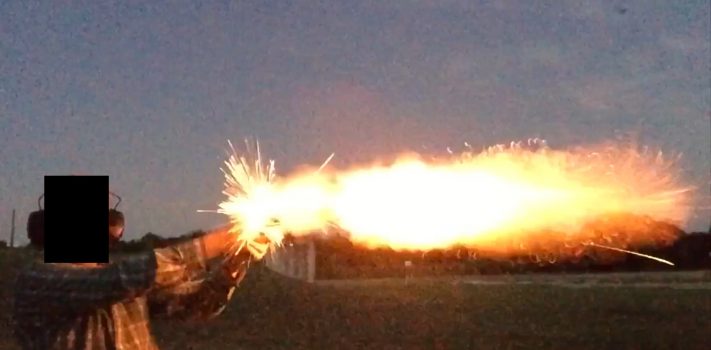
(Continued from Part 3. This concludes a four-part series.) Introductory Disclaimer (Repeated): Making black powder, while safe in the author’s experimental experience, can be dangerous. The author and SurvivalBlog.com do not endorse making black powder, and you do so at your own risk. Making black powder could also be in violation of the laws in your jurisdiction. You are responsible for compliance with all laws in your area. Neither the author, nor SurvivalBlog.com, are responsible for your use of the information in this article. The processes described herein are therefore for informational purposes only. Safety Note (Repeated): Black powder can …


Adventures in Beekeeping by K. in Tennessee

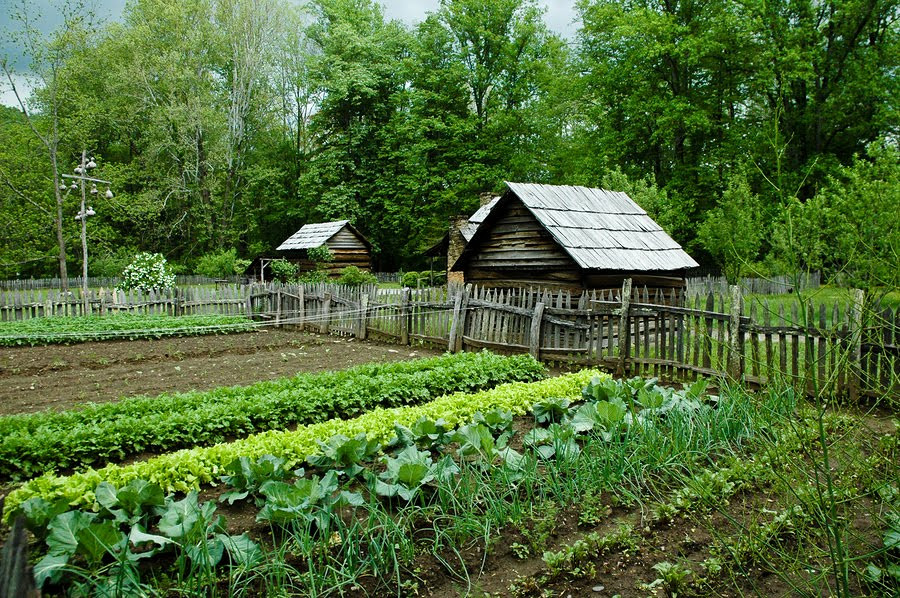
I’ve been a regular reader of SurvivalBlog.com for years and had developed an interest in keeping bees. I started researching online, got a book or two from the library, and after a few years felt I was ready to give it a try. Then we moved 800 miles away, bought some land, built a house, and started a little hobby farm in southern Appalachia. Life has funny ways of getting in the way, but I’m much happier for it, and now I have a great place to try out the hobby of beekeeping. I was quite daunted with all of …


Still Prepping After All These Years, by Tony T.

I have written this to encourage others that may be getting weary with the never-ending labors of preparation. I have divided this into four parts: 1. Learning from my family. 2. Adjusting to my own family. 3. Persevering through the years 4. Where we are now. Learning From My Family I’ll start by describing my father and his family. I was raised in a family that by modern standards would be considered preppers, at least by some. Prepping is not universally defined, to my knowledge. Be that as it may, I say we were preppers, but were unaware. It started …


Wood Cutting Made Slightly Less Dangerous – Part 2, by The Novice

(Continued from Part 1. This concludes the article.) Incident 3 It was a warm, slightly breezy August day. My son-in-law had asked if I would remove a dead pine tree from the corner of his back yard. The tree was 45 feet tall. The neighbor’s garage was 27 feet away. Observation: You can determine the height of a tree quite accurately by using a stick-like object about three feet long. In this case, I used an old pool cue that I found in my son-in-law’s trash can. First, I placed the pool cue in my right hand so that the …


Wood Cutting Made Slightly Less Dangerous – Part 1, by The Novice

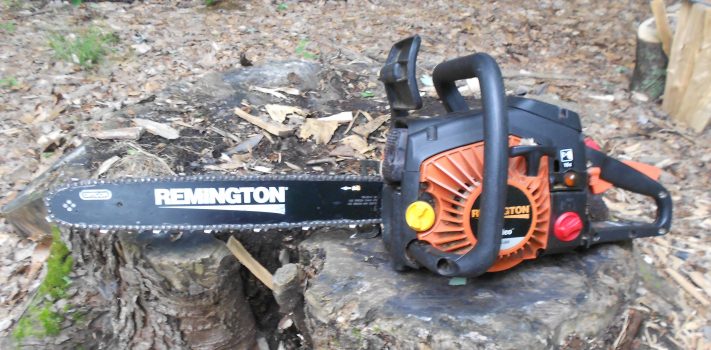
Editor’s Introductory Note: The following are some recounted experiences, observations, and advice, earned through experience. I hope that you benefit from this, and thereby avoid repeating the author’s mistakes. – JWR — Incident 1 It was an unremarkable autumn day: pleasantly cool, and a trifle overcast. I had thrown some logs on top of the last load of wood that I had hauled. Those logs now needed to be bucked for splitting. All of the proper protective equipment was in place: eye protection, hard hat with attached hearing protection and face screen, gloves, Kevlar chainsaw chaps, and sturdy footwear. As …


Practical Survival Chemistry – Part 2, by 3AD Scout

(Continued from Part 1. This concludes the article.) Apple Cider Vinegar This is one of the examples of where biology and chemistry cross over. Apple cider vinegar is mostly Acetic acid and is easy to make. The process starts with fermenting apples (biology) and ends with acetic acid (chemistry). Like baking soda there are many uses for vinegar, both in cooking and other applications. I now stock several gallons of white vinegar for cleaning rust off of items, especially if they are going to be used around food. For the price, this is the best method for getting rid of …


Practical Survival Chemistry – Part 1, by 3AD Scout

I have been involved in survival and preparedness since I was a teenager. I have done a lot, seen a lot, and heard a lot about preparedness from many sources. This has come from hands-on practice, reading books and magazines, watching YouTube, and talking with others of like mind. One area of survival or preparedness for TEOTWAWKI that doesn’t get discussed a lot is chemistry. I am by no means a chemist but I have always had an interest in chemistry and am a member of my local Hazardous Materials Response Team. While in the Army I was also on …


A Beginner’s Wood Splitting Journey – Part 2, by The Novice

(Continued from Part 1. This concludes the two-part series.) The Straight Stack I initially stacked my split wood in straight, eight-foot sections about four feet high. This made each of those sections contain approximately a face cord of wood. Three face cords comprise a full cord. We typically burn six to eight full cords each winter. I put a strip of tarp on the top of each stack and weighted it down with extra pieces of wood. This kept the rain off the top of the stack while allowing the wind to blow through and the sun to dry the …


A Beginner’s Wood Splitting Journey – Part 1, by The Novice

Six years ago, my wife and I slipped the surly bonds of suburbia and sought refuge in less densely populated parts. We settled in a log home in the woods. The northern woods in winter are beautiful but cold. Keeping warm led to a discovery: propane is expensive. So in the interest of fiscal responsibility, we henceforth heated our home by the sweat of my brow. The details of felling trees, limbing, bucking logs, and hauling billets belong to a tale for another day. My story today concerns splitting wood: the experiences of a smooth-handed greenhorn reducing billets of wood …