Update: Budget Preparedness–Survival Isn’t About Stuff, It is About Skills

JWR’s Introductory Note: This is an update to an article that I wrote for SurvivalBlog back in June, 2008. It includes an adenda from my first wife Linda (“The Memsahib”), who passed away in 2009. It is part of a series of SurvivalBlog 20th Anniversary update re-posts, in recognition of the fact that the majority of readers did not join us until recent years. — I often stress that a key to survival is not what you have, but rather what you know. (See my Precepts of Rawlesian Survivalist Philosophy web page.) In part, I wrote: Skills Beat Gadgets and …


The Dirty Side of Homesteading, by Patrice Lewis

Too often, homesteading articles, blogs, websites, and videos (including this one – guilty!) show only the successful side of homesteading. The abundant harvest, the completed projects, the fresh eggs and baby chicks and overflowing milk, the healthy livestock … by golly, this lifestyle must be easy-peasy, right? Yes and no. Of course things go right. And of course things go wrong. But what is seldom shown is the nitty-gritty day-to-day dirty side of homesteading, including the daily chores that must be done for the comfort and welfare of animals. For that reason, I thought I’d show you something I do …


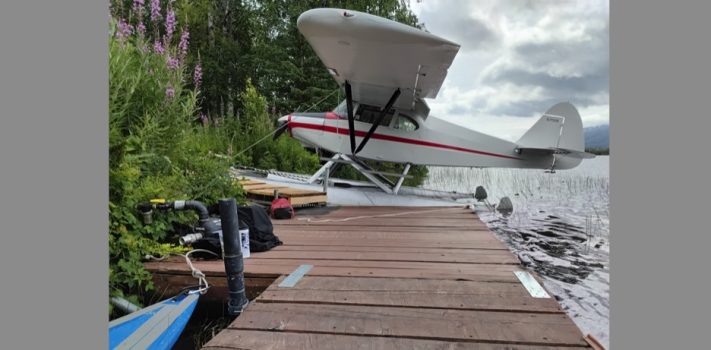
A Goldilocks Tale of Three Lake Docks, by Mrs. Alaska

When we bought our undeveloped land on a lake in Alaska, the first thing built was a little dock on the lake, so that boats and float planes could deliver workers and supplies. What type of dock is best in a cold climate where lakes and rivers freeze and thaw? In general, I found that Americans writing from states like Minnesota favored light metal docks that you could pull out of the water at the end of the season.  We saw that approach frequently used in Wisconsin.  From friends there, we have heard that it is something of a seasonal …


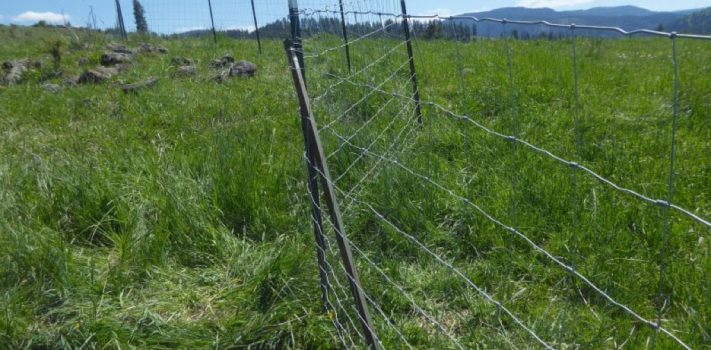
Field Fencing: Subdividing the Pasture, by Patrice Lewis

Editor’s Introductory Note:  This article is a guest post by our long-time friend and fellow blogger, Patrice Lewis. After first living in Oregon (from 1992 to 2003), Don and Patrice Lewis bought a ranch south of Coeur d’Alene, Idaho, and genuinely pursued a self-sufficient lifestyle. After their lovely homeschooled daughters both reached the “up and out” age, they moved again. This time it was to an undisclosed location elsewhere in North Idaho, ostensibly to slow down and lead a more sedate life. But, as irrepressible gardeners and dairy cattle ranchers, they’ve found themselves busier than ever. I highly recommend bookmarking …


Your Last Day, by SaraSue

On Monday I seemed extra tired while trying to get morning chores done, and it took longer than normal.  I struggled milking the cow and carrying the milk in.  I felt dizzy, a little short of breath, like walking underwater.  I tried to shake it off, but it wasn’t shakin’.  After morning farm chores were slowly finished, I sat in a lounge chair and put my feet up.  I pretty much stayed there all day.  At least, until, it was time for afternoon chores, and I didn’t milk the cow.  Just couldn’t do it.  Went to bed early and slept …


A Prepper’s Carpentry Toolkit – Part 2, by A.F.

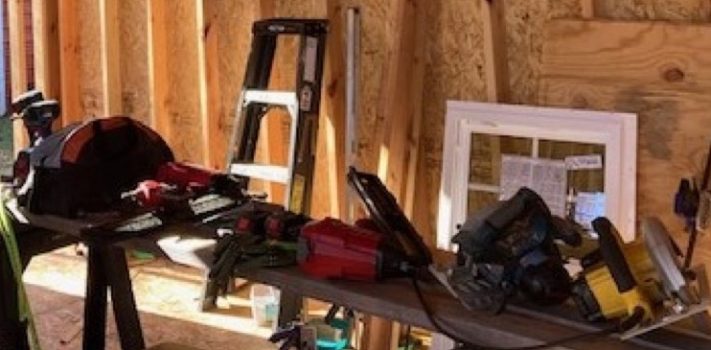
(Continued from Part 1. This concludes the article.) In the upper-right corner of the essential tools photo there is a stack of quick grip clamps. In particular, these are Irwin brand heavy-duty models in maximum working lengths between six and twenty-four inches. A couple of these models have head release slides that allow the user to quickly convert the tool from a clamp into a spreader. When it comes to pulling tightly cut framing into position, aligning materials until they can be fastened or holding the end of a long timber while working alone, these clamps can do it. I …


Thoughts on Farming – Part 6, by Single Farmer

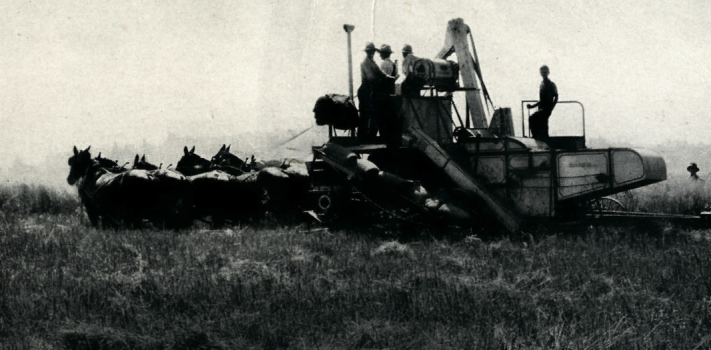
(Continued from Part 5. This concludes the article.) The number of hours required to complete an agricultural task has been in decline for over 100 years. This is one of the key concepts that you need to understand in order to have the best chance of surviving the future as these efficiency increases also are across many industries. Time is not spread out evenly on a farm which is a problem from a labor perspective. There are many times in the life cycle of a grain farm where there is nothing to do, but wait especially with dryland (non-irrigated) farming …


Thoughts on Farming – Part 5, by Single Farmer

(Continued from Part 4.) The Economics of Farming I often hear statistics that farmers receive 15 percent of a food dollar. That statistic really needs some examination in comparing it to previous generations. Back in 2016, we sold wheat in the $3.80 range and we were fortunate in that the official statistic for wheat for our area is $3.20 a bushel. I will be generous and use our $3.80 a bushel number: At that number, a pound of wheat is a little over 6 cents. Wheat is commonly used in bread, so an example that I often think about is …


Thoughts on Farming – Part 4, by Single Farmer

(Continued from Part 3.) The Future of Farming The smallest of agricultural tools demonstrates the largest of problems in farming today. Small funnels are often thought of as almost disposable, but this one and its sticker saying the price survived all of these decades to become a component in this discussion. The funnel is from 1977 when my dad was young long before I was born. It was 59 cents. A comparable funnel today is around 5 dollars. Let us call it almost a ten to one ratio because you have in many states to add sales tax. Corn prices …


Thoughts on Farming – Part 3, by Single Farmer

(Continued from Part 2.) Wheat Farming in the Heartland: A year in the life of a wheat farm We are a diversified family farm actually growing multiple crops to provide diversified income streams. We own all of our acres and have no debt. This will be covered extensively in the part which covers the “Economics of Farming.” Everything is grown that is sold is for profit. If a crop is no longer profitable or has a strong possibility of becoming unprofitable, it is not grown or sometimes grown in a limited amount. Just because we can grow something in quantity, …


Thoughts on Farming – Part 2, by Single Farmer

(Continued from Part 1.) Successful survivalists consider a variety of scenarios including looking at how previous generations survived to glean any wisdom that they can take as compensation for their time. All of us are only here because our ancestors somehow managed to carry themselves genetically forward. For most of human history, it was difficult to get enough calories to barely stay alive and this fact is lost upon most people as they have so many choices today often struggling on what cuisine to eat, and not how to find food. A common cause of death throughout history has been …


Thoughts on Farming – Part 1, by Single Farmer

I want to tell you about an amazing group of people. They make sure that you not only stay alive, are well-nourished, and that you have your choice of a delicious variety of food that Kings and Queens of yesteryear could not dream of, all at relatively low prices. Contrary to what you’ve been told, prices are still fairly low by historical standards and food quality is high. I know that you or someone you know has recently been to the grocery store and you think the prices are high, but wait until you hear about the state of the …


Post-TEOTWAWKI Refrigeration, by 3AD Scout

My Amish neighbor, who recently moved into the neighborhood, was telling me that he was going to build an ice house from a kit.  I told him to let me know when he was going to assemble it and I would give him a hand.  I have some historical knowledge of how ice used to be harvested, stored, delivered, and used before modern refrigeration, so I was very interested in how the Amish store and use their ice today. The Component kit The ice house kit consisted of 14 large pieces of styrofoam that were one foot thick.  The kit …


Twelve Live Gifts that Keep on Giving, by Mrs. Alaska

In the spirit of the season, I offer a “Twelve Days of Christmas” list of LIVE gifts that keep on giving to us here, at a remote homestead in Alaska. 1- Gallon of red wiggler worms, divided among my food gardens. They eat the kitchen scraps I toss there and rapidly improve the soil. 2 – Years’ worth of seeds (many degrade after that: check with a float/sink test each year). 3 – Rabbits (1 buck and 2 does). They can be mated at about five months and over the year, fill our larder. (In the photo at left, can …


Why A Cat Is The Most Valuable Animal on a Farm – Part 3, by W.J.

(Continued from Part 1. This concludes the article.) HOW TO MAINTAIN AN OUTDOOR CAT COLONY If you want cats to be attracted to your home or homestead, and to stay around, you need to give them food, water and shelter, and teach them that people are a good thing. And you need to encourage good traits and prevent inbreeding. Food: I did not give my outdoor colony cats the Farmina Prime lamb kibble, imported from Italy, that my indoor fur family gets. But they get decent stuff, as well as leftovers, bones, and oddly enough, wheat germ muffins. They want …