Fuel Storage for Survival Retreats, by Flighter

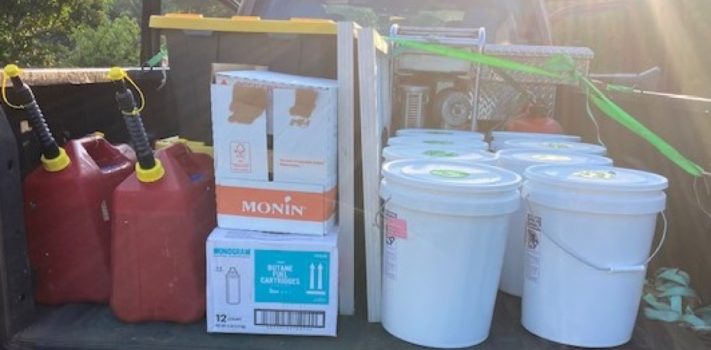
Editor’s Introductory Note: The following is a re-post of a 2007 SurvivalBlog article. Given the recent spike in gasoline and diesel fuel prices, I thought that is was apropos to re-post a few articles related to fuel from SurvivalBlog’s early days. — The world runs on petroleum. Imagine a post-apocalyptic period when the local gas station is closed, and has been for two years. How will you carry out your daily activities? Generate electricity? Pump water? Plow your garden, or fields? All of these can be done by hand, and have been for thousands of years. Modern life has given …


Understanding Hydrocarbon-Based Fuel, by Industry Guy

Editor’s Introductory Note: I’ve had many e-mailed questions about buying, transporting, and storing gasoline and diesel fuel in recent days. I also had a question about the available blends of gasoline. So, I thought it would be apropos to re-post a few fuel-related articles from SurvivalBlog’s deep archives.  This article dates back 16 years, to April, 2010. It was written by an anonymous reader in the fuel refining industry. Background Fuel supplies are essential for many aspects of modern society. Complex supply chains rely on hydrocarbon-fueled trucks, trains, and planes to deliver food and other supplies in near real-time. Natural …


Alternative Fuels and Lighting For When The SHTF, by Tractorguy

Something that we always stress to fellow preppers, is that “when the SHTF, what you have is all you will have,” stressing the importance of permanently sustainable and renewable things like wood heat, electricity from solar panels, etc. Once you have that covered, however, it is worthwhile to consider that some of the disaster scenarios we may have to cope with may be temporary – whether a weather event such as a snowstorm or tornado, or something medium-term like an EMP event affecting a smaller town where the residents are likely to pull together and survive. A limited-supply fuel may …


Update: Oil and Lubricant Storage in Retreat Planning

JWR’s Introductory Note: The following is an update and expansion to a post that I made in SurvivalBlog back in November, 2005. It is part of a series of SurvivalBlog 20th Anniversary re-posts, in recognition of the fact that the majority of readers did not join us until recent years. — Many letters and e-mails I’ve received over the years have mentioned motor oil and chainsaw fuel mixing oil.  That reminded me about a subject that I’ve meant to address on the blog: the key considerations of oil and lubricant storage.  It is important to think through all of your …


The “Come as You Are” Collapse–Have the Right Tools and Skills

Introductory Note From JWR: This article is an update and small expansion to a succinct post that I made back in February, 2008. When the Second World War broke out in September, 1939, the United States had nearly two full years to ramp up military training and production before decisively confronting the Axis powers. In the mid-1970s, looking at the recent experience of the 1973 Arab-Israeli War, the Pentagon’s strategic planners came to the realization that the next major war that the US military would wage would not be like the Second World War. There would not be the luxury …


Commonality Across Your Preps, by A.C.

Let’s face it, the world we live in is defined by the staggering variety of choices we have. A that is why the simple concept of standardization (the deliberate choice to use common platforms and equipment) might seem like a limitation. However, as large government organizations and individual preppers alike have learned a strategic commitment to commonality offers immeasurable benefits in efficiency, cost, and safety. By examining the lessons from military programs I have been personally involved with and applying them to our own lives, we can see how thinking about standardization is a powerful way to enhance our readiness, …


Stihl MS261C Chainsaw, by Thomas Christianson

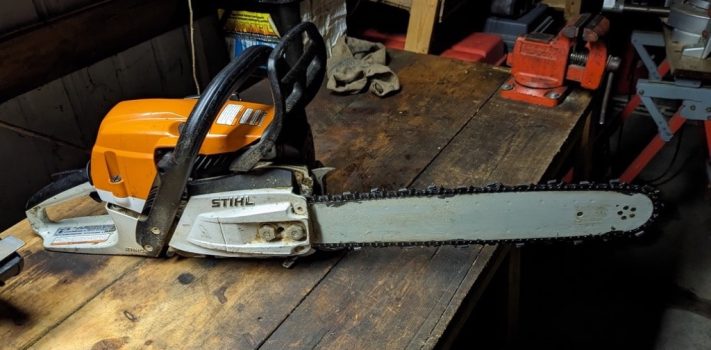
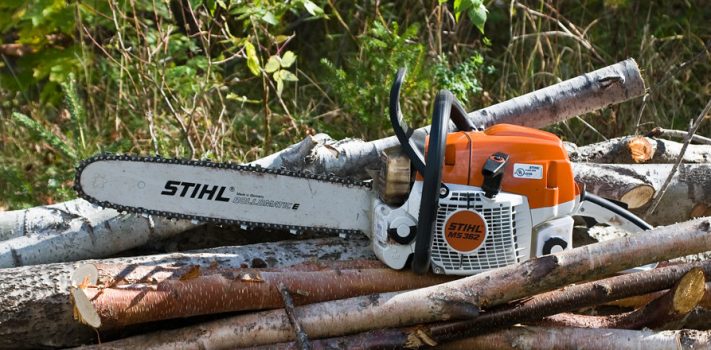
With a magnesium-alloy crankcase, captive bar-nuts, a decompression valve, and a host of other premium features, the Stihl MS261 is its various forms represents a well-designed and well-constructed professional chainsaw. But it is the light weight and the outstanding power-to-weight-ratio of the saw that secures its place as one of the most popular chainsaws in the world. With a manufacturer-suggested retail price of $709.99 at the time of this writing for the C-M version with a 16 inch bar, the saw represents a great value for high-volume wood cutting. If you only cut a few cord or less of firewood …


Preps Starter Kits for Reluctant Families – Part 1, by A.F.

For years, my father and father-in-law would tell us that they had everything under control to handle the natural disasters common to their areas. Healthy pantries, stored gasoline and propane, plenty of firewood, tractors to clear debris or snow, four-wheel drive vehicles for movement and most importantly generators for their wells and freezers. Yet, after each big weather event both of them would tell of what they didn’t quite have ready or of supplies that they should have had. I got into the practice of calling them before inclement weather to ask if they had water and fuel ready or …


Prepare For The Consequences, Not The Disaster, by 3AD Scout

Many Preppers are often asked “what are you preparing for?” The responses are anything from a simple weather event to an extinction-level event. Having been in the field of disaster planning and response for 24 years, I cannot tell you the number of times someone from the public would call looking for our tornado plan, or flood plan, chemical spill plan and on and on. The reality is, many entities do not have disaster specific plans but rather general emergency operations plan that address the similar consequences of several different disasters. With that said, there are exceptions such as entities …


Post-SHTF Lighting – Part 2, by St. Funogas

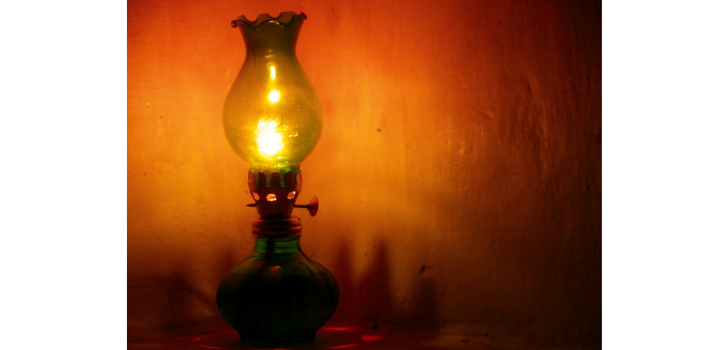
(Continued from Part 1.) Paraffin Lamps Halfway between a candle and an oil lamp are paraffin lamps. They’re similar to oil lamps and burn the same fuel but they come in a small jar with a wick. They’re essentially a small oil lamp that burns more like a candle. I thought it would be interesting to test one but by the time I finished with the candle portion of my tests, there was no doubt in my mind these paraffin lamps with their small wicks and long burn times (one claimed 115 hours) wouldn’t be much better than candles. There’s …


A Water or Fuel Level Sensor Circuit, by Mike in Alaska

We live up in the Arctic. Water is not always easily available in this area, various events can cause power to go out for weeks at time … what could possibly go wrong? The following design is for a fuel or water level sensor circuit. It uses a 66F002 MCU (Microprocessor Control Unit) with a built-in Analog to Digital flash storage read-only memory (A/D Flash EEPROM) using a sensor that has a prism built into a lens in the form of a sealed IR (Infrared) detector. When the sensor is bare (dry) the logic input to the MCU is logic …


Fuels for Cooking, Warmth and Comfort – Part 4, by Lodge Pole

(Continued from Part 3. This concludes the article.) Cooking with Wood and Propane We do not regularly use our house wood stove for cooking. We can, but since we installed the wood stove, it has not been needed. Recently, I was given an old, homemade wood stove from an old-timer’s cabin. The stove is very well made. I have it outside of the shipping container and use it to cook on. It is an extremely large stove inside and out. It stays outside and will likely never be indoors again. Whoever built it, put several feet of ¾ inch steel …


Fuels for Cooking, Warmth and Comfort – Part 3, by Lodge Pole

(Continued from Part 2.) When the 2024/2025 woodstove season started, I had roughly seven cords of stacked, seasoned wood in the shipping container. We use about two cords of wood each winter. My goal is to always have at least two years of firewood on hand. To me, three years is an insurance policy. If I am unable to gather firewood one summer, I do not need to worry. I will simply gather more the following summer. I also store everything I need to gather, cut, carry, and split wood to prep it for storage. Our log splitter, chainsaws, axes, …


Fuels for Cooking, Warmth and Comfort – Part 2, by Lodge Pole

(Continued from Part 1.) Tools for Cutting Wood at Home Wheelbarrow or manure cart- I use these to haul wood and cutting equipment. Occasionally, someone will offer me free firewood they cut some time previously. Sometimes, if it is seasoned and not split, the wood can be heavy. In these circumstances, I will use a furniture dolly, but I try to never cut and/or haul anything that large/heavy. Hunting/Boy’s Axe – I prefer using a two-pound “boy’s axe” because it is extremely light, and easily maneuverable. This is strictly used for delimbing. Splitting maul – I use these not only …


Fuels for Cooking, Warmth and Comfort – Part 1, by Lodge Pole

Before buying our home, we rented it. The first winter living there, I had forgotten to call and get a propane fill-up. When I checked the tank level, it showed 1%. I called the propane company, explained that I needed a fill-up, and was told they could not service me for another week or more. The only exception was if I agreed to be placed “on route”, which meant they would fill my tank when they were in our area, every two weeks. We needed propane to stay warm since our only heat was an HVAC system, so I agreed …