Letter Re: Deet
Hello HJL & JWR, Citronella oil works for black flys. I live in the New York state Adirondacks; trust me on this! – R.J.

Hello HJL & JWR, Citronella oil works for black flys. I live in the New York state Adirondacks; trust me on this! – R.J.
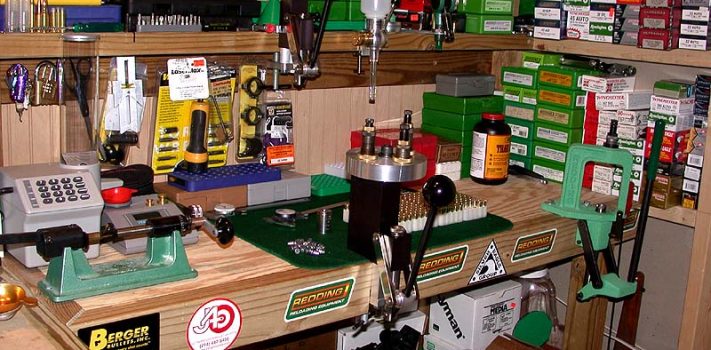
First off, let me say that I am very grateful to have SurvivalBlog. Over the years, I have learned so much from the accumulated wisdom of the writers and the administrators. I felt that it was time to give back to this community, so I decided to share what I have learned over many years of reloading my own ammunition for rifle and pistol, while being conscious of both budget and space/OPSEC concerns. Please believe that you don’t need to spend thousands of dollars or have a 1000-square-foot shop dedicated to reloading in order to produce your own high-quality reloads …
I’m not exactly sure where the dividing line is between some disorders, like genius, driven mad, sheer genius, tortured mind, losing your mind, and other similar diagnoses. There are creative minds, like that of the novelist Stephen King, and I’m not sure if he has creative genius or a very tortured mind, after watching many of the movies that Hollywood created from his novels. I tend to think that, perhaps, just perhaps, he has a tortured mind. In any event, I’m sure I’ve lost my mind many years ago; just ask my own family! LOL Now, I’m not saying that …
So, you’ve got your bug out bag packed and ready to go, survival supplies laid in at your bug out location, and you keep your powder dry. Have you stopped to consider how you’re going to move people and gear around? Traveling on foot is slow (about two miles per hour for the average person) and your hauling capacity is limited to 50 or 60 pounds of gear, food, ammo, et cetera. More realistically, take a look at recreational backpackers; their goal is to carry no more than 30 pounds for movement of 10-15 miles per day. If you are …
When reading survivalist literature, on various blogs and in fiction, there are many good ideas and suggestions, but often suffering from an idealization of circumstances, both before and after “the event”, which throws all into confusion. On the one hand, preparations for disaster are too often haunted by the twin hell-hounds of over-confidence and the myth of universal preparedness. Over-confidence, in that the prepper is assumed to have unlimited financial resources and time to purchase the items suggested and to acquire the training needed to do various things. Universal preparedness, being a myth, is based on the idea that the …
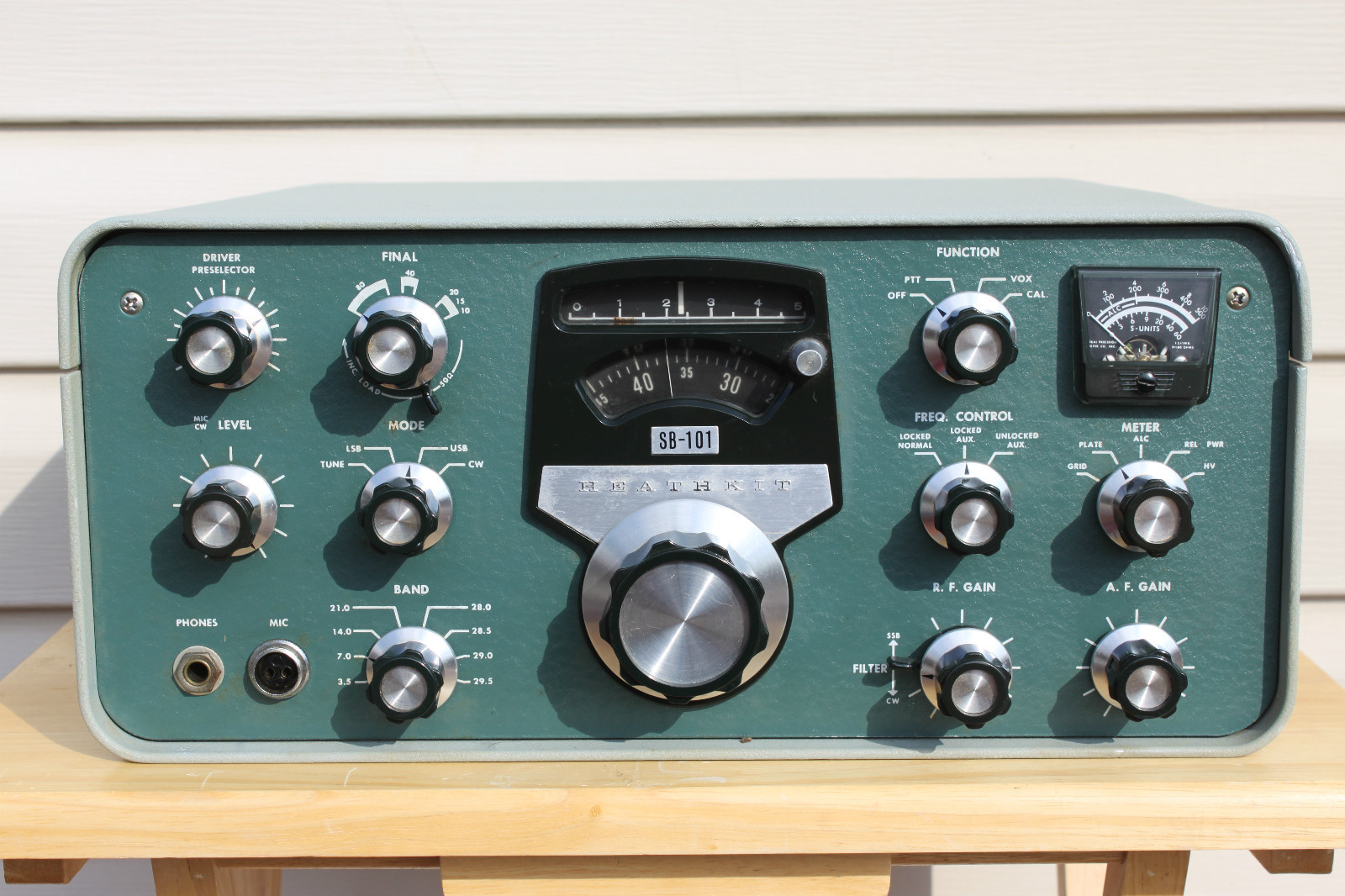
Editor: I disagree with the letter regarding the unsuitability of Heathkit (vacuum) tube radios for EMP protection. Let me elaborate: Lethal voltages: While you really don’t want to tangle with +700 VDC, the most lethal voltage in any radio is that which comes from the wall outlet: 120 VAC. AC fibrillates hearts (we use it for that purpose in cardiac surgery); DC defibrillates hearts (done that many times). Requires 120 Volts AC: Unless you get the 12 volt power supply (I have two). Or solar power / inverters.…right? No cooling fan: Well, they rarely need it! My primary rig is …
Dear Sirs, I really enjoy reading your blog, but I have a question to ask you. I am blind in my right eye and I am having trouble trying to find a long distant vision and night vision for a one-eyed person. Do you have any suggestions? – R.H. HJL’s Comment: The PVS-14, carried by several of our advertisers, is an excellent choice for night vision. It is a monocle and is used on only one eye. It is commonly worn on the dominate eye, allowing the non-dominate eye to be used for peripheral vision. Without the use of your …
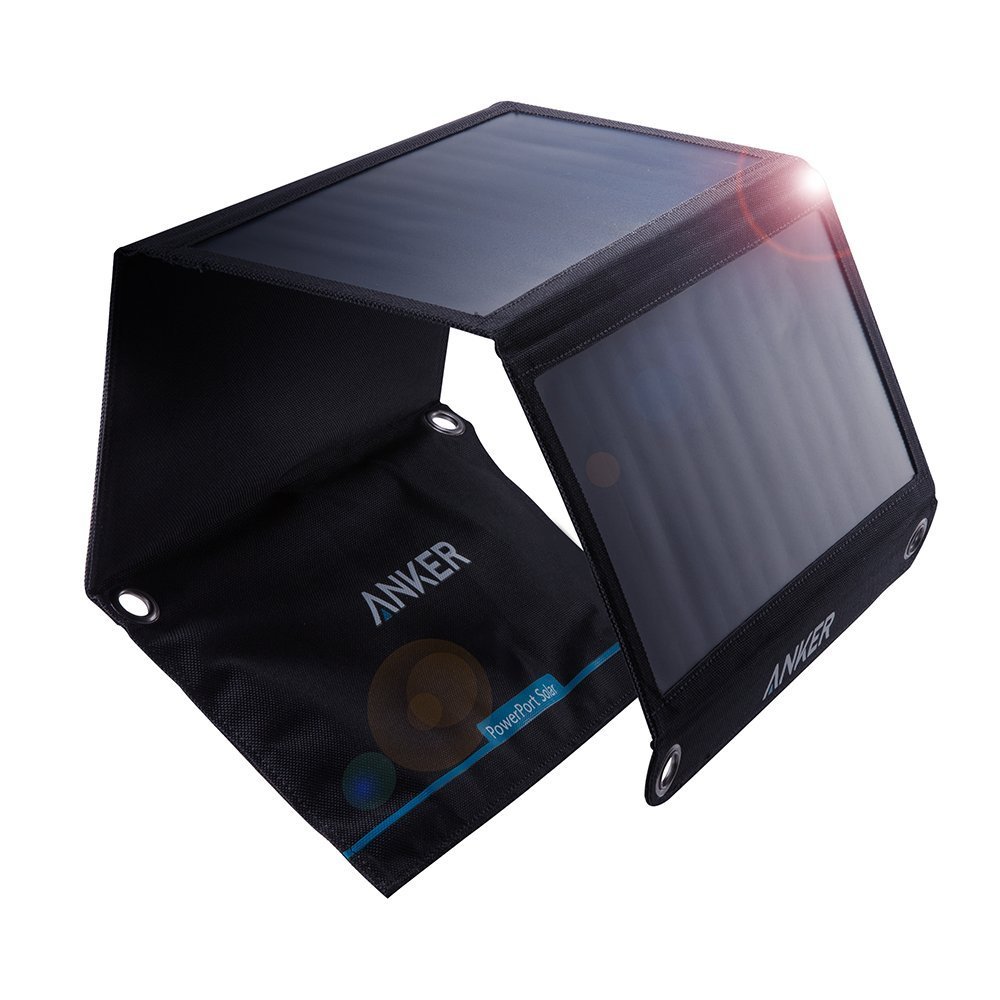
Necessity being the mother of invention, I recently stumbled backwards onto an inexpensive and truly totable way to power two-way radios, shortwave, and other receivers; charge smart phones and iPads; provide lighting; quickly purify water on the go; keep night vision functional; enable electronic security systems; and pump rainwater to a gravity tank, while protecting all these functions from EMP in the interim. I will quietly be turning 50 next month. I joined the survivalist movement in the early 1980’s, at the tail end of that upswing of interest in such things. Vietnam was still fresh in our minds, and …
Hugh, I strongly recommend against using any Heathkit rig for an emergency radio. There was one solid state Heathkit but it was a rebadged, factory assembled Yaesu. All others were built by an individual, whose attention to detail you most likely have no idea about. They are known in the hobby as “GRIEF kits” for a GOOD reason. They fail – early, and often. They have too many disadvantages for the emergency backup purpose. Besides all the ones mentioned by the original author: They have high (LETHAL) voltages inside. They require 120V AC power. They have no cooling fan on …
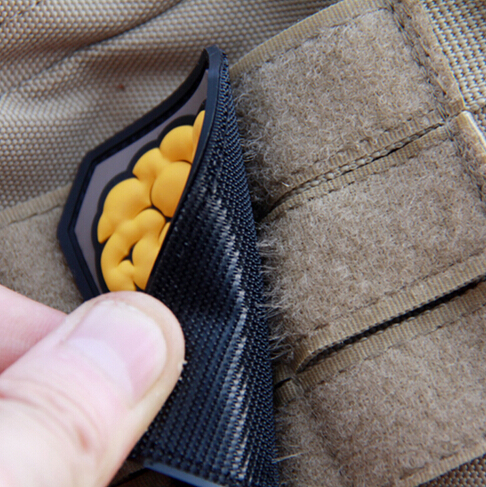
Hugh, There was some discussion a few weeks ago about using hook and loop fasteners for gear. As this photo demonstrates, it’s essentially useless after about two years. Avoid. – D.D.
Jim and Hugh, Several weeks ago, in your “News from the Redoubt” column, you mentioned a company out of Idaho for IWB (inside the waistband) holsters, named Alien Gear Holsters. I have just about every type of (outside) belt holster and most work just fine for my needs, but I was in need of an IWB so I decided to give them a try. I’m glad I did. I was planning on an Internet order on Sunday evening when the hours on their website said they were still open (I live in the eastern time zone and they in mountain), …
Okay, when the lid comes off civilization and things are fun again, you don’t want to be the numbskull sending up a smoke signal that can be seen from space, just trying to get a fire going. You want to be the guy who kneels down for a bit and brings forth fire, like Prometheus or somebody that gets things done. I am going to teach you to make tinder that will stay lit and accelerate your fire. It will be inexpensive, too. Then you will achieve success in building a fire so you can finally crack open that can …
Dear Hugh, A very nice alternative to velcro pouches is made by the folks at UW Gear. They use a “tuck tab” feature that doesn’t use velcro, snaps, or buckles. This uses a stiff piece of webbing that “tucks” into the tab on the front of the magazine pouch. There is nothing to wear out here and should be easy to clean if snow or mud somehow gets in there. They make chest rigs, bandoleers, and standalone pouches. To my knowledge, they currently can make these for 5.56, 7.62×39,5.45, and 7.62×51. It is a little bit of a wait time …
Hugh, My experience with the hook-and-loop closure system is, that it works fine while it is new and clean, but deteriorates quickly. Lint is one of the biggest enemies, along with cheat grass and other vegetable contamination. We have velcro on a camera case closure, and one time it came in handy when a moose was headed toward us with its hackles up. Zip, and the moose made a 90-degree turn to the left and trotted away. But in situations where the noise could draw fire, a snap is usually less loud. Better yet, unsnap your retainer early on, before …
Dear Hugh, Regarding the use of Velcro on tactical gear, I have something which might be of importance that I would like to share. Due to an old athletic injury, I wear an ankle brace for both stability and compression on a daily basis. I have been wearing a brace of one kind or another for more than 40 years. I currently use a brace employing an elastic wrap around with a Velcro closure. It is both convenient and holds tight. Until, that is, the Velcro begins to wear out. With daily use it does wear out rather quickly. I …