Neighbors, Friends and Enemies, by SaraSue

I think this is an important topic, and I’ve been struggling with it.  Who is my friend and who is my enemy, and why is it important to designate people as such?  Should I?  On the face of it, it’s about my safety and that of my family.  If I can identify friend or foe, I can more easily identify threats and make plans to mitigate them.  Maybe not easily, but at least I would know at some level what I’m dealing with.  I realize that my experiences are far different than those living in the suburbs or in a …


Writing Contest Prize Winners Announced — Round 120

We’ve announced the winners of Round 120 of the SurvivalBlog non-fiction writing contest. Note to the top three prize winners: Please contact me and let me know your UPS and USPS address(es), for your prizes. Thanks. – JWR The top three prize winners will each receive some great prize packages. The winners for Round 120 are… First Prize Winner: First Prize goes to AppComms, for Memoirs of a Disaster Survivor. (See: Part 1 and Part 2.) It was posted August 1-2, 2025. He will receive as prizes: A Gunsite Academy Three Day Course Certificate. This can be used for any …


Growing Kabocha Squash, by Rookie Gardener

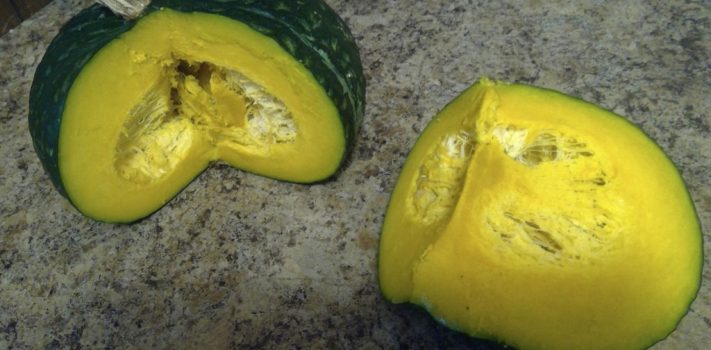
Until my retirement in the summer of 2021, I had never grown anything but weeds, which evidently, I’m pretty good at. However, growing anything else was hit and miss, mostly miss. During my working life my wife and I spent a lot of time in Asia. One of the commonly used vegetables often sliced thin, breaded, and deep fried on tempura platters is kabocha squash, also called Japanese pumpkin. Kabocha is a winter squash with a creamy texture. It’s used in many Asian cuisines. We could not bring home seeds but here we found that we could purchase them online …


My Most Recent Lesson in Logistics, by Reltney McFee

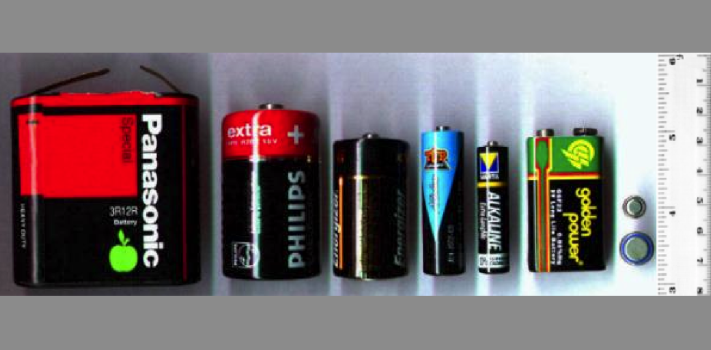
Last weekend, I was performing my periodic battery survey, assessment and replacement ritual. I have a list of (I had thought) every battery device, and its location, along with a hidey-hole for the batteries to replace those that require them. This list, in the summer 2025 edition, runs 3 pages of 14 point type. On my yearly planner, it is slated for January. (Yes, I am aware that this is September. Let us consider the gulf between plans, and actions, shall we?) As it developed, as I was working my way through each page, I would pass one shelf in …


Text Comms in a Post-Disaster World – Part 5, by J.M.

(Continued from Part 4. This concludes the article.) There are a lot of different complicated characteristics in the LoRa radio configuration that can be changed that impact range and transfer speed, so Meshtastic has defined a number of preset configurations so you don’t need to mess with the technical details. The first word of the preset defines range, and the second defines bandwidth, with ‘Long Fast’ being the default. I strongly recommend that you stick with the ‘Long Fast’ preset until you gain more experience with Meshtastic, so make sure the ‘Modem Preset’ field says ‘Long Fast’. Once you’ve selected …


Text Comms in a Post-Disaster World – Part 4, by J.M.

(Continued from Part 3.) Flashing I’ve covered a lot of details regarding how Meshtastic works, so let’s walk through an example of configuring an actual device to see how it all applies. Note that one of the results of Meshtastic currently being primarily a hobbyist activity is that there are multiple ways of doing things. For example, you can connect a Meshtastic device to a PC via serial (over USB) or Bluetooth, you can manage the device from a PC using an Internet-based web interface, a locally hosted web interface or a Command Line Interface (CLI), you can update the …


Text Comms in a Post-Disaster World – Part 3, by J.M.

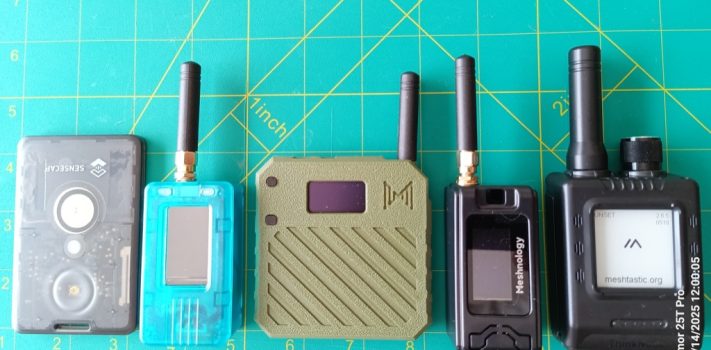
(Continued from Part 2.) Charging In regards to charging, most Meshtastic devices have a built-in USB-C port for charging the internal battery (except for the T1000-E mentioned above). The USB-C port can also be used to connect to the device to a computer for upgrading the firmware or managing the device via a web browser. Compact Comms Above is a picture of several Meshtastic devices to give you an idea of their sizes:


Text Comms in a Post-Disaster World – Part 2, by J.M.

(Continued from Part 1.) Meshtastic provides native integration with GPS satellite data for location information. Many Meshtastic devices come with a hardware GPS receiver built in, and the Meshtastic app has the ability to share GPS data from a paired cell phone if it’s not built into the device. There is usually a shortcut in many Meshtastic devices for immediately sending your location information to other users in the event of an emergency. The Meshtastic phone app has the ability to download local copies of some maps so you can pinpoint other people’s locations. I realize that many people don’t …


Text Comms in a Post-Disaster World – Part 1, by J.M.

Unless you’re a completely isolated loner, communications are going to play a critical role in both short-term and long-term disaster scenarios. Being able to effectively exchange information with family, friends and community members in both short-term as well as long-term disaster scenarios can literally mean the difference between surviving or going the way of The Dodo. There have been dozens of articles on SurvivalBlog about the use of radios for voice communications, and having appropriate radios and communications plans should definitely be considered a critical part of any preparedness plan. However, there’s another form of communications that should be considered …


Improvised Shower Fixtures and Pumps, by A.F.

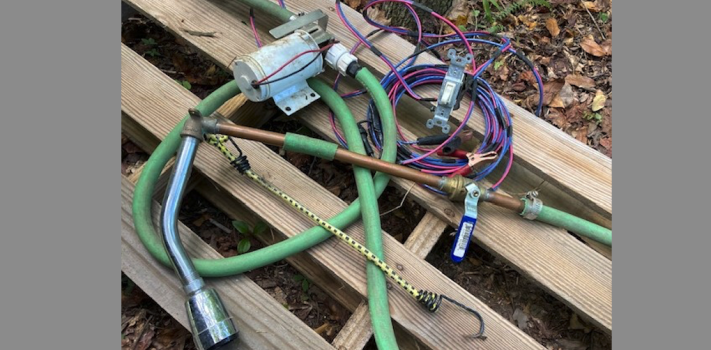
My first iteration of an improvised shower came about while stationed in Texas. Our unit was participating in a field training exercise and were allocated one trip to the shower point per week. As this exercise was more of a practice of our daily grind in field conditions rather than a battle simulation, our platoon of mechanics set up a minimal motor pool and for the most part spent time catching up on service work. One of the few actual repairs I was given over those days was replacing the power steering pump on a M1009 CUCV better known as …


Secure Local Comms With POTS Equipment, by Tractorguy

Land-line analog telephone service was ubiquitous in most of the 20th Century. This hardware is now commonly Plain Old Telephone Service (POTS).  This was our primary means of communication. It was simple, robust, and reliable. A few users still have landline service, although most landline service has migrated to digital means over a public Internet connection, with a modem at the user’s residence converting the digital data back to analog and providing ringer voltage to operate the bell. A lot of these telephones and associated equipment still exist, and are sitting in basements and attics. They could be easily pressed …


JIT Training for Trusted Friends, Family, and Neighbors, by Dr. Bob

This article will provide some thoughts on how to address a few common problems seen in the preparedness community. The first problem involves the difficulty finding like-minded people to form a community before the Stuff Hits The Fan (SHTF). The second problem is how to engage friends, family, and neighbors so that they take actions to prepare their families prior to SHTF. These problems are related and center on the realization that many people are bound by their current life circumstances and are unwilling or unable to consider that the current paradigm is in danger and, secondly, many of those …


A Costly Freeze-Drying Prepper Mistake, by Mrs. T.

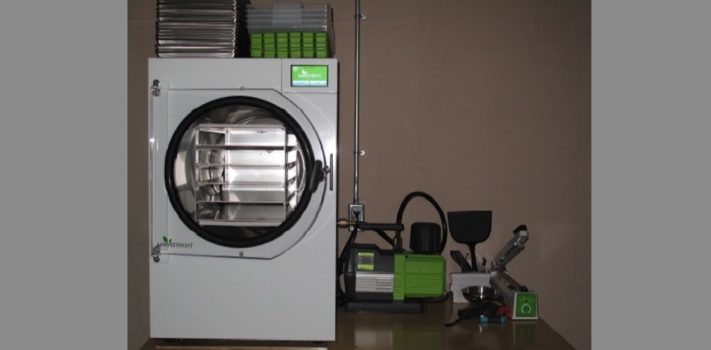
Doesn’t everyone want a freeze dryer? It feels like the ultimate answer to long-term food storage, your foods, your way, preserved “forever.” Perfect for a nuclear war, another COVID lockdown, or just peace of mind. My family has a lot of food allergies, making it difficult for long long-term food storage solutions. We have never been able to find freeze-dried foods that were a combination of what we eat, and not processed in facilities that process ingredients we’re allergic to. That’s why the freeze dryer seemed like the perfect solution. And honestly, it still is. But not before I learned …


Maximizing Prepping Storage Space – Part 2, by Iowa Dave

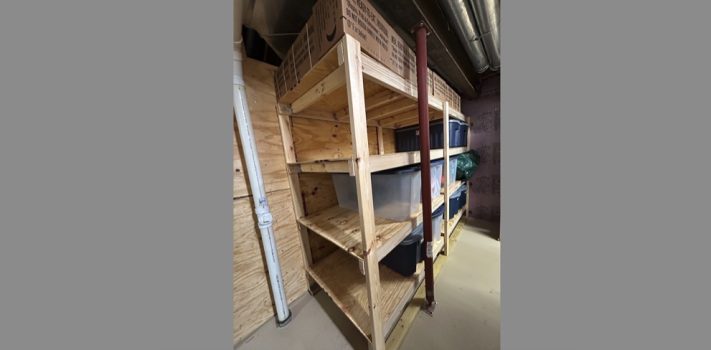
(Continued from Part 1. This concludes the article.) Here are the steps that I followed in this project: Figure out how much space is available. Don’t just think in two dimensions (length and width), look up and consider how tall the available space is and what is above it. You are essentially playing a three-dimensional version of the old two-dimensional Tetris game in this exercise, while factoring in the features of your home. My basement shelving has been constrained by things like water lines, waste lines, propane lines, and HVAC ducts. Consider how wide any aisles between rows of shelves …


Maximizing Prepping Storage Space – Part 1, by Iowa Dave

Author’s Introductory Note: I am not a carpenter or engineer. I am simply sharing concepts that have worked well for me and can be applied by anyone. Beans, bullets, and band aids. Their volume grows over time, and we all need somewhere to put them. Mr. Rawles calls his storage space Jim’s Amazing Secret Bunker of Redundant Redundancy (JASBORR). I call mine The Temple of Doom. Managing the storage of these items is a challenge faced by all preparedness-minded individuals. Most of us have limited resources, and few would say they have enough storage space. The concepts in this article …