Gardening and the Struggles – Part 2, by SaraSue

(Continued from Part 1. This concludes the article.) I decided to try raised garden beds, and I’m three years into it!  When people purchase and store seeds for their apocalypse garden should they need it one day, I laugh.  You could starve before you ever get a good garden going.  Unless, you happen to be sitting on perfect and fertile soil. Raised garden beds    In my case, I had to hire the help to build all the beds, transport barn compost from another area of the farm to the beds, and pay for composted “top soil” to be delivered.  …


Gardening and the Struggles – Part 1, by SaraSue

I am going into my fifth year trying to garden here on my farm.  I have ranching and farming neighbors who have been at it for generations, and their gardens are amazing.  Mine?  Not so much.  There also exists a large Amish and Mennonite presence here in this area.  They have large and productive gardens.  I could just buy from all the neighbors!  But, I wanted to have my own garden, which gives one a sense of security and food system control.  It has been a several year struggle. The 2025 gardening season was a positive change from previous years, …


How to Source “Real Food” if You Can’t Grow it Yourself, by SaraSue

I’m sure most everyone is familiar now with the seemingly sudden change in the Food Pyramid.  The Food Pyramid has essentially been flipped on its head.  Whereas, grains were considered a “foundational” food, meats (proteins), vegetables, and dairy are now considered to be foundational.  I am very pleased to see this change at the federal government level because it’s going to impact all federal programs for the better, in my opinion, such as feeding children, the less fortunate, healthcare, and nutrition guidelines. Have you ever (unkindly) thought “they could afford to lose some weight” when witnessing someone purchasing groceries with …


Beyond Organic: Biological Systems Gardening for Food Security – Part 5, by Hobbit Farmer

(Continued from Part 4. This concludes the article.) Where do I start if I’m new? Okay, this all sounds great but maybe you’re feeling overwhelmed. Where do you start if you are starting from scratch? Or maybe you have a large garden but aren’t sure you want to convert the whole thing over to this approach. I’m going to give you my method for establishing a garden bed on new ground, which I have used successfully in multiple beds on my property including my entire greenhouse.


Beyond Organic: Biological Systems Gardening for Food Security – Part 4, by Hobbit Farmer

(Continued from Part 3.) Mineralize the Soil Many of our soils are depleted of trace elements and micronutrients from past agricultural use. If your land was ever farmed, it’s probably got some deficiencies. While a soil test is probably a good idea so you can see the bigger picture of certain elements you might need to add, you can also address the deficiencies with broad spectrum amendments. Because they are in mineral form they don’t tend to leach from the soil, so they are available for the soil life to break them down and transport to your plants when they …


Beyond Organic: Biological Systems Gardening for Food Security – Part 3, by Hobbit Farmer

(Continued from Part 2.) The microbes in the soil are master mineral miners using various acids, such as carbonic acid, to break down minerals into soluble forms that are bioavailable to the plants. The plants in turn exude sugars to feed and power the microbes during the mining operation. If you live east of the Mississippi or in commercial agricultural areas where we’ve been unsustainably exploiting the soil nutrients for decades or even centuries, there is a pretty good chance your soil is deficient in micronutrients, especially anion molecules like boron, sulfur, and molybdenum that tend to leach from the …


Beyond Organic: Biological Systems Gardening for Food Security – Part 2, by Hobbit Farmer

(Continued from Part 1.) Principle #1: You Are a Microbe Farmer Do you want to sustainably grow healthy, nutritious, produce? Congratulations . You are now a microbe farmer! The first principle of biodynamic gardening is you are no longer growing plants, you are raising trillions upon trillions of microbes. If you can create an environment that supports a healthy soil ecosystem full of bacteria, fungi, and other soil organisms then ANY plants adapted to that environment will thrive. The Bionutrient Food Association (BFA) spent 3 years surveying nutrient quality across 21 crops. They compared the soil samples with the crops …


Beyond Organic: Biological Systems Gardening for Food Security – Part 1, by Hobbit Farmer

Many articles in SurvivalBlog discuss reaching the point of a new normal after TEOTWAWKI when society starts to rebuild and little communities pull together. However, the majority of articles focus on getting through the event itself and not how you are going to live beyond the event. To be successful in the post-TEOTWAWKI economy you will need to have the means to produce. Without petroleum-powered combines, chemical fertilizers, centralized distribution systems, and confined animal feeding operations the food system will fall apart. It’s all powered by (relatively) cheap fuel and transport. Your food sources will be mostly reduced to whatever …


Construction and Design of a Remote, Off-Grid Residence – Part 1, by Mrs. Alaska

We bought undeveloped land in rural Alaska, in a region with no municipal infrastructure within a 20-minute flight to the nearest community. So, we built everything from scratch, after we hauled all the requisite supplies in by snowmobile trailer or by float plane. We made many mistakes in our design and construction, as well as a few good decisions. I actually think that people who buy a property that has an old-timer’s cabin, layout, and tools, may have an advantage in making future adjustments. The following are my suggestions for considering how to build and design property in a remote …


What I’m Growing This Year – Part 2, by SaraSue

(Continued from Part 1. This concludes the article.) Meat, Dairy, and Eggs My first cow to calve this year is due in a couple of weeks, and being that she is a first time heifer, she could calve any time now.  So, I’m trying to finish up house projects, cleaning the farmhouse top to bottom. and get the garden going before I need to ensure a healthy calf, and train its mother to the milking machine.  I’ll be honest.  I’m apprehensive about training this particular heifer.  She’s a big Guernsey, taller than me, and has long “kickers”/legs, and she’s a little skittish.  Some heifers settle …


What I’m Growing This Year – Part 1, by SaraSue

Time to start the garden and not spend time watching world news.  I can’t change a thing that is happening, but I can grow food and pray.  I must stay focused on the farm and move forward rather than spend time fretting and scanning “the news”.  Fear can be paralyzing.  Growing food and praying are the most important things I can do, at this time, in this place. Unless we get a surprise Spring cold snap, which is likely, the weather should be fairly mild temperature wise, from here on out for my location in Tennessee.  Our long range weather forecast looks mild (in …


Processing Spaghetti Squash, by Patrice Lewis

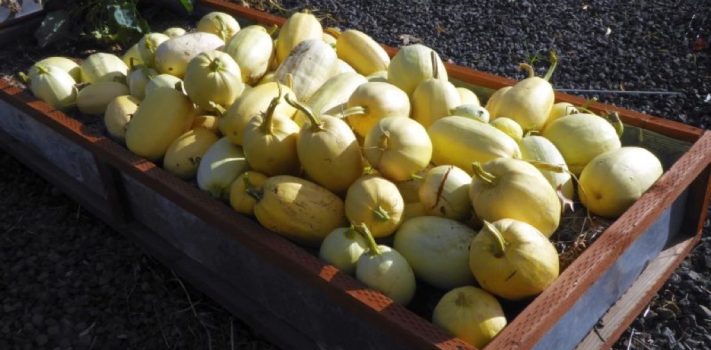
JWR’s Introductory Note:  This photo-intensive article was written by our long-time friend Patrice Lewis. It was posted at her excellent Rural Revolution blog.  We highly recommend bookmarking it. Last fall, if you remember, we had a bumper crop of spaghetti squash. With this much abundance, we were tasked with how best to store the sheer volume.       In the end, we divvied up the ripe squash from the unripe, then stored the ripe squash in the well house.         The unripe squash was stacked in crates in the library, where it slowly ripened over a …


The 21st Century Rural Migration, by Single Farmer

The idea that our country is thought of in terms of conservative versus liberal areas caused me to think about how so many people today and in the recent past have either moved, will be moving, or even thinking about moving for better opportunities. I wanted to write more about how this has occurred historically and more about how my conservative region is part of this trend including how it is impacting farms. Technological change and government interventions are often two factors that cause the settlement and population redistribution throughout the country.  Urbanization following the Second World War was just …


A Top-10 Prepping List, Multi-Tool Not Included – Part 5, by St. Funogas

(Continued from Part 4. This concludes the article.) 9. CLOTHES AND A WAY TO WASH THEM It’s hard to believe how many top-10 lists mention ferro rods, manual can openers, plant-identification books, and the ever-present multi-tool without ever mentioning clothes or washing equipment. Clothes last for quite a while if we’re sitting in an office all day but they won’t lost long when manual labor becomes a daily routine. Since we’ll be wearing them at some future point anyway, it’s a good idea to be stocking up on clothes for all of the inflation-fighting reasons already mentioned. At the same …


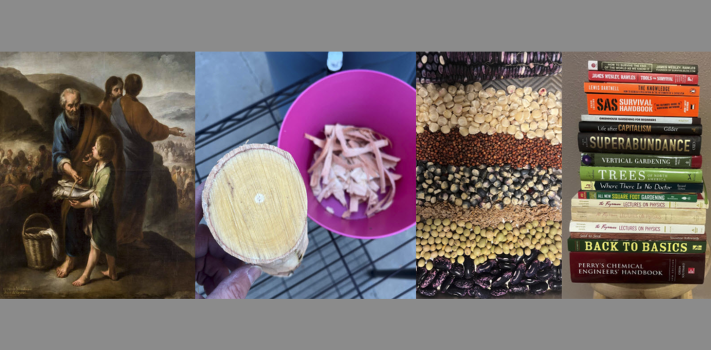
Loaves, Fishes, Tree Bark, Seeds, and Knowledge – Part 8, by The Chemical Engineer

(Continued from Part 7. This concludes the article.) 4 – How Much Food Can We Afford To Share With Others? Now, let’s consider the controversial topic of sharing our limited food resources with a neighborhood group. Think of this option like investing money in start-up companies, high risk for the chance at high rewards but in this case the money is our food and the companies are people that need some of our food to have the strength to work on survival projects with us. I will do my best to outline facts and calculations that will help us to …