
On December 5th, 1964, the first Medal of Honor awarded to a serviceman for action in Vietnam was presented to Capt. Roger Donlon of Saugerties, New York. Captain Donlon and his Special Forces team were manning Camp Nam Dong, a mountain outpost near the borders of Laos and North Vietnam. Just before two o’clock in the morning on July 6, 1964, hordes of Viet Cong attacked the camp. He was shot in the stomach, but Donlon stuffed a handkerchief into the wound, cinched up his belt, and kept fighting. He was wounded three more times, but he continued fighting–manning a mortar, throwing grenades at the enemy, and refusing medical attention.
- Ad USA Berkey Water Filters - Start Drinking Purified Water Today!#1 Trusted Gravity Water Purification System! Start Drinking Purified Water now with a Berkey water filtration system. Find systems, replacement filters, parts and more here.
- Ad Survival RealtyFind your secure and sustainable home. The leading marketplace for rural, remote, and off-grid properties worldwide. Affordable ads. No commissions are charged!
Firefield Nightfall-2 Night Vision Scope, by Pat Cascio
We all know, or at should know, that there are certain pieces of kit that we should have if we are truly preparing for a SHTF scenario of any type. We always discuss firearms, and that is first on most lists. We then have to add food and water, as well as shelter of some type, because we never know what the emergency might be that brings us to a scenario where we might have to bug out or are left to our own devices to survive as best we can. To many of us, this is an excuse to purchase more guns and ammo, and if that is your number one goal you aren’t really a Prepper, in my humble opinion. There is a lot more involved in surviving whatever may come our way than just owning a lot of firearms. As stated, food and water are a must. Without both of these preps, you will die in short order with your pile of guns and ammo at your side.
As a former Paramedic in another life, I hold first-aid and medical supplies high on my list of things to have on hand. Truth be told, we probably have more medical supplies than some small hospital ERs. This is for several reasons; number one, of course, is the health of my family. Number two is that I can barter my medical training and supplies in a SHTF scenario.
One thing that many Preppers simply don’t think of is night vision. Odds are good that in a really bad situation we may not have power, and this is especially true in the country as well as in the city. Without electricity, the street lights don’t work, and you can’t see danger coming your way. I live out in the boonies, and we don’t have street lighting of any kind. When the sun goes down, it gets very dark at my small homestead, if there isn’t a full moon out. Sure, flashlights help; however, you might want to see, without being seen, and a flashlight will give away your location. So, to my way of thinking, some kind of night vision scope is in order. I own several different types of night vision scope. Remember, one is none and two is one. If one breaks, you have none; if you have two and one breaks, you still have one!

I recently ran across the Firefield Nightfall 2, 5X50 night vision scope, and it is advertised as a Gen 1 scope. (I have more on this shortly.) I don’t like to give away costs on many products until the end of my articles; however, in this case, I paid about $150 for my Nightfall scope, but it can be found for about ten bucks less if you shop around. Over the past 20+ years, I’ve had occasion to test and play with a lot of Gen 1 night vision scopes, and to be sure some were about as useless as not having one. They didn’t really allow you to see very far, and it was hard to make out anything. This was especially true with the flood of Russian military surplus night vision scopes back in the early 1990s that flooded the USA.
Over the years, I’ve played with Gen 1, Gen 2, Gen 3, and Gen 3+ night vision scopes, and the higher the Generation, the better you can see things. They get much sharper and clearer in the viewer. Some Gen 3+ night vision scopes cost more than five grand. Are they worth it? It depends on your checking account, I guess. I will say that there is usually a big difference when you look through the different Generation night vision scopes, and you readily get spoiled when you look through a Gen 1 and then a Gen 3 scope. After that, you don’t want a Gen 1 scope, but what can you afford?
The Firefield Nightfall 2 is a Gen 1 night vision scope, and it is a monocular, as are many night vision scopes. You have one lens to look through, unlike binoculars, where you have two lenses to look through. This helps keep costs down, as well as allow you to keep one eye accustomed to the darkness, when you turn off your scope. Firefield advertises that this scope has “high quality image and resolution…” hype you might say… I say, “Not so fast!” The power is 5X magnification. Some scopes have 1X; many have 2X magnification. It depends on how far you need to see, as to how much magnification you might need. I live out in the country, so I want to see as far as I can at night. The objective lens– the front lens in 50mm– allows a lot of light in as well as gives you a more distant field of view for longer distances.
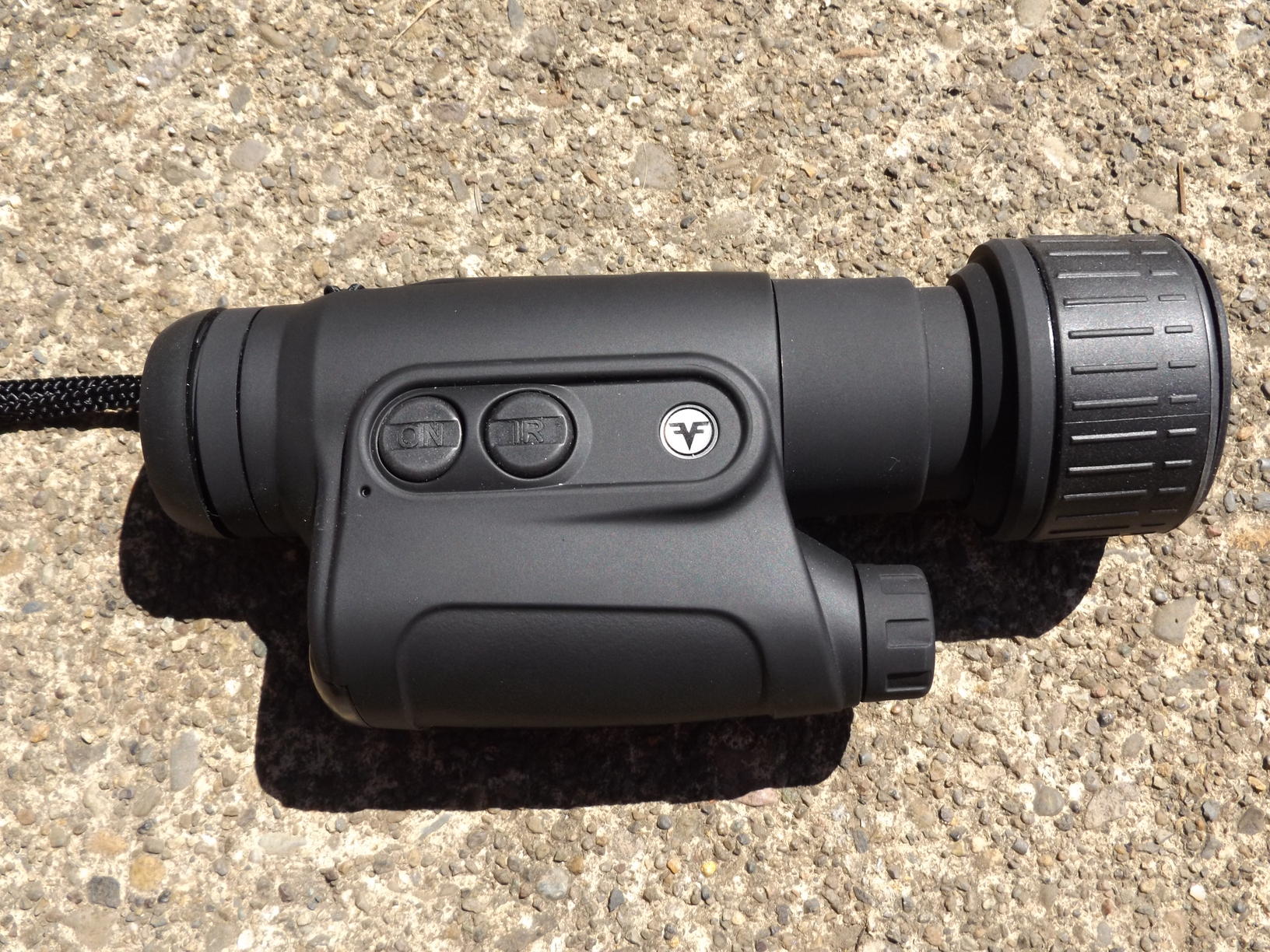
The Nightfall 2 has a minimum focus distance of a mere 1-meter. That’s nice, real nice! Diopter adjustment is +-5, which is good enough for my corrected vision. This scope also has an IR light that is invisible to the naked eye but when switched on is like a flashlight, lighting things up in total darkness. Night vision scopes depend on light from the stars and the moon to allow you to see. The more stars you can see and the brighter the moon, the more the scope magnifies the light, allowing you to see. However, an IR illuminator is sure nice to have. All electronics have operation temperatures that give the best performance. This Nightfall 2 says it will operate from minus 10 Celsius to plus 40 Celsius, so you have a good range of temps to work in.
Here’s one of the things I really appreciate about this scope; it operates on a mere two AA batteries rather than the CR123 batteries that are very expensive. I know, I have a couple scopes that use CR123 batteries. Firefield says that the scope will operate for 72 hours without using the IR light and 20-hours with it. Some of my other scopes operate for 20 hours, period. With them, it doesn’t matter if the IR is turned on or not. So, this is an added attraction to the Firefield Nightfall 2 scope. The only “bad” thing is that batteries are not included. However, this isn’t a deal breaker at all. You can buy a 24-pack of AA batteries for about $12, if you shop around. Plus, I keep on hand a lot of AA and AAA rechargeable batteries. It’s the way to go. I also keep some one-hour battery chargers and a generator, so I can recharge those batteries.
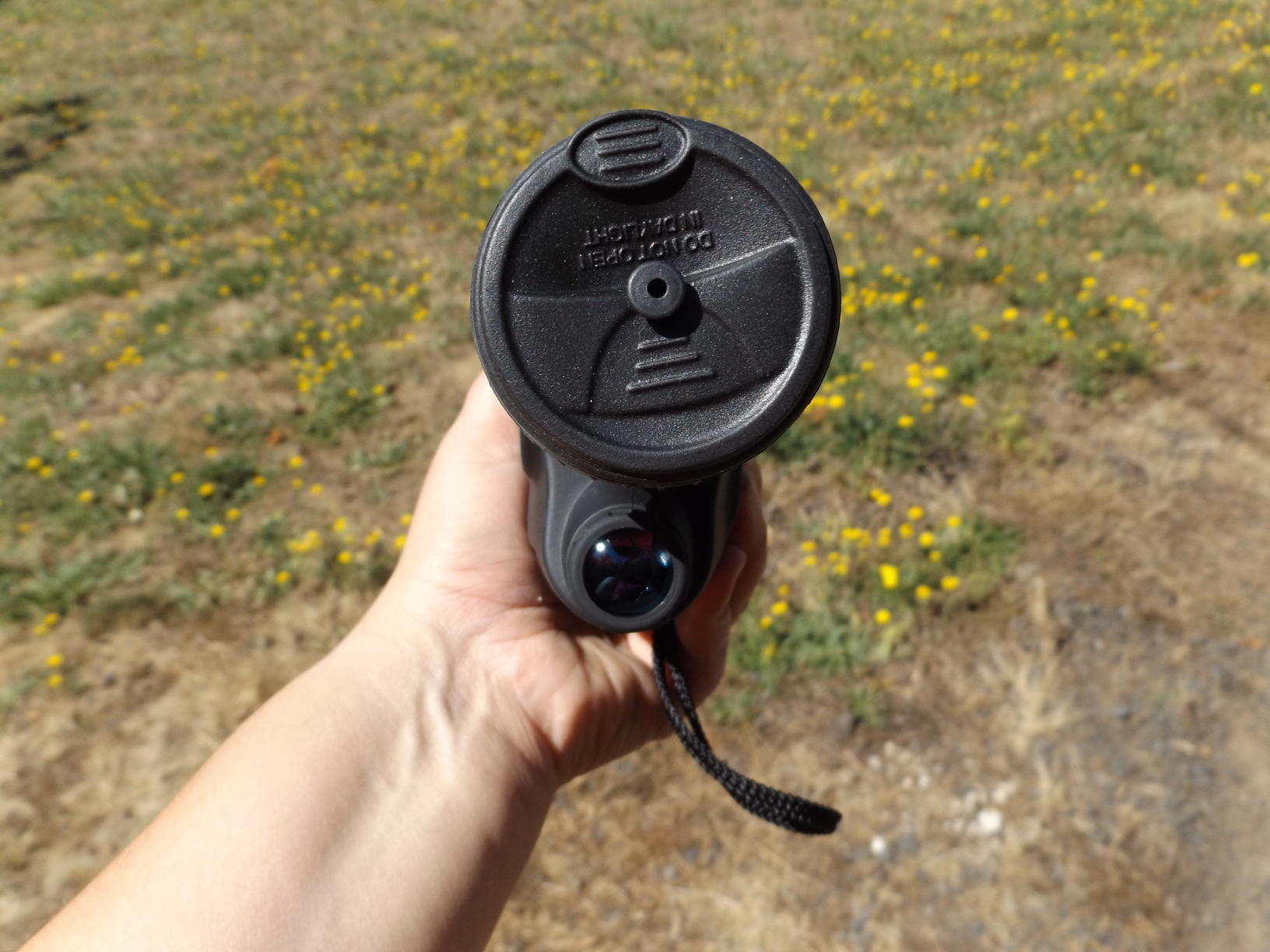
The Nightfall 2 only weighs 15.2 oz empty, and only a couple more ounces with two batteries inside of it. The scope is eight inches long and four inches wide, so it is pretty compact. It also comes in a padded carrying case. You should keep your scope in this carrying case to help prevent it from getting banged up and abused. There is a one year warrant on the scope, too. There is a lanyard on the scope, and you really should wrap it on your wrist when using the scope so you can’t accidentally drop it. The front lens has a cover on it with a pin-hole so you can test the scope in the daylight hours; just don’t ever point it at the sun, even with the lens cap on, or you can burn out the intensifier tube inside the scope rendering it useless. The scope operates easily with one hand. There are only a couple of buttons you need to press– the on/off button and the IR button to turn it on and off. One thing you will notice with most Gen 1 night vision scopes is that when you turn them off, there is still a green glow in the view finder; it takes a few minutes for it to fully shut-down when you turn it off.

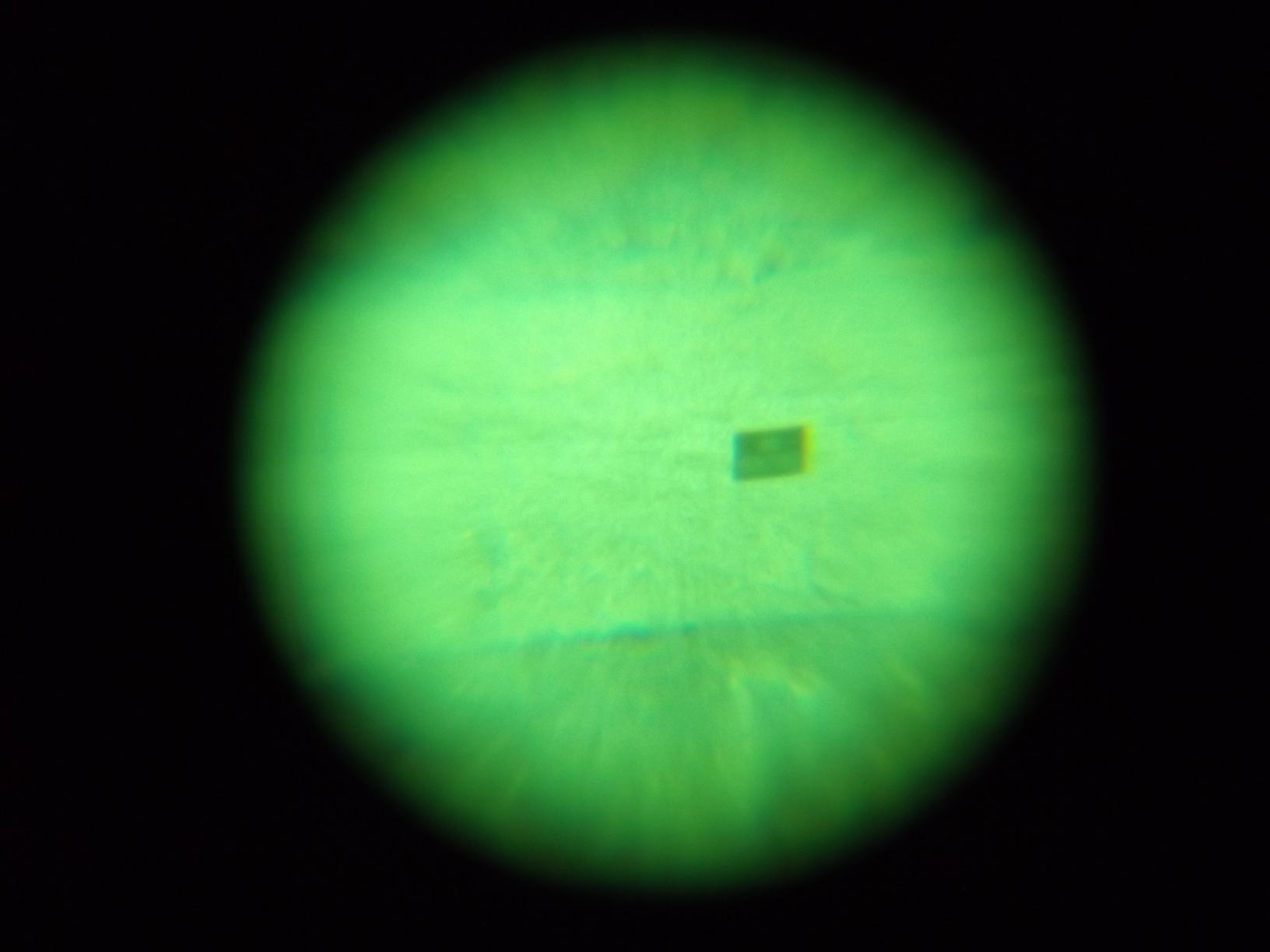
Alright, remember Firefield says that this scope has “high quality image and resolution…”. Well, it does! I have tested Gen 2 night vision scopes that didn’t have this type of quality image and resolution. I kid you not! My other night vision scopes that I currently have are Gen 1, and they don’t come close to the resolution and image quality that this scope has! I am totally blown away with the quality of this Gen 1 scope. Living in the country, I have ample opportunity to watch wildlife after the sun goes down. We have deer that feed in our front yard all of the time– day and night. I can go on my front deck and talk to my deer. They know my voice and don’t run. They get very close to me because they know they are safe in my front yard. After dark, they oftentimes bed down in the front yard, where you can’t see them without night vision. It’s fun to watch them, when they think they can’t be seen.
With the 5X lens, you have to adjust the scope for varying distances, and it only takes a second to turn the lens so you can clearly see things close up or farther away. The IR illuminator is good out to about 100 yards, and that’s a fair distance if you ask me. Most of the time, there is ambient light in the sky, and I don’t have to use the IR. However, if I want to really brighten things up, I turn it on, and the wildlife can’t see it.
I am more than a little impressed with the Firefield Nightfall 2 Gen 1 night vision scope. It is one of the best bargains out there, and to my eyes it is equal to many Gen 2 or Gen 2+ scopes at a fraction of the cost. If you believe you have everything you need in your bug out bag, or your preps, think again. Give some serious thought to adding the Firefield night vision scope to your supplies, along with a good supply of AA batteries. I promise, it will come in handy when the sun goes down.
Note: The pics through the night vision scope don’t do justice to the clarity. (It is difficult shooting through the camera lens into the night scope’s lens.)
– Senior Product Review Editor, Pat Cascio
- Ad LifeSaver 20K JerryCan Water PurifierThe best water jerrycan you can buy on the market! Mention Survivalblog for a Free Filter ($130 Value)
- Ad Civil Defense ManualClick Here --> The Civil Defense Manual... The A to Z of survival. Looks what's in it... https://civildefensemanual.com/whats-in-the-civil-defense-manual/
Recipe of the Week: Bird Seed Bars (“Power Trail Bars”) by C.J.
Bird Seed Bars (“Power Trail Bars”), by C.J.
Ingredients:
- 2 cups rolled oats
- 1 cup *pumpkin seeds
- 1 cup sesame seeds
- 1 cup *sunflower seeds
- 8 Tbsp butter
- 6 Tbsp honey
- 1/2 cup raw sugar (or just brown sugar)
- 1/3 cup peanut butter
- 1 cup dried fruit, such as apricots, cranberries, or raisins
Directions:
- Mix oats with seeds, spread out on tray and bake 15 minutes at 180 degrees.
- To make the “glue” that holds these together, melt and simmer butter, honey, sugar, and peanut butter together for 5 minutes.
- In large mixing bowl combine your wet into dry ingredients; mix well, then stir in dried fruit.
- Spread out quickly onto a sheet pan, use your hands to press into your desired thickness as it will begin to cool and harden fast.
- Cut into long bars or your choice of shape and size. (You may choose to refrigerate them to set up first before cutting up.)
These will store in an airtight container for several weeks.
Variations:
For a nut free bar: In place of peanut butter use sweetened condensed milk. Substitute some chia seeds for an equal amount of sesame seeds
Experiment! I’ve made this recipe with dried pineapple and shredded coconut, chocolate bits, a variety of nuts, and another favorite is with bits of dehydrated apples and cinnamon.
* If you are using home grown seeds, they need to already be prepared.
o o o
Do you have a favorite recipe that would be of interest to SurvivalBlog readers? Please send it via e-mail. Thanks!
- Ad Click Here --> Civil Defense ManualNOW BACK IN STOCK How to protect, you, your family, friends and neighborhood in coming times of civil unrest… and much more!
- Ad STRATEGIC RELOCATION REALTYFOR SALE: Self-sustaining Rural Property situated meticulously in serene locales distant from densely populated sanctuary cities. Remember…HISTORY Favors the PREPARED!
Letter Re: SARs and CTRs
Hugh,
Regarding L.O.’s letter and “don’t act suspicious and you won’t be suspected”, SARs and CTRs are required by federal law. CTRs for any cash transaction for $10,000 or more are required. This is also true of a cash transaction at a jeweler, car dealer, et cetera. Also, in high crime areas (drug areas), the bank may be required to report any cash transaction over any amount set by a federal agency. For a time, in Eastern KY, all transactions over $3000 required a CTR. These are done without the customer’s knowledge or permission, usually after the transaction is completed, though with today’s automation, the CTR may be generated automatically without teller input. SARs are required for ANY “gut feeling” of improper financial activity; the report is then reviewed by an internal bank officer, who reviews the customer’s activity, and then the report is sent to a federal agency. Again this is done without customer’s knowledge or permission. The PATRIOT Act, while riddled with problems, was and is very effective to the banking industry in the pursuit of money laundering. – T.B.
- Ad Trekker Water Station 1Gal Per MinuteCall us if you have Questions 800-627-3809
- Ad Ready Made Resources, Trijicon Hunter Mk2$2000 off MSRP, Brand New in the case
Economics and Investing:
The Wider Ramifications Of The OPEC Deal – The OPEC deal has had an immediate impact on markets, sending oil prices soaring, but the long-term ramifications of the deal are less clear.
o o o
This has an all-too-familiar ring: Venezuela to issue larger bill as currency continues to melt
o o o
Great Timing Award: Wolfgang Schäuble Says “Greece Must Reform or Leave Eurozone”
o o o
Swiss Economy Unexpectedly Stalls on Weak Domestic Demand
o o o
SurvivalBlog and its editors are not paid investment counselors or advisers. Please see our Provisos page for details.
- Ad California Legal Rifles & Pistols!WBT makes all popular rifles compliant for your restrictive state. Choose from a wide range of top brands made compliant for your state.
- Ad USA Berkey Water Filters - Start Drinking Purified Water Today!#1 Trusted Gravity Water Purification System! Start Drinking Purified Water now with a Berkey water filtration system. Find systems, replacement filters, parts and more here.
Odds ‘n Sods:
From the desk of Mike Williamson, SurvivalBlog’s Editor at large: Antique cannon repurposed in Syria
o o o
Houston homeowner brutally beaten by fake UPS driver & 3 other youths with pistols – T.P.
o o o
Earthquakes sequence animation for the last 15 years – J.H.
o o o
Yes, this is a real police recruitment ad…At a minimum, it is inappropriate and in bad taste: Inside FWPD – T.P. (It’s on Facebook, but you do not need a facebook account to see it.)
o o o
This forgotten WWI antiseptic could be the key to fighting antibiotic resistance – G.G.
- Ad Don't wait - get the ultimate US-made ultra-high performance US-made SIEGE Stoves and stunning hand-crafted SIEGE belts for Christmas. For stocking-stuffers see our amazing fire-starters. Gifts that can save lives. Big Sale!Every bespoke SIEGE buckle goes through an hours-long artisanal process resulting in a belt unlike anything else, with blazing fast performance and looks and comfort to match.
- Add Your Link Here
Hugh’s Quote of the Day:
“A society that puts equality … ahead of freedom will end up with neither equality nor freedom.” – Milton Friedman
Notes for Sunday – December 04, 2016
It is the birthday of Gregory “Pappy” Boyington, (born 1912) an AVG “Flying Tiger” volunteer pilot for the Chinese Nationalist government, WWII Marine Corps aviator, and Medal of Honor recipient. (He died January 11, 1988.) A proto-Redoubter, Pappy Boyington was born in Couer d’Alene, Idaho and was raised in Spokane, Washington.
o o o
Safecastle’s Thanksgiving Sale is ending Sunday night, Dec. 4. Take advantage of discounts of up to 34% on Future Essentials storage foods and Yoders canned meats and bacon!
Bugout Apple Pie, by Sarah Latimer
Back in October, during part of the time we were away from SurvivalBlog, we were practicing our bug out scenario with a group of folks we might join in a TEOTWAWKI situation. We took our vehicle with camp stove, tent, and significant equipment, but we also took the minimal equipment that might be needed if we were to need to vacate the vehicles, too. We believe in practicing what we preach, so to speak and encourage you to do so too. There is no substitute for experience! Every time we do this, we come up with new ideas for improvement, whether it is for improved comfort, convenience, ease of transport/loading/unloading, better OPSEC, or something else. I personally believe that I have infinite opportunity for improvement and am always seeking how to do this. I just can only handle a little at a time, but I’m open to it. It truly is my desire to become better at everything that is important, and my family’s survival in an emergency (whether a small, personal emergency or a massive global one) is pretty near the top of my “life’s priority” list. (What tops the list is my own and my family’s eternal spiritual security with the God of Abraham, Isaac, and Jacob through faith in and obedience to His Son and His Word.)
We had a great and adventurous time traveling to and setting up our camp with our friends. We practiced building fires and cooking with them, but I also cooked with the gas camp stove and camp oven. I used some of our freeze-dried food ingredients and meals and also cooked from scratch. Several weeks of bugging out really gives you a taste for what life might be like if we had to live away from “home” long term. I was almost sad to have to go home, but I hadn’t gone through the winter and depleted my supplies. I hadn’t gardened without a tractor. We weren’t under attack. We weren’t simply living with what we could carry on our backs either.
We had some minor health emergencies. Some of these allowed me to put my homegrown herbal remedies and tinctures as well as purchased essential oils to work. In spite of being outside in the sun all day every day, none of our family (including the fairest skinned among us) had issues with sunburn. I’m learning that nutrition has a lot to do with this. My homemade healing lotion resolved the other family’s sunburn and our cuts overnight. Strains and sprains were quickly healed with my infused trauma oil. I’ll write about this at some point in the future. We all got a real taste of what it might be like to be with a varied group of families with young children and also the elderly. Fortunately, we had no serious health crises within our group.
We had great fun on one particular evening when our family prepared a formal feast to share with a few others who we invited to our campsite for dinner. During our bugout experience, some meals were shared but most were handled by individual families or a few families within their own campsights. On the particular evening that we decided to host something special, it became somewhat like our own survival Thanksgiving feast, only without the turkey and dressing. Instead, we had beef, cheese, rice, green salad, and fresh fruit. The climax of our feast was a camp made apple crumb pie. Yes, you read that right. While bugging out, I made and baked an apple crumb pie that was better than the ones I make at home because it was made in God’s beautiful outdoors.
There are so many things that we can do to go beyond survival. It is my philosophy that I want my family to thrive and not just survive, regardless of the world around us. I’m going to be creative and resourceful to find ways to do this. With a camp oven, there are many things that we enjoy at home that can be made out in the wilderness now, too. My little Coleman camp oven looks like it is big, but it breaks down to be only about three inches tall by about fourteen inches square. (I am approximating here, as it is packed away and ready to go whenever we need to bug out.)
Here’s how I made our delicious bugout “Thanksgiving” apple crumb pie, complete with low-quality photos (sorry!).
Steps for Sarah Latimer’s Bugout Crumb-Topped Apple Pie
- Make Sarah Latimer’s custom apple pie spice blend by combining the following (very healthy) spices: (Grinding them from their whole form is always the best tasting but not the easiest, especially when camping, so grind these ahead of time and possibly even blend ahead of time into a container, too; the blend can be used on baked apples or in applesauce also.)
- 4 teaspoons ground cinnamon
- 1/2 teaspoon ground ginger
- 1/4 teaspoon mace
- 1/2 teaspoon ground allspice
- 1 1/2 teaspoon ground nutmeg
- 1/4 teaspoon ground fennel seed
- 1/2 teaspoon ground cardamon (optional)
- 1/2 teaspoon ground cloves
- Roll out single pie crust and place it into pie plate (Pyrex or metal), fluting the edges.
- Peel, core, and thinly slice apples until accumulating 6 cups of sliced apples; place in large bowl.
- Set up camp oven with rack set in center position. I use a Coleman camp oven as shown in the pictures.
- Preheat camp oven over medium stove flames to reach about 400-425 degrees (before opening door). (We ideally want to bake pie at around 375 degrees, but because the temperature will fluctuate in our camp oven get it hotter before opening door to insert pie.)
- In a cup, combine 1/2 cup brown sugar, 4 tsp of apple pie spice blend, and 2-4 Tbsp flour (depending upon type of apples; use 4 Tbsp when apples are soft/juicy and only 2 Tbsp when apples are crisp and dry). Pour this dry mixture over apples and toss to mix well.
- Spoon apples into pie crust, filling the pie edges first and pressing apples down tightly and then filling in the middle and piling them up.
- In a medium metal bowl, combine 1/2 cup flour and 1/2 sugar. Then, add 1/2 cup of softened (not melted) butter and cut with either a large fork or a pastry cutter until the mixture is just small crumbs.
- Spoon the crumb topping over apples, beginning with the edges and filling in the center.
- Sit the pie on top of heavy duty aluminum foil that is larger in size that the pie plate and curl the edges of the foil up a bit. (The foil will catch over flow from pie but allow heat to rise around the pie plate.)
- Open your pre-heated camp oven and while using oven mits carefully insert your foil and pie plate simultaneously; close oven door tightly.
- Watch the thermometer and adjust heat as necessary to keep the oven’s temperature between 350 and 400 degrees for 45-60 minutes, until apples are cooked and crust is browned. (You’ll have to open the oven periodically to check, beginning at about 40 minutes.) I believe my stove knobs were generally on medium-low to low during most of the baking time, but your stove may be different.
- When pie is bubbly and browned, turn stove off and remove pie from camp oven. Allow it to cool at least 30 minutes before serving.
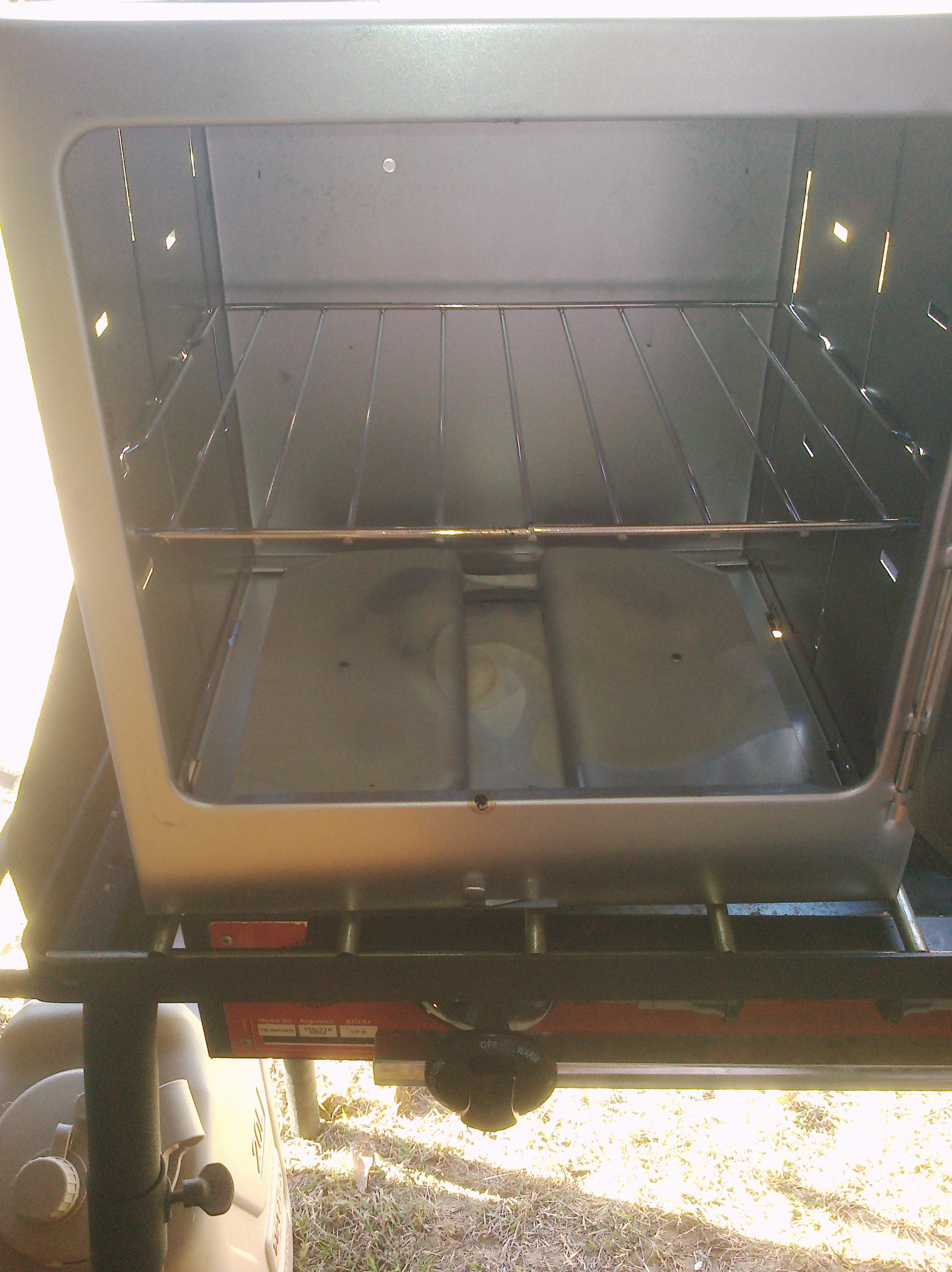
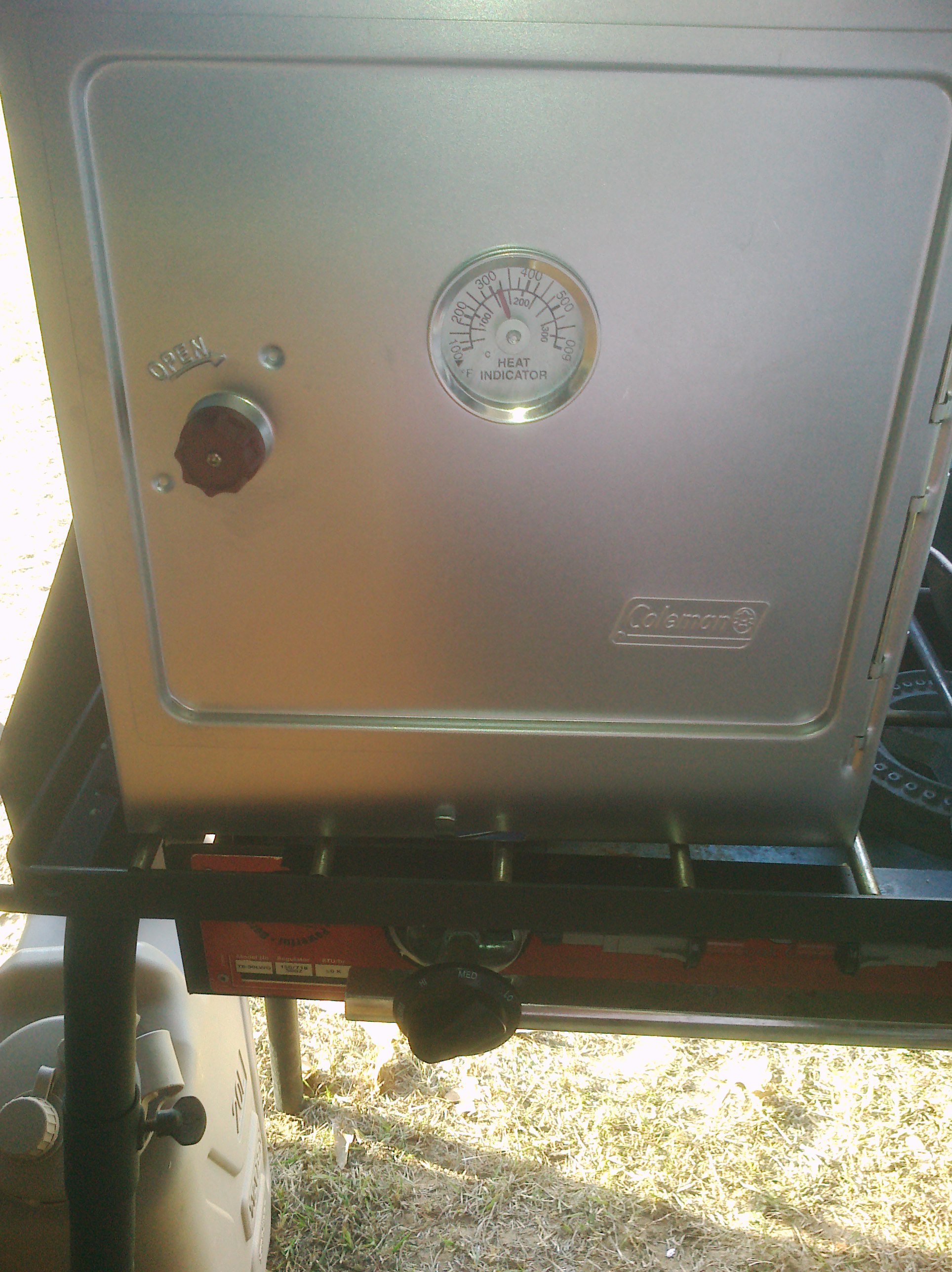
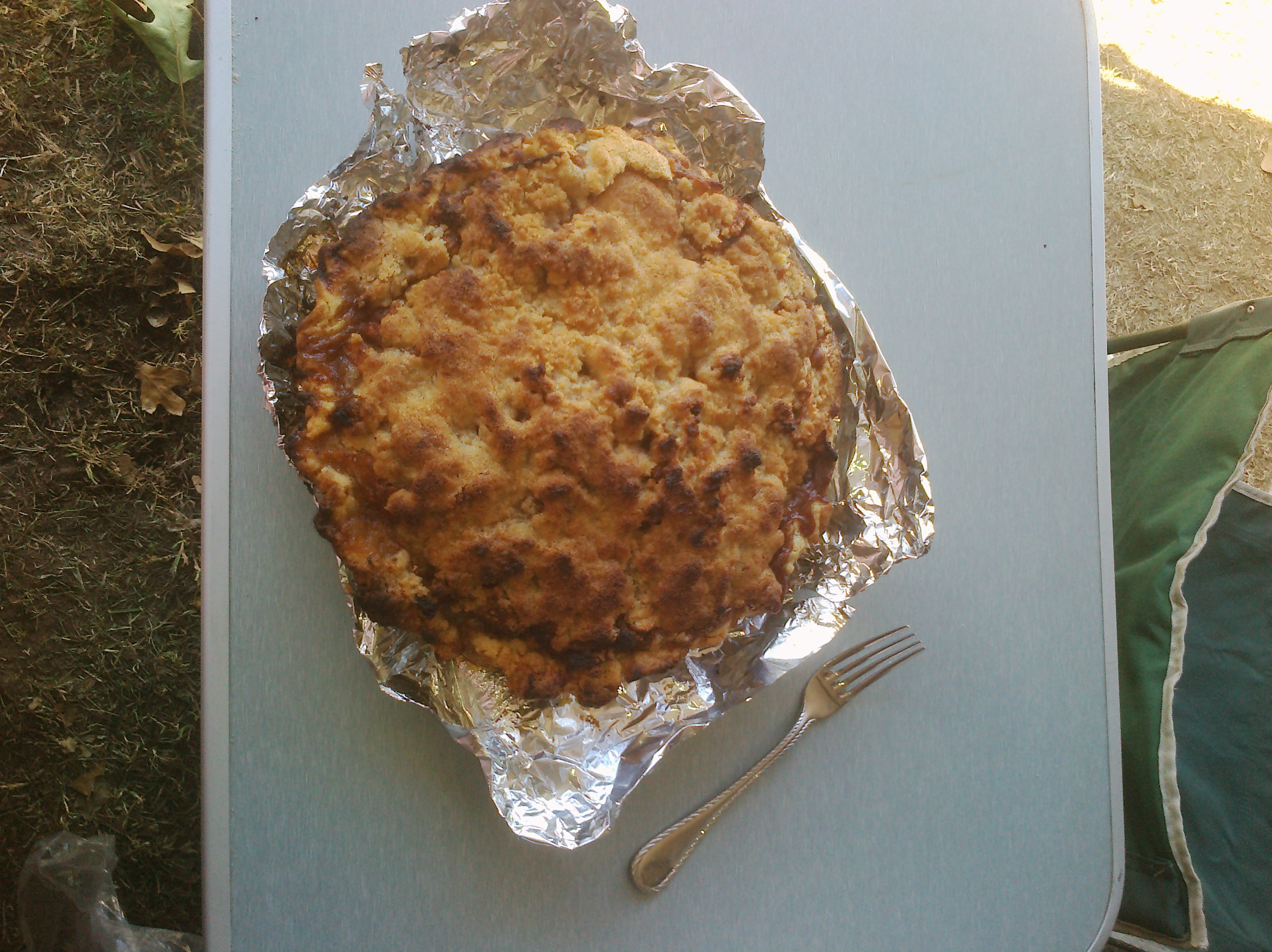
I let my oven get a little too hot at one point while I was preparing some other dishes, so the pie had some spots that were overly browned on the back side. It didn’t keep us from enjoying it. It was piled high, spicy sweet, and absolutely delicious!
The next time your family gets the opportunity, practice your bugout protocol and see how comfortable and resourceful you can be. You might even want to try this pie or get even more adventurous and bake homemade bread out in the wilderness!
I have used our camp oven to make breads. It’s best to practice now, as there is not only a learning curve to making things from scratch in a home kitchen but especially to using less than automated tools, like the camp oven that doesn’t regulate the temperature, when out in the wilderness.
So, live beyond survival and look at ways to thrive, no matter where you find yourself!
May God bless you and help you count all of the blessings already around you.
Letter Re: Using a Food Slicing Mandoline
Dear Editor:
I bought the food slicing mandoline recommended in the article on the topic of food dehydrating: “So Tell Me Again…”- Part 2, by M.P. the very morning the article appeared and have used it frequently ever since. I’ve used it primarily for making sauerkraut and other pickled vegetables as well as hash browns. Until the article I would’ve scoffed at the idea of paying $20 for something that I could already do with the knives in our drawer, a food slicer and a food processor; but now I concur on its usefulness. Perhaps it’s even a necessity if you’re doing moderate to high volume amounts, which you should be doing. However, for me it is time to move up to a higher quality unit– the Swissmar Borner V-1001 V-Slicer Plus Mandoline 5-Piece Set at $50. Although I will continue to use the unit mentioned in the article, if I knew then what I know now I would’ve gone for the Borner based upon my experience with the present one. Hopefully, the Borner will be good as the reviews it gets on YouTube. – R.T.
Economics and Investing:
Investors Push Gold Eagle Sales To Record High & Commentary On Precious Metals Sentiment
o o o
Deutsche Bank Pays $60 Million To Settle Gold-Manipulation Lawsuit
o o o
125 Housing Metro Areas Compared: How Much Does California Skew National Averages?
o o o
Fed Should Lead Global Rate Rise, Former BOC Governor Says
o o o
SurvivalBlog and its editors are not paid investment counselors or advisers. Please see our Provisos page for details.
Odds ‘n Sods:
The Propaganda About Russian Propaganda
o o o
Video: Secret Compartment Furniture. Here is a link directly to their web site: SecretCompartmentFurniture.com
o o o
Fred on Everything: Gun Control: Hawglegs and Hawgwash – T.J.
o o o
Uber can now track passengers’ locations after they are dropped off – DSV
o o o
An earthquake worse than the ‘Big One’? Shattered New Zealand city shows danger of Seattle’s fault. Note that they’re still using shipping containers to prop things up. There are a series of pictures in the article. – P.S.
Hugh’s Quote of the Day:
“That is, They which are the children of the flesh, these are not the children of God: but the children of the promise are counted for the seed.” – Romans 9:8 (KJV)
Notes for Saturday – December 03, 2016
Today, we present another entry for Round 68 of the SurvivalBlog non-fiction writing contest. The nearly $15,000 worth of prizes for this round include:
First Prize:
- A $3000 gift certificate towards a Sol-Ark Solar Generator from Veteran owned Portable Solar LLC. The only EMP Hardened Solar Generator System available to the public.
- A Gunsite Academy Three Day Course Certificate that is good for any one, two, or three day course (a $1,195 value),
- A course certificate from onPoint Tactical for the prize winner’s choice of three-day civilian courses, excluding those restricted for military or government teams. Three day onPoint courses normally cost $795,
- DRD Tactical is providing a 5.56 NATO QD Billet upper with a hammer forged, chrome-lined barrel and a hard case to go with your own AR lower. It will allow any standard AR-type rifle to have a quick change barrel, which can be assembled in less than one minute without the use of any tools and a compact carry capability in a hard case or 3-day pack (an $1,100 value),
- Gun Mag Warehouse is providing 20 Magpul PMAG 30-rd Magazines (a value of $300) and a Gun Mag Warehouse T-Shirt; (an equivalent prize will be awarded for residents in states with magazine restrictions),
- Two cases of Mountain House freeze-dried assorted entrees in #10 cans, courtesy of Ready Made Resources (a $350 value),
- The Ark Institute is donating a non-GMO, non-hybrid vegetable seed package (enough for two families of four) plus seed storage materials, a CD-ROM of Geri Guidetti’s book “Build Your Ark! How to Prepare for Self Reliance in Uncertain Times”, and two bottles of Potassium Iodate (a $325 retail value),
- A $250 gift certificate good for any product from Sunflower Ammo,
- Two cases of Meals, Ready to Eat (MREs), courtesy of CampingSurvival.com (a $180 value).
Second Prize:
- A Tactical Self-Contained 2-Series Solar Power Generator system from Always Empowered. This compact starter power system is packaged in a wheeled O.D. green EMP-shielded Pelican hard case (a $1,700 value),
- A Glock form factor SIRT laser training pistol and a SIRT AR-15/M4 Laser Training Bolt, courtesy of Next Level Training, which have a combined retail value of $589,
- A gift certificate for any two or three-day class from Max Velocity Tactical (a $600 value),
- A transferable certificate for a two-day Ultimate Bug Out Course from Florida Firearms Training (a $400 value),
- A Trekker IV™ Four-Person Emergency Kit from Emergency Essentials (a $250 value),
- A $200 gift certificate good towards any books published by PrepperPress.com,
- A pre-selected assortment of military surplus gear from CJL Enterprize (a $300 value),
- An infrared sensor/imaging camouflage shelter from Snakebite Tactical in Eureka, Montana (A $350+ value),
- RepackBox is providing a $300 gift certificate to their site, and
- American Gunsmithing Institute (AGI) is providing a $300 certificate good towards any of their DVD training courses.
Third Prize:
- A Royal Berkey water filter, courtesy of Directive 21 (a $275 value),
- A custom made Sage Grouse model utility/field knife from custom knife-maker Jon Kelly Designs, of Eureka, Montana,
- A large handmade clothes drying rack, a washboard, and a Homesteading for Beginners DVD, all courtesy of The Homestead Store, with a combined value of $206,
- Expanded sets of both washable feminine pads and liners, donated by Naturally Cozy (a $185 retail value),
- A Model 175 Series Solar Generator provided by Quantum Harvest LLC (a $439 value),
- Two Super Survival Pack seed collections, a $150 value, courtesy of Seed for Security, LLC,
- Mayflower Trading is donating a $200 gift certificate for homesteading appliances,
- Montie Gear is donating a Y-Shot Slingshot and a $125 Montie gear Gift certificate.,
- Two 1,000-foot spools of full mil-spec U.S.-made 750 paracord (in-stock colors only) from www.TOUGHGRID.com (a $240 value), and
- Fifteen LifeStraws from SafeCastle (a $300 value).
- A $250 gift certificate to Tober’s Traditions, makers of all natural (organic if possible) personal care products, such as soap, tooth powder, deodorant, sunscreen, lotion, and more.
Round 67 ends on January 31st, so get busy writing and e-mail us your entry. Remember that there is a 1,500-word minimum, and that articles on practical “how to” skills for survival have an advantage in the judging.
Bugging-in vs. Bugging-out, by John M.
In most preparedness magazines and on most prepper websites, bug-out bags are an ever-popular topic for discussion. The idea of “bugging-out” in a SHTF scenario makes us dream of an idyllic cabin in the mountains where we grow or hunt our own food and live happily ever after, or it’s where we take on an enemy in a Red Dawn (United Artists, 1984) scenario, hopefully minus the attrition rate of the Wolverines. However, practical preparedness should be about looking at possible real-life scenarios, rather than things that rarely happen. In a real-life emergency, would it be better to “bug-out” or “bug-in”? It depends largely upon the type of emergency situation. What are the dangers of each?
“Bugging-In”
In most situations, “bugging-in”, “holing-up”, or sheltering-in-place would probably be the best course of action. During a winter storm, you have protection from the elements and a secure place in your own home. Likewise, in a tornado situation, a home is much more secure than being out in the open. Special precautions should be taken in tornado country to prepare for such an eventuality. Droughts, heatwaves, power outages, earthquakes, and local unrest (riots) are all best waited out inside the shelter of one’s own home, if one is properly prepared. Even tropical storms may be waited out with proper preparedness, as long as one is ready to leave in a moment’s notice if the situation turns ugly.
Proper preparedness is the key if one is to wait out an emergency situation in one’s own home. Having foodstuff stored to live on, until supplies are available, is obvious. Water is also necessary but sometimes overlooked. One should plan for at least 72 hours of food and water in most suburban and urban areas. More rural areas could take longer, depending on the severity of the emergency.
A major mistake often made is energy for cooking and heating. Each year, there are numerous fatalities from carbon monoxide poisoning during winter power outages. Using a campstove or barbeque indoors for cooking or heating, without proper ventilation, can easily result in death. Homes with gas stoves and heaters have a readily available energy source, but caution should be taken after emergencies, such as earthquakes, to be sure there are no leaks that cause fire danger or risk of asphyxiation. To prevent such problems, in the event of an earthquake, turn off the outside gas valves as soon as possible. Fireplaces, candles, oil lamps, and other heat and light sources made for indoors should be used with caution to prevent injury and accidents.
Another benefit to sheltering-in-place is that weight and space are less of an issue. Materials and tools may be stored to secure the home from the weather, such as plywood, hammers, and nails. This also helps secure the home from the damage done by vandals. Tarps or plastic sheeting with duct tape can also be used to replace broken glass during storms or to seal windows and vents in the event of chemical spills or terrorist attacks using chemicals or biological weapons. Saws and other equipment will be readily available for recovery efforts after an event.
There are many comprehensive lists available on the internet for emergencies, and they vary significantly based on the background of those creating them. As a rule of thumb, one should have the following items:
- Food and water to last at least 72 hours.
- Cook stove that can be used indoors. (Many gas ranges can be operated even when the power is out.)
- Fuel to last 72 hours.
- Medications and supplies for special needs, such as infants and the elderly.
- Small tool kit, with wrenches to turn off gas, hammers and nails, screwdrivers, and other basics.
- Flashlights.
- Battery-operated (or hand-crank) radio.
- First aid kit.
- Toiletries.
- Matches.
- Can opener.
- Battery backup for cell phones.
- Cash.
(For more comprehensive lists, see http://lds.about.com/od/preparednessfoodstorage/a/72hour_kit.html or https://www.ready.gov/kit.)
One of the hardest parts of sheltering in place is that it can get boring or very stressful. Books and games can help alleviate this problem, especially with small children. Cards are an excellent way to have many games for numerous people or a solitary individual. The Bible provides activity for the mind and comfort for the soul.
Security is often a concern for preppers. While firearms are an appealing solution, it is best to check local laws before purchasing or using one in self defense. Often a baseball bat or an axe handle is a more discreet but still viable choice. However, even the sound of a cartridge be cycled into a shotgun will make the boldest men hesitate. But in most cases, short of riots and civil unrest, a simple presence in one’s home is enough to deter all but the most determined invaders. During storms, it is also helpful to board up windows and unused doors, not only to prevent break-ins but storm damage as well.
One additional benefit to holing up in one’s own home is being around familiar people. Get to know the neighbors before the emergency. During an emergency, you can pool resources, guard each other from unknown threats, and help in recovery efforts. Knowing who to trust and what skills each person has is an important part of preparedness.
“A man’s home is his castle,” as the saying goes, and this is even more apparent during emergency situations. It is a fortress against the elements and protection from the outside world. Travel can be perilous in emergency situations. (Most deaths during Winter Storm Jonas were vehicle related, according to “At A Glance”, 2016.) The smartest thing may be to simply stay put.
“Bugging-Out”
Some situations are extreme enough that staying in place is not an option. These may include tropical storms, wildfires, flooding, and even volcanoes. These usually include a government-mandated evacuation notice. In some instances, after an earthquake or tornado, or when civil unrest begins to build, it may also become necessary to “bug-out” on short notice. In such a situation, it is important to have a prepared plan and an emergency kit that can readily be loaded into a vehicle.
Evacuation plans should include not only a destination but routes (and alternate routes), ways of communicating with family members, and rendezvous points, in case emergencies occur when members are separated. All family members (including those living far away) should be familiar with the plan.
Bug-out bags have become a popular term for emergency kits in recent years. Unfortunately, with the rise of apocalyptic thrillers and zombie shows, these are often created with a more tactical nature. For practical preparation, it is important to remember the types of things you will need if forced to move to a FEMA shelter, friend’s or family member’s home, or a motel along the way. The idea of relocating to the mountains is a romantic notion, but in the event of an evacuation one would have to travel several hundred miles to an unfamiliar area to get away from the emergency, and you may still be affected. Tropical storms in the Gulf of Mexico produce monsoons in Arizona. It’s better to find a more fixed solution than a tent in the hills.
Emergency kits for evacuation are different than what might be used for sheltering-in-place. They must be kept in containers that can easily be loaded into a vehicle at a moment’s notice. Aside from the items included in a shelter-in-place kit, an evacuation kit should also include the following:
- Spare clothes, especially undergarments
- Blankets
- Flares
- Dishes/utensils
- Axe
- Shovel
- Emergency car kit
- Rope
- Legal documents
- Insurance paperwork
- Medical records (immunization records, at the very least)
- Other irreplaceable items, such as family Bibles or records (Remember, however, many “irreplaceable” items may be covered by insurance).
- Emergency contact information & emergency plans, including maps (for more comprehensive lists, see http://lds.about.com/od/preparednessfoodstorage/a/72hour_kit.html or https://www.ready.gov/kit)
If an evacuation kit is needed during a shelter-in-place event, the evacuation kit may be used, but be prepared to pack them up quickly if the situation changes.
A lot of time and energy has gone in to firearms for “bugging-out” or evacuations. These are important, but as much planning should go into learning laws and there should be a strong debate as to whether they are taken in an emergency situation. I could find no specific guidance as to whether or not they are specifically banned from emergency shelters, but laws vary from state to state. During Hurricane Katrina, many people were evacuated from Louisiana to Texas and other states (A Failure of Initiative). In 1997, flooding in Marysville, CA forced residents into shelters at Beale AFB. As a military installation, civilians were not allowed to carry firearms. Additionally, you may be forced to stay with friends or family who do not share your views on the Second Amendment. Careful judgment should be taken before including a firearm in an emergency kit.
TEOTWAWKI
Preppers are forever discussing how to prepare for The End Of The World As We Know It (TEOTWAWKI), whether it comes in the form of an EMP, nuclear attack, economic collapse, or zombie apocalypse. These scenarios are much less likely than the emergencies previously listed. Under such extreme circumstances, the ideal location to be is probably a farm in a small town. Few are fortunate enough to live in such ideal locations and fewer can afford an emergency retreat to evacuate to. Even those who have such a retreat run the risk of someone else arriving first and taking up residence. For the rest, each must assess their own situation.
An established home has the benefit of storing all of one’s supplies, having solid shelter and known neighbors who can share the burdens of survival. One has the “home court” advantage of knowing where to find resources and the weaknesses in defense. One can begin preparing their home with fruit trees, water collection and storage, and other long-term needs. And there is the added comfort of “home”.
However, a home may not be the ideal location. Bad neighborhoods can quickly get worse, when food and supplies become scarce. Modern homes are completely dependent on outside utilities to dispose of waste and supply water and energy for cooking and heating. In crowded urban areas, close quarters can become a breeding ground for diseases not seen in over a century. A “bug-out” bag may be the only answer in some situations.
Summary
In September 2001, the U.S. suffered the worst attack on the homeland in our history. We were not prepared. Two years later, the northeastern part of the U.S. suffered a major blackout (“Major power outage hits New York, other large cities”, 2003), one of the largest blackouts in history. Many were not prepared. But in both situations, people in this nation pulled together and helped each other. Later, Hurricane Katrina would not be as unifying. Each family should take time to prepare for emergencies to the best of their ability. Each situation must be evaluated separately, and good judgment should be used in deciding a course of action. There are a number of resources available online or in print. Take the time to study your needs, possible scenarios for your area, and make an individual plan that fits. Be prepared.
References
Red Dawn, United Artists, Movie, 1984
“At a glance — 49 deaths on East Coast in Winter Storm Jonas“. Silive.com, 27 Jan 2016,
“A Failure of Initiative: The Final Report of the Select Bipartisan Committee to Investigate the Preparation for and Response to Hurricane Katrina”, US House of Representatives, PDF, 16 March 2006, h
“72-hour kit”, Lds.about.com, Web, retrieved on 15 Sept 2016 from
“Build a kit”, Ready.gov, Web, retrieved on 15 Sept 2016 from
“Major power outage hits New York, other large cities”, CNN, Web, 14 Aug, 2003,