Notes for Thursday – March 09, 2017

Today is the birthday of writer John McPhee (b. 1931), a master of creative nonfiction. One of McPhee’s most widely read books is Coming into the Country, which eloquently describes the Alaskan wilderness.

March 9th is the birthday of Cosmonaut Yuri Gagarin– the first man to ever travel in space. He was born in 1934 and died in the crash of a MiG-15-UTI fighter on March 27, 1968.

o o o

Ki4u.com is selling a Radius P10 Shelter (from an estate sale) for 75% off. If you’re looking for a ready-made shelter that can hold your entire family, this is a great deal!

o o o

Seed for Security, LLC has their Colossal Security Pack on sale for 15% off. The pack contains 7 poiunds of vegetable, grain, and herb seeds and includes their three most popular collections: the Super SurvivalPack, the Four Grain Collection, and their Heirloom Herb Collection.

o o o

Today, we present another entry for Round 69 of the SurvivalBlog non-fiction writing contest. The nearly $15,000 worth of prizes for this round include:

First Prize:

  1. A $3000 gift certificate towards a Sol-Ark Solar Generator from Veteran owned Portable Solar LLC. The only EMP Hardened Solar Generator System available to the public.
  2. A Gunsite Academy Three Day Course Certificate that is good for any one, two, or three day course (a $1,195 value),
  3. A course certificate from onPoint Tactical for the prize winner’s choice of three-day civilian courses, excluding those restricted for military or government teams. Three day onPoint courses normally cost $795,
  4. DRD Tactical is providing a 5.56 NATO QD Billet upper with a hammer forged, chrome-lined barrel and a hard case to go with your own AR lower. It will allow any standard AR-type rifle to have a quick change barrel, which can be assembled in less than one minute without the use of any tools and a compact carry capability in a hard case or 3-day pack (an $1,100 value),
  5. An infrared sensor/imaging camouflage shelter from Snakebite Tactical in Eureka, Montana (A $350+ value),
  6. Gun Mag Warehouse is providing 20 Magpul PMAG 30-rd Magazines (a value of $300) and a Gun Mag Warehouse T-Shirt; (an equivalent prize will be awarded for residents in states with magazine restrictions),
  7. Two cases of Mountain House freeze-dried assorted entrees in #10 cans, courtesy of Ready Made Resources (a $350 value),
  8. A $250 gift certificate good for any product from Sunflower Ammo,
  9. Two cases of Meals, Ready to Eat (MREs), courtesy of CampingSurvival.com (a $180 value).

Second Prize:

  1. A Tactical Self-Contained 2-Series Solar Power Generator system from Always Empowered. This compact starter power system is packaged in a wheeled O.D. green EMP-shielded Pelican hard case (a $2,400 value),
  2. A Glock form factor SIRT laser training pistol and a SIRT AR-15/M4 Laser Training Bolt, courtesy of Next Level Training, which have a combined retail value of $589,
  3. A gift certificate for any two or three-day class from Max Velocity Tactical (a $600 value),
  4. A transferable certificate for a two-day Ultimate Bug Out Course from Florida Firearms Training (a $400 value),
  5. A Trekker IV™ Four-Person Emergency Kit from Emergency Essentials (a $250 value),
  6. A $200 gift certificate good towards any books published by PrepperPress.com,
  7. A pre-selected assortment of military surplus gear from CJL Enterprize (a $300 value),
  8. A selection of canned meats containing a 10 pack of 28oz cans of Premium Beef and a 5 pack of 28oz cans of Premium Pork from Wertz’s Farm Market (a $300 value),
  9. RepackBox is providing a $300 gift certificate to their site, and
  10. American Gunsmithing Institute (AGI) is providing a $300 certificate good towards any of their DVD training courses.

Third Prize:

  1. A Model 175 Series Solar Generator provided by Quantum Harvest LLC (a $439 value),
  2. A Royal Berkey water filter, courtesy of Directive 21 (a $275 value),
  3. A custom made Sage Grouse model utility/field knife from custom knife-maker Jon Kelly Designs, of Eureka, Montana,
  4. A large handmade clothes drying rack, a washboard, and a Homesteading for Beginners DVD, all courtesy of The Homestead Store, with a combined value of $206,
  5. Expanded sets of both washable feminine pads and liners, donated by Naturally Cozy (a $185 retail value),
  6. Two Super Survival Pack seed collections, a $150 value, courtesy of Seed for Security, LLC,
  7. Mayflower Trading is donating a $200 gift certificate for homesteading appliances,
  8. Montie Gear is donating a Y-Shot Slingshot and a $125 Montie gear Gift certificate.,
  9. Two 1,000-foot spools of full mil-spec U.S.-made 750 paracord (in-stock colors only) from www.TOUGHGRID.com (a $240 value), and
  10. Fifteen LifeStraws from SafeCastle (a $300 value).
  11. A $250 gift certificate to Tober’s Traditions, makers of all natural (organic if possible) personal care products, such as soap, tooth powder, deodorant, sunscreen, lotion, and more.

Round 69 ends on March 31st, so get busy writing and e-mail us your entry. Remember that there is a 1,500-word minimum, and that articles on practical “how to” skills for survival have an advantage in the judging.


Building An 80% Firearm- Part 3, by Tupreco

Finishing an AR-15 80% Lower

During the eight years of Obama’s presidency, a record 144 million pre-purchase NICS background checks were performed. This is almost exactly twice the number we saw during eight years of George W. Bush. Whether the numbers return to Bush-era levels under a Trump presidency remains to be seen. Certainly, while a background check is not an actual gun sale, it is widely believed that the numbers do correlate closely to actual gun sales.

This substantial increase in firearms sales also saw a corresponding increase in firearms technology development. Good examples of this include the rise in popularity of the AR-15 rifle with pistol versions and availability of several new calibers; the proliferation of new firearms models; and solid sales growth for items like suppressors and specialty stocks that used to be regarded as curiosities. While Obama’s anti-gun stance clearly polarized the nation, a broader firearms mindset also became evident by increased concealed carry permit issuance and broader concealed carry legislation. Firearms training classes also proliferated as the idea of gun ownership actually attracted many new shooters, and, of course, there was the emergence of the 80% firearms industry.

The 80% firearm idea is simple. It allows an individual to legally purchase an unregulated firearm lower receiver as an incomplete and non-functional receiver blank or casting. The individual can complete the final machining operations themselves using their own equipment to do so. When properly completed, it becomes a functional gun receiver, which can then be assembled into a complete firearm when fitted with the remaining non-regulated parts. When done properly, most are indistinguishable from their commercial counterparts. However, as covered in Parts 1 and 2 of this article series, its use and ownership is limited to the builder and a family member who might inherit it.

First Things First

It is easy to get psyched at the idea of building your own legal “ghost gun”. Hopefully, you can learn something from my experience and mistakes. I wish this kind of input had been available to me before I charged off into uncharted territory. We will examine the options currently available and review a number of tips and tricks to assist you in the completion your own 80% receiver. We will also identify some common potential pitfalls to avoid.

First of all, completing an 80% receiver requires some experience at how to properly use hand and power tools. Those lacking skills here should fine a more experienced friend to mentor them so as to minimize their potential frustration. Also, be aware building an AR-15 using an 80% lower is really a project with two distinct phases. Phase 1 is taking your 80% blank and completing the necessary steps to make it functional. Phase 2 is to use that completed lower, now at 100%, by then assembling the rest of the parts properly to produce and test the completed firearm. I strongly recommend participating in the assembly of at least one conventional AR-15 build using a factory-built or other known-good lower receiver before tackling one with your 80%ers. This way you will experience what a normal AR-15 build feels like, so you will have some sense of whether the lower you just finished machining is being stubborn, if it is just a normal assembly challenge, or if there is another defective component. That said, let’s begin.

Picking a Material and Finish

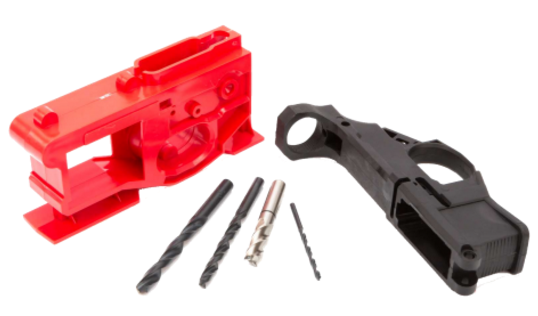
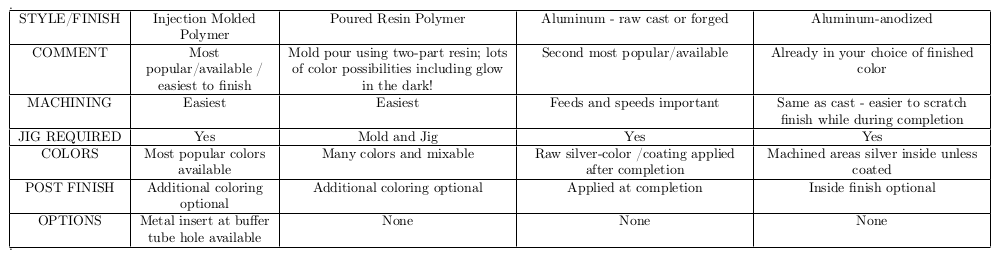
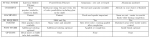
Before your order a receiver, jig, and tools, you need to decide whether you want a receiver made of aluminum (which is harder to machine) or polymer (which is easy to machine). If choosing polymer, will you choose an injection molded polymer to machine or mold your own using a two-part polymer mold pour? Review the options carefully because once you build one, you will own it for a lifetime.

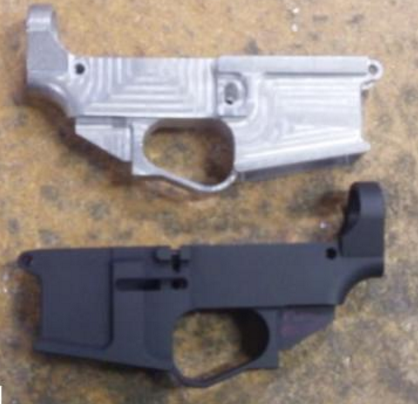
If choosing aluminum, there are generally two ways to buy an 80% aluminum receiver; they come raw or anodized. A raw unfinished receiver should be later finished to protect it from corrosion and scuffing. The best for finishing raw aluminum are the hard-cure coatings such as Gun Kote, Cerakote, or Dura Coat. Spray paint will work but may need frequent touchup. The second alternative is to buy it already hard anodized. An anodized finish is an electrolytic plating operation that significantly and uniformly forms a durable aluminum oxide finish that protects the surface. The machining operations performed while completing the receiver will leave raw aluminum exposed where it was machined but corrosion coating those areas isn’t as critical.
If you opt for a polymer lower, no additional finishing will likely be needed. Black is the most popular but many non-black options also exist. Color can be introduced by molding it using a color polymer feedstock or using a hard-cure coating over a black receiver after completion. I personally choose an anodized lower for my first build because that’s how every high-end AR-15 I saw was built. I used a polymer lower for a second build because my goal was to build a real AR-15 rifle chambered in .22 lr that weighed less than 4 lbs.
Here’s a chart that shows the comparison:
Choosing a Supplier

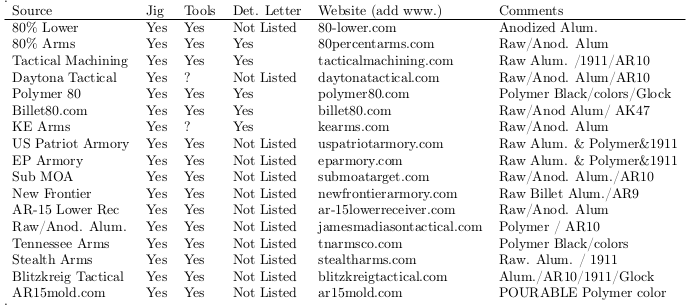
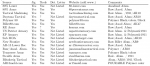
After selecting the type of material and finish, you will have to review what each maker has to offer and decide where to buy. Be sure to review what type of jig / tool combination they have available and how much support they offer. One final note about selecting a company’s lower system is whether they have gone to the trouble of getting their own ATF Determination Letter. This letter certifies that their product is an ATF-approved true 80% lower. Here’s one reason why it might someday matter. A few years ago, one firm in the early days of 80% receiver– Ares Armor in southern California– was raided by the ATF and temporarily shut down because they built their 80% lower with a different color piece of plastic permanently molded at the exact location of the fire-control cavity. Buyers would then simply Dremel out or mill away the different-colored plastic from that area and drill a few more holes to complete their lower. It was a clever approach, but the ATF held that by adding the color in the shape of the cavity to be removed, Ares Armor was illegally facilitating the manufacture of a firearm by its actions. Essentially they were now judged to be selling a firearm, not an 80% lower. A lower from a maker without a Determination Letter may be just fine, but I think it is better to be safe than sorry. Oh, the ATF also confiscated Ares Armor’s entire 80% receiver customer list along with Ares Armor’s other business records.

Choose your lower and you’re on your way. I compiled a pretty complete list of most of the available sources I could find and whether they offer matching jigs and tools. I also tried to find out whether they have an ATF Determination Letter. I made no attempt to compare them, other than a few comments. No claims are made for the completeness or accuracy of the list. I have no involvement, recommendations, or worries relating to any of them, except for what I have already discussed.
Jigs and Cutting Tools

Most manufacturers also offer a jig suited for their lower with a tool set to match. If possible, consider getting your jig, cutting tools, and lower from the same source. They are more likely to work together, which will give you a better chance at success. The best jigs have replaceable drill bushings, but this is not critical. I like drill bushings because they are replaceable and reduce wear from repeated use. This means that hole placement will stay more precise over time. The best jig makers also have both written and video instructions. I would definitely avoid the peel-and-stick label jig templates that some vendors offer as an alternative to a jig to guide your work. A friend was halfway through a milling cut when his label template wrapped itself around the spinning cutter. It shredded his confidence right along with the template. Aluminum jig came to the rescue.

Doing the 80% Machining

– For drilling the hammer pin, trigger pin, safety selector hole, and other holes needed, a good electric hand drill or drill press will do as long as you are careful. Lube while drilling or milling helps also. Milling out the fire control pocket will be the most challenging part. It is the operation where people make the most mistakes and break the most tools. That’s because people are less familiar with milling, which is different than simple drilling. In milling, the spinning cutter is stationary and you feed the workpiece into the cutter. Drilling is done on a stationary workpiece and the spinning bit is fed into the workpiece. Also, in milling you are often taking material off of two surfaces at once, so it is easier to slip. Personally, a benchtop drill press and a manual $49 Harbor Freight cross-slide milling vise is the minimum I am comfortable with. Like you, I’ve had projects ruined by power tool bit slippage. Make sure you properly clamp the workpiece, control the feed rate between bit and workpiece, and prepare to stop quickly. There are videos all over YouTube of people using these methods successfully. Good luck and be careful!

Plan Ahead

Do your homework and dry fit parts and jigs together to make sure they fit; then, reread everything and watch the video one more time! YouTube and Vimeo are loaded with some good and bad examples of people completing their lower. Watch a few. It’s an inexpensive way to learn from the mistakes of others.

Some Random Considerations

  • RPM and Feed Rate – Watch your spindle speeds; you need a minimum speed to cut properly, and too fast will burn the bit and workpiece as well as melt the polymer. I’ve seen several recommendations to stay around 600-800 RPM, but YMMV. Keep a can of cutting oil near and use it frequently, especially on the harder aluminum grades used in AR-15 lowers. Remember that WD40 is not a lubricant. Also, watch your feed rates (how much and how fast you push cutter into the workpiece). More passes with less removed per pass is better than too much. Bit breakage is to be expected, and I don’t recommend starting a build without a spare milling cutter.
  • Mistake Proofing – Preventing mistakes is way easier than trying to fix them. Here are some suggestions:
    • Cover exposed surfaces with blue painters tape to prevent scratching.
    • Use screw-on drill collars to keep drilled hole depths from going too deep.
    • Use the tool stops on your machine or clamp on small blocks of wood to guide tool movement and limit slippage and overtravel.
  • Repairing mistakes – Fortunately, if you still make a mistake, there are some limited ways to reverse the damage. JB Weld two-part epoxies are a godsend here. Stick to the standard JB Weld and the JB Aircraft weld. It can be machined like aluminum or polymer, once it sets. Avoid the 15 min. Kwik Weld; it’s not as strong. Rapid Fix is a 2-part system that includes cyanoacrylate liquid and a fine plastic powder. It makes a fast-drying slurry that can actually fill holes with multiple applications and can be machined and painted later.

Should I serialize it?

Putting permanent identifying marks on your lower is not legally required but strongly recommended by the ATF. You may want to consider it for two good reasons:

  1. It will allow you to identify and recover your firearm if it is stolen, and
  2. Commercial firearms made after 1968 must have a serial number affixed by the manufacturer. Removing the serial number or owning a gun with the number removed are both felonies. Older guns that never had one are okay. However, if a local LEO decides that your unmarked but legal ghost gun may really be evidence of a felonious serial number “file off”, the burden of proof will be on you to prove it doesn’t have one or need one. That said, many people avoid the problem by using a short numeric code on the area normally covered by the grip using an inexpensive metal stamp set or engraver. Since your unique number is only known by you and is nowhere “in the system”, there is really not much downside.

You followed all the tips, and now it’s done!

Now that you have a functioning receiver, it’s time for the rest of the build. Since the focus of this series is the 80% receiver, I am going to leave the balance of your AR-15 build up to you. There’s a ton of good info online about doing the remainder of a build. I hope this detailed look at the possibilities of completing your own Ghost Gun lower has been worth your time.

Next up: Building an 80% Firearm– Part 4, 80% versions of 1911 and Glock-type pistols.



Three Letters Re: Dental Emergencies

Jim and Hugh,

The Sustainable Prep Expo in Grants Pass, Oregon in May, will feature Dr. Howard Shayne doing hands-on classes in “Emergency Dental Techniques”. Preppers in the Northwest might want to consider attending this. – N.M.

o o o

HJL,

I have bought from these people before. They sell lidocaine and good antibiotics. – Mike Williamson, SurvivalBlogs Editor at Large

o o o

Hugh,

It’s easy to purchase Lidocaine powder, store it long term, and make your own as needed for emergencies.

LidoKing – Lidocaine powder

How to make injectable Lidocaine HCL

– V.F.


Economics and Investing:

How the Market Creates Jobs and How the Government Destroys Them – H.L.

o o o

Your Welfare Dollars Feed State Budgets, Not Needy Families – C.F.

o o o

No Surprise In Recent Moves In Gold And Silver Prices

o o o

Top 10 Largest Occupations in the United States Dominated by Jobs that pay $20k to $30k a Year.

o o o

SurvivalBlog and its editors are not paid investment counselors or advisers. Please see our Provisos page for details.


Odds ‘n Sods:

Bird flu found at Jennie-O farm in Wisconsin – J.C.

o o o

The Supreme Court’s dangerous tampering with jury secrecy P.M.

o o o

South African Pres Calls For Confiscating White-Owned Land

JWR’s Comment: This does not bode well. South Africa has already been in a slow slide, with rampant nepotism and crumbling infrastructure, characterized by regularly rotating power outages. For South Africa to go Full Zimbabwe would cause lots of deep drama, massive internal displacement, and most likely a new international diaspora. Please pray for South Africa!

o o o

A few interesting links on the Vault 7 release from Wikileaks:

WikiLeaks CIA Files ‘Sinister’ But Not Surprising – B.B.

Wikileaks Issues A Beatdown To The CIA

Podcast: Vault 7 CIA Hacking Tools Breakdown – Am I at risk of being hacked? – S.L.

o o o

Justice Department Lowers Bar for Fugitives Who Try to Buy Guns – DSV


Notes for Wednesday – March 08, 2017

March 8th is the birthday of famed revolver shooter, big game hunter, and gun writer Elmer Keith, who co-designed the S&W .44 Magnum and .41 Magnum cartridges. He authored the book Sixguns, which is still considered a standard reference. His fascinating life story is told in his last book, Hell, I was there! Keith spent the second half of his life on a ranch near Salmon, Idaho. (Keith was born in 1899 and died February 12, 1984.)

o o o

Today, we present part two of a four part entry for Round 69 of the SurvivalBlog non-fiction writing contest. The nearly $15,000 worth of prizes for this round include:

First Prize:

  1. A $3000 gift certificate towards a Sol-Ark Solar Generator from Veteran owned Portable Solar LLC. The only EMP Hardened Solar Generator System available to the public.
  2. A Gunsite Academy Three Day Course Certificate that is good for any one, two, or three day course (a $1,195 value),
  3. A course certificate from onPoint Tactical for the prize winner’s choice of three-day civilian courses, excluding those restricted for military or government teams. Three day onPoint courses normally cost $795,
  4. DRD Tactical is providing a 5.56 NATO QD Billet upper with a hammer forged, chrome-lined barrel and a hard case to go with your own AR lower. It will allow any standard AR-type rifle to have a quick change barrel, which can be assembled in less than one minute without the use of any tools and a compact carry capability in a hard case or 3-day pack (an $1,100 value),
  5. An infrared sensor/imaging camouflage shelter from Snakebite Tactical in Eureka, Montana (A $350+ value),
  6. Gun Mag Warehouse is providing 20 Magpul PMAG 30-rd Magazines (a value of $300) and a Gun Mag Warehouse T-Shirt; (an equivalent prize will be awarded for residents in states with magazine restrictions),
  7. Two cases of Mountain House freeze-dried assorted entrees in #10 cans, courtesy of Ready Made Resources (a $350 value),
  8. A $250 gift certificate good for any product from Sunflower Ammo,
  9. Two cases of Meals, Ready to Eat (MREs), courtesy of CampingSurvival.com (a $180 value).

Second Prize:

  1. A Tactical Self-Contained 2-Series Solar Power Generator system from Always Empowered. This compact starter power system is packaged in a wheeled O.D. green EMP-shielded Pelican hard case (a $2,400 value),
  2. A Glock form factor SIRT laser training pistol and a SIRT AR-15/M4 Laser Training Bolt, courtesy of Next Level Training, which have a combined retail value of $589,
  3. A gift certificate for any two or three-day class from Max Velocity Tactical (a $600 value),
  4. A transferable certificate for a two-day Ultimate Bug Out Course from Florida Firearms Training (a $400 value),
  5. A Trekker IV™ Four-Person Emergency Kit from Emergency Essentials (a $250 value),
  6. A $200 gift certificate good towards any books published by PrepperPress.com,
  7. A pre-selected assortment of military surplus gear from CJL Enterprize (a $300 value),
  8. A selection of canned meats containing a 10 pack of 28oz cans of Premium Beef and a 5 pack of 28oz cans of Premium Pork from Wertz’s Farm Market (a $300 value),
  9. RepackBox is providing a $300 gift certificate to their site, and
  10. American Gunsmithing Institute (AGI) is providing a $300 certificate good towards any of their DVD training courses.

Third Prize:

  1. A Model 175 Series Solar Generator provided by Quantum Harvest LLC (a $439 value),
  2. A Royal Berkey water filter, courtesy of Directive 21 (a $275 value),
  3. A custom made Sage Grouse model utility/field knife from custom knife-maker Jon Kelly Designs, of Eureka, Montana,
  4. A large handmade clothes drying rack, a washboard, and a Homesteading for Beginners DVD, all courtesy of The Homestead Store, with a combined value of $206,
  5. Expanded sets of both washable feminine pads and liners, donated by Naturally Cozy (a $185 retail value),
  6. Two Super Survival Pack seed collections, a $150 value, courtesy of Seed for Security, LLC,
  7. Mayflower Trading is donating a $200 gift certificate for homesteading appliances,
  8. Montie Gear is donating a Y-Shot Slingshot and a $125 Montie gear Gift certificate.,
  9. Two 1,000-foot spools of full mil-spec U.S.-made 750 paracord (in-stock colors only) from www.TOUGHGRID.com (a $240 value), and
  10. Fifteen LifeStraws from SafeCastle (a $300 value).
  11. A $250 gift certificate to Tober’s Traditions, makers of all natural (organic if possible) personal care products, such as soap, tooth powder, deodorant, sunscreen, lotion, and more.

Round 69 ends on March 31st, so get busy writing and e-mail us your entry. Remember that there is a 1,500-word minimum, and that articles on practical “how to” skills for survival have an advantage in the judging.


Building An 80% Firearm- Part 2, by Tupreco

Learn The Why and How (continued)

The key provision that makes the 80% industry possible is making sure that all the items being purchased and transported are parts and not a firearm. Because once the parts wind up in your hand, you have the right to now “make” a firearm as listed above but only if you can legally own that firearm in your state of residence.

Does this mean I can make my own firearm?

The short answer is “Yes, with conditions attached.” From the ATF website:

An individual may generally make a firearm for personal use. However, individuals engaged in the business of manufacturing firearms for sale or distribution must be licensed by ATF. Additionally, there are certain restrictions on the making of firearms subject to the National Firearms Act.

The second consideration is also critical: (again from the ATF website)

Does an individual need a license to make a firearm for personal use? No, a license is not required to make a firearm solely for personal use. However, a license is required to manufacture firearms for sale or distribution.

So, you can’t sell it, ever. But when does a person need to become licensed? The simple answer is when they are considered “engaged in the business”. The following is once more from the ATF website:

Any person “engaged in the business” as a manufacturer must obtain a license from ATF. The term “engaged in the business” means— (A) as applied to a manufacturer of firearms, a person who devotes time, attention, and labor to manufacturing firearms as a regular course of trade or business with the principal objective of livelihood and profit through the sale or distribution of the firearms manufactured.

It is probably true that if you are simply a hobbyist, collector, sport shooter, or person not “engaged in the business” you would have wide latitude regarding how you built your firearms for your personal use. The reality is that you are in the big gray area. Many believe that the ATF likes it gray because it gives them wide discretion to take appropriate enforcement actions to go after those who they consider “engaged in the business” since that definition is fluid. Clearly, you may not have something as obvious as a corner storefront, website, or other method to sell your home-built plinker.

What about helping a buddy build his or using a drill press at work with the boss’s permission after hours?

Keep in mind that the GCA and NFA already indicate and the ATF has reaffirmed that you may not sell a firearm you make to anyone, ever, and may only pass it on to a family member or surrender it to the government upon your death.

Here are some other questions to consider…

Do I have to fill out any forms or pay to get a tax stamp? This one is a bit trickier. If you are building some type of modified firearm that does not fit the current legal definition of a pistol, rifle, or shotgun, you might have to. Things like short-barreled rifles, handguns with shoulder stocks, fully automatic firearms of any style, sawed-off shotguns, or anything outside the current restriction may have to be registered as an NFA item. See www.atf.gov for the restriction list. You can usually avoid unwanted scrutiny by sticking to the basics and making sure that what you build looks a lot like every AR-15 or 1911 that can be purchased commercially. Also if you make sure it does not have a restricted modification like a suppressor, shortened stock, et cetera, you will generally be on solid ground.

Do I have to mark it or serialize it?

No, but marking it is encouraged by the ATF so they can help identify it if it is lost or stolen. Many people think marking it is a euphemism for having a means to track it. I would mark mine someplace unique and discreet in case it does get lost or stolen.

Is there is a particular part that is actually considered the “firearm”? Yes, and it varies. On a commercial firearm that component is usually either the upper or lower receiver, because that is what must be serialized and tracked through the supply and distribution chain using the serial number assigned by the manufacturer. On the three platforms discussed here, it is the body of the lower receiver or pistol frame that is serialized and recorded. On some firearms, it is actually the upper receiver because the trigger group is housed there.

What is an ATF Determination Letter?

This seems pretty important in my opinion, but use your own judgment. If a manufacturer wants to make an 80% lower receiver available and stay in the good graces of the ATF, they have typically submitted a sample and description of their product to the ATF Firearms Technology Branch, who will review the sample and confirm in writing that what they are making is not a firearm. If it is found to be compliant and not a firearm, the FTB will then issue a letter indicating that only that specific configuration from that manufacturer has been evaluated is not considered a firearm and thus does not have to comply with restrictions as a firearm. This formal notification to the manufacturer is called a Determination Letter and the manufacturers who have one will freely provide it, often right on their website. Curiously, most of the manufacturers listed in this article that I surveyed do not have one specific to their company and seem to be relying instead on the ATF’s general rulings. Consider how important the letter might be to your peace of mind as you make a decision what and where to buy.

Are there any restrictions on using the firearm?

As long as it complies with the ATF-FTB’s interpretation of regulations, it generally meets the same use and handling conditions as any other commercially available firearm except that you can’t sell it to someone else.

Are there any other things to be aware of?

Maybe. For example, here is an interesting restriction that makes little sense but still exists. The first application that a serialized firearm receiver is used for can technically never be changed. In other words, if you initially buy or build an AR-15 lower receiver into an AR-15 pistol, you may never legally recycle it later to build an AR rifle and vice versa. It must always be used in a pistol. Once your receiver is used for a particular firearm configuration, it has to stay that way over its entire life. I’m not sure if it applies to your 80% completed receiver, how it could be enforced or why it even matters, but there it is.

How and where you complete your 80% receiver is critical. It is also important that you realize your 80% receiver must be built solely by you on equipment you own. Without a vote from Congress, ATF Director, B. Todd Jones, released a ruling in 2015 which makes it illegal for a business entity to rent or loan their equipment to a private individual so that person may complete an 80% receiver.  It is also prohibited for a private individual to complete an 80% receiver using a friend’s personal equipment.  Essentially, this means the only way to complete an 80% lower is working on your own equipment (jig, drill press, drill bits, or CNC machine, et cetera) and finishing it in your own home. Otherwise, the machine shop or your friend could be considered “engaged in the business” of firearm’s manufacture, and without being licensed they could be subject to legal actions. It would be very hard to prove unless you or your friend admitted it. However, law enforcement agencies frequently succeed when they choose to prosecute someone by relying heavily on the testimony of a friend or perhaps an ex-spouse. This person can often be enticed or compelled to testify against you in some way, so keep that in mind and practice good OpSec. Don’t trip yourself up with an accidental admission or social media post that could be used against you. Here is a link to the complete ruling.

How much money can I save?

This may come as a surprise but building one of the popular 80% versions of these handguns or rifles at this time may actually cost more than purchasing a serialized receiver and assembling the other components. Even though they have less manufacturing performed on them, 80% receivers are usually priced higher than their finished, serialized cousins. I expect that will change over time, but it is almost universally true as of this writing.

So why do the build?

That’s a great question. Here are reasons most people give for why they do it:

  • I can acquire deeper knowledge of the platform and how to gunsmith it.
  • I want to see if I can do it.
  • I have a love of the platform.
  • I want bragging rights / the manly-man or girly-girl factor.
  • I don’t want the government to know what I have. (BTW, to keep the lowest profile, make sure you are paying with cash, like a money order, have parts shipped to an offsite location, and don’t post it all over your social media.

In Part 3, we will detail the actual process of doing an 80% AR-15 build.


Letter Re: Dental Emergencies

Hugh and Jim,

Regarding the post on 3/7 about dental emergencies. A few years back their was a like minded dentist up in TN that taught some Field Dentistry classes in middle TN. Dr. Tom offered an excellent two-day class that focused on just this sort of stuff. He was not just some dentist that figured he could cater to the “prepper” market. You could tell Dr. Tom was a survivalist, and he had thought through some incredibly creative ways to handle what could be survival dentistry. He offered tools there as well as the instruction. We did a lot of hands-on training, including doing fillings, practicing extractions (we took prisoners the night before; just kidding), et cetera.

I go to a lot of training classes, and this one I attended twice because it was so good. I’m not sure if he’s still offering them, but I know he likely reads the blog here, so hopefully he will see this and do some more classes. This sort of class isn’t as glamorous as shooting rifles, but it’s as important and perhaps more so. As survivalists, we should seek to be well rounded in our skill sets. – R.H.


Economics and Investing:

Time To Give The Metals A Break

o o o

Colt Lays Off Custom Shop Director, Other Employees, Company Rumored Gutted – DSV

o o o

Gold Investing 101 – Beware eBay, Collectibles and “Pure” Gold Coins that are Gold Plated – S.C.

o o o

Cost of Illegal Immigration Higher than Cost of Securing Borders – G.L.

o o o

SurvivalBlog and its editors are not paid investment counselors or advisers. Please see our Provisos page for details.


JWR’s Recommendations of the Week:

Books:

The Defined King James Version Bible, Large Print

The Art of Invisibility: The World’s Most Famous Hacker Teaches You How to Be Safe in the Age of Big Brother and Big Data

Movies:

Gone with the Wind

USS Indianapolis: Men Of Courage

Television:

Lonesome Dove

Band of Brothers

Music:

Wanted! The Outlaws (1976-1996 20th Anniversary)

O Brother, Where Art Thou? (Movie Soundtrack)

Instructional Videos:

Bushcraft Fun in the Bush, Camp Projects

The Backyard Machine Shop – Machine Rescue Series

Online Sermon Videos:

Grace Baptist Church, Fremont, California (Pastor Michael Phillips)

Sovereign Grace Baptist Church of Silicon Valley (Dr. Paul Nelson, et al.)

Podcasts:

The Bump That Bumps the Bump in the Night (Podcast – Season 4, Ballistic Radio Episode 197)

The Self Sufficient Gardener (No longer being produced, but the archived shows are worth a listen!)

Blogs:

The Freeholder

Barnhardt

Salvation And Survival: A Woman’s Perspective On The Times We Live In

Gear:

Pelican 1740 Travel Vault Watertight Hard Case with Foam – Olive Drab

Lorex HD 16 Channel Security DVR System with Eight 1080p HD Cameras – 2TB HDD

Nikon PROSTAFF 5 BDC Riflescope, Black, 3.5-14×40

Chapman (Made in USA) Master Tool Kit with Screwdriver Kit Allen Hex, Metric Allen Hex, Star/Torx, Phillips, Reed & Prince, Robertson, Socket Adapter, Midget Ratchet Hand Tools Set.


Notes for Tuesday – March 07, 2017

Panic in Year Zero: It is important that SurvivalBlog readers take the time to read at least the summary of the Wikileaks “Year Zero” March 7th announcement. (Also known as Vault 7.) The ramifications of this release of state-sanctioned and state-sponsored cyberweapons are huge. The sheer volume of weaponized code that has been unleashed is amazing. The mis-use of these cyberweapons could very rapidly devastate e-commerce, banking, satellite navigation systems, and public utilities, including national power grids. Do not dismiss this as mere speculation. The risk is real, and the risk is huge. This announcement is just one more reason for SurvivalBlog readers to redouble their preparedness efforts. Make your preparations now, before the lights go out! – JWR

o o o

March 7, 1707 was the birthday of Stephen Hopkins, (Governor of Rhode Island) one of the signers of the Declaration of Independence.

March 7, 1925 was the birthday of Rene Gagnon, a U.S. Marine, who was seen in the famous photographs of the Raising the Flag on Iwo Jima. (He died in 1979.)

And March 7, 1944 was the birthday of Townes Van Zandt, a gifted Texan singer/songwriter. (He died in 1997.)

o o o

Today, we present another entry for Round 69 of the SurvivalBlog non-fiction writing contest. The nearly $15,000 worth of prizes for this round include:

First Prize:

  1. A $3000 gift certificate towards a Sol-Ark Solar Generator from Veteran owned Portable Solar LLC. The only EMP Hardened Solar Generator System available to the public.
  2. A Gunsite Academy Three Day Course Certificate that is good for any one, two, or three day course (a $1,195 value),
  3. A course certificate from onPoint Tactical for the prize winner’s choice of three-day civilian courses, excluding those restricted for military or government teams. Three day onPoint courses normally cost $795,
  4. DRD Tactical is providing a 5.56 NATO QD Billet upper with a hammer forged, chrome-lined barrel and a hard case to go with your own AR lower. It will allow any standard AR-type rifle to have a quick change barrel, which can be assembled in less than one minute without the use of any tools and a compact carry capability in a hard case or 3-day pack (an $1,100 value),
  5. An infrared sensor/imaging camouflage shelter from Snakebite Tactical in Eureka, Montana (A $350+ value),
  6. Gun Mag Warehouse is providing 20 Magpul PMAG 30-rd Magazines (a value of $300) and a Gun Mag Warehouse T-Shirt; (an equivalent prize will be awarded for residents in states with magazine restrictions),
  7. Two cases of Mountain House freeze-dried assorted entrees in #10 cans, courtesy of Ready Made Resources (a $350 value),
  8. A $250 gift certificate good for any product from Sunflower Ammo,
  9. Two cases of Meals, Ready to Eat (MREs), courtesy of CampingSurvival.com (a $180 value).

Second Prize:

  1. A Tactical Self-Contained 2-Series Solar Power Generator system from Always Empowered. This compact starter power system is packaged in a wheeled O.D. green EMP-shielded Pelican hard case (a $2,400 value),
  2. A Glock form factor SIRT laser training pistol and a SIRT AR-15/M4 Laser Training Bolt, courtesy of Next Level Training, which have a combined retail value of $589,
  3. A gift certificate for any two or three-day class from Max Velocity Tactical (a $600 value),
  4. A transferable certificate for a two-day Ultimate Bug Out Course from Florida Firearms Training (a $400 value),
  5. A Trekker IV™ Four-Person Emergency Kit from Emergency Essentials (a $250 value),
  6. A $200 gift certificate good towards any books published by PrepperPress.com,
  7. A pre-selected assortment of military surplus gear from CJL Enterprize (a $300 value),
  8. A selection of canned meats containing a 10 pack of 28oz cans of Premium Beef and a 5 pack of 28oz cans of Premium Pork from Wertz’s Farm Market (a $300 value),
  9. RepackBox is providing a $300 gift certificate to their site, and
  10. American Gunsmithing Institute (AGI) is providing a $300 certificate good towards any of their DVD training courses.

Third Prize:

  1. A Model 175 Series Solar Generator provided by Quantum Harvest LLC (a $439 value),
  2. A Royal Berkey water filter, courtesy of Directive 21 (a $275 value),
  3. A custom made Sage Grouse model utility/field knife from custom knife-maker Jon Kelly Designs, of Eureka, Montana,
  4. A large handmade clothes drying rack, a washboard, and a Homesteading for Beginners DVD, all courtesy of The Homestead Store, with a combined value of $206,
  5. Expanded sets of both washable feminine pads and liners, donated by Naturally Cozy (a $185 retail value),
  6. Two Super Survival Pack seed collections, a $150 value, courtesy of Seed for Security, LLC,
  7. Mayflower Trading is donating a $200 gift certificate for homesteading appliances,
  8. Montie Gear is donating a Y-Shot Slingshot and a $125 Montie gear Gift certificate.,
  9. Two 1,000-foot spools of full mil-spec U.S.-made 750 paracord (in-stock colors only) from www.TOUGHGRID.com (a $240 value), and
  10. Fifteen LifeStraws from SafeCastle (a $300 value).
  11. A $250 gift certificate to Tober’s Traditions, makers of all natural (organic if possible) personal care products, such as soap, tooth powder, deodorant, sunscreen, lotion, and more.

Round 69 ends on March 31st, so get busy writing and e-mail us your entry. Remember that there is a 1,500-word minimum, and that articles on practical “how to” skills for survival have an advantage in the judging.


Building An 80% Firearm- Part 1, by Tupreco

Learn the Why and How

The election of Donald Trump is beginning to show concrete steps toward dialing back the Obama administration’s numerous efforts to undermine our Second Amendment rights. How that will continue to play out remains to be seen. Surprisingly though, even on Obama’s watch there were several pro-2nd Amendment (2A) court and legislative victories, including expansion of concealed carry in many states.

Another thing that occurred while Obama was in office was an unexpected but welcome surprise from the ATF. Several years ago, a well-known AR-15 parts manufacturer requested and received the ATF’s formal approval to manufacture and sell, without restriction, a partially-finished AR-15 lower receiver. This receiver would only be legal for unrestricted sale if the ATF approved the exact design where several very specific features remained un-machined or marked in a way that would aid in its completion. This partially-complete receiver (now commonly called an “80% receiver”) required that the through holes for the trigger and hammer pins be omitted and that solid material must remain where the cavity for all of the trigger components would normally be milled out. This new approach was clearly designed to attract buyers who would then complete the steps left unfinished. When finished, it would be a fully functional AR-15 lower receiver.

Many people don’t realize that it has been legal for years to build your own personal unregistered firearm. Up to this point, the practice of making a homemade firearm has not generated much activity or interest for two reasons. First, a home built firearm cannot be legally sold or transferred to another person. Second, building a firearm safely was typically well beyond the skills of most people. However, the approval for sale of a partly finished receiver ushered in a significant change. Now all that would be required to build a quality firearm at home would be a minimal level of machining skills and equipment. Suddenly, making your own unregistered firearm for only personal use just got a lot easier. Virtually overnight, the 80% firearms industry was born and has continued to flourish. It will surely continue to grow, provided it is not eliminated through a contrary stroke of the ATF’s regulatory pen.

This may be the time to take advantage of the opportunity to build your own “ghost gun”, as this type of firearm is often called. For now you can build your own commercial-quality firearm with virtually no paper trail tracking it (presuming you don’t use your credit card or ship to your home address). Michael Bloomberg, George Soros, and the other anti-2A gun control crowd have already begun putting resources together to convince the public and sympathetic lawmakers to restrict or eliminate the availability of the 80% lower receiver. Even with the Trump administration taking the pressure off the Second Amendment, other governmental bodies still have power to act independently. The worst example of this in years just happened in February 2017, when the Fourth Circuit Federal Appeals Court in Virginia overruled its own previous ruling regarding Maryland’s state law banning the AR-15 and other similar scary rifles. The court finding was that firearms of this type had no legitimate purpose other than to kill in large numbers and that these “weapons of war” (their words) did not qualify for protection under the Second Amendment. It was not an actual ban per se, but if left standing it would clear the way for an unfriendly federal government issue, an executive order, or a liberal state to pass a law to ban them. Further, in 2016, four states voted on gun control initiatives, and all passed except for Maine’s universal background check measure. Other laws recently passed in California now affect a firearm built there using an 80% receiver through new restrictions going into effect regarding fees, registration, and serialization requirements. Given these pressures, it seems like now is a prudent time to do your research and get to work before it’s too late.

So what are the things that need to be considered before building your own firearm using a legal 80% receiver? You can legally purchase one at this time and perform the final machining operations to make it 100% functional. If done according to ATF guidelines, the 80% receiver is not considered a firearm by any federal or state agency. Since the ATF approved this approach several years ago, manufacturers and sellers have been popping up rapidly. The AR-15 variants have catapulted to capture the lion’s share of the market. Also available are versions for the AK-47, the 1911 pistol, and most recently, an 80% pistol frame designed to be completed using standard Glock pistol components.

In this four-part article series, we will look at the issues surrounding the purchase, completion, and assembly of three very popular 80% platforms:

  • AR-15 rifle,
  • 1911 Browning-designed pistol, and the
  • Glock–style pistol, in both full-size and compact versions

There is also a smaller but active AK-47 builder community as well plus a growing AR-10 presence. However, we will focus here on the versions listed above, since they are more widely supported and popular. Other than the specific technical issues, the things that affect the three 80% platforms in this series also generally apply to the other platforms as well.

SERIOUS DISCLAIMER:

Understand this up front, I am not a lawyer, so nothing listed here may be considered legal advice of any kind. Your decisions should be made after thoroughly researching the law and published ATF guidelines. At the end of the day, it is your responsibility to confirm which aspects of this apply to you and how they apply. There are some very important distinctions about what the ATF does and does not consider a firearm, including at what moment your 80% hunk-o-plastic or aluminum magically and legally transforms into a firearm. At that moment, it comes under the jurisdiction of multiple government agencies that range from your local LEO to the ATF (depends on your locale). For advice, start with the person or company where you might purchase your 80% components. Realize that they are hoping you buy as much as you can from them, so verify what they tell you. Read the links that are provided here and on their websites. Read the actual laws themselves. I can’t stress enough how important this is. You will learn a great deal here, but at the end of the day it’s completely on you.

What is an 80% firearm?

This is the first and most important issue because an 80% firearm as discussed here is not an actual firearm as purchased. It does not become a firearm until an individual completes the steps needed to transform it into a form that does meet the legal definition of a firearm. To be on the safe side, I consider an 80% component a firearm from the moment the first feature is drilled or milled. The reason I approach it that way is that there is very minimal case law at this time. The only configuration that has been specifically designated by the ATF as “not-a-firearm” is the part you took out of the box that is described in the seller’s Determination Letter (more on that later). In other words, once the 80% component is modified in any way from its “as-received” condition, the government may try at some point to declare that it has become a firearm. This can happen any time it suits their purposes to do so. It would then be up to you to spend the time and money proving that it is not a firearm. Who wants to sign up for that? Just don’t plan to sell your partially finished receiver once you start to machine it. The good news is that at this time, a reasonably competent individual can safely fabricate his or her own 80%-er into a functional lower receiver fairly quickly. Once you’ve gathered the correct additional components, it can also be assembled into a usable firearm without restriction and used as you would any firearm.

What is considered a firearm?

We have to start with a working definition. This is where the ATF website is actually a treasure trove of information. Find out yourself at www.atf.gov. You can find listings of most current federal laws there as well as the ATF regulations that serve to interpret (or some would say, re-write) those laws. Be sure your state laws also allow this kind of build to take place. California is already trying to restrict their large in-state 80% community.

Two of the most important federal statutes that apply are the National Firearms Act (NFA) of 1934 and the Gun Control Act (GCA) of 1968. These two are the source of most of the definitions and restrictions you will have to comply with. That said, here is what the GCA and the NFA calls a firearm:

(A) any weapon (including a starter gun) which will or is designed to or may readily be converted to expel a projectile by the action of an explosive; (B) the frame or receiver of any such weapon; (C) any firearm muffler or firearm silencer; or (D) any destructive device. Such term does not include an antique firearm.

The terms “firearm silencer” and “firearm muffler” mean any device for silencing, muffling, or diminishing the report of a portable firearm, including any combination of parts, designed or redesigned, and intended for use in assembling or fabricating a firearm silencer or firearm muffler, and any part intended only for use in such assembly or fabrication.

The term “make” is defined in the NFA to include manufacturing, putting together, altering, any combination of these, or otherwise producing a firearm.

Once something is legally considered a firearm, it becomes subject to a myriad of restrictions and regulations (yes, infringements) that control its sale, transport, purchase, and use.