Vinegar As An Essential Multi-Purpose Tool for TEOTWAWKI- Part 1, by J.R.

During TEOTWAWKI, long-term survivability will depend upon more than adequate caloric intake and the ability to defend oneself and one’s family.  Historically, the leading cause of death during times of prolonged war, conflict, or natural disasters has not been violence or the direct impact of disasters, rather, most people perished due to rampant disease and infections caused by the interruption of access to medical treatment, clean water, and adequate hygiene.  In dire times, access to medicinal agents and the ability to both prevent food and water-borne illness and to maintain hygienic living quarters may make the difference between life and death.  Although various options abound to address one or more of those concerns, for the budget-minded prepper, tackling each of those categories can prove costly and confusing.  But what if we could utilize one affordable and easily obtainable substance to treat many medical conditions, preserve food, and provide for a hygienic environment?  Many people may be surprised to learn that such a substance does exist and has been known since ancient times.  That incredible substance is vinegar.  

Even before the rise of civilization more than 6,000 years ago, vinegar was known among many cultures for its medicinal, preservative, and cleaning properties.  Along with alcohol, vinegar was discovered independently and used heavily by almost every culture of the ancient world for many of the same uses we think of today.  In ancient China, Korea, Babylon, and Egypt vinegar was used widely by all classes, from slaves to sovereigns, as a means to treat the ill and infirm, to ensure food preservation for lean times, and clean domiciles.  Hippocrates, the father of medicine, wrote about using vinegar.  Vinegar is also mentioned numerous times in the Bible, both the New and Old Testament. This is all because vinegar has such a variety of uses in food, medicine, non-toxic cleaning, and even removing rust and corrosion from metallic objects.  

Vinegar was so widely known due primarily to its simple and sometimes spontaneous nature. Vinegar is so incredibly easy to make that it was most likely discovered by accident, much the same way that alcohol probably was. In fact, the process of producing vinegar is nearly identical to that of alcohol.  That procedure, known as fermentation, is a biological process wherein microbes of the genus Acetobacter metabolize simple sugar, starch, or alcohol into acetic acid.   Acetobacter is so prevalent in the environment that nearly any hydrated sugar or alcohol can seemingly spontaneously convert into vinegar given time. If you have ever left an open bottle of wine on the counter for too long, you have likely already inadvertently made your own vinegar.  Some more commonly known vinegars include apple cider vinegar, red wine vinegar, rice vinegar, distilled white vinegar, coconut vinegar, balsamic vinegar, and malt vinegar.  Though the process of making vinegar is very simple, there are keys to exploiting its full potential if a TEOTWAWKI scenario comes to pass.  For whatever vinegar you use, it is important to make sure to use the raw, unfiltered form to reap the maximum benefits from all the qualities vinegar has to offer.  This is especially important when used as a medicinal measure. 

In this essay, we will examine some of the uses of two types of vinegar, but in particular, raw, unfiltered Apple Cider Vinegar (hereafter referred to as ACV).  Perhaps the most beneficial type of vinegar, raw, unfiltered ACV has literally dozens of applications. Let us first explore the medicinal properties of ACV.    

Health Benefits

We all know that prevention is the best medicine, and this is especially the case during TEOTWAWKI.  ACV contains minerals, vitamins, essential acids, and enzymes.  Catching a cold or having the flu is a relativity simple fix presently because we can easily make an appointment with our primary care doctor or go to the emergency room if need be, but we know both of those options will be off the table when the grid goes down.  ACV has the medicinal knockout punch to help the immune system fight many common viruses and ailments.  With a recommended dose often ranging from one tablespoon to one ounce, individuals need not be concerned with consuming large quantities in their diet.  Taking it straight, in its undiluted form, may be tough for some unaccustomed to the unique, strong flavor of ACV, while others may enjoy it.  Diluting it, or chasing it with water will help lighten the taste and alleviate potential damage to teeth due to the acidity.  Many prefer to dilute ACV in a glass of water and add some honey to make it more palatable.  

Historically, ACV held a place of high regard in the medicinal cabinets of doctors, healers, and elders.  Hippocrates used vinegar as a medicinal treatment to tackle various aliments, including pleurisy and pneumonia.  In modern times ACV has been shown to be an effective treatment against intestinal infections caused by E. coli and salmonella.  During the American Civil War, ACV was given to soldiers on both sides to help prevent scurvy on the front lines.  Modern science has indicated through a number of studies that ACV may be beneficial to a wide range of biological functions in our bodies.  Many of us take vitamins and supplements everyday in hopes of adding some extra nutrition to our daily diet that may be lacking in various nutrients.  Unfortunately, many of these supplements are expensive and not available around the common man’s household.  ACV is regarded as a superfood by many nutritionists and is an affordable supplement that anyone can add to their daily routine.  Medical studies have demonstrated how ACV can slow or even halt the growth of various forms of cancer cells, shrink tumors, lower blood pressure levels, and assist in insulin regulation in people with diabetes. Those are just a few of the documented medicinal benefits, but traditional medicine expands the potential uses of ACV far beyond the scope of this essay.

These benefits are especially important during TEOTWAWKI because our minds and bodies will be under a considerable amount of ongoing stress, causing us to be more exposed to possible health complications.  Consuming ACV is a great way to boost one’s immune system in the present and an essential preventative measure if the grid goes down. Additionally, ACV and other vinegars are great tools to use for purposes outside the body.

Antiseptic

During TEOTWAWKI, cuts and scraps from working hard around the house will no longer be a minor issue.  Even with access to antibiotics, infection is a serious threat. Proper hygiene and prompt cleaning prevents many small wounds from festering, but what about when antibiotics and cleaning products aren’t readily available?   How will we prevent or treat infection? We will be exposed to increased risk of physical injury in a grid-down scenario when the machines of modern age can no longer do the work for us. That risk of injury factors directly to an elevated risk of infection.  Thorough cleaning of abrasions is essential. Distilled white vinegar, which has a higher acetic acid content of 6% is a natural antiseptic and can be used to successfully disinfect a wound that has been exposed to possible germs.  To disinfect with vinegar, merely mix a 50/50 solution of sterile water and vinegar then lightly scrub and irrigate the wound with the solution.  This solution is particularly valuable when a medicinal iodine solution is not available. This technique was used during World War I on soldiers when medical supplies were in limited supply.

Anti-Bacterial/Topical Pain Reliever

ACV can also be used to treat sunburns by applying a cloth soaked with both water and vinegar directly on the sunburn or by using a spray bottle filled with a 50/50 solution of water and vinegar that is then sprayed over the sunburned area which will help alleviate tenderness and prevent blisters.  ACV is also a remedy for diarrhea because diarrhea is primary caused by a bacteria or virus in the intestinal track and ACV is great at killing those germs.  A scratchy, sore throat can also benefit from ACV.  Bacteria often stay in the throat and cause excess mucus when you’re sick with a cold.  Drinking or gargling some ACV will help eliminate excess mucus in the throat while also killing pain causing bacteria.  On top of all that, ACV and white distilled vinegar can be applied to itchy bug bites, poison ivy rash, and jelly fish stings to help minimize itching, irritation, and swelling.  

Vinegar’s Acetic Acid

Along with disinfecting wounds on the body, vinegar can be used to thoroughly disinfect your environment.  The primary active agent in all vinegars is acetic acid, which kills bacteria and viruses on household surfaces. There may be a situation during TEOTWAWKI where there is danger of contagion; keeping a clean sterile environment means the difference between getting sick or not. Even multi-drug resistant tuberculosis can be eliminated with vinegar given appropriate application. Distilled white vinegar, again because of the 6% acidity, can be used to disinfect all commonly touched surfaces in your home.  If bleach supplies have been exhausted, vinegar can be used for nearly all household cleaning purposes.  Distilled white vinegar is commonly used in homes where an individual may suffer from a chemical sensitivity and using harsh chemicals in your home is not an option.  It can also be used as a degreaser in place of other harsh, flammable, or reactive solvents. In addition, ACV can be used to remove rust and corrosion from metallic objects or tools.  Archaeologists even use ACV to substitute for electrolysis when removing corrosion from delicate artifacts.  For the scientifically inclined, both ACV and distilled white vinegar can even be used to make battery cells!  Keeping several gallons of distilled white vinegar and ACV on hand with a few ***spray bottles***amazon.com/Houseables-24SB-CL1-Bottles-Professional-Trigger/dp/B00Z86FRPO/ref=sr_1_3?ie=UTF8&qid=1489457382&sr=8-3&keywords=cleaning+spray+bottle gives one the ability to always disinfect the home when needed without causing an unwanted allergic reaction from harsh chemical cleaners.  

Acetic acid has the capacity to kill tough bacteria and viruses, but having even a few more extra gallons of vinegar on hand will help out greatly when it comes to preserving food as well. Vinegar is safe and effective food preserver.  The ability to preserve food to eat at a later date is a traditional practice that took place in just about every country homestead and across many cultures.  Pickling and fermenting in vinegar is a safe, delicious, and nutritious way to ensure food security.  This practice will have to take place in every home in a TEOTWAWKI situation, if people expect to keep their families fed.  Buying distilled white vinegar for canning may be the easiest solution for canning needs, but ACV works too, as long as the acidic acid levels are 4.5% or higher.  With an inexpensive acid titration kit, vinegar can be tested to measure acetic acid levels to make sure the correct acidity is present.  Certain foods do require the use of vinegar when canning, so if you want those foods on your long-term menu during a grid down situation, keeping a supply of vinegar would be a necessity. Of course you could always learn to make your own.


Letter Re: Shielding a Cell Phone

Mr. Latimer:

Simply as a departure point for thought: I placed my wife’s cell phone inside an empty metal coffee can and covered the open top with aluminum foil. I secured that by overlaying the plastic lid. The phone did not ring, nor would it receive a text. Outside of the can, both calls and texts went through. Should you (we) have a cell phone that has a integrated battery, this may make tracking or malicious communications more difficult. – Skyrat


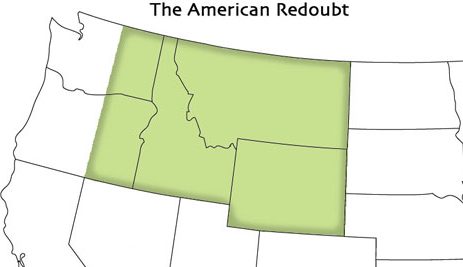
News From The American Redoubt:

Anyone living anywhere near Hermiston, Oregon, should check out Eastern Oregon Tactical (EOT). They carry a broad inventory of guns and accessories, and also offer training including an online Oregon CCW permit training course.

o o o

Magpul up and running in Cheyenne, Wyoming. (They recently got a big USMC sole-source contract for Gen 3 PMAGs—a favorite item for both soldiers and preppers.)

o o o

Montana leads nation in gun companies per capita.

o o o

Big snow portends flooding in major Wyoming river basins

o o o

Idaho lawmakers to discuss mandatory minimums bill

o o o

Video: How This Idaho Oldtimer Constructed An Ideal Underground Home for Less Than $50


Economics and Investing:

Some news from Tyler Durden, over at Zero Hedge: As Millions Of Venezuelans Try To Flee The Country They Run Into A Problem. Here is a quote: “…the nation now lacks the materials to meet the soaring demand for new passports – making it almost impossible to leave the socialist utopia.”

o o o

The US government now has less cash than Google. (Sovereign man) Excerpt: “In fact the government has been extremely careful to keep the debt below $20 trillion in anticipation of another debt ceiling fiasco. One way they’ve done that is by burning through cash.”

o o o

$21,714 For Every Man, Woman And Child In The World – This Global Debt Bomb Is Ready To Explode (The Economic Collapse Blog) Excerpt: “According to the International Monetary Fund, global debt has grown to a staggering grand total of 152 trillion dollars” – Sent in by B.B.

o o o

Just so you know: Total U.S. debt and other obligations now total $69 trillion (Canada Free Press) “That’s 370 percent of GDP, but hey, why change anything we’re doing?” – Link sent in by B.B.

o o o

New Oil Price War Looms As The OPEC Deal Falls Short. The OPEC-led production cut has been more robust than many analysts had predicted, but as last week’s crash shows, it has largely failed to achieve its key goals.

o o o

SurvivalBlog and its editors are not paid investment counselors or advisers. Please see our Provisos page for details.


Odds ‘n Sods:

Homeschoolers under attack by officials conducting unannounced visits – DSV

o o o

If you’ve wondered how to teach your kids disaster survival skills, you might be interested in this article: 25 Ways to Teach Kids About Disasters Without Scaring Them – DSV

o o o

In the typical liberal media fashion, CNN doubles down on fake news: Shots Fired At Ferguson Market After CNN Broadcasts Fake News and Edited CCTV Footage

o o o

From Zero Hedge: CIA Stresses Loyalty to the AGENCY Over Loyalty to the Constitution, by you already knew that. – B.B.

o o o

James Wesley, Rawles makes the “Founding Fathers of Survivalism” list

o o o

Meanwhile, over at The Art of Manliness: Lessons From the Roman Art of War

o o o

Claire Wolfe mentioned this fascinating article on political demographics: Purple America Has All But Disappeared

o o o

The states of the America Redoubt, and all states, should follow Tennessee’s lead. Tennessee sues federal government over refugees – K.B.


CZ 85B, by Pat Cascio

Continuing on with testing all-metal firearms, as requested by many of our readers, here’s one of my favorite double-stack 9mm handguns. The CZ-85B is simply an upgraded model of the original CZ-75. For many years, the CZ-75 was hard to come by in the USA, because it was produced in the Czech Republic when it was behind the “Iron Curtain”. The few CZ-75 handguns that were in the USA were very hard to come by and expensive, very expensive!

Because of the scarcity of the original CZ-75, a number of near-clones of this gun appeared. One of the most recognized, coming from Italy, was imported by several different companies into the U.S. However, some were a serious hit or miss proposition, and I owned many. They had feeding problems as well as extraction problems, and most were guns you sure didn’t want to bet your life on. That was then, and this is now. One major importer– European American Armory– is bringing in some outstanding CZ-type handguns. However, like many gun owners who longed for the real thing, I wanted the original.

CZ-USA.com is the importer of the original CZ-75 and, of course, the subject of this article is the improved version or updated version– the CZ-85B. The CZ-75 is used by many military forces around the world; it is “that” reliable. Well over a million of the original CZ-75 models have been produced since their inception in 1975!

The CZ-85B is an all-steel handgun, frame and slide. Of course, that turns off a lot of people because everyone is into polymer framed guns these days. While I own my share of polymer framed handguns, I sure would never turn my nose up at a great all-steel manufactured gun like the CZ-85B and to be sure the grand 1911 handgun that has been around for well over a hundred years.

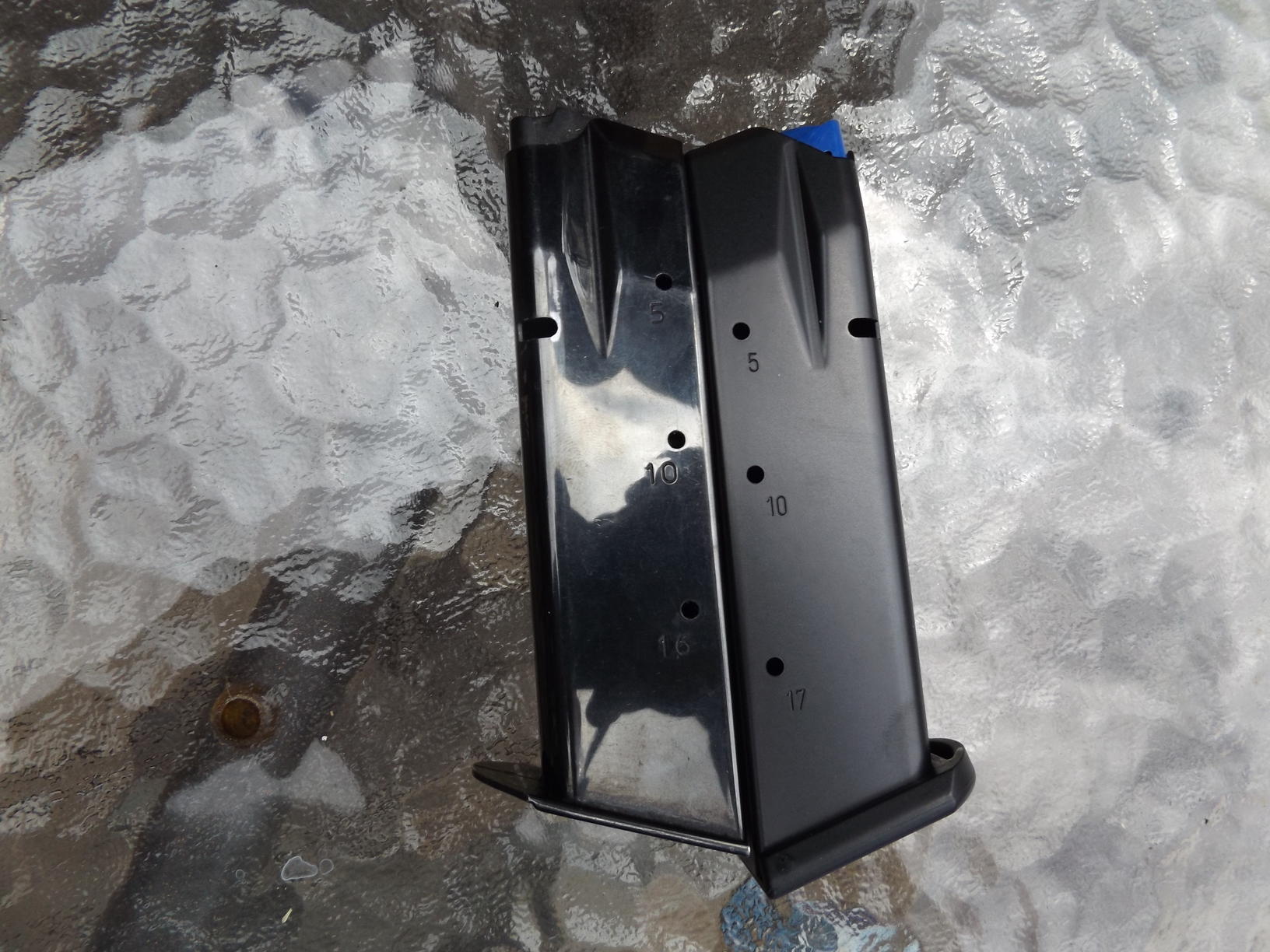
We have a black polycoat finish on the CZ frame and slide. It isn’t highly polished; it has a little bit of a dull look to it, and I have no problem with this. However, you can see some tooling marks inside the frame and slide, but they are only cosmetic. They do not affect how the gun functions. For all intents and purposes, the gun just screams “military” to my mind. I like it! The 9mm version, which I have, holds 16 rounds in the magazine, while the original CZ-75 held 15 rounds. However, there are outstanding after-market magazines from Mec-Gar that hold 17 rounds and have a nice slam pad on the bottom of the magazine for a sure reload, and they are easier to load than the original mags. The gun comes with two mags.

We have the popular 3-dot white sights on the slide, which are very fast to pick up, even if the sights are a little bit small for my liking. The top of the slide also has serrations running along the top of it. BTW, the “B” designation means that the gun has a firing pin safety, which I can take or leave. Given my druthers, I’d rather not have it. The trigger pull is Double-Action/Single Action. When you chamber a round, the hammer is cocked; you can then either apply the frame-mounted safety and carry it cocked ‘n locked, like the 1911, or carefully, very carefully, lower the hammer by holding it between your thumb and index finger, while pulling the trigger. Then the gun will fire with a long but very smooth, double-action trigger pull. I much prefer the cocked ‘n locked carry method.

On some of the clone-like versions, there was a slide-mounted decocker/safety, but some also had the frame-mounted safety. One bad thing with many of the clones was that the trigger pull was long and heavy if you elected to fire from the double-action trigger pull. On the CZ-85B, the trigger design is outstanding, and my trigger finger had no problems reaching the trigger in the double-action mode. Still, my preferred method is carrying the gun cocked ‘n locked; snip off the frame mounted safety ala’ the 1911 and you have a short trigger pull.

CZ-75/85 guns are known for outstanding accuracy, and this comes via two things; the 4.6-inch hammer forged barrel, of course, contributes to this. But then we have the way the slide and frame fit together. Unlike other semi-auto handguns, where the slide rides over the rails on the frame, the CZ slide rides inside the rails on the frame. The slide fits snuggly inside those rails, and the slide on the CZ guns also sits lower inside the frame. It doesn’t stick up high at all, which is good and bad. It makes for a cleaner looking package overall, but it also doesn’t give you a lot of frame to grasp when chambering a round from the slide forward; however, it’s not a deal breaker at all.

The double-action trigger pull is rightfully famous on the CZ-75/85. It is one of the smoothest out of any of similar types of handguns. We are talking long but a super-smooth trigger pull. The single-action trigger pull is fairly crisp, too, not as crisp as a 1911 is, but it is crisper than other similar hammer-fired handguns.

The CZ-85B is slightly different in a few other ways, compared to the original CZ-75. The frame-mounted safety is ambidextrous; it can be found on the opposite side of the frame, along with the ambi slide release. This is nice. The grips that come on the gun are checkered hard black plastic; however, there are a number of grip makers that can set you up with G-10 or wood grips. I liked the military-looking plastic grips. The magazine release was very positive and easy to reach for quick mag changes, too.

One thing that you might notice on the CZ is that the ejection port seems rather smallish compared let’s say to the ejection port on a 1911. I had no problems with fired brass cleanly ejecting, and even loaded rounds ejected without any problems, from the chamber.

CZ claims on their website that the CZ-75B is used by more governments, militaries, police, and security agencies than any other pistol in the world. Perhaps that’s so, but they also claim it is possibly the perfect pistol.

As to the trigger pull weight, it was next to impossible for me to get an accurate pull weight in the double-action, but it was around 12-13 lbs and very smooth. The single-action pull weight was a little over 5 lbs and fairly crisp, too. Sometimes we make too much ado about nothing, when it comes to trigger pull weight if you ask me. More often than not, when using a gun for self defense, we pay no attention to the pull weight of the trigger; we concentrate on the sights. Still, a nice trigger pull does contribute to better accuracy.

The gun weighs 2.2 lbs, and for many that might seem like carrying a tank on their hip because we are used to the polymer framed guns that everyone is making. Personally, the added weight of the steel frame really keeps recoil down quite a bit. This is not a bad thing for fast followup shots, if you ask me. The gun’s overall length is 8.1 inches, and it is 5.4 inches high and 1.4 inches wide. It’s right up there with the 1911 in most respects.

So, after singing the praises of the CZ-85B, how did the gun actually shoot? Well, I usually keep a very accurate round count during my testing; however, the CZ was so much fun to shoot that I lost count. I know I fired well over 700 rounds through the gun and maybe even a lot more with zero malfunctions of any type. For my shooting, I had some Black Hills Ammunition 115-gr JHP +P, 124-gr JHP +P, 115-gr FMJ, 115-gr EXP HP, and 124-gr JHP loads. From Buffalo Bore Ammunition, I had their 147-gr Heavy sub-sonic JHP load, 147-gr Outdoorsman Hard Cast FN +P load, 115-gr Barnes TAC XP, all copper hollow point +P+, and the identical 95-gr Barnes load.

While I’ve never found the recoil of a 9mm handgun objectionable, the all-steel CZ-85B made it just that much more pleasurable to fire and fast, very fast, followup shots were easy to pull off. Accuracy testing was done at a distance of 25 yards, using a rolled-up sleeping bag as a rest, over the hood of my pickup truck. If I did my part, I was getting groups under 2.5 inches, again if I did my part, which wasn’t all of the time. Some groups were around three inches or a tad larger. The best ammo of the day for accuracy was the Black Hills 124-gr JHP load with the Buffalo Bore 147-gr Heavy Sub-sonic JHP load on the heels of the Black Hills load.

There wasn’t anything I didn’t love about the CZ-85B, nothing! I did much prefer the Mec-Gar magazines over the mags that came with the gun, though. I like that extended slam pad on the bottom of the mag. The gun feels just great in the hand, too, as it balances nicely. I’d have no problem taking this pistol into combat, a hostage rescue, or for everyday carry, even if it is a little bit on the heavy side, at least compared to polymer framed 9mm handguns. Additionally, the gun can also be had in .40 S&W, if you prefer.

Full retail is $612 on this model. That’s not too bad. My cost was $549 at my local gun shop, so shop around. To be sure, they are a bit hard to come by. Once you pick one up, it will be hard to put it back down.

– Senior Product Review Editor, Pat Cascio


Recipe of the Week: Garden Season Pico de Gallo (Cold Salsa), by L.H.

An easy and flavorful summertime garden treat. We eat it on our tacos and burritos. We eat it on the side of cottage cheese. We dip celery/carrot sticks and tortilla chips in it. It wonderfully tops a bowl of fresh shredded lettuce. Shoot, we sometimes just eat it out of the bowl with a spoon. It’s good stuff.

Ingredients:

  • 6 large garden tomatoes, chopped small
  • (or) 4-5 cups smaller garden tomatoes such as cherries or romas (measured before chopping)
  • 1/2 cup finely diced red onions
  • 1 large medium-to-hot pepper such as jalapeno, habanero, Serrano etc., chopped fine
  • 3 cloves garlic, minced
  • 2 Tbsp. any vinegar
  • 2 Tbsp. chopped fresh basil, or 1 Tbsp. dried
  • Salt and fresh-cracked pepper to taste

Directions:

  1. Mix all ingredients in bowl in order given; stir well and adjust seasonings to taste.
  2. Cover and refrigerate at least 3 hours to allow flavors to meld.

Note: Play with the pepper, onion, and vinegar flavors to suit what you’re growing in your garden and your family’s tastes. It’s all good.

We grow Garden Salsa peppers and Juliet (kind of like small Roma) tomatoes for this and usually use red onions but sometimes yellow or green onions; and I usually use plain ol’ cider vinegar but sometimes red wine vinegar or even balsamic for a different depth of flavor. You really can’t mess this up with whatever you have around to make it with.

o o o

Useful Recipe and Cooking Links:

Do you have a favorite recipe that would be of interest to SurvivalBlog readers? Please send it via e-mail. Thanks!


Letter Re: Cell Phone Blocking/Masking

Hi James,

For people with cell phones having non-removable batteries, I have wondered if cell phone tracking could be blocked by removing the sim card. I have such a phone, and although removing the battery is not an option, removing the sim card is pretty straightforward. – B.G.

o o o

Dear Editor,

I work exclusively with cell phone RF protocols (4G/LTE, Bluetooth) and can say this “evidence bag” does the trick. http://a.co/7z56VAh

In a separate item please let SurvivalBlog readers know that Polar Pure is back on the shelves in the USA after resolving its conflict with the geniuses at the DEA. This is year-old news, but somehow I missed it. – D2 in AZ

HJL’s Comment: Just make sure you’re turning your cell phone off when you place it in an RF shield. Without that, the phone will continue to search for service, shortening your battery life.


Economics and Investing:

When This All Blows Up… (Peak Prosperity) Understanding the how and when of the next economic crash. Sent in by B.B.

o o o

More money for homeless? Seattle consultants said no last Fall. “But she said the true political challenge remains: how to shift money away from some groups that have been getting it for decades. Of 205 shelters and low-income housing projects reviewed countywide by Focus Strategies, 51 were judged to be ‘low-performing’ for return on taxpayer dollar. To get better results, politicians may have to lop off some social-service providers, who have huge hearts but aren’t cutting it.” Sent in by P.S.

o o o

As Deadlines Approach For College Financial Aid & Income-Based Loan Repayment, IRS Leaves Parents, Students & Graduates In Lurch By Taking Down Online Tax Return Data Retrieval Tool. (Tax Prof Blog) “The IRS Data Retrieval Tool on fafsa.gov and StudentLoans.gov is currently unavailable.”

o o o

Silver Market Poised For Big Reversal When Institutional Investors Move In. (SRSrocco Report) “The Silver Market is going to experience a big reversal when the Hedge Funds and Institutional investors rotate out of highly inflated stocks and into precious metals investments.”

o o o

States Consider Removing Income And Sales Taxes From The Monetary Metals (Mises)

o o o

Crude Dips Below $48.00 First Time Since November 29: CPI Where to From Here? (MishTalk)

o o o

SurvivalBlog and its editors are not paid investment counselors or advisers. Please see our Provisos page for details.


Odds ‘n Sods:

Harvard library circulating ‘fake news’ list, which, of course, includes just about every conservative news site.

JWR’s Comment: Note that dozens of popular news websites and blogs (including SurvivalBlog) made it on their list but are tagged only “unknown.” This seems to be their default tag for any site that they simply dislike because its editorial stance doesn’t match their Progressive/neo-Maoist worldview. It is ironic that they often use the tag “bias” when they are blind to their own bias, which is self-evident. The short “Updates and Notes” section below the table is particularly telling about the strong bias of Melissa Zimdars and her staff. It is noteworthy that there she includes http://www.truth-out.org/ as one of her “sources I trust”, when it is so blatantly anti-Israel that it can safely be categorized as anti-Semitic.

o o o

Deadly fungal infection that doctors have been fearing now reported in U.S. – J.A.

Charming. Just one more reason not to visit hospitals!

o o o

Rod Serling’s “Talking Tina” doll joins your daughter’s internet of things – “The doll maker reportedly recorded children’s conversations and stored them on a server to use in product testing. Meanwhile, Cayla caused such alarm in Germany that the government there advised parents to destroy the doll.” – Link sent in by T.P.

o o o

Video: A city homesteading family – The Dervaes Family lives one mile from downtown Pasadena and grows most of their food on a small lot in the city. – R.S.

o o o

Gun Owners of America: Beware of Republicans’ “Obamacare Lite”! – DSV


Notes for Sunday – March 12, 2017

Today is the birthday of science fiction author Harry Harrison, who is best known for his Deathworld trilogy. (He was born in 1920 and died in 2012.)

On March 12, 1850 the first U.S. $20 gold piece was issued. The current bullion (melt) value of a $20 gold piece (not even considering any numismatic value) is about $1,185. Lesson learned: Trust gold, not paper.


Household Basics in TEOTWAWKI- Part 6, by Sarah Latimer

Well, this series on pantry basics (beyond meat, eggs, dairy, grains, fruits, and vegetables) is getting long. Yet, I still have several more items on my list to explore and share. These items even go beyond the normal bulk items we think of and beyond spices and herbs, though last week I covered salt and pepper and encouraged readers to use the improved SurvivalBlog search capabilities to go back and read some of the great articles our SurvivalBlog community has previous provided on the subject of “growing herbs” and spices. We have a wealth of information within our community not only on growing and using culinary herbs but also on medicinal herbs, and I wholeheartedly believe it is time to grow and learn to use them. I’ve been growing medicinal herbs for years and use them for normal everyday items, like deodorant and healing lotions/salves. However, it is helpful and health-ful to know how to use them for medical purposes rather than just hygienic ones. In TEOTWAWKI, we very well may only have what we can produce or scavenge in the wild ourselves, what we have stored, or what we are able to barter to obtain from those who do produce or have stored items. So, I’m continuing my quest to examine some of the things that our household considers “necessities” to see how we can best provide them for ourselves in TEOTWAWKI and share with you how you can too. To be honest, it has been as much of a learning experience for me as it has been for many of you. I knew something about providing and/or storing all of these items so far, but I have learned much for my research and also from the generous readers who have written in to share their wealth of experience also. Be sure to go back and take a look at the earlier articles and related letters in this series, covering baking soda, vinegar, yeast, and salt and pepper. It’s easy with the new search. To find my articles, search for “Sarah Latimer”.

Let us move on and take a look at this week’s item for examination– coffee. I know. Many of you are immediately thinking that it is just not a necessity. Well, I would agree with you, since I don’t drink the stuff myself. However, others in my family would argue that it is most definitely a necessity if I want happy “campers” in our crew. While I am a tea drinker, with black tea, white tea, and especially herbal teas being my preference, several members of my householdwant their cup of “joe”, “java”, “mud”, or “brain juice”– whatever it might be called. So, because I love them and want a happy family, I’ll consider coffee as necessary as my tea or chocolate. Oh, chocolate! Now, maybe I should add that to our household basics list. Hmmm. Anybody have any ideas on how to grow a cacao tree in cold North America? I think I had just better vacuum seal and freeze a lot of cocoa powder along with vanilla beans and homemade extracts!

Years ago, in our earlier prepping pursuits, coffee was one of the items that we were concerned about having should we have a SHTF period or TEOTWAWKI situation. Initially, we bought canned coffee, but my coffee drinkers just weren’t happy with the taste of canned coffee. It was stale and unsatisfying to them. At that time, they preferred what they thought was fresh roasted, and we ground it ourselves to stash in the freezer, hoping to keep it from getting stale. We knew that we couldn’t keep much coffee in this manner, as a freezer is not good long-term storage because it relies upon the grid, which would go down in a TEOTWAWKI and in truth, doesn’t actually do much to preserve coffee. At that time, we were also not set up to run our freezers on solar either. So, we needed other solutions for a long-term coffee supply.

In our research, we learned a lot about coffee growing and production. We learned that while coffee beans go stale within a matter of days after being roasted, green coffee beans can be stored a long, long time. It’s somewhat like whole grain, where whole grain can remain viable, wholesome, and tasty almost indefinitely as long as the grain remains whole and is stored in a dry, dark place at moderate or cool temperature. We discovered that we could preserve green coffee beans by putting them in our Mason jars, vacuum sealing them, storing them in the dark and in a dry, cool/moderate temperature environment and indefinitely. Hugh, who is one of my coffee drinkers, took the lead on procuring green coffee beans and testing this out. It worked! We have had green coffee beans that were stored at room temperature in our vacuum sealed jars for four or five years, successfully roasted, and used to create what was described as a marvelous cup of coffee. Our friends couldn’t believe the beans were years old. One friend said it tasted fresher than his Starbucks he’d bought that morning. In fact, now most of our friends prefer our black coffee over Starbucks, if they can give up all of the flavorings that are used to cover up the stale taste of stale coffee.

At first, when Hugh was shopping for green coffee beans, he struggled with which kind of green coffee to buy. Then he realized that he was buying on a coffee snob website, Sweet Maria’s, and probably just about any coffee he bought would beat the stuff we bought at the grocery store. So, he tried the sampler and found that he liked all of them and especially liked several of them. Unfortunately, the ones he liked most were unavailable for repurchase by the time he had sampled all of the coffees. The coffees come from small, boutique coffee farms, so it is difficult to get coffee from the same farm again. They sell out of a variety of coffee very quickly and then don’t make it available again for quite awhile. Still, he has been very pleased with the green coffees and has figured out how to roast it. We enjoy reading the extravagant descriptions of coffee that emulate the elaborate language of wine connesiours describing nuances and hints of flavors. We apparently don’t have taste buds that are as discerning to pick up on all of these nuances or hints of flavors. However, we have found some language that seems to sound familiar among the coffee descriptions of those our family likes and we also have found regions/countries that seem to grow “favorites”. For each person it varies. We also have some friends who prefer city roasts and others who like dark roasts; so that is also a personal decision. Trying the sampler and learning which ones are favorites and then looking for coffees from those regions and with descriptions that are similar is a good way to get started.

There are many options for roasting coffee, from expensive automated roasters all the way down to a simple cast iron skillet. We’ve tried a variety. However, if you use the skillet, it will take time and you’ll have some loss while you learn. We did, but now the skillet is our preferred method, because it travels easily, and it doesn’t break or require replacement parts or depend upon electricity. We’ve roasted coffee in our kitchen on electric, on gas, and even outdoors over a fire, using our skillet and a metal spatula that tosses the coffee beans continuously during the roasting process.

I have been told that there are coffee substitutes that are good, but we have not found them to be satisfying. It may be the lack of caffeine even more than the flavor that is the obstacle for my coffee drinkers. I’ve heard that roasted barley, roasted rye, and roasted chicory have a coffee-like taste. I also found an article from my childhood that encouraged people to use grated, dehydrated, and roasted parsnips, roasted chickpeas, and roasted wheat as well as those roasted items listed above to extend coffee rather than just using these items as a substitute. That seems more sensible to me. It might be worth a try to see if these items can help extend coffee, but I know that my guys would miss their caffeine if I completely substituted these for real coffee.

So, we will continue to buy many pounds of green coffee at a time and store it in our half gallon Mason jars to be roasted every few days, for the freshest, most delicious coffee in town! People talk about storing beer, wine, and liquor for barter in those difficult days, but I think that there will be some people more likely desperate for a good cup of coffee than for a beer. It may just be the new gold in TEOTWAWKI, when Starbucks and every other coffee shop is closed.

We make sure that we have coffee ready to go, even in our go bags. We carry portable coffee grinders and both fine paper tea bags and mesh tea infusers that can be used for teas and/or coffees, plus we of course have various utensils in which to heat water and various forms for heating the water. There are collapsible brew baskets with carabiner for those who wish to carry their filter on the outside of their go bag. What you choose to carry depends upon whether you are making coffee for one or for several people and how you are transporting it, too. Having a boilable stainless steel cup that can sit on a small camp stove is handy, so you can make your hot water and coffee right in your own mug using a tea bag, a tea infuser basket or silicon coffee drip/filter. This single cup system simplifies the clean up, too. The items highlighted are items we have in our household and that we use and enjoy, especially when on the trail or camping.

I will admit that when TEOTWAWKI occurs, depending upon how bad the situation is, I very well may find myself extending my supplies by roasting the grains and/or vegetables we have on hand or can grow. Remember that these seeds, grains, and vegetables must be roasted to a dark state but not burned. Like everything, it takes some practice. Some grains and seeds are better roasted at 300 degrees, while others are better roasted at a higher temperature of 375 or 400 degrees. I have not perfected my grain, seed, or vegetable roasts and do not feel that i can offer advice in this area yet with a “perfected” recipe. If others have recipes they would like to share, please write in and let us hear from you. We enjoy learning from our knowledgeable SurvivalBlog community of friends!

If you are a person who can’t imagine life without coffee and haven’t a clue how to store coffee without a freezer, then I hope you have gained insight into how to prepare for TEOTWAWKI and will look at buying green coffee beans and will learn how to roast it yourself. If you learn how to roast with a skillet or an air popcorn popper, you’ll end up saving yourself some money in the short term, too. As I said, we estimate that we spend about ten cents for a sixteen ounce cup of coffee, not including our time/labor in packaging the green beans for storage, roasting, grinding, and brewing, of course. However, it is the best cup of black coffee you can buy! You can always add vanilla, cream, and sugar if you have the need, but there is no bitter after taste that requires a cover-up. Even I, who despises the after-taste of coffee, can drink Hugh’s fresh coffee because it does not have the bitter after-taste. It’s smooth, like no other coffee I’ve ever tasted, except when I once attended a coffee convention in San Francisco, where coffee was being roasted on sight. Where and when it is ground is not any more important than when it was roasted. Once coffee is roasted, it begins to deteriorate rapidly. Whole beans are at their peak flavor at about 18-24 hours after roasting and become stale in about three days. Stores don’t get coffee on their shelves within three days of roasting, not even at Starbucks. The best you can hope for at your local stores is lightly stale coffee, but most of it is very, very stale. That is why it requires loads of sugar, cream, and flavors. Stale coffee has created a whole new career for baristas, who have the ability to add flavors to stale coffee with artist form in a cup. (Though I don’t drink coffee, I enjoy seeing the pictures of hearts and animals created with floating cream and flavors.)

There is a difference in taste between the various coffee beans, and the roasting is critical. It is important to evenly roast the beans, so air roasting or continuous stirring is necessary. Burned coffee is no good! Additionally, the roasting process causes the skin of the coffee beans to come off and fall to the bottom and then burn, making the kitchen smell for an hour or two, so don’t roast right before company it expected or you will need to get the air infuser running and supplement with an air deodorizer, too. However, it’s a price I’m willing to pay for my loved ones to enjoy their coffee and to maintain their good attitudes. We usually roast the night before we are expecting company, so the roasting smell is clear. Then, the grinding and brewing begins just before they arrive, and this smells great! We serve it with options of sugar, cream, and/or some of my homemade vanilla extract, which is offered to guests in a glass dropper bottle, which facilitates the addition of just a drop or two to beverages such as coffee or hot cocoa. With these options, we still find that once our guests taste fresh roasted coffee they often choose to enjoy it simply “black”. There is nothing bitter that needs to be covered up or compensated for.

You will find that buying green coffee and brewing it yourself will lead you into a whole new world of better coffee! Doing it yourself just couldn’t be better when it comes to coffee, because it is the only way to enjoy a truly fresh cup that isn’t stale. Remember, coffee gets stale within a few days, so by the time it is roasted and shipped to your gourmet coffee shop and prepared for you, it is already at least in the early stages of stale.

It is an investment to get set up to roast your own coffee, mainly because of the roaster, but then you are independent and able to produce your own for a long time. Like I’ve shared, we’ve calculated that we are able to produce a top quality 16-ounce cup of coffee for about 10 cents. Buying green coffee beans in bulk is an up-front expense, but you are assured of having coffee for a good long while, and you can extend the supply even further if you choose to supplement it with other “substitutes”, too. Write in and let us know what coffee supplements or substitutes you like to use and how you prepare them. We’d all love to learn from you, the SurvivalBlog community!